
Winter arrives, bringing cold winds and often, freezing temperatures. As you pull out your cozy sweaters and prepare for the chill, consider the small feathered friends who share your urban or suburban landscape. For birds, winter is a season of survival, and finding food becomes a critical daily task. Many gardeners focus on providing bird feeders, which is excellent, but an often-overlooked necessity is a reliable water source. Liquid water becomes scarce when natural puddles and shallow streams freeze solid.
If you live in a small space, perhaps an apartment with a balcony or a patio home, you might assume creating a bird sanctuary is out of reach. Think again. You possess a unique opportunity to provide vital support. A simple, freeze-proof water station on your balcony or patio offers a lifeline to birds and an engaging focal point for your own balcony bird watching. You not only help local wildlife survive the harsh season but also bring vibrant activity directly to your outdoor living area. This article walks you through creating an effective, low-maintenance, and freeze-resistant water station, transforming your small space into a vital part of a larger wildlife friendly garden.
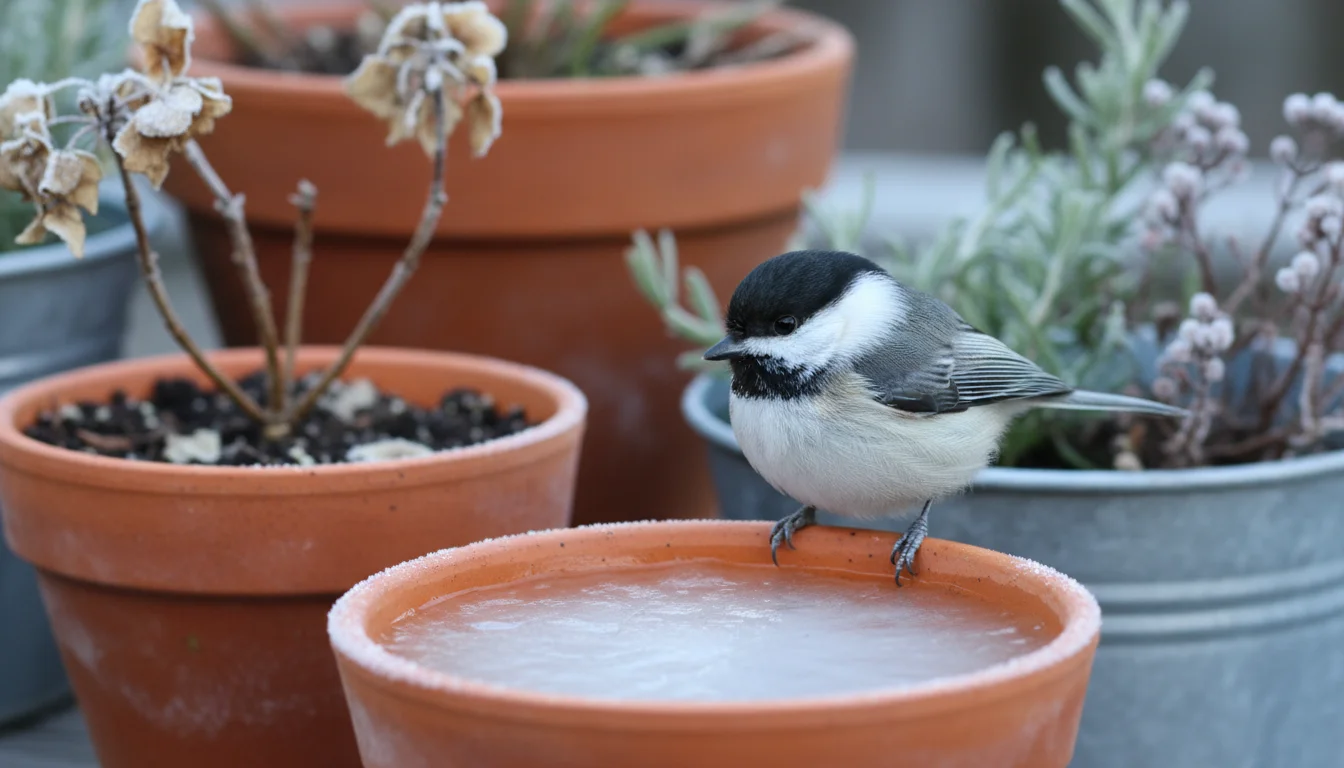
Why Balcony Birds Need Water in Winter
Birds require water for two fundamental reasons: drinking and preening. While we might associate winter with snow and ice, these forms of water are not easily accessible for hydration. Eating snow expends precious energy, which birds cannot afford to waste during cold months. Liquid water provides immediate hydration, crucial for regulating their body temperature and fueling their high metabolism.
In addition to hydration, you can support local wildlife by choosing plants to not cut back that offer natural seeds and shelter throughout the coldest months.
Preening, the act of cleaning and rearranging feathers, depends heavily on water. Birds use water to keep their feathers in top condition, ensuring they remain insulated and waterproof. Imagine trying to stay warm when your only jacket is dirty and matted; birds face a similar challenge. Well-maintained feathers trap air, creating a vital layer of insulation against the biting cold. Without access to liquid water for preening, their feathers become less effective at keeping them warm, making them vulnerable to hypothermia.
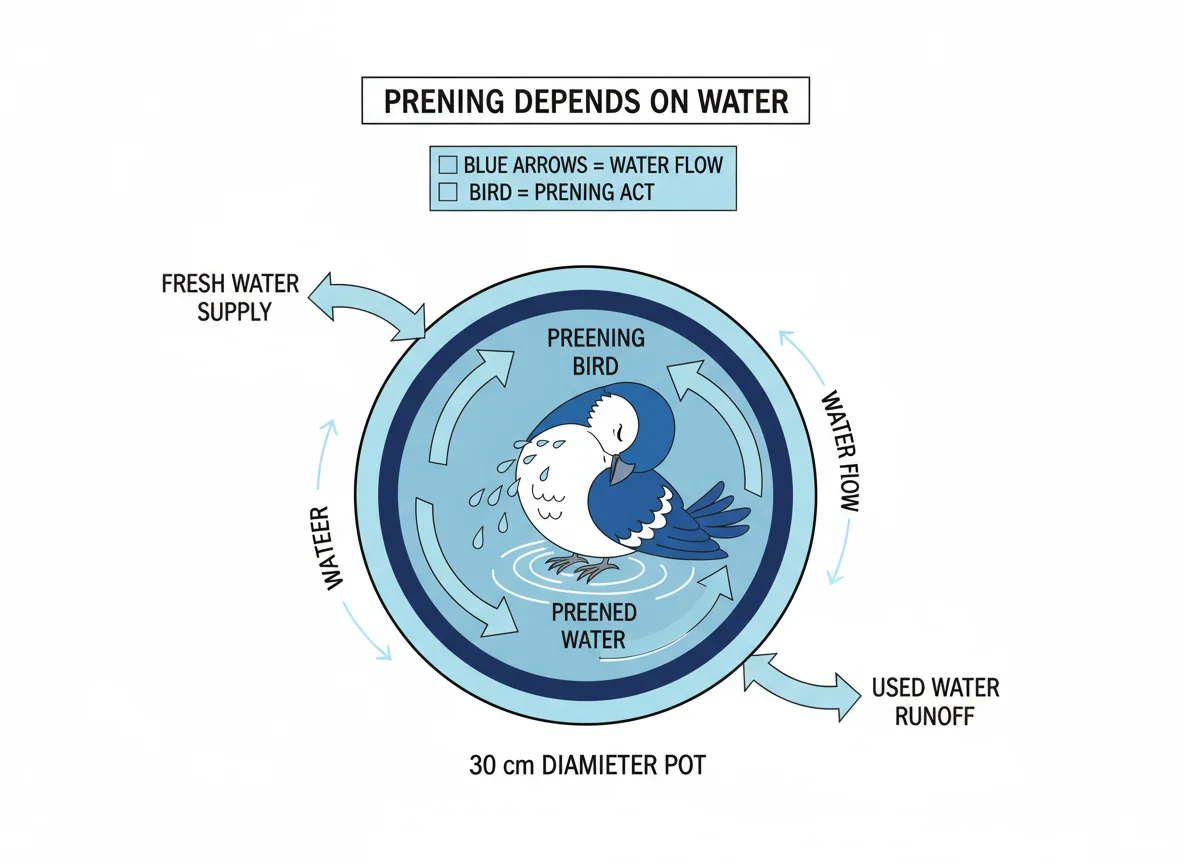
In urban environments, natural water sources like ponds, puddles, and bird baths often freeze solid, particularly in smaller garden spaces or on balconies where bodies of water are typically shallow. Your small contribution of a reliable water station can make a significant difference in the survival rates of local bird populations, turning your balcony into a vital oasis and enhancing your balcony bird watching experience.
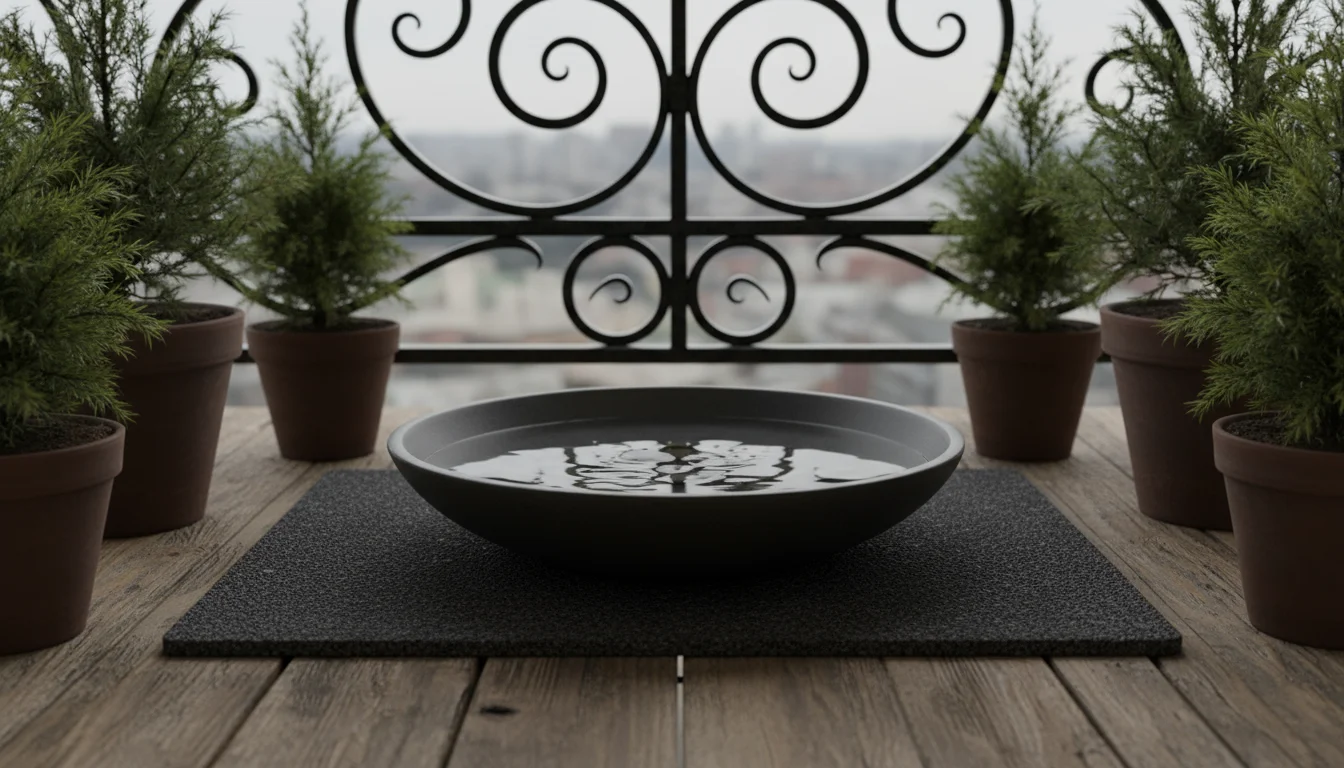
The Science of Staying Liquid: Passive Freeze Prevention
Keeping water from freezing, especially in a compact space like a balcony, does not always require electricity. You can use several passive methods rooted in basic physics. The goal is to either increase the water’s thermal mass, reduce its exposure to freezing air, or harness available ambient heat.
While focusing on water, you can also use similar passive insulation techniques to create a winter shelter for beneficial insects within your balcony pots.
- Thermal Mass: Materials like dark-colored rocks or bricks absorb heat from the sun during the day and slowly release it overnight, delaying the freezing process. Placing these in your water container adds thermal mass, acting like tiny heat reservoirs. A larger volume of water also has greater thermal mass, but on a balcony, you work with space constraints.
- Insulation: Insulating the base and sides of your water container reduces heat loss to the colder air and surfaces. Materials like Styrofoam, bubble wrap, or even old towels placed underneath and around the container can significantly slow heat transfer.
- Surface Area: A wider, shallower container freezes faster than a deeper one with the same volume because more of its surface area directly contacts the cold air. However, a shallow depth is essential for birds’ safety, allowing them to drink and bathe without risk of drowning. Aim for a balance: a wide basin with a maximum depth of about 2 inches (5 cm) in the center, gradually sloping up.
- Solar Absorption: Dark-colored containers absorb more solar radiation, warming the water during sunny winter days. This absorbed heat contributes to the water’s overall temperature, extending the time before it freezes.
- Agitation: Moving water freezes slower than still water. While powered agitators exist, you can achieve a minimal effect by simply adding a few small, bobbing objects like ping pong balls. These shift with the breeze, breaking the surface tension and delaying ice formation.
By combining these principles, you create a robust DIY bird waterer for small space that effectively minimizes freezing, ensuring safe water for birds in freezing weather without relying on external power sources.

Gathering Your Gear: Essential Components for Your Winter Water Station
You do not need many specialized tools or expensive gadgets to construct an effective winter bird bath. Many items you might already have around your home or can acquire affordably. Here is a list of what you will need for your DIY bird waterer for small space:
To make your bird station more visually appealing, consider surrounding it with plants for winter interest that thrive in small containers.
- The Water Container:
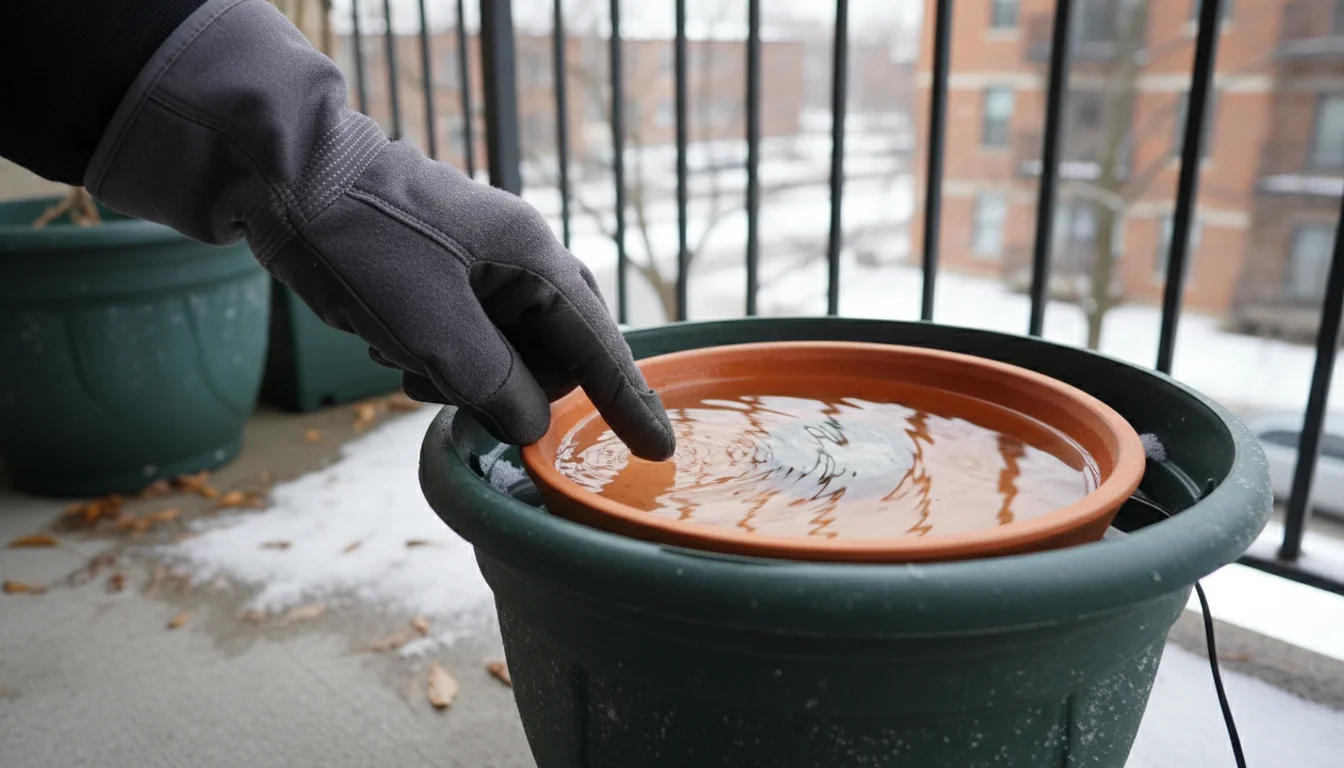
- Choose: A shallow, wide, dark-colored saucer or dish. Terracotta saucers (if sealed to prevent water absorption and cracking), dark plastic plant saucers, or ceramic dishes work well.
- Size: Aim for a diameter of 10-14 inches (25-35 cm). The water depth should not exceed 2 inches (5 cm) at its deepest point, with gently sloping sides for easy access. Dark colors absorb more solar heat.
- Choose: Several dark-colored, smooth river rocks, ceramic tiles, or small bricks.
- Size: Large enough not to be ingested by birds, but small enough to fit comfortably in the basin, partially submerged. These provide perching spots and absorb solar heat.
- Choose: A piece of rigid foam insulation board (e.g., Styrofoam), bubble wrap, an old wool blanket or towel, or even thick corrugated cardboard.
- Size: Cut to fit just under your water container, slightly larger than its base.
- Choose: A sturdy plastic pot, a stack of bricks, or a small wooden crate. This elevates the water source, making it more visible and potentially safer from ground predators if you have a low balcony.
- Choose: A few clean, lightweight plastic balls (e.g., ping pong balls) or a solar-powered water wiggler. These can help break the surface tension and delay freezing.
- Note: While simple, solar-powered wigglers add a slight cost but are very effective at keeping water moving. Ensure they are designed for outdoor use and have a small solar panel that catches direct sun.
- A stiff brush, a small scoop or trowel, and mild, bird-safe disinfectant (like a diluted bleach solution, thoroughly rinsed, or specialized bird bath cleaner).
Having these components ready ensures you can quickly assemble your how to keep water from freezing for birds on a balcony solution and provide immediate relief for the birds.
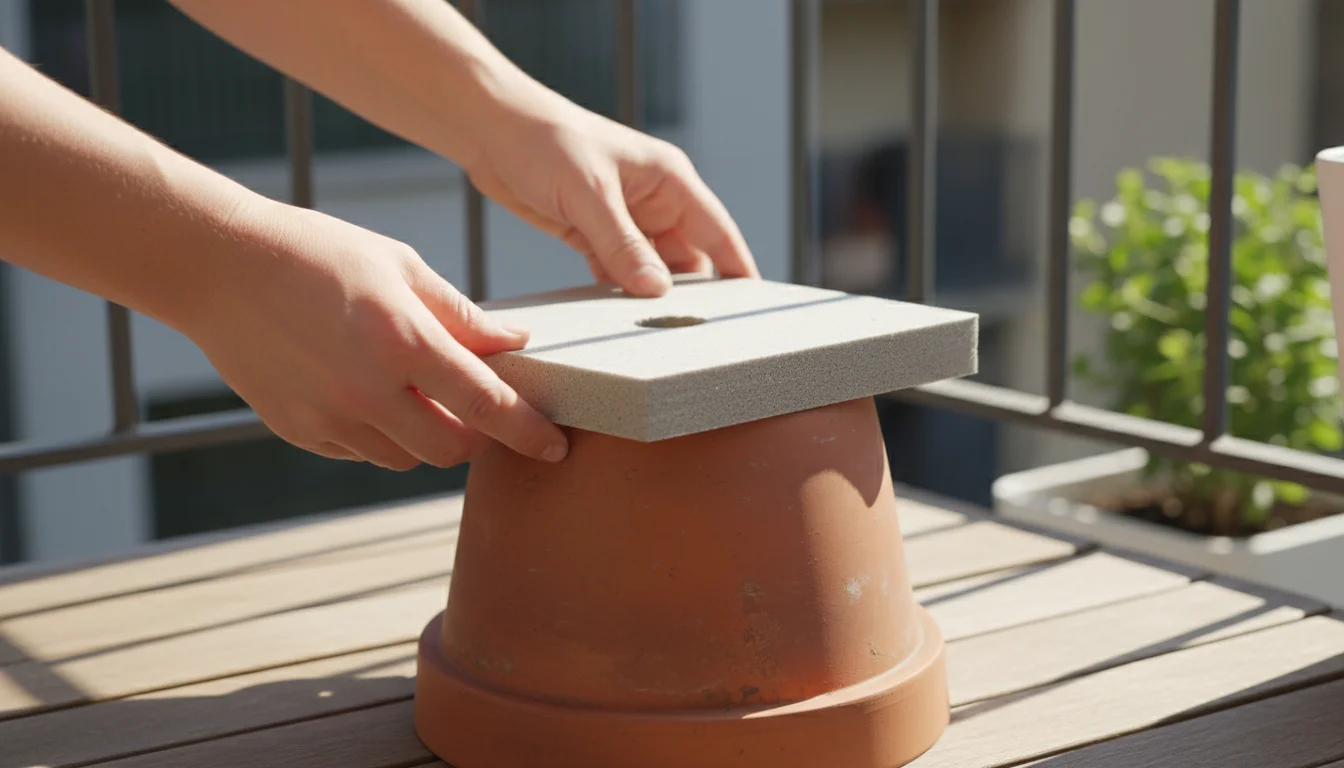
Step-by-Step: Constructing Your Balcony Bird Oasis
Building your freeze-proof water station is a straightforward project. Follow these steps to create an inviting and functional oasis for your balcony birds:
- Prepare Your Base:
- Identify a suitable spot on your balcony, considering sunlight exposure and shelter.
- Place your chosen support (e.g., upside-down sturdy pot, bricks) in this location. This elevates the water station, making it more accessible and visible to birds.
- Apply Insulation:
- Cut your insulation material (Styrofoam, bubble wrap, old towel) to a size slightly larger than the base of your water container.
- Place this insulation directly on top of your support structure. This layer is critical for preventing heat loss from the bottom of your water container to the cold balcony surface.
- Position the Water Container:
- Place your dark-colored, shallow water container directly on top of the insulation. Ensure it is stable and level to prevent spills.
- Add Thermal Mass Rocks:
- Carefully arrange your dark, smooth river rocks or ceramic pieces inside the water container.
- Position them so they are partially submerged when the basin is full, offering various depths for birds to stand and creating perching spots just above the water line. These rocks absorb solar heat and slowly release it, helping to keep the water liquid.
- Fill with Water:
- Fill the container with fresh, clean water. Do not overfill; remember the deepest point should be around 1.5 to 2 inches (3.8 to 5 cm) to ensure bird safety.
- Incorporate Agitation (Optional):
- If using ping pong balls, float a few on the water’s surface. The wind will move them, gently disturbing the water and delaying ice formation.
- If using a solar-powered wiggler, position its solar panel to receive direct sunlight, and place the wiggler component in the water according to the manufacturer’s instructions.
Your DIY bird waterer for small space is now ready. This setup helps address the challenge of how to keep water from freezing for birds on a balcony by combining insulation, thermal mass, and solar absorption.
Strategic Siting: Where to Place Your Water Station for Maximum Appeal
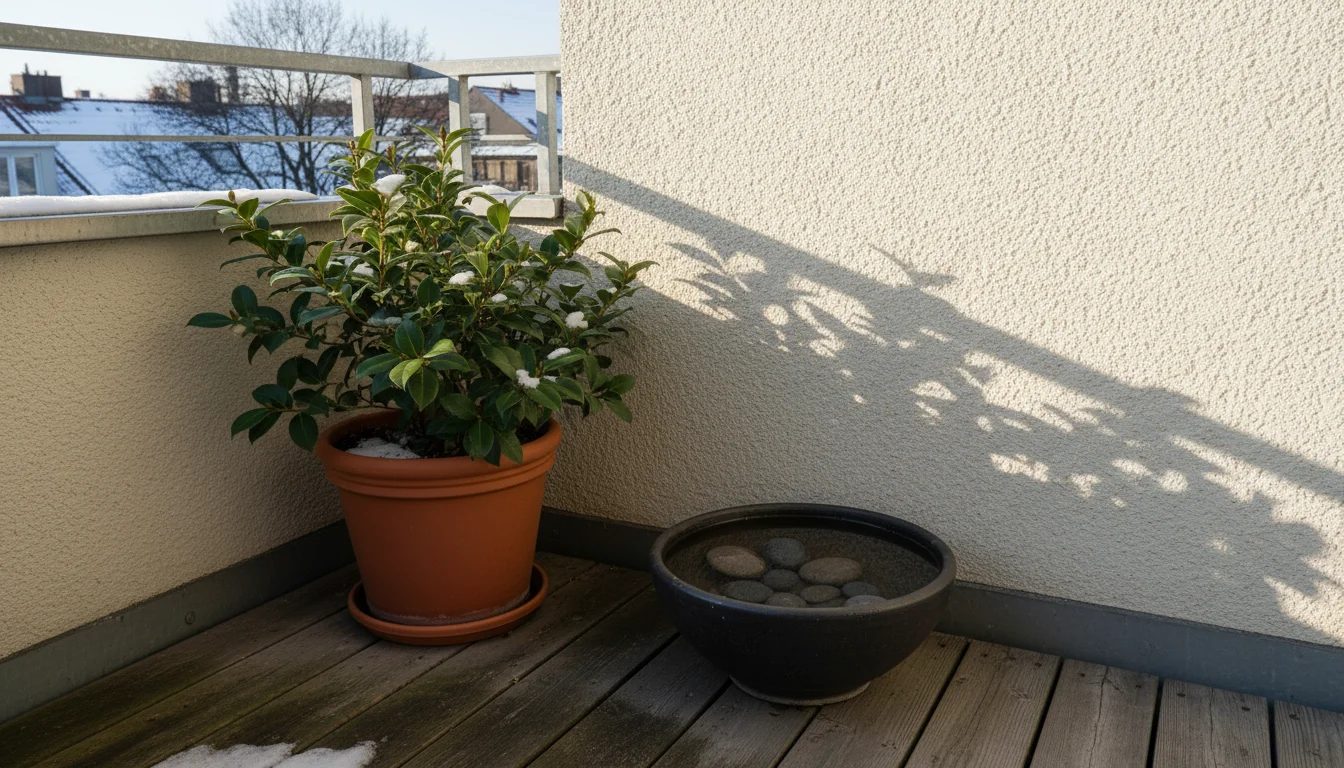
Location is crucial for both the effectiveness of your winter bird bath and the safety of your feathered visitors. Thoughtful placement maximizes sun exposure, provides shelter, and enhances your balcony bird watching experience.
Your waterer can be the centerpiece of a complete winter balcony glow-up, turning a bare space into a lively and beautiful sanctuary.
- Sunlight Exposure: Position the water station where it receives the most direct sunlight, especially during the morning and early afternoon. The sun’s warmth is a primary component of your freeze-proofing strategy, heating the water and the dark rocks. A south-facing balcony or a spot that catches winter sun is ideal.
- Shelter from Wind: While sunlight is important, protection from harsh winter winds prevents rapid cooling. Place your water station near a solid wall, a sturdy railing, or among dense evergreen plants you might have in containers. This microclimate offers a significant advantage in maintaining water temperature.
- Proximity to Cover: Birds feel vulnerable when drinking or bathing. Locate the water station within a reasonable distance (a few feet) of protective cover, such as potted evergreen shrubs, a railing draped with netting (not too close for predators to hide), or other balcony plantings. This provides a quick escape route from potential predators and a place to preen safely after bathing.
- Visibility for You, Safety for Birds: While you want to enjoy balcony bird watching, ensure the birds feel safe. Avoid placing it too close to windows where reflections might cause collisions. If window strikes are an issue, consider applying window decals or placing the water station a bit further away from the glass.
- Avoid Contamination: Do not place the water station directly under a bird feeder. Dropped seeds, hulls, and bird droppings can quickly contaminate the water, potentially spreading disease. Separate your feeder and waterer by several feet if possible.
- Secure Placement: Ensure the entire setup is stable and cannot be easily knocked over by strong winds or a visiting bird. On a balcony, wind can be particularly strong, so a heavy base or securing the components prevents accidents.
By carefully considering these factors, you create a haven that birds readily find and use, transforming your small outdoor space into a thriving part of a wildlife friendly garden.
Daily Rituals: Maintenance for a Safe and Pristine Water Supply
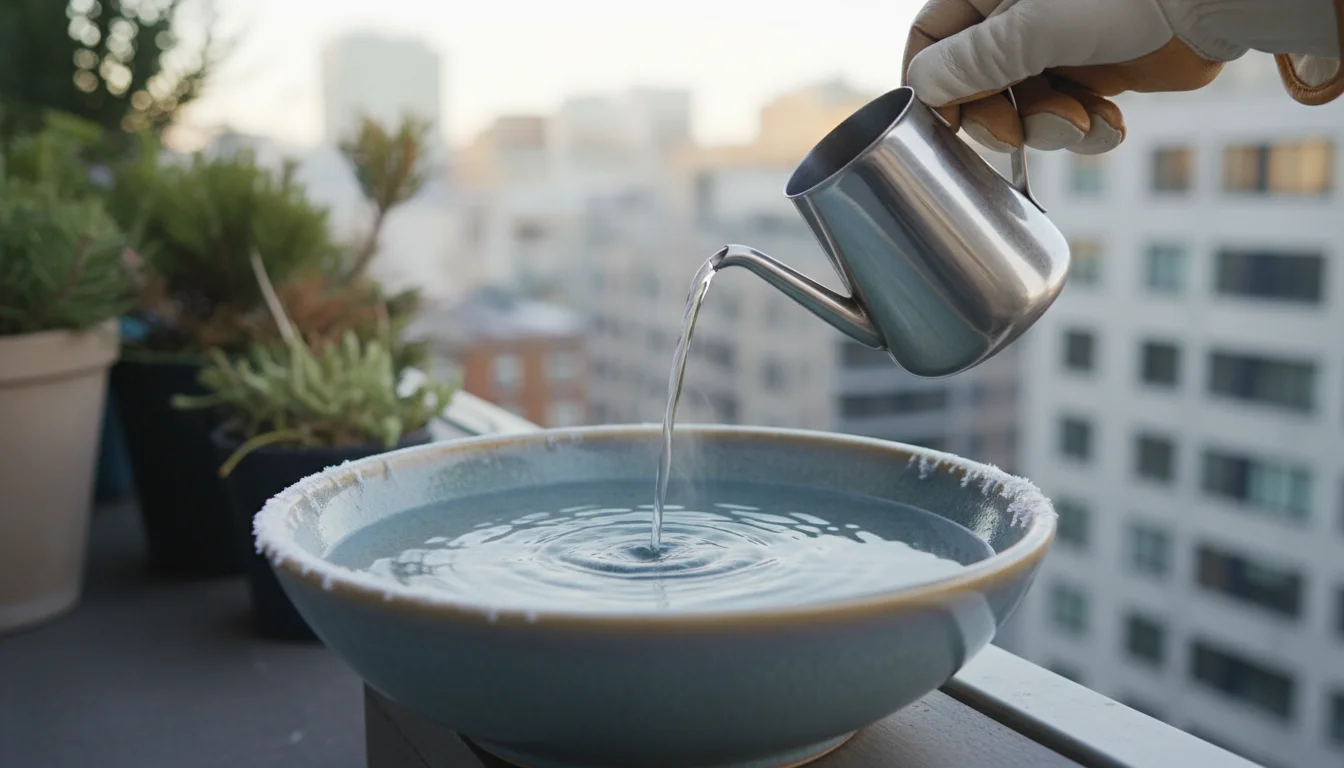
A freeze-proof water station is only effective if it remains clean and functional. Consistent maintenance is the cornerstone of providing safe water for birds in freezing weather. Your daily routine should involve refreshing the water and checking for ice.
- Daily Water Changes:
- Every morning, or at least once a day, empty any remaining water from the basin.
- Rinse the container thoroughly to remove debris, droppings, and algae.
- Refill with fresh, clean water. Warm water helps melt any lingering ice and gives the birds a warmer start, extending the time before it freezes again.
- Ice Management:
- Even with freeze-proofing efforts, very cold nights can still cause a layer of ice to form.
- Never add boiling water to a frozen ceramic or terracotta dish, as the sudden temperature change can cause it to crack. Instead, use warm (not hot) tap water to loosen the ice, or simply remove the ice chunk and refill.
- If the entire basin freezes solid, bring the container indoors for a short time to thaw, then clean and refill before returning it outside.
- Regular Deep Cleaning:
- At least once a week, perform a more thorough cleaning. Scrub the basin and rocks with a stiff brush.
- You can use a diluted solution of one part bleach to nine parts water to disinfect, but you must rinse everything extremely well multiple times afterward to remove all traces of bleach, as it is toxic to birds. A safer, non-toxic alternative is a specialized bird bath cleaner, or simply thorough scrubbing with hot water.
- Allow the basin to air dry completely before refilling with fresh water.
- Check Insulation and Support:
- Periodically inspect the insulation layer and the support structure. Ensure they remain in place and are not waterlogged or damaged. Replace or adjust as needed.
- Monitor Water Level:
- Birds consume and splash water, especially when bathing. Keep an eye on the water level throughout the day, particularly during milder winter spells when activity might increase, and refill as necessary.
By dedicating a few minutes each day to these tasks, you ensure your winter bird bath remains a hygienic and reliable source of water, making your balcony a crucial resource for local birds.
Troubleshooting Your Freeze-Proof Water Station
Even with the best preparation, you might encounter challenges. Here are common issues and practical solutions to ensure your how to keep water from freezing for birds on a balcony efforts remain successful.
- Water Still Freezes Completely:
- Issue: Despite your efforts, the water turns into a solid block of ice.
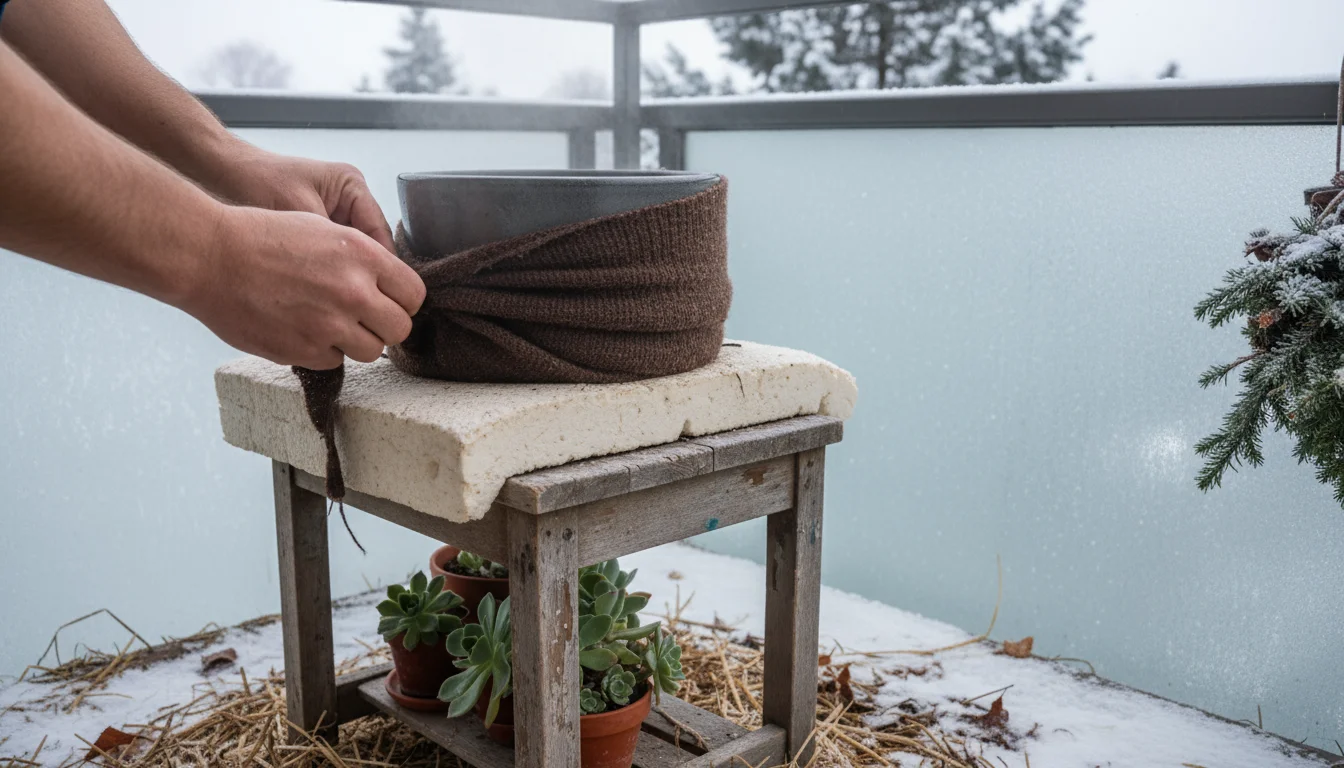
- Solution: You likely need more insulation or thermal mass.
- Add a thicker layer of foam insulation beneath the basin.
- Consider insulating the sides of the container with an old sweater or bubble wrap, secured with tape or string.
- Add more dark rocks to the basin to increase solar heat absorption and thermal mass.
- If using a plastic saucer, switch to a darker ceramic or terracotta (sealed) one for better heat retention.
- Re-evaluate placement: Is it getting enough direct winter sun? Is it fully protected from wind?
- Birds Are Not Visiting:
- Issue: You have a water station, but no birds come to drink or bathe.
- Solution:
- Patience: Birds can be wary of new objects. Give them time to discover and trust the new water source.
- Safety First: Ensure the station is close enough to protective cover (plants, railings) so birds feel safe from predators.
- Visibility: Is it too hidden? Elevate the station slightly so it is more visible from above.
- Cleanliness: Birds avoid dirty water. Ensure you are cleaning and refilling daily.
- Movement: Birds are attracted to moving water. Add ping pong balls or consider a solar wiggler if you do not have one.
- Feeders Nearby: Is there a feeder too close? Separate the waterer from feeders to prevent contamination and create distinct zones.
- Water Contamination and Algae:
- Issue: Water quickly becomes dirty, or green algae appears.
- Solution:
- Increase cleaning frequency. Daily rinsing and scrubbing are essential, especially in milder weather.
- Ensure the water station is not directly under a feeder or a tree that drops a lot of debris.
- For persistent algae, use a thorough weekly cleaning with a stiff brush and a very diluted bleach solution (rinse exhaustively) or a specialized bird-safe cleaner.
- Container Cracks or Breaks:
- Issue: Ceramic or terracotta containers can crack if water freezes inside them or due to sudden temperature changes.
- Solution:
- Use sealed terracotta or frost-proof ceramic dishes specifically designed for outdoor use.
- Always remove ice gently. Do not use very hot water on frozen ceramic.
- Consider a heavy-duty plastic saucer designed for extreme temperatures, as they are more forgiving.
Addressing these issues promptly ensures your winter bird bath remains a reliable and safe resource, continuing your valuable contribution to a wildlife friendly garden.
Beyond the Bath: Furthering Your Wildlife-Friendly Balcony
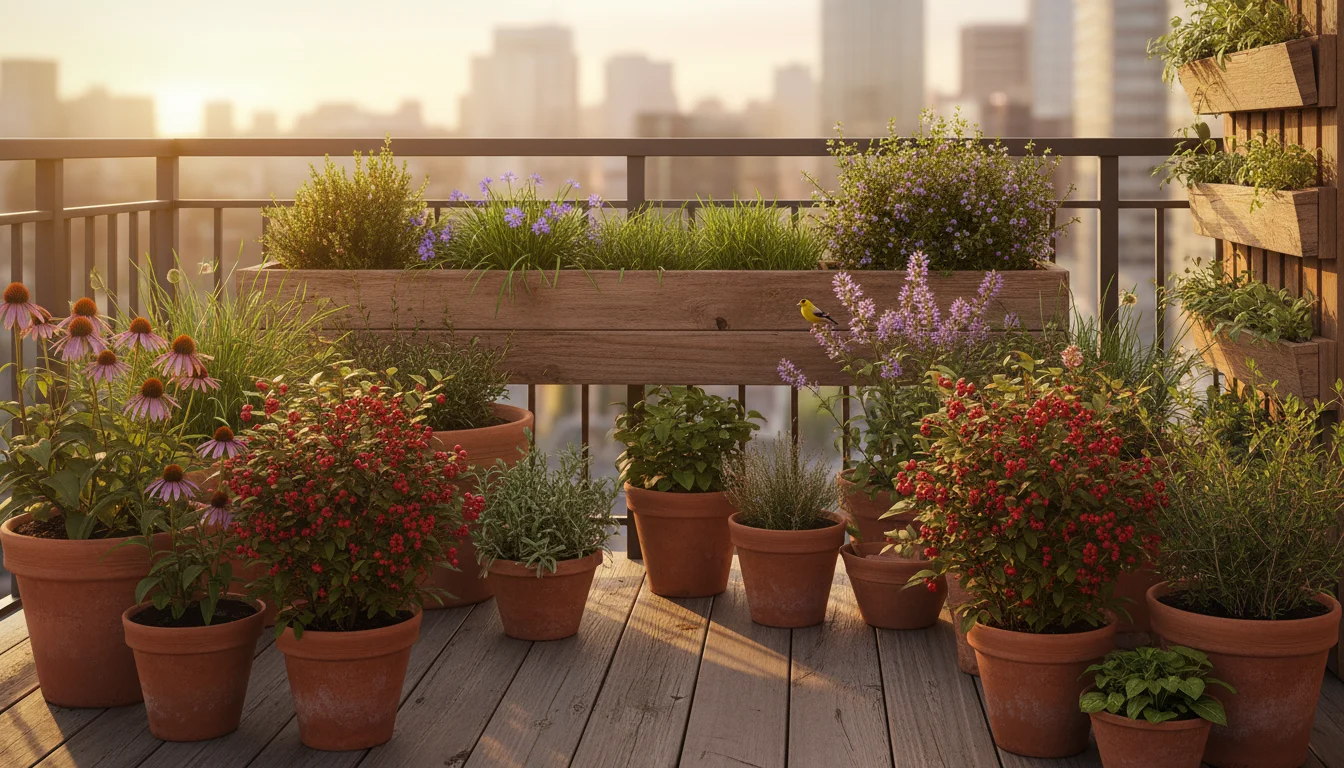
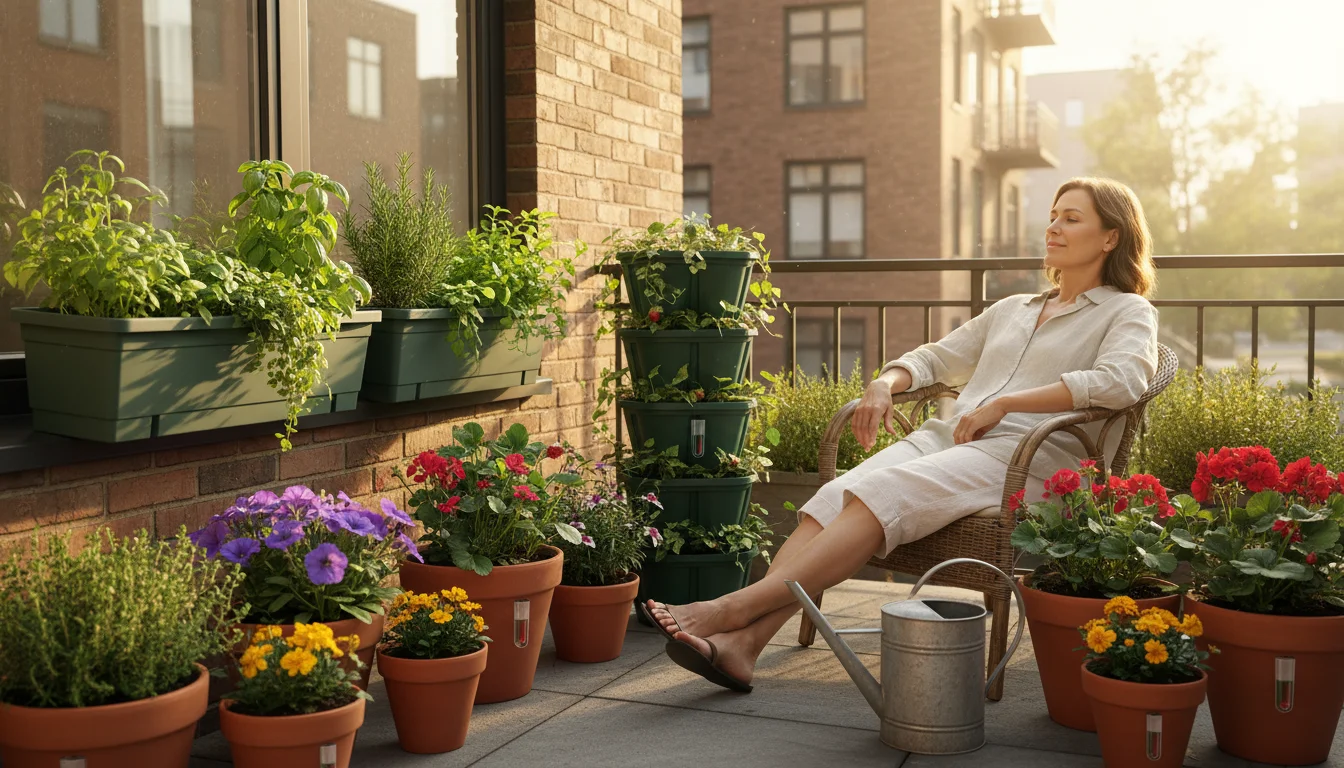
Establishing a freeze-proof water station is a significant step toward creating a truly wildlife friendly garden on your balcony. Your commitment to providing safe water for birds in freezing weather already makes a big impact. You can expand your efforts to offer a complete ecosystem of resources, transforming your small space into a vibrant haven for biodiversity, all while enjoying captivating balcony bird watching.
- Native Plants in Pots: Incorporate native plants that provide natural food sources (berries, seeds) and shelter. For a balcony, choose compact native shrubs or perennials that thrive in containers. These plants often support local insect populations, which in turn are a vital food source for birds, especially during nesting season. For example, a small pot of low-growing juniper offers excellent winter shelter, and its berries are enjoyed by some bird species.
- Strategic Feeders: While this article focuses on water, bird feeders complement your water station. Offer a variety of foods: black oil sunflower seeds attract many species, suet cakes provide essential fats in winter, and nyjer seed draws finches. Place feeders at a safe distance from your water source to prevent contamination.
- Provide Shelter: Dense evergreen container plants offer excellent roosting and nesting spots. A small cluster of potted evergreens or even a carefully placed brush pile (if space allows and is allowed by your building management) gives birds a safe refuge from harsh weather and predators. Birdhouses can also provide shelter, especially during cold nights.
- Reduce Pesticide Use: Embrace organic gardening practices. Avoiding chemical pesticides and herbicides on your balcony plants ensures that insects, which birds rely on for food, remain safe and abundant. This is fundamental to creating a truly healthy wildlife friendly garden.
- Embrace Natural Cycles: Leave spent seed heads on plants during winter to provide natural food sources. Resist the urge to “tidy up” too much; a little natural mess provides valuable resources for wildlife.
Each of these additions enhances the appeal of your balcony, creating a more complete habitat. You not only support local wildlife but also cultivate a dynamic, living extension of your home, bringing the wonders of nature closer to you.
Frequently Asked Questions
Can I use antifreeze in my bird bath to prevent freezing?
Absolutely not. Antifreeze is highly toxic to birds and all other wildlife. Ingesting even a small amount can be fatal. Never use antifreeze or any other chemical de-icer in a bird water station. Stick to physical methods of freeze prevention like insulation, thermal mass, and regular water changes.
How often should I clean and refill my winter bird bath?
You should clean and refill your winter bird bath daily. Fresh, clean water is crucial for bird health. Daily maintenance prevents the buildup of bacteria, fungi, and algae, which can spread diseases. In very cold weather, refilling with warm water helps melt any existing ice and keeps the water liquid for longer.
What if my water station still freezes solid despite all efforts?
If your water station consistently freezes solid, you likely need to enhance your freeze-proofing. Try adding more insulation beneath the basin, increasing the number of dark thermal rocks inside, or relocating the station to a spot with more direct winter sunlight or better wind protection. Ensure your container is dark-colored for maximum solar absorption. For persistent issues in extremely cold climates, a low-wattage, bird-safe electric water heater designed specifically for bird baths (if permitted on your balcony and you have an outdoor outlet) might be your last resort, but passive methods should be optimized first.
What is the ideal depth for a bird bath or water station?
The ideal water depth is shallow, generally no more than 1.5 to 2 inches (3.8 to 5 cm) at the deepest point. Birds need to feel secure while drinking and bathing. A graduated depth, with very shallow edges and a slightly deeper center, is perfect, allowing smaller birds to wade comfortably and larger birds to reach the water without submerging too much.
Are solar-powered water agitators or heaters effective for freeze-proofing?
Solar-powered water agitators (wigglers or bubblers) are quite effective at delaying freezing by preventing ice from forming a solid sheet on the surface. They rely on sunlight to operate, so their effectiveness diminishes on cloudy days or overnight. Solar-powered heaters are generally less powerful than electric models and may only slightly delay freezing in very cold conditions; most truly freeze-proof heating requires a consistent power source. For a simple, low-maintenance setup, focusing on insulation and thermal mass, supplemented by a solar wiggler, offers the best balance.
Your simple, freeze-proof water station on your balcony becomes an invaluable resource for birds surviving winter’s challenges. You actively support local wildlife and gain a unique connection to nature right outside your door. Enjoy your balcony bird watching!
For trustworthy gardening information, visit:
American Horticultural Society, National Garden Bureau and National Wildlife Federation — Garden for Wildlife. These organizations provide expert, research-based advice for gardeners at all levels.
Disclaimer: This article is for informational purposes only and is not a substitute for professional gardening advice. Always consult local extension services or horticulture experts for region-specific guidance.
Leave a Reply