Is My Tap Water Toxic? A Beginner’s Guide to Water Quality for Healthier Houseplants This Winter
Understanding the quality of the water you give your houseplants is crucial, especially as colder weather keeps your green companions indoors. Many gardeners assume that if water is safe for human consumption, it must be safe for plants. However, the truth is more nuanced. Your tap water, while potable for you, can contain elements that stress your indoor plants, leading to slowed growth, leaf discoloration, or even plant death over time. This guide empowers you with the knowledge to assess your tap water and implement simple, effective strategies to ensure your houseplants thrive through winter and beyond. You will learn how common tap water components impact plant health and discover actionable steps to provide the best possible hydration for your beloved greenery.
Overcoming common houseplant watering myths is the first step toward becoming a more confident and successful indoor gardener.
For those new to indoor gardening, mastering hydration is a core pillar of a complete indoor plant survival guide.
Understanding Your Tap Water: More Than Just H2O
Every time you turn on the faucet to give your houseplants a drink, you deliver more than just pure H2O. Tap water, especially municipal water, carries various dissolved substances, including minerals, salts, and chemicals added for public health and safety. The specific composition of your tap water depends entirely on its source and the treatment processes used by your local water utility. Understanding these components is your first step toward providing optimal `water for houseplants`.
Your local water quality report provides detailed information about your municipal water. You can usually find this report, often called a Consumer Confidence Report (CCR), on your water provider’s website. It lists levels of common contaminants, dissolved minerals, and purification additives. Familiarizing yourself with this report helps you identify potential issues for your plants, such as high chlorine levels or water hardness. For instance, if your report indicates elevated levels of calcium and magnesium, you are dealing with hard water, which directly impacts your `tap water for plants`.
Even if your tap water tastes fine to you, plants have different sensitivities. Their roots absorb these dissolved substances directly from the soil, and an imbalance can disrupt essential plant functions. For example, excess salts can build up in the soil, hindering the plant’s ability to absorb water, even when the soil appears moist. This phenomenon is known as “salt burn” or “reverse osmosis,” where the higher salt concentration outside the plant roots draws water away from them. This highlights why good `houseplant watering tips` extend beyond just the frequency and volume of water you provide. The quality of that water profoundly affects plant vitality.
The Common Culprits: Chlorine, Chloramine, and Fluoride
Municipal water treatment often involves adding chemicals to make the water safe for human consumption. While these chemicals safeguard public health, they can become problematic for your sensitive houseplants. The two most common additives causing concern are chlorine and chloramine, along with fluoride. Knowing how each affects your plants helps you mitigate their impact.
Chlorine: Chlorine is a potent disinfectant that kills bacteria and viruses in water. It is volatile, meaning it dissipates into the air over time. For plants, high concentrations of chlorine can damage root cells and inhibit enzyme activity, leading to symptoms like yellowing leaves or stunted growth. Young plants and sensitive species, like ferns and prayer plants, are particularly vulnerable. When discussing `is chlorinated water bad for indoor plants`, the answer often leans towards “yes, if not managed.”
Chloramine: Many water utilities have switched from chlorine to chloramine, a more stable disinfectant formed by combining chlorine with ammonia. The stability that makes chloramine effective for disinfection also makes it harder to remove from water. Unlike chlorine, which evaporates relatively quickly, chloramine persists longer. This means simply letting `tap water for plants` sit out for a few hours will not effectively remove chloramine. Plants exposed to high levels of chloramine can exhibit similar symptoms to chlorine damage, though it often takes longer for problems to manifest due to its slower dissipation.
Fluoride: Fluoride is often added to municipal water to promote dental health. While beneficial for human teeth, it is toxic to many plants, especially at higher concentrations. Certain plants, such as dracaenas, spider plants, and prayer plants, are particularly susceptible to fluoride toxicity. Symptoms typically appear as browning or yellowing leaf tips and margins, often resembling nutrient deficiencies or pest damage. Over time, chronic fluoride exposure can lead to significant foliar damage and overall plant decline. The impact of fluoride emphasizes the importance of understanding all aspects of your `water for houseplants`.
The presence and levels of these chemicals directly influence your watering strategy. Ignoring them can lead to chronic plant stress, making your plants more susceptible to pests and diseases, and ultimately undermining your efforts to keep them healthy.
Decoding Hard Water: Minerals and Plant Health
Beyond disinfectants, the mineral content of your `tap water for plants` significantly impacts their health. Hard water, characterized by high concentrations of dissolved minerals like calcium and magnesium, is a common issue for many gardeners. While these minerals are essential plant nutrients in small amounts, excess levels can cause a range of problems.
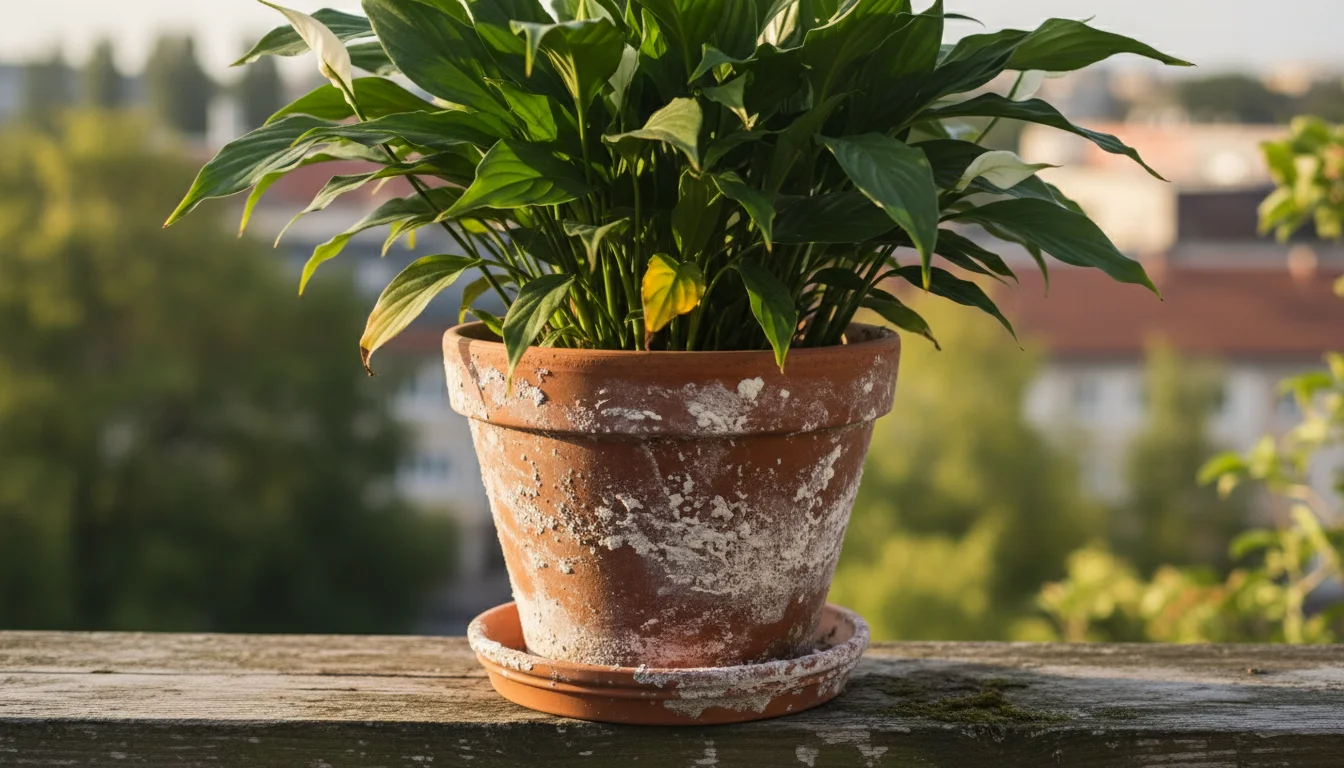
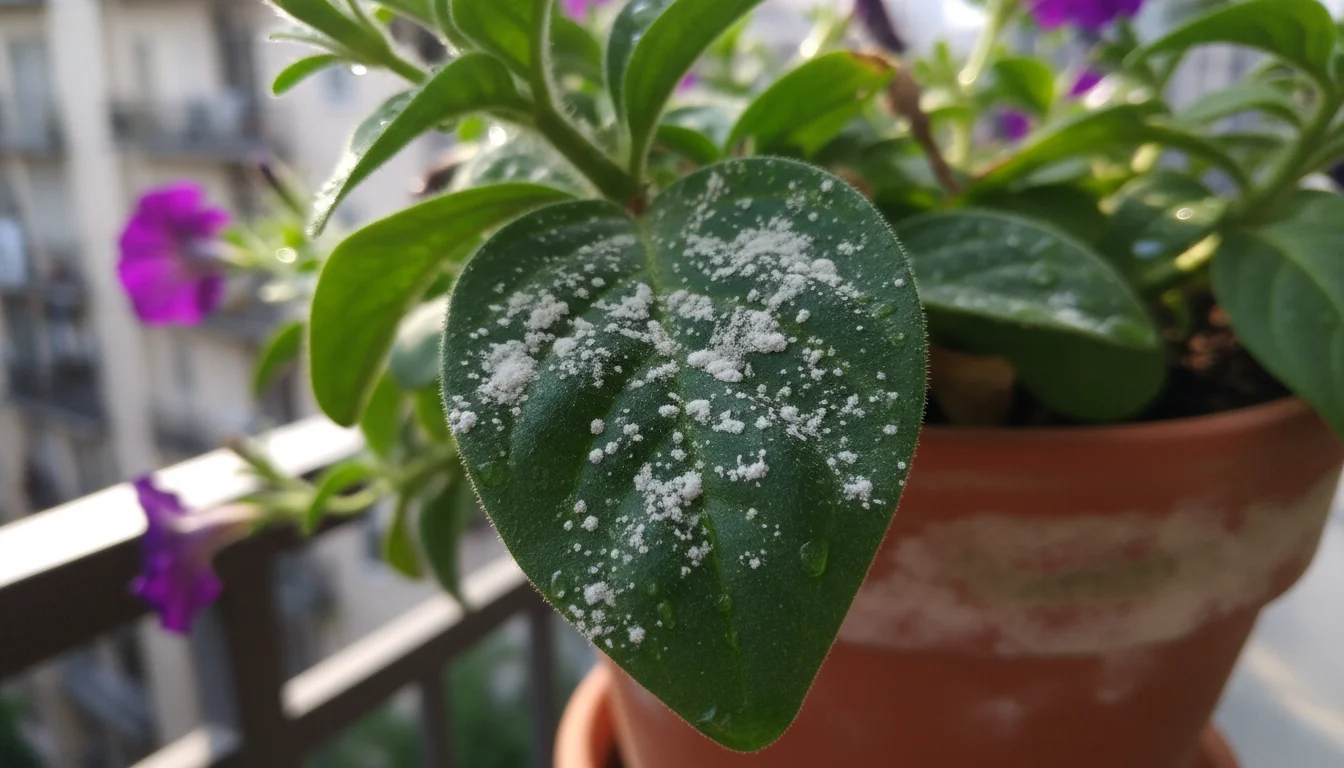
You recognize hard water by familiar signs: stubborn white residue on faucets, showerheads, and especially on your plant pot rims and saucers. This residue is a visible indicator of mineral salts accumulating. Over time, these minerals build up in the soil. As water evaporates from the soil surface, it leaves mineral deposits behind, increasing the soil’s salinity.
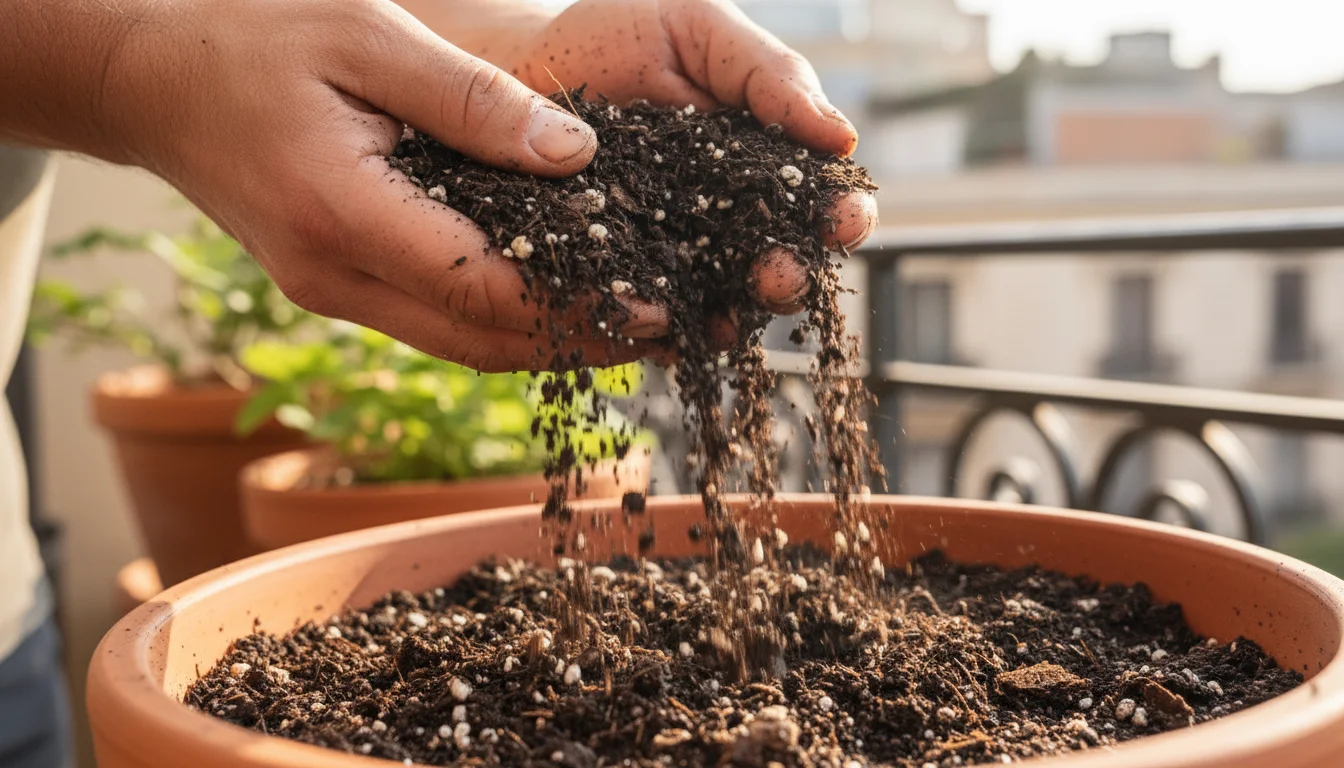
Impact on Soil: Mineral buildup makes the soil less permeable, hindering proper drainage. This means water may not penetrate evenly, leading to dry pockets while other areas remain soggy. The accumulation of salts can also alter the soil’s pH, pushing it towards alkaline levels. Most houseplants prefer slightly acidic to neutral soil, so an overly alkaline environment locks up essential micronutrients, making them unavailable for plant uptake, even if they are present in the soil. This explains why your plant might show signs of nutrient deficiency despite regular fertilization.
Impact on Plants: High mineral content directly affects plant physiology. Roots struggle to absorb water and nutrients when surrounded by a concentrated salt solution. This is because water moves from areas of lower salt concentration to higher salt concentration. If the soil solution is too salty, water actually gets drawn out of the plant roots, leading to dehydration and what gardeners often misinterpret as underwatering. Symptoms include:
- White crust on soil surface or pot rims: A clear visual cue of mineral accumulation.
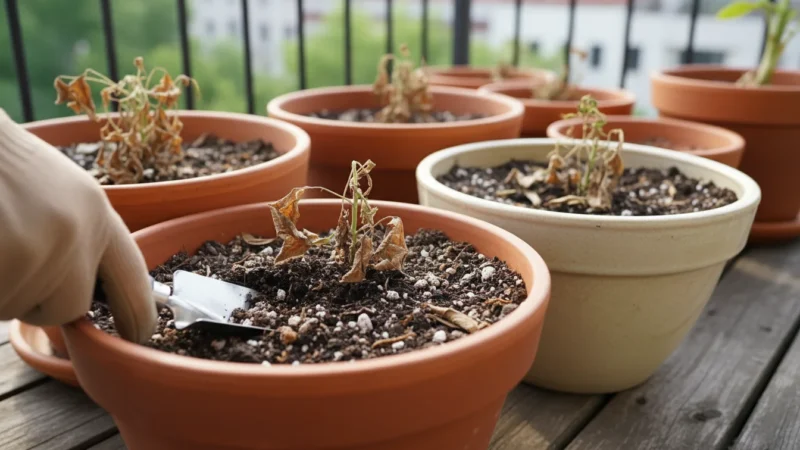
- Yellowing or browning leaf tips and margins: Often mistaken for fertilizer burn or lack of humidity, but can indicate salt stress.
- Stunted growth: The plant expends energy fighting environmental stress rather than growing.
- Wilting, even in moist soil: The plant cannot absorb water effectively due to osmotic imbalance.
- Overall lack of vigor: Your plant just does not look healthy.
The long-term effects of hard water necessitate proactive strategies for `how to fix hard water for houseplants`. Ignoring these signs ensures your plants remain in a state of chronic stress, reducing their lifespan and vibrancy.
Signs Your Plants Are Struggling: Spotting Water Quality Issues
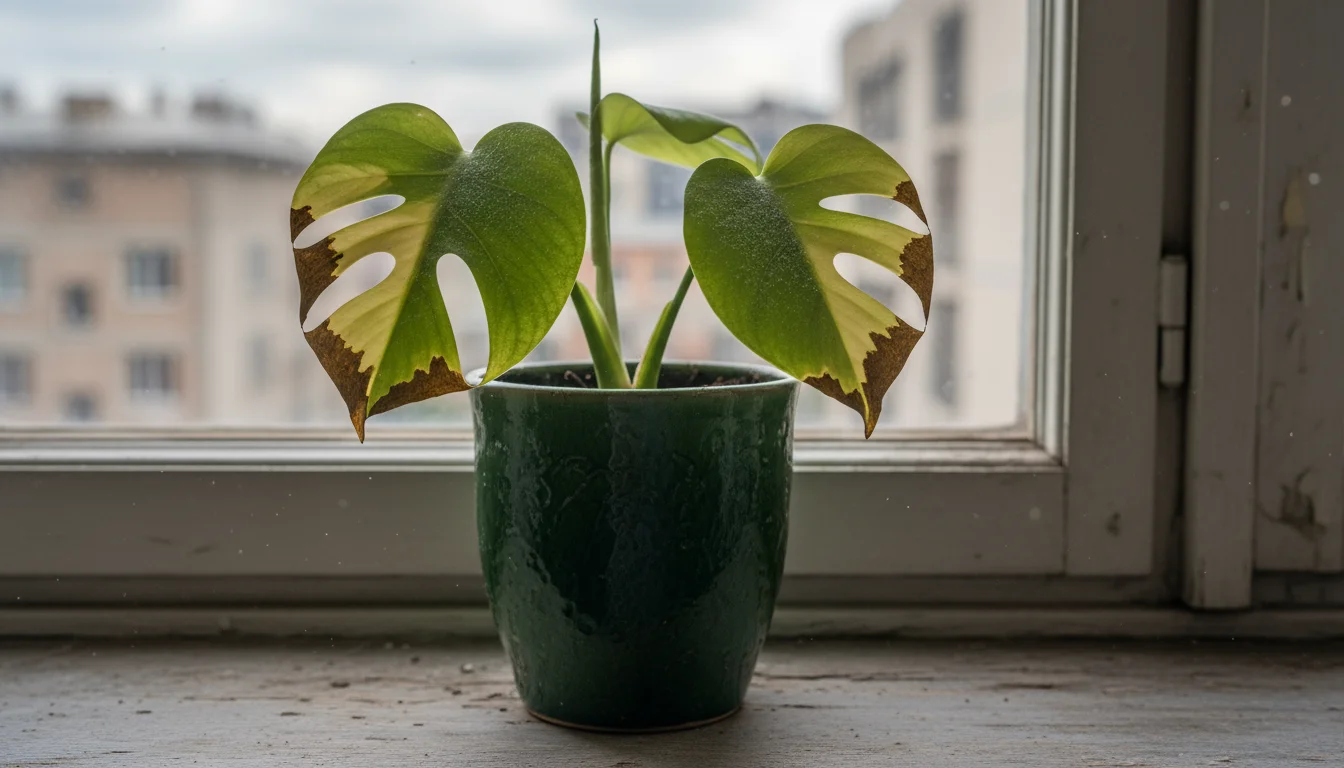
Your houseplants communicate their needs through visual cues. Learning to interpret these signals helps you diagnose problems related to poor water quality. Observing these signs early allows you to intervene before significant damage occurs. Here are common indicators that your `water for houseplants` might be problematic:
Remember that water temperature also matters; following the ice cube watering myth can shock tropical roots just as much as poor water quality.
- Crispy, Brown Leaf Tips and Margins: This is one of the most common and frustrating symptoms. While low humidity can cause similar issues, persistent browning or yellowing along the edges of leaves, especially on fluoride-sensitive plants like Dracaenas and Spider Plants, often points to an accumulation of salts, chlorine, or fluoride. The damage concentrates at the leaf margins where water evaporates and leaves behind dissolved substances.
- White Crust on the Soil Surface or Pot Rims: A clear tell-tale sign of mineral buildup from hard water. As water evaporates, it leaves calcium, magnesium, and other salts behind. This crust indicates the soil itself is likely accumulating these minerals, altering its pH and hindering nutrient uptake.
- Stunted Growth or Lack of Vigor: If your plant simply is not growing, or new growth appears weak and discolored, poor water quality might be a factor. When roots struggle with excess salts or chemicals, the entire plant system slows down. It diverts energy to mitigating stress rather than healthy growth.
- Unusual Leaf Dropping: While some leaf drop is natural, excessive or sudden shedding can signal stress. If older leaves yellow and drop, especially when other conditions like light and nutrients seem fine, consider your water quality.
- Dull, Lifeless Foliage: Healthy plants display vibrant, glossy leaves. If your plant’s foliage appears dull, faded, or lacking its usual luster, it could be a subtle sign of chronic stress from inadequate water quality.
- Wilting, Even When Soil Is Moist: This counterintuitive symptom frequently stumps new gardeners. If the soil feels damp but your plant still wilts, it might suffer from salt burn. The high concentration of salts in the soil prevents roots from absorbing water effectively, causing dehydration despite adequate moisture.
- Slow Drainage or Water Pooling: Over time, mineral buildup can compact the soil, making it less porous. This leads to water sitting on the surface for extended periods after watering, indicating poor drainage and potential root problems.
- Unpleasant Odor from Soil: While not always linked directly to tap water quality, if you notice a sulfurous or rotten egg smell, it could indicate anaerobic conditions from excessive mineral buildup and poor drainage, fostering undesirable microbial growth.
By diligently observing your plants for these symptoms, you gain valuable insights into their health. Recognizing these issues early allows you to adjust your `houseplant watering tips` and practices, preventing further decline and promoting a thriving indoor garden.
Simple Solutions for Better Houseplant Water
You do not need a complex filtration system to improve `water for houseplants`. Several practical, easy-to-implement strategies exist to address common tap water issues. Incorporating these into your `houseplant watering tips` routine makes a significant difference.
-
Let Tap Water Sit Out: The Chlorine Solution.
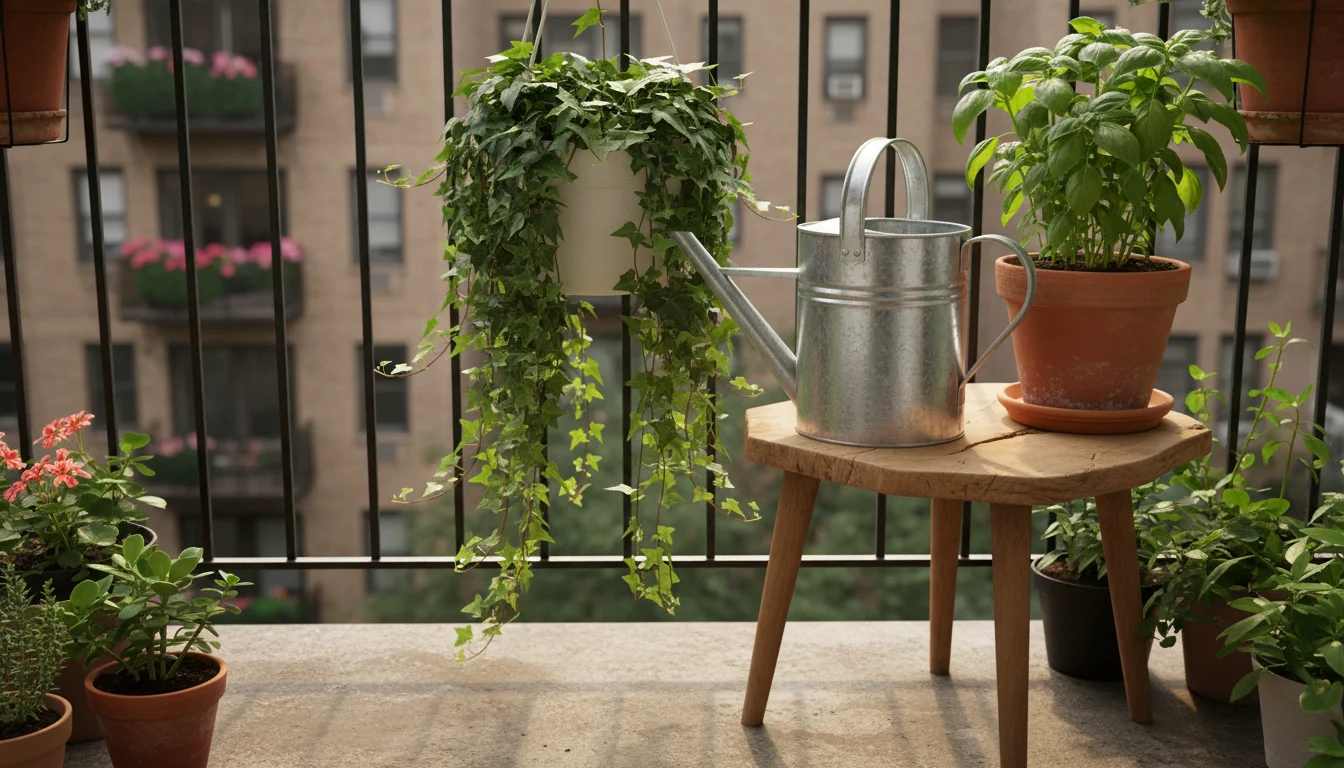
This is arguably the simplest and most effective method for removing chlorine. Chlorine is a gas, and it evaporates from water relatively quickly. Fill an open container, like a watering can or a bucket, with tap water and let it sit uncovered for at least 24 hours. Some experts suggest up to 48 hours for complete dissipation. This allows the chlorine to escape into the atmosphere, providing your plants with dechlorinated water. Remember, this method is only effective for chlorine, not chloramine. For `should I let tap water sit before watering plants` in cases of chloramine, you need other solutions.
-
Utilize a Water Filter.
If your municipal water contains chloramine or high levels of minerals (hard water), a simple Brita-style pitcher filter or a faucet-mounted filter can significantly improve `tap water for plants`. These filters typically use activated carbon, which effectively removes both chlorine and chloramine. Some advanced filters also reduce heavy metals and some dissolved solids, helping with minor hard water issues. While not as thorough as a reverse osmosis system, they offer a convenient and affordable upgrade for your plant’s hydration. Read the filter specifications to ensure it targets the contaminants relevant to your water.
-
Collect Rainwater: Nature’s Best.
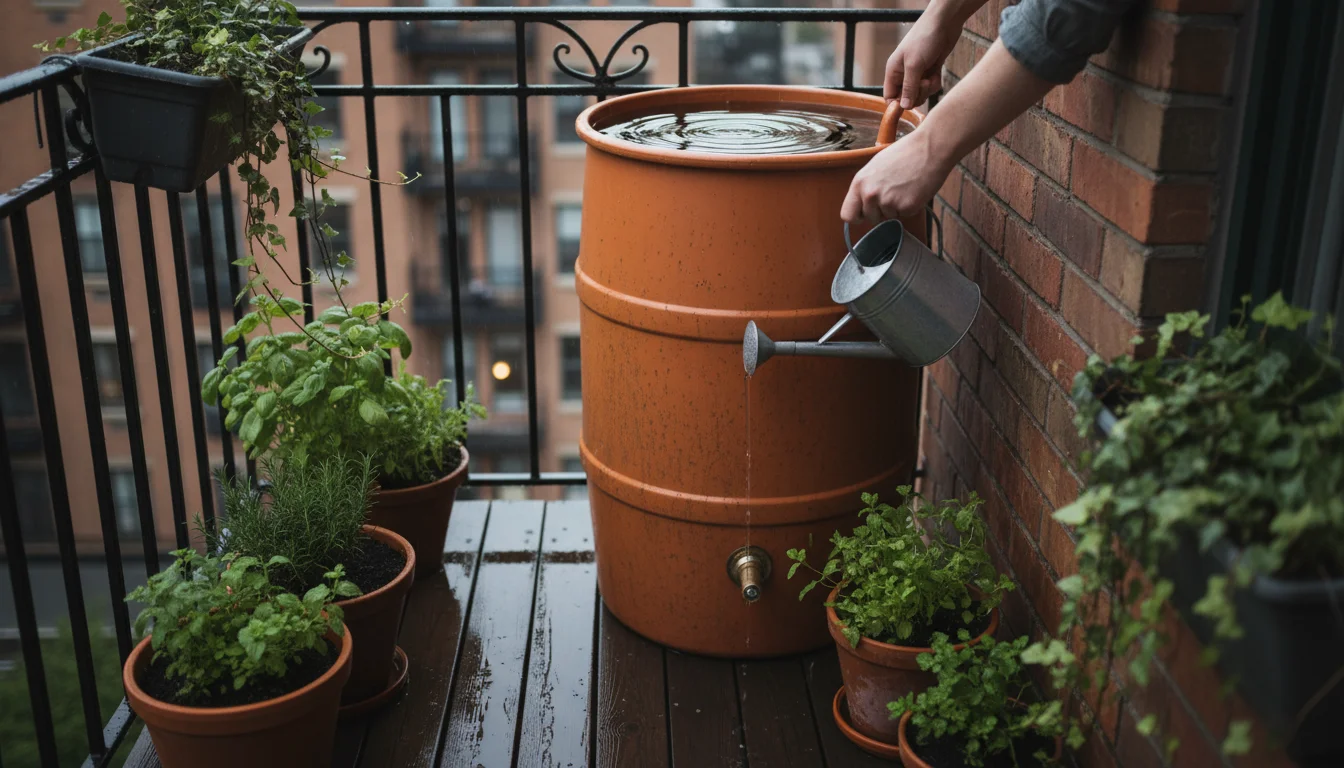
Rainwater is naturally soft, free of chlorine, chloramine, and fluoride, and contains trace amounts of beneficial nutrients. It is often considered the ideal `water for houseplants`. Setting up a simple rain barrel or even placing buckets outside during a rain shower provides an excellent, sustainable water source. Ensure you collect rainwater away from heavily trafficked roads or industrial areas to avoid airborne pollutants. Stored rainwater is best used within a few weeks to prevent algae growth, though a tightly sealed container helps prolong its freshness.
-
Consider Distilled or Reverse Osmosis (RO) Water.
For highly sensitive plants or if your tap water is exceptionally problematic, distilled or reverse osmosis water offers the purest option. Distillation involves boiling water and collecting the steam, leaving all impurities behind. RO systems filter water through a semi-permeable membrane, removing nearly all dissolved solids, including minerals, salts, and chemicals. You can purchase distilled water from grocery stores, or install a small RO system under your sink. Be aware that these waters are devoid of all minerals, so you must supplement with a balanced liquid fertilizer to provide essential nutrients for your plants. This is a targeted approach for `how to fix hard water for houseplants` and chemical issues.
-
Leaching the Soil (Flushing): Addressing Mineral Buildup.
If you already have white crusts or signs of mineral buildup, you can periodically flush your plant’s soil. Take your plant to a sink or bathtub and slowly pour a large volume of plain, good-quality water (dechlorinated, filtered, or rainwater) through the pot. Use a volume equivalent to at least two to three times the pot’s capacity. Allow the water to drain completely from the bottom. This process washes away accumulated salts and minerals, resetting the soil’s balance. Perform this every few months, especially if you notice signs of stress, as part of your `houseplant watering tips` regimen.
Implementing one or a combination of these methods empowers you to provide healthier `water for houseplants`, ensuring they receive the best possible care for vibrant growth.
Advanced Water Care: pH Testing and Adjustment
While basic methods cover many water quality issues, understanding and adjusting your water’s pH takes your `houseplant watering tips` to an advanced level. pH measures the acidity or alkalinity of a substance, on a scale from 0 to 14. A pH of 7 is neutral. Values below 7 are acidic, and values above 7 are alkaline (basic). Most houseplants thrive in slightly acidic to neutral soil, typically a pH range of 5.5 to 7.0, depending on the species.
Why pH Matters: The pH of your water directly influences the pH of your soil over time. More importantly, it affects nutrient availability. When soil pH strays too far from the ideal range, certain essential nutrients become “locked up,” meaning plants cannot absorb them, even if they are present in the soil. For example, in highly alkaline conditions (high pH), micronutrients like iron, manganese, and zinc become less available. In overly acidic conditions (low pH), macronutrients like phosphorus can be tied up. This leads to nutrient deficiencies, manifesting as yellowing leaves, stunted growth, or other stress symptoms. This is a critical aspect when considering `tap water for plants`.
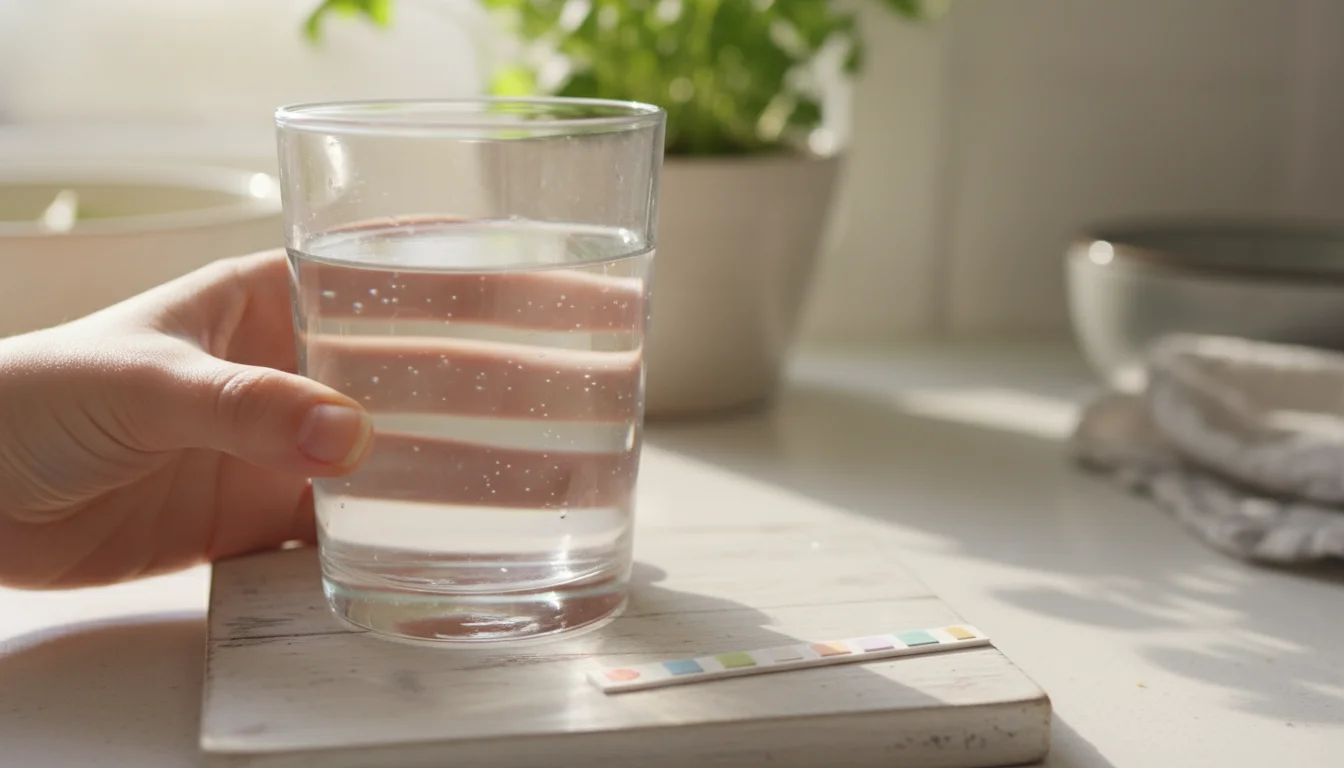
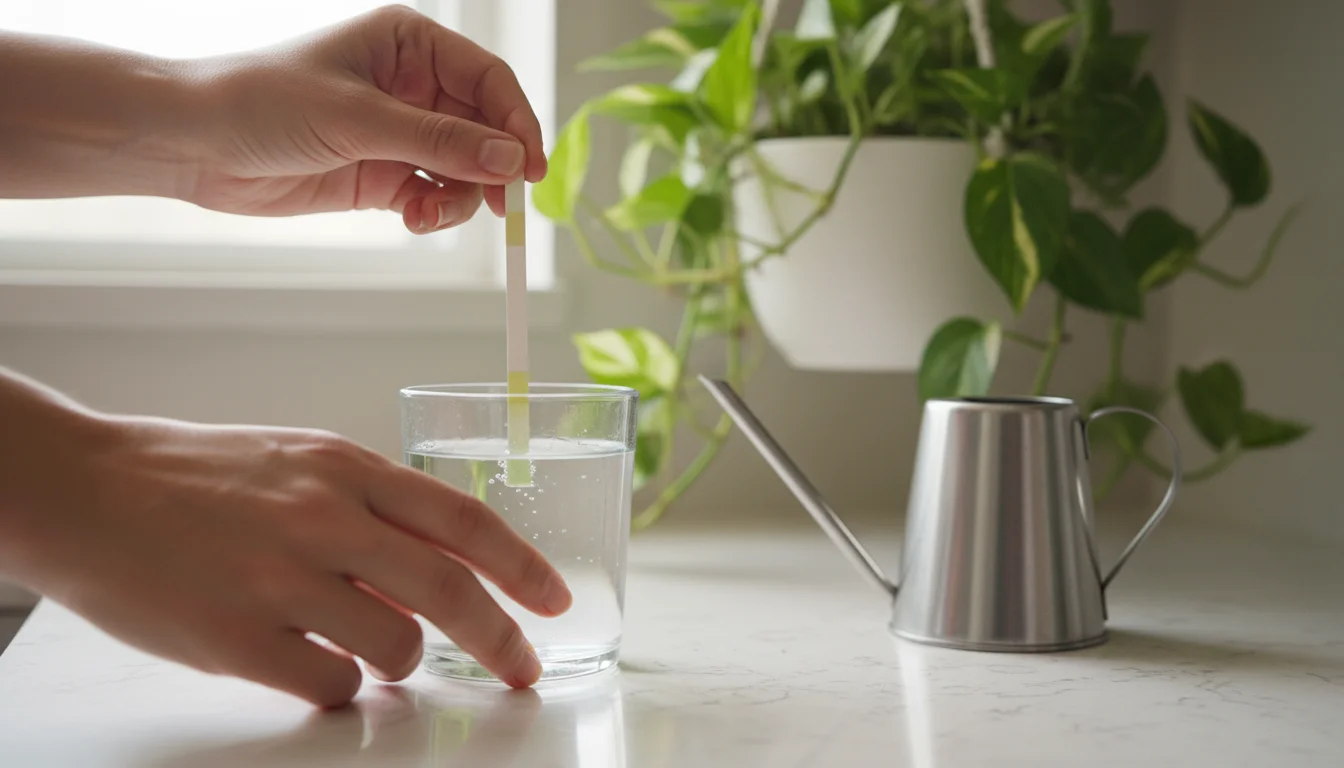
- pH Test Strips: Inexpensive and widely available at garden centers or online. Dip a strip into a water sample and compare the color change to a chart.
- Liquid pH Test Kits: Similar to aquarium test kits, these involve adding a few drops of a reagent to a water sample and observing the color change.
- Digital pH Meters: Offer the most accurate readings. Calibrate these devices regularly for reliable results.
Record your findings. If your tap water consistently falls outside the ideal range for your plants (typically 6.0-7.0), you may need to adjust it.
- Lowering pH (Making water more acidic):
- Lemon Juice or Vinegar: For small quantities of water, a few drops of lemon juice or white vinegar can effectively lower pH. Add sparingly, testing as you go. For example, a single teaspoon of white vinegar per gallon of water often lowers pH by about 1.0. This is a simple `how to fix hard water for houseplants` method, as hard water often has high pH.
- Sphagnum Peat Moss: Soaking a bag of sphagnum peat moss in your water for 24-48 hours releases humic acids, naturally lowering pH.
- Acidic Fertilizers: Some specialized fertilizers are formulated to be acidic and help lower soil and water pH over time.
- Raising pH (Making water more alkaline):
- This is less common for houseplants, as most prefer slightly acidic conditions. If your water is unusually acidic (e.g., collected rainwater from an industrial area), you could add a tiny pinch of baking soda (sodium bicarbonate) or horticultural lime. However, use extreme caution, as too much significantly raises pH and sodium levels, which are harmful.
Always test the pH after making adjustments to ensure you reach the desired range. Consistency is key. Regularly monitoring and adjusting your water pH ensures optimal nutrient uptake, contributing significantly to the health and vitality of your `water for houseplants` and their overall well-being.
Winter Watering Wisdom: Special Considerations for the Colder Months
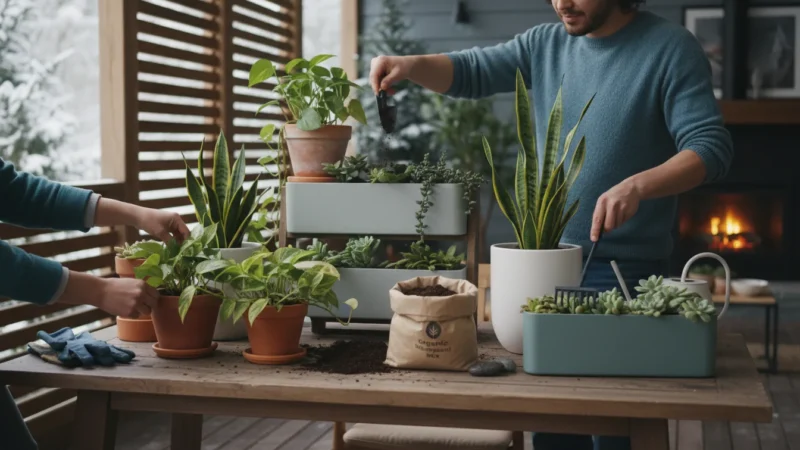
Winter presents unique challenges for houseplants. Reduced light, lower humidity, and often cooler indoor temperatures mean your `houseplant watering tips` must adapt. The impact of your tap water quality becomes even more pronounced during these months, making careful consideration essential for healthier houseplants.
Reduced Plant Activity: During winter, most houseplants enter a period of dormancy or significantly slowed growth. They require less water overall. Overwatering is the number one killer of houseplants, and it is particularly prevalent in winter when gardeners continue their summer watering routines. Ensure the top inch or two of soil dries out completely before watering again. For some plants, allow the soil to dry even deeper. Always feel the soil before watering, lifting the pot to gauge its weight, and observing your plant’s leaves for signs of thirst, such as slight wilting or dullness.
Lower Indoor Humidity: Central heating systems dramatically reduce indoor humidity. While this does not directly affect the chemical composition of your `tap water for plants`, it impacts how quickly your plants transpire (lose water vapor from leaves) and how quickly the soil dries. Plants in low humidity environments are more susceptible to leaf tip burn, which can be exacerbated by mineral salts in tap water. Misting or using pebble trays helps increase ambient humidity, but focusing on water quality remains paramount to prevent further stress.
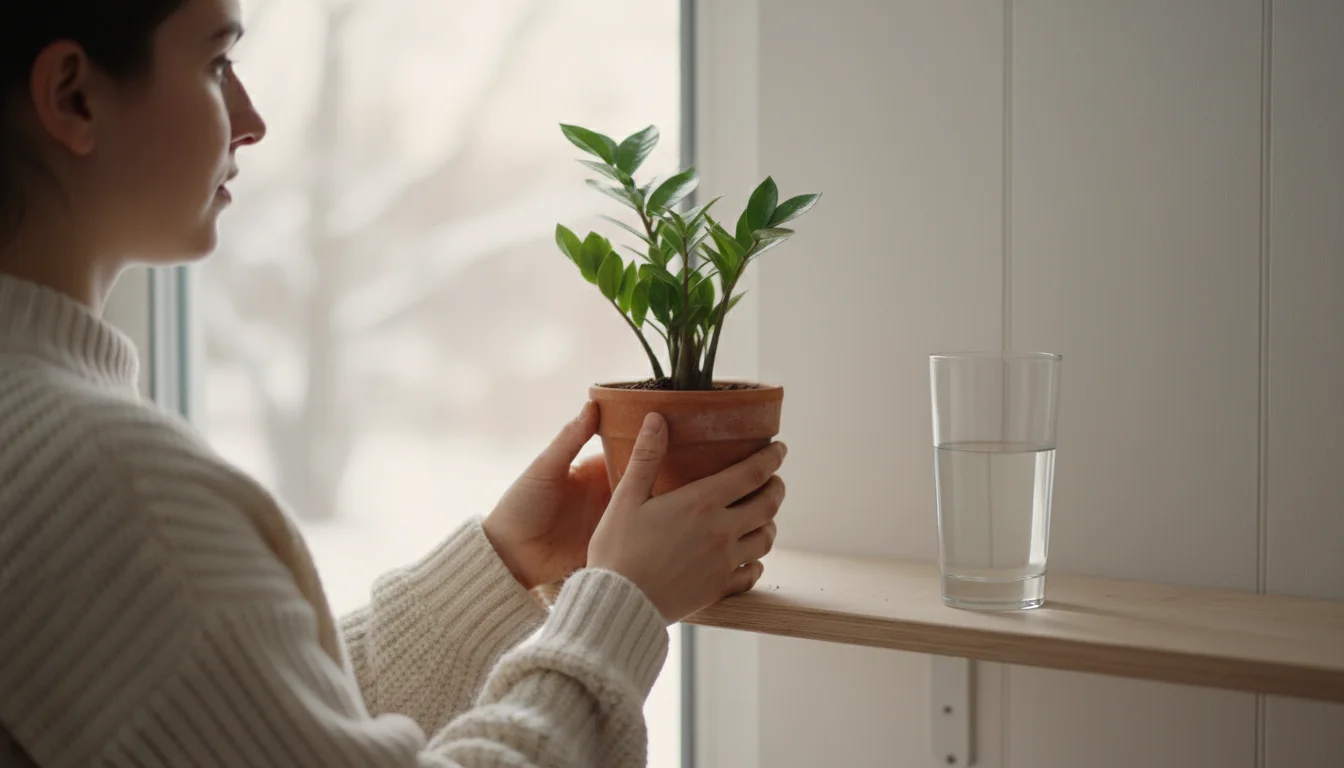
Water Temperature: Cold water shocks plant roots, especially tropical varieties. Imagine drinking ice water on a freezing day—it is jarring. The same applies to your plants. Always use room-temperature water for houseplants during winter. Fill your watering can the night before, allowing the water to sit and warm up naturally while also giving chlorine time to dissipate. This simple step reduces stress on the root system, making it easier for the plant to absorb water and nutrients.
Flushing to Prevent Winter Salt Buildup: In winter, you might water less frequently, but when you do water, mineral buildup from hard water can still occur. Perform a thorough flushing (as described in “Simple Solutions”) every 1-2 months. This washes away accumulated salts that can become concentrated in the soil as water evaporates between longer watering intervals. This proactive approach helps `how to fix hard water for houseplants` issues before they become critical.
Monitoring for Toxicity Signs: With less light and cooler temperatures, plants are inherently more stressed in winter. This makes them more vulnerable to the effects of poor `water for houseplants`. Be extra vigilant for signs of chlorine, chloramine, or fluoride toxicity, or mineral buildup. Browning leaf tips, stunted growth, or a white crust on the soil are amplified symptoms during this period.
By adjusting your `houseplant watering tips` to winter conditions and prioritizing water quality, you help your plants conserve energy, prevent root rot, and minimize stress, ensuring they emerge healthy and vibrant in spring.
Beyond the Tap: Eco-Friendly Water Sources
Embracing eco-friendly practices extends beyond just the types of plants you choose; it also encompasses how you manage resources like water. For the environmentally conscious gardener, exploring alternatives to tap water offers sustainable and often superior options for your houseplants. These methods reduce your reliance on municipal systems and provide plants with water closer to what they would receive in their natural habitats.
- Simple Setup: Place clean buckets or large containers outdoors during a rain shower.
- Rain Barrels: For larger volumes and convenience, invest in a rain barrel connected to a downspout. Ensure the barrel has a screen to prevent debris and mosquitoes.
- Storage: Store collected rainwater in sealed containers in a cool, dark place to prevent algae growth. Use it within a few weeks for best results.
- Pure Source: This makes it an excellent, free source of `water for houseplants`.
- Caution: Ensure your dehumidifier collection tank is clean to avoid introducing bacteria or mold spores. Do not use water from a dehumidifier that has been used in a heavily polluted area or where chemicals have been used nearby, as it may absorb those airborne contaminants.
- Nutrient Boost: This “dirty” water contains beneficial nitrates, phosphates, and other trace elements from fish waste and decaying plant matter. These act as a gentle, natural fertilizer for your plants.
- Avoid: Do not use water from saltwater aquariums or tanks treated with medications, as these can harm your plants. Ensure the aquarium is a freshwater setup before using its water.
- Collection: Gather fresh, clean snow, avoiding areas contaminated by road salts or pollutants.
- Temperature: Allow it to reach room temperature before `houseplant watering tips` application to avoid shocking your plants.
By exploring these eco-friendly options, you not only provide superior `water for houseplants` but also reduce your environmental footprint, embracing a more sustainable approach to gardening. These practices align perfectly with the ethos of low-maintenance, small-space gardening, proving that healthy plants and a healthy planet go hand in hand.

Frequently Asked Questions
How long should I let tap water sit before watering plants?
You should let tap water sit for at least 24 hours to allow chlorine to dissipate. For optimal results, especially if your water has a strong chemical smell, 48 hours is even better. Remember, this method primarily removes chlorine; it does not remove chloramine or hard water minerals. This answers the question: `should I let tap water sit before watering plants` for chlorine issues.
Is chlorinated water bad for indoor plants?
Yes, chlorinated water can be detrimental to indoor plants, particularly sensitive species. Chlorine can damage plant cells, inhibit enzyme functions, and lead to symptoms like yellowing or browning leaf tips and stunted growth. While low levels might not cause immediate harm, chronic exposure to `chlorinated water` stresses plants.
What are the best houseplant watering tips for beginners?
For beginners, focus on consistency and observation. Always check the soil moisture before watering by sticking your finger an inch or two into the soil. Water thoroughly until it drains from the bottom of the pot, then discard any excess water in the saucer. Use room-temperature water. For `tap water for plants`, let it sit out for 24 hours to dechlorinate, or consider a simple filter if you suspect hard water or chloramine. Adjust watering frequency based on the season, reducing it in winter.
How do I fix hard water for houseplants?
To address hard water, consider several options. You can use filtered water (pitcher filters can help reduce minerals), collect and use rainwater, or opt for distilled or reverse osmosis (RO) water for very sensitive plants. Regularly flushing your plant’s soil with purified water helps wash away accumulated mineral salts. Periodically repotting with fresh soil also helps remove mineral buildup. These methods effectively provide `how to fix hard water for houseplants` issues.
Can I use softened water for my houseplants?
It is generally not recommended to use water from a salt-based water softener for houseplants. While softeners remove calcium and magnesium, they replace these minerals with sodium. High levels of sodium are toxic to most plants, accumulating in the soil and causing salt burn, leading to browning leaf tips and stunted growth. If you have a water softener, bypass it to get untreated `tap water for plants` for your houseplants, then follow the advice for dealing with hard water or chemical additives.
For trustworthy gardening information, visit:
Denver Botanic Gardens, San Diego Botanic Garden, U.S. National Arboretum, American Horticultural Society and National Garden Bureau. These organizations provide expert, research-based advice for gardeners at all levels.
Disclaimer: This article is for informational purposes only and is not a substitute for professional gardening advice. Always consult local extension services or horticulture experts for region-specific guidance.

Leave a Reply