
Why Is My Succulent Stretching? A Beginner’s Guide to Diagnosing and Fixing Etiolation in Winter
You probably brought a succulent into your home because of its charming, compact form and reputation for being easy to care for. But as winter approaches, you might notice something unexpected: your once-tidy succulent starts to look a bit gangly. Its stem elongates, leaves spread out, and the plant appears to be reaching desperately for something. This phenomenon, known as etiolation, is a common cry for help from succulents, especially during the darker, colder months. Understanding why your succulent is stretching and, more importantly, how to reverse the damage and prevent it in the future, keeps your plants healthy and beautiful. As your gardening coach at SimpleGardenJoy.com, I am here to guide you through diagnosing this issue and providing practical, actionable steps to bring your succulent back to its best.
Etiolation primarily signals insufficient light, a prevalent problem for indoor succulents during winter. Unlike many houseplants that tolerate lower light conditions, succulents thrive on abundant, direct sunlight. When they do not receive enough, they put all their energy into stretching towards any available light source, resulting in a weakened, elongated, and often paler appearance. This stretching is not just an aesthetic concern; it also indicates a less healthy plant, more susceptible to pests and diseases. By addressing the root cause, typically a lack of adequate light, you can ensure your succulents remain vibrant, robust, and true to their naturally compact shapes. Let’s explore the visual cues of an etiolated succulent, understand the underlying reasons, and implement effective strategies to restore your plant’s health.
Understanding Etiolation: Why Your Succulent Stretches
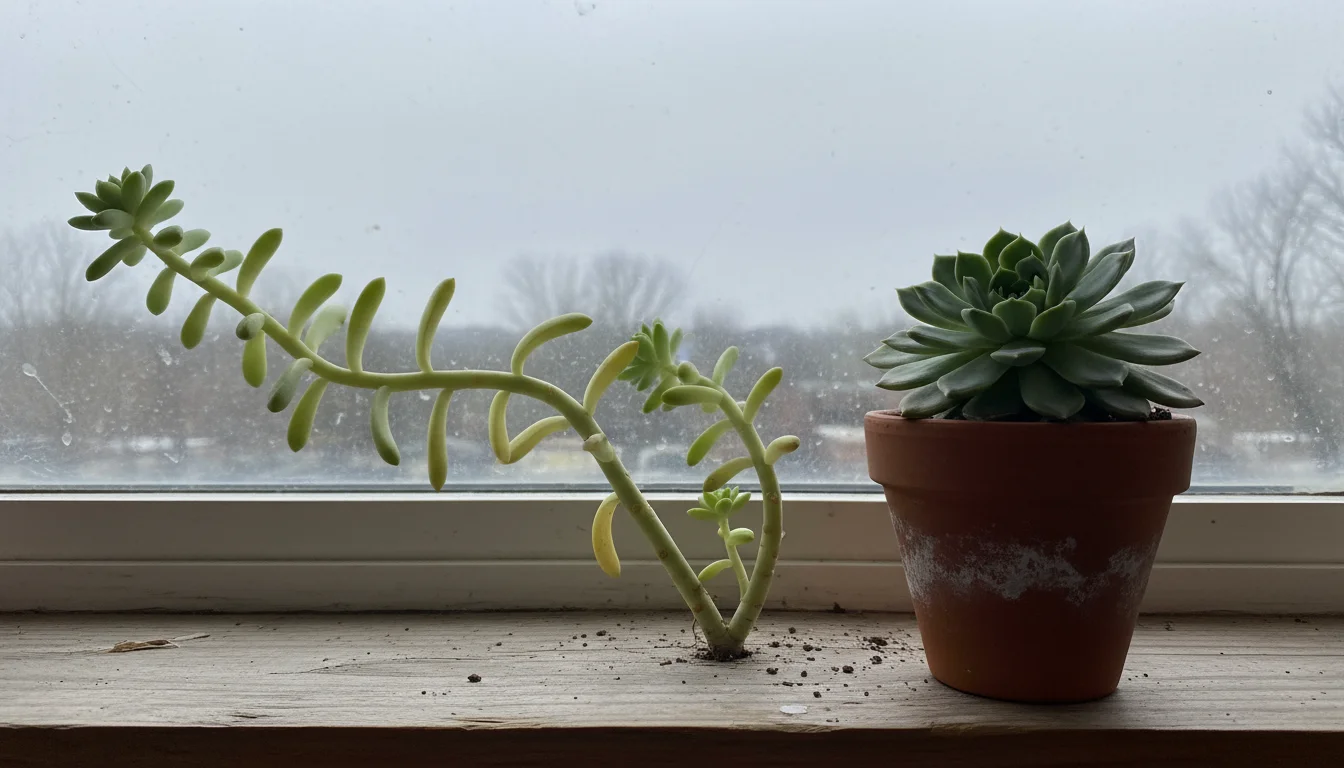
Etiolation is a fascinating biological response plants exhibit when they do not receive enough light. For succulents, which are native to bright, arid environments, it is a desperate attempt to find more sunshine. Picture a succulent’s natural habitat: vast, open spaces bathed in intense, unfiltered sunlight for most of the day. Their compact growth, thick leaves, and often vibrant colors are adaptations to conserve water and maximize light absorption in such conditions. When you bring these plants indoors, especially during the shorter, darker days of winter, they face a dramatically different environment.
So, what exactly happens during etiolation? Succulents, like all plants, produce hormones called auxins. In adequate light, these auxins regulate growth evenly, resulting in a stocky, symmetrical plant. When light is scarce, auxins concentrate on the shaded side of the stem, promoting rapid cell elongation in an effort to stretch the plant toward the perceived light source. This leads to a rapid, unnatural vertical growth, often sacrificing leaf development. The plant essentially sacrifices its compact, water-storing structure for height, hoping to break through a canopy or reach a brighter spot.
The impact of etiolation extends beyond aesthetics. A stretched succulent is a weaker succulent. The elongated stem becomes fragile, making the plant prone to snapping or toppling over. The widely spaced leaves receive less light overall, reducing the plant’s ability to photosynthesize effectively. Photosynthesis is the process by which plants convert light energy into chemical energy, essentially their food source. Reduced photosynthesis means less energy for growth, root development, and defense against pests and diseases. Furthermore, the vibrant stress colors many succulents develop in strong light fade, replaced by a pale, often yellowish or sickly green hue, indicating a lack of the pigments that protect them from intense sun and contribute to their beauty.
Think of it this way: your succulent is trying to survive in what it perceives as a dimly lit forest, even if it is simply sitting on your windowsill during a cloudy winter. Understanding this fundamental process is your first step in becoming a more attentive and successful succulent caretaker. It is a critical insight into `why is my succulent growing tall and thin` and signals the need for intervention to restore its health.
Diagnosing Etiolation: Visual Cues of a Struggling Succulent
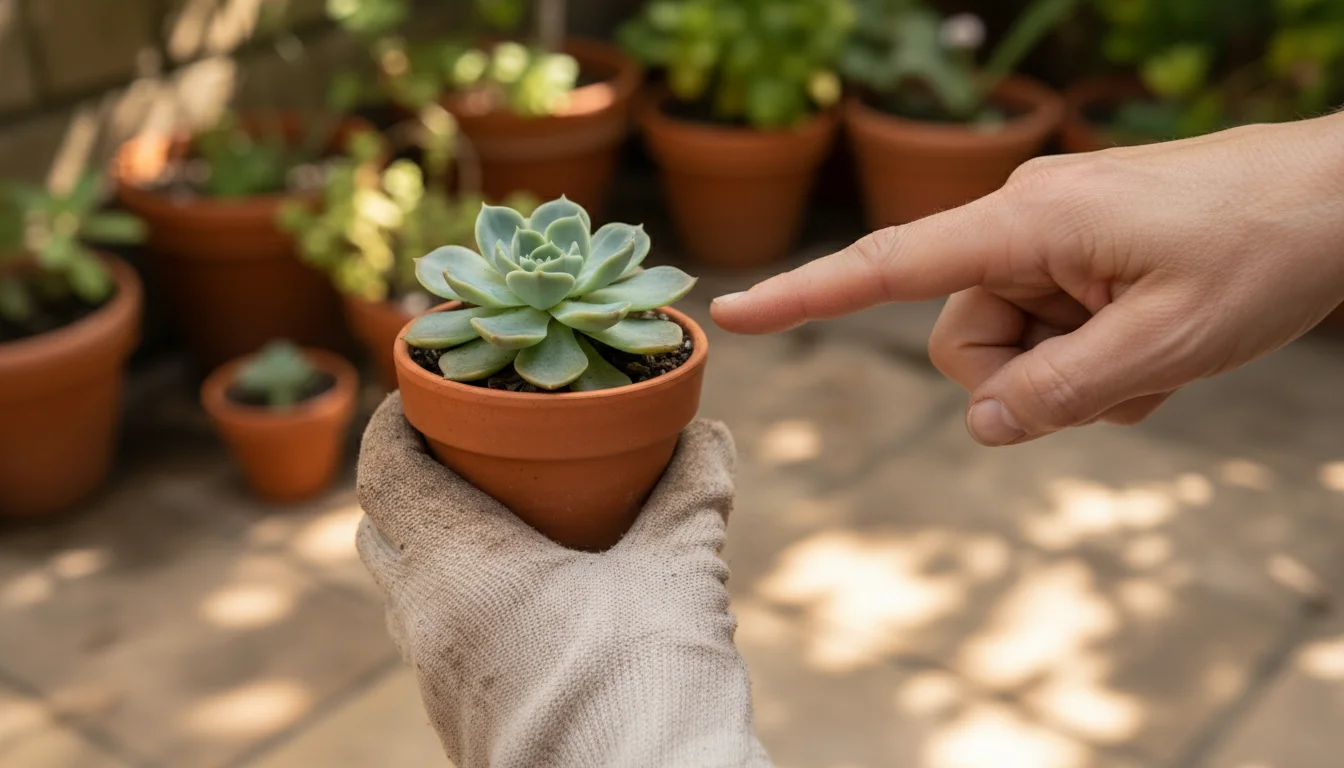
Spotting etiolation early allows you to take corrective action before the plant suffers significant damage. Often, beginners might mistake this stretching for normal growth, but once you know what to look for, the signs become unmistakable. Your succulent will communicate its distress through several clear visual indicators. Learning to read these signals is key to successful `winter succulent care` and maintaining healthy plants.
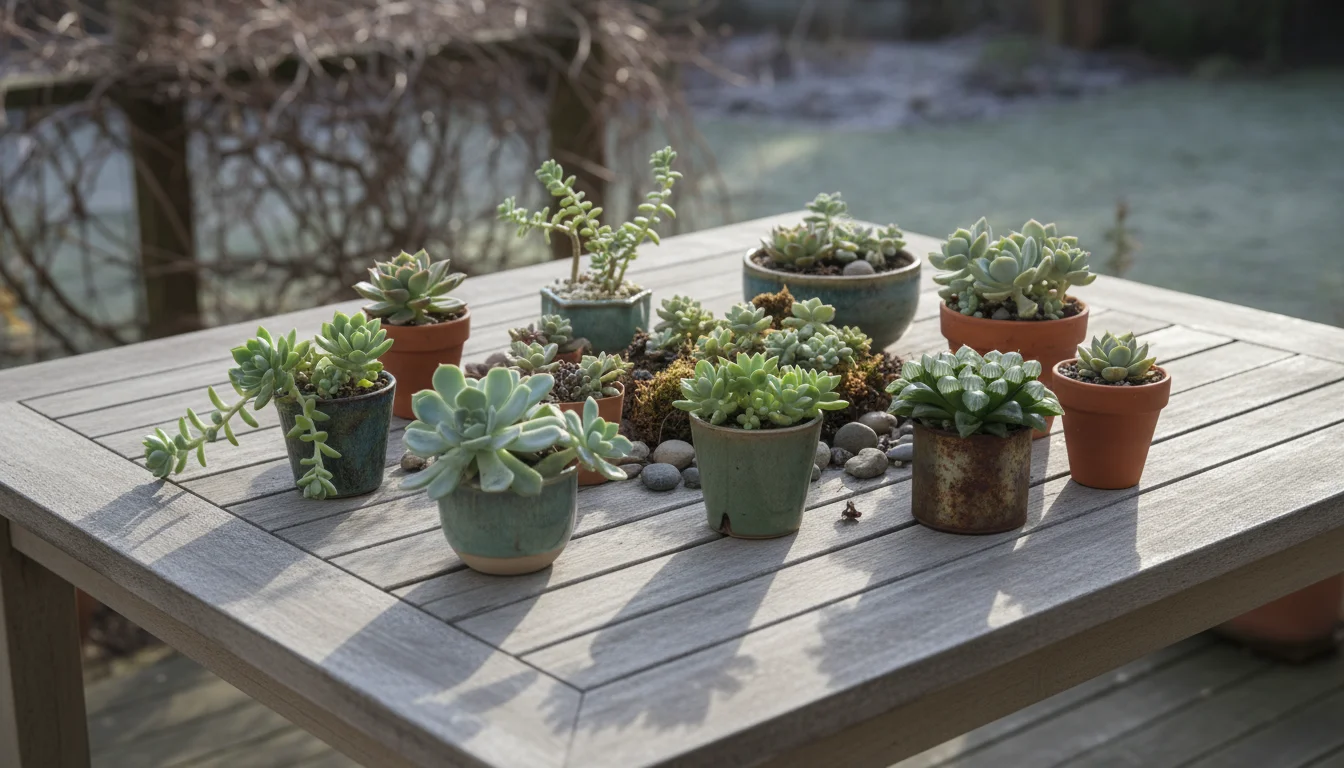
The most prominent sign of etiolation is the elongated stem. Instead of the tight, stacked rosettes you expect from many succulents, you will see noticeable gaps between the leaves as the stem stretches. These gaps reveal more of the stem than is typical for a healthy succulent. For instance, an Echeveria, which naturally forms a compact rosette with leaves overlapping, will begin to look like it has a bare “neck” between its lower and upper leaves. Each new set of leaves will appear further away from the previous set, creating a ladder-like effect.
Accompanying this stem elongation, the leaves themselves often change. They may appear thinner and flatter than usual, lacking the plump, succulent quality characteristic of a healthy plant. They also tend to point downwards or spread out more, rather than maintaining an upright or inward-curving posture. This outward growth is another desperate attempt to maximize exposure to any available light. Imagine a plant with its arms outstretched, trying to catch every ray of sun.
Another telling symptom is a change in leaf color. Many succulents display beautiful, vibrant hues, especially when exposed to bright light. These “stress colors” often include reds, pinks, purples, or deep oranges. An etiolated succulent, however, loses these pigments. Its leaves will appear significantly paler, often a sickly light green or yellow. The plant is essentially turning off its sun-protective coloring because it is not getting enough sun to need it. This pallor indicates reduced chlorophyll production due to insufficient light, impacting the plant’s overall vitality.
A simple comparison can highlight the issue. Place your stretching succulent next to a picture of a healthy, mature specimen of the same type. The difference in stem length, leaf spacing, and color will be immediately apparent. For example, a healthy Sedum ‘Burro’s Tail’ has plump, tightly packed leaves along its cascading stems. An etiolated ‘Burro’s Tail’ will have widely spaced, often flattened leaves with much longer sections of visible stem between them, making it look sparse and weak. Understanding these specific visual cues empowers you to accurately diagnose `etiolated succulents` and take swift action to correct their environment, ensuring they do not suffer further.
The Root Cause: Insufficient Light During Winter Months
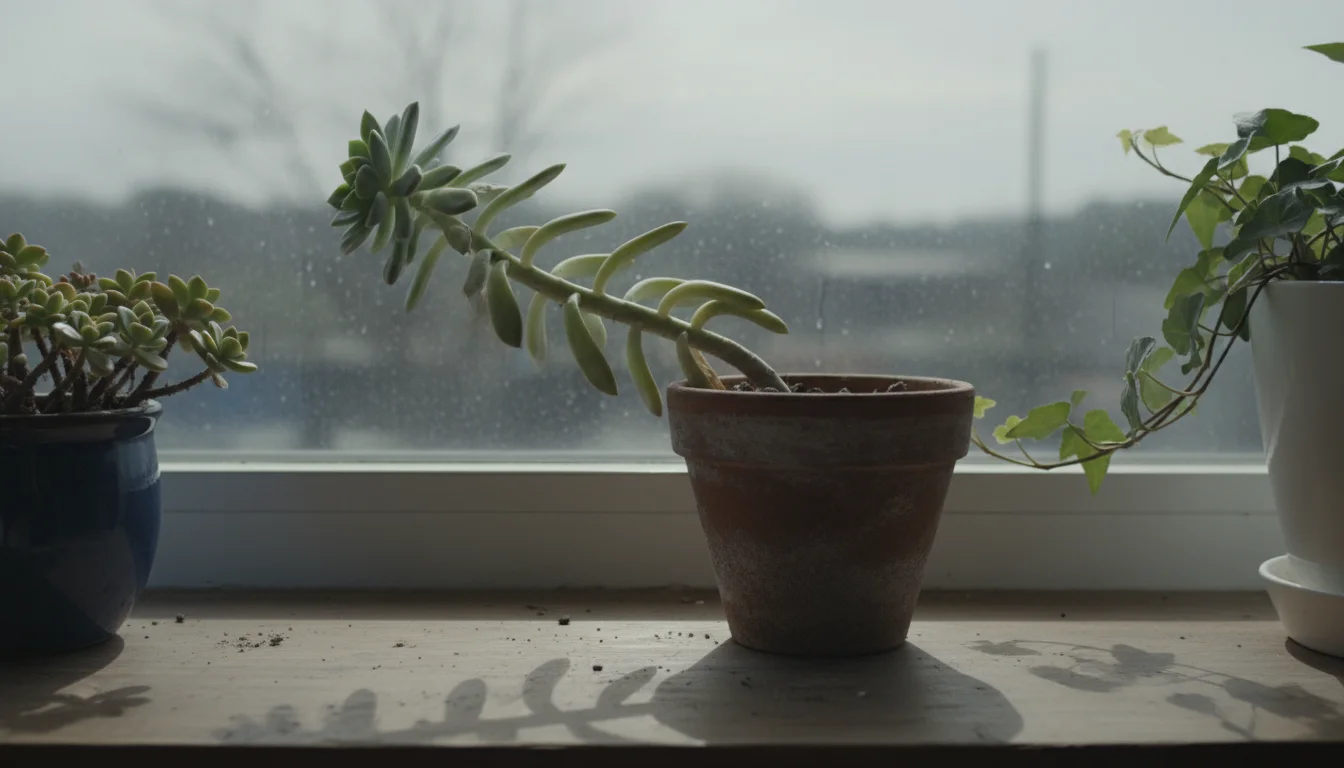
When you observe your succulent stretching, the primary culprit is almost always a lack of adequate light. This problem becomes particularly pronounced during winter, even for plants kept in seemingly bright indoor locations. Understanding the nuances of light availability and how it shifts in the colder months provides crucial insight into preventing etiolation.
Firstly, the intensity and duration of natural light significantly decrease in winter. Days shorten, meaning fewer hours of daylight overall. Additionally, the sun’s angle is lower, so even if the sun shines, its rays often enter your home at a less direct, less powerful angle. Clouds are also more frequent in many regions, further diminishing ambient light. Your sunniest south-facing window in summer might become a `low light plants` zone for succulents in winter, simply because the quality and quantity of light passing through it have plummeted.
Consider the succulent’s natural habitat. Most succulents originate from deserts, semi-deserts, or arid mountainous regions near the equator. In these environments, they receive 6 to 8 hours of direct, intense sunlight daily, sometimes even more. Their physiology is entirely geared towards this level of light. When moved indoors, window glass filters out a significant portion of the beneficial light spectrum, and anything blocking the window, even a sheer curtain, further reduces it. Each foot away from a window drastically reduces light intensity. For instance, light intensity decreases by roughly 50% for every foot you move a plant away from a window.
Your succulent needs bright, direct light. This means the kind of light that casts a sharp, distinct shadow when you hold your hand over the plant. If the shadow is faint or fuzzy, the light is probably insufficient for a succulent. East-facing windows provide morning sun, which is gentle and often not intense enough for prolonged periods. West-facing windows offer strong afternoon sun, but only for a few hours. North-facing windows typically receive indirect light, which is rarely sufficient for sun-loving succulents. South-facing windows generally offer the best light in the Northern Hemisphere, providing the longest duration of direct sun. However, even these can fall short in winter. This understanding is crucial for `winter succulent care` because it highlights why your plants might be struggling despite your best efforts to place them near a window.
Furthermore, plants use specific wavelengths of light for photosynthesis. Full-spectrum light, mimicking natural sunlight, is ideal. Standard incandescent bulbs or fluorescent lights designed for human vision do not provide the necessary spectrum or intensity for most succulents. This knowledge underpins why a dedicated `grow light for succulents` often becomes a necessary tool for preventing and reversing etiolation, especially when natural light cannot meet their high demands during the dormant winter period.
Immediate Action: How to Adjust Your Succulent’s Environment
Once you recognize the signs of etiolation, taking immediate steps to increase your succulent’s light exposure is critical. While a stretched stem cannot revert to its compact form, you can halt further stretching and encourage new, healthy growth. This initial intervention focuses on maximizing the natural light your plant receives without resorting to artificial means just yet.
Your first and most straightforward action is to move your `etiolated succulents` to the brightest possible location in your home. For most homes in the Northern Hemisphere, this means a south-facing window. Ensure no curtains, blinds, or other objects obstruct the window. Even a fine screen can filter out a surprising amount of light. If you have multiple south-facing windows, choose the one with the longest duration of direct sun exposure. Place your succulent as close to the window pane as safely possible, ideally within 6 to 12 inches. Remember, light intensity drops off dramatically with distance.
Next, consider the cleanliness of your windows. Dust and grime accumulate over time, creating a subtle but effective barrier against sunlight. Take a few minutes to clean your windows, both inside and out, especially those near your succulents. This simple act can significantly increase the amount of light reaching your plants, providing a measurable boost to their environment.
You can also experiment with reflective surfaces to amplify existing light. For smaller plants, lining the back or sides of a shelf with aluminum foil or a white poster board can bounce available light back onto the plant, essentially surrounding it with more light. This creates a miniature, brighter microclimate. While this is a temporary solution, it provides a quick, cost-effective way to give your succulents a light boost while you consider more permanent solutions. Positioning a mirror behind your plants can also achieve a similar reflective effect, directing more light to those areas that might otherwise remain in partial shadow.
If direct window placement is not enough, or if your home lacks consistently bright windows, consider a temporary outdoor move if your climate allows. On warmer, sunny winter days (above 40°F or 5°C), you can place your succulents outdoors in a sheltered spot that receives direct sun for several hours. Be mindful of sudden temperature drops or strong winds, and always bring them back inside before evening temperatures fall. This occasional sunbath can make a big difference, but it requires diligent monitoring to prevent cold damage. These immediate adjustments lay the groundwork for recovery, giving your succulent the best chance to halt its stretching and resume healthy, compact growth.
Boosting Light: Choosing and Using a Grow Light for Succulents
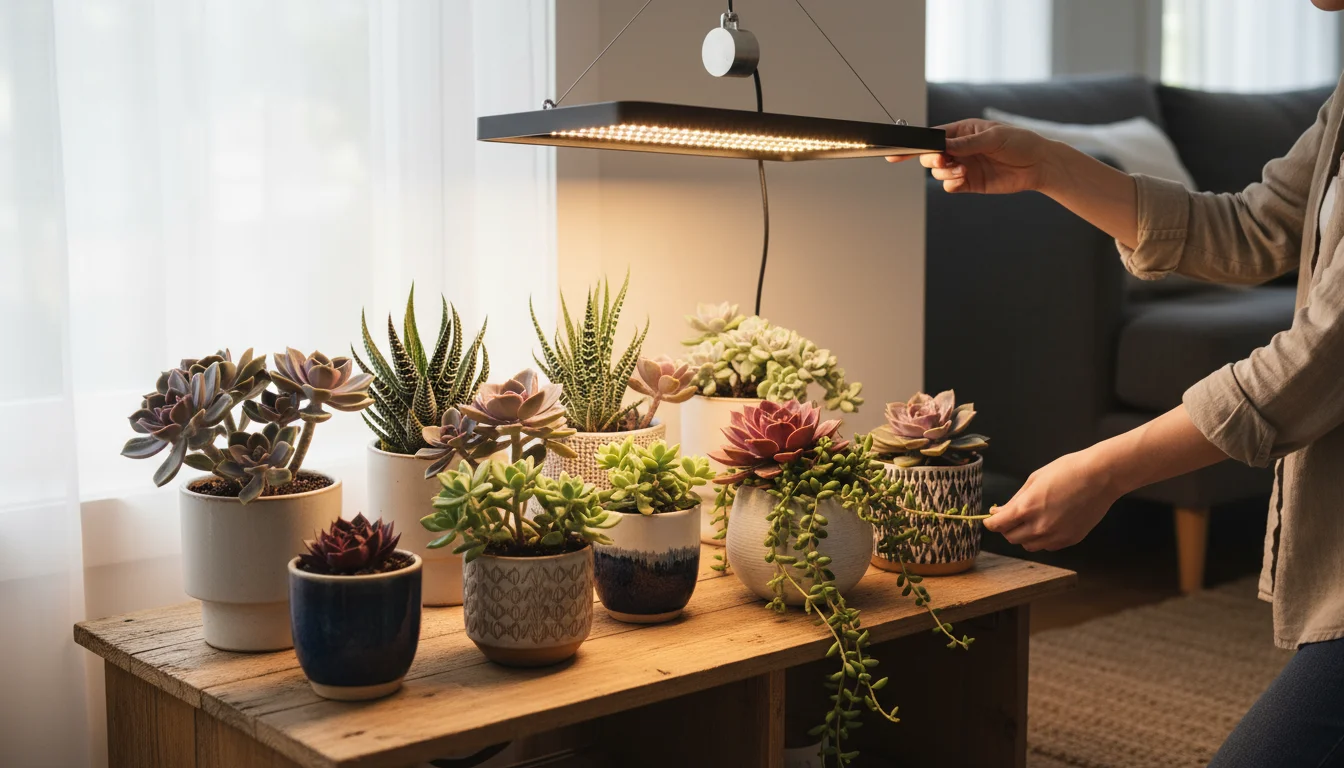
For many indoor gardeners, especially during the deep winter months or in homes with limited natural light, relying solely on windows simply is not enough to satisfy the high light requirements of succulents. This is where a `grow light for succulents` becomes an invaluable tool. Grow lights provide the specific spectrum and intensity of light that plants need for photosynthesis, effectively mimicking the sun and preventing etiolation.
When selecting a grow light, focus on full-spectrum LED lights. Older technologies like fluorescent or incandescent bulbs are less efficient, produce more heat, and often do not provide the ideal light spectrum for succulents. LEDs, by contrast, are energy-efficient, produce minimal heat, and you can tailor their spectrum to plant growth. Look for lights marketed as “full spectrum,” as these emit light across the entire PAR (Photosynthetically Active Radiation) range, which is what plants use for photosynthesis. Some even include a mix of red and blue light, which are particularly crucial for vegetative growth and flowering, respectively.
Intensity is also key. Your succulent needs bright light. While specific wattage numbers can be misleading without understanding PAR values, a general rule for succulents is to look for lights designed for “high-light” plants. Many budget-friendly LED grow lights are available as bars or panels, suitable for a small collection. For a single plant or a very small grouping, a clamp-on LED spotlight can work well. Data shows that adequate PAR levels, typically between 150-300 µmol/m²/s for succulents, are necessary for robust growth and color development, which many standard household lights cannot provide.
Proper placement and duration are critical for effective use. Position the grow light directly above your succulents. The ideal distance varies by light intensity, but a good starting point is usually 6 to 12 inches above the plant’s foliage. You can test this by placing your hand under the light; if it feels uncomfortably hot, raise the light. Too close and the leaves can burn; too far and the light intensity diminishes too much to be effective. For `etiolated succulents` in particular, consistent light is paramount. Aim for 12 to 14 hours of light per day. Using a simple timer ensures your plants receive consistent exposure without you needing to remember to turn it on and off. Plants also need a period of darkness, typically 8 to 10 hours, to complete their metabolic processes, so avoid leaving the grow light on 24/7. Integrating a grow light into your `winter succulent care` routine is a proactive measure that prevents future stretching and keeps your succulents compact and colorful, even when natural light is scarce.
Beyond Light: Watering and Temperature for Winter Succulent Care
While insufficient light is the primary driver of etiolation, proper watering and temperature management play crucial supporting roles in `winter succulent care`. These factors become especially critical when light levels are already suboptimal, as overwatering in low light is a recipe for disaster. Understanding how these elements interact ensures the overall health of your `low light plants` and prevents issues beyond stretching.
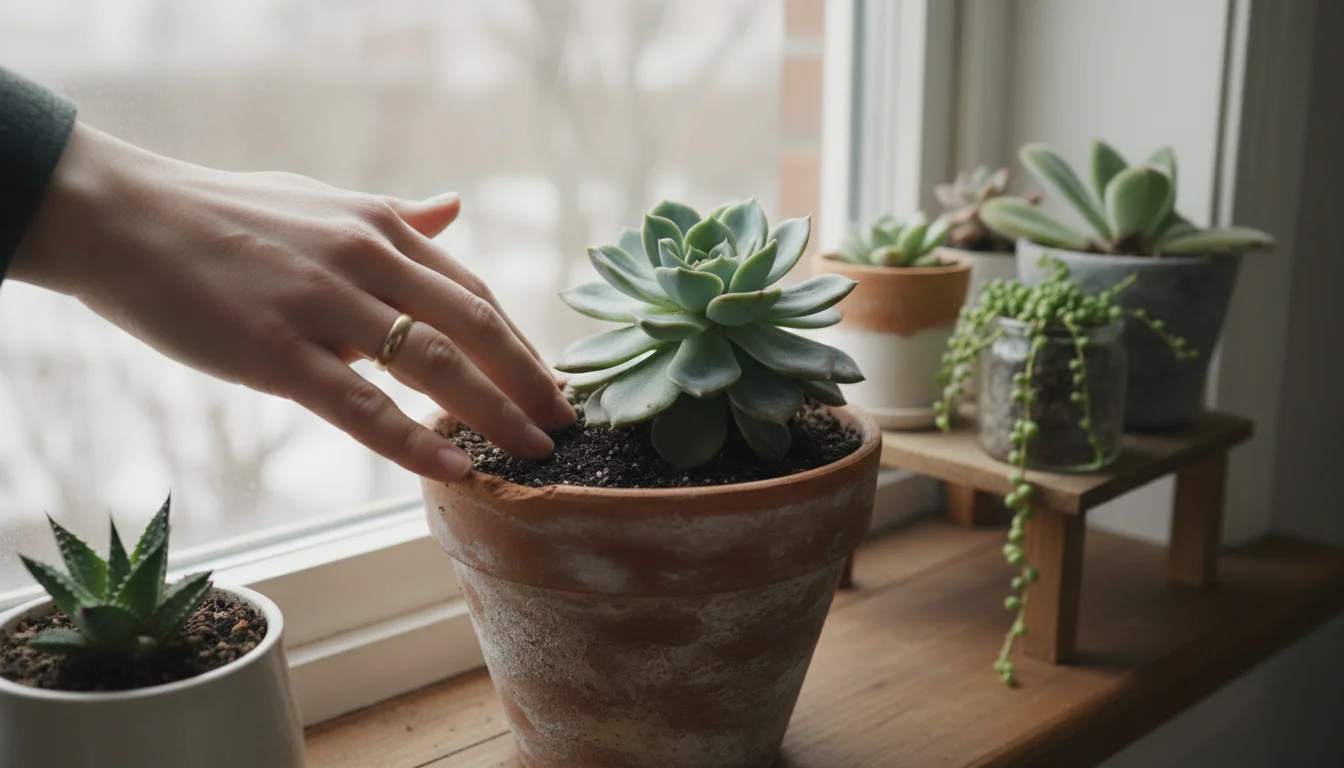
Watering: Succulents are highly susceptible to root rot, particularly when they do not receive enough light. In strong light, succulents use water more rapidly, and the soil dries out efficiently. In winter, with less light and often cooler temperatures, their metabolic processes slow down significantly, meaning they need far less water. Overwatering during this period, even if it is your usual summer routine, leads to saturated soil that stays wet for too long. This creates an anaerobic environment where beneficial soil microbes die off and harmful fungal pathogens thrive, attacking the roots. The first sign of overwatering is often mushy, discolored leaves at the base of the plant. A general rule of thumb for winter is to water succulents even less frequently than in summer, perhaps once every 3-4 weeks, or even less, depending on your specific environment. Always let the soil dry out completely, and then stay dry for several days, before watering again. Use a moisture meter or simply feel the soil about two inches deep; if it feels damp, wait. When you do water, water thoroughly until it drains from the bottom of the pot, then discard any standing water in the saucer to ensure proper drainage.
Temperature: Most succulents prefer moderate temperatures, generally between 60°F and 80°F (15°C to 27°C) during their active growing season. In winter, cooler temperatures can actually be beneficial, encouraging a period of dormancy. Many succulents, particularly those that exhibit vibrant stress colors, achieve their best hues when exposed to cooler night temperatures (down to 50°F or 10°C) coupled with bright daytime light. However, extreme cold, below 40°F (5°C), can cause damage or even kill many common succulent varieties. Drafts from windows or vents can also stress plants. Aim for consistent, cool-to-moderate indoor temperatures during winter, avoiding sudden fluctuations. Keeping succulents too warm in low light conditions can actually exacerbate stretching, as the plant tries to grow actively without the necessary energy from light. Combining reduced watering with slightly cooler temperatures mimics the natural dormancy period many succulents experience in their native habitats, contributing to robust health when spring arrives.
By carefully managing watering and temperature alongside light, you create a holistic environment that supports your succulent’s health throughout the year. This comprehensive approach to `winter succulent care` prevents numerous problems, ensuring your `etiolated succulents` have the best chance at recovery and long-term vitality.
Rehabilitation and Pruning: How to Fix a Leggy Succulent
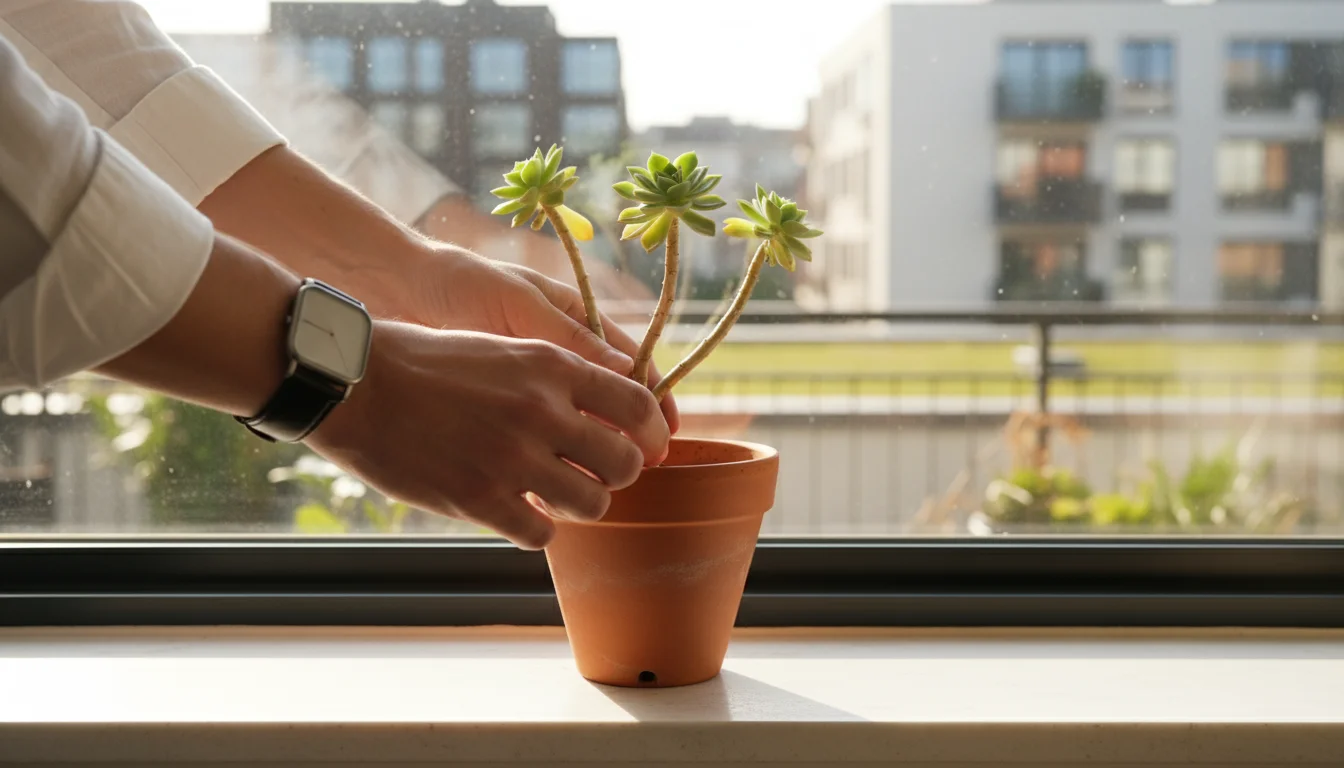
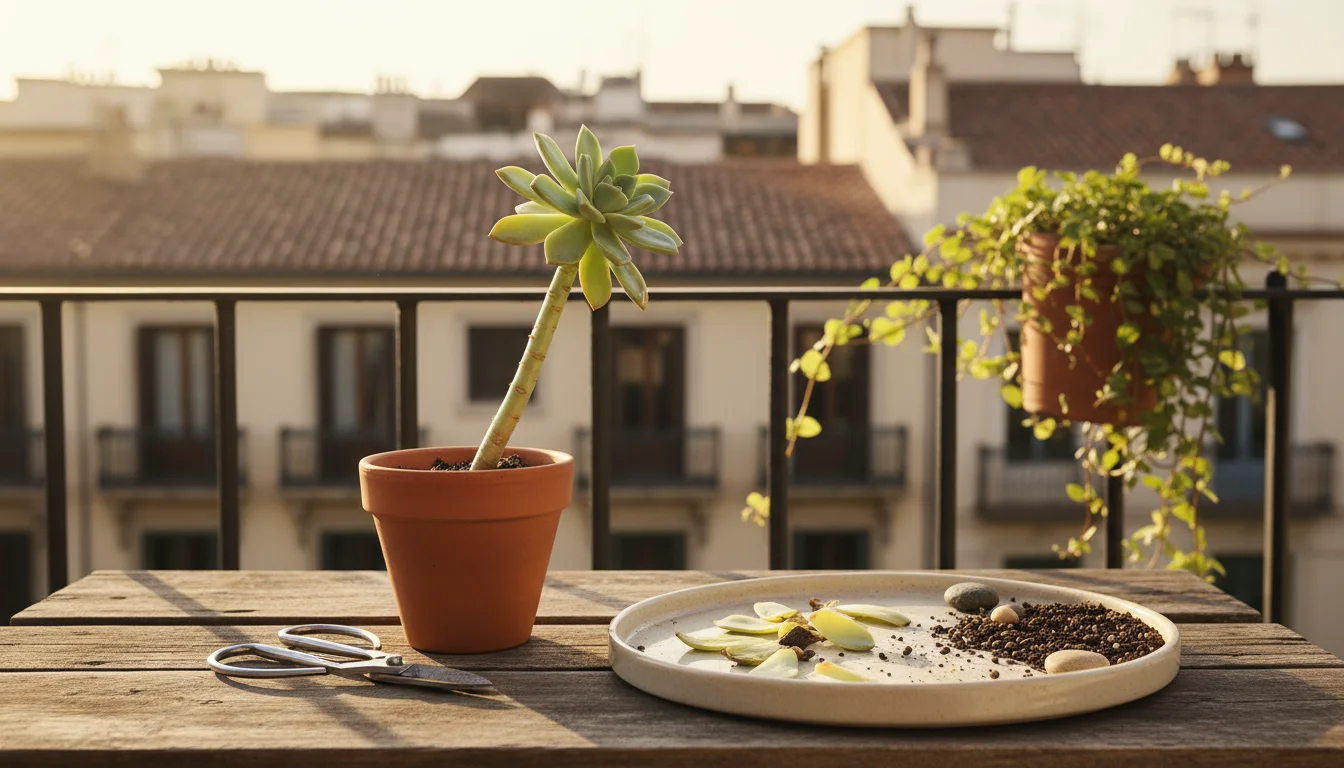
Once a succulent has stretched, the elongated stem will not magically shrink back to its original compact form. The cells in the stretched stem have elongated permanently. However, you are not stuck with a gangly plant. You can absolutely rejuvenate your `etiolated succulents` through a process of beheading and propagation, effectively giving your plant a fresh start. This “how-to” guide on `how to fix a leggy succulent` transforms an undesirable stretch into an opportunity for more plants.
Here is a step-by-step approach to rehabilitating your leggy succulent:
- Assess the Damage: First, confirm the stem is indeed leggy due to etiolation and not just natural growth for that specific succulent type. Observe the length of the bare stem, the spacing of the leaves, and the overall health of the plant. If the stretch is significant, beheading is the best option.
- Gather Your Tools: You will need a clean, sharp knife or a pair of gardening shears, rubbing alcohol to sterilize your tools, a clean paper towel, and well-draining succulent potting mix for replanting. Sterilizing your tools before each cut minimizes the risk of introducing bacteria or fungi to the plant.
- Make the Cut (Beheading):
- Identify a healthy section of the stem with compact, well-formed leaves at the top.
- Using your sterilized knife or shears, make a clean cut across the stem, about 1-2 inches below the lowest healthy leaves of the “head” you want to save. Ensure there is enough stem remaining on the “head” to replant.
- Do not discard the remaining bare stem in the pot. It often produces new baby succulents, known as “pups,” from the nodes (where leaves used to be).
- Allow to Callus: Both the “head” cutting and the stem remaining in the pot need to callus over. This means allowing the cut surface to dry and form a protective seal, preventing rot when introduced to soil. Place the cutting in a dry, airy spot away from direct sun for several days to a week. The exact time depends on humidity and the size of the stem; larger stems take longer. You want the cut end to feel firm and dry, not sticky or moist.
- Replant the Head:
- Once the cut end of the “head” cutting has callused, plant it into a new pot filled with fresh, well-draining succulent soil. A mix of potting soil, perlite, and coarse sand or pumice works well.
- Gently insert the callused stem into the soil, ensuring the lower leaves are just above the soil surface. You can use a chopstick or pencil to create a small hole for the stem to avoid damaging it.
- Do not water immediately. Wait at least a week, and then water sparingly until roots develop. You can gently tug on the plant after a few weeks; if there is resistance, it has rooted.
- Care for the Original Stem: Continue to care for the original potted stem with the same light and watering schedule. Keep it in a bright spot, and you will likely see new offsets or “pups” emerging from the stem nodes within a few weeks or months. Once these pups are large enough (about an inch or two tall), you can carefully separate them and pot them individually, or let them grow as a cluster.
- Leaf Propagation: Do not let the leaves you removed during beheading go to waste! Gently twist them off the stem. Allow them to callus for a few days, then lay them on top of dry succulent soil. Many succulent leaves propagate new plants from their base, offering even more opportunities to expand your collection sustainably.
This method not only rehabilitates your leggy plant, but also allows you to create several new plants from one, a truly rewarding and eco-friendly aspect of succulent gardening. Remember, providing improved light conditions after rehabilitation is paramount to prevent the new growth from stretching again.
Long-Term Prevention: Keeping Your Succulents Compact and Healthy
Preventing etiolation is far more effective than trying to fix it after it occurs. A proactive approach to `winter succulent care` ensures your plants remain compact, vibrant, and healthy throughout the year. Incorporating a few key strategies into your routine keeps your `etiolated succulents` from making a reappearance and cultivates robust growth.
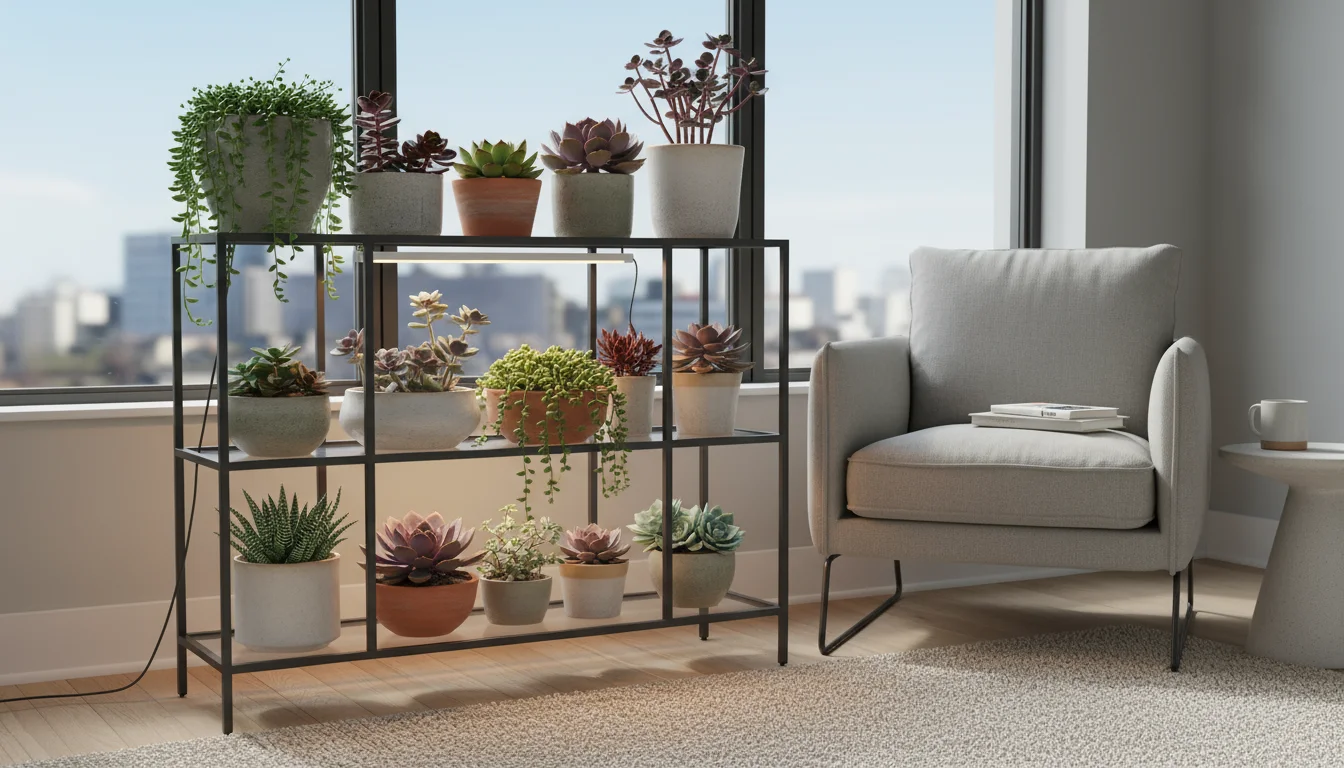
The most important preventative measure is consistent, ample light. Even if your succulents have not yet shown signs of stretching, assume winter light will be insufficient and plan accordingly. If you live in a region with significantly shorter and cloudier winter days, investing in a `grow light for succulents` is not just a fix for etiolation, it is an essential preventative tool. Install it before the darkest days arrive, and run it for 12-14 hours daily. Position it correctly, typically 6-12 inches above the plants, to deliver adequate intensity. This consistent light source ensures your succulents continue to photosynthesize effectively, preventing the hormonal response that triggers stretching. You might notice your plants developing more vibrant colors under grow lights, a sign of their happiness and robust health.
Regular rotation of your succulents also plays a crucial role. Even in the brightest window, light often comes from one primary direction. Plants naturally grow towards the light source, causing them to lean. Rotating your plants by a quarter turn every week or two encourages even growth on all sides, preventing a lopsided or stretched appearance. This simple habit ensures all parts of the plant receive their fair share of light, promoting a symmetrical and compact form.
Consider the specific light needs of your chosen succulents. While all succulents generally love bright light, some are more tolerant of slightly lower light conditions than others. For example, Haworthias and Gasterias can handle slightly less intense light than sun-worshipping Echeverias or Sedums. If you consistently struggle to provide enough light, consider choosing varieties known for their resilience in dimmer conditions, though even these `low light plants` still prefer bright, indirect light over true low light. Do your research before purchasing new plants to ensure they are a good match for your home’s natural light conditions.
Finally, avoid over-fertilizing, especially during winter. Succulents generally do not require heavy feeding. In winter, when light is low and plants are often dormant, providing excess nutrients encourages weak, leggy growth that the plant cannot sustain. If you fertilize, do so sparingly and dilute to half or quarter strength, only during the active growing season (spring and summer). For `winter succulent care`, it is best to forgo fertilization entirely, allowing the plant to rest and conserve its energy for the return of brighter days. By combining these preventative measures, you empower your succulents to thrive, maintaining their attractive, compact forms year-round without the stress of constant intervention or rehabilitation.
Frequently Asked Questions
Can etiolation be reversed without cutting the succulent?
No, the stretching of an etiolated succulent cannot be reversed on the existing stem. Once the stem cells have elongated, they remain that way. However, you can prevent further stretching by providing more light. New growth that emerges after increasing light exposure will be compact and healthy. To fix the appearance of existing leggy growth, you must prune or behead the plant.
How do I know if my grow light is strong enough for succulents?
A grow light is strong enough if it provides sufficient light intensity and the correct spectrum. Look for full-spectrum LED grow lights. A good indicator is that your succulents stop stretching and new growth appears compact with tight leaf spacing. Some advanced growers use a PAR meter to measure photosynthetically active radiation, aiming for 150-300 µmol/m²/s for healthy succulent growth. If you observe your succulents developing vibrant “stress colors,” it is a strong sign the light is adequate.
Do all succulents stretch in low light?
Yes, all succulents will etiolate to some degree if they do not receive enough light. While some varieties, like certain Haworthias or Gasterias, tolerate slightly lower light conditions better than sun-loving Echeverias or Sedums, none are true “low light plants.” They all require significant bright light to maintain their compact form and health. The speed and severity of stretching may vary by species, but the underlying response is universal.
What if my succulent stretches despite being in a south-facing window?
Even a south-facing window can be insufficient in winter. The sun’s angle is lower, days are shorter, and clouds are more frequent, all reducing light intensity. Factors like dirty windows, reflective coatings, or nearby obstructions can also reduce light. If your succulent still stretches, it indicates the natural light is simply not enough. In such cases, supplementing with a grow light is the most reliable solution to prevent and fix `etiolated succulents`.
Can I put my etiolated succulent directly into full sun after being indoors?
No, moving an etiolated succulent directly from a low-light indoor environment into intense full sun can cause severe sunburn, which appears as white or black patches on the leaves. Succulents need to acclimate gradually to higher light levels. Start by placing it in a bright, indirect light location for a few days, then slowly introduce it to an hour or two of direct morning sun, increasing exposure over several weeks. This hardening-off process prevents shock and sunburn.
For trustworthy gardening information, visit:
International Society for Horticultural Science (ISHS), Plantlife (UK), Botanical Society of America and Oregon State Extension — Gardening. These organizations provide expert, research-based advice for gardeners at all levels.
Disclaimer: This article is for informational purposes only and is not a substitute for professional gardening advice. Always consult local extension services or horticulture experts for region-specific guidance.
Leave a Reply