
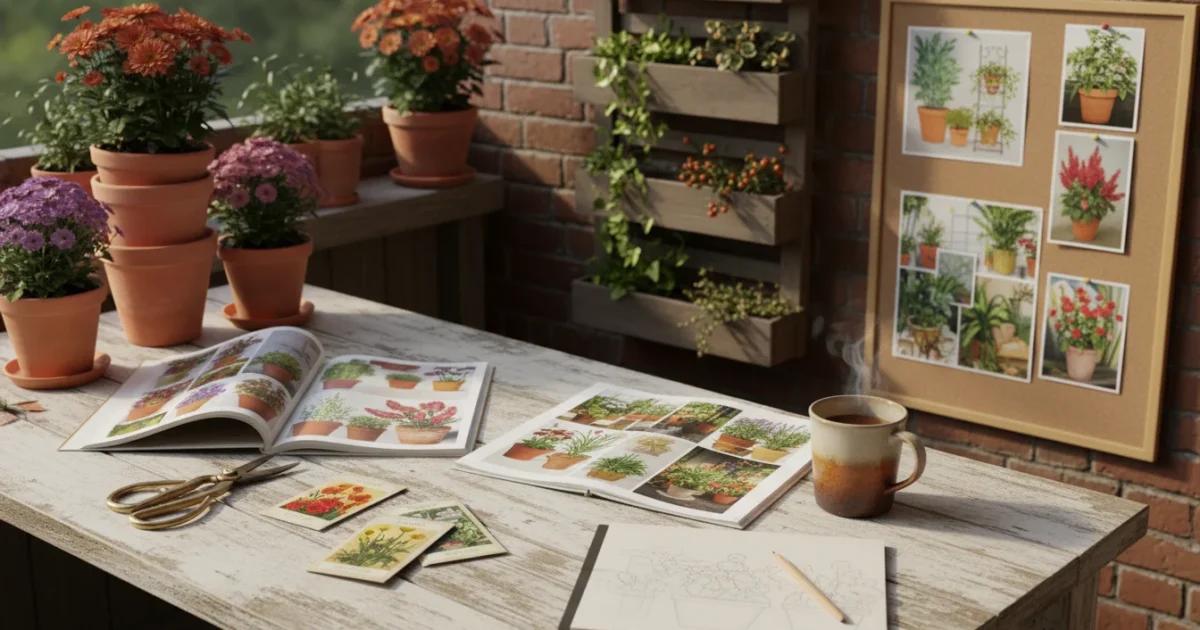
As the vibrant colors of summer gardens begin to fade, many gardeners experience a quiet melancholy, knowing the growing season draws to a close. However, fall is not a time for sadness; it is a golden opportunity for creative garden planning and exciting anticipation. For those of you with balconies, patios, or small yards, this period presents an ideal moment to envision your most abundant, beautiful, and efficient space yet.
This creative activity is a wonderful companion to a winter wishlist strategy, helping you prioritize needs over wants before the buying season starts.
Forget the winter blues; let us channel that energy into designing your dream garden for next year. Instead of spending money on impulse buys or feeling overwhelmed by endless options, we will explore a simple, enjoyable, and completely free activity: creating a Fall Seed Catalog ‘Dream Board’. This method transforms the humble seed catalog into a powerful tool for balcony garden design, helping you visualize your perfect 2025 container garden long before planting season arrives. This approach offers a practical way to plan a container garden for next year, focusing on thoughtful design and plant selection tailored to your unique small space. You will gain clarity, inspiration, and a solid plan, all while enjoying the therapeutic process of garden planning.
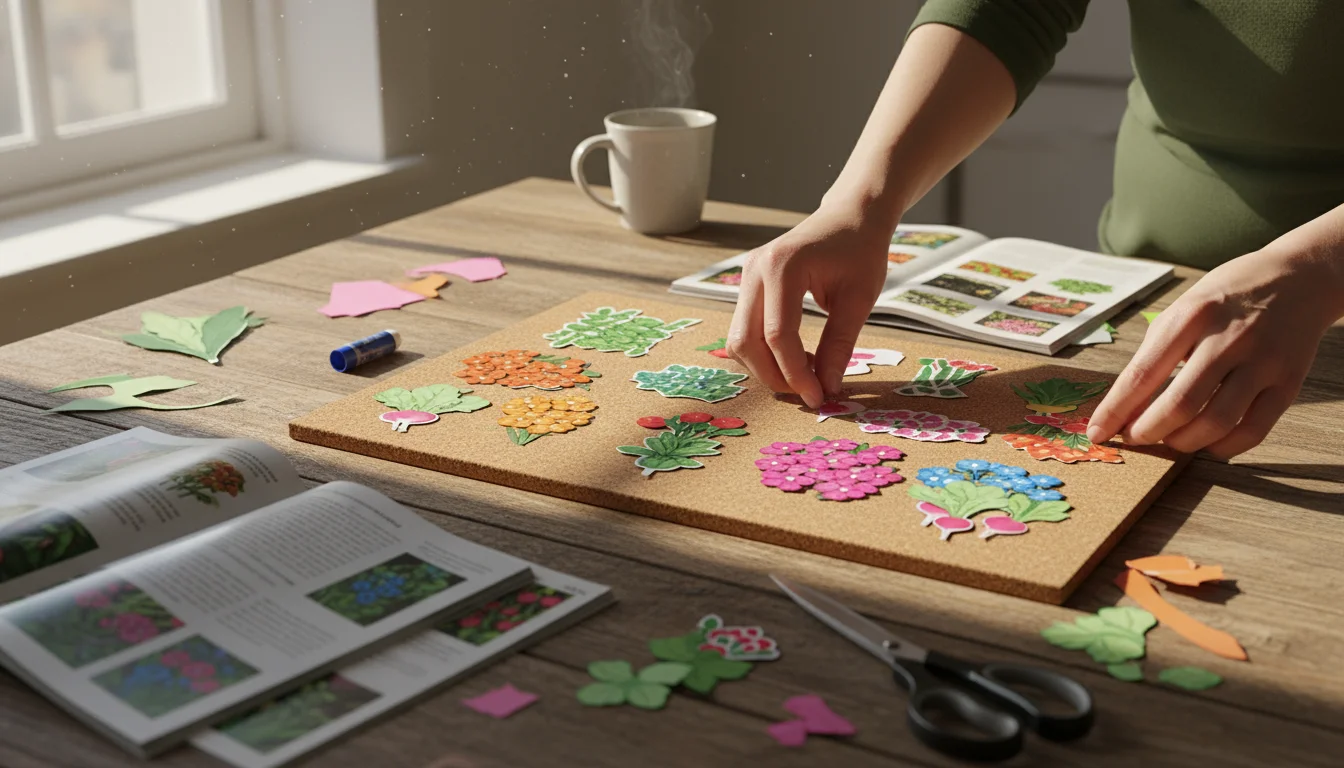
What is a Seed Catalog ‘Dream Board’?
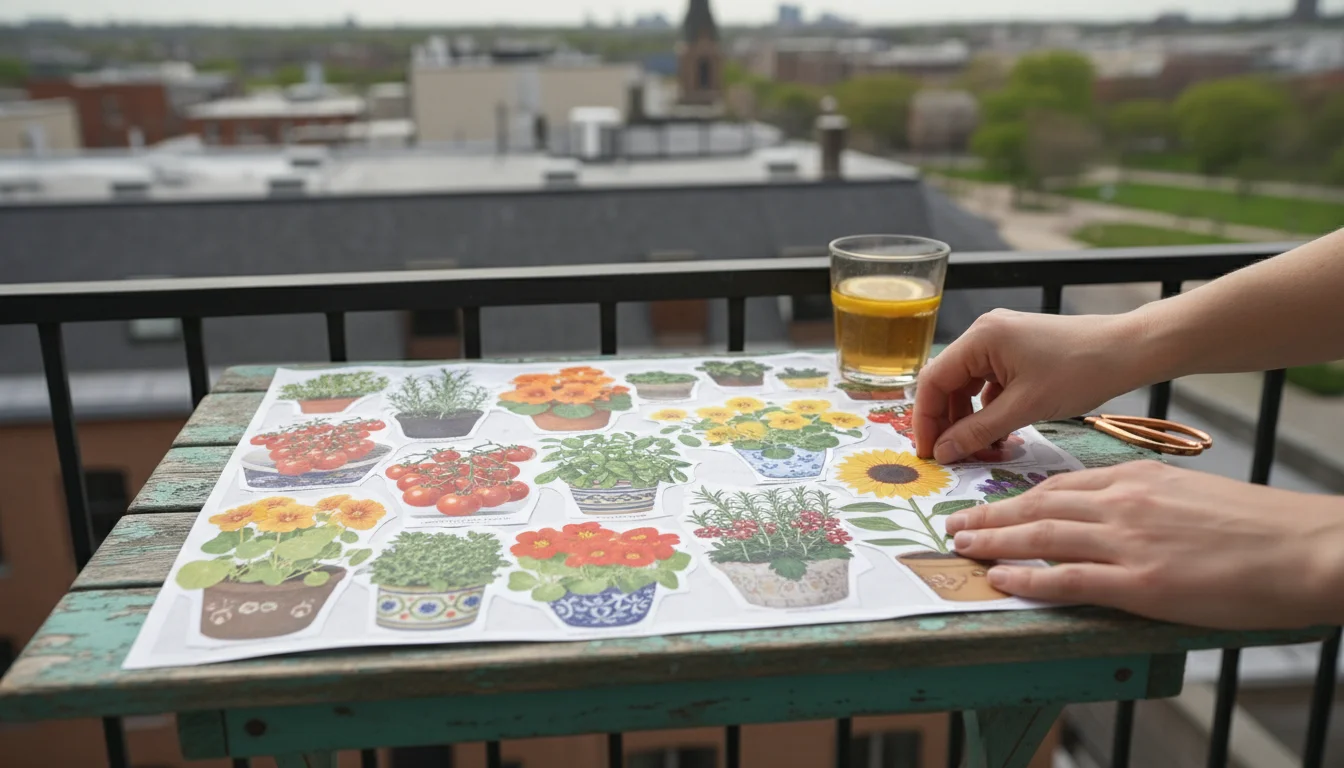
Imagine a vision board, but specifically for your garden. That is exactly what a seed catalog dream board is. It is a collage of images, descriptions, and ideas cut from seed catalogs that represent your ideal garden. It is a tangible representation of your aspirations, a visual blueprint for the next growing season. Instead of relying solely on mental notes or scattered ideas, this physical board consolidates your wishes into one inspiring display. You are effectively creating a garden planning vision board, a creative and powerful tool.
While you are dreaming of new varieties, don’t forget that you can also save seeds from your balcony garden right now to use in next year’s layout.
This process encourages intentionality in your garden planning. You move beyond simply planting what you found at the garden center to thoughtfully selecting plants that thrive in your specific conditions and fulfill your aesthetic or practical goals. For instance, if you want a vibrant culinary herb garden, your dream board might feature images of basil, rosemary, and thyme, alongside ideas for vertical planters suitable for a small balcony. If you dream of an edible oasis, you can find images of compact tomato varieties, bush beans, and dwarf fruit trees.
A dream board helps you clarify your preferences and identify what truly excites you. Do you gravitate towards bright, cheerful annuals, or do you prefer the subtle beauty of perennial herbs? Are you focused on growing your own food, attracting pollinators, or creating a serene retreat? By actively cutting and arranging, you uncover patterns in your desires and make conscious choices about your garden’s purpose and style. This deep engagement with seed catalogs for garden inspiration transforms abstract wishes into concrete plans, preparing you for successful planting.

Why Fall is the Ideal Time for Garden Planning
Many gardeners wait until spring to begin their garden planning, often rushing through decisions under pressure. However, fall offers several distinct advantages for thoughtful garden planning:
Even if your balcony is currently bare, this quiet phase is the perfect time to imagine its future potential.
- Fresh Perspective: Your current garden is still fresh in your mind. You remember what thrived, what struggled, and what you wished you had planted. This immediate feedback provides invaluable lessons for your next season. For example, if your balcony garden received too much afternoon sun for your leafy greens, you now know to seek out more heat-tolerant varieties or plan for shade cloth next year.
- Abundance of Seed Catalogs: Fall is when seed companies release their new catalogs, brimming with exciting new varieties, improved classics, and inspiring photographs. These catalogs are a treasure trove of information and visual inspiration, perfect for browsing without the pressure of imminent planting. You have ample time to pour over pages and let your imagination roam freely.
- Reduced Pressure: Unlike spring, when you feel the urgency to get seeds started, fall allows for a leisurely, reflective approach. You can take your time exploring different options, researching plant needs, and truly envisioning your space without feeling rushed. This relaxed pace fosters creativity and prevents hurried decisions you might regret later.
- No-Spend Inspiration: The dream board concept emphasizes inspiration without immediate expenditure. You use the catalogs as a free resource for ideas, deferring actual seed or plant purchases until you have a clear, well-considered plan. This avoids impulse buys and ensures every item you eventually acquire serves a specific purpose in your garden design.
- Optimized Small Spaces: For balcony and small-space gardeners, every inch counts. Fall planning gives you the foresight to maximize your limited area, considering vertical gardening solutions, compact plant varieties, and efficient layouts. You can map out precisely where planters will go and which plants will occupy them, ensuring no space goes to waste.
By engaging in garden planning during fall, you transform a potentially slow season into a productive and enjoyable period of preparation. You set yourself up for a less stressful and more successful growing season, turning those winter months into an exciting journey of discovery.
Gathering Your Inspiration Tools
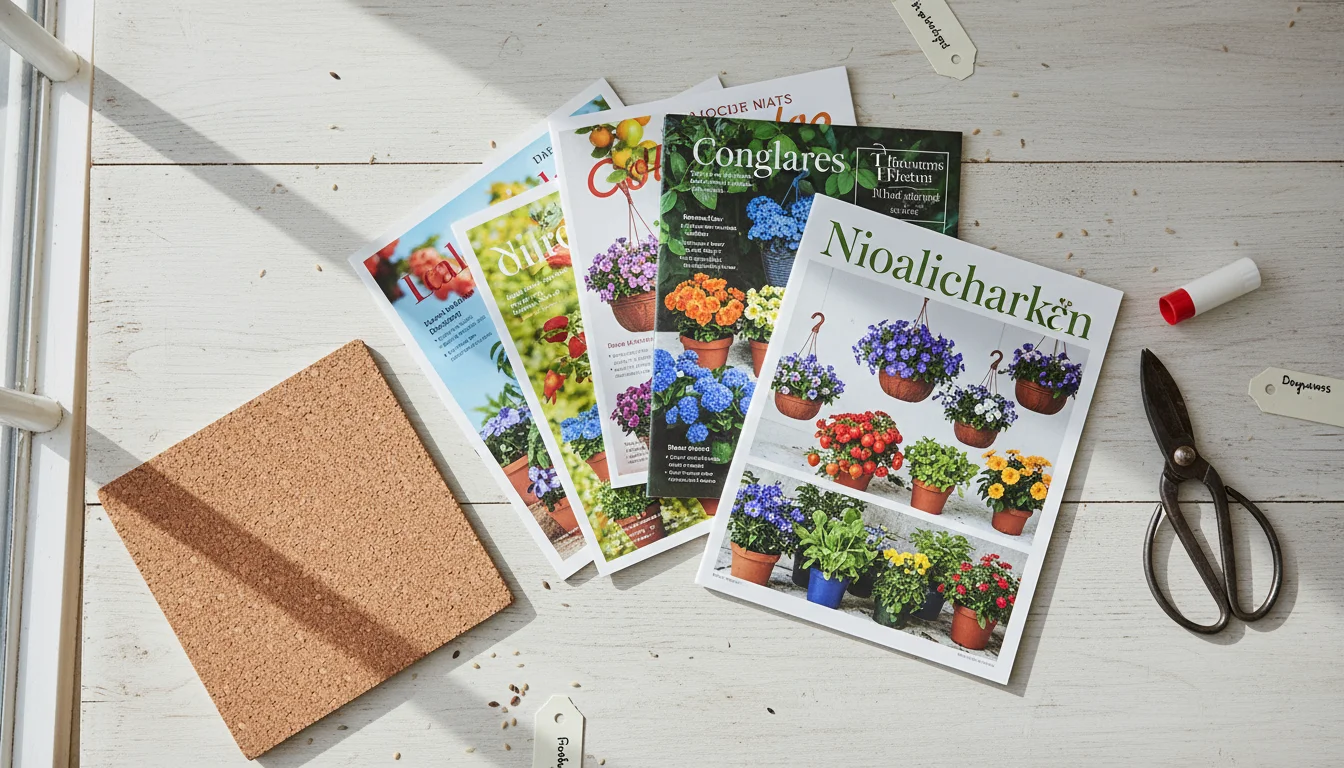
Before you dive into the delightful world of seed catalogs, gather a few simple items. The beauty of this activity lies in its minimal requirements and zero cost. You likely already possess most of what you need:
Before you dive into the catalogs, it is helpful to audit your gardening supplies to see which pots or tools might need replacing for the upcoming season.
As you collect your tools, it is also the perfect time for organizing your seed collection to see what you already have on hand for next year.
- Seed Catalogs: The stars of the show! If you have ordered seeds in the past, catalogs will arrive in your mailbox. If not, many seed companies offer free catalogs upon request, or you can browse their digital versions online and print out pages that inspire you. Look for variety in your catalog selection. Different companies specialize in different plants, from heirloom vegetables to vibrant flowers or specific regional varieties.
- A Large Board: This forms the base of your dream board. Options include a sturdy piece of cardboard, a cork board, a poster board, or even a section of a wall if you have dedicated planning space. Choose a size that accommodates your vision without overwhelming your space.
- Scissors: For cutting out all those beautiful plant images and compelling descriptions. Keep them handy for clean cuts.
- Adhesive: Glue sticks, tape, or pushpins work perfectly to attach your clippings to your board. Choose what you find easiest to work with.
- Markers or Pens: Useful for making notes, circling important details, or adding your own creative touches to the board. You can jot down ideas for companion planting, specific container sizes, or even desired harvest dates.
- Notebook or Digital Document: This is for accompanying notes and research. As you find plants you love, you might want to jot down their specific needs: sun exposure, watering frequency, mature size, and any special considerations for container growing. This research component is critical for making informed decisions.
That is it. You do not need fancy supplies. The goal is to make this process accessible and enjoyable. This simple toolkit empowers you to start using seed catalogs for garden inspiration immediately, turning abstract ideas into a concrete plan.
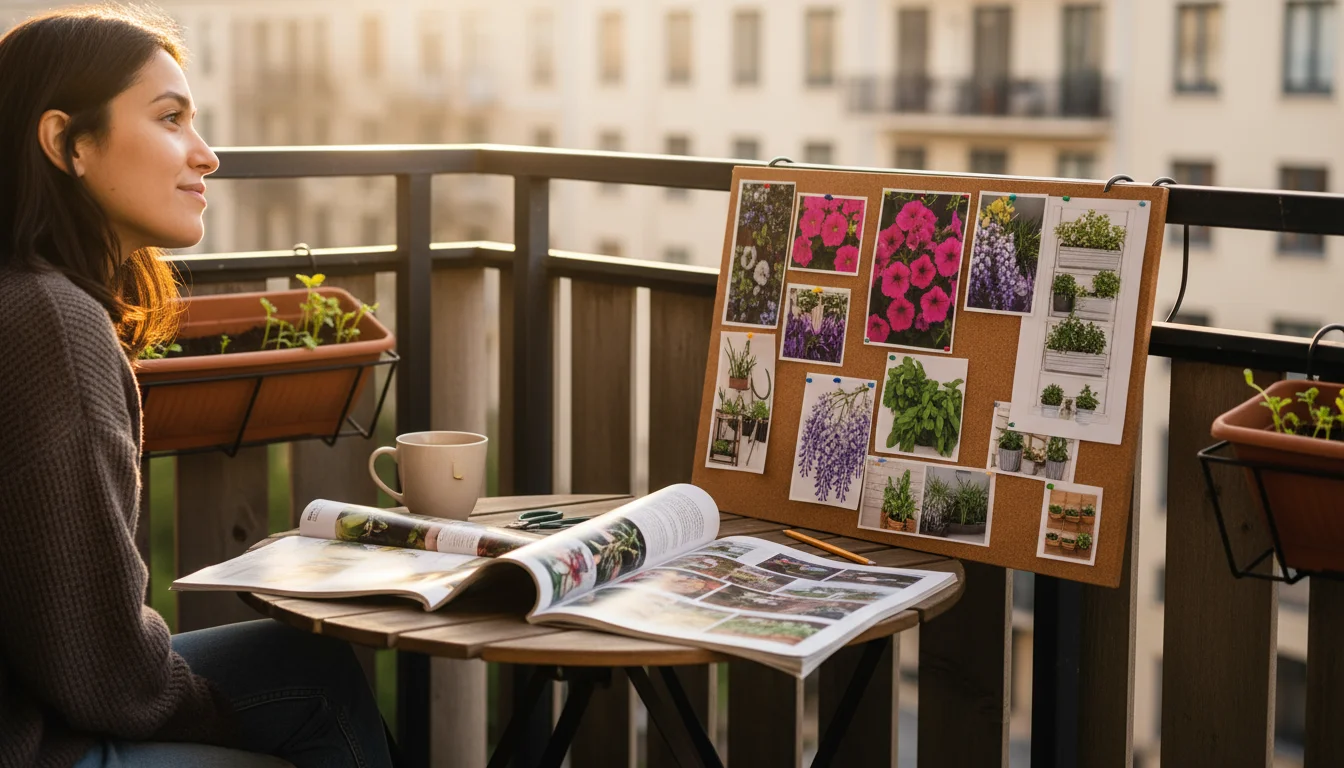
Step-by-Step: Creating Your Balcony Garden Dream Board
Now for the fun part: bringing your dream garden to life on your board. This step-by-step guide walks you through the process of creating your garden planning vision board:
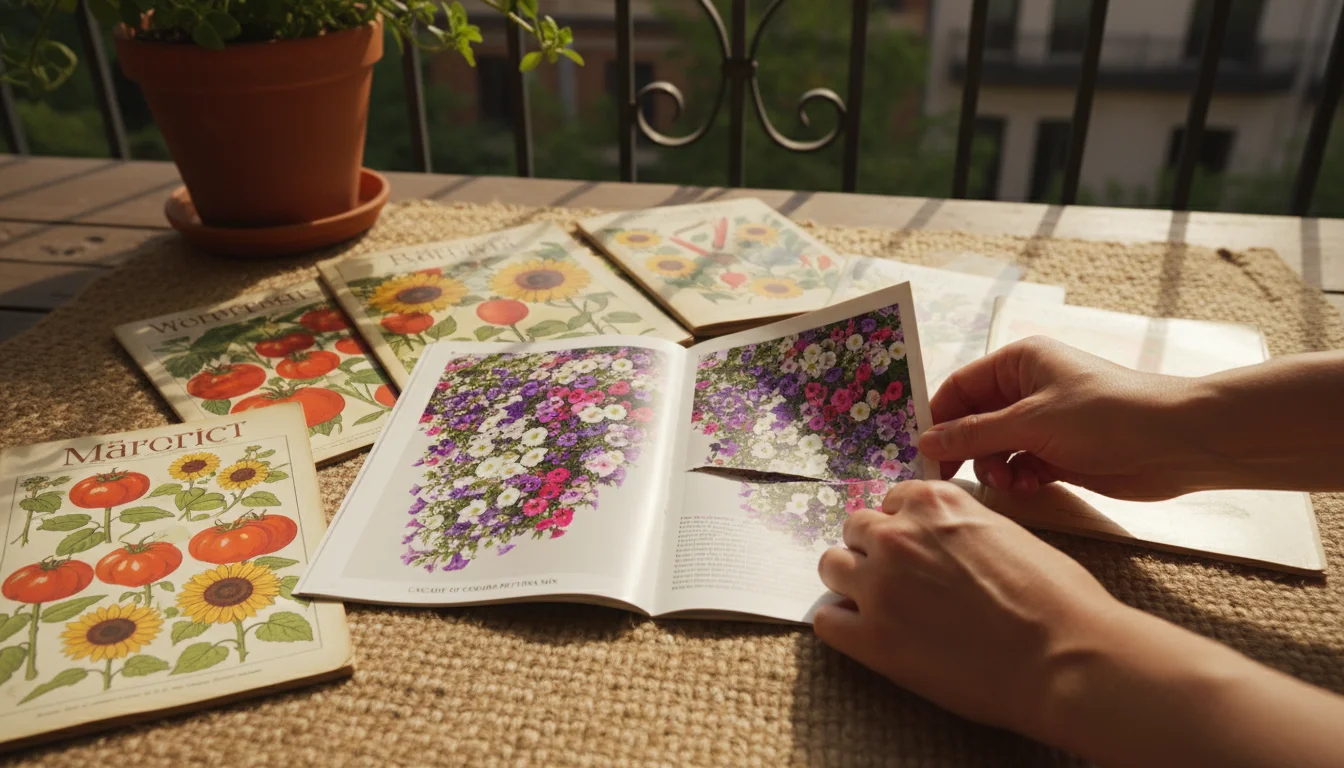
Step 1: Get Inspired and Browse Catalogs
Sit down with your collection of seed catalogs. Do not filter yourself yet. Simply flip through the pages, letting your eyes linger on anything that catches your attention. Look at the colors, shapes, textures, and read the descriptions. What excites you? What looks delicious? What feels calming or beautiful? Tear out or cut out any images, plant descriptions, or even snippets of text that spark joy or interest. This initial stage is all about pure inspiration, collecting anything that resonates with your vision for next year’s balcony garden design.
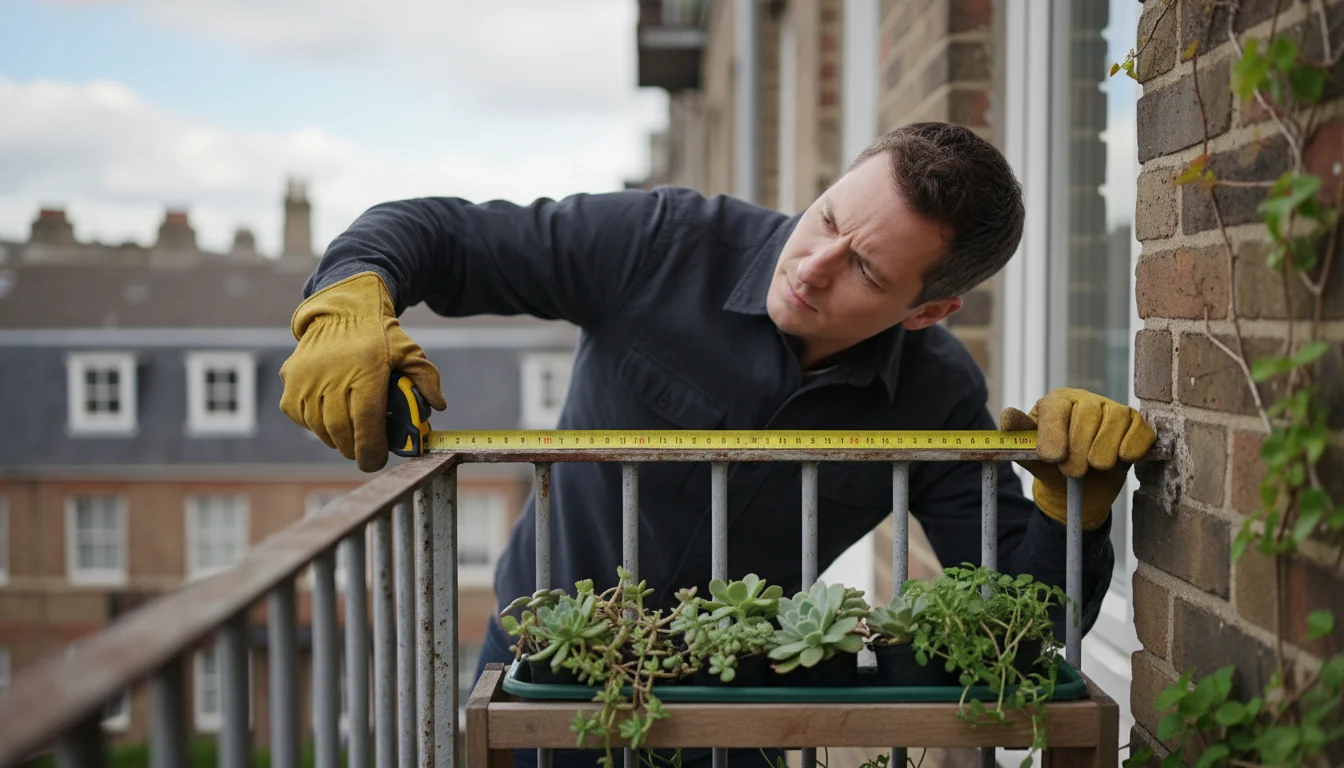
Step 2: Define Your Balcony’s Conditions
Before you start gluing, take a moment to assess your actual gardening space. This grounding step is crucial for successful garden planning. Consider:
- Sunlight: How many hours of direct sun does your balcony receive daily? Observe morning, midday, and afternoon light. Does it get full sun (6+ hours), partial sun (4-6 hours), or shade (less than 4 hours)?
- Space Constraints: Measure your balcony or patio. How much floor space is available for containers? Do you have walls suitable for vertical planters? What about railing planters?
- Wind Exposure: Is your balcony particularly windy? This affects plant choices and container stability.
- Weight Limits: For balconies, be aware of any weight restrictions. Large containers filled with wet soil can be very heavy.
- Water Access: How easily can you water your plants? Is there a spigot nearby, or will you carry water?
Understanding these conditions helps you select plants that will truly thrive in your specific environment, making your dream board realistic and achievable. This practical information informs how to plan a container garden for next year effectively.
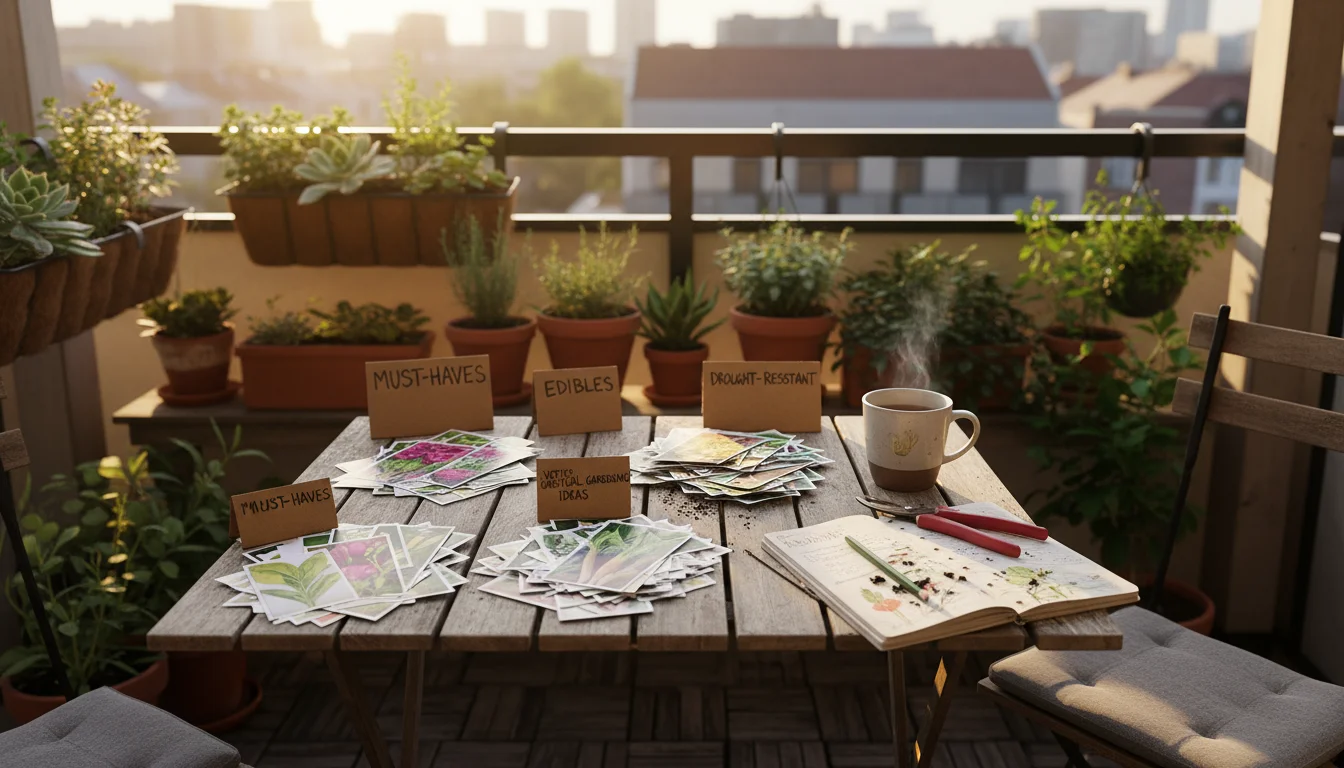
Step 3: Curate and Organize Your Clippings
Review the pile of clippings you collected in Step 1. Now it is time to be a bit more selective, aligning your inspirations with your balcony’s realities. Separate your clippings into categories. Common categories include:
- Must-Haves: Plants you absolutely want to grow.
- Would-Likes: Plants that look interesting but might require more research.
- Edibles: Vegetables, herbs, fruits.
- Ornamentals: Flowers, foliage plants.
- Vertical Gardening Ideas: Images of hanging baskets, trellises, or wall planters.
- Container Types: Ideas for pots, grow bags, or self-watering containers.
Eliminate any plants that clearly will not work in your space (e.g., giant pumpkins for a tiny balcony, or sun-loving plants for a shady spot). This curation process is an important part of using seed catalogs for garden inspiration strategically.
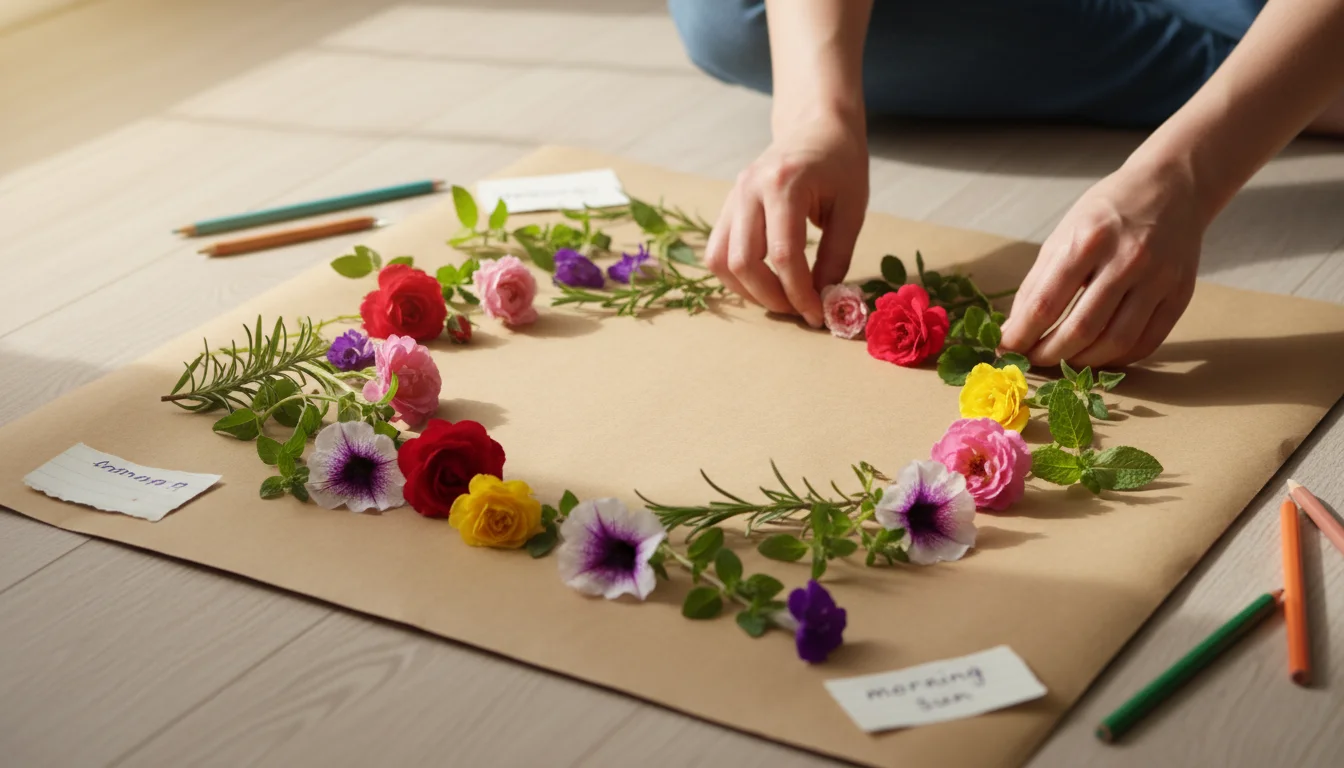
Step 4: Design Your Layout
Before gluing, arrange your chosen clippings on your board. Think about composition and how the different elements interact. You can:
- Group similar plants together.
- Place “must-haves” centrally.
- Visualize different sections of your balcony.
- Add notes about container sizes or color schemes.
Experiment with different arrangements until you find a layout that feels balanced, inspiring, and functional for your balcony garden design. This is your chance to really play with possibilities and see how different combinations look together.
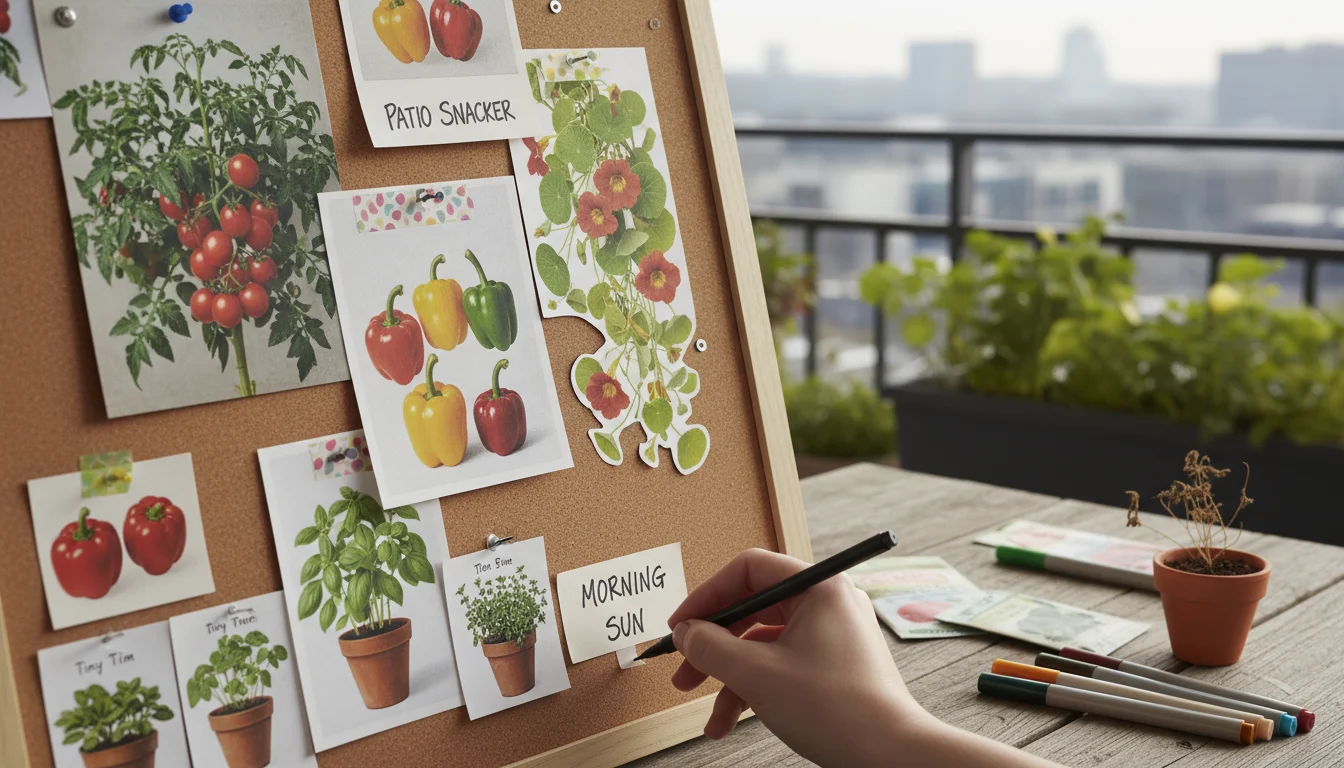
Step 5: Secure Your Dream Board and Add Notes
Once you are happy with your arrangement, glue or tape your clippings into place. Use your markers or pens to add personal notes. This could include:
- Specific variety names you want to remember.
- Notes about light requirements or watering needs.
- Ideas for companion planting.
- Rough sketches of your balcony layout.
- A reminder to research specific pests or diseases.
Your finished dream board becomes a comprehensive visual guide for your 2025 garden planning. It is a constant source of motivation and a practical reference point as you move closer to planting season. This active engagement helps solidify your vision for your next container garden.
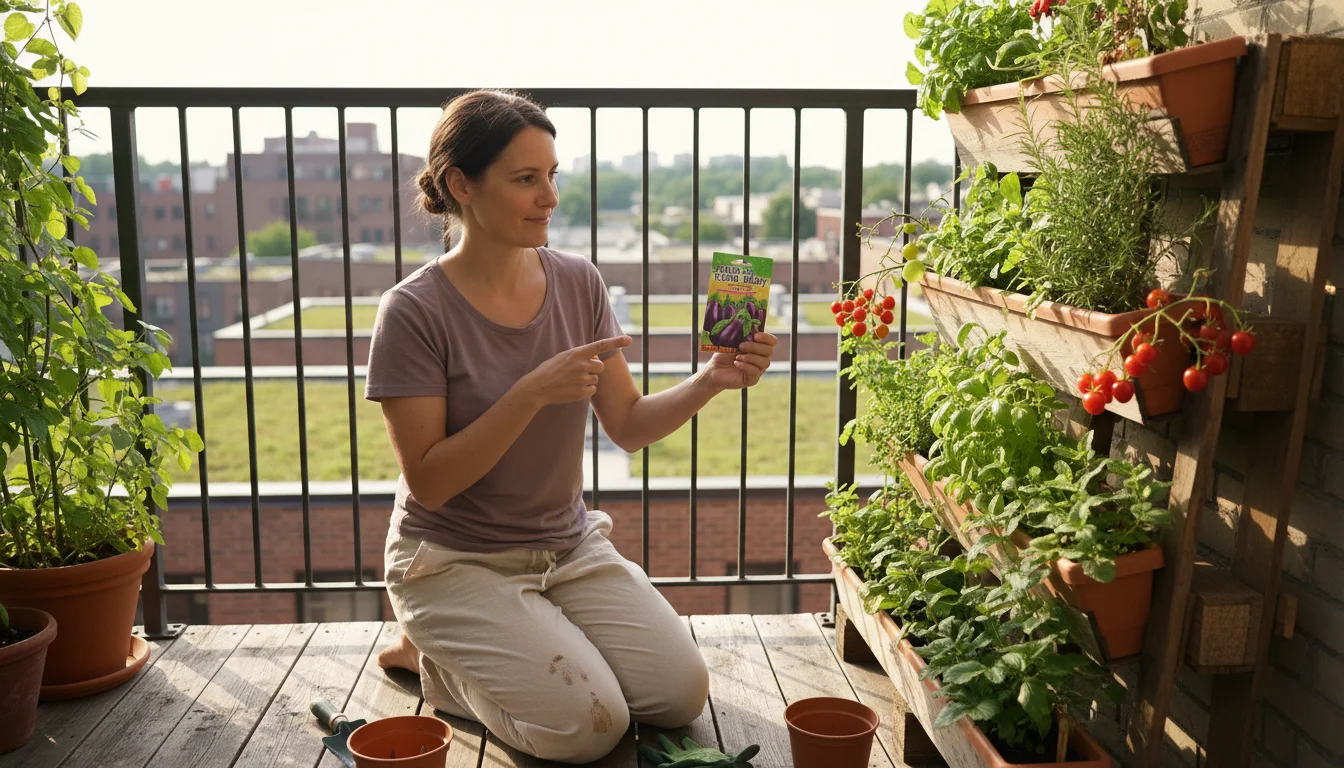
Designing for Small Spaces: Smart Plant Choices and Layouts
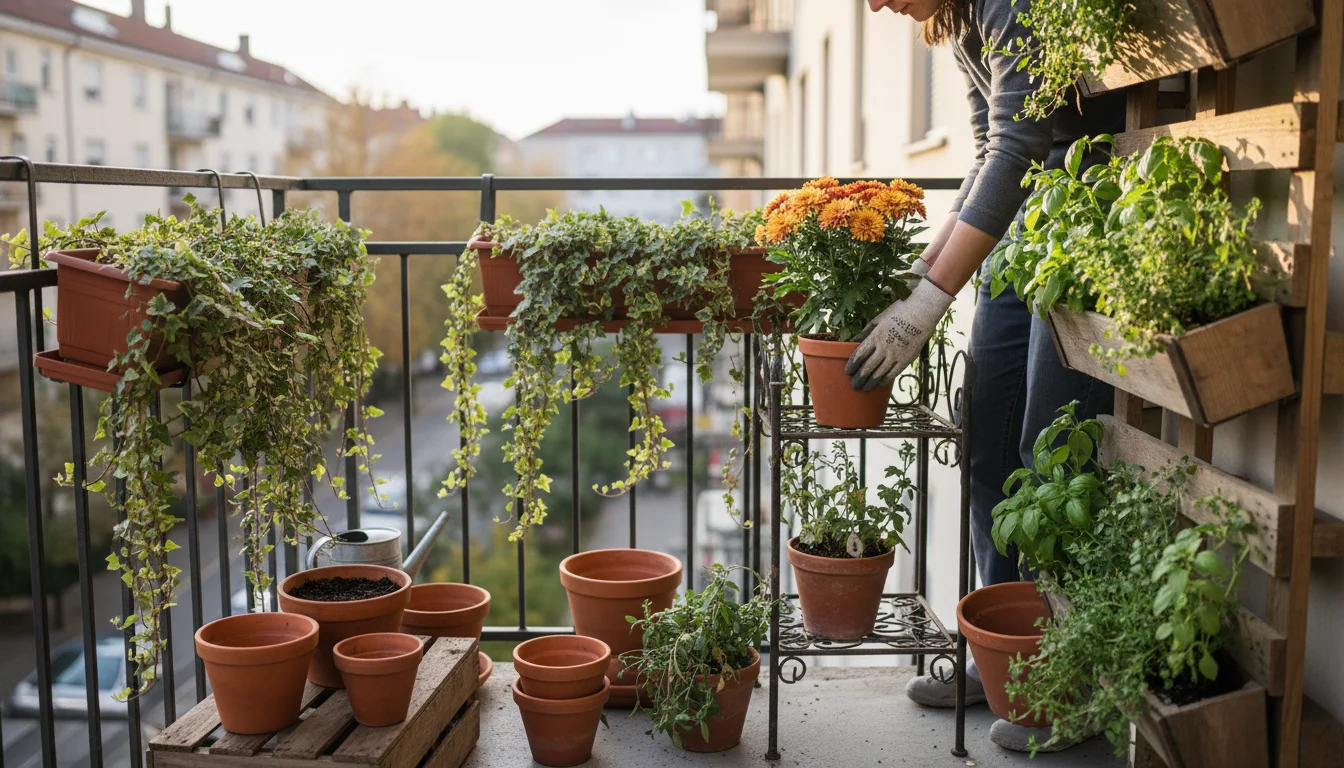
Balcony and small-space gardening requires a thoughtful approach to maximize your limited footprint. Your dream board is an excellent tool for visualizing these strategies:
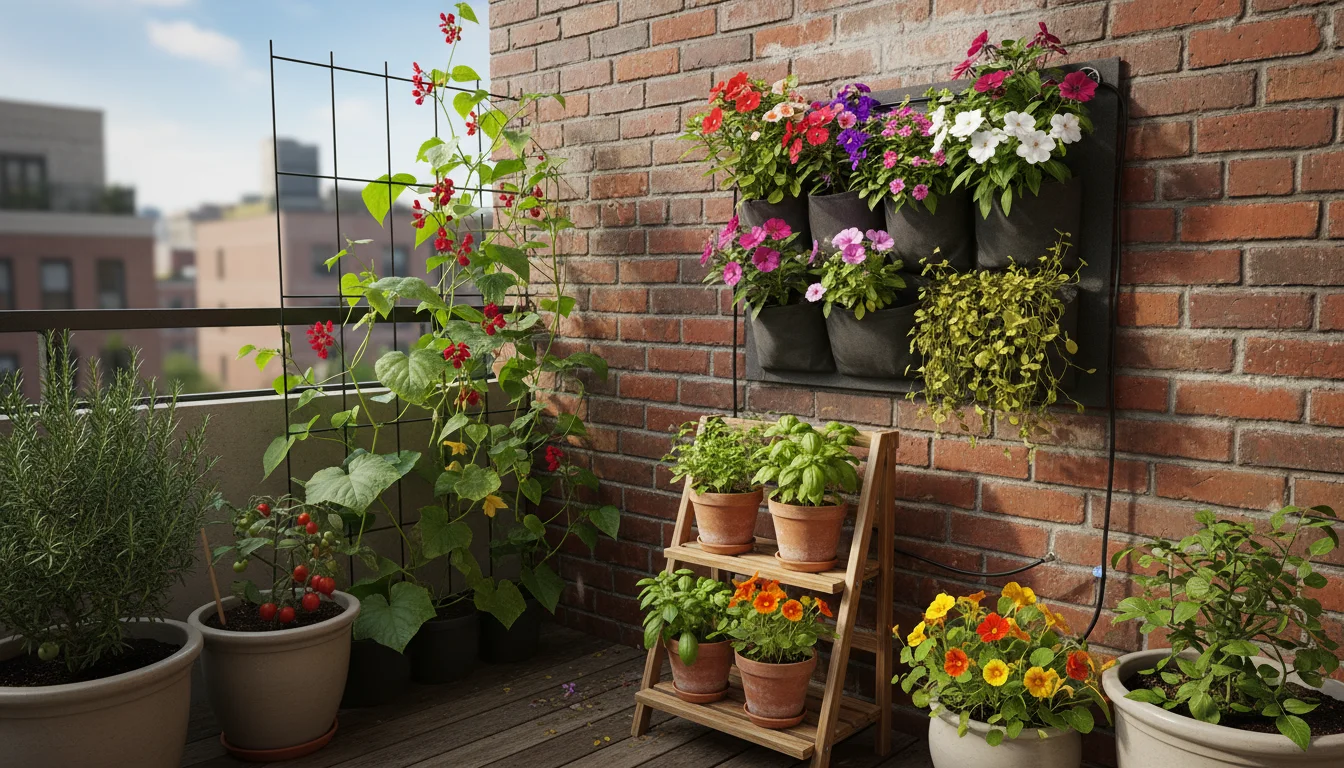
Vertical Victory
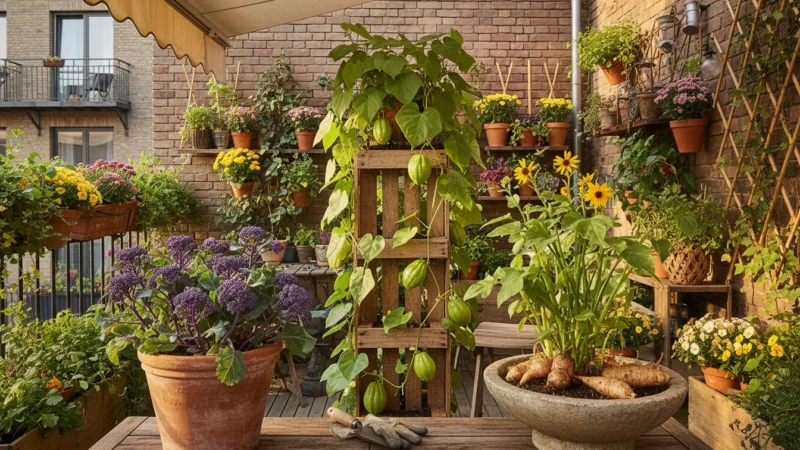
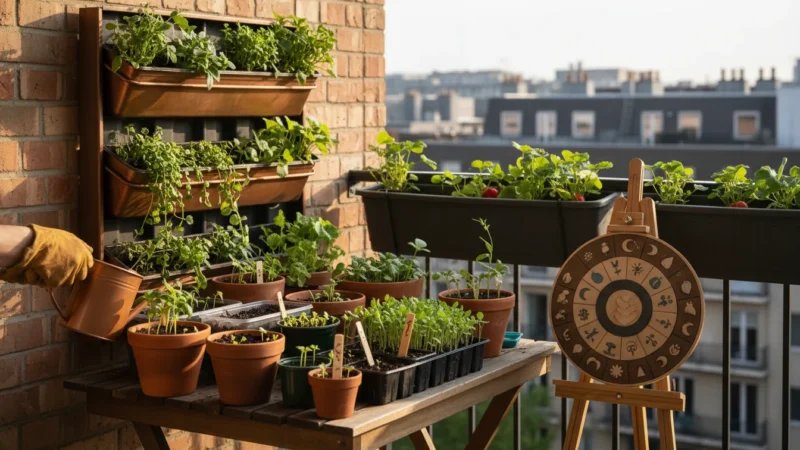
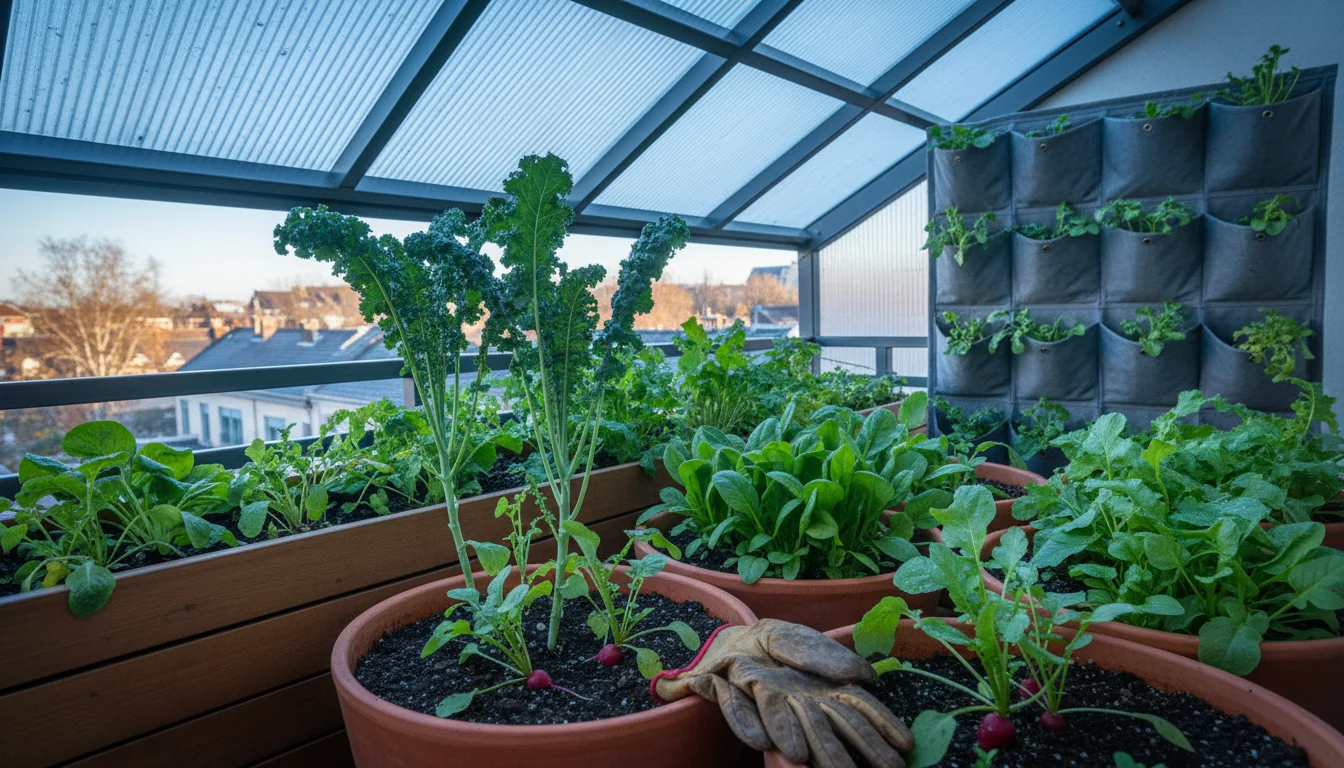
The number one rule for small spaces is to grow up, not out. Look for images of vertical gardening solutions in your seed catalogs or online. This includes:
- Stackable Planters: Ideal for herbs, strawberries, or small flowers.
- Wall-Mounted Pockets or Shelves: Create a green wall with succulents, herbs, or compact annuals.
- Trellises: Transform a wall into a support system for climbing plants like cucumbers, pole beans, or cherry tomatoes. Choose varieties specifically labeled as “bush” or “patio” for smaller spaces. For instance, ‘Patio Princess’ tomatoes offer a great yield in a compact form, making them perfect for a balcony.
- Hanging Baskets: Excellent for cascading flowers, trailing herbs, or even small berry plants like alpine strawberries.
Incorporating vertical elements on your dream board immediately expands your perceived gardening area, showcasing innovative balcony garden design ideas.
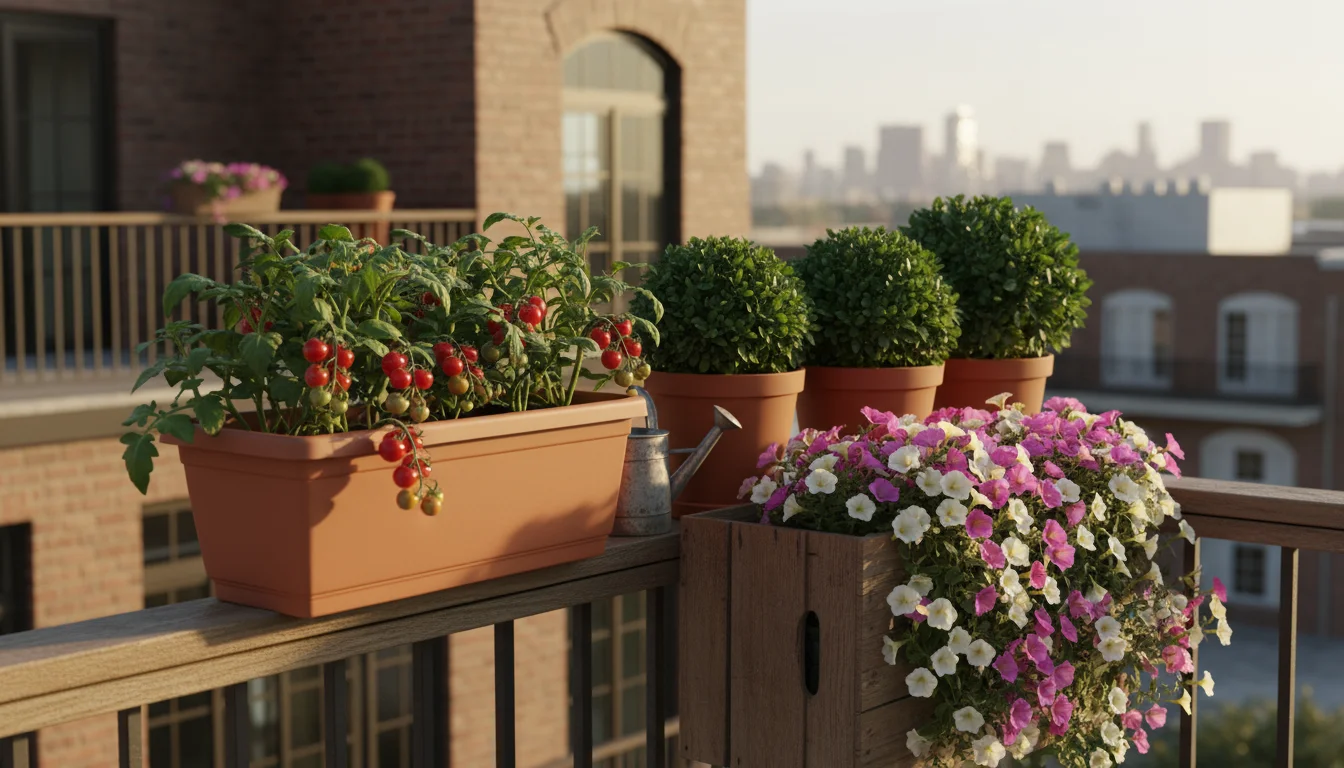
Compact Plant Power
Seed catalogs highlight varieties specifically bred for small spaces. Seek out keywords like “patio,” “bush,” “dwarf,” “compact,” or “container-friendly.”
- Vegetables: Instead of sprawling zucchini, look for bush zucchini. Choose ‘Tom Thumb’ peas, ‘Little Gem’ lettuce, or ‘Window Box Roma’ tomatoes. Many seed catalogs even feature charts comparing mature sizes of different varieties.
- Herbs: Most herbs adapt well to containers, but consider varieties like ‘Spicy Globe’ basil, which forms a neat mound, or creeping thyme that spills elegantly from pots.
- Flowers: Prioritize continuous bloomers that do not take up much space, such as dwarf petunias, alyssum, calendula, or nasturtiums (which also offer edible flowers).
Focusing on these smaller varieties ensures your containers remain manageable and productive, a key aspect of successful garden planning for compact areas.
Strategic Layout
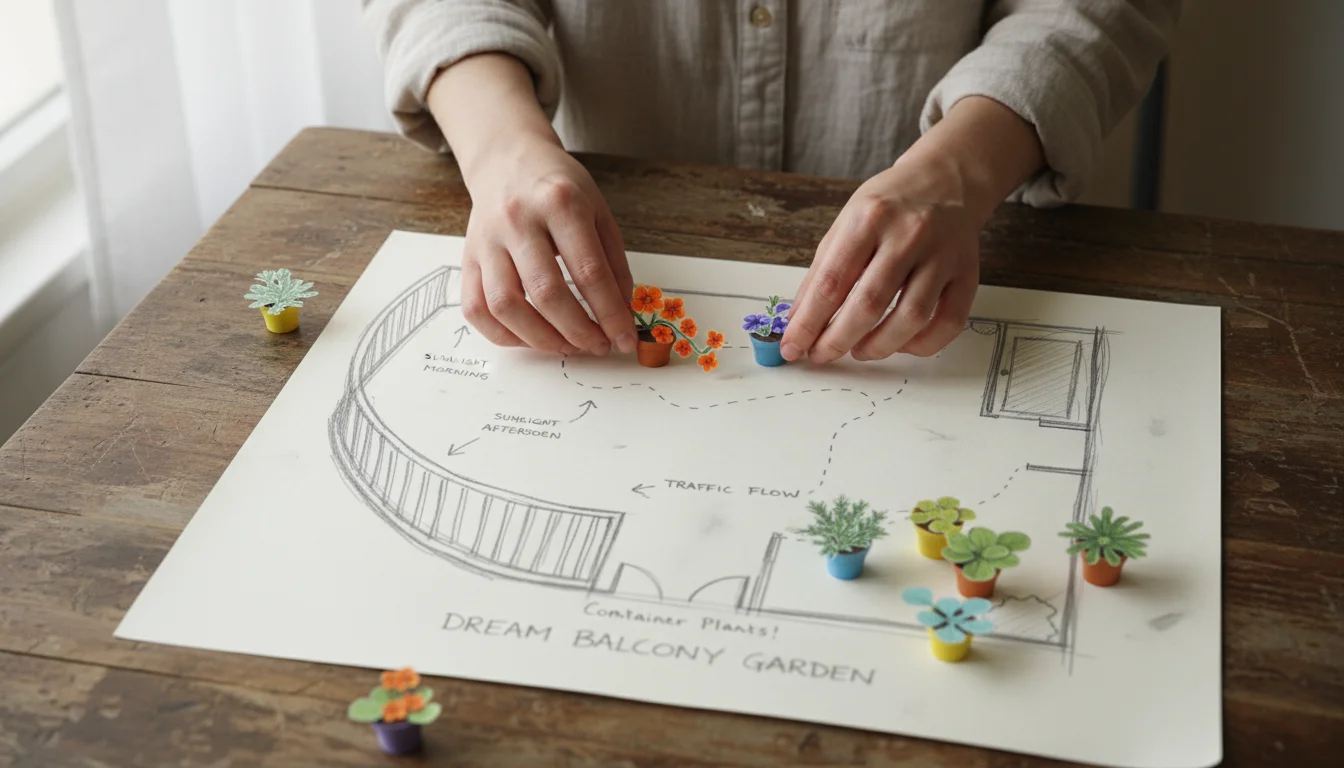
Use your dream board to experiment with the physical arrangement of your plants and containers. Consider:
- Sunlight Zoning: Place sun-loving plants where they get the most direct light, and tuck shade-tolerant plants into cooler, shadier spots. Your initial assessment of balcony conditions (Step 2) guides this.
- Traffic Flow: Ensure your layout leaves enough room for you to move around, water plants, and enjoy your space. Do not block doorways or walkways.
- Height Variation: Create visual interest by varying the heights of your plants and containers. Tall plants in the back, shorter ones in the front, or cascading plants from hanging baskets. This adds depth to your balcony garden design.
- Color and Texture: Use your dream board to play with plant combinations. Do certain colors clash, or do they complement each other? Mix fine-textured foliage with broad leaves for visual appeal.
By thoughtfully considering these design elements on your dream board, you ensure your balcony garden is not only productive but also aesthetically pleasing and functional. This detailed approach improves how to plan a container garden for next year, focusing on both beauty and practicality.
Integrating Eco-Friendly Practices into Your 2025 Plan
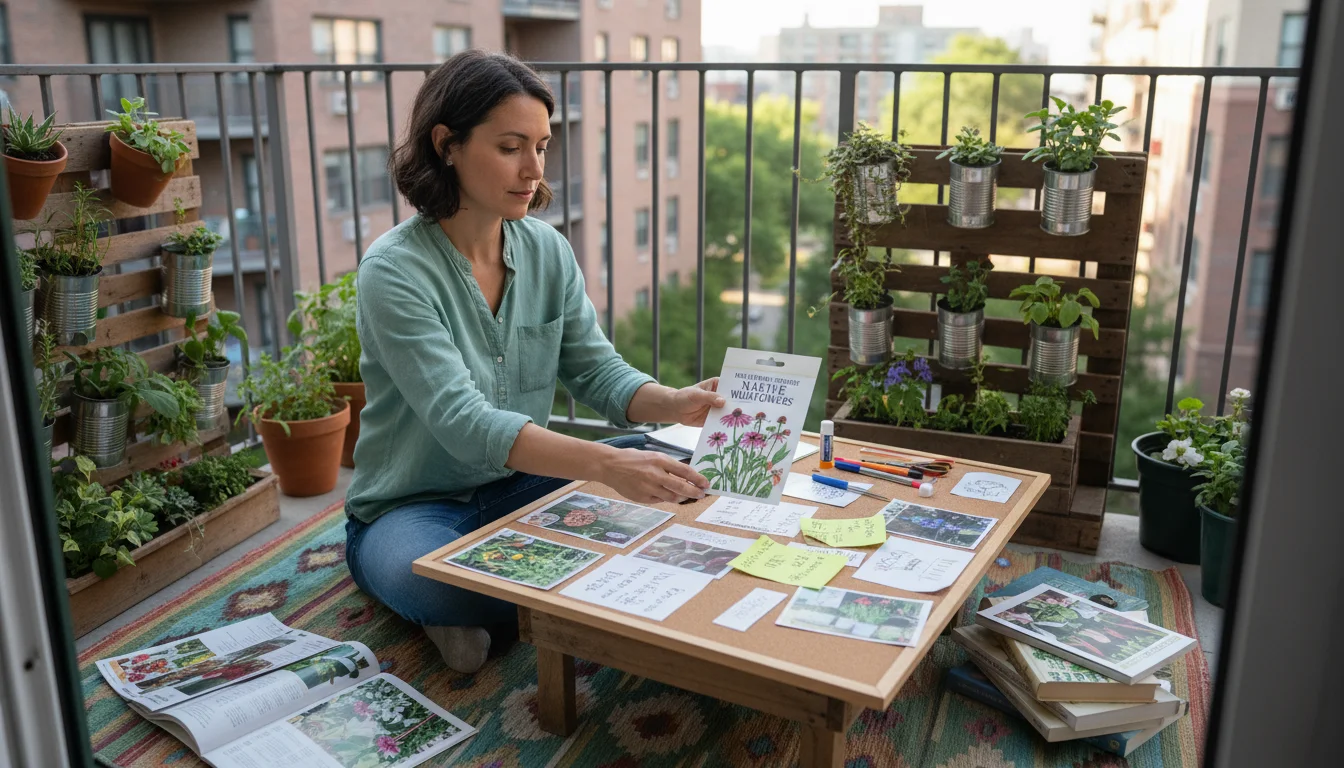
As a supportive gardening coach, I encourage you to weave sustainability into your garden planning from the very start. Your seed catalog dream board is an excellent place to integrate environmentally conscious choices for your 2025 balcony garden.
Prioritize Pollinator-Friendly Plants
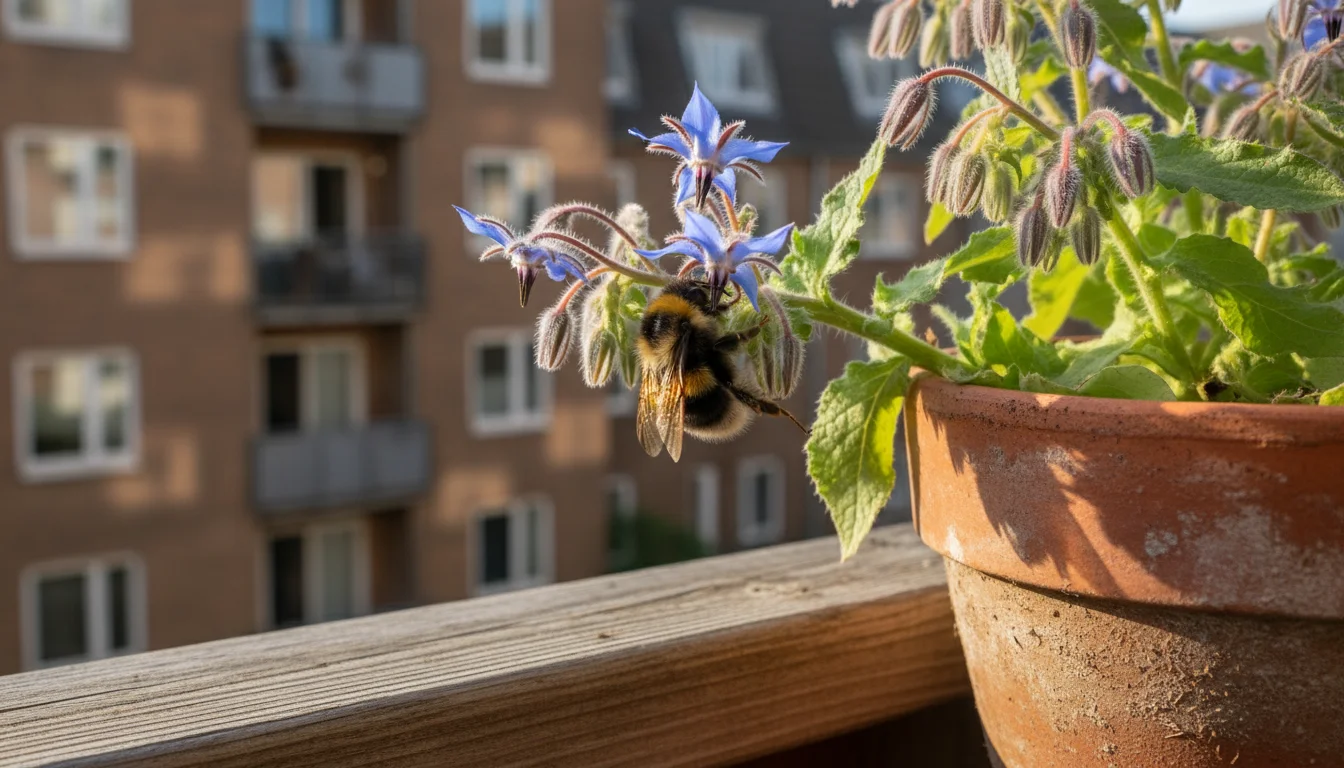
Many seed catalogs highlight plants that attract bees, butterflies, and other beneficial insects. Look for flowers like marigolds, zinnias, cosmos, or coneflowers. Even some herbs like borage and lavender are pollinator magnets. Including these on your dream board not only adds beauty to your space but also supports local ecosystems, even in a small urban setting. A vibrant balcony garden can become a crucial pit stop for pollinators.
Choose Open-Pollinated or Heirloom Varieties
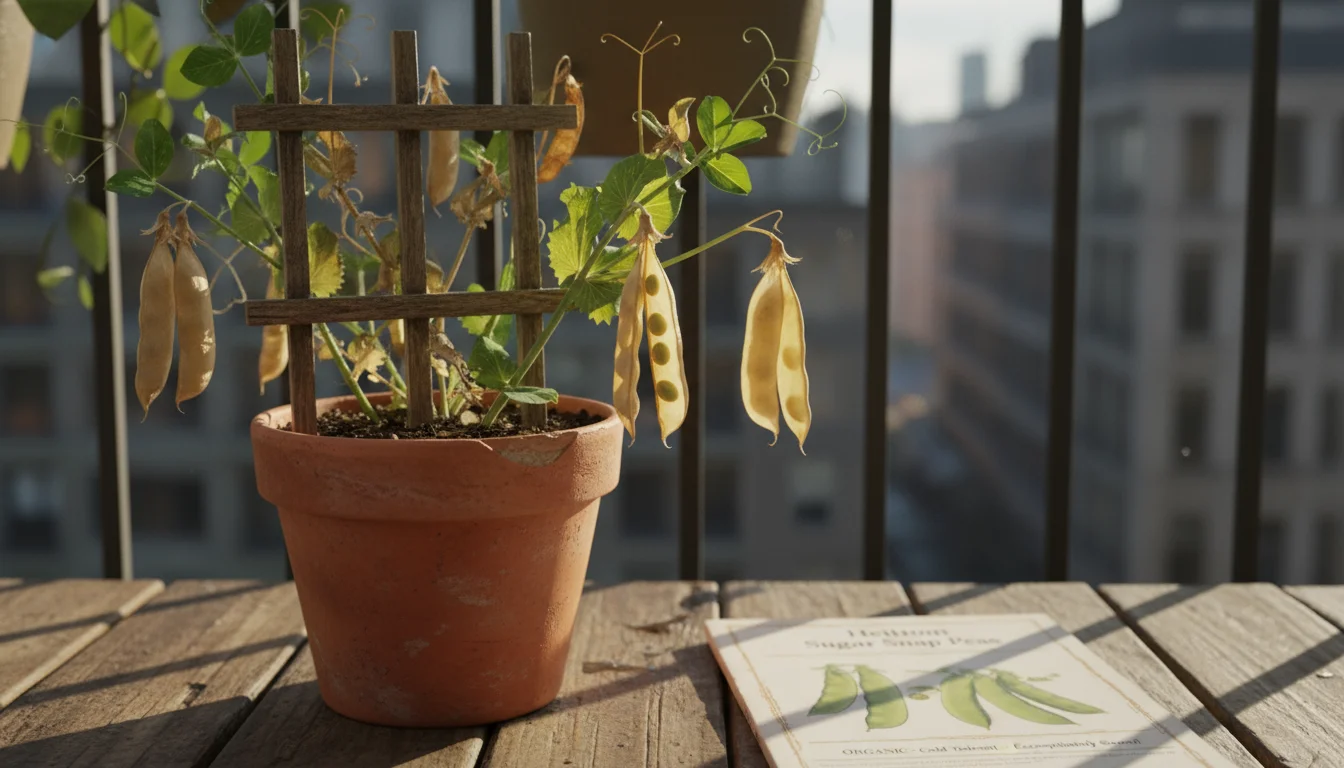
While hybrid seeds offer certain advantages, open-pollinated (OP) and heirloom varieties allow you to save seeds for future seasons. This practice reduces your reliance on purchasing new seeds every year, saves money, and preserves genetic diversity. As you browse catalogs, look for terms like “heirloom” or “open-pollinated” next to plant descriptions. Saving seeds from a healthy, productive plant you grew yourself is incredibly rewarding and a truly sustainable practice. For instance, saving beans or pea seeds is straightforward and yields great results.
Research Drought-Tolerant Options
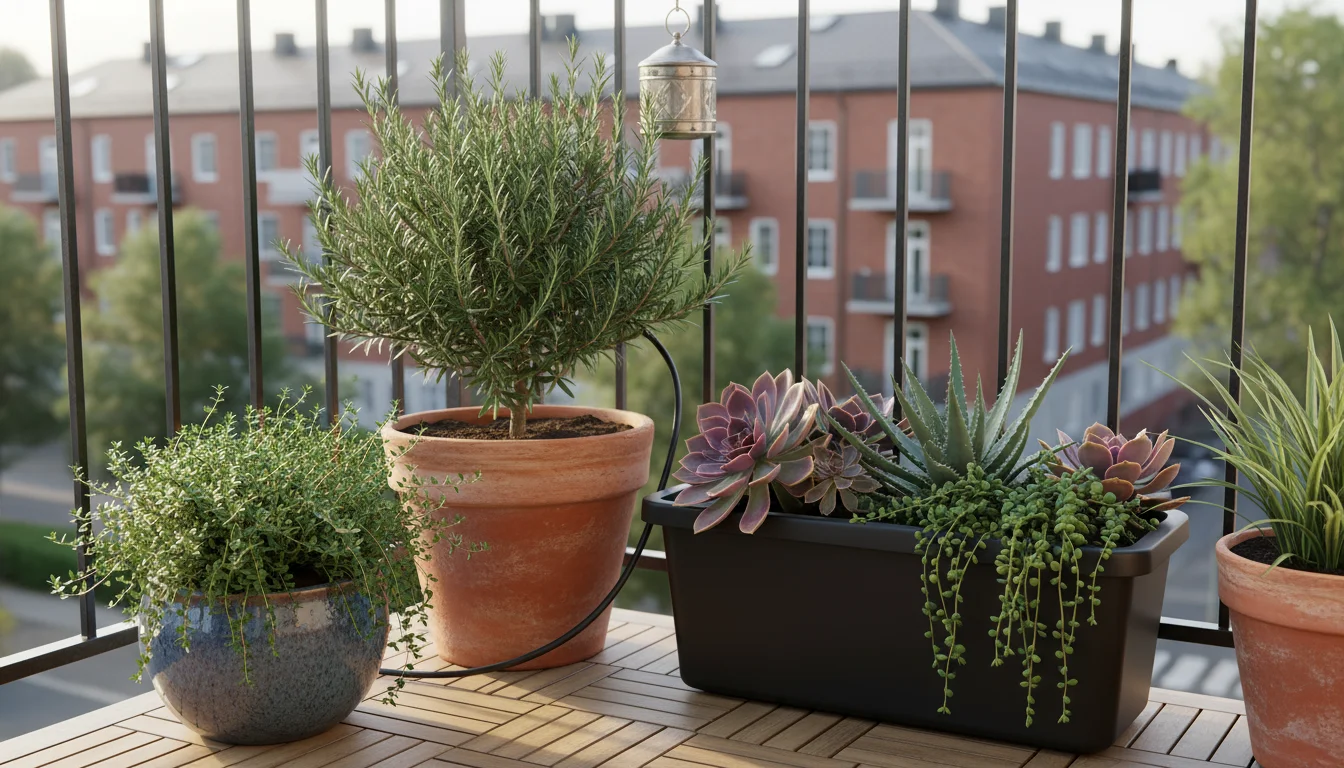
Water conservation is a key aspect of eco-friendly gardening. Identify plants on your dream board that thrive with less water once established. Succulents, certain herbs like rosemary and thyme, and many Mediterranean plants are good choices for containers. Also, consider using self-watering containers or integrating a drip irrigation system into your plan, even a small, DIY one, to optimize water use. This thoughtful selection reduces your environmental footprint.
Consider Companion Planting
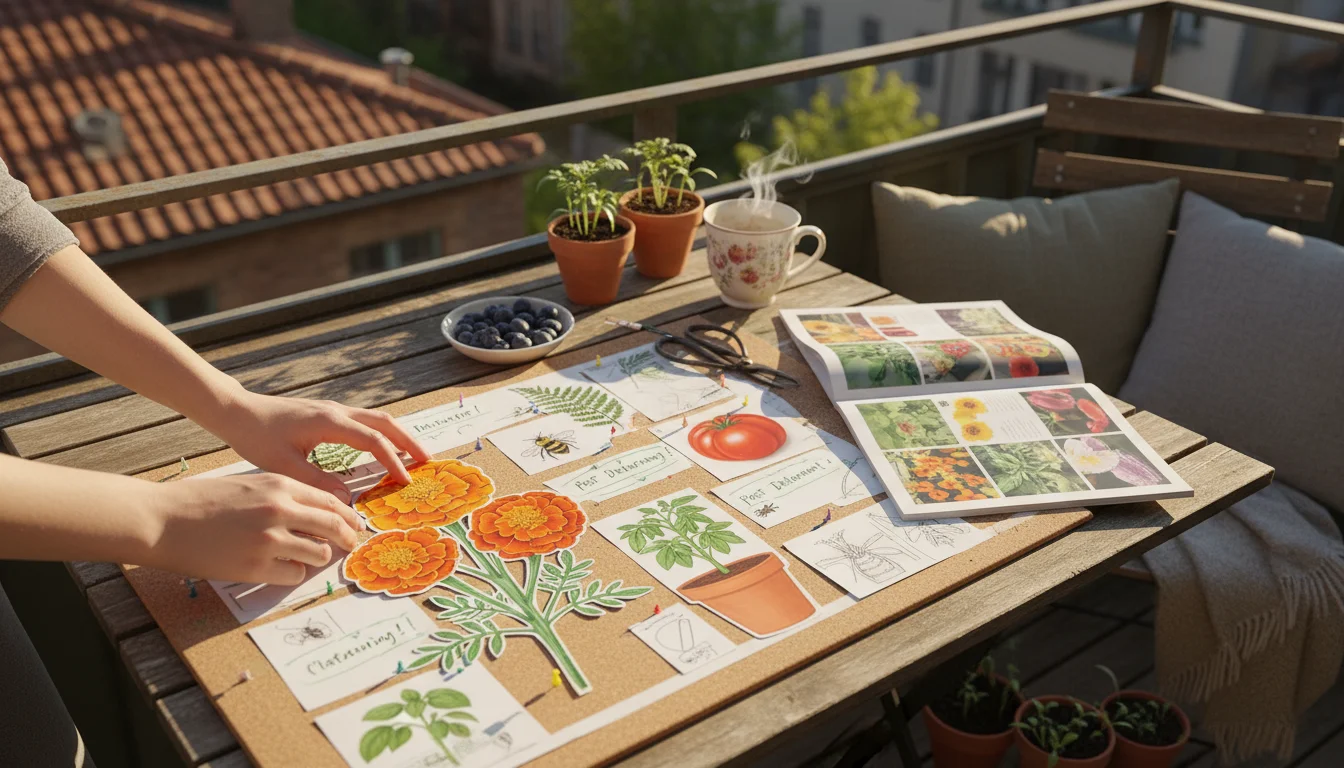
Companion planting involves growing specific plants together that benefit each other, often by deterring pests or attracting beneficial insects. For example, marigolds can help deter nematodes, and nasturtiums can act as a trap crop for aphids. While you might not find specific companion planting charts in a seed catalog, you can certainly cut out images of these beneficial plants and add notes to your dream board about their intended pairings. This natural pest management reduces the need for chemical interventions, keeping your balcony ecosystem healthier.
Plan for Soil Health
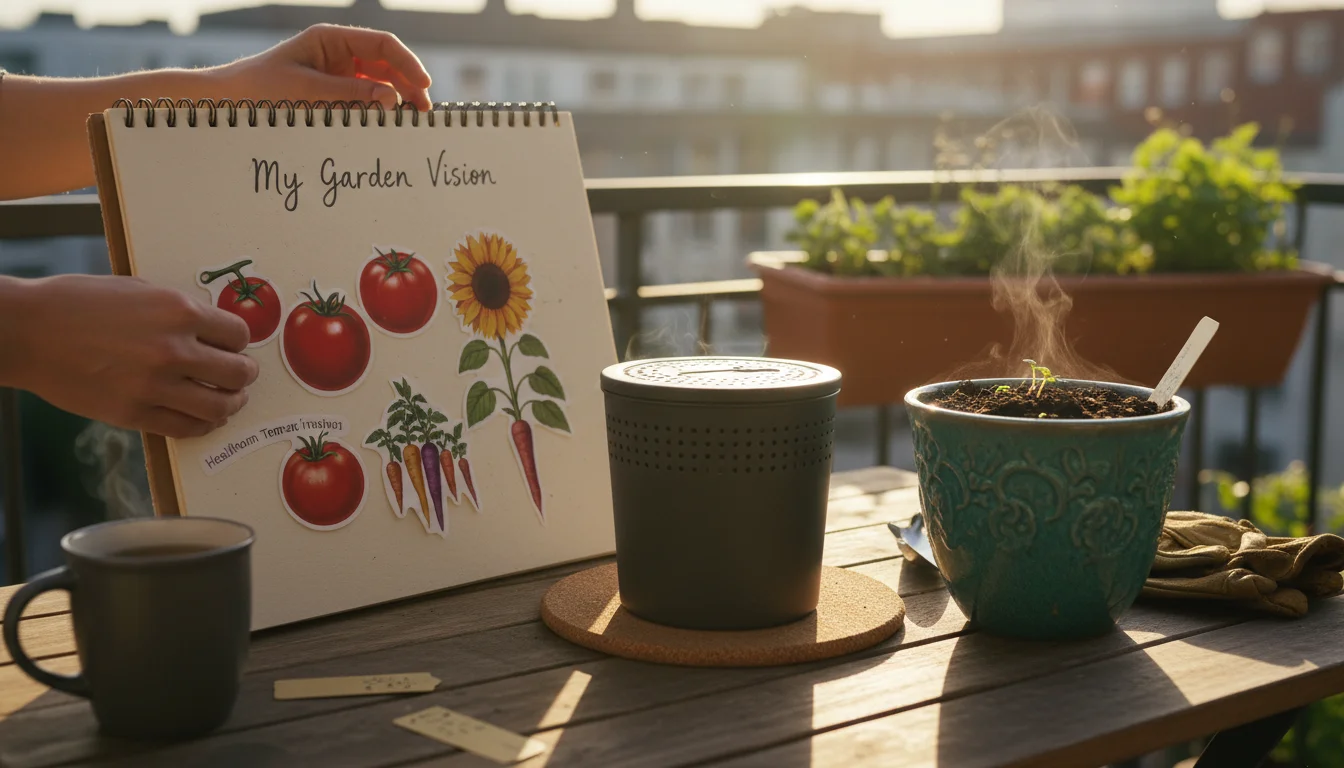
While you might not cut out “compost” from a catalog, you can certainly make a note on your dream board to prioritize healthy soil. Research sources for good quality, organic potting mix or plan to create your own by amending existing soil with compost. Healthy soil is the foundation of a thriving garden and reduces the need for synthetic fertilizers. Your planning vision board can include reminders to research local compost sources or even a compact vermicomposting bin for your balcony.
By consciously incorporating these eco-friendly principles into your initial garden planning, you build a sustainable and resilient balcony garden from the ground up. This forward-thinking approach ensures your dream garden is not only beautiful and productive but also kind to the planet.
Avoiding Common Planning Pitfalls for Container Gardens
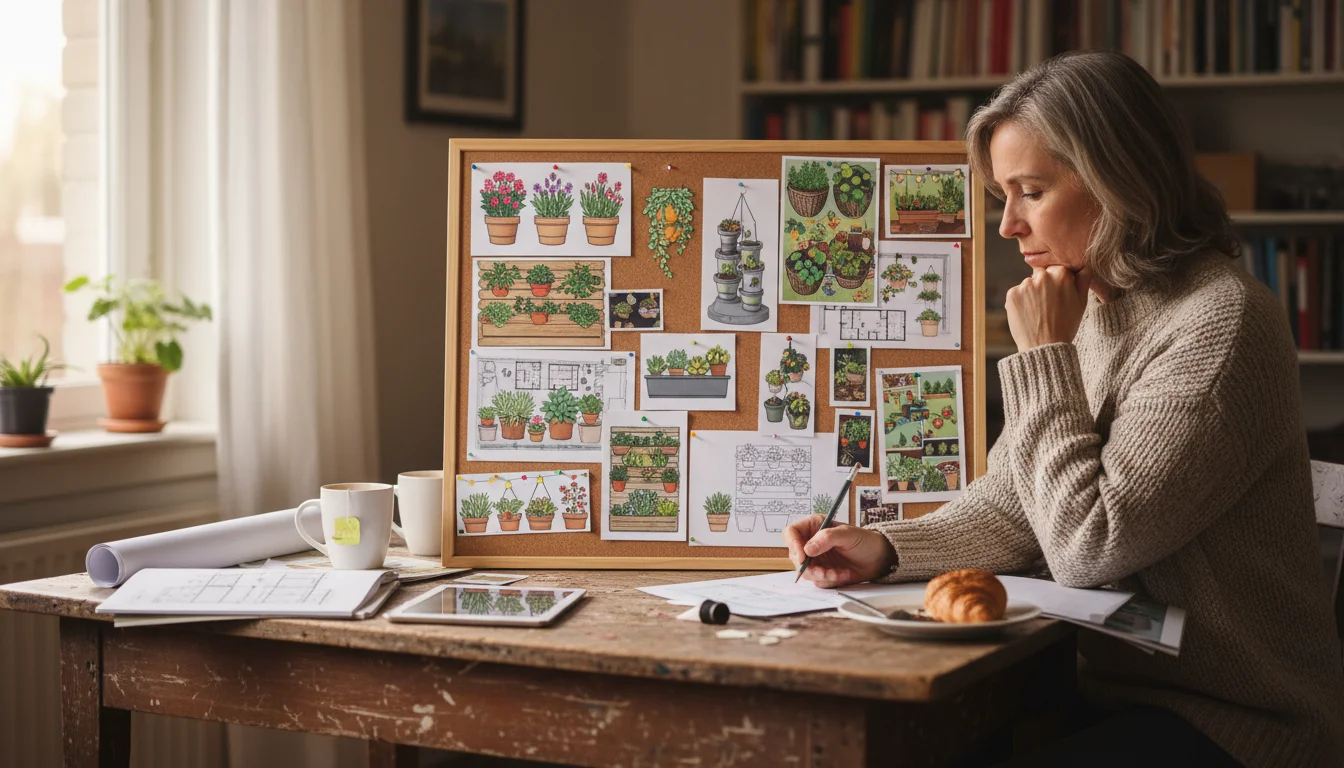
Even with the best intentions, garden planning can sometimes lead to avoidable mistakes. Being aware of these common pitfalls helps you create a more successful and less frustrating 2025 balcony garden. Use your dream board as a tool to consciously steer clear of these issues:
Overcrowding Your Containers
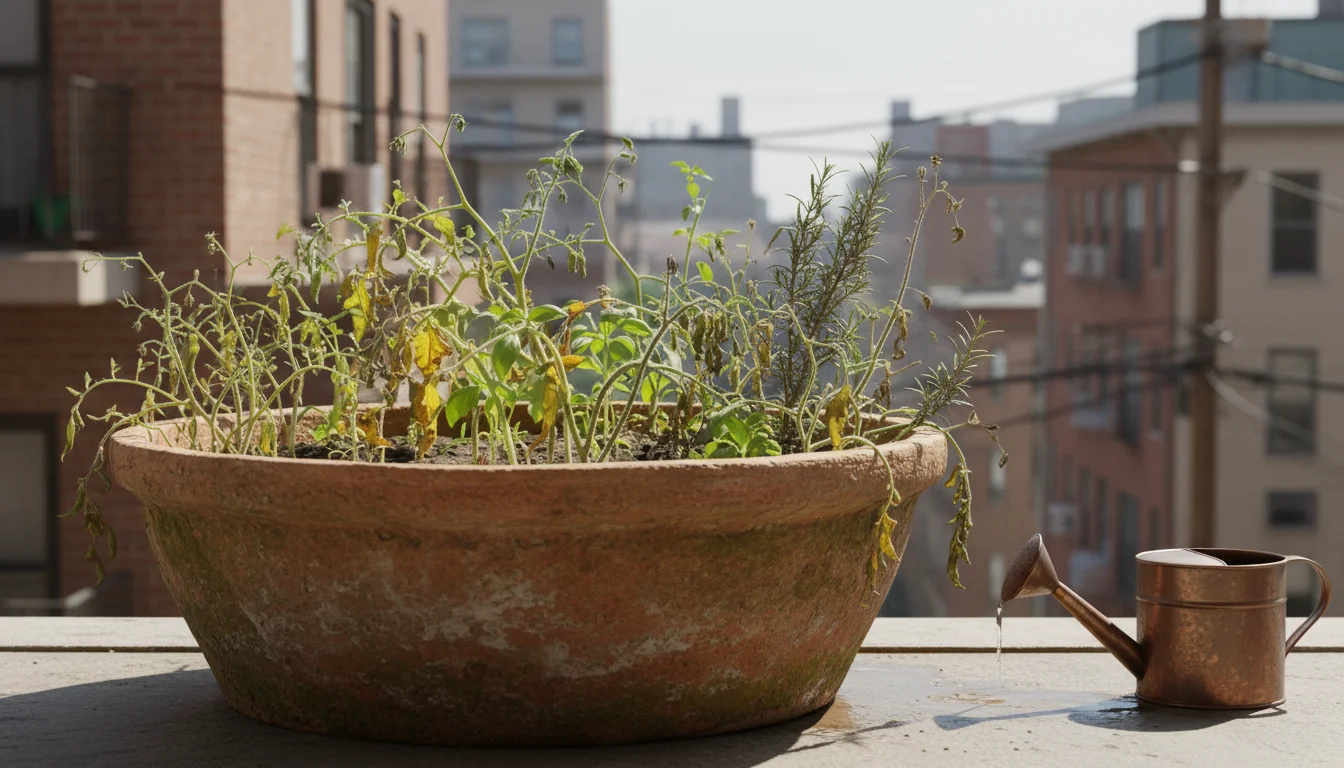
It is tempting to plant many seeds or seedlings in a single container, especially when space is limited. However, overcrowding leads to poor air circulation, increased pest and disease pressure, and plants competing for limited nutrients and water. When selecting plants from seed catalogs, always pay close attention to the “mature size” and “spacing” recommendations. If a packet says a tomato needs 24 inches of space, it means it needs 24 inches for a healthy root system and airflow. On your dream board, resist the urge to cram too many pictures into one “container” section. Plan for adequate spacing based on mature plant size, not just initial seedling size.
Ignoring Sunlight Requirements
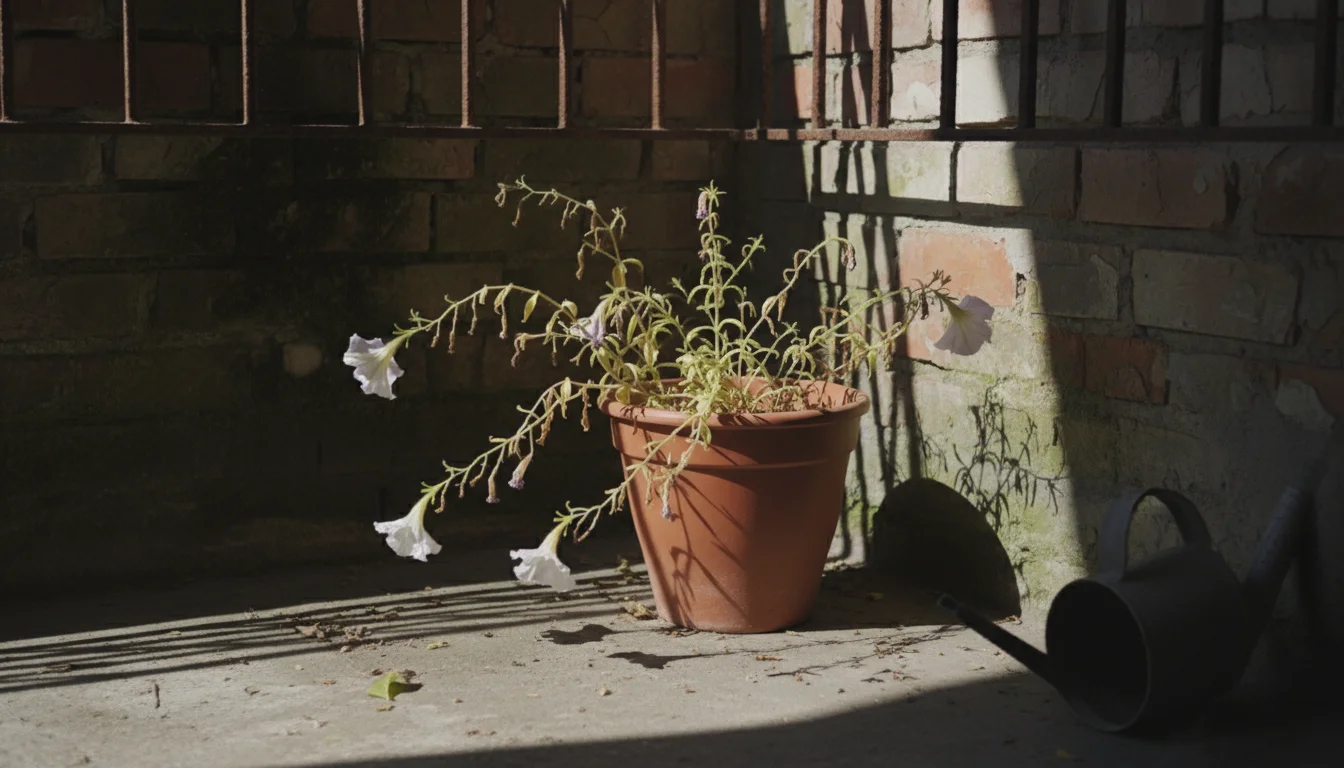
This is perhaps the most frequent mistake. A beautiful sun-loving flower will languish in a shady spot, and a shade-loving lettuce will bolt quickly in full, intense sun. Your careful assessment of your balcony’s sunlight in Step 2 of the dream board creation is critical here. As you review your clippings, double-check the light requirements for each plant. If your dream board has many full-sun plants but your balcony only gets 3 hours of direct light, you need to adjust your selections. Be realistic about your light conditions. There are plenty of fantastic plants for every light level; the key is matching the plant to the place.
Underestimating Container Size
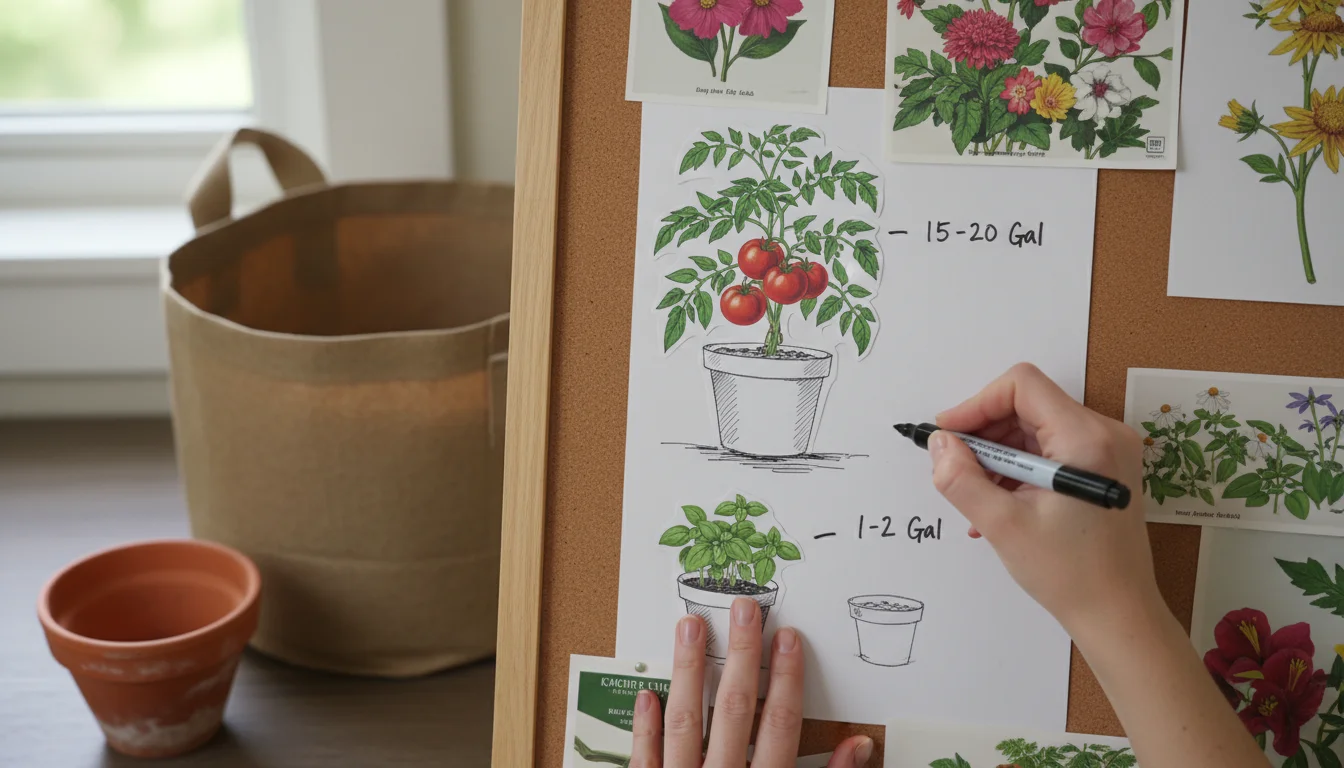
A small seedling grows into a large plant that needs ample root space to thrive. Using containers that are too small restricts root development, leading to stunted growth, nutrient deficiencies, and constant watering demands. Many seed catalogs specify ideal container sizes for particular varieties. For example, a single indeterminate tomato plant needs at least a 15-20 gallon pot, while most herbs are happy in 1-2 gallon pots. On your dream board, make notes about the appropriate container size next to each plant image. Planning for the correct container size prevents unnecessary stress for both you and your plants. Remember, “drainage” refers to how well water moves through the soil and out of the pot; good drainage is essential, and larger pots generally offer more stable moisture levels.
Neglecting Drainage
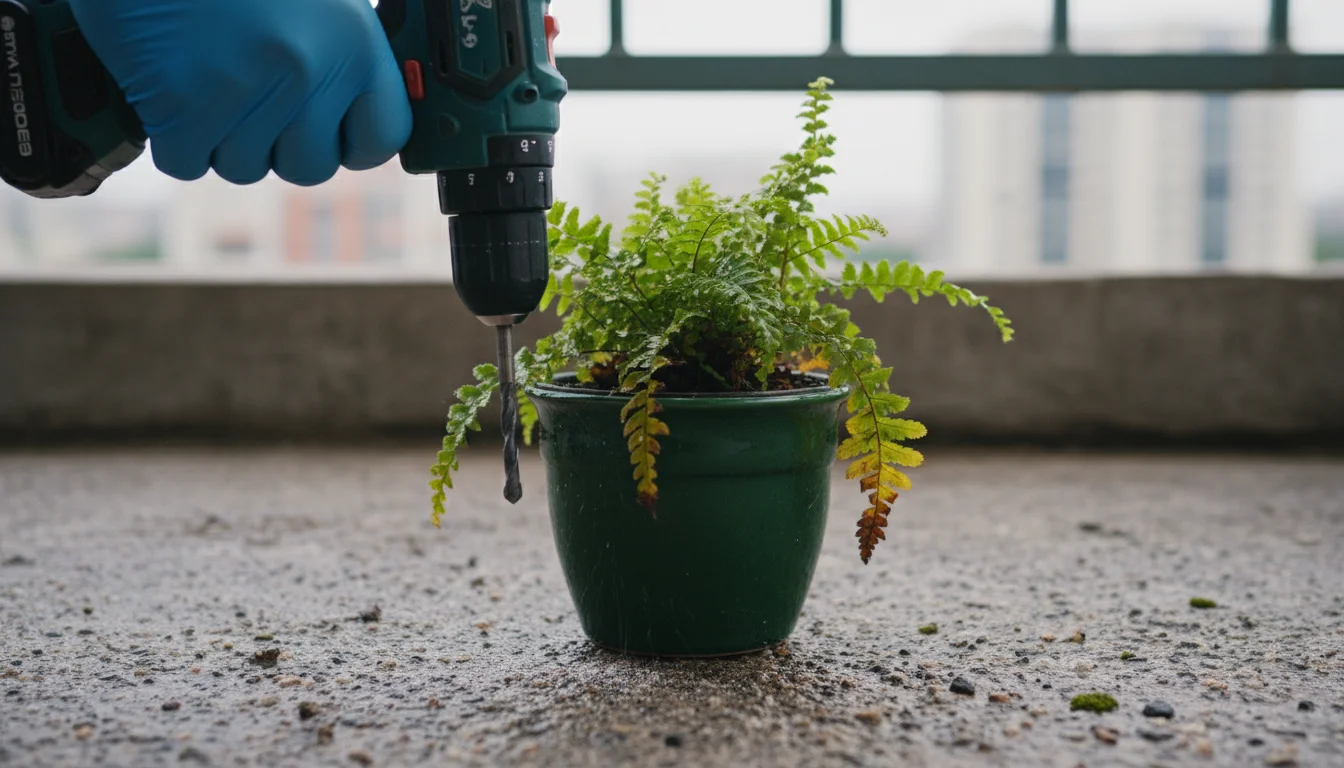
All containers must have drainage holes. Without them, water accumulates at the bottom, suffocating roots and leading to root rot. Even if a container looks attractive, if it lacks drainage, you must drill holes or use it as a cachepot (a decorative outer pot) with a smaller, draining pot inside. As you envision container types on your dream board, mentally or physically check for drainage. Never put gravel at the bottom of a pot; it raises the water table and exacerbates drainage issues rather than solving them. Quality potting mix and drainage holes are the only real solutions.
Ignoring Water and Nutrient Needs
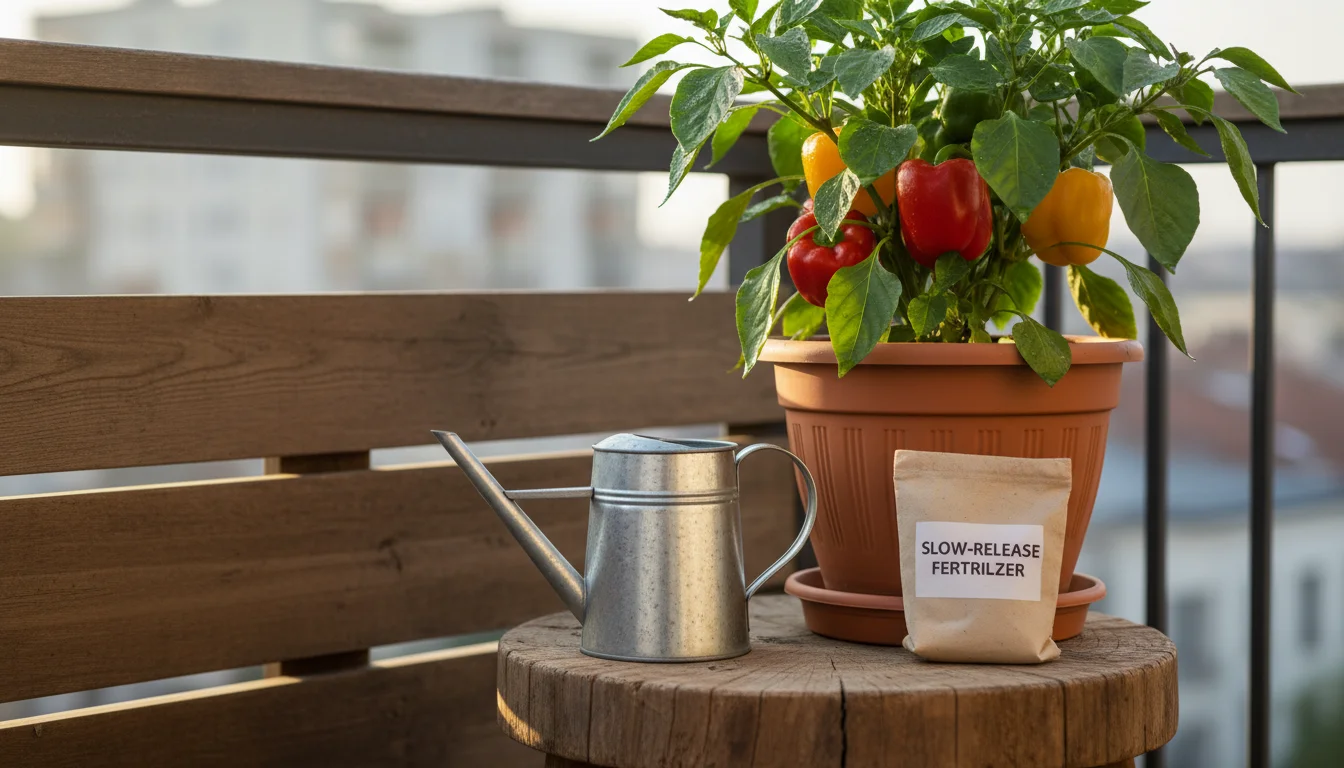
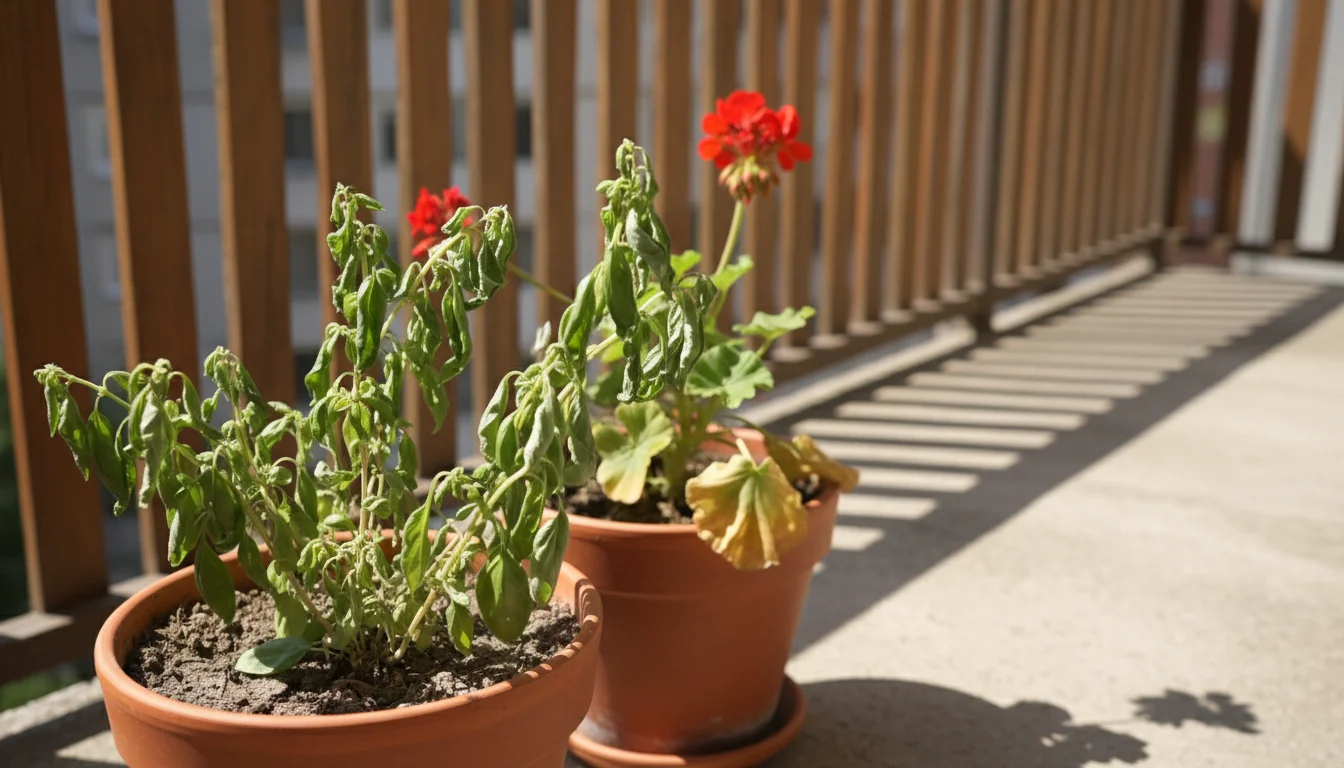
Container plants rely entirely on you for water and nutrients. They dry out faster than in-ground gardens and deplete nutrients more quickly. Your dream board planning should include a strategy for consistent watering and feeding. Are you incorporating self-watering planters? Do you have a watering can handy? Are you planning for slow-release fertilizer or regular liquid feeding? Make notes about these considerations. For instance, plants like peppers and tomatoes are heavy feeders and will require regular replenishment of nutrients throughout the growing season. Planning for these needs prevents mid-season struggles.
By proactively addressing these common pitfalls during your fall garden planning, you lay the groundwork for a truly successful and enjoyable 2025 gardening season. Your dream board helps you visualize solutions and make informed choices, ensuring your balcony garden thrives.
Bringing Your Dream Board to Life: Next Steps
Your Fall Seed Catalog Dream Board is more than just a collage; it is a dynamic plan for your perfect 2025 balcony garden. Now that you have created it, here are the actionable steps to transform your vision into reality, moving from inspiration to tangible action.
Step 1: Deep Dive Research
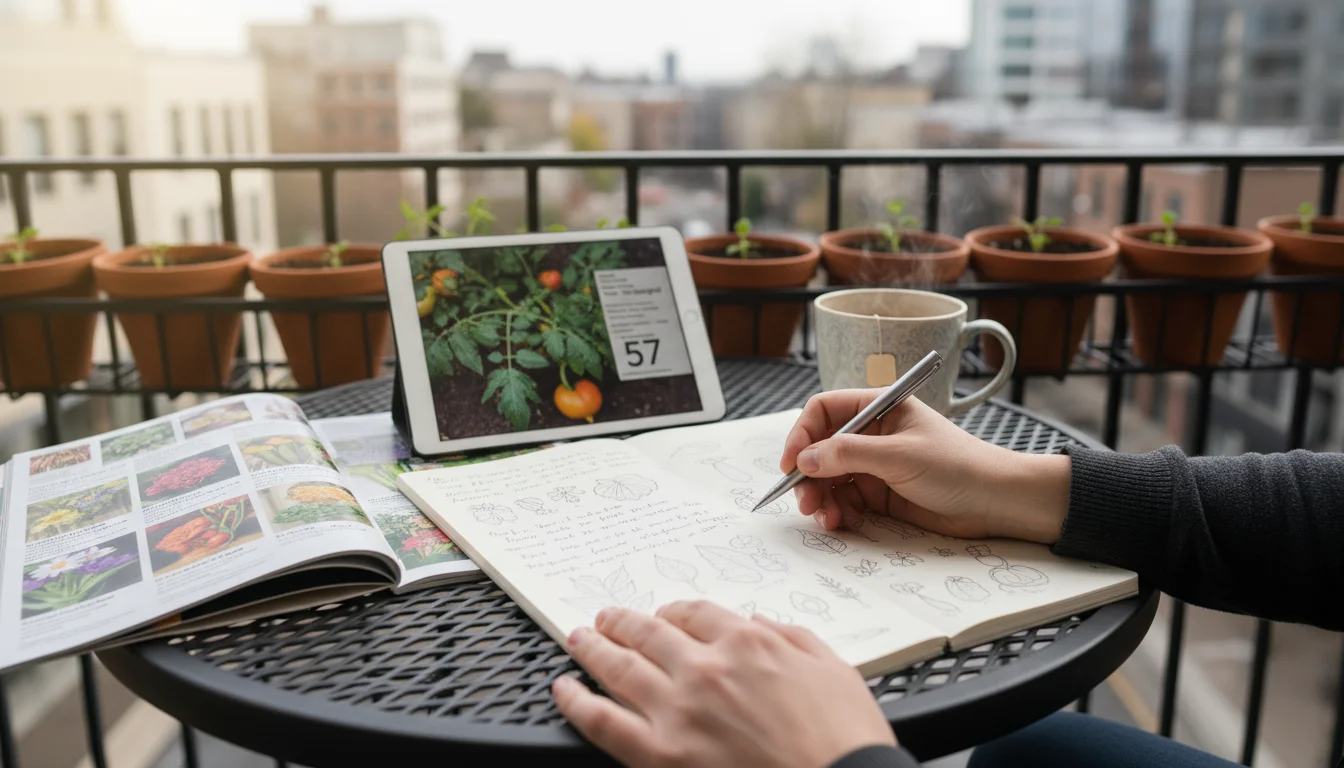
With your dream board as your guide, delve into more specific research for each chosen plant. Use your notebook or digital document to record important details. This is where you move beyond just pretty pictures to practical knowledge. For each plant, research:
- Specific Variety Details: Not all ‘Sweet Basil’ is the same. Look up the specific variety name from your catalog clipping for detailed characteristics.
- Days to Maturity: This is crucial for planning your harvest schedule, especially if you want multiple successions of crops.
- Pest and Disease Resistance: Some varieties offer natural resistance to common issues. Choosing these reduces future problems.
- Companion Planting: Confirm good and bad neighbors for your chosen plants.
- Container-Specific Needs: Verify recommended pot size, watering frequency for containers, and fertilization schedule.
- Sourcing: Identify which seed companies carry your desired varieties.
University extension services offer excellent, research-based information on specific plant care, acting as a reliable resource for your garden planning.
Step 2: Inventory and Acquire Containers
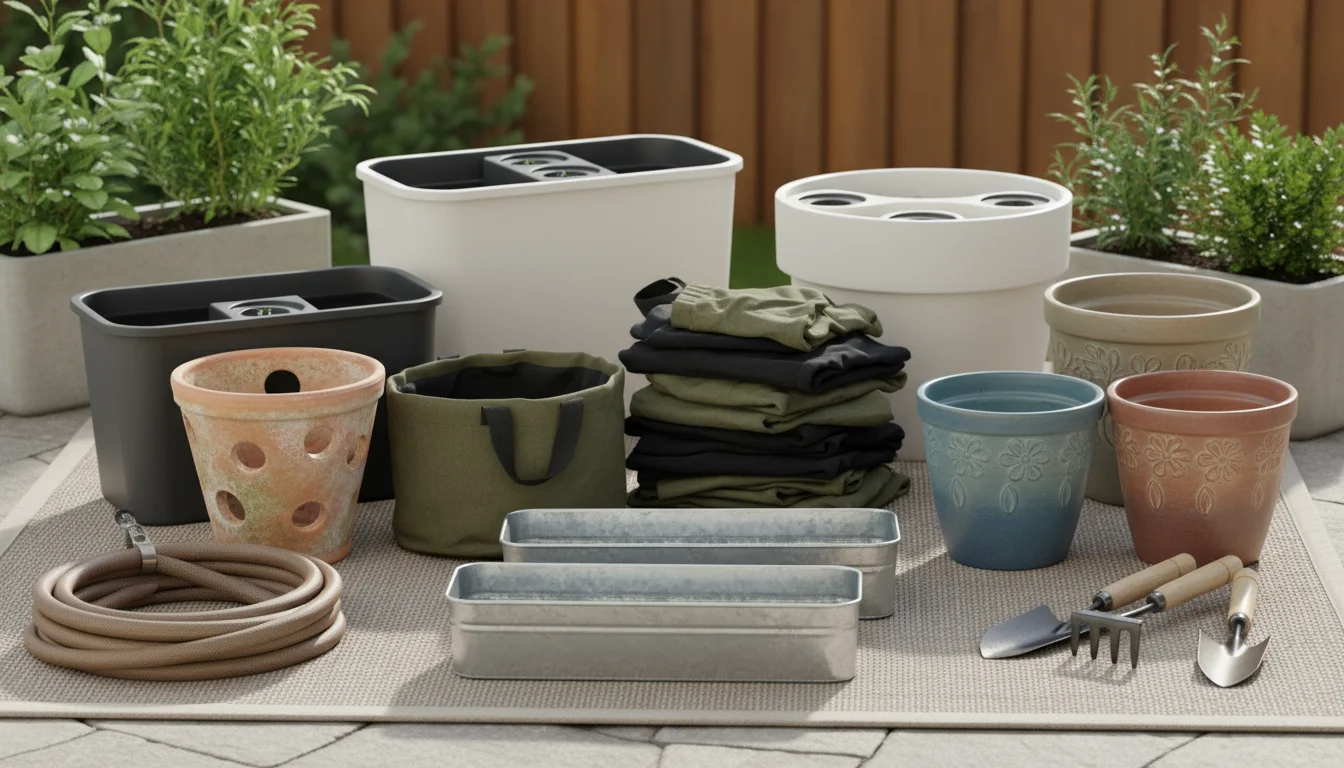
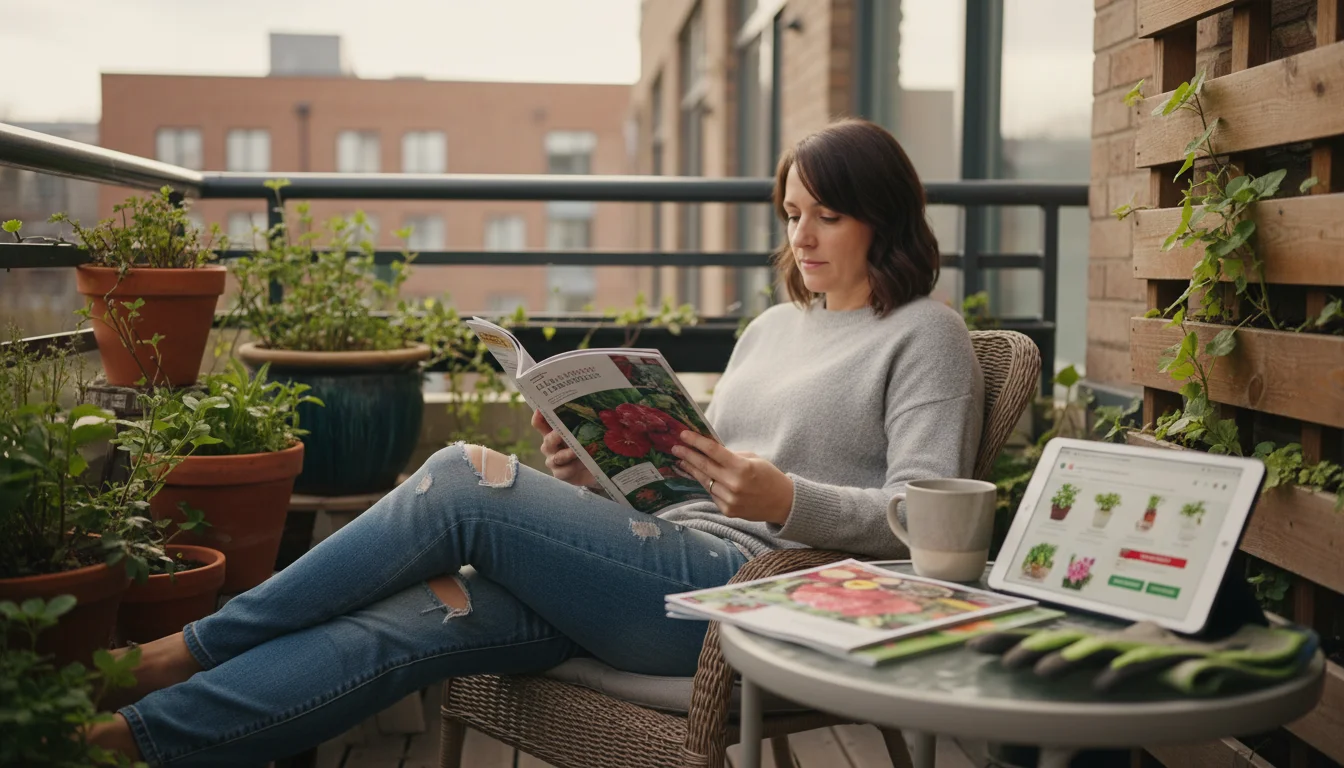
Review your dream board and the notes you made about container sizes. Take an inventory of your existing pots, grow bags, and vertical planters. Do you have enough, and are they the right sizes? This is the ideal time to repurpose old containers or scout for new ones. Look for sales on durable, lightweight options. Consider materials like fabric grow bags, which are excellent for root aeration, or self-watering planters that reduce watering frequency. Remember, good drainage is non-negotiable for all containers.
Step 3: Source Your Seeds and Seedlings
Once you finalize your plant list and understand their needs, it is time to think about acquiring your seeds or starts. During late fall or early winter, many seed companies offer discounts or free shipping. Place your seed orders early to ensure you get the varieties you want, especially popular or unique options. For plants you prefer to buy as seedlings (like certain delicate flowers or larger vegetable starts), research local nurseries or garden centers that carry them. Knowing your source ahead of time saves last-minute scrambling.
Step 4: Prepare Your Potting Mix
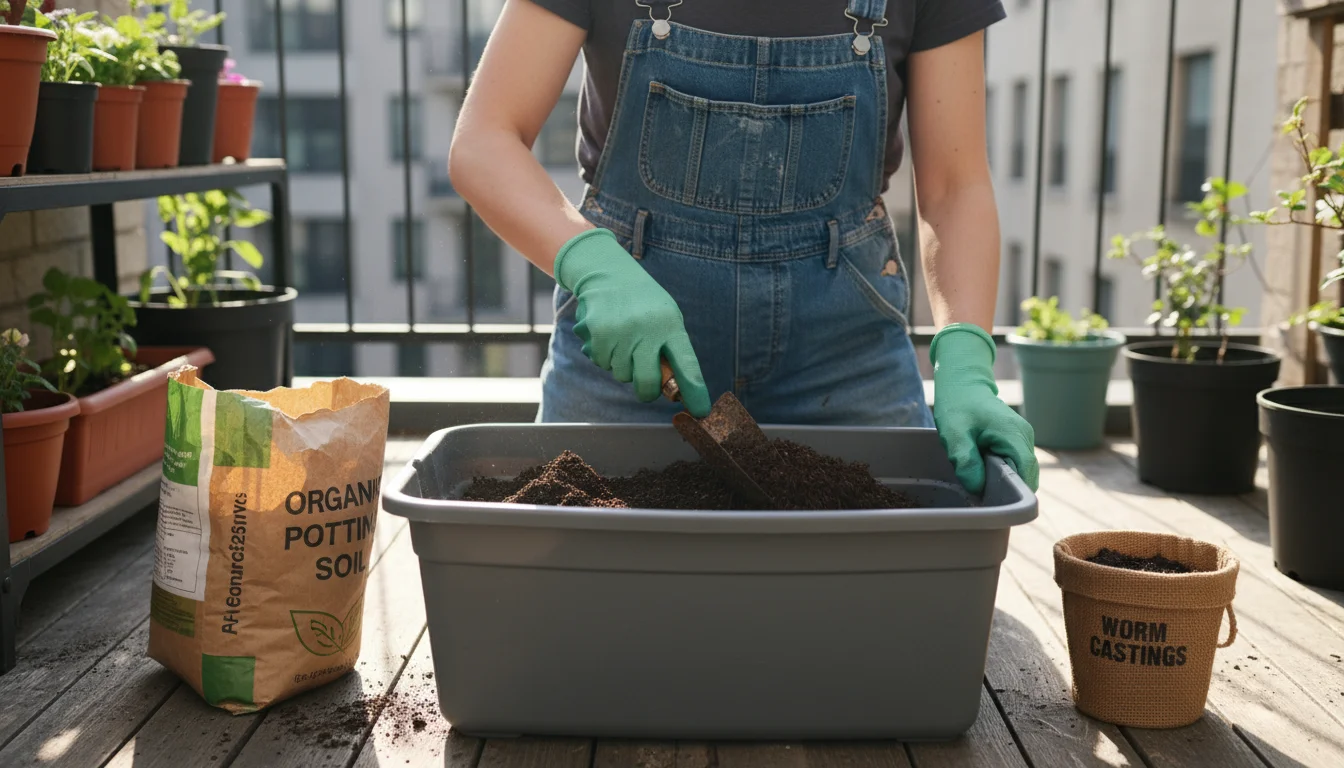
Do not wait until planting day to think about soil. A high-quality potting mix is paramount for container gardening success. It needs to be lightweight, well-draining, and rich in organic matter. Purchase bags of potting mix, or plan to create your own blend if you have experience. Consider amending with compost or worm castings for added nutrients and beneficial microbes. Having your soil ready in advance makes planting day much smoother.
Step 5: Create a Planting Schedule
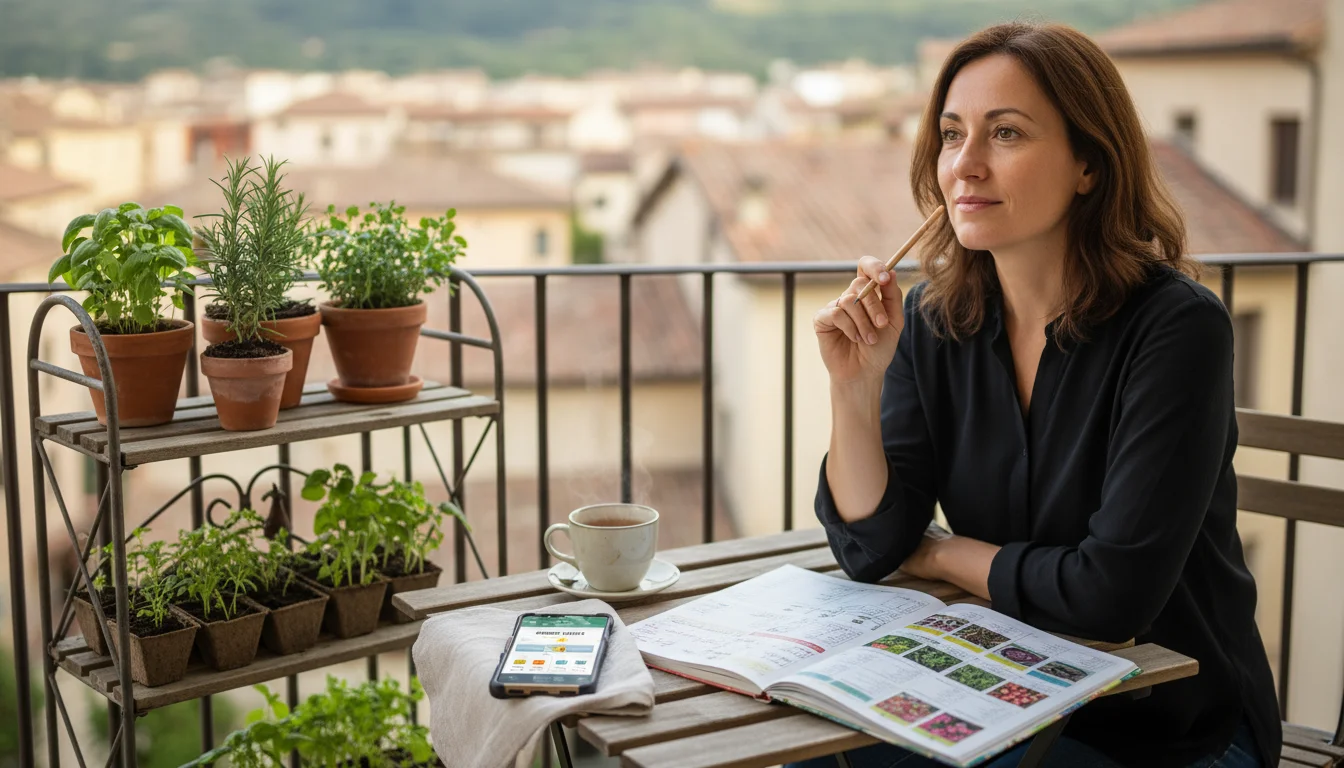
Using the “days to maturity” and your local frost dates, create a planting schedule. Determine when you need to start seeds indoors, when to harden them off, and when it is safe to plant outdoors. For balcony gardeners, understanding your microclimate (how your balcony differs from general regional weather) is important. A protected balcony might allow for earlier planting than an open yard. A well-organized schedule ensures you plant at the optimal time for maximum success, taking the guesswork out of how to plan a container garden for next year.
Your Fall Seed Catalog Dream Board is a powerful first step in your garden planning journey. By following these next steps, you systematically transform your inspiring vision into a thriving, beautiful, and productive balcony garden.
Frequently Asked Questions
Can I create a digital dream board instead of a physical one?
Absolutely! A digital dream board works just as effectively. You can use Pinterest, a digital collage app, or even a simple document where you paste images and notes from online seed catalogs. The core benefit comes from actively collecting and organizing your ideas, regardless of the medium. Digital dream boards offer the advantage of easy editing and sharing.
How many seed catalogs should I collect for my dream board?
There is no strict number. Start with 3-5 diverse catalogs to get a good range of inspiration. Too few might limit your options, while too many could become overwhelming. Focus on quality over quantity, selecting catalogs known for specific plant types you are interested in, whether vegetables, flowers, or herbs. Many companies also offer online catalogs, expanding your reach without increasing clutter.
What if I find too many plants I love? How do I narrow down my choices for my balcony garden design?
This is a common and fun problem! Use your balcony’s actual conditions as your primary filter. Eliminate plants that truly will not thrive in your specific sunlight or space. Then, prioritize based on your main goals: Are you focused on growing food, attracting pollinators, or creating beauty? Rank your “must-haves.” Consider a theme for your garden, such as a “pizza garden” or a “cutting flower patch,” to guide your selections. Remember, you can always rotate plants year to year.
Is it too early to plan my garden in the fall for the following spring?
Definitely not! Fall is arguably the best time for garden planning. It provides a calm period for reflection, research, and creative visualization before the hectic pace of spring planting. Planning in the fall allows you to assess the previous season’s successes and failures, order seeds early for the best selection, and secure necessary supplies. This proactive approach sets you up for a much more organized and successful spring growing season.
Should I include companion planting ideas on my dream board?
Yes, including companion planting ideas is an excellent way to integrate beneficial relationships into your garden design. You can cut out images of specific companion plants (like marigolds or nasturtiums) and place them near the vegetables or flowers they would benefit. Add notes about why these pairings work. This visual reminder helps you implement natural pest control and enhance plant health, contributing to a more sustainable balcony garden.
For trustworthy gardening information, visit:
University of Maryland Extension — Home & Garden, Rutgers New Jersey Agricultural Experiment Station, University of Arizona Cooperative Extension — Gardening, University of Alaska Fairbanks Extension — Gardening and University of Georgia Extension — Gardening. These organizations provide expert, research-based advice for gardeners at all levels.
Disclaimer: This article is for informational purposes only and is not a substitute for professional gardening advice. Always consult local extension services or horticulture experts for region-specific guidance.
Leave a Reply