
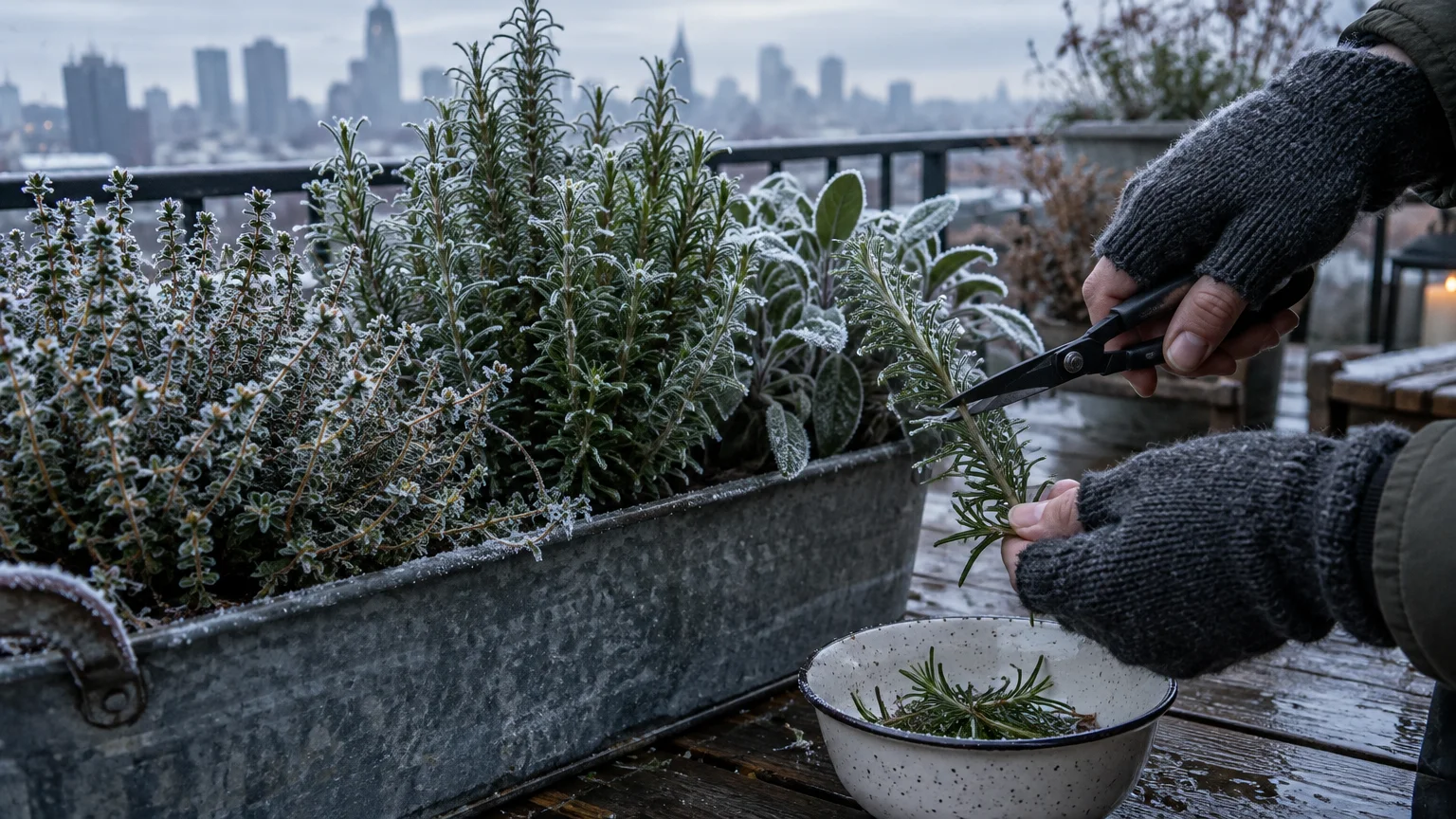
Fresh culinary herbs do not need to disappear when frosty temperatures sweep across your patio. You can harvest vibrant, savory foliage all season long with the proper plant selections.
A compact winter herb garden supplies pungent aromatics for hearty stews, slow roasts, and warming soups. You will slash grocery expenses while upgrading comfort meals directly from your outdoor containers.
These ten cold-hardy herbs withstand freezing conditions and thrive in small spaces without fussy care. Let us explore the best varieties to keep your kitchen running all winter.
Contents9 sections
- Why Grow Cold-Hardy Herbs for Winter Cooking?
- The 10 Best Cold-Hardy Herbs for Small Spaces
- Cold-Hardiness and Culinary Comparison
- Designing a Compact Winter Herb Arrangement
- Container and Soil Preparation for Freezing Weather
- Best Harvesting Practices for Dormant Herbs
- Microclimates and Winter Protection Strategies
- Common Winter Herb Gardening Mistakes
- Frequently Asked Questions
Why Grow Cold-Hardy Herbs for Winter Cooking?
Cooking during the colder months calls for deep, earthy flavors that dried seasonings cannot fully match. Fresh cold-hardy herbs provide intense essential oils that lift heavy braises and creamy vegetable soups.
When you grow these plants in patio pots or balcony window boxes, you bypass high supermarket prices. You also eliminate the plastic packaging that comes with store-bought sprigs.
Cold temperatures actually enhance the flavor of several frost-tolerant herbs. Chilly weather causes many perennials to concentrate their sugars and volatile oils, resulting in a richer culinary profile.
Small-space gardeners gain an easy food source that requires far less water than a summer garden. Natural winter moisture often handles hydration, leaving you free to clip fresh sprigs whenever dinner simmers.
The 10 Best Cold-Hardy Herbs for Small Spaces
Choosing resilient varieties ensures your kitchen stays stocked with fresh aromatics through frost and snow flurries. Here are ten outstanding cold-hardy herbs proven to succeed in compact containers.
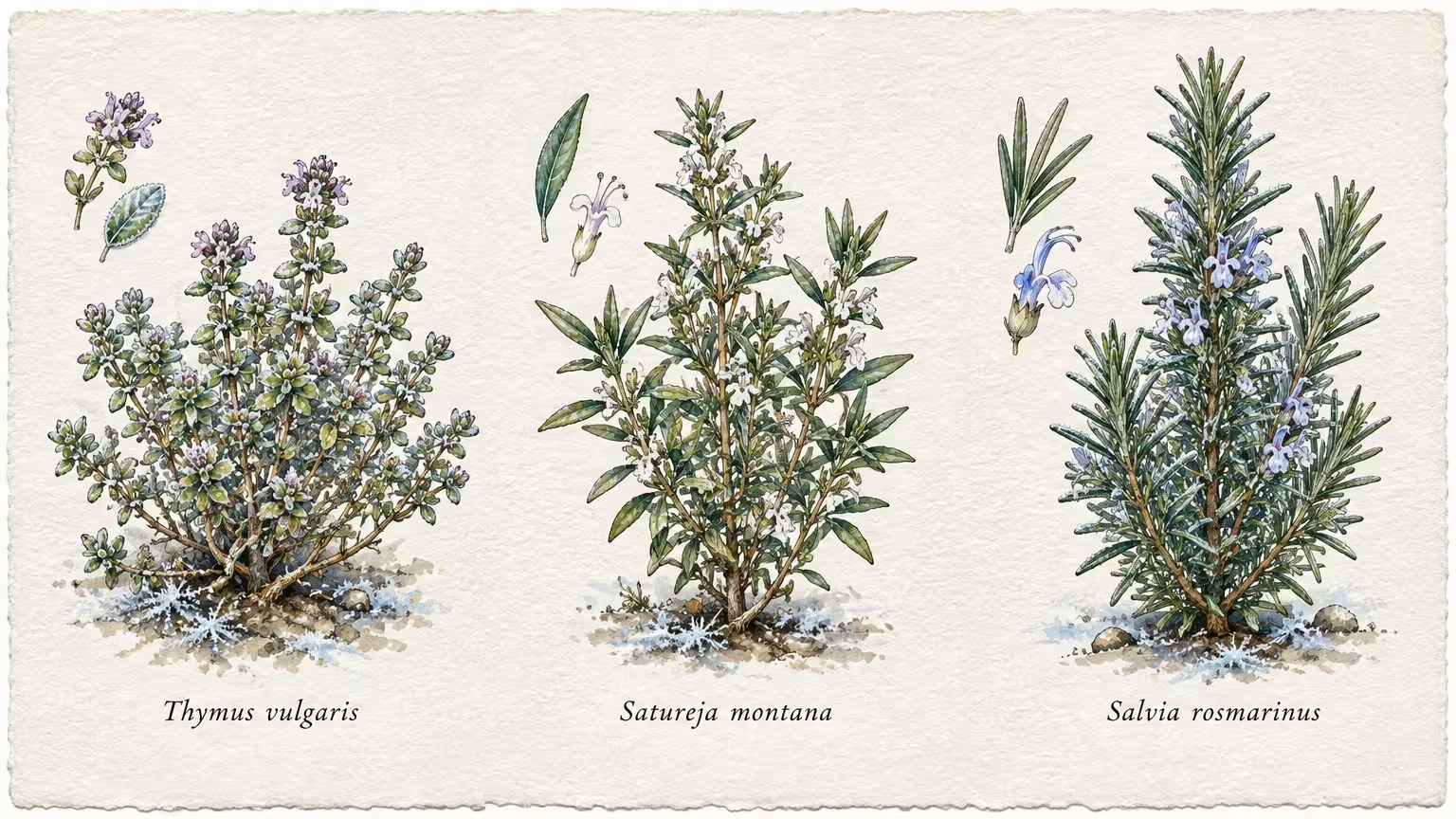
1. Common Thyme (Thymus vulgaris)
Common thyme is a sturdy evergreen subshrub that easily handles sub-freezing temperatures down into USDA Zone 5. Its tiny, woody leaves retain their pungent flavor through heavy snowfalls and persistent frost.
You can also take stem cuttings as part of a simple winter propagation project for woody herbs to multiply your stock for next spring.
Use fresh thyme to season roasted root vegetables, poultry stuffing, and rich beef stews. Pair it with garlic and melted butter for a savory pan sauce on cold evenings.
Plant thyme in a container with excellent drainage—meaning soil that lets excess water escape freely. Thyme roots rot quickly if kept wet during damp winter weeks.
2. Winter Savory (Satureja montana)
Winter savory is a semi-evergreen perennial that shines when delicate summer savory dies back. It survives temperatures down to Zone 6, providing a spicy, peppery kick similar to a blend of thyme and oregano.
This herb pairs naturally with dried beans, lentils, pork chops, and root vegetable bakes. Its bold taste cuts through the rich fattiness of slow-cooked winter braises effortlessly.
Grow winter savory in a shallow balcony planter exposed to maximum daily sunlight. Clip outer sprigs regularly to keep the plant compact and prevent woody centers from developing.
3. Rosemary (Salvia rosmarinus)
Rosemary features needle-like foliage loaded with piney, resinous oils that excel in cold-weather cuisine. Cold-hardy cultivars like Arp and Hill Hardy survive outdoor temperatures down into Zone 6 or 7.
If extreme sub-zero weather threatens your container, learning how to keep potted rosemary alive indoors will protect it until spring.
Toss whole sprigs into simmering marinara sauce, roasted lamb, or rustic sourdough bread. You can also skewer roasted potatoes on firm rosemary stems to infuse pine fragrance during baking.
Keep your rosemary container on a sheltered porch where drying winter winds cannot sap moisture from needles. Water sparingly; dormant roots rot quickly if kept damp during chilly weather.
4. Garden Sage (Salvia officinalis)
Garden sage produces velvety, silver-green leaves that persist through severe winter chills down to Zone 4. Cold weather often deepens its musky, earthy taste, making it an indispensable winter culinary staple.
Fry sage leaves in browned butter until crispy to top butternut squash ravioli or creamy potato leek soup. It also enriches homemade breakfast sausage patties and classic bread stuffings.
Select a wide, shallow pot that gives sage room to spread without crowding neighboring plants. Prune away dead or damaged leaves in late winter before fresh spring growth begins.
5. Chives (Allium schoenoprasum)
Chives rank among the toughest alliums available, hardy down into extreme Zone 3 climates. While outdoor foliage may die back in hard freezes, chives regenerate swiftly in protected microclimates.
Snip hollow green blades over baked potatoes, creamy chowders, and warm egg dishes for a mild onion bite. Fresh chives inject vibrant green color into otherwise neutral winter comfort plates.
A compact ten-inch pot easily accommodates a dense clump of chive bulbs on your balcony railing. Divide overcrowded bulbs every few years to maintain vigorous production.
6. Flat-Leaf Parsley (Petroselinum crispum var. neapolitanum)
Flat-leaf Italian parsley handles repeated frosts without losing its clean, bright taste. As a biennial, parsley produces vigorous, deeply flavored leaves right through its first winter in Zone 5.
Chop fresh parsley into classic gremolata to garnish braised osso buco or rich beef roasts. Stir generous handfuls into chicken noodle soup right before serving to revive rich broth.
Plant parsley in a deep container because its long taproot requires vertical growing space. Keep the potting mix evenly moist, avoiding both swampy conditions and severe dehydration.
7. Greek Oregano (Origanum vulgare subsp. hirtum)
Greek oregano forms low-growing mats of pungent foliage that withstand freezing weather down to Zone 5. While growth slows noticeably in December, existing leaves remain green and intensely aromatic.
Crumble fresh leaves into pizza sauces, meatball mixtures, and slow-simmered chili pots. The essential oils diffuse steadily across long cooking times without turning bitter.
Oregano thrives in modest six-inch containers positioned in full winter sun. Avoid excessive fertilization in late fall, which produces weak, frost-sensitive leaves that collapse during cold snaps.
8. Spearmint (Mentha spicata)
Spearmint is an unstoppable perennial hardy to Zone 3 that stays active in mild winter microclimates. Even if hard frost knocks back surface foliage, underground rhizomes stay alive and tender shoot clusters emerge.
Steep fresh leaves into hot herbal teas to soothe winter colds or craft savory Moroccan mint sauces for lamb. Mint also adds a refreshing contrast to roasted carrots and parsnips.
Always confine mint to its own dedicated container; its invasive root systems quickly choke out neighboring herbs. Place the pot against a warm wall to encourage winter sprig growth.
9. Cilantro (Coriandrum sativum)
Most gardeners treat cilantro as a summer crop, but hot summer sun actually triggers premature bolting. Cilantro thrives in chilly autumn and winter temperatures, tolerating light frosts down into Zone 7.
Scatter raw cilantro leaves over simmering tortilla soup, black bean chili, and warming winter curries. The bright, citrus-tinted herbal note breaks up the heavy richness of long-cooked dishes.
Sow seeds directly into balcony containers every three weeks from late summer through mid-autumn. This succession planting provides continuous tender cuttings for your kitchen during cool months.
10. French Tarragon (Artemisia dracunculus)
True French tarragon withstands cold down to Zone 4, relying on a period of winter chilling to thrive. The anise-flavored leaves remain pickable during mild early-winter spells before plant dormancy sets in.
Incorporate freshly snipped tarragon into warm béarnaise sauces, creamy chicken pot pies, and roasted mushroom medleys. Its subtle licorice undertone brings sophisticated French flair to rustic dinners.
French tarragon must have rapid drainage; wet winter soil will rot its crown before spring arrives. Blend coarse perlite or pumice into your potting medium to guarantee airy root conditions.
Cold-Hardiness and Culinary Comparison
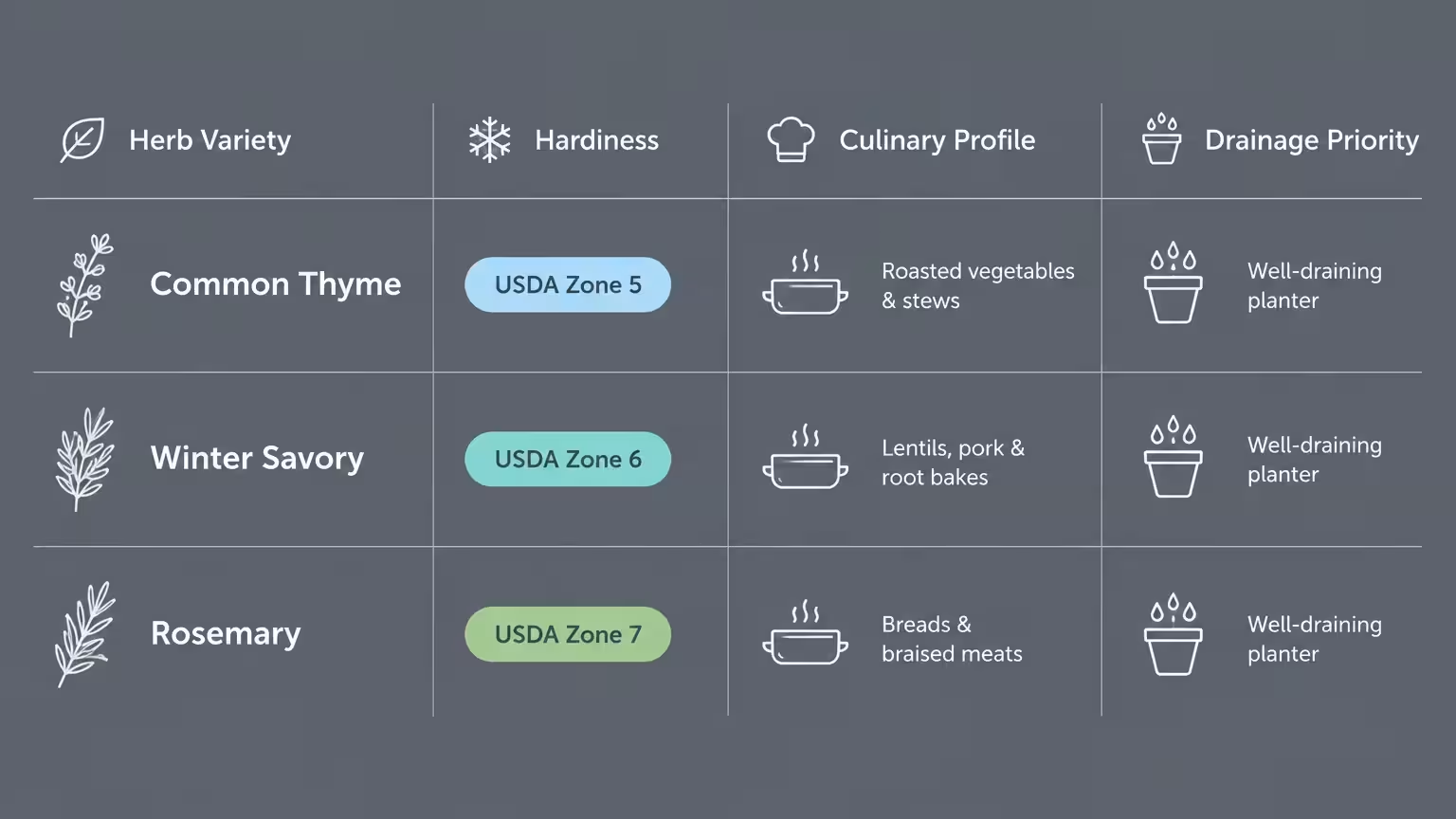
Understanding hardiness ratings and culinary applications helps you position pots strategically in your microclimate. The reference table below outlines the cold tolerance, light requirements, and ideal dishes for each herb.
| Herb | USDA Zone | Sunlight Need | Best Winter Culinary Pairing |
|---|---|---|---|
| Common Thyme | 5 to 9 | Full Sun | Beef stews, roasted poultry, vegetable broths |
| Winter Savory | 6 to 9 | Full Sun | Bean soups, lentils, roasted pork |
| Rosemary | 6 to 10 | Full Sun | Roast potatoes, focaccia bread, lamb |
| Garden Sage | 4 to 8 | Full Sun | Browned butter pasta, turkey, winter squash |
| Chives | 3 to 9 | Full Sun / Partial Shade | Potato soup, omelets, sour cream dips |
| Flat-Leaf Parsley | 5 to 9 | Full Sun / Partial Shade | Gremolata, grain salads, chicken soup |
| Greek Oregano | 5 to 10 | Full Sun | Chili, tomato-based sauces, meatballs |
| Spearmint | 3 to 9 | Partial Sun / Shade | Herbal infusions, braised lamb, glazed carrots |
| Cilantro | 7 to 10 (annual) | Full Sun / Partial Shade | Curries, winter chilis, roasted squash tacos |
| French Tarragon | 4 to 8 | Full Sun | Chicken pot pie, cream sauces, roasted fish |
Keep in mind that container plants experience colder root conditions than in-ground specimens. As a baseline rule, potted herbs experience conditions roughly one to two zones colder than the ambient ground zone.
Designing a Compact Winter Herb Arrangement
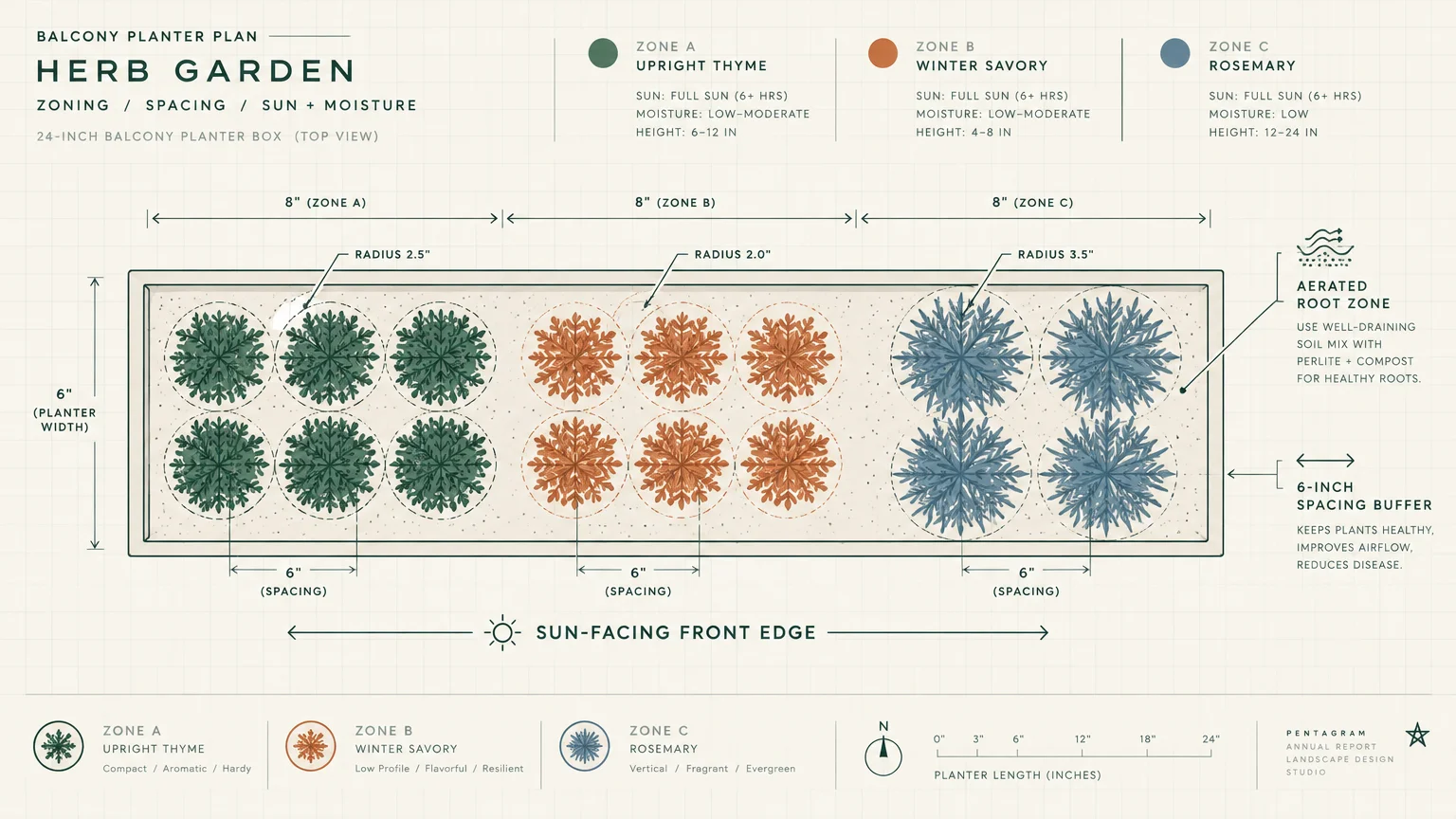
Combining herbs with similar moisture and sunlight needs into shared planters saves valuable square footage on balconies. A single twenty-inch container can comfortably support three complementary varieties throughout the winter.
These arrangements pair wonderfully with other winter-hardy perennials for small pots to create a full, resilient patio display.
Pair Mediterranean subshrubs like thyme, winter savory, and rosemary together in a gritty potting blend. These varieties share an appetite for full winter sun and require minimal watering during cool weather.
Keep moisture-loving herbs like flat-leaf parsley and chives in a separate planter containing richer, compost-boosted soil. Separating these groups prevents rot in your Mediterranean herbs while keeping parsley lush and hydrated.
Utilize vertical space by arranging containers on tiered plant stands or hanging railing planters. Vertical stacking lifts plants into direct winter sunlight while keeping pots off cold concrete floors.
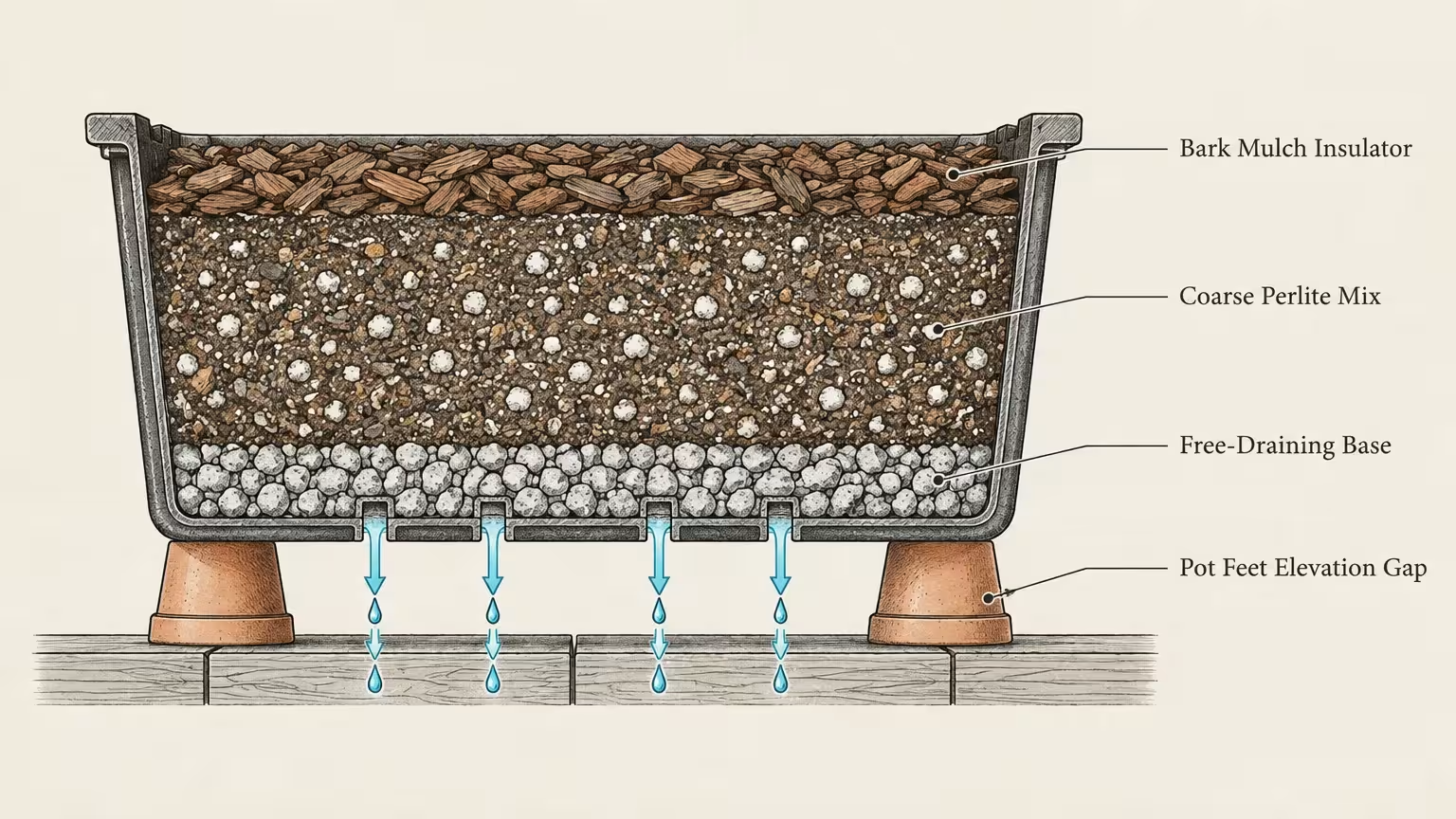
Top your potting soil with an eco-friendly mulch of shredded autumn leaves or untreated wood chips. Natural mulch moderates soil temperatures, retains baseline moisture, and breaks down into organic nutrients by spring.
Container and Soil Preparation for Freezing Weather
Container selection dictates winter survival when temperatures drop below freezing on exposed balconies. Fragile terracotta planters often crack because expanding moisture inside the clay breaks the walls.
Choose freeze-resistant containers made of thick resin, dense fiberglass, or durable cedar wood. These materials insulate sensitive roots from sharp thermal swings while surviving repeated freeze-thaw cycles without fracturing.
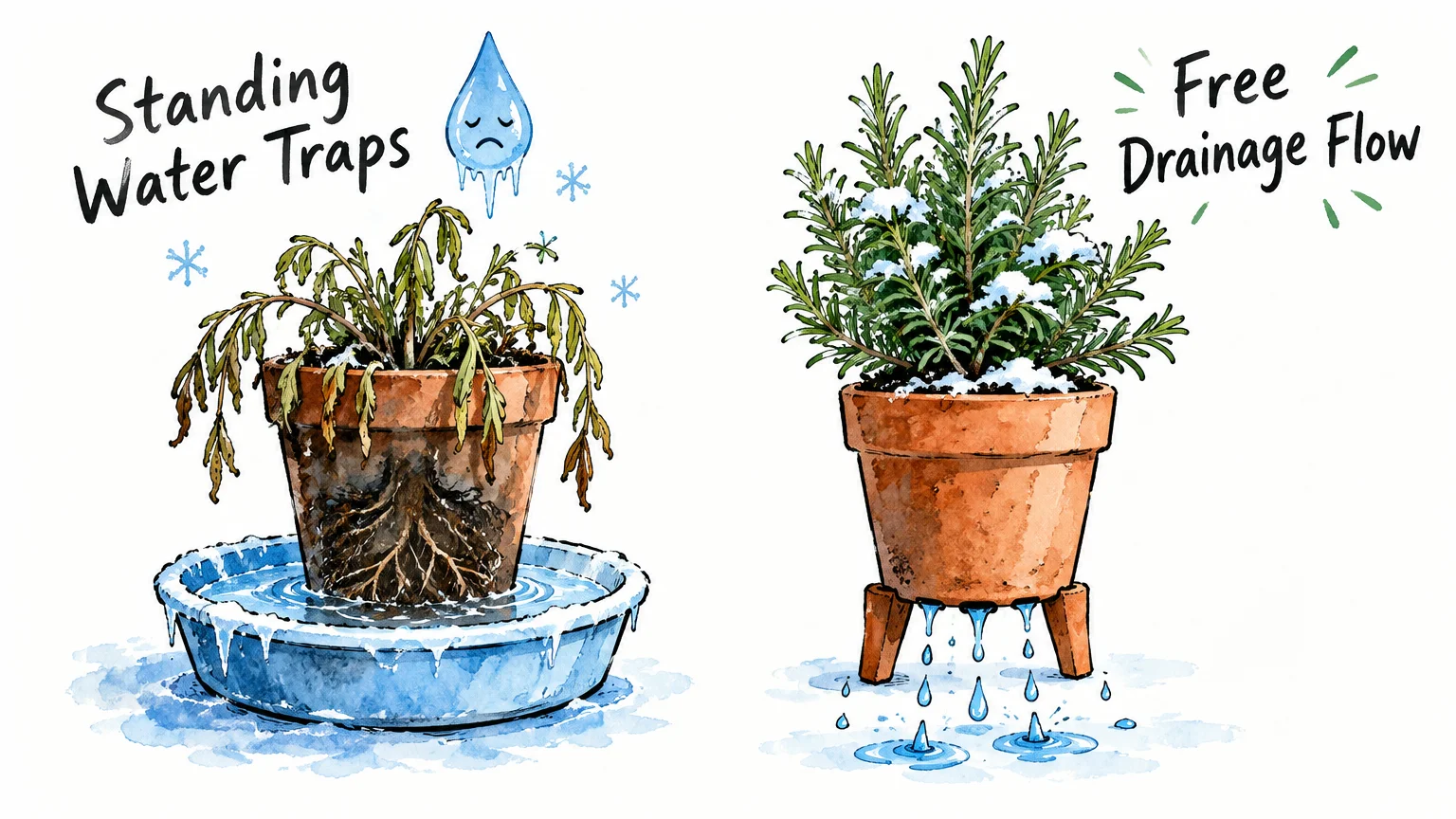
Soil drainage—the speed at which water moves through your potting medium—is vital during winter months. Saturated potting soil freezes into solid blocks of ice, which tears delicate root hairs and suffocates plants.
Create an open, porous potting mix by combining high-quality organic potting soil with thirty percent coarse perlite or horticultural grit. This structure ensures excess rainfall percolates through rapidly, leaving air pockets intact.
Always elevate your pots on small container feet, wooden slats, or bricks. Elevating pots prevents the drainage holes from sealing against cold concrete surfaces or standing puddles.
Select larger containers when designing small-space winter plantings. A larger volume of soil cools down much more slowly than a small pot, offering better root insulation against freezing winds.
Best Harvesting Practices for Dormant Herbs
Harvesting herbs in winter requires a lighter, more deliberate hand than harvesting during lush summer months. Plants enter semi-dormancy when day lengths decrease, which slows vegetative regeneration significantly.
Never harvest more than twenty percent of an herb’s foliage at one time during cold weather. Removing excess foliage strips the plant of stored carbohydrates needed to protect root tissues from freeze injury.
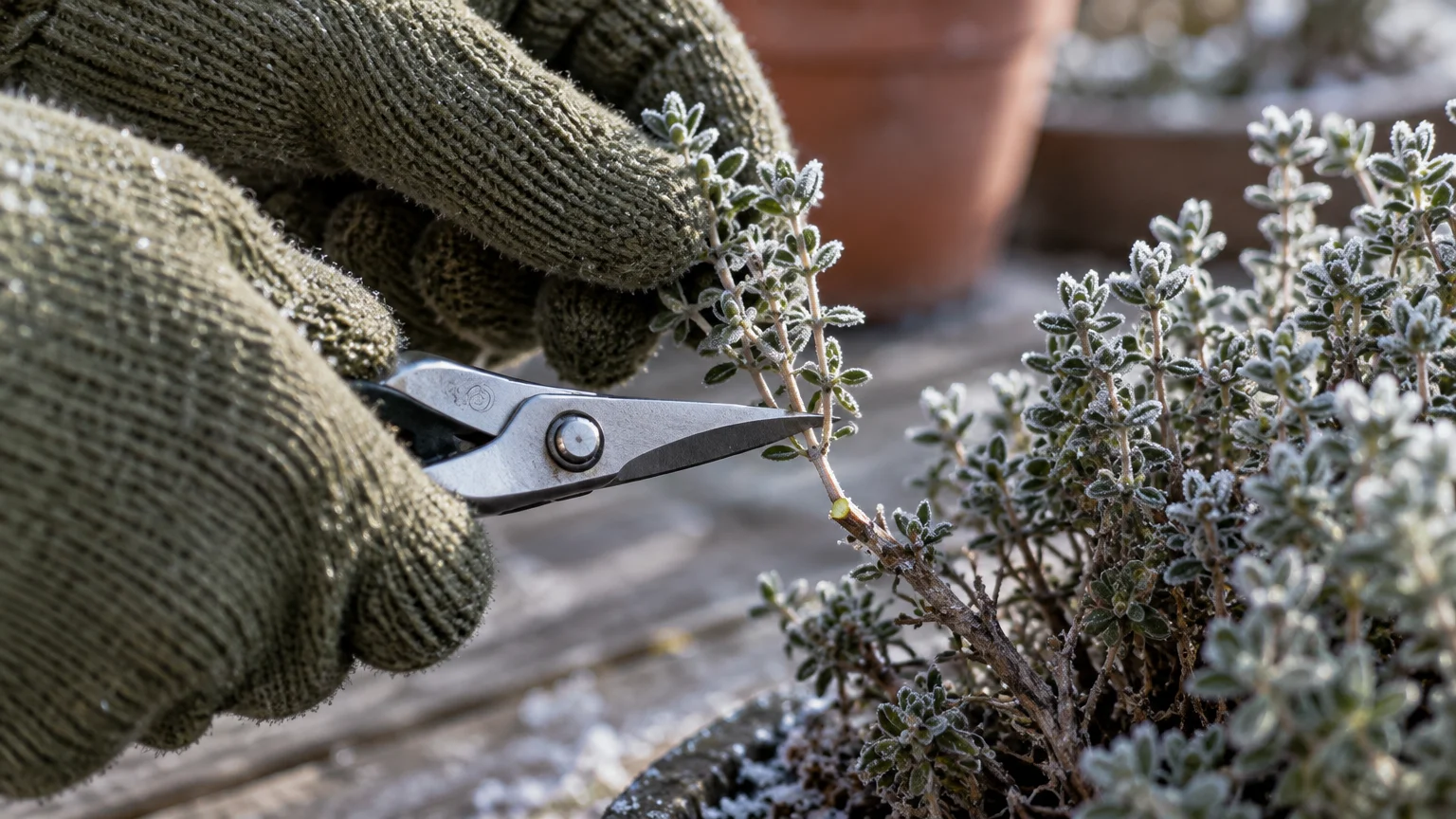
Use sharp, clean snips or pruning shears rather than dull kitchen scissors or finger pinching. Clean cuts heal cleanly without crushing stems, reducing the risk of fungal infections in damp weather.
Harvest sprigs from the sun-facing side of the plant where growth is densest. Avoid cutting deep into the older, woody stems of thyme, sage, or rosemary; clip only flexible, leafy tips.
Gather your herbs around midday when frost has melted and foliage has dried. Harvesting damp, frozen foliage causes cell walls to bruise, which turns delicate greens limp and dark.
Microclimates and Winter Protection Strategies
A microclimate is a small localized area where temperature, wind, and moisture differ from surrounding conditions. You can create favorable microclimates on small balconies to buffer herbs against extreme freezing temperatures.
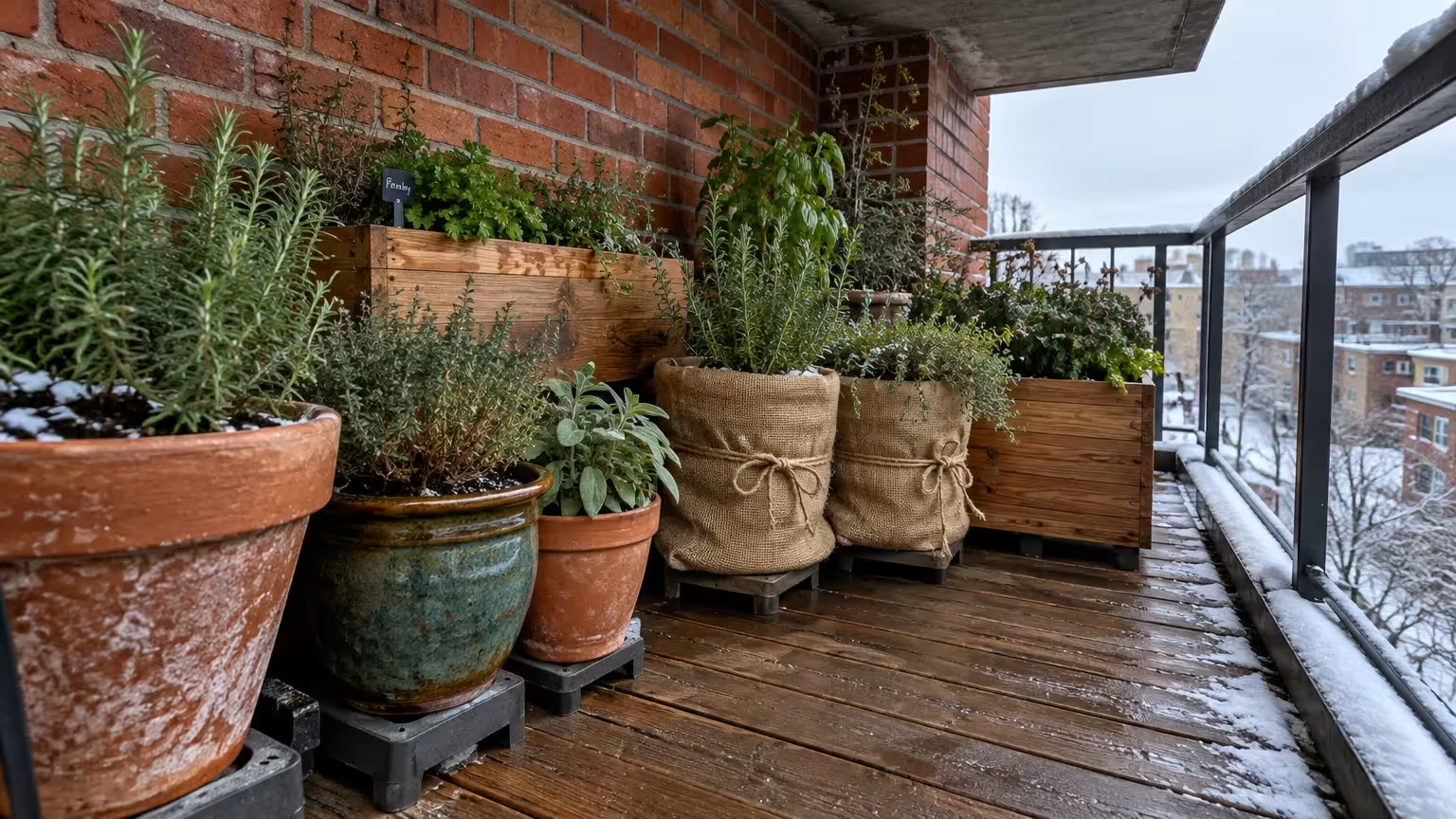
Shift your containers directly against south-facing brick walls or exterior house siding. These masonry surfaces absorb solar radiation throughout the day and steadily radiate heat back toward your pots at night.
Group multiple containers together in clusters to trap collective warmth and shield individual pots from biting wind. Place your largest, hardiest pots on the outside perimeter to form a windbreak for delicate herbs.
Wrap exposed container exteriors in burlap, horticultural fleece, or bubble wrap during prolonged freezes. Insulating the pot body keeps root balls several degrees warmer than uninsulated thin plastic pots.
Drape a lightweight frost cloth over foliage during severe overnight cold snaps. Anchor the cloth corners firmly so high winter gusts cannot tear the fabric or break brittle stems.
Take advantage of overhead protection like balcony eaves or patio awnings. These covers stop frost from settling directly on delicate foliage and prevent excess winter rains from saturating containers.
Common Winter Herb Gardening Mistakes
Overwatering is the single most common cause of winter herb loss in containers. Because plant metabolism slows down dramatically in cold weather, herbs consume only a fraction of their normal summer water.
Check soil moisture with your finger before grabbing the watering can. Water only when the top two inches of soil feel completely dry to the touch.
Avoid fertilizing your herbs after mid-autumn arrives. Fertilizer stimulates tender new flushes of green growth that lack the cell density to endure freezing temperatures, leading to blackened foliage.
Do not bring cold-hardy herbs indoors into dry, centrally heated living rooms during brief cold snaps. Sudden temperature spikes confuse the plant and often trigger rapid leaf drop and spider mite infestations.
Avoid leaving saucers under outdoor pots in freezing weather. Standing runoff collected in saucers will freeze solid, locking plant roots into a freezing marsh that causes root death.
Resist heavy pruning until early spring arrives and active growth resumes. Leaving spent foliage intact through the coldest months acts as a physical shield protecting inner crown buds from frost.
Frequently Asked Questions
Can cold-hardy herbs survive snow cover?
Yes, snow actually functions as an insulating blanket that protects plant roots and foliage from sub-zero winds. Gently brush away heavy, wet snow accumulations if branches bow under weight to prevent stem breakage.
How often should you water herbs in winter?
Most potted herbs need water only every two to three weeks during cold weather. Always test the soil first and apply water during warm morning hours so roots absorb moisture before nightfall.
Will cut herbs grow back during the winter?
Herbs grow very slowly in winter because reduced sunlight triggers semi-dormancy. Harvest conservatively; plants will not produce rapid flushes of replacement foliage until temperatures rise and days lengthen in early spring.
Do cold-hardy herbs need fertilizer in winter?
No, you should never fertilize winter herbs while they remain semi-dormant. Feeding encourages weak, succulent growth that immediately succumbs to frost damage; resume light feeding when vigorous spring growth resumes.
Can you harvest frozen herb leaves directly from the stem?
Avoid picking leaves while they are actively frozen stiff. Cutting frozen foliage damages cell structures and turns the cut stems black, so wait until midday sun has fully thawed the plant.
For trustworthy gardening information, visit:
U.S. National Arboretum, American Horticultural Society, National Garden Bureau and National Wildlife Federation — Garden for Wildlife. These organizations provide expert, research-based advice for gardeners at all levels.
Disclaimer: This article is for informational purposes only and is not a substitute for professional gardening advice. Always consult local extension services or horticulture experts for region-specific guidance.