
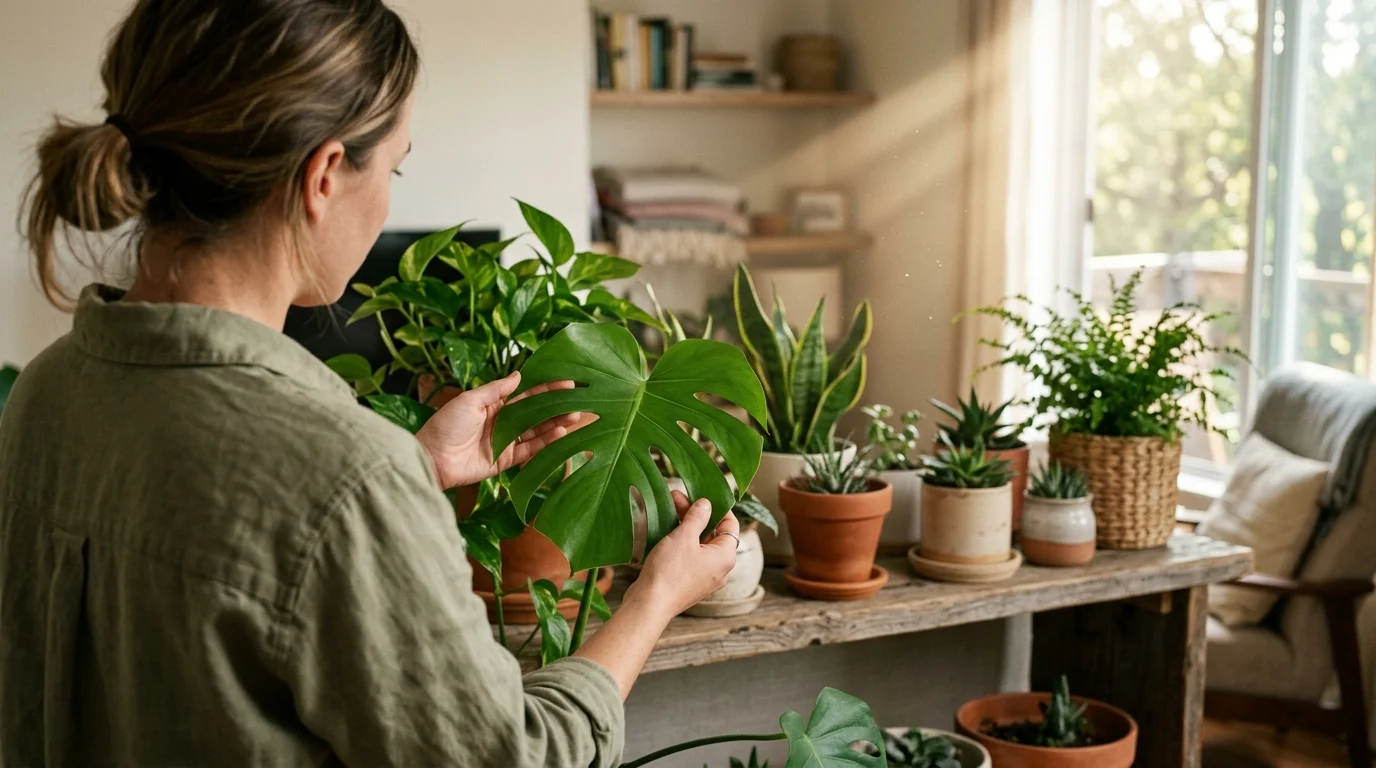
You dedicate time, water, and love to your indoor garden, only to notice your beloved monstera dropping leaves or your pothos looking suspiciously yellow.
Sneaky houseplant pests might be silently feasting on your foliage right under your nose, threatening to ruin your carefully curated indoor plant care routine. Catching these tiny intruders early prevents a minor issue from becoming a full-blown disaster in your living room or small-space sanctuary.
This guide equips you with practical, actionable strategies to identify, treat, and banish common houseplant insects using eco-friendly methods. By knowing exactly what to look for and how to respond, you ensure your indoor jungle remains vibrant, healthy, and completely pest-free all year long.
Many of these pests hitch a ride inside during seasonal transitions, making a pest-free transition checklist essential when bringing potted plants indoors.
To protect your existing collection, always follow a strict new plant quarantine protocol before introducing any new additions to your home.
Contents10 sections
- Spider Mites: The Invisible Web Weavers
- Fungus Gnats: The Bothersome Soil Swarmers
- Mealybugs: The Deceptive Cotton Candy Invaders
- Aphids: The Rapid Sap Sucking Multipliers
- Scale Insects: The Camouflaged Armor Plated Feeders
- Thrips: The Slender Cell Disruptors
- Whiteflies: The Fluttering Foliage Drainers
- Designing a Pest Resistant Indoor Garden
- Essential Maintenance Habits to Keep Your Plants Healthy
- Frequently Asked Questions
Spider Mites: The Invisible Web Weavers
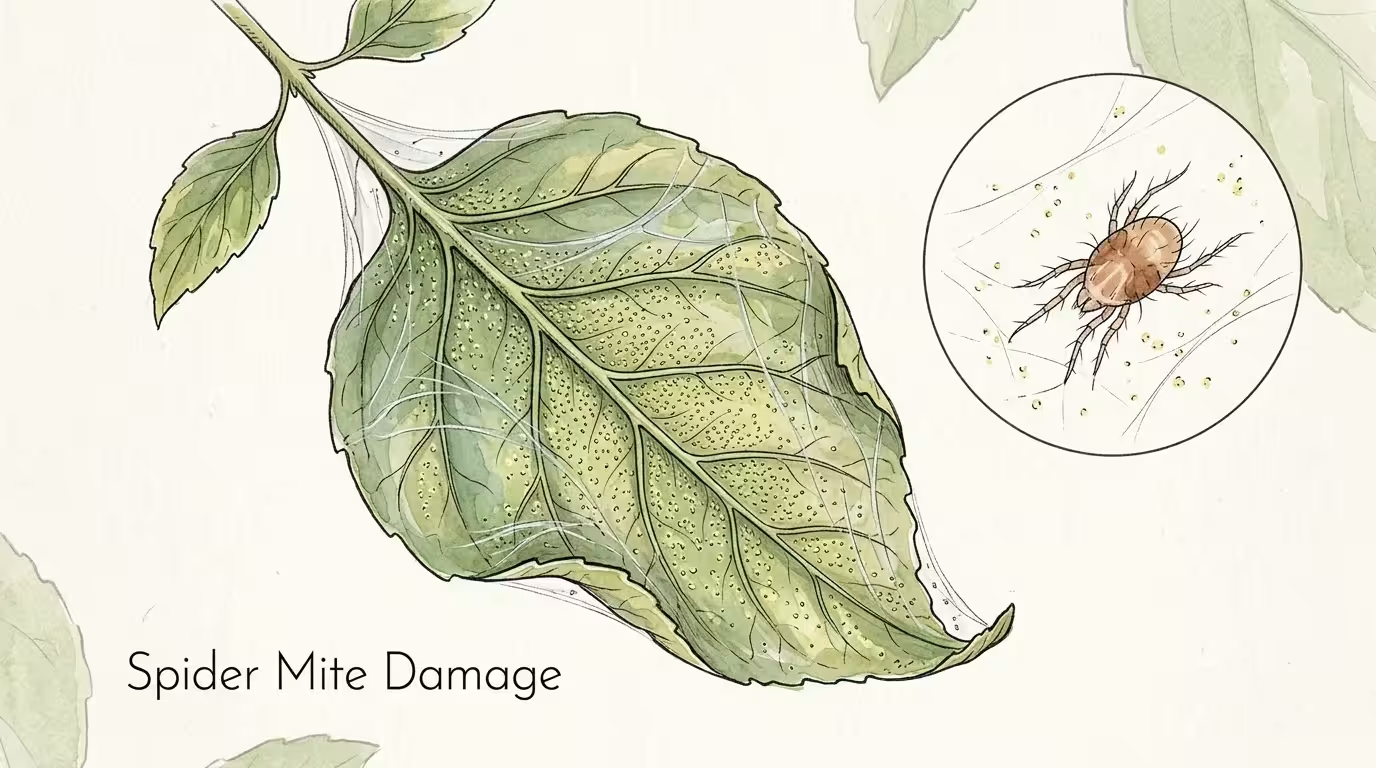
Spider mites are notorious for flying under the radar until your plant looks like an old, neglected haunted house. These microscopic arachnids thrive in the hot, dry air that central heating systems create in our homes during winter.
Because they are roughly the size of a grain of pepper, you rarely spot the actual bugs first. Instead, you notice the damage they leave behind.
Regularly cleaning your plant’s leaves is an excellent preventive step, as dusty foliage provides the perfect hideout for mites.
To prevent future mite outbreaks and keep your leaves looking pristine, consider giving your collection a DIY houseplant spa day using natural ingredients that deter pests.
The first sign of spider mites usually appears as stippling on the leaves. Stippling means you will see hundreds of tiny, pale yellow dots clustered together where the mites have pierced the plant cells and sucked out the fluids.
As the infestation progresses, you will find fine, silky webbing stretching between stems and the undersides of leaves. The foliage eventually turns completely yellow, dries out, and falls off.
Actionable Treatment Plan:
- Isolate the Plant immediately: Move the affected plant away from your healthy indoor collection to prevent the mites from traveling across overlapping foliage.
- Wash the Foliage: Take the plant to your shower or sink. Spray the leaves with a gentle but firm stream of lukewarm water. This physical action knocks the majority of the mites down the drain. Pay special attention to the undersides of the leaves.
- Apply Insecticidal Soap: Once the leaves dry, thoroughly spray the plant with an organic insecticidal soap or neem oil solution. Make sure the liquid coats all stems, leaf joints, and undersides.
- Repeat: Spider mites breed rapidly. You must reapply your treatment every five to seven days for at least three weeks to break their reproductive cycle completely.
To prevent spider mites from returning, increase the humidity around your plants. You can group pots closer together, place them on pebble trays filled with water, or run a small humidifier near your indoor garden.
Mites despise high humidity and will look elsewhere for a dry environment.
Fungus Gnats: The Bothersome Soil Swarmers
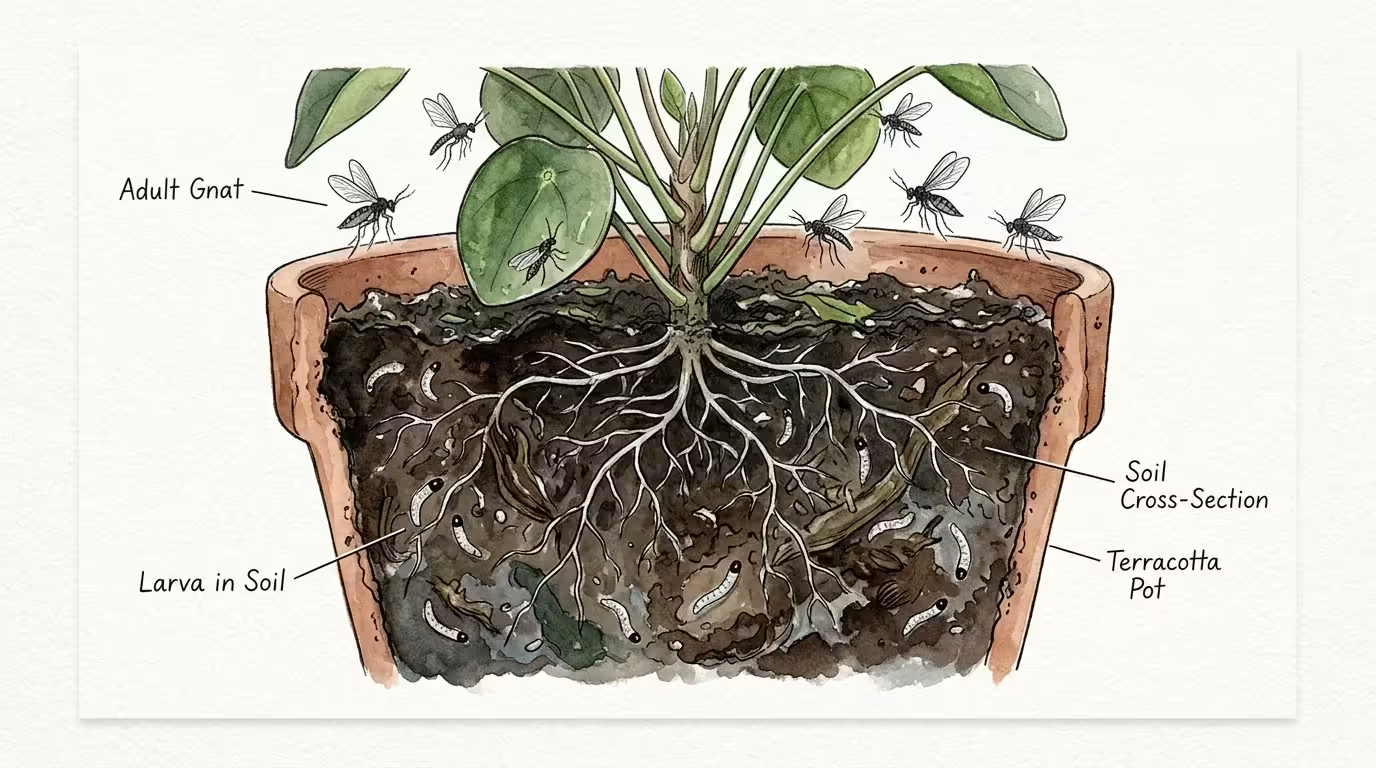
If you have ever watered a potted fern and watched a cloud of tiny, black flies erupt from the soil, you have met fungus gnats.
While the flying adults are incredibly annoying as they hover around your living space and fly into your coffee cup, the real danger lies beneath the soil surface.
Avoiding overly damp soil requires understanding proper watering habits, so make sure to watch out for common houseplant watering myths.
If standard tricks fail to work, deploying a comprehensive fungus gnat annihilation plan can help you eliminate these stubborn soil invaders permanently.
Fungus gnat larvae hatch in damp potting mix and feed on fungi, organic matter, and, most destructively, the tender root hairs of your plants. When they compromise a plant’s root system, the plant struggles to take up water and nutrients.
You might notice your plant wilting even though the soil feels wet, or you might see the leaves slowly turning pale and yellow.
Fungus gnats almost always indicate a moisture problem. They require consistently wet topsoil to lay their eggs and complete their life cycle.
Actionable Treatment Plan:
- Let the Soil Dry: The most effective way to eliminate fungus gnats is to stop overwatering. Allow the top two to three inches of your potting mix to dry out completely before you water again. Dry soil kills the eggs and the larvae instantly.
- Deploy Yellow Sticky Traps: Place small yellow sticky stakes directly into the soil. The bright yellow color attracts the adult flying gnats. Trapping the adults prevents them from laying new generations of eggs in your planters.
- Use Mosquito Dunks: For a stubborn infestation, dissolve a quarter of a mosquito dunk (which contains a natural bacterium called BTI) in your watering can. Soak the soil with this treated water. BTI specifically targets and destroys fungus gnat larvae without harming your plants, pets, or family.
- Improve Drainage: Drainage refers to how quickly water moves through your soil and exits the bottom of the pot. Ensure every container has drainage holes at the bottom, and mix perlite or pumice into your soil to keep it airy and fast-drying.
Mealybugs: The Deceptive Cotton Candy Invaders
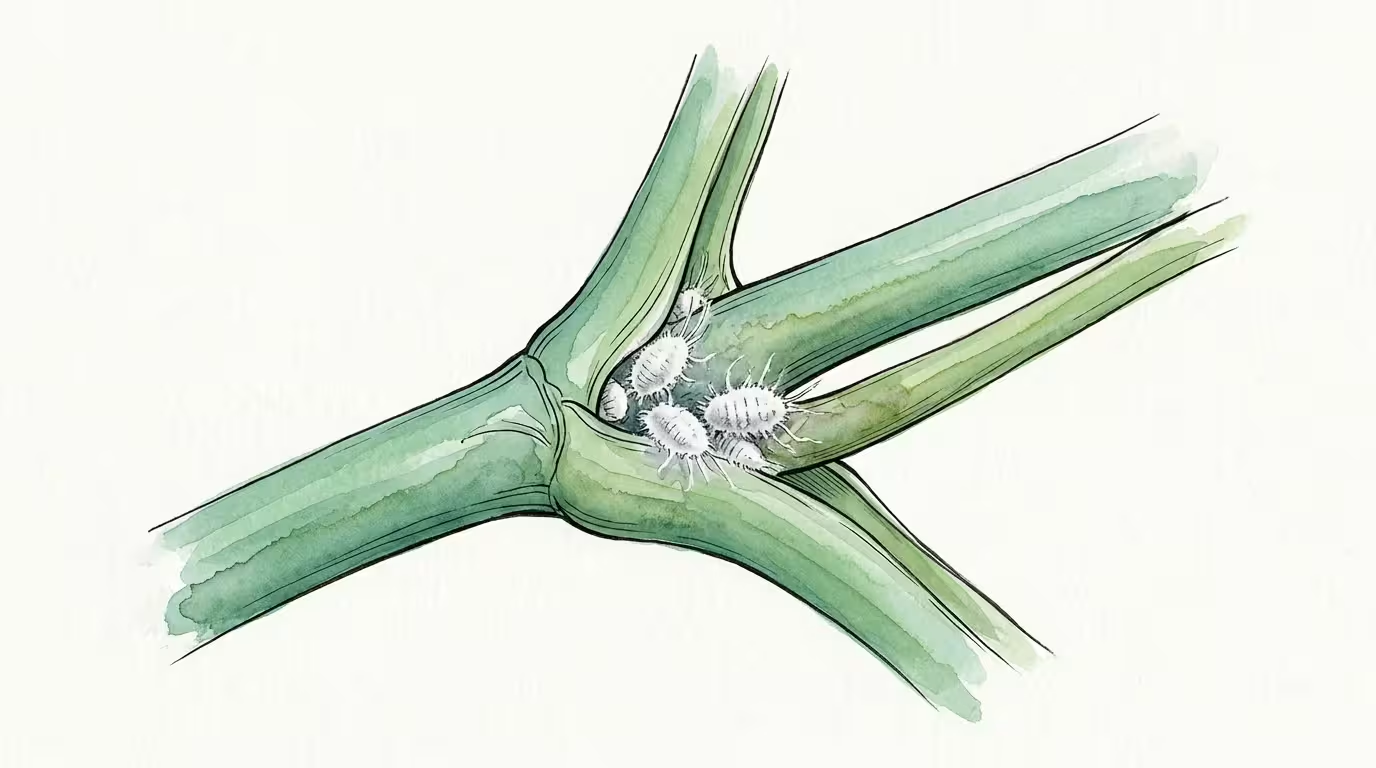
Mealybugs are masters of disguise. To the untrained eye, a mealybug infestation just looks like small tufts of white cotton or mold stuck to the plant.
However, underneath that fluffy white exterior lies a soft-bodied insect that slowly drains the sap from your houseplant.
Integrating pest monitoring into your regular winter routines, such as a dormant houseplant health check, will ensure you catch mealybugs early.
If you are dealing with a severe outbreak, it is best to set up a dedicated plant hospital to isolate and treat your sick greenery.
These pests prefer to hide in the tightest, most protected crevices of your plants. You will typically find them wedged where the leaf meets the stem, unrolling inside new leaf growth, or congregating under the rim of the pot.
As they feed, mealybugs excrete a sticky, sugary substance known as honeydew. This honeydew coats the leaves, making them feel sticky to the touch, and can eventually lead to the growth of a black, powdery fungus called sooty mold.
Because their waxy, cottony coating repels water and many standard pest sprays, you must take a more targeted approach to eradicate them.
Actionable Treatment Plan:
- The Alcohol Swab Technique: Dip a cotton swab into 70 percent isopropyl rubbing alcohol. Touch the swab directly to each mealybug. The alcohol instantly dissolves their protective waxy coating and kills them on contact. This method works perfectly for light infestations on small balcony plants or tabletop succulents.
- Spot Treat with a Spray: For larger plants with heavier infestations, mix one part rubbing alcohol with four parts water and a few drops of mild liquid castile soap. Spray the entire plant, focusing heavily on the tight crevices.
- Inspect the Roots: If your plant looks sickly and you cannot find pests on the foliage, pull the plant out of its pot and inspect the roots. Root mealybugs look like white, chalky deposits clinging to the root ball. If you discover root mealybugs, you must discard the old soil, wash the roots thoroughly in insecticidal soap, and repot the plant in a fresh, sterilized container.
Consistency is your best friend when battling mealybugs. Inspect your plants weekly with a flashlight to catch any hidden stragglers before they multiply.
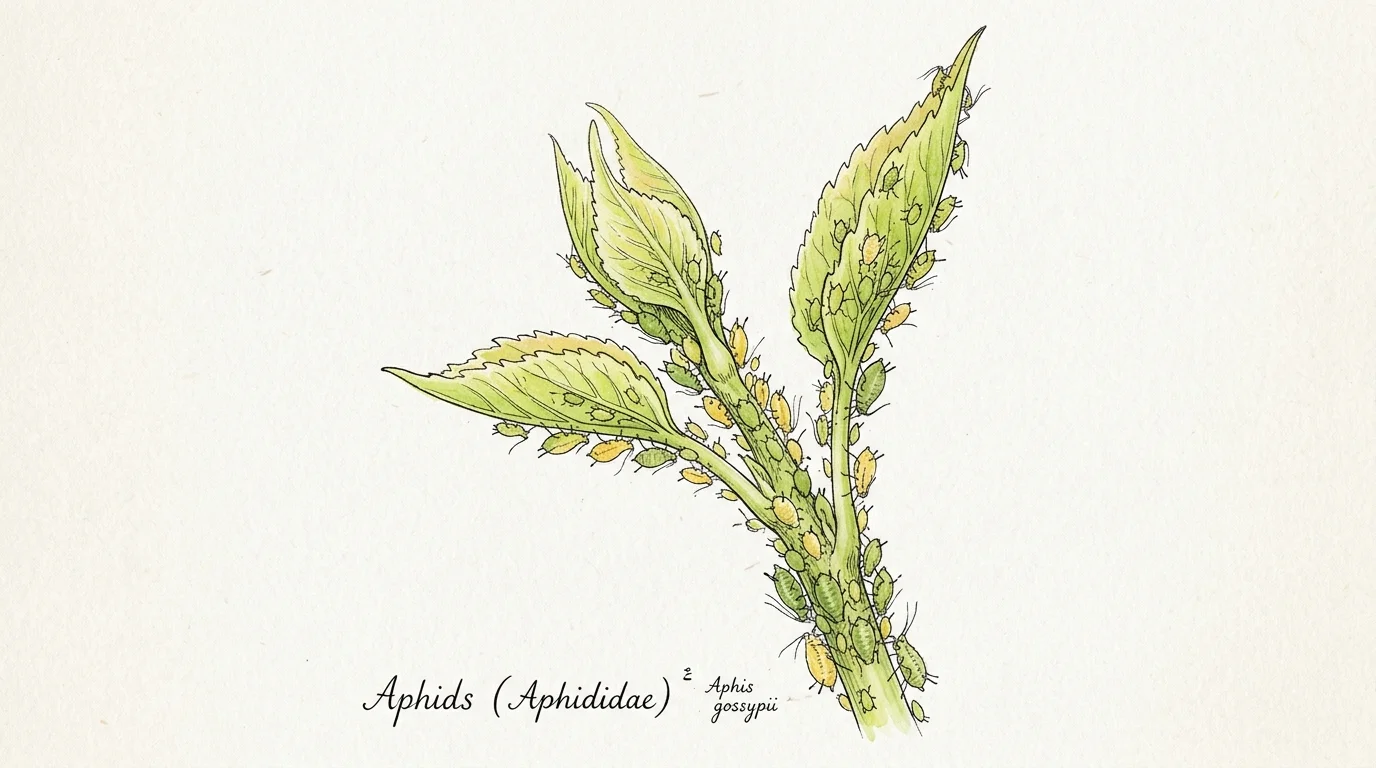
Aphids: The Rapid Sap Sucking Multipliers
Aphids are common garden pests that occasionally make their way indoors, usually hitching a ride on new plant purchases or clothing. These pear-shaped, soft-bodied insects come in various colors, including green, black, red, and yellow.
They prefer to cluster thickly on the softest, newest growth of your plants, such as tender growing tips, flower buds, and the undersides of young leaves.
Aphids reproduce at an astonishing rate. A female aphid can give birth to live nymphs without mating, meaning a single pest can explode into a massive colony in just a matter of days.
As they suck the nutrient-rich sap from the plant tissues, they cause the new leaves to emerge distorted, curled, and stunted. Like mealybugs, aphids also produce copious amounts of sticky honeydew.
Actionable Treatment Plan:
- The Water Blast: Aphids are relatively fragile and do not hold onto the plant tightly. If your plant is sturdy enough, take it to the sink and use your faucet sprayer to physically blast the aphids off the foliage. Most aphids cannot climb back onto the plant once knocked off.
- Insecticidal Soap Sprays: For soft-leaved plants that cannot handle a strong water spray, apply a thorough coat of insecticidal soap. The soap breaks down the soft cellular membrane of the aphid, causing it to dehydrate rapidly.
- Prune Infested Areas: If the aphids have heavily clustered on a specific vine or a single flower stalk, use sterilized pruning snips to cut off the infested section entirely. Seal the cutting in a plastic bag and throw it in the trash.
Because aphids love tender, succulent new growth, avoid over-fertilizing your houseplants with high-nitrogen fertilizers. Excessive nitrogen forces the plant to push out rapid, weak growth, which essentially rings a dinner bell for passing aphids.
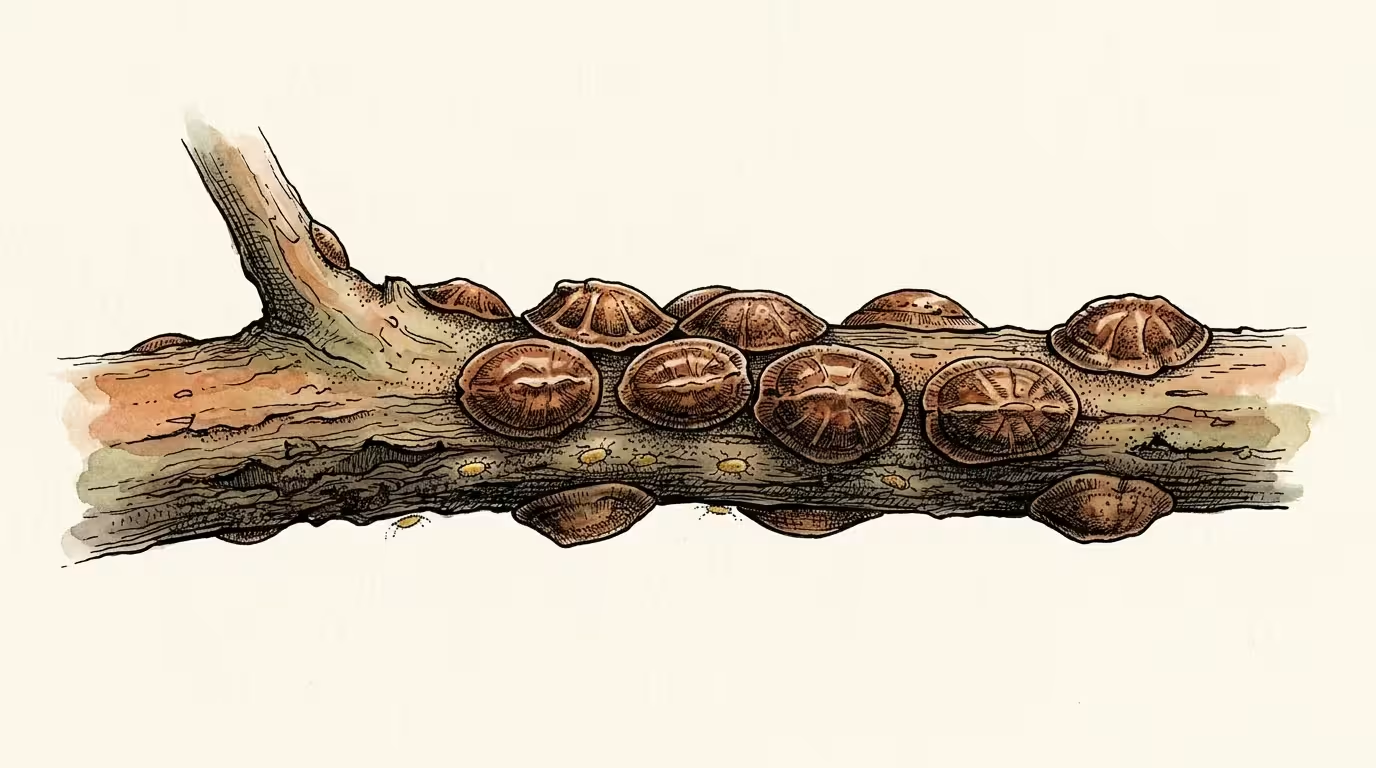
Scale Insects: The Camouflaged Armor Plated Feeders
Scale insects are arguably the most difficult houseplant pests to identify because they do not look like bugs at all. Instead, they look like small, brown, tan, or black scabs stuck onto the stems and leaves of your plants.
If you run your fingernail over a scale insect, it easily pops off, revealing the tiny insect underneath.
There are two main types of scale: soft scale and armored scale. Soft scale produces sticky honeydew and often attracts ants.
Armored scale secretes a hard, waxy shell over its body for protection and does not produce honeydew. Both types lock their mouthparts into the plant tissue and feed continuously, causing the plant to lose vigor, drop leaves prematurely, and experience dieback on the branches.
Because of their protective shell, traditional contact sprays like insecticidal soap simply bounce off armored scale without harming the insect inside.
Actionable Treatment Plan:
- Manual Removal: For small, manageable infestations, physically remove the bugs. Dip an old, soft-bristled toothbrush or a cotton swab in rubbing alcohol and gently scrub the scale off the stems and leaves. Take your time and check every inch of the stem.
- Horticultural Oils: Neem oil and other refined horticultural oils are your best chemical defense against scale. When you spray the oil onto the plant, it coats the scale insect’s shell and suffocates the bug underneath. Follow the dilution instructions on the product label and apply the oil in the evening, keeping the plant out of direct sunlight while the oil dries to prevent leaf burn.
- Ongoing Pruning: If a particular branch is thoroughly encrusted with scale and shows severe decline, prune it off completely. Sometimes, removing the most heavily infested portion of the plant gives the rest of the foliage a fighting chance to recover.
Thrips: The Slender Cell Disruptors
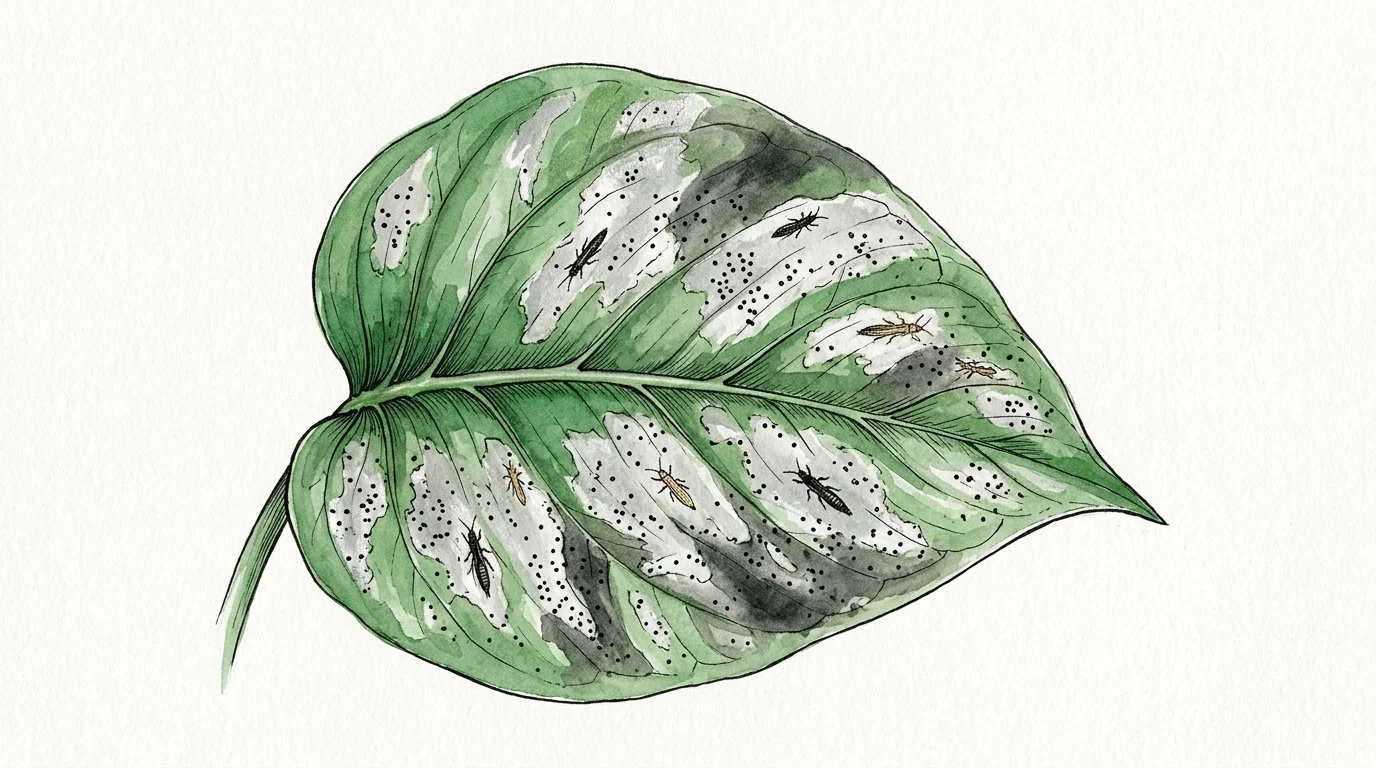
Thrips are a nightmare for indoor gardeners. These slender, dark-colored, cigar-shaped insects are barely visible to the naked eye.
Unlike aphids or scale that sit still while they feed, thrips are highly active. When you disturb a plant infested with thrips, they will often run quickly across the leaf surface, jump, or even fly away.
Thrips feed by puncturing the outer layer of the plant cells and slurping up the contents. This feeding method creates a highly distinctive damage pattern.
You will see silvery, metallic-looking streaks or irregular white patches on the leaves. If you look closely at these damaged areas, you will spot tiny black dots, which is the frass (pest droppings) left behind by the feeding thrips.
Left untreated, the leaves will turn brown and papery before dying.
Eradicating thrips requires patience because their life cycle involves multiple stages. The adults lay eggs inside the plant tissue where sprays cannot reach.
The larvae hatch and feed on the leaves. Finally, they drop down into the soil to pupate before emerging as flying adults.
Actionable Treatment Plan:
- Sticky Traps for Adults: Thrips are heavily attracted to the color blue. Place blue sticky traps just above the plant canopy to catch the flying adults and monitor the population size.
- Lint Roller Physical Removal: For sturdy plants like rubber trees or monsteras, gently run a clean, sticky lint roller over the broad leaves. This physically lifts the larvae and adults right off the foliage without using any chemicals.
- Use Spinosad: Spinosad is a natural bacterium that is highly toxic to thrips but safe for humans and pets. Spray a spinosad-based organic insecticide thoroughly over the foliage. You must reapply this treatment weekly for an entire month to ensure you kill the new thrips emerging from the soil and hatching from the leaf tissue.
Whiteflies: The Fluttering Foliage Drainers
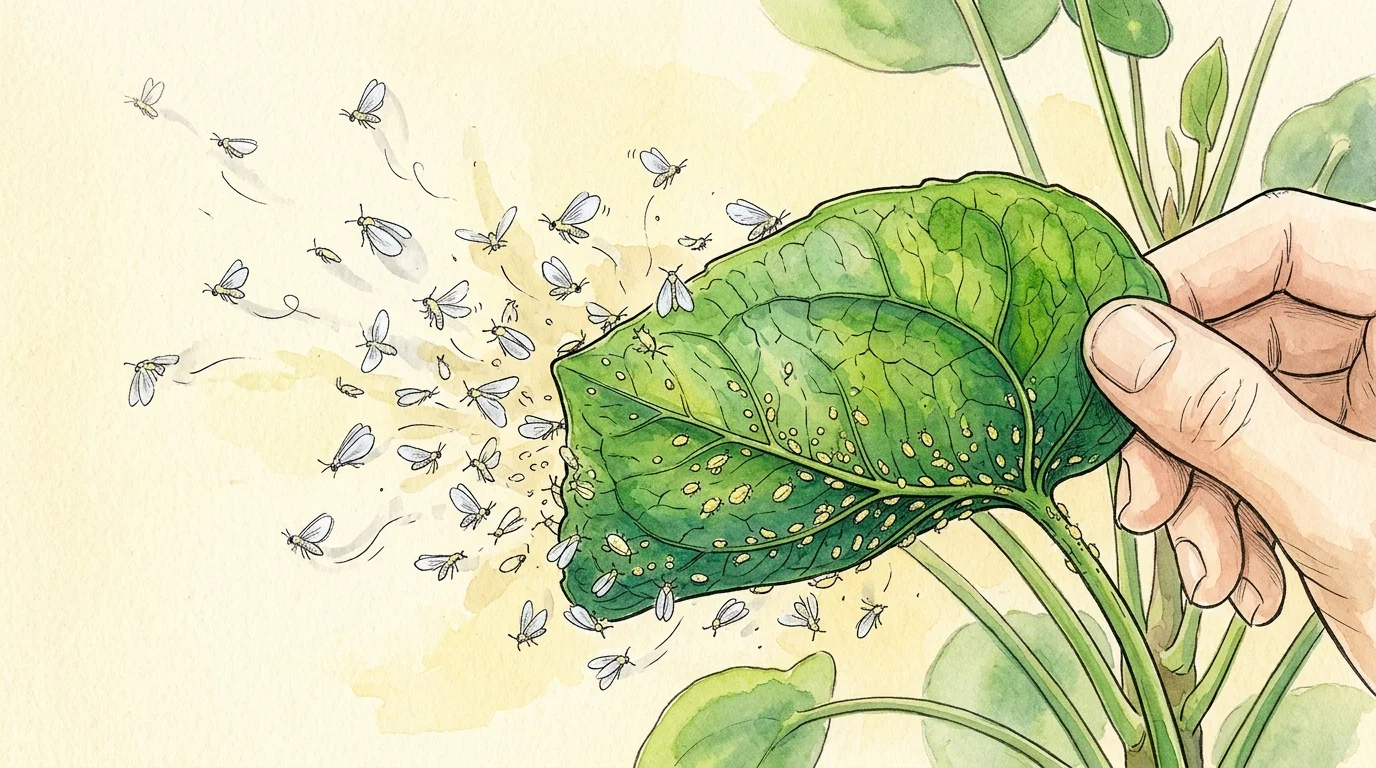
Whiteflies look exactly like their name suggests: tiny, bright white, moth-like insects. They usually congregate in large groups on the undersides of the leaves.
The most obvious sign of a whitefly infestation occurs when you brush against or water your plant. A cloud of tiny white specks will flutter up into the air, swarm around briefly, and then settle right back down onto the plant.
Like many other pests on this list, whiteflies pierce the plant and suck out the vital sap. They target plants with softer, thinner foliage, such as indoor herbs, hibiscus, and ferns.
Their feeding causes the leaves to turn pale, mottle with yellow spots, and eventually drop off. Whiteflies also excrete honeydew, opening the door for sticky foliage and sooty mold.
Actionable Treatment Plan:
- The Vacuum Technique: Because they fly up when disturbed, you can use a hand vacuum or a vacuum cleaner with a hose attachment to physically remove the adults. Gently shake the plant to agitate the whiteflies, and suck them out of the air as they take flight. Empty the vacuum canister outside immediately afterward.
- Yellow Sticky Traps: Hang yellow sticky traps close to the foliage. The adults are drawn to the bright yellow color and will become trapped, breaking the breeding cycle.
- Coat the Undersides: The eggs and crawling nymphs remain attached to the undersides of the leaves. Mix a solution of neem oil or insecticidal soap and thoroughly drench the bottoms of every single leaf. Reapply every four to five days until the swarms disappear completely.
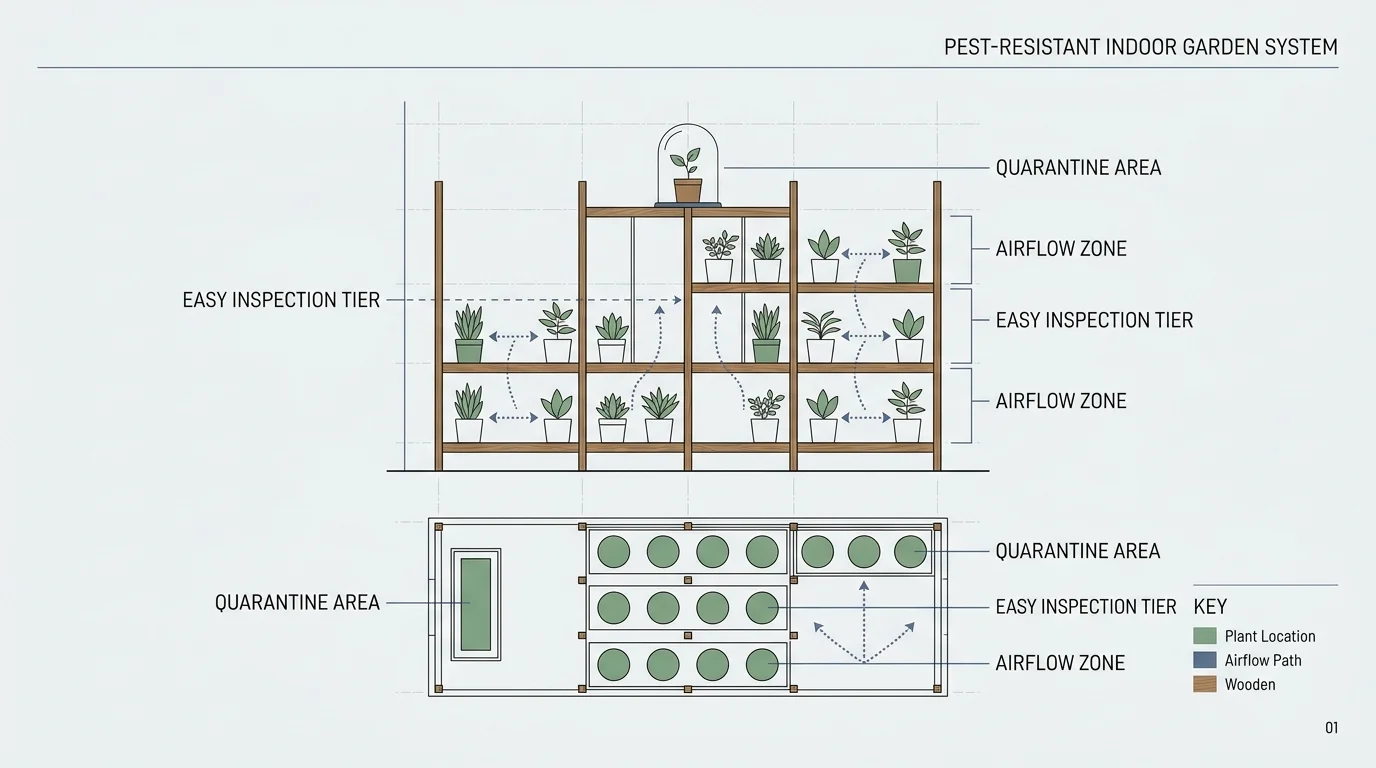
Designing a Pest Resistant Indoor Garden
How you arrange and style your indoor plants plays a massive role in pest prevention. When you have limited space, such as a small balcony or a narrow apartment windowsill, the temptation to cram as many pots as possible into one area is incredibly strong.
While a dense indoor jungle looks aesthetically beautiful, it creates a perfect microclimate for pests to thrive and travel.
When plants touch one another, pests like spider mites and mealybugs simply walk from leaf to leaf, turning a single-plant problem into an entire garden infestation. Furthermore, densely packed plants restrict airflow.
Stagnant air allows moisture to sit on the leaves and soil surface longer, creating the ideal breeding ground for fungus gnats and various fungal diseases.
Actionable Design Tips:
- Space Your Plants Appropriately: Arrange your pots so that the foliage of one plant does not physically touch its neighbor. Leave at least an inch or two of space between the canopies to encourage active air circulation.
- Utilize Vertical Space: If you lack floor space, use hanging planters, wall-mounted pots, or tiered shelving units. Elevating your plants separates them naturally and makes it much easier to inspect the undersides of the leaves at eye level.
- Choose the Right Pots: Always prioritize functionality over aesthetics when selecting a container. A beautiful decorative pot without drainage holes guarantees soggy soil and root rot, stressing the plant and inviting fungus gnats. If you love a pot with no drainage, use it as a cachepot. Plant your greenery in a cheap plastic nursery pot with drainage holes, and simply slip that plastic pot inside the decorative container. Remove the plastic pot when watering, let it drain completely, and place it back inside.
- Select Resilient Plant Species: If your home consistently struggles with low humidity and high heat, do not force delicate, pest-prone plants like calatheas or maidenhair ferns to survive there. Instead, design your space around tough, thick-leaved plants that naturally resist pests, such as snake plants, ZZ plants, and rubber trees.
Essential Maintenance Habits to Keep Your Plants Healthy
The foundation of pest control is overall plant health. A robust, thriving plant can naturally fend off minor pest damage, whereas a weak, stressed plant serves as an easy target for an infestation.
Establishing a consistent, hygienic maintenance routine is the most effective way to protect your small-space garden.
Before implementing any treatments, make it a habit to check your plants whenever you water them. Look at the stems, check where the leaves attach to the vines, and peek under the foliage.
Catching a single mealybug today is vastly easier than treating a hundred mealybugs next week.
| Maintenance Habit | How to Execute It | Why It Prevents Pests |
|---|---|---|
| The 30-Day Quarantine | When you buy a new plant, place it in a separate room away from your collection for 30 days. | Prevents greenhouse pests or hidden eggs on the new plant from spreading to your established indoor garden. |
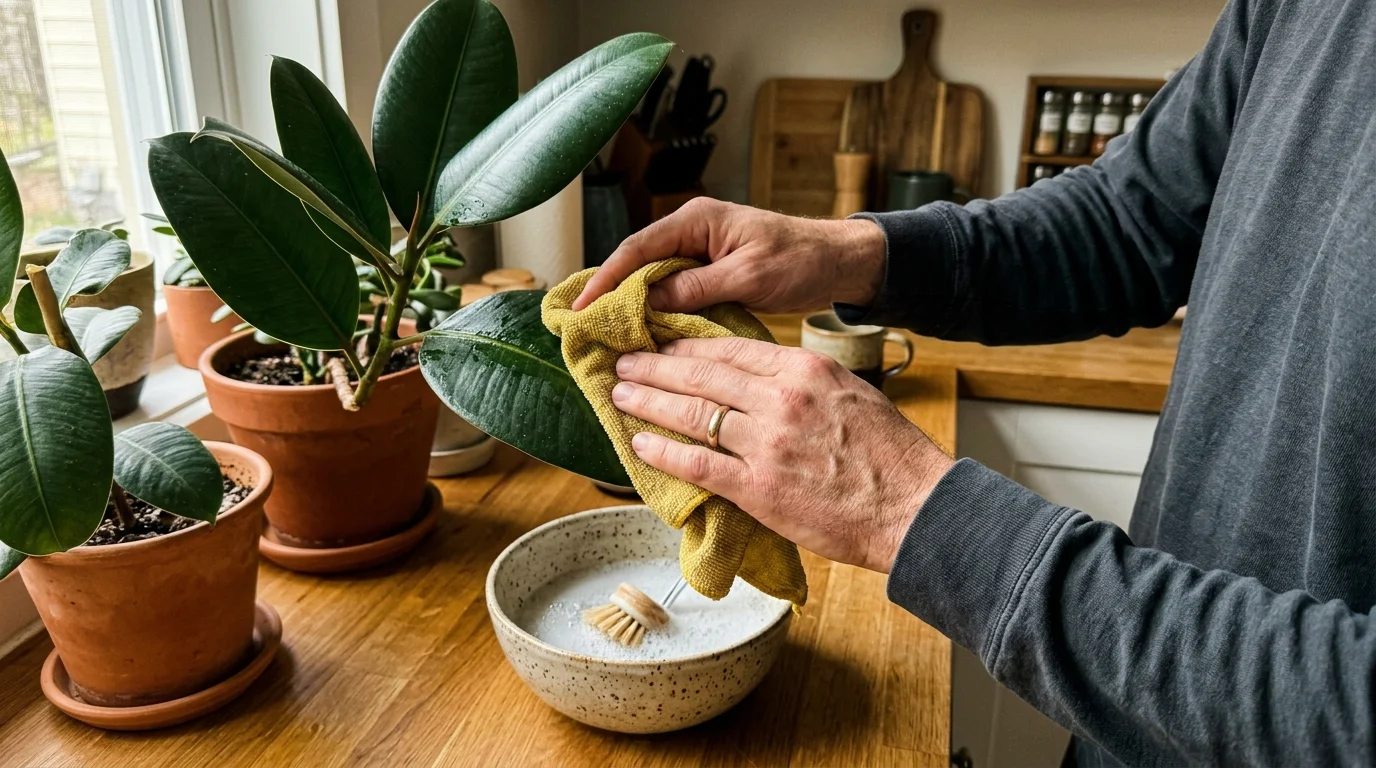
| Foliage Wiping | Wipe broad leaves with a damp microfiber cloth or a diluted neem oil solution every two weeks. | Removes dust, allowing the plant to photosynthesize efficiently. Physically wipes away early spider mites and thrip larvae. |
| Bottom Watering | Place the pot in a bowl of water and let the soil soak up moisture from the bottom drainage holes. | Keeps the top two inches of the soil completely dry, effectively starving out fungus gnat populations. |
| Sanitizing Tools | Wipe your pruning shears and scissors with rubbing alcohol before moving from one plant to the next. | Prevents the transfer of invisible bacterial diseases and microscopic pest eggs across your plant collection. |
| Removing Dead Debris | Pluck off yellowing leaves and remove dropped foliage sitting on top of the potting soil. | Eliminates hiding spots and decaying organic matter that attracts pests and encourages mold growth. |
Remember that watering correctly is your primary defense against stress. Most indoor plants prefer a thorough drenching followed by a period of drought, rather than frequent, tiny sips of water.
Overwatering suffocates the roots, causing the plant to weaken and emit chemical signals that actually attract predatory insects.
Frequently Asked Questions
Can houseplant pests spread to my outdoor patio garden?
Yes, indoor pests can absolutely spread to outdoor spaces, and vice versa. If you move your houseplants to a balcony or patio during the warm summer months, they can easily pick up aphids, thrips, or scale from the surrounding outdoor environment.
Always inspect and treat your outdoor plants before bringing them back inside for the winter.
Will normal liquid dish soap work as an insecticidal soap?
While many online tutorials suggest using liquid dish detergent, true insecticidal soap is formulated with potassium salts of fatty acids specifically designed to dissolve insect exoskeletons without harming plant tissue.
Dish detergents are heavily concentrated degreasers that can strip the natural protective waxes off your plant leaves, causing severe chemical burns. Always use a dedicated horticultural soap or a very mild, pure liquid castile soap.
How do pests get inside my house in the first place?
Plant pests are incredibly resourceful. They enter your home by hitchhiking on the leaves or hidden in the soil of newly purchased plants from the nursery.
They can also blow in through open windows on a breeze, latch onto your clothing after you walk through a park, or travel indoors on fresh-cut floral bouquets from the grocery store.
Should I just throw away a heavily infested plant?
If a plant is severely infested, losing most of its foliage, and the pests are threatening your expensive, healthy plant collection, throwing it away is a perfectly valid and practical choice. Sometimes the time, effort, and cost of treatments outweigh the value of the plant.
Do not feel guilty about protecting your overall indoor garden by discarding a lost cause. Bag the infested plant securely before placing it in the trash.
For trustworthy gardening information, visit:
University of Illinois Extension — Gardening, UC IPM (University of California Integrated Pest Management) and Missouri Botanical Garden. These organizations provide expert, research-based advice for gardeners at all levels.
Disclaimer: This article is for informational purposes only and is not a substitute for professional gardening advice. Always consult local extension services or horticulture experts for region-specific guidance.