
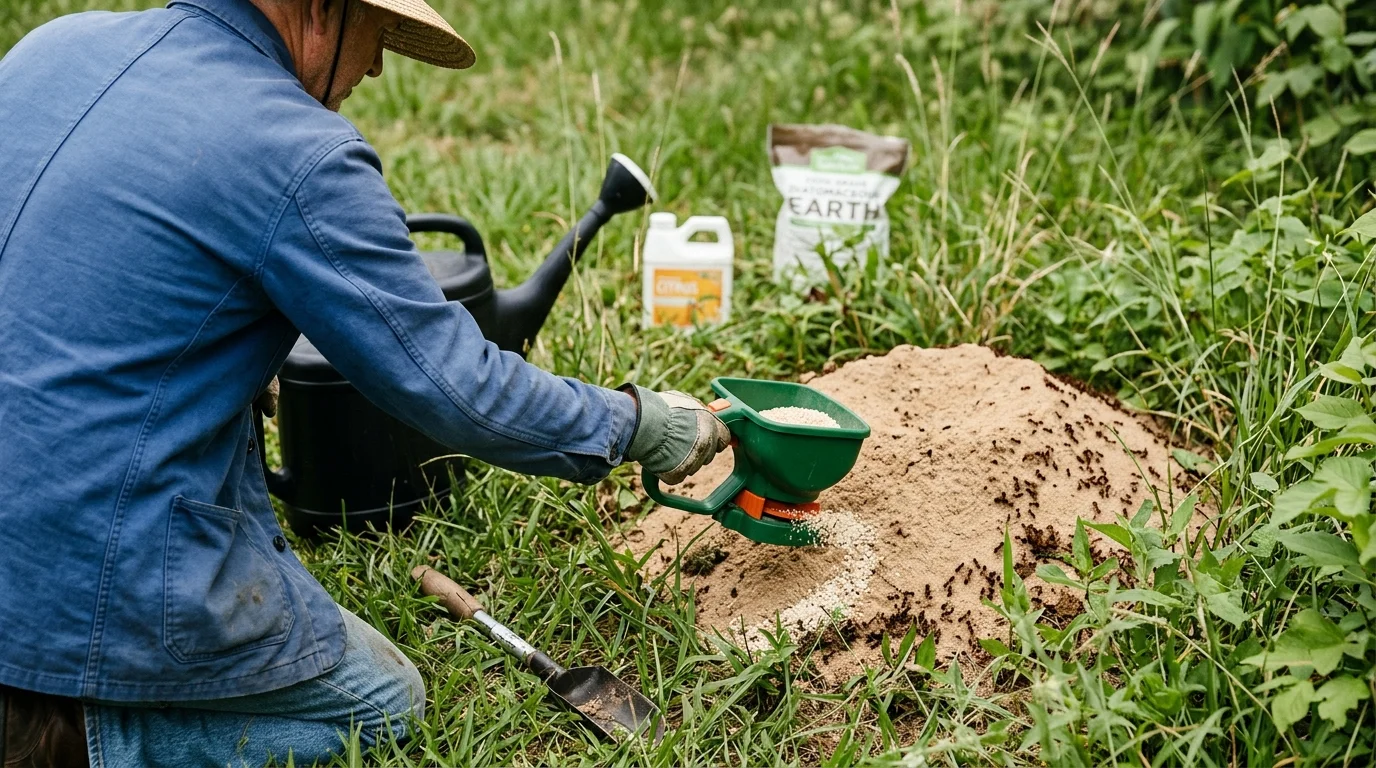
Fire ants turn a peaceful patio or small yard into a hostile environment with alarming speed, delivering painful stings that ruin your outdoor experience.
When you spot their distinctive dome-shaped mounds disrupting your carefully curated container garden or creeping along your balcony edges, you need immediate, effective solutions to take back your space.
Instead of resorting to harsh, indiscriminate chemicals that harm local ecosystems, you can deploy targeted strategies that destroy the colony from the inside out.
By understanding the foraging habits and lifecycle of these aggressive pests, you can combine mechanical tactics, organic treatments, and strategic baiting to achieve complete ant removal. These expert-approved methods will safely restore your garden sanctuary and protect your family from future invasions.
Contents11 sections
- Understanding Fire Ant Behavior in Small Spaces
- Method 1: The Two-Step Bait and Drench System
- Method 2: The Boiling Water Technique
- Method 3: Diatomaceous Earth Application
- Method 4: Botanical Oil Drenches
- Method 5: Deploying Beneficial Nematodes
- Method 6: Soapy Water Contact Killer
- Comparing Fire Ant Treatment Methods
- Protecting Container Plants from Fire Ant Invasions
- Long-Term Prevention Strategies
- Frequently Asked Questions
Understanding Fire Ant Behavior in Small Spaces
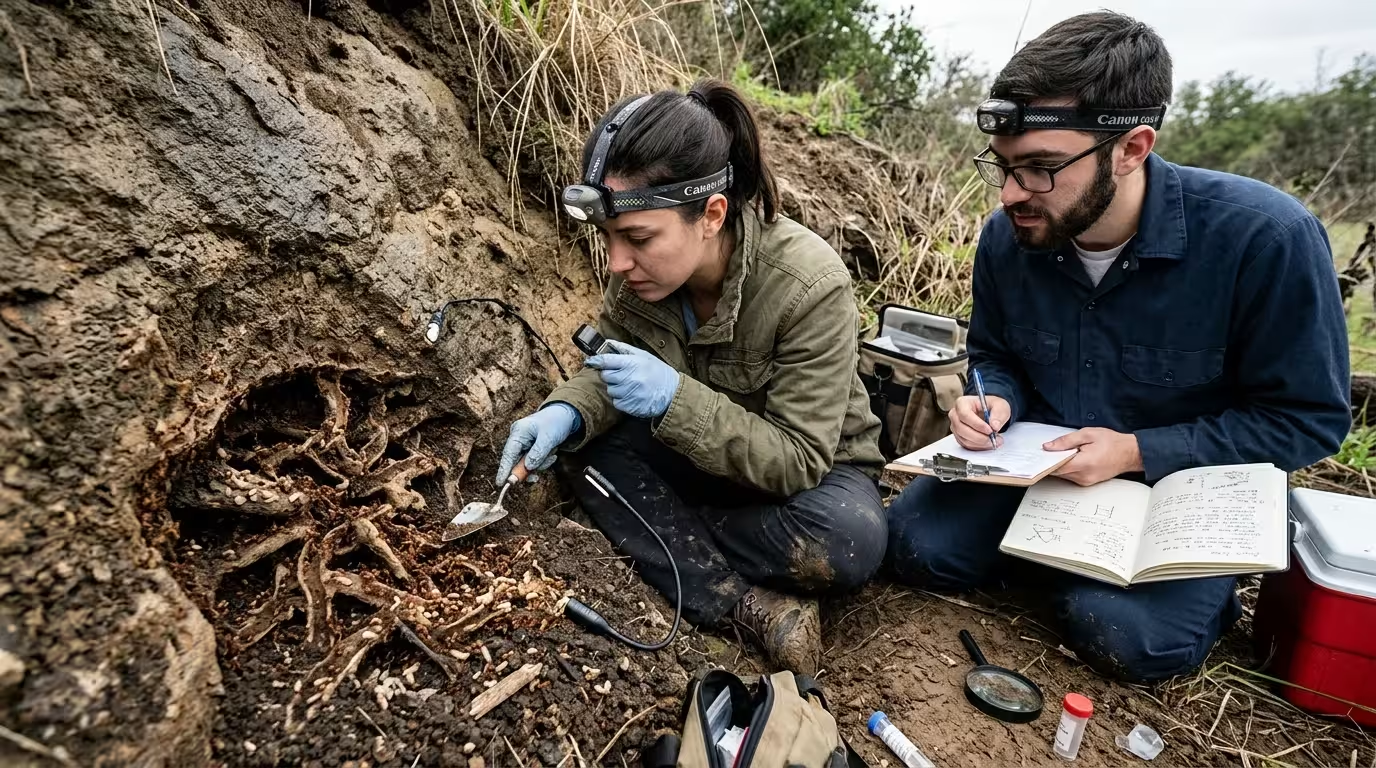
To successfully get rid of fire ants, you must first understand how they operate, especially within the confines of small-space gardens. Fire ants thrive in warm, sunny locations and frequently seek out disturbed soil to establish their expansive colonies.
In a traditional yard, you identify their presence by observing raised, dome-shaped dirt mounds that lack a central entry hole. However, on a concrete patio or a wooden balcony, their behavior adapts to the environment.
They often construct their nests in the tiny gaps between paving stones, underneath outdoor rugs, or, most destructively, straight inside your potted plants.
While fire ants are an aggressive outdoor threat, indoor and balcony growers must often defend against more subtle pests, requiring a targeted fungus gnat elimination plan to protect container root systems.
To keep other invasive bugs from taking over your deck or balcony, consider adopting simple habits to prevent pests before colonies can form.
Container gardens offer a luxurious habitat for these pests. Potting mixes are specifically engineered for excellent drainage—which refers to how efficiently water moves through the soil—and fire ants prefer exactly this type of loose, well-aerated medium.
The soil inside a terracotta or plastic pot also heats up rapidly in the sun, creating an ideal incubator for a growing colony. When a queen fire ant settles into your container garden, her worker ants quickly begin excavating tunnels.
This tunneling activity displaces the soil around your plant’s root system, severing delicate feeder roots and leaving massive air pockets that prevent the plant from absorbing water and vital nutrients.
The danger extends beyond plant damage. Fire ants exhibit hyper-aggressive defensive behaviors.
When they sense a vibration near their nest—such as you shifting a planter or brushing against a leaf—hundreds of workers swarm out instantly.
They use their mandibles to latch onto your skin and then inject a venom containing solenopsin, which produces an intense burning sensation followed by a painful, itchy white pustule. Because they attack in unified numbers, attempting to brush them away often triggers simultaneous stings.
Conquering these pests requires targeting the queen; as long as she survives deep within the soil, she will rapidly replenish the worker population.
Method 1: The Two-Step Bait and Drench System
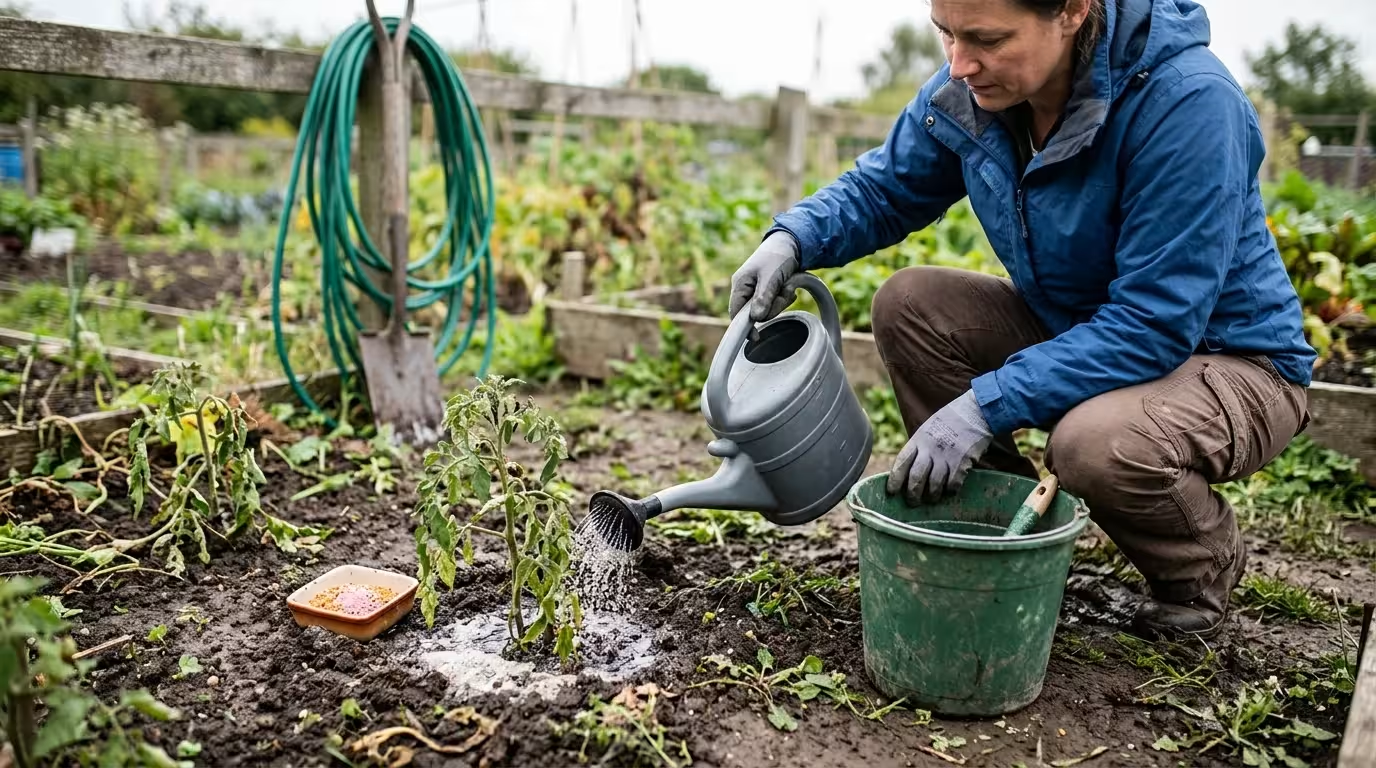
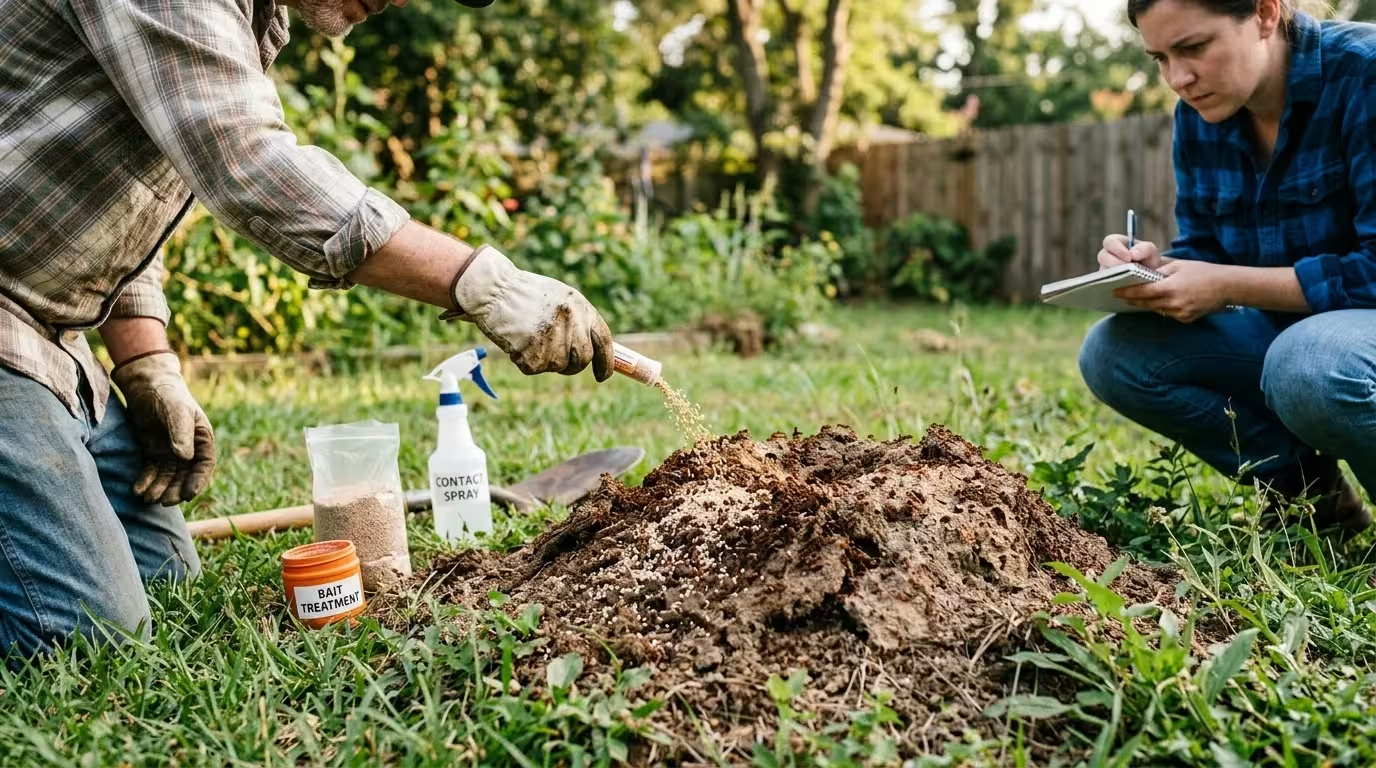
Horticultural experts universally recognize the two-step method as the most reliable strategy for total fire ant removal. This approach combines a slow-acting granular bait to target the queen with a fast-acting mound drench to eliminate aggressive workers.
The brilliance of this method lies in manipulating the ants’ natural foraging behavior rather than relying on overwhelming chemical force.
While organizing your pest control routine, it is also wise to ensure you are not making common gardening mistakes that invite snakes into your outdoor relaxation areas.
During peak summer warmth, remember to also protect your potted plants from extreme heat so they stay strong enough to survive both pests and thermal stress.
Adult worker ants cannot digest solid food. When they discover food sources in your garden, they carry the material back to the colony and feed it to the larvae.
The larvae convert the solid food into a liquid, which they regurgitate to feed the workers and, crucially, the queen.
If you apply a fast-acting contact poison on the soil surface, you only kill the foraging workers; the queen senses the drop in population and simply increases her reproductive rate.
By broadcasting a slow-acting organic bait—such as those containing spinosad, a natural substance made by a soil bacterium—you allow the workers ample time to carry the lethal meal deep into the nest.
Follow these specific steps to execute the two-step method:
- Time your application: Fire ants forage most actively when soil temperatures fall between 70 and 90 degrees Fahrenheit. Apply your bait in the late afternoon or early evening during the summer, or mid-morning during cooler months.
- Ensure a dry environment: Moisture ruins the attractiveness of the bait. Check the weather forecast to guarantee no rain is expected for at least 48 hours, and turn off your balcony irrigation systems or avoid watering your pots before application.
- Broadcast, do not disturb: Lightly scatter the bait around the perimeter of the mound or container. Never pour a large pile directly on top of the nest, as this alarms the ants and causes them to relocate the colony.
- Follow up with a drench: Wait five to seven days after baiting. This gives the colony enough time to distribute the bait to the queen. After this waiting period, apply a liquid mound drench directly to the nest to wipe out any remaining workers.

Method 2: The Boiling Water Technique
If you prefer an immediate, zero-chemical approach and are dealing with a localized infestation, boiling water offers a highly effective physical control method.
This technique works best for rogue mounds sprouting in driveway cracks, between patio pavers, or in bare corners of a small urban yard. It requires no specialized ingredients—only caution, precise execution, and a large volume of water.
Using scalding water is just one of several clever gardening hacks that use items you already own to tackle common plant problems on a budget.
The concept is straightforward: the extreme heat instantly neutralizes any ant it touches, destroying the colony through thermal shock.
Research shows that drenching a mound with scalding water yields roughly a 60 percent success rate per application, meaning you may need to repeat the process a few days later to achieve total eradication.
Success depends entirely on volume. A common mistake is pouring a single kettle of water over a large nest.
Fire ant tunnels stretch deep into the earth, sometimes plunging several feet down. To reach the queen, you must flood the entire subterranean network before the soil absorbs the heat.
You need approximately three gallons of boiling water for an average-sized mound. Heat the water in large, sturdy stockpots on your stove.
Safety remains paramount when handling large quantities of boiling water outdoors. Wear heavy-duty closed-toe shoes and long pants to protect your legs from accidental splashes.
Approach the mound carefully to avoid sending vibrations into the ground. Pour the water slowly and steadily directly over the center of the mound, allowing it to percolate downward rather than washing the topsoil away.
Critical warning: Never use boiling water on a fire ant colony located inside a container or near the root zone of your garden plants. The extreme heat will literally cook the root system, killing your plants instantly.

Method 3: Diatomaceous Earth Application
Diatomaceous earth (DE) provides a brilliant mechanical solution for pest control. This fine, white powder consists of the fossilized remains of microscopic aquatic organisms called diatoms.
While it feels incredibly soft and powdery to human hands, under a microscope, DE resembles jagged shards of broken glass. This structural composition makes it a formidable weapon against fire ants.
This mechanical dust is also an excellent line of defense against sneaky pests on indoor plants before they can colonize your patio pots.
If you are applying treatments late in the season, you should also take steps to stop pests from overwintering in your balcony soil so they don’t emerge next spring.
When an ant walks across a surface dusted with DE, the microscopic shards slice into the waxy outer coating of its exoskeleton. This lipid layer is responsible for trapping moisture inside the insect’s body.
Once the waxy barrier is breached, the ant rapidly loses moisture to the surrounding air, leading to fatal dehydration within 24 to 48 hours. Because DE kills through physical desiccation rather than chemical toxicity, ants can never build up an immunity or resistance to it.
To use this method effectively in your small-space garden, you must source “food-grade” diatomaceous earth, which is perfectly safe for humans, pets, and the environment. Avoid pool-grade DE, as it has been chemically treated and heated, altering its structure and making it dangerous to inhale.
Application requires a light touch. If you dump heavy piles of DE on the soil, ants will simply recognize it as an obstacle and walk around it.
You want to create an almost invisible layer of dust that they unknowingly cross.
Use a specialized bulb duster or a repurposed powder makeup brush to apply a fine, even coat around the base of your affected containers, along balcony thresholds, and over active foraging trails.
The primary limitation of DE is moisture. If the powder gets wet from rain, high humidity, or overhead watering, it loses its abrasive edge and becomes ineffective.
You must reapply the powder after every rainfall or heavy watering session to maintain continuous protection.

Method 4: Botanical Oil Drenches
Harnessing the power of botanical extracts is a highly effective way to eliminate fire ants without resorting to synthetic pesticides. Oils derived from citrus fruits—specifically orange oil containing the active compound d-limonene—serve as potent organic insecticidal drenches.
D-limonene acts as a powerful solvent; it breaks down the protective cell membranes of insects upon contact, leading to rapid suffocation and death.
Just as citrus-based drenches deter aggressive insects, you can strategically cultivate plants that naturally keep mice away to establish a chemical-free shield around your entire patio.
If you use your small patio space to grow food, these natural drenches can also help safeguard your crops against other pests that attack container vegetables.
An orange oil drench is particularly beneficial for small-space gardeners because it leaves behind a pleasant citrus scent rather than a harsh chemical odor, making your patio or balcony immediately usable after treatment.
It also acts as a deterrent, as ants despise the strong aroma of citrus oils and will actively avoid treated areas.
To create an effective botanical drench, you need to emulsify the oil so it mixes properly with water. Follow this reliable recipe:
- Measure 1.5 ounces of high-purity orange oil (look for products containing at least 70% d-limonene).
- Combine the oil with 3 ounces of a gentle, liquid dish soap. The soap acts as a surfactant, breaking the surface tension of the water and allowing the oil to mix evenly.
- Stir this mixture into one gallon of room-temperature water inside a large watering can or bucket.
To apply the drench, slowly pour the mixture directly over the fire ant mound or the surface of the infested potting soil. For a standard mound, you will likely need the entire gallon to ensure the liquid penetrates deep enough to coat the queen.
The citrus drench acts on contact, so you will notice an immediate reduction in ant activity. When applying to container plants, ensure the pot has adequate drainage holes so the excess liquid can flush through without waterlogging the roots.
Method 5: Deploying Beneficial Nematodes
If you want to fight nature with nature, beneficial nematodes represent the ultimate biological warfare against fire ants. These microscopic, unsegmented roundworms live naturally in the soil and actively hunt down insect pests.
For fire ant treatment, you want to seek out specific nematode species, namely Steinernema carpocapsae, which are highly effective at parasitizing mobile insects.
The mechanism of action is fascinating. Nematodes swim through the moisture in the soil, seeking out host insects.
When a nematode locates a fire ant, it enters the ant’s body through natural openings like spiracles (breathing tubes). Once inside, the nematode releases a specialized symbiotic bacterium that liquefies the ant’s internal organs within 48 hours.
The nematodes then feed on the resulting nutrient soup, reproduce, and emerge by the thousands to hunt down the rest of the colony.
Deploying nematodes requires careful attention to environmental conditions, as these living organisms are highly sensitive to sunlight and dehydration. Purchase your nematodes from a reputable garden supplier; they usually arrive packaged in a small sponge or granular powder holding millions of dormant worms.
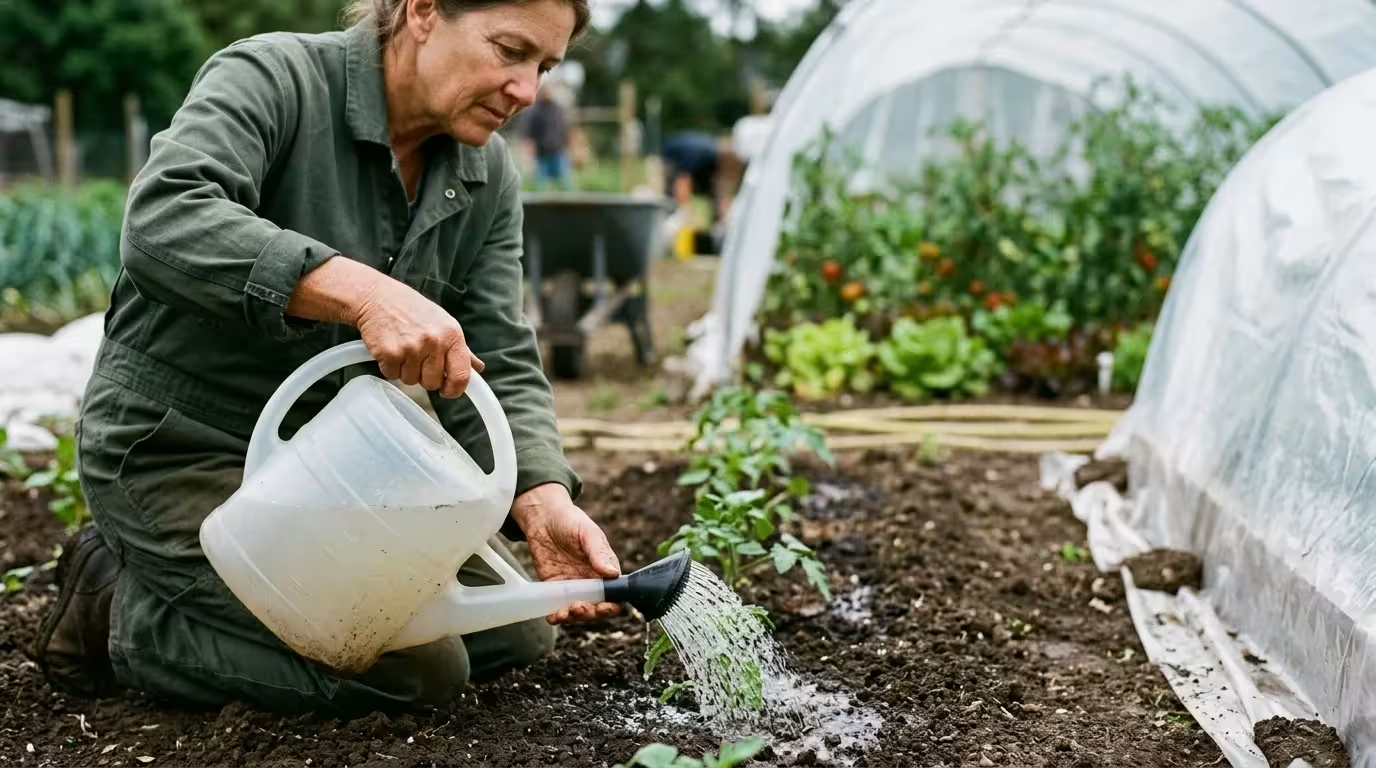
Mix the package contents into a watering can filled with lukewarm, unchlorinated water. Stir gently to awaken and distribute the nematodes.
Because ultraviolet light kills them rapidly, you must apply the solution at dusk or early in the evening. Before pouring the mixture, heavily water the target soil or potting mix; nematodes require a wet environment to move efficiently.
Pour the nematode solution over the infested area, and then lightly water the area again to wash the microscopic worms off the plant foliage and down into the soil matrix.
Keep the soil consistently moist for the next seven days to ensure the nematodes establish a strong, hunting population.
Method 6: Soapy Water Contact Killer
Sometimes the most effective solutions are the ones you already have sitting next to your kitchen sink.
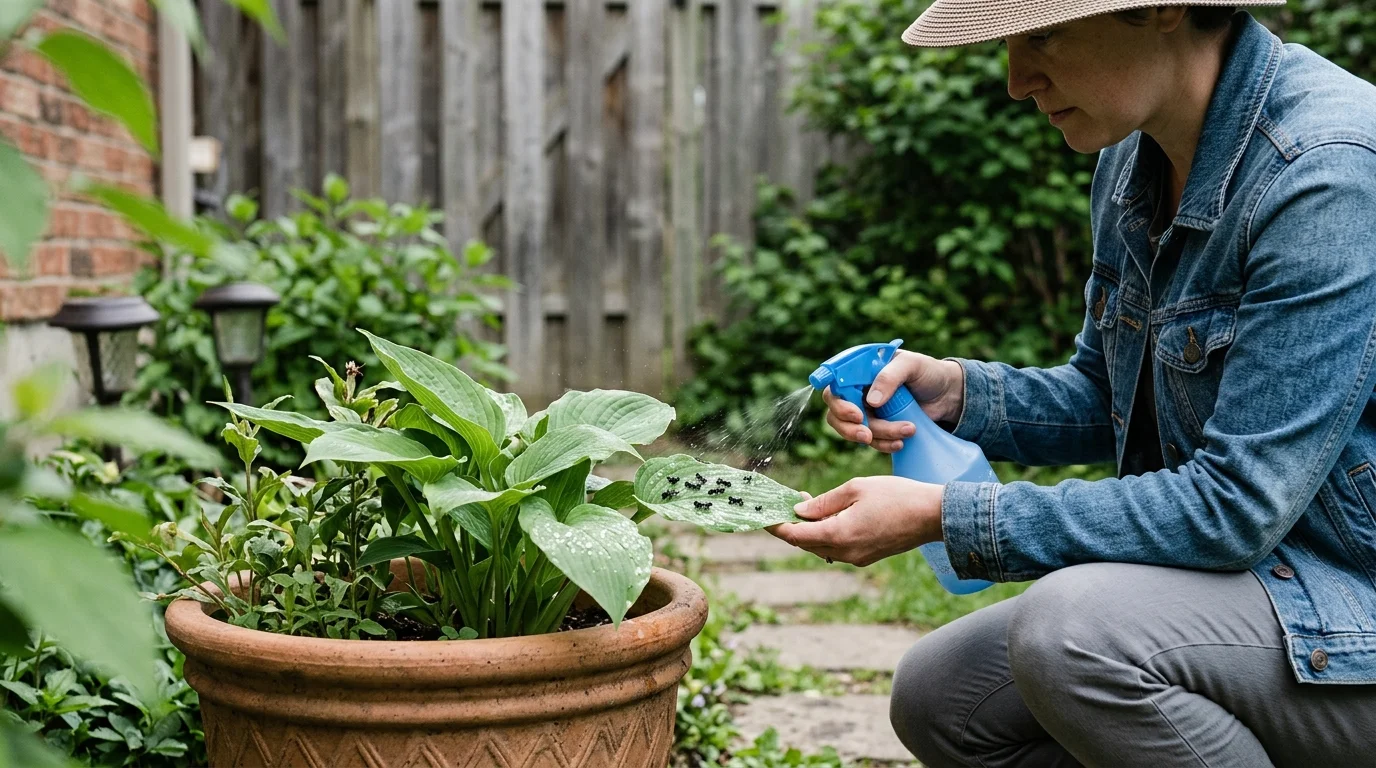
A simple solution of dish soap and water serves as an exceptional contact killer for fire ants, making it a perfect tool for quickly neutralizing aggressive foragers that invade your patio space while you are trying to relax or tend to your plants.
Unlike humans, ants do not have lungs. They breathe through tiny pores along the sides of their bodies called spiracles.
Water alone cannot penetrate these microscopic openings because of natural surface tension. However, when you introduce liquid dish soap to the water, the soap acts as a surfactant.
It destroys the water’s surface tension, allowing the liquid to instantly flood the spiracles and suffocate the ant within seconds.
To utilize this method, mix two to three tablespoons of a mild liquid dish soap into a quart-sized spray bottle filled with water. Avoid heavy-duty degreasers or soaps containing bleach, as these can easily damage plant foliage.
Shake the bottle gently to combine the ingredients without creating an excessive amount of foam.
Keep this spray bottle handy on your balcony or patio. Whenever you spot a line of scouting fire ants marching along a railing or clustering near a spilled drink, douse them thoroughly with the soapy spray.
Wipe away the dead ants with a paper towel a minute later.
You can also mix a larger batch in a watering can to use as an immediate surface drench for small mounds popping up in your lawn, though it lacks the deep-penetrating power required to reliably kill a well-entrenched queen.
Comparing Fire Ant Treatment Methods
To help you select the most appropriate strategy for your specific gardening situation, review this quick comparison of the six expert-recommended methods.
| Treatment Method | Speed of Results | Eco-Friendly | Best Use Case |
|---|---|---|---|
| Two-Step Bait & Drench | 7 to 14 days | Yes (if using organic bait) | Total colony elimination and deep nests. |
| Boiling Water | Immediate | Yes | Paved areas, driveway cracks; away from plants. |
| Diatomaceous Earth | 24 to 48 hours | Yes | Dry thresholds, indoor/outdoor borders, prevention. |
| Botanical Oil (Orange) | Immediate | Yes | Container drenching, patios with high foot traffic. |
| Beneficial Nematodes | 3 to 7 days | Yes | Organic soil beds, preventative ecosystem balance. |
| Soapy Water Spray | Immediate | Yes | Spot treating active foragers and small scouts. |

Protecting Container Plants from Fire Ant Invasions
For gardeners working on balconies or small patios, your container plants represent a significant investment of time and money. Fire ants find these enclosed environments irresistible.
If you notice a fine accumulation of dirt on your patio underneath a pot’s drainage holes, or if ants immediately swarm out when you water the plant, you have a colony thriving inside the root ball.
Evicting fire ants from a potted plant requires a specialized approach to avoid damaging the delicate root system. You cannot use boiling water, and harsh chemical drenches can stunt the plant’s growth.
The safest and most effective method is a complete submersion flood.
Find a large bucket or a heavy-duty plastic storage tub that is deeper and wider than your infested plant pot. Fill this outer container with a solution of water and two tablespoons of insecticidal soap or mild dish soap per gallon.
Wearing heavy gardening gloves, carefully lift the infested plant pot and slowly lower it into the soapy water bath. The water level should reach just an inch below the rim of the plant pot.
As the soapy water rushes into the pot through the bottom drainage holes, it displaces the oxygen in the soil. The fire ants will immediately panic and rush to the surface to escape the flood.
However, as they hit the soapy water barrier, the surfactant causes them to sink and drown. Leave the pot submerged for 20 to 30 minutes to ensure total saturation of the root ball.
Afterward, lift the pot out, flush it heavily with clean water to rinse away the soap residue, and allow it to drain completely in a shaded spot before returning it to its original location.

Long-Term Prevention Strategies
Eliminating an active fire ant colony is only half the battle; preventing new queens from claiming your garden requires consistent vigilance. Fire ants constantly send out winged reproductive queens during warm, humid weather, typically after a heavy rainstorm.
If your patio offers an inviting environment, a new colony will quickly replace the old one.
Start by prioritizing strict sanitation. Fire ants are aggressive scavengers that consume proteins, fats, and sugars.
Never leave pet food bowls sitting outside on your patio overnight. Sweep up fallen fruit from container citrus trees, clean your outdoor grill thoroughly after each use, and ensure your compost bin features a tight-fitting, ant-proof lid.
Moisture management is equally crucial. While ants tolerate dry spells, they actively seek out reliable water sources during the peak of summer heat.
Inspect your garden hoses, watering wands, and balcony drip irrigation systems for tiny leaks. Empty the saucers sitting underneath your plant pots after watering; standing water not only attracts ants but also invites mosquitoes and leads to root rot.
Finally, inspect every new addition to your garden. Many fire ant infestations begin when a gardener unknowingly brings a contaminated nursery pot or a bag of premium topsoil onto their property.
Before setting a newly purchased plant on your patio, tap the sides of the plastic nursery pot firmly and watch the soil surface.
If ants begin swarming, quarantine the plant and treat the root ball using the submersion method before integrating it into your main collection.
For trustworthy gardening information, visit: Denver Botanic Gardens, San Diego Botanic Garden and U.S. National Arboretum. These organizations provide expert, research-based advice for gardeners at all levels.
Frequently Asked Questions
Does baking soda and vinegar kill fire ants?
No, the combination of baking soda and vinegar does not reliably eliminate fire ant colonies. While pouring vinegar on baking soda creates an impressive bubbling reaction caused by the rapid release of carbon dioxide, this reaction lacks the toxicity required to kill the queen.
The fizzing may alarm the workers and cause them to relocate the mound a few feet away, but it will not solve your infestation.
Can I use cornmeal to make fire ants explode?
The idea that fire ants eat cornmeal, drink water, and then explode because they cannot digest it is a common gardening myth. Adult fire ants only consume liquid food.
They will carry the cornmeal back to the colony for the larvae to process, but it does not cause any fatal digestive expansion. Cornmeal has absolutely no insecticidal properties and will simply act as a free carbohydrate source for the colony.
What should I do if a fire ant stings me while gardening?
If you are stung by a fire ant, immediately wash the area with soap and cold water to remove any dirt and lingering venom. Apply a cold compress to reduce swelling and numb the pain.
You can apply an over-the-counter hydrocortisone cream to manage the severe itching that typically follows. Resist the urge to pop the white pustule that forms the next day, as breaking the skin dramatically increases your risk of a secondary bacterial infection.
If you experience shortness of breath or swelling in your throat, seek emergency medical attention immediately.
Are fire ants beneficial to the garden in any way?
In a purely natural, undisturbed ecosystem, fire ants do perform some beneficial tasks. They aerate the soil through their extensive tunneling and aggressively hunt down other garden pests like tick larvae, chiggers, and certain types of caterpillars.
However, in a small-space garden, balcony, or patio environment, their extreme aggression, painful stings, and tendency to destroy container plant roots far outweigh any minor ecological benefits they provide.
Disclaimer: This article is for informational purposes only and is not a substitute for professional gardening advice. Always consult local extension services or horticulture experts for region-specific guidance.