
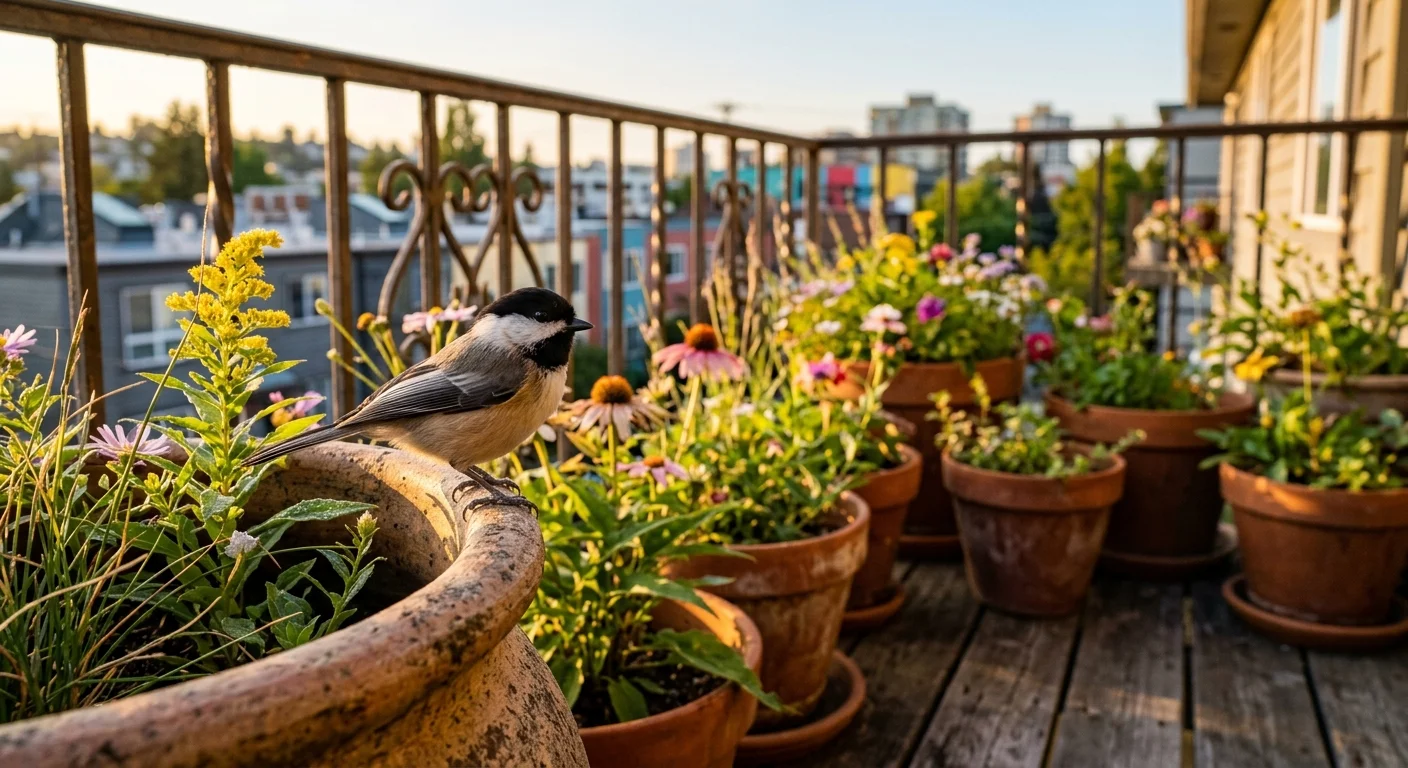
Transforming your compact outdoor space into a thriving sanctuary for songbirds brings immediate joy and vital ecological support to your local neighborhood. By selecting specific, nutrient-dense plants, you provide natural food sources and essential shelter that keep feathered visitors returning year after year.
Cultivating a bird-friendly garden requires no massive acreage; even small balconies and patios can host striking native perennials and dwarf shrubs that birds absolutely love. You simply need to understand which species deliver the most high-quality seeds, berries, and nectar throughout the changing seasons.
The following twelve plants offer outstanding visual beauty while serving as natural bird feeders, helping you create a wildlife garden bursting with vibrant color and cheerful song.
Contents8 sections
- Understanding What Attracts Birds to Small Spaces
- Essential Native Plants for Seed Eaters
- Berry-Producing Shrubs for Compact Yards
- Nectar and Insect Magnet Flowers
- Songbird Plant Quick Reference Guide
- How to Design a Bird-Friendly Garden Layout
- Common Mistakes to Avoid When Gardening for Wildlife
- Frequently Asked Questions
Understanding What Attracts Birds to Small Spaces
Creating a successful wildlife habitat requires a fundamental shift in how you view your gardening space. Instead of viewing your yard solely as a collection of pretty flowers, you must begin treating it as a dynamic, living ecosystem.
Birds evaluate potential habitats based on three critical survival pillars: reliable food sources, accessible fresh water, and adequate shelter for roosting and nesting.
When you garden in limited areas—such as an urban balcony, a tiny courtyard, or a narrow side yard—every single plant choice matters tremendously.
Even a simple setup like a balcony bee stop with spring flowers can dramatically boost local biodiversity in urban neighborhoods.
To make the most of your footprint, practicing companion planting for small spaces can help you grow compatible, resource-efficient plants together.
Planning your setup with specific small garden layouts can help you arrange these layers effectively without making the area feel cluttered.
Native plants provide the foundation for any successful bird garden. Because local bird populations evolved alongside native flora over thousands of years, their lifecycles synchronize perfectly with the blooming and fruiting times of these specific plants.
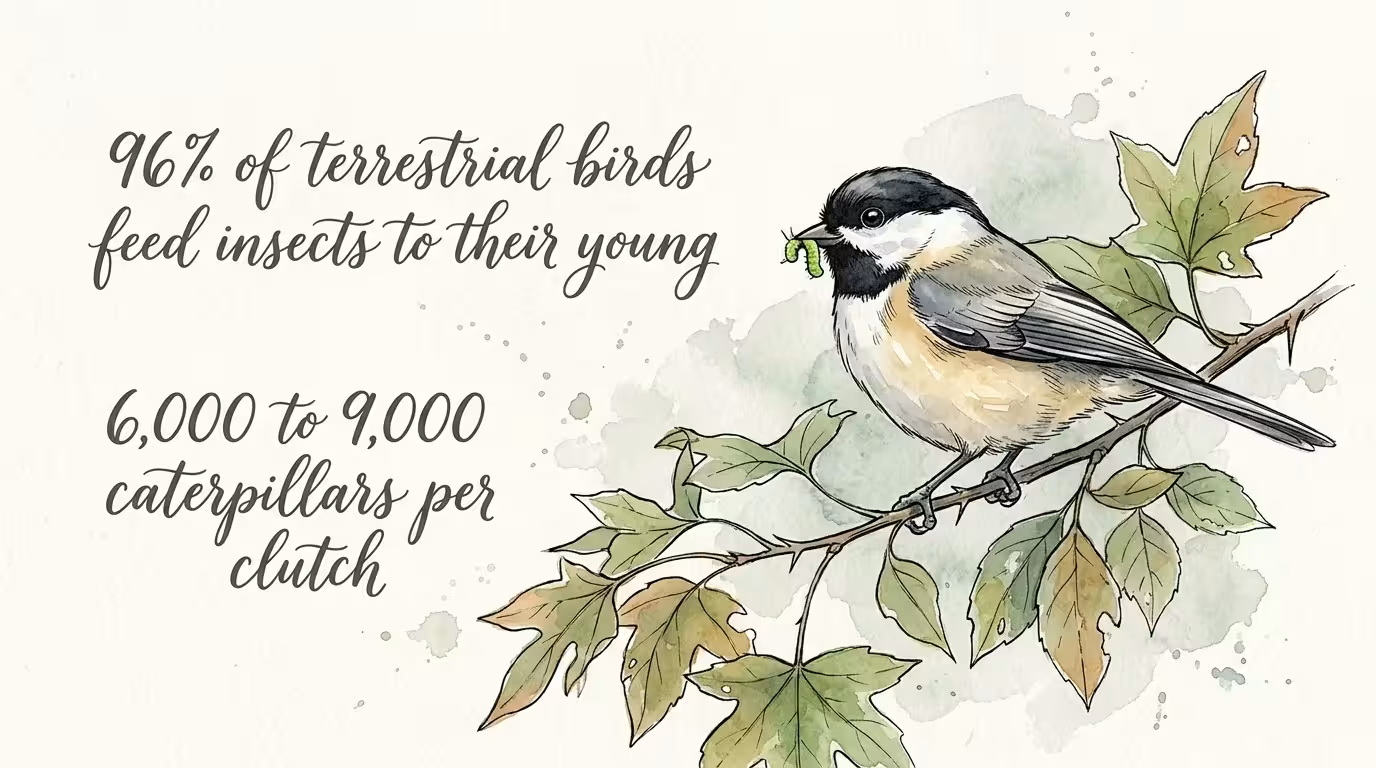
Furthermore, native plants support massive populations of native insects. While we often think of birds eating seeds and berries, nearly 96 percent of terrestrial North American birds rely completely on insects to feed their young.
A single clutch of Carolina Chickadees requires between 6,000 and 9,000 caterpillars just to reach fledging age; without native host plants to attract those insects, the baby birds simply cannot survive.
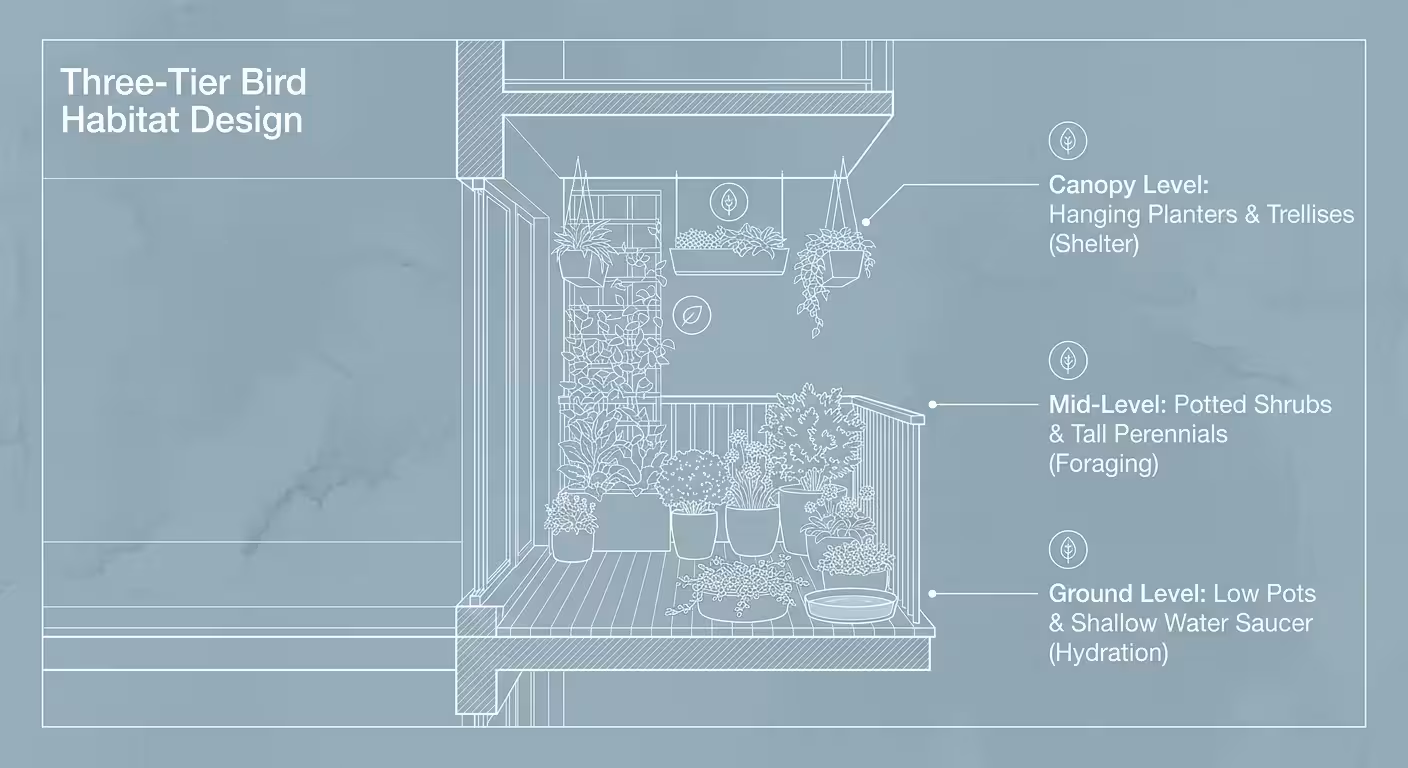
In small spaces, maximizing vertical real estate becomes your greatest advantage. By utilizing hanging baskets, sturdy trellises, and multi-tiered container arrangements, you can simulate the layered environment of a natural forest edge.
This tiered approach provides canopy cover, mid-level foraging, and ground-level feeding, satisfying the distinct preferences of different songbird species.
Selecting plants that offer multiple seasons of interest—such as a shrub that provides nectar-rich spring flowers, late-summer berries, and dense winter branching—ensures your compact garden remains highly productive all year round.
Essential Native Plants for Seed Eaters
Seed-bearing flowers represent some of the easiest and most visually rewarding additions to any small-space garden. These tough, sun-loving perennials and annuals draw vibrant flocks of finches, sparrows, buntings, and chickadees directly to your viewing area.
If you want to create a stunning backdrop for your goldfinches and cardinals, try incorporating some beautiful blue flowers to make the yellow and red plumage pop.
Selecting the best flowers for container gardens that bloom all summer is a foolproof way to secure a constant supply of seeds and nectar.
Incorporating a few no-fail flowers that bloom all summer long ensures your garden remains colorful and full of life with minimal effort on your part.
1. Purple Coneflower (Echinacea purpurea)
Renowned for its striking, drooping pink petals and prominent, spiky central cones, the Purple Coneflower stands as a quintessential wildlife plant. These hardy perennials thrive in full sun and well-draining soil—meaning water moves quickly through the earth rather than pooling and rotting the roots.
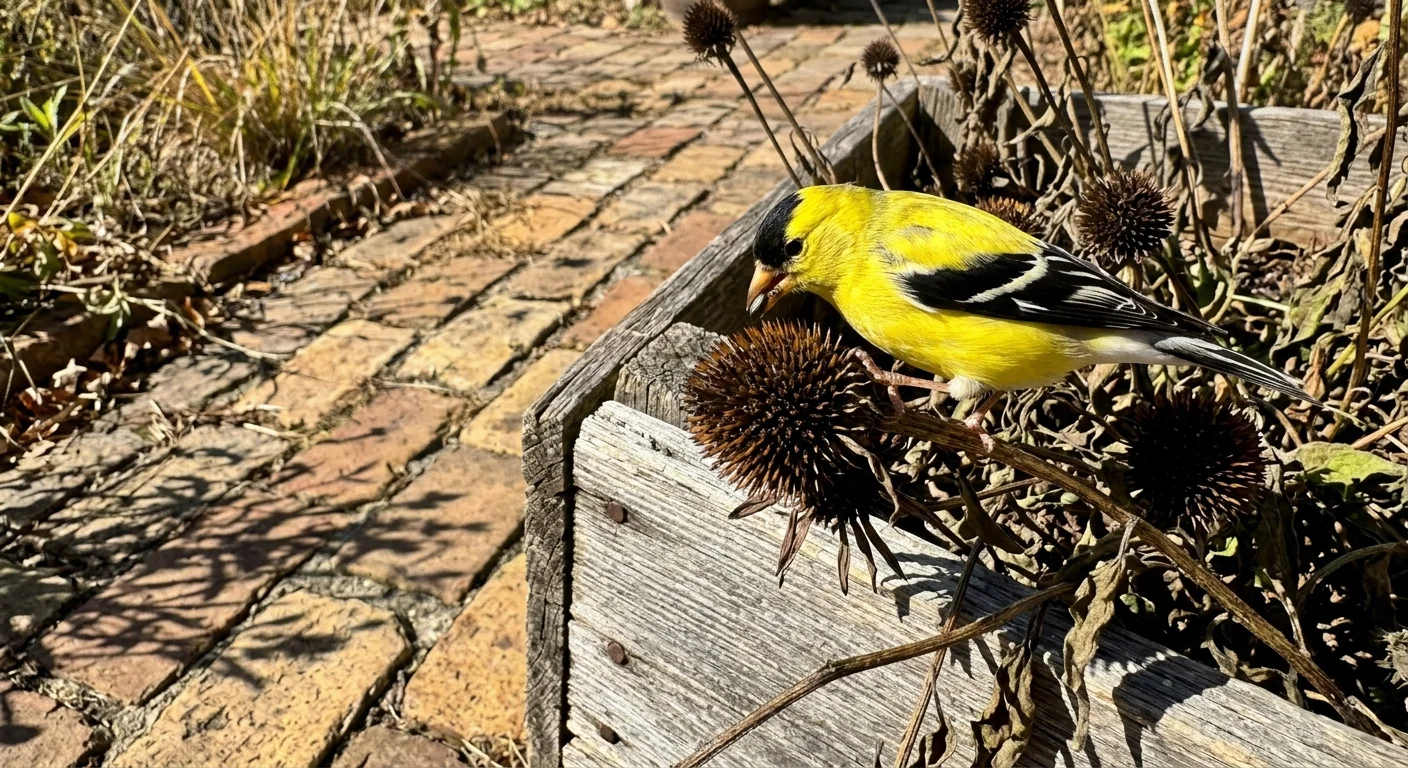
They adapt beautifully to deep container gardens, provided the pots measure at least 14 inches deep to accommodate their robust taproots. In late summer and autumn, American Goldfinches will routinely perch precariously atop the sturdy stems, meticulously plucking the nutrient-dense seeds from the dried cones.
2. Black-eyed Susan (Rudbeckia hirta)
Offering a cheerful burst of golden-yellow warmth, Black-eyed Susans act as a magnetic force for seed-eating birds. These reliable bloomers establish quickly and tolerate significant drought once their root systems mature.
Because they spread readily, they fill out patio planters and border edges with impressive speed.
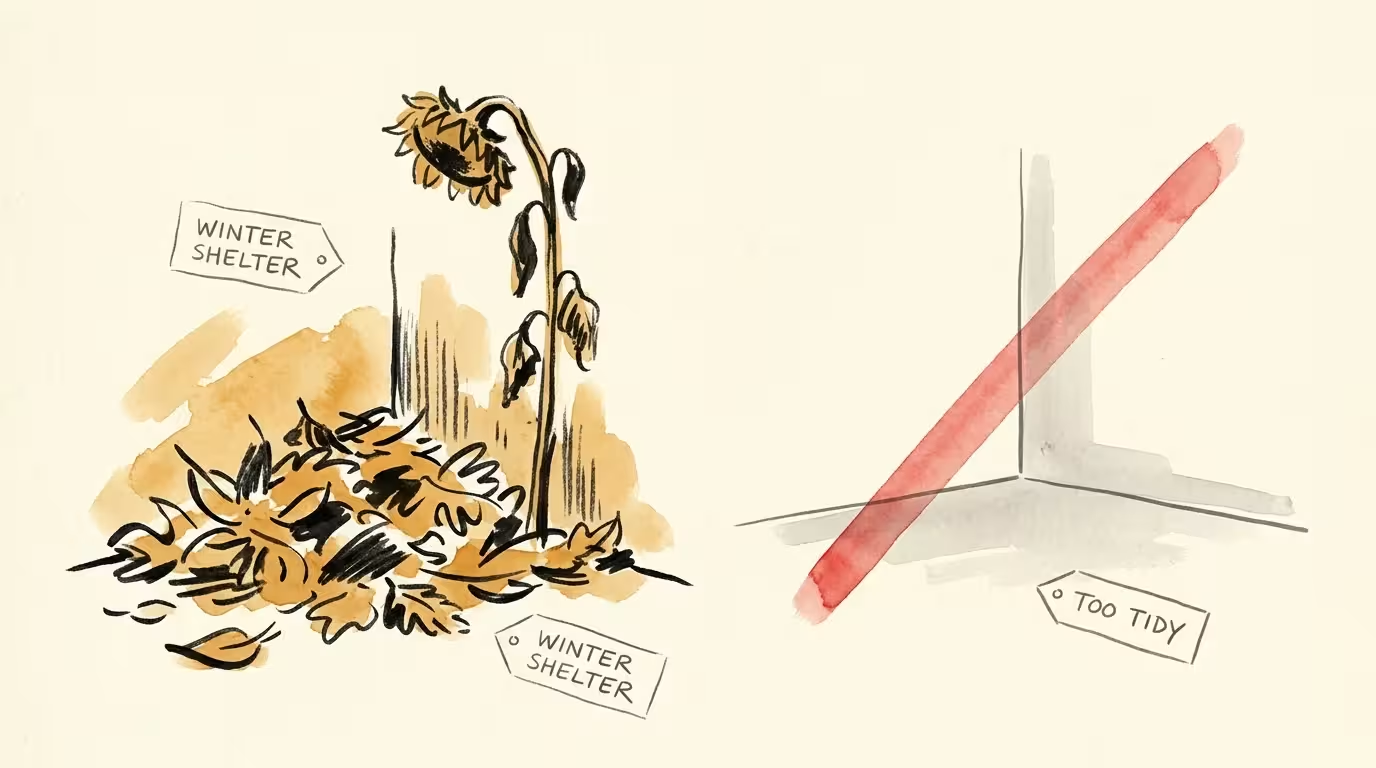
To maximize their wildlife value, you must resist the urge to tidy up your garden in the fall; leaving the dark, mature seed heads intact provides a critical winter pantry for juncos, nuthatches, and tufted titmice when other food sources disappear under the snow.
3. Sunflowers (Helianthus annuus)
No bird garden feels complete without the towering majesty of sunflowers, which produce seeds packing up to 40 percent fat content—essential fuel for migrating and wintering birds.
If you lack the ground space for standard 10-foot varieties, dwarf cultivars like ‘Sunbelievable’ or ‘Elf’ top out at a manageable three feet, making them absolutely ideal for large balcony pots. Sunflowers require heavy watering and full sun exposure to develop their massive seed heads.
Once the bright yellow petals shrivel and drop, you will often spot Northern Cardinals and Blue Jays clinging to the heavy stalks to extract their high-calorie prize.
4. Coreopsis (Tickseed)
Coreopsis blooms with an abundance of delicate, daisy-like flowers that persist from early summer straight through to the first frost. This low-maintenance native requires very little fertilizer; in fact, overly rich soil often causes the stems to flop over lazily.
It excels in shallow, wide planters and thrives in hot, baked microclimates near concrete patios.
While the seeds are incredibly small, they provide an ideal foraging opportunity for ground-feeding songbirds like Native Sparrows and Dark-eyed Juncos, who eagerly hop around the base of the plant to scavenge fallen seeds.
Berry-Producing Shrubs for Compact Yards
Shrubs anchor your landscape design, providing necessary structural elements while doubling as heavy-yielding food factories. For small yards, carefully selecting dwarf or prune-tolerant species prevents the plants from overwhelming your limited footprint.
Many berry-producing shrubs can also double as fast-growing screens; if you need to create some separation, look for privacy hedges that fill in quickly to give your wildlife sanctuary some peace and quiet.
5. Serviceberry (Amelanchier)
Often called Juneberry, this versatile deciduous shrub offers exceptional four-season interest for both you and your local wildlife.
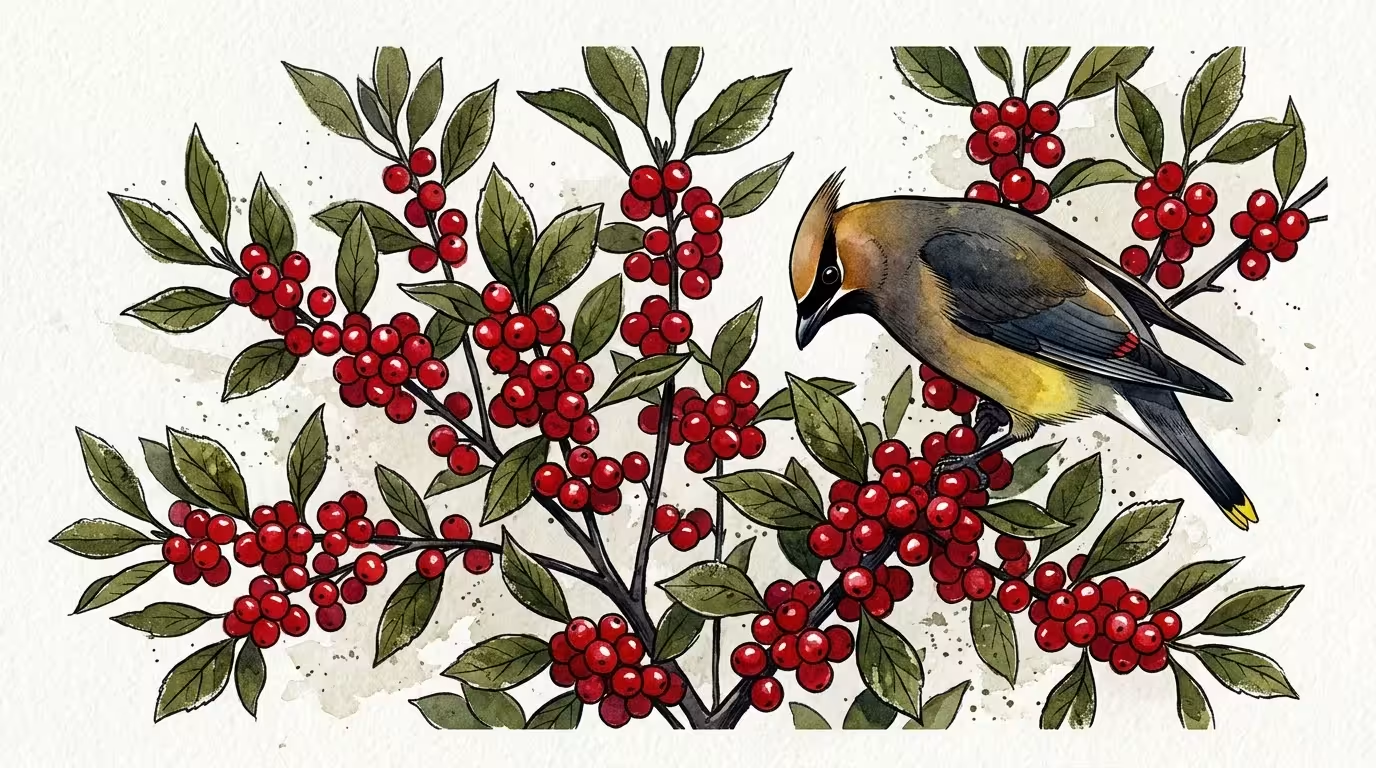
Spring brings delicate, star-shaped white blossoms; summer yields clusters of sweet, edible purple berries; and autumn sets the foliage ablaze in brilliant shades of fiery orange and red. The berries typically ripen in early June, instantly attracting Cedar Waxwings, American Robins, and Baltimore Orioles.
For tight spaces, seek out the ‘Regent’ cultivar, a compact form that naturally maxes out around four to six feet tall and easily thrives in oversized patio half-barrels.
6. Winterberry Holly (Ilex verticillata)
Unlike traditional evergreen hollies, Winterberry sheds its leaves in late autumn, revealing bare branches absolutely smothered in brilliant scarlet berries.
These berries contain specific chemical compounds that make them unpalatable in the fall; however, after enduring multiple cycles of freezing and thawing throughout the winter, they soften and become a vital, life-saving food source for Eastern Bluebirds and Hermit Thrushes.
Because Winterberry is dioecious—meaning individual plants are either strictly male or strictly female—you must plant at least one male nearby to ensure your female plant produces fruit.
Dwarf female varieties like ‘Berry Poppins’ can easily be paired with a dwarf male like ‘Mr. Poppins’ in a single large planter.
7. Elderberry (Sambucus nigra)
While wild Elderberry bushes can grow rather unruly, modern garden cultivars respond incredibly well to aggressive pruning, allowing you to maintain them as compact, ornamental shrubs.
They produce wide, flat umbels of fragrant white flowers in early summer, followed by heavy, drooping clusters of dark purple, antioxidant-rich berries. These soft berries appeal specifically to softer-billed birds like Gray Catbirds, Northern Mockingbirds, and Brown Thrashers.
Elderberries prefer consistently moist soil, making them an excellent solution for the damp, poorly draining corners of your yard where other plants might struggle.
8. Beautyberry (Callicarpa americana)
Living up to its descriptive name, the American Beautyberry produces tight, vibrant clusters of metallic-purple berries that wrap dramatically around its arching stems. The bright magenta fruit persists well into the late fall, providing a striking visual contrast against the fading autumn landscape.
This resilient shrub tolerates part shade gracefully, making it a stellar choice for a covered patio or a yard heavily shaded by neighboring buildings. The high-moisture berries serve as a crucial hydration source for migratory songbirds passing through your area in September and October.
Nectar and Insect Magnet Flowers
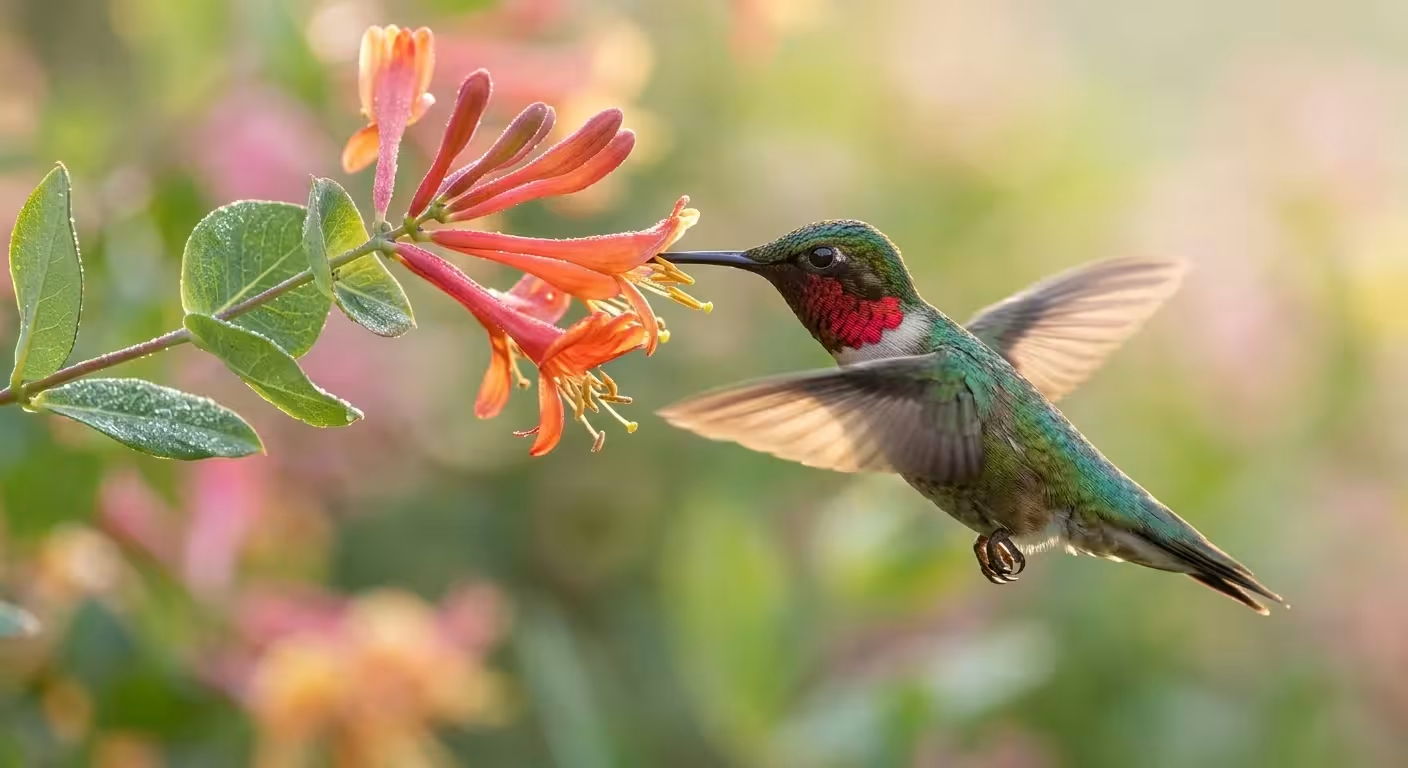
Attracting hummingbirds requires tubular blossoms rich in sugary nectar, while supporting baby songbirds requires plants that host a diverse buffet of beneficial caterpillars, beetles, and aphids.
Integrating beautiful climbing plants for fences and pergolas is an excellent vertical design strategy to provide both food and nesting cover for visiting birds.
In addition to birds, you can expand your wildlife habitat by attracting butterflies with the right plants in sunny spots.
9. Trumpet Honeysuckle (Lonicera sempervirens)
Do not confuse this spectacular, well-behaved native vine with the highly invasive Japanese honeysuckle. Trumpet Honeysuckle features gorgeous, elongated red and yellow tubular flowers that bloom repeatedly from mid-spring through late summer.
Because it climbs via twining stems rather than aggressive aerial roots, it remains easy to control and will not damage your brickwork or fencing.
By training it up a simple trellis against a bare wall, you create a vertical feeding station that Hummingbirds will aggressively defend, while the dense foliage provides perfect, hidden nesting sites for chipping sparrows.
10. Bee Balm (Monarda)
A member of the mint family, Bee Balm produces wildly spectacular, shaggy flower heads in brilliant shades of scarlet, pink, and purple.
This plant serves a dual purpose in the wildlife garden: its deep floral tubes hold abundant nectar for hummingbirds, while its fragrant leaves attract a massive variety of beneficial pollinating insects. These buzzing insects subsequently attract insectivorous birds like Eastern Phoebes and Flycatchers.
Bee Balm spreads via underground runners and can aggressively take over a garden bed, so planting it inside a buried plastic container or keeping it strictly in patio pots helps manage its enthusiastic growth.
11. Cardinal Flower (Lobelia cardinalis)
If you want to guarantee hummingbird sightings, you simply must plant the Cardinal Flower. Sending up dramatic, three-foot-tall spikes of the most intense, brilliant red flowers found in nature, this plant evolved specifically for hummingbird pollination.
The birds brush their heads against the protruding stamens as they drink, transferring pollen from plant to plant.
Cardinal Flowers require consistently moist soil and prefer a bit of afternoon shade to protect their leaves from scorching; they perform brilliantly in self-watering planters or alongside shallow garden water features.
12. Milkweed (Asclepias tuberosa)
While globally famous as the sole host plant for the Monarch butterfly caterpillar, Milkweed plays an equally vital, albeit less celebrated, role in the songbird ecosystem. Milkweed leaves naturally attract large colonies of bright yellow oleander aphids.
Rather than reaching for insecticidal soap, you should celebrate this aphid arrival; the tiny insects provide a highly concentrated protein source for warblers, vireos, and wrens.
The vibrant orange flowers also draw endless streams of nectar-seeking insects, creating a buzzing micro-ecosystem that acts as an all-you-can-eat buffet for local bird populations.
Songbird Plant Quick Reference Guide
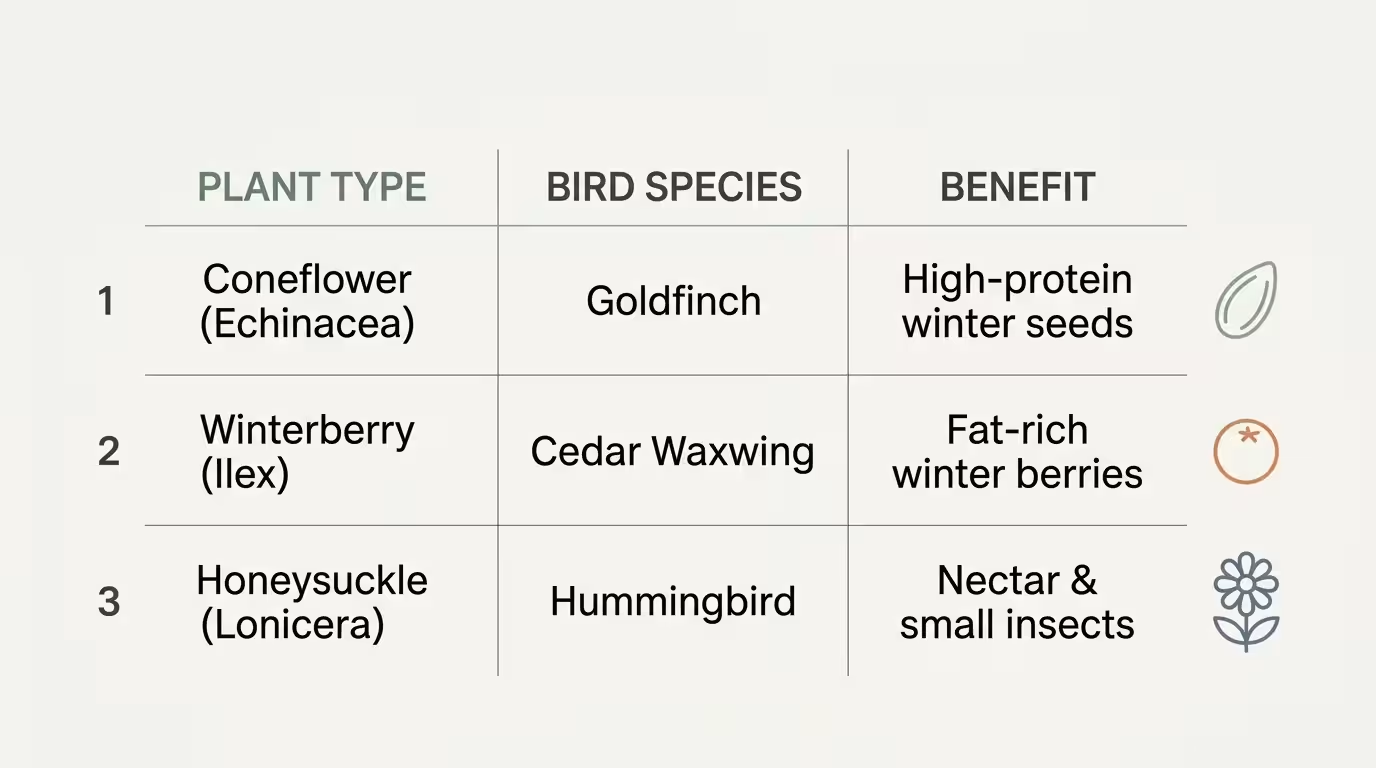
Use this convenient overview to select the best plants for your specific environmental conditions and container limitations. Always match the plant’s light and soil requirements to the microclimates present in your yard.
| Plant Name | Primary Food Source | Ideal Sunlight | Container Friendly? |
|---|---|---|---|
| Purple Coneflower | Seeds | Full Sun | Yes (Deep Pots) |
| Black-eyed Susan | Seeds | Full Sun to Part Sun | Yes |
| Sunflowers (Dwarf) | Seeds (High Fat) | Full Sun | Yes (Large Pots) |
| Coreopsis | Seeds | Full Sun | Yes |
| Serviceberry (Dwarf) | Summer Berries | Full Sun to Part Shade | Yes (Half-Barrels) |
| Winterberry Holly | Winter Berries | Full Sun to Part Shade | Yes |
| Elderberry | Summer Berries | Full Sun to Part Sun | No (Needs ground space) |
| Beautyberry | Fall Berries | Part Sun to Part Shade | Yes (Large Pots) |
| Trumpet Honeysuckle | Nectar | Full Sun to Part Sun | Yes (Requires Trellis) |
| Bee Balm | Nectar & Insects | Full Sun to Part Sun | Yes |
| Cardinal Flower | Nectar | Part Sun to Shade | Yes (Requires Moist Soil) |
| Milkweed | Insects (Host Plant) | Full Sun | Yes |
How to Design a Bird-Friendly Garden Layout
Planting the right species represents only half the battle; arranging them correctly ensures the birds feel safe enough to visit and stick around. By strategically organizing your containers and garden beds, you can create an irresistible, welcoming environment.
- Layer your vegetation purposefully. Nature does not grow in a flat, single-height plane. Try to mimic the forest edge by placing taller shrubs or trellised vines in the back, mid-sized perennials like coneflowers in the center, and trailing or ground-cover plants at the front edges. This tiered approach allows birds to dart quickly into dense foliage if a neighborhood hawk or cat appears.
- Group plants in odd-numbered clusters. Planting single, isolated flowers forces birds to expend excessive energy flying from spot to spot. Instead, group identical plants in clusters of three, five, or seven. A dense patch of Black-eyed Susans provides a concentrated food source, allowing a flock of foraging finches to feed efficiently in one secure location.
- Integrate a reliable water source. Food alone will not sustain a bird population. Add a shallow birdbath or a simple recirculating fountain right in the middle of your plant containers. Ensure the water depth does not exceed two inches, and place a flat rock in the center to give smaller birds secure footing while they bathe and drink. Running water acts as an auditory beacon, drawing passing birds down from the sky.
- Embrace the “messy” garden aesthetic. A hyper-manicured yard often functions as a biological desert. When autumn arrives, skip the aggressive cleanup. Leave the dried flower stalks standing through the snow, allowing the seeds to serve as natural bird feeders. Allow a thin layer of fallen leaves to remain on your garden beds; thrashers and robins will happily flip these leaves over all winter long to hunt for dormant insects and pupae.
- Provide natural nesting materials. In early spring, your plants serve an entirely different purpose. Birds will meticulously strip the fuzzy fibers from dried milkweed pods and gather the dried grasses you left standing over the winter to weave into their nests. By leaving your garden slightly wild, you offer a full-service nursery for the next generation of local songbirds.
Common Mistakes to Avoid When Gardening for Wildlife
Even well-intentioned gardeners occasionally implement practices that inadvertently harm the very wildlife they wish to attract. Keep your yard safe and productive by avoiding these frequent missteps.
First, absolutely eliminate the use of broad-spectrum pesticides. When you spray your garden to kill a few nuisance aphids or caterpillars, you completely eradicate the essential food web your birds rely upon.
A garden completely devoid of insects is a garden completely devoid of baby birds. Instead, practice patience; once you cultivate a healthy ecosystem, predatory insects like ladybugs—and the birds themselves—will naturally keep pest populations firmly in check.
Second, resist the urge to deadhead your flowers late in the season. Deadheading—the practice of snipping off faded blooms to encourage new flowers—works wonderfully in June and July.
However, once mid-August rolls around, you must stop. If you cut off the dying flowers, you prevent the plant from forming the seed heads that wintering birds desperately need for survival.
Third, be highly conscious of window placement. If you position your beautiful new bird-friendly container garden right next to a large, highly reflective sliding glass door, you risk fatal window strikes.
Birds cannot perceive glass; they see the reflection of the sky and fly directly into it. Keep tall plants either closer than three feet to the glass—so birds cannot build up enough flying momentum to injure themselves—or further than thirty feet away.
Applying ultraviolet window decals also drastically reduces accidental collisions.
Frequently Asked Questions
Do I need a large yard to attract songbirds successfully?
Absolutely not. Birds care about the quality of the habitat, not the square footage.
A second-story apartment balcony filled with a few large pots of Coneflower, a trellised Trumpet Honeysuckle, and a shallow dish of fresh water will quickly become a highly active hotspot for local hummingbirds and finches.
How long does it typically take for birds to discover new plants?
Patience remains key. Depending on your location and the current season, birds may find your new garden in a matter of days, or it might take an entire migration cycle for them to map out your yard as a reliable food source.
Keep the birdbath clean and the plants healthy, and they will eventually arrive.
Should I still hang traditional bird feeders if I have native plants?
Yes, traditional feeders perfectly complement a native plant garden. While your shrubs and flowers provide superior, natural nutrition, supplemental tube and hopper feeders provide a vital safety net during extreme weather events, heavy blizzards, or late spring freezes when natural food sources temporarily vanish.
How can I protect my container garden from destructive squirrels?
Squirrels heavily favor easy meals. By relying on native plants rather than simply dumping loose seed on the ground, you force animals to work harder for their food.
For extreme squirrel problems, sprinkle generous amounts of cayenne pepper powder on the topsoil of your pots; birds cannot taste the heat of capsaicin, but mammals absolutely despise it.
For trustworthy gardening information, visit:
National Wildlife Federation — Garden for Wildlife, Lady Bird Johnson Wildflower Center, Botanic Gardens Conservation International and American Public Gardens Association. These organizations provide expert, research-based advice for gardeners at all levels.
Disclaimer: This article is for informational purposes only and is not a substitute for professional gardening advice. Always consult local extension services or horticulture experts for region-specific guidance.