
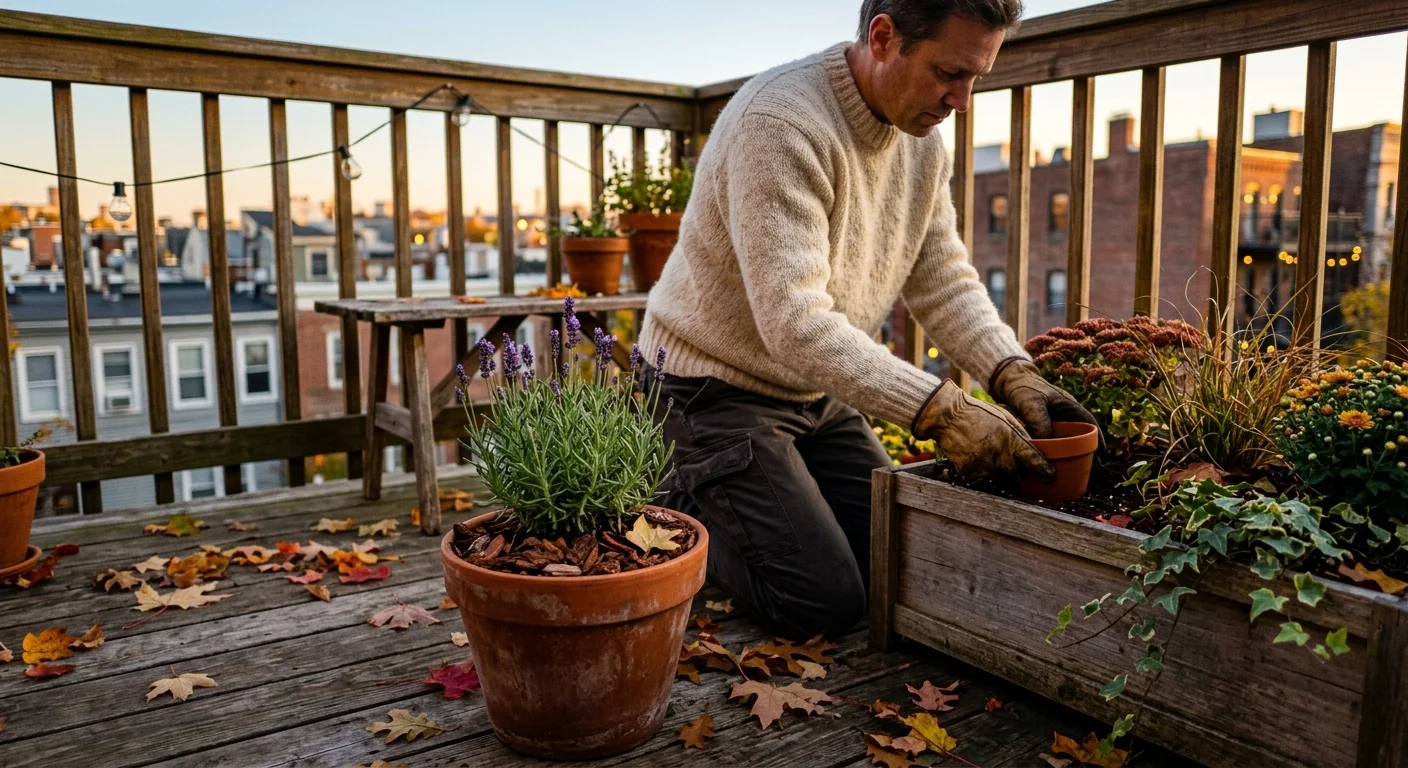
Investing time in strategic autumn garden prep directly determines how vibrantly your outdoor space revives when warmer weather returns next spring.
Taking care of critical fall gardening tasks right now protects valuable perennial root systems, reduces destructive overwintering pests, and enriches nutrient-depleted soil before the first hard freeze arrives.
Whether you manage a backyard plot or maintain a modest balcony setup with raised beds and container plants, a systematic fall garden cleanup checklist simplifies seasonal maintenance while saving you money on replacement plants and synthetic fertilizers.
Tackling these seven essential autumn chores ensures your small-space garden enters dormancy healthy, resilient, and fully prepared for explosive growth.
Contents11 sections
- The Botanical Benefits of Seasonal Autumn Garden Prep
- Task 1: Clear Away Diseased Vegetation and Fallen Leaves
- Task 2: Protect Container Soil and Store Vulnerable Pots
- Task 3: Apply Organic Mulch to Insulate Perennial Roots
- Task 4: Plant Spring-Blooming Bulbs and Divide Perennials
- Task 5: Preserve Habitat Stems and Native Seed Heads
- Task 6: Clean, Sharpen, and Sanitize Irrigation and Hand Tools
- Task 7: Amend Garden Beds and Containers with Organic Compost
- Five Critical Mistakes to Avoid During Autumn Garden Prep
- Autumn Garden Prep Summary and Seasonal Timetable
- Frequently Asked Questions
The Botanical Benefits of Seasonal Autumn Garden Prep
Skipping autumn maintenance leaves your garden vulnerable to severe winter stress, pest infestations, and fungal diseases. When cold weather approaches, active plant growth slows down, and dormant life cycles begin.
Fungal pathogens, such as powdery mildew, black spot, and early blight, do not simply vanish during frost—they hibernate on dead leaves, fallen fruit, and decaying stems.
When warm spring rains arrive, these overwintered fungal spores splash onto fresh new growth, infecting your young plants immediately. By executing thorough fall gardening tasks, you disrupt these disease cycles and drastically reduce pathogen pressure for the upcoming growing season.
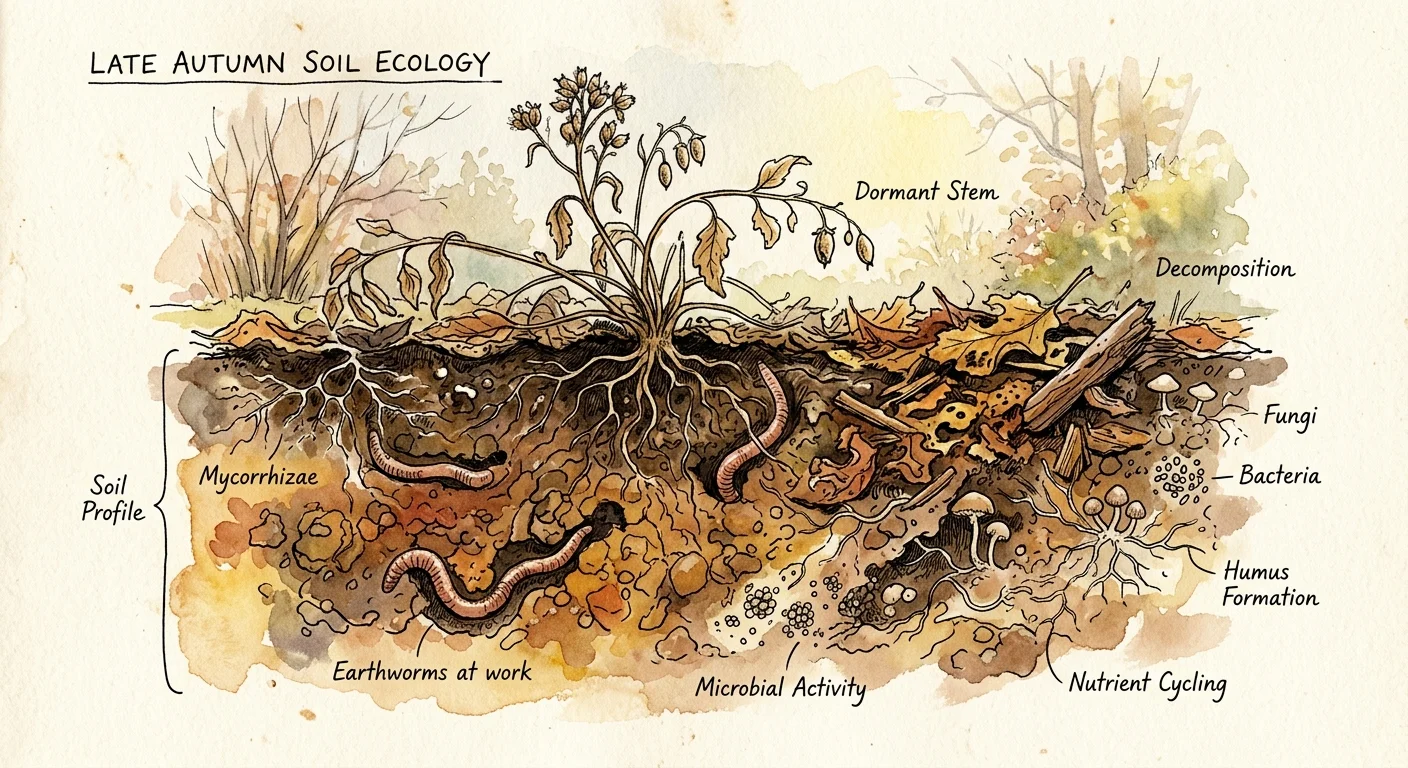
Soil biology also benefits enormously from targeted fall garden prep. During late autumn, earthworms and beneficial soil microbes remain active underneath the soil surface long after top growth freezes.
Adding organic amendments in autumn gives soil organisms months to break down materials, integrate organic matter, and build robust soil structure before spring planting.
This process improves soil drainage—the rate at which water moves through soil—and prevents valuable topsoil from leaching nutrients during heavy winter rains or snowmelt.
For gardeners operating in confined areas like balconies, small patios, or raised bed plots, autumn prep serves an even more critical purpose. Small volumes of potting mix and raised bed soils cool down much faster than ground-level soil.
Root systems inside patio containers lack the natural thermal insulation provided by the earth, making them susceptible to freeze-thaw cycles. Proper winterization prevents root mortality, protects expensive containers from structural cracking, and saves you time and financial resources every single spring.
Task 1: Clear Away Diseased Vegetation and Fallen Leaves
Start your fall garden cleanup checklist by meticulously removing dead, rotting, or visibly diseased foliage from your growing beds and container plants.
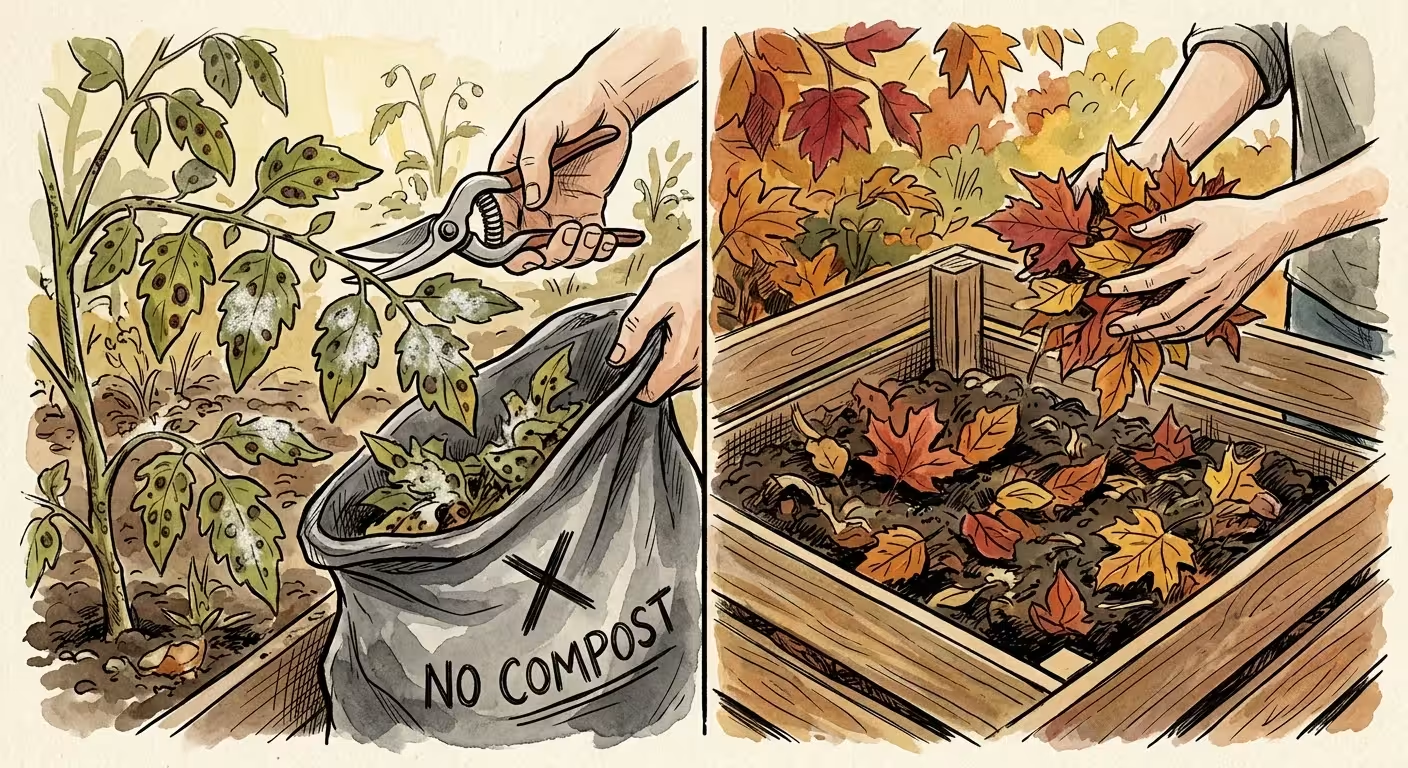
Tomato plants infected with Septoria leaf spot, squash vines ravaged by powdery mildew, and rose foliage coated in black spot must come out of the garden entirely.
Pull these plants out by the roots, gather all fallen foliage from the surrounding soil surface, and place them directly into household trash bags.
Never toss diseased plant material into home compost piles; standard backyard compost heaps rarely sustain temperatures above 140°F (60°C), which is the heat threshold required to kill stubborn fungal spores and weed seeds.
Healthy fallen leaves, however, represent a valuable, free resource for your garden beds. Rather than bagging healthy leaves for municipal curb collection, collect them to manufacture nutrient-rich leaf mold.
Shred leaves using a lawn mower, leaf shredder, or handheld hedge shears; whole leaves mat together when wet, forming an impenetrable barrier that blocks water and oxygen from reaching plant roots.
Spread a two-inch layer of shredded leaves over exposed soil surfaces in your raised beds or large containers. Studies show that incorporating leaf mold into urban soils increases water retention by up to 25 percent while providing vital micronutrients to subterranean ecosystems.
Pay close attention to fruit trees, fruiting bushes, and container tomatoes. Remove any shriveled, unharvested fruit—often referred to as “mummies”—hanging on stems or resting on the soil.
Dried fruits serve as primary overwintering sites for brown rot fungal spores and destructive insects like plum curculio and apple maggot. Cleancut field management during late autumn eliminates harborage areas, lowering pest populations for the following season without requiring synthetic chemical sprays.
Task 2: Protect Container Soil and Store Vulnerable Pots
Container gardening demands unique winterization strategies because pot walls offer minimal protection against freezing temperatures.
Water expands by roughly 9 percent when it turns into ice; when saturated potting soil freezes solid inside unglazed terracotta, ceramic, or concrete pots, the outward expansion exerts intense pressure against the pot walls.
This force creates hairline fractures that shatter expensive containers during deep winter freezes. Protecting container soil and hardscape materials ranks high among essential garden bed winterizing tips for small-space growers.
To safeguard your containers, follow this step-by-step winterization routine:
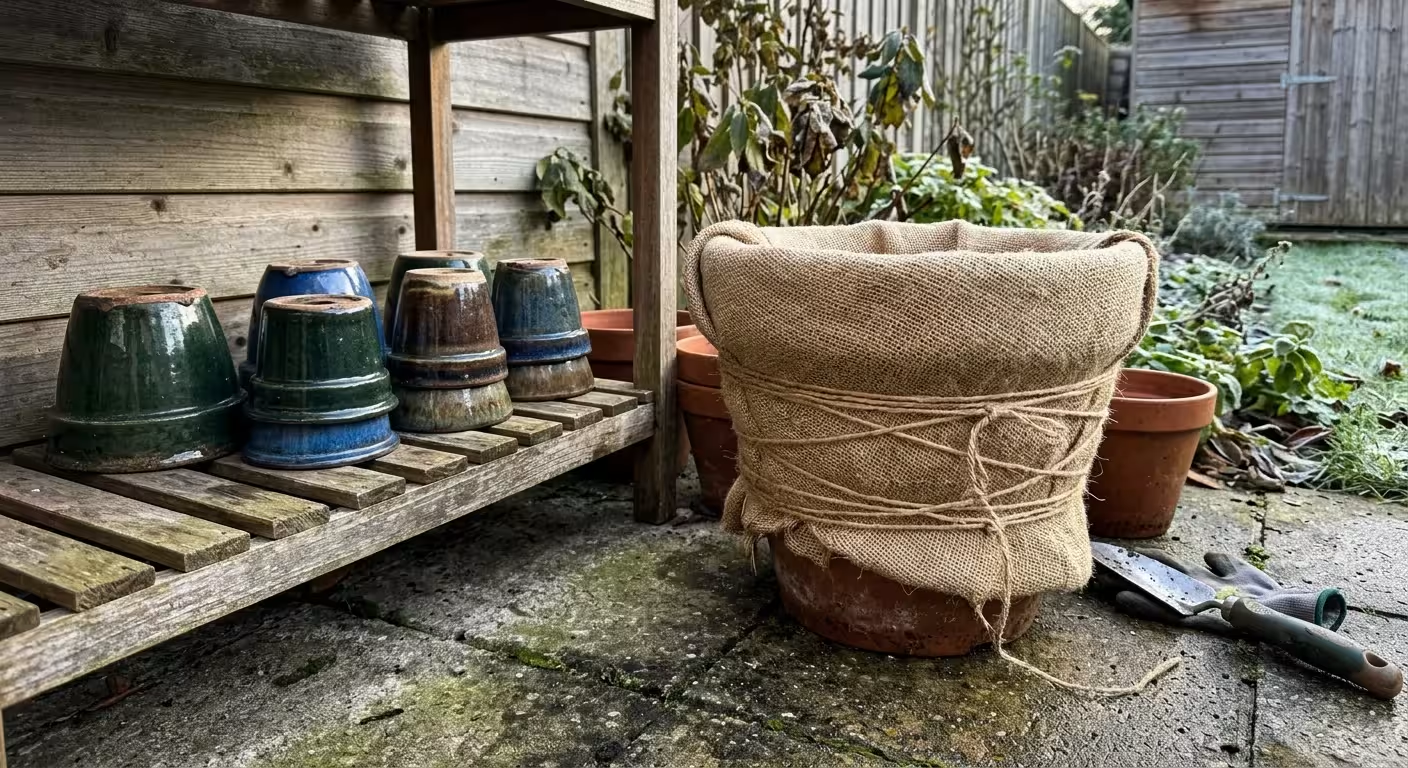
- Empty Tender Containers: Dump spent annual soil into a central storage bin or garden bed. Scrub unglazed terracotta, ceramic, and clay pots with a stiff brush and a solution of one part household bleach to nine parts water to eliminate lingering fungal spores and mineral deposits. Store these containers upside down inside a garage, basement, or garden shed.
- Consolidate and Protect Soil: If you plan to reuse non-diseased potting soil next year, place it in heavy-duty plastic storage totes equipped with lids. Keep the soil slightly dry to prevent frozen blocks from forming, and store the totes in a covered area.
- Elevate Heavy Outdoor Planters: For pots too large or heavy to move indoors—such as large resin, heavy-duty plastic, or wooden containers—raise them off balcony or patio surfaces using pot feet, wooden bricks, or rubber risers. Elevating planters prevents drainage holes from freezing shut and allows excess water to escape freely.
- Wrap Overwintering Perennial Containers: Protect cold-hardy perennials remaining outdoors in containers by grouping pots together against a warm house wall. Wrap the exterior of the clustered pots in several layers of bubble wrap, burlap, or foam insulation, filling spaces between pots with crushed dried leaves for added thermal retention.
By preventing container damage and controlling soil moisture levels, you prolong the structural life of your pots while preserving the physical properties of your growing media.
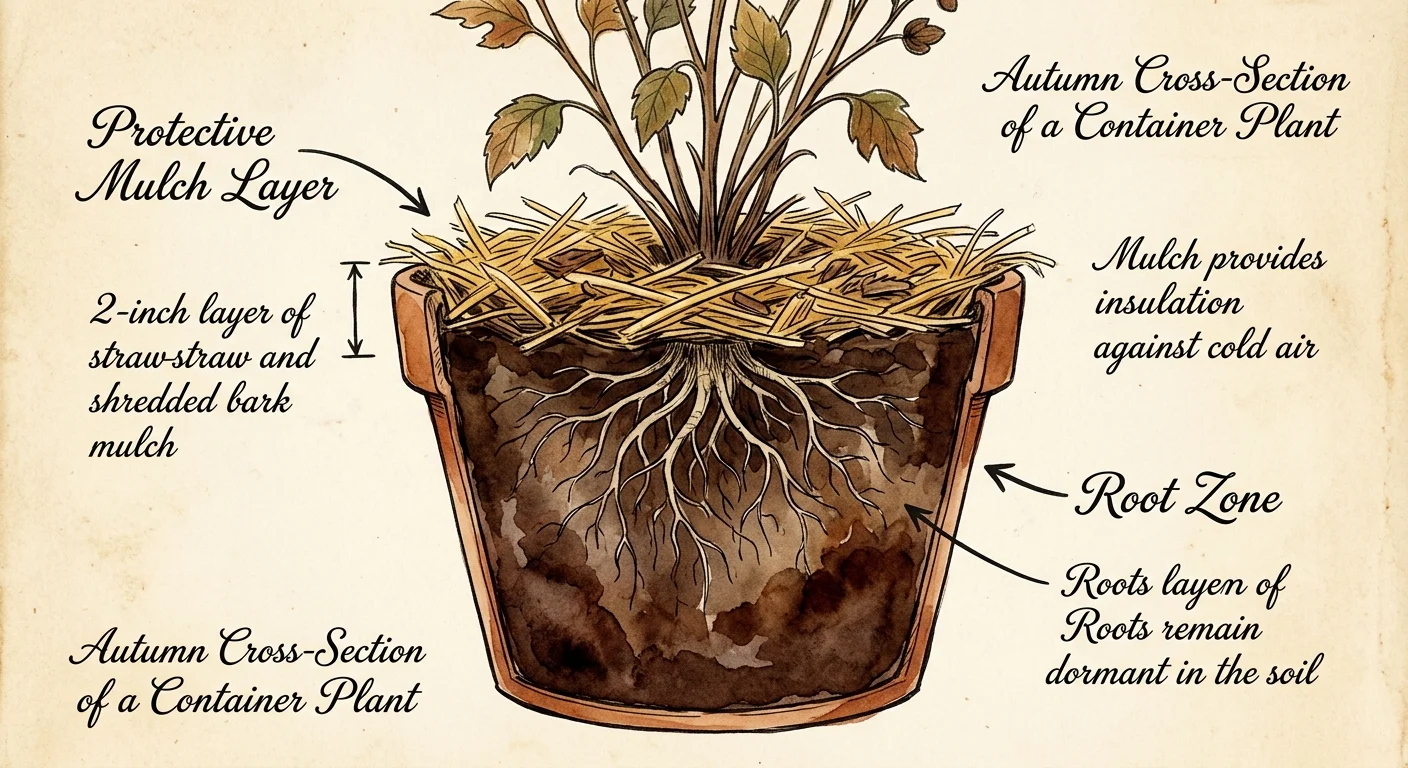
Task 3: Apply Organic Mulch to Insulate Perennial Roots
Applying a protective layer of organic mulch stands as one of the most effective fall gardening tasks for ensuring plant survival through winter. Soil temperature fluctuations pose a greater danger to dormant plants than sustained freezing temperatures.
When air temperatures cycle repeatedly above and below freezing, soil expands and contracts. This phenomenon, known as frost heaving, pushes shallow-rooted perennials—such as coral bells, strawberries, and newly planted spring bulbs—upward out of the soil, exposing delicate root crowns to dry, freezing winds.
In empty vegetable planters, establishing a quick container cover crop provides a living blanket that prevents winter nutrient loss.
Mulch acts as an insulating blanket, moderating soil temperatures and keeping the ground consistently frozen throughout mid-winter warm spells. The ideal timing for autumn mulch application occurs right after the ground experiences its first hard frost, but before the soil freezes solid.
Applying mulch too early invites field mice and voles to nest in the warm organic layer, where they chew on bark and root crowns during winter months.
Select clean, high-quality organic mulches depending on your garden setup:
- Shredded Bark or Hardwood Chips: Excellent for raised beds, perennial pathways, and large wooden planters. Apply a two- to three-inch layer evenly across soil beds.
- Clean Straw or Salt Hay: Ideal for protecting strawberry patches, vegetable raised beds, and overwintering garlic crops. Straw provides deep air pockets that lock in thermal energy.
- Shredded Leaves or Leaf Mold: Perfect for small patio containers and shallow garden beds. Shredded leaves break down quickly, providing immediate organic material to soil organisms.
Always maintain a two-inch gap between the mulch material and the main stems or trunks of plants. Packing mulch directly against plant stems—often called “mulch volcanoing”—traps excess moisture against bark tissues, inviting fungal rot and providing shelter for stem-boring pests.
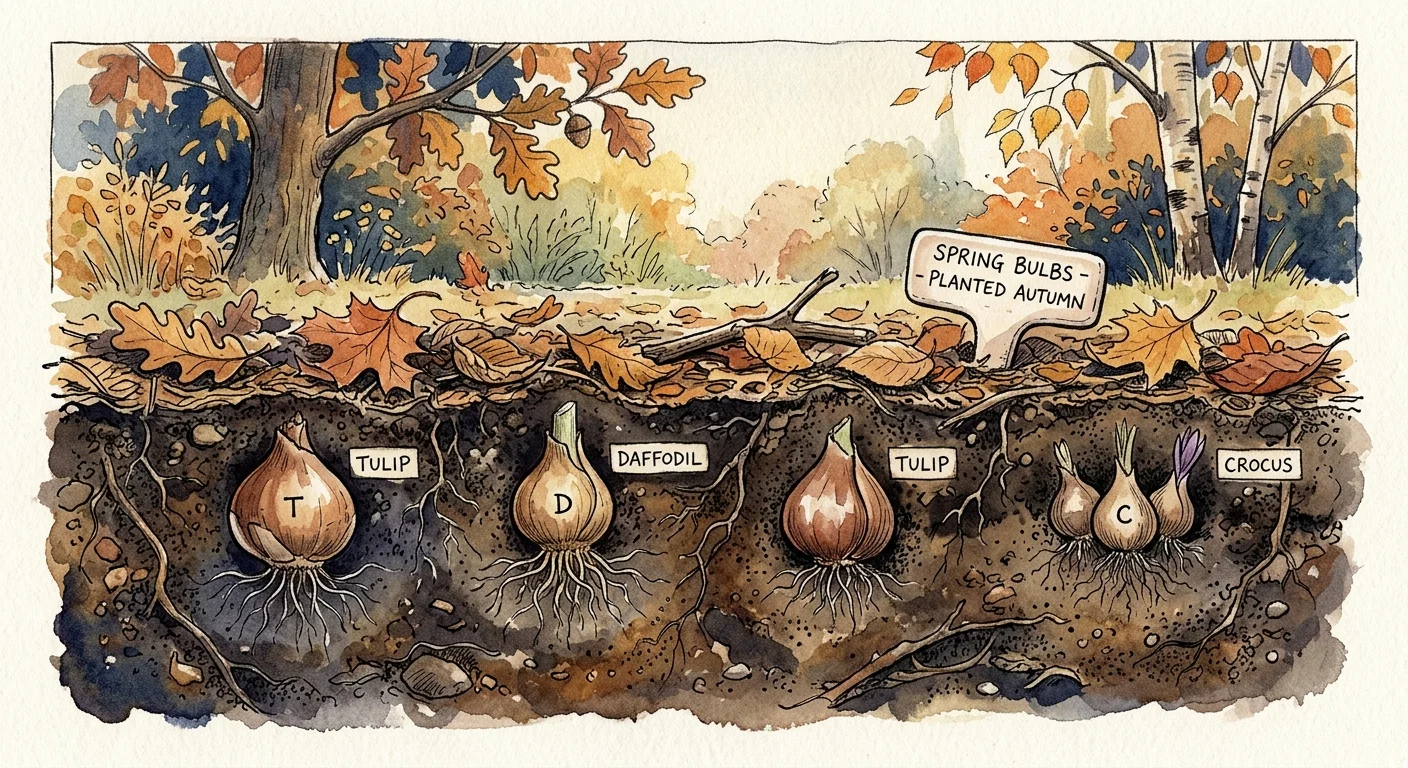
Task 4: Plant Spring-Blooming Bulbs and Divide Perennials
Autumn offers a vital opportunity to plan and plant for future floral displays. Spring-blooming bulbs—such as tulips, daffodils, hyacinths, alliums, and crocus—require a sustained period of cold temperatures, known as vernalization, to initiate flower bud formation.
Plant these bulbs in late autumn when nighttime air temperatures settle consistently between 40°F and 50°F (4°C to 10°C), and soil temperatures drop below 60°F (15°C). Planting too early encourages bulbs to sprout foliage prematurely, which freeze damage destroys during severe winter drops.
Once planting and dividing are complete, perform a thorough fall garden tool tune-up to keep blades sharp and prevent rust over winter.
Follow the general rule of thumb for planting depth: dig a hole three times as deep as the height of the bulb. Place the bulb firmly inside the hole with its pointed end facing upward and root plate facing downward.
For small-space and balcony gardeners, practice the “bulb lasagna” technique inside deep, frost-proof containers. Layer late-blooming tulips at the deepest level, cover with two inches of soil, add mid-season daffodils, cover with soil, and top with early-blooming crocus or grape hyacinths.
This stacked method produces a continuous, space-saving flower show throughout the entire spring season.
Fall is also the preferred season for dividing overgrown, summer-blooming perennials such as hostas, daylilies, irises, and sedums. Follow this straightforward method to divide crowded perennials:
- Water the target perennial thoroughly 24 hours prior to division to hydrate root tissues.
- Dig around the drip line of the plant with a sharp spade or hand trowel, lifting the entire root mass carefully from the ground.
- Slice through dense root crowns using a sanitized hori-hori garden knife or sharp spade, ensuring each new section retains at least three healthy growth buds (eyes) and a robust cluster of roots.
- Replant divisions immediately at their original depth in refreshed, compost-amended soil, watering thoroughly to settle air pockets around root zones.
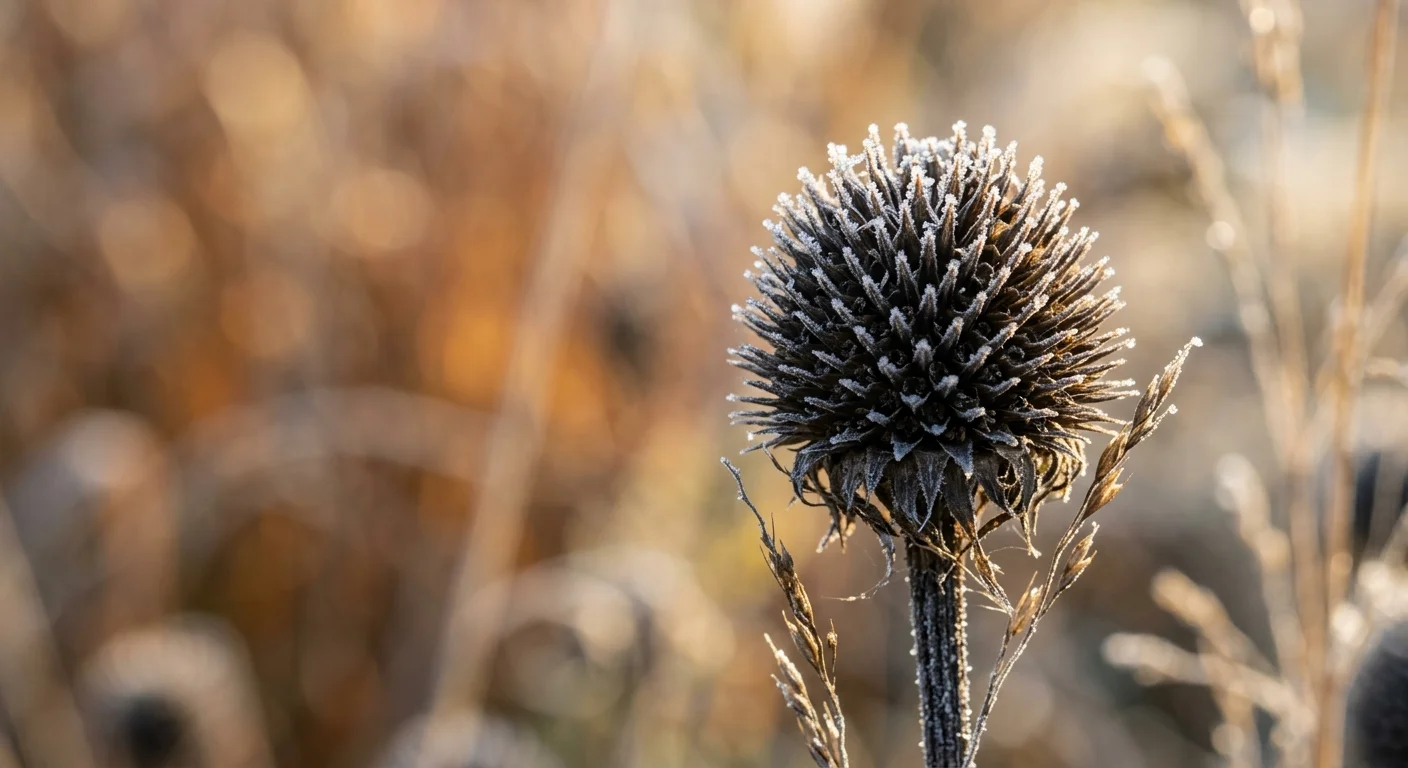
Task 5: Preserve Habitat Stems and Native Seed Heads
Modern sustainable gardening practices emphasize striking a balance between plant sanitation and ecological conservation. While removing diseased foliage is necessary, clearing every single dried stem creates an ecological desert in your winter garden.
Native bees, ladybugs, lacewings, and other beneficial predatory insects rely on hollow plant stems and leaf litter to hibernate safely through severe winter conditions. Over 70 percent of native solitary bees nest in underground burrows or within hollow, woody plant stems.
To support native pollinators while executing your autumn garden prep, leave structural, disease-free stems standing in garden beds and large planters.
Cut back perennials like purple coneflower (Echinacea), black-eyed Susan (Rudbeckia), bluestar (Amsonia), and native ornamental grasses to a height of 12 to 18 inches above the ground rather than shearing them flat to soil level.
Stem-nesting insects enter the open tops of cut stems to lay eggs or overwinter. In late spring, new plant growth hides the old standing stems while beneficial insects emerge naturally.
Retaining dried seed heads also provides crucial natural food sources for resident winter birds like goldfinches, chickadees, and nuthatches. Coneflower, sunflower, coreopsis, and native grass seed heads act as natural, zero-cost bird feeders throughout winter months.
Additionally, frosty seed heads and snow-covered ornamental grasses add structural beauty, textural contrast, and visual interest to small-space winter landscapes.
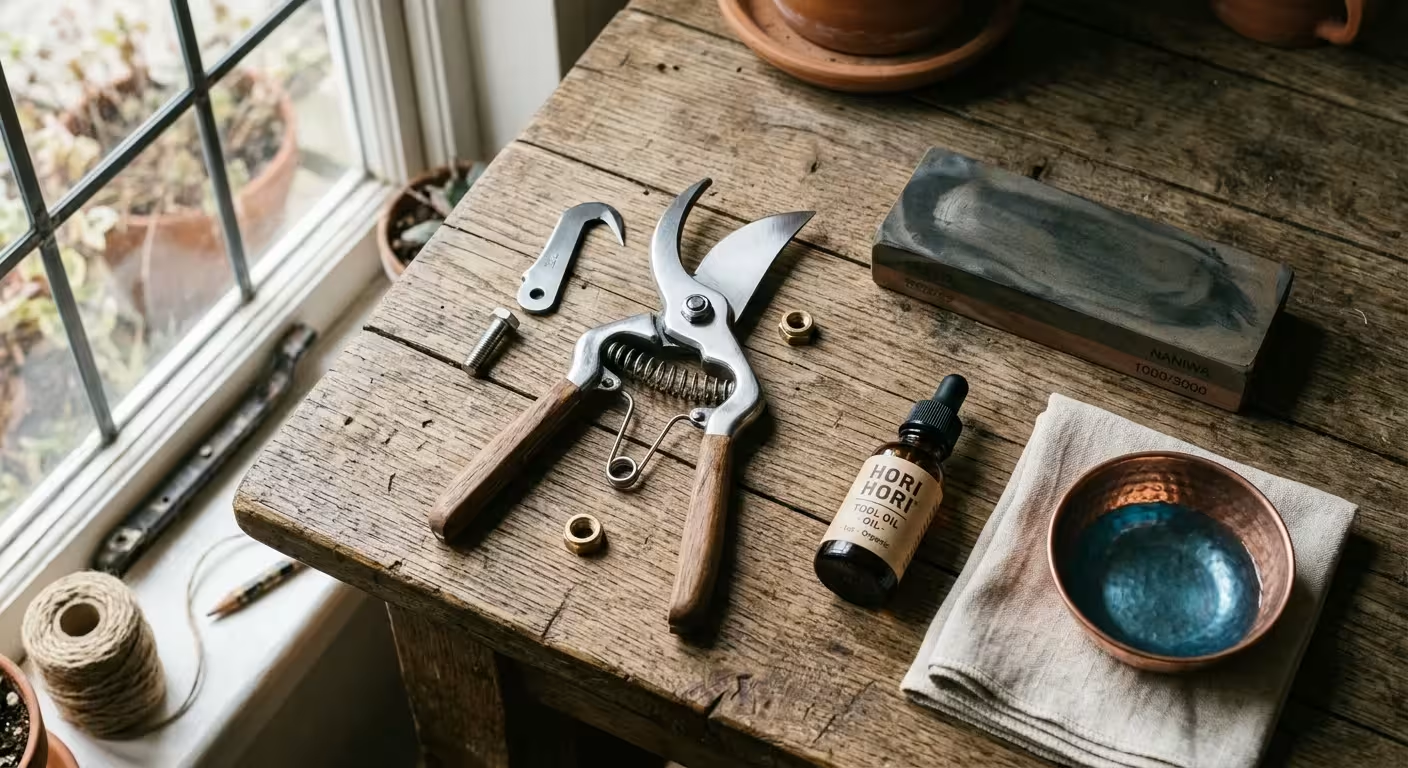
Task 6: Clean, Sharpen, and Sanitize Irrigation and Hand Tools
Your tools represent a major financial investment; maintaining them properly during late autumn extends their working life for decades while preventing the mechanical transfer of plant diseases across your garden.
Dirty pruners, soil-crusted trowels, and unmaintained irrigation hoses left exposed to freezing conditions deteriorate rapidly, rust, and harbor harmful pathogens like bacterial canker and vascular wilt fungi.
Set aside a dedicated afternoon to execute a systematic tool maintenance protocol:
- Scrub and Remove Soil: Wash off caked-on dirt, sap, and rust from hand trowels, spades, and bypass pruners using warm soapy water, a wire brush, and steel wool. Dry all metal surfaces thoroughly with a cotton rag.
- Sanitize Metal Blades: Wipe pruner blades and cut-off shears with a cloth saturated in 70 percent isopropyl alcohol or a 10 percent bleach solution. Sanitizing blades eliminates microscopic pathogens that cause cross-contamination when pruning stems next spring.
- Sharpen Cutting Edges: Sharpen dull pruner blades and spade edges using a diamond file or whetstone. Maintain the original single-bevel angle (typically 20 degrees), pushing the sharpening file in a single direction across the edge. Sharp tools make clean cuts that heal rapidly, preventing opportunistic plant infections.
- Condition Handles and Oil Metal Parts: Rub boiled linseed oil into wooden tool handles to prevent drying, cracking, and splintering. Apply a thin layer of mineral oil or 3-in-1 machine oil to all metal surfaces and mechanical springs to repel moisture and block rust formation.
- Drain Irrigation Lines: Disconnect, drain, and coil all garden hoses, drip irrigation lines, and automatic watering timers. Residual water trapped inside hose nozzles, brass couplings, or plastic timer valves freezes, expands, and splits internal components. Store irrigation hardware indoors in a frost-free area.
Task 7: Amend Garden Beds and Containers with Organic Compost
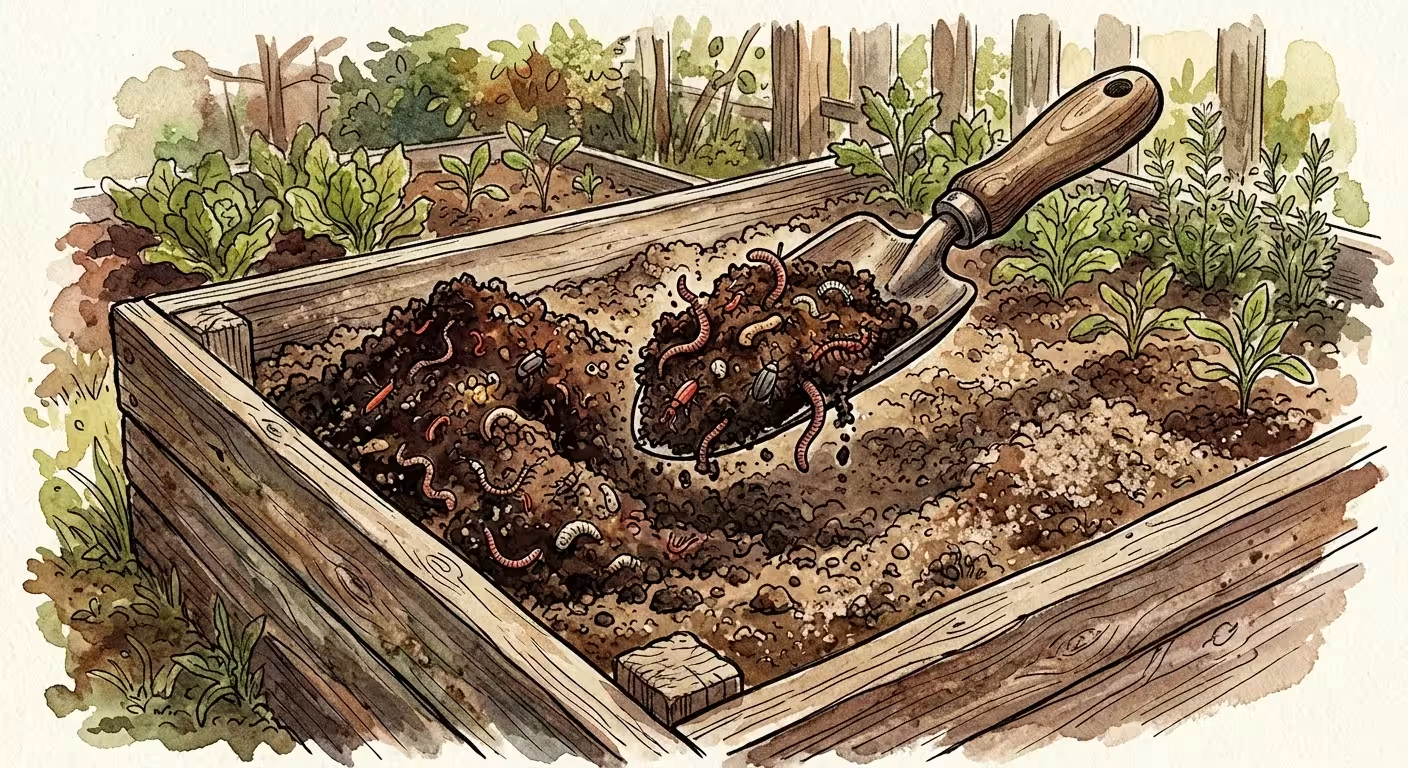
Heavy-feeding vegetable crops, summer annuals, and container herbs deplete vital macronutrients (nitrogen, phosphorus, and potassium) and organic matter from soil over the summer growing season. Fall represents the absolute best time to replenish soil health.
Adding organic matter in autumn gives soil microbes, mycorrhizal fungi, and earthworms several months to digest raw amendments, binding nutrients directly into stable soil structures before spring roots demand them.
Practicing “no-till” soil management preserves delicate subterranean networks. Rather than digging or tilling deep into raised beds and heavy patio pots—which destroys earthworm tunnels and disrupts fungal mycorrhizae—spread a top-dressing of organic amendments directly over the soil surface.
Layer one to two inches of fully finished compost, worm castings, or well-rotted manure over raised beds and container containers. Over winter, rain and melting snow wash soluble humic acids and essential trace minerals deep into the root zone without causing soil compaction.
For empty raised beds or dedicated vegetable plots, consider planting a fall cover crop—often referred to as “green manure.” Fast-growing cover crops like crimson clover, winter field peas, or oats prevent winter soil erosion, suppress weed seeds, and fix atmospheric nitrogen into the soil.
In early spring, chop down the cover crop before it flowers and lay it flat on top of the soil as an organic mulch layer, returning rich organic matter back to your small-space garden bed.
Five Critical Mistakes to Avoid During Autumn Garden Prep
Executing seasonal cleanup correctly requires knowing what actions to avoid. Well-intentioned gardeners often commit common mistakes during fall gardening tasks that inadvertently damage plant health, suppress spring flowering, or destroy soil structure.
Correcting these five bad habits protects your garden throughout winter.
Avoid these major autumn gardening pitfalls:
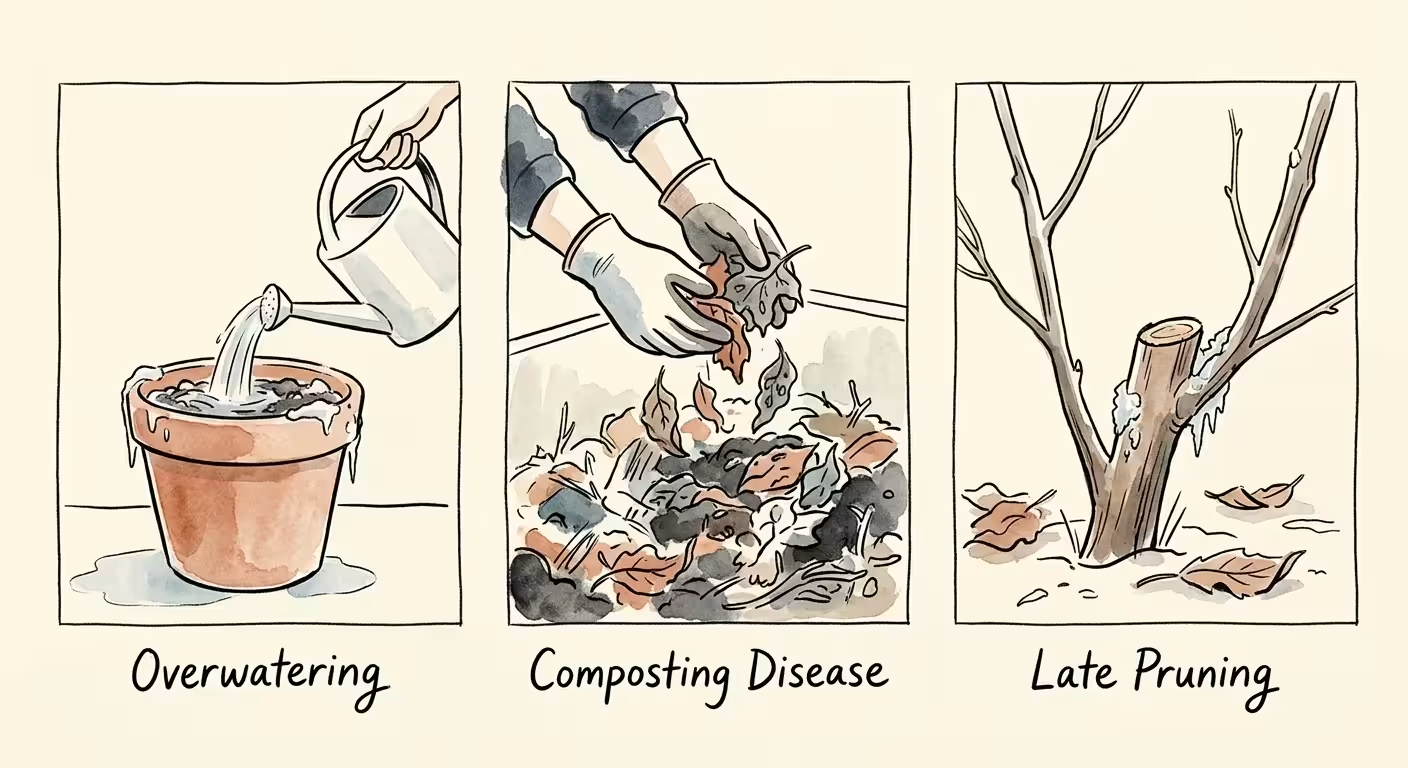
- Pruning Spring-Blooming Shrubs in Autumn: Never prune woody ornamentals that flower in early spring—such as lilacs, forsythia, azaleas, rhododendrons, or bigleaf hydrangeas (Hydrangea macrophylla)—during fall cleanup. These shrubs set their flower buds during mid-summer on “old wood.” Cutting them back in late fall removes next spring’s flowers entirely. Prune spring bloomers within two weeks after their spring bloom finishes.
- Applying High-Nitrogen Fertilizers Late in the Season: Cease feeding perennial plants and woody shrubs with high-nitrogen synthetic fertilizers at least six to eight weeks before your region’s average first frost date. Nitrogen stimulates tender, sap-rich leafy growth that fails to harden off before freezing weather arrives. Sudden frosts freeze this soft tissue, causing severe stem dieback and systemic rot.
- Composting Pathogen-Infected Plant Tissue: Avoid tossing plants infected with tomato blight, powdery mildew, rust, or root-rot pathogens into standard backyard compost bins. Home compost piles rarely reach high temperatures throughout their entire mass, allowing fungal spores to survive and re-infect your container vegetables next season. Throw infected material in the trash.
- Piling Mulch Directly Against Stems and Trunks: Placing organic mulches directly against plant bases creates moist microclimates that rot bark, encourage crown decay, and provide hidden winter nesting quarters for bark-chewing rodents. Maintain a clear two-inch ring around plant stems.
- Leaving Wet Soil inside Porous Pots Outdoors: Leaving saturated potting mix inside unglazed clay, ceramic, or terracotta pots out on exposed patios invites complete structural failure. Dump or protect soil in moisture-proof containers, and store porous pots upside down in dry indoor areas.

Autumn Garden Prep Summary and Seasonal Timetable
Organizing your fall garden cleanup checklist by seasonal timing ensures you complete each chore efficiently without feeling overwhelmed. Temperatures drop gradually, providing specific environmental cues for each action.
Use the following reference timetable to guide your autumn garden prep throughout the season.
| Cleanup Task | Optimal Timing | Essential Tools Needed | Small Space / Container Tip |
|---|---|---|---|
| Clear Diseased Plants & Leaves | Early Autumn (Before first hard frost) | Hand trowel, bypass pruners, trash bags | Bag and discard diseased container soil completely; do not reuse. |
| Protect Containers & Soil | Mid Autumn (Nighttime temps drop to 40°F/4°C) | Scrub brush, bleach, bubble wrap, pot feet | Elevate large patio pots using pot feet; store clay pots indoors. |
| Apply Organic Root Mulch | Late Autumn (Immediately after first hard frost) | Shredded leaves, straw, hardwood bark, rake | Apply a 2-inch layer of shredded leaves over container tops. |
| Plant Bulbs & Divide Perennials | Mid to Late Autumn (Soil temps drop below 60°F/15°C) | Hori-hori knife, spade, bone meal, watering can | Use the stacked “bulb lasagna” method inside deep frost-proof pots. |
| Preserve Habitat Stems | Late Autumn (During general plant cutback) | Hand shears, bypass pruners | Cut stems back to 12-18 inches; leave seed heads for birds. |
| Clean & Sanitize Tools | Late Autumn (After all outdoor digging finishes) | Wire brush, alcohol, whetstone, machine oil | Drain, coil, and store drip irrigation timers indoors before freezing. |
| Amend Beds with Compost | Early to Mid Autumn (During bed clearing) | Finished compost, worm castings, trowel | Top-dress raised beds with 1 to 2 inches of rich compost without tilling. |
Frequently Asked Questions
Should I cut back all my perennial flowers before winter arrives?
No, you should not cut back all perennials in autumn. While cutting back disease-prone plants like hostas, peonies, and bearded irises prevents pest egg survival and fungal spores, leaving sturdy, healthy perennials standing provides essential ecological benefits.
Coneflowers, rudbeckias, native grasses, and sedums offer overwintering shelter for beneficial insects and produce seed heads that feed native birds throughout winter. Cut back diseased foliage, but leave healthy, hollow-stemmed native plants standing until late spring.
Can I reuse container potting soil for next season’s vegetables?
You can safely reuse container potting soil provided the plants grown in it were completely free of disease and severe insect infestations.
Dump healthy soil into a clean storage container, remove old root masses, and mix in equal parts fresh finished compost or worm castings to restore depleted nutrients.
If the previous plants suffered from soil-borne diseases like bacterial wilt, root rot, or early blight, discard the soil in household trash and sanitize the pot before replanting.
When is it officially too late to perform my fall garden cleanup?
It is never entirely too late to perform basic winterization tasks, but completing your fall garden cleanup checklist before the ground freezes solid yields the best results.
Task timing depends on soil conditions; once the top layer of soil freezes solid, planting spring bulbs, dividing perennials, and incorporating compost top-dressings becomes difficult.
However, clearing surface debris, protecting delicate containers, draining irrigation lines, and applying protective root mulch can occur anytime during early winter before deep snow covers the landscape.
How do I protect overwintering container plants on a balcony or patio?
Protect container-grown perennials on exposed balconies by clustering pots together against the warm exterior wall of your home, which radiates heat throughout winter. Grouping pots minimizes cold wind exposure.
Wrap the outer perimeter of the clustered containers in several layers of bubble wrap or burlap, filling the air gaps between pots with packed shredded leaves or straw.
Elevate pots off cold concrete balcony tiles using pot feet to maintain proper water drainage and prevent pot bases from freezing solid.
For trustworthy gardening information, visit:
University of New Hampshire Extension — Yard & Garden, University of Maine Cooperative Extension — Gardening and University of Rhode Island Cooperative Extension — Gardening. These organizations provide expert, research-based advice for gardeners at all levels.
Disclaimer: This article is for informational purposes only and is not a substitute for professional gardening advice. Always consult local extension services or horticulture experts for region-specific guidance.