
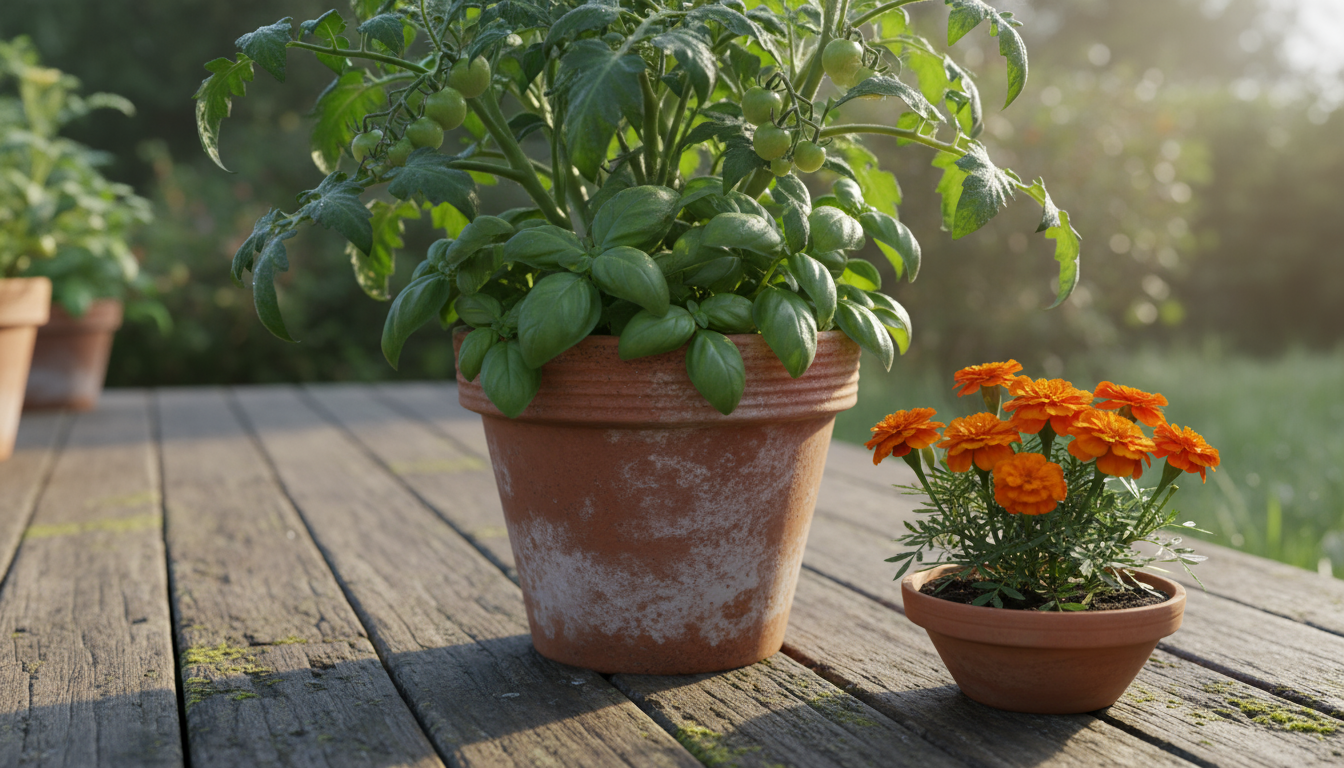
Companion Planting for Healthier Pots
Companion planting involves growing specific plants together that benefit each other. This can deter pests, attract beneficial insects, improve soil health, or even enhance flavor.
While space is limited in containers, you can still strategically pair plants.
- Basil with Tomatoes: Many gardeners believe basil improves tomato flavor and deters tomato hornworms and flies. Plant a basil plant in the same large pot as your tomato, or in an adjacent container.
- Marigolds (French) Anywhere: Marigolds are known to repel nematodes (microscopic worms that attack roots) and other pests. Tuck a marigold plant into any large pot or place them strategically around your container garden.
- Nasturtiums as Sacrificial Plants: Aphids often prefer nasturtiums. Plant them near susceptible crops; aphids may congregate on the nasturtiums, leaving your other `best crops small garden` intact.
- Herbs and Leafy Greens: Many herbs can be interplanted with leafy greens. For example, plant cilantro or parsley among your lettuce to maximize space.
Vertical Gardening and Trellising
When you garden in a small space, thinking vertically multiplies your growing area. Many `vegetables in pots` can be trained to grow upwards.
- Peas and Pole Beans: While bush beans were ranked high for yield and ease, pole beans and peas can offer even higher yields over a longer season if you provide a trellis or support. A simple tepee of bamboo stakes or a small mesh trellis works well in a pot.
- Vining Cucumbers: Even “bush” cucumbers benefit from a small trellis to keep fruit off the ground, prevent rot, and save space.
- Dwarf Vining Tomatoes: Some compact indeterminate cherry tomatoes can be trained up a stake or small cage, allowing for more air circulation and easier harvesting.
Integrated Pest Management (IPM) for Containers
Pests can quickly decimate a container garden. Regular monitoring and proactive measures are your best defense.
- Daily Inspection: Make it a habit to check your plants daily for any signs of pests (tiny bugs, sticky residue, chewed leaves) or disease. Early detection makes control much easier.
- Hand Picking: For larger pests like tomato hornworms or slugs, hand-picking them off your plants is often the most effective method.
- Strong Water Spray: A strong jet of water can dislodge aphids and spider mites. Repeat every few days until the infestation is gone.
- Insecticidal Soap: For persistent infestations of soft-bodied insects (aphids, whiteflies, spider mites), an organic insecticidal soap is a safe and effective option. Ensure you spray the undersides of leaves where pests often hide.
- Beneficial Insects: Encourage beneficial insects (ladybugs, lacewings) by planting small flowering herbs like dill, cilantro (allowed to flower), or sweet alyssum nearby.
This is one of most useful articles! Bookmarked it. Thanks!