
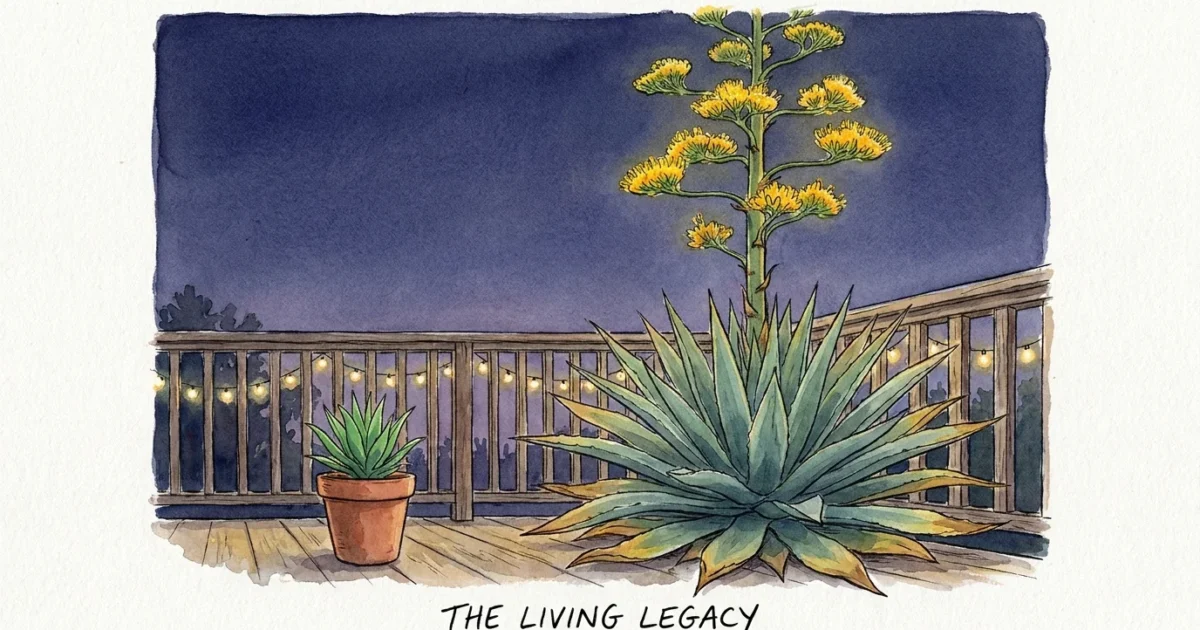
Discover the dramatic world of monocarpic plants, where producing a single, magnificent bloom is the ultimate lifelong mission. These extraordinary plants pour decades of stored energy into one spectacular floral display before naturally dying to make way for their offspring. Growing once in a lifetime flowers adds profound meaning to your garden, transforming your balcony or patio into a living legacy. You get to witness a rare biological event that few gardeners experience up close. Whether you cultivate tiny geometric succulents on a sunny windowsill or striking architectural bromeliads in your living room, these unique flower blooms teach patience and reward your dedicated care. Explore ten remarkable rare flowering plants that offer the ultimate botanical payoff, perfectly suited for compact growing spaces.
Understanding Monocarpic Plants
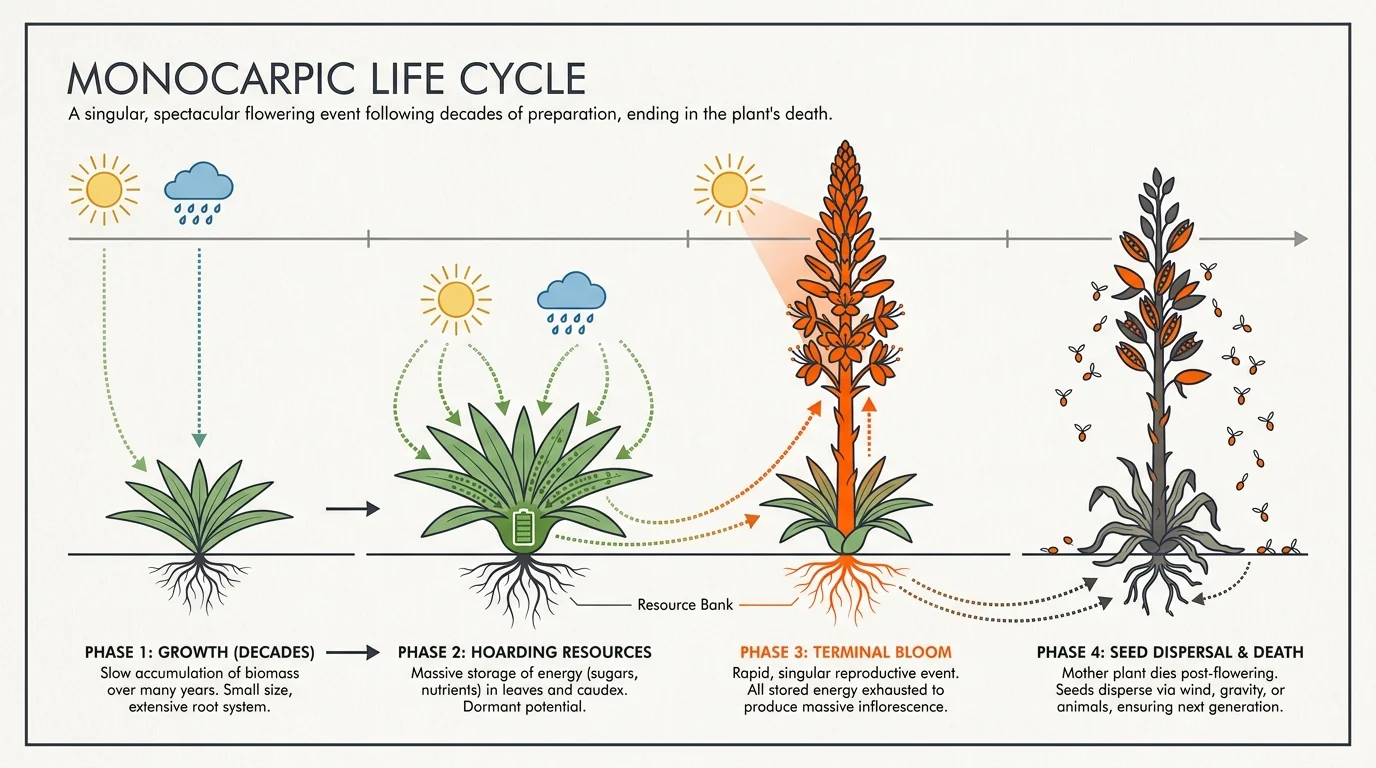
To truly appreciate these extraordinary flowers, you need to understand the biology behind their unique life cycle. The term “monocarpic” comes from Greek roots—”mono” meaning single, and “carpic” meaning fruit or seed. Unlike perennial plants that bloom year after year, a monocarpic plant flowers just once, sets seed, and then dies. This terminal bloom represents the climax of the plant’s entire existence.
Many of these species have evolved to survive extreme heat and drought by storing resources for years.
Why would a plant evolve to die after a single bloom? The answer lies in survival strategy. These rare flowering plants grow in some of the harshest environments on Earth, from arid deserts to high mountain peaks. Instead of expending precious energy trying to produce small blooms every year, they hoard their resources. They spend years, sometimes decades, building up a massive reserve of carbohydrates in their leaves and root systems.
When the environmental conditions are perfect, the plant triggers its flowering phase. It redirects every ounce of stored energy into pushing up a massive flower stalk, completely depleting its foliage in the process. The resulting bloom is often spectacularly large and brightly colored, designed to attract pollinators from miles away. This ensures a massive yield of seeds and guarantees the survival of the next generation.
For home gardeners, cultivating monocarpic plants offers a lesson in horticultural patience. You spend years nurturing a beautiful architectural rosette or a sleek tropical epiphyte. The foliage itself acts as the primary display. When the bloom finally arrives, it becomes a garden event—a fleeting, breathtaking reward for your long-term dedication.
Small-Space Monocarpic Succulents
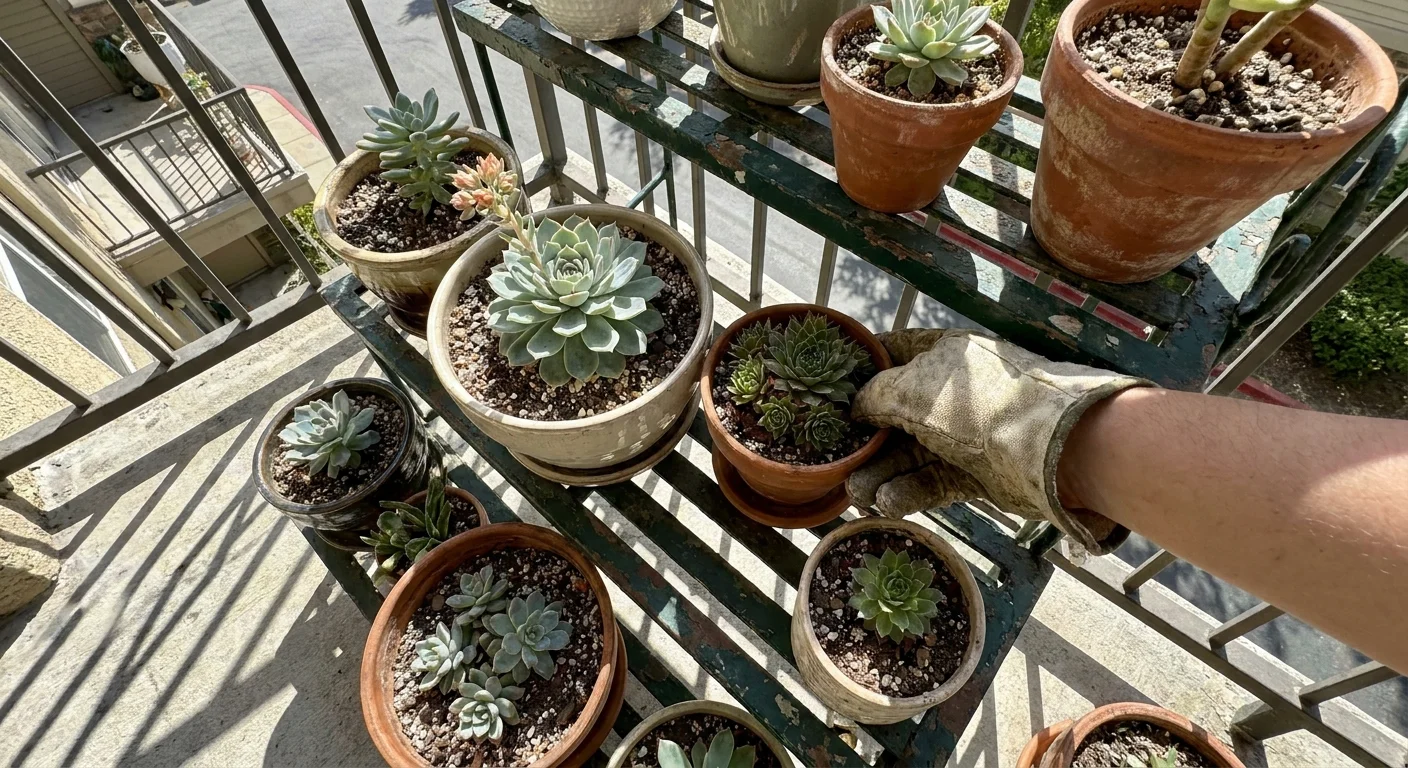
You do not need a sprawling estate to enjoy rare blooming flowers. Several stunning monocarpic succulents thrive perfectly in small pots, hanging baskets, and balcony rail planters. These compact wonders bring the drama of terminal blooms right to your fingertips.
To maintain visual interest while your succulents grow, consider pairing them with year-round green plants that provide constant structure to your containers.
Because they naturally die after their terminal bloom, these are some of the few garden plants that need replanting to maintain the display.
1. Hens and Chicks (Sempervivum tectorum)
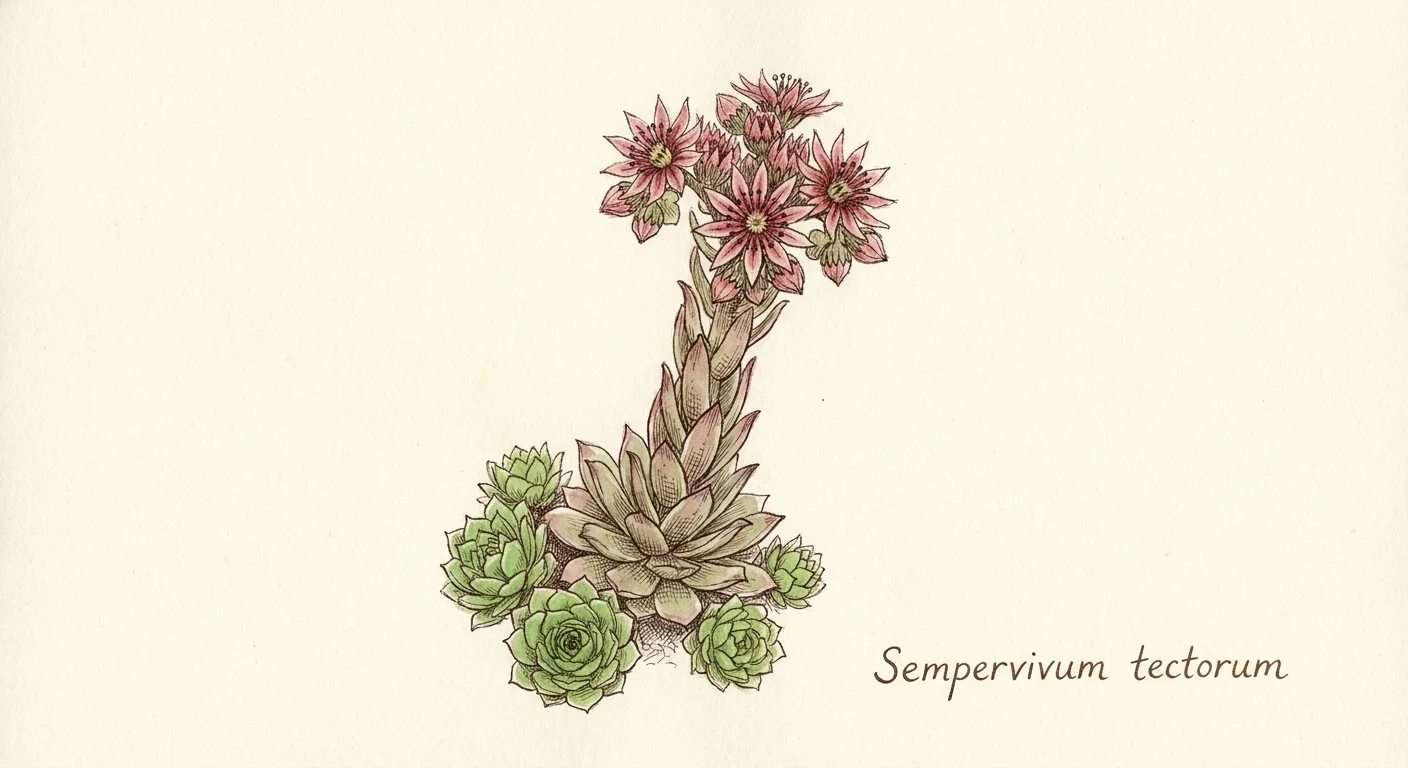
Hens and Chicks rank among the most recognizable and resilient succulents available to small-space gardeners. These alpine plants form tight, geometric rosettes of fleshy leaves. As they grow, the mother plant (the hen) produces numerous tiny clones (the chicks) around her base on short runners. Sempervivum plants tolerate extreme freezing temperatures, making them excellent candidates for year-round outdoor balcony containers in cold climates.
After three to four years of steady growth, a mature hen undergoes a radical transformation. The center of the rosette suddenly stretches upward, a process enthusiasts call “roostering.” The rosette elongates into a thick, fleshy stalk topped with a cluster of star-shaped, pink or yellow flowers. Because the root system and offsets remain intact, the death of the mother plant simply leaves a small gap that the chicks quickly fill.
2. Queen Victoria Agave (Agave victoriae-reginae)
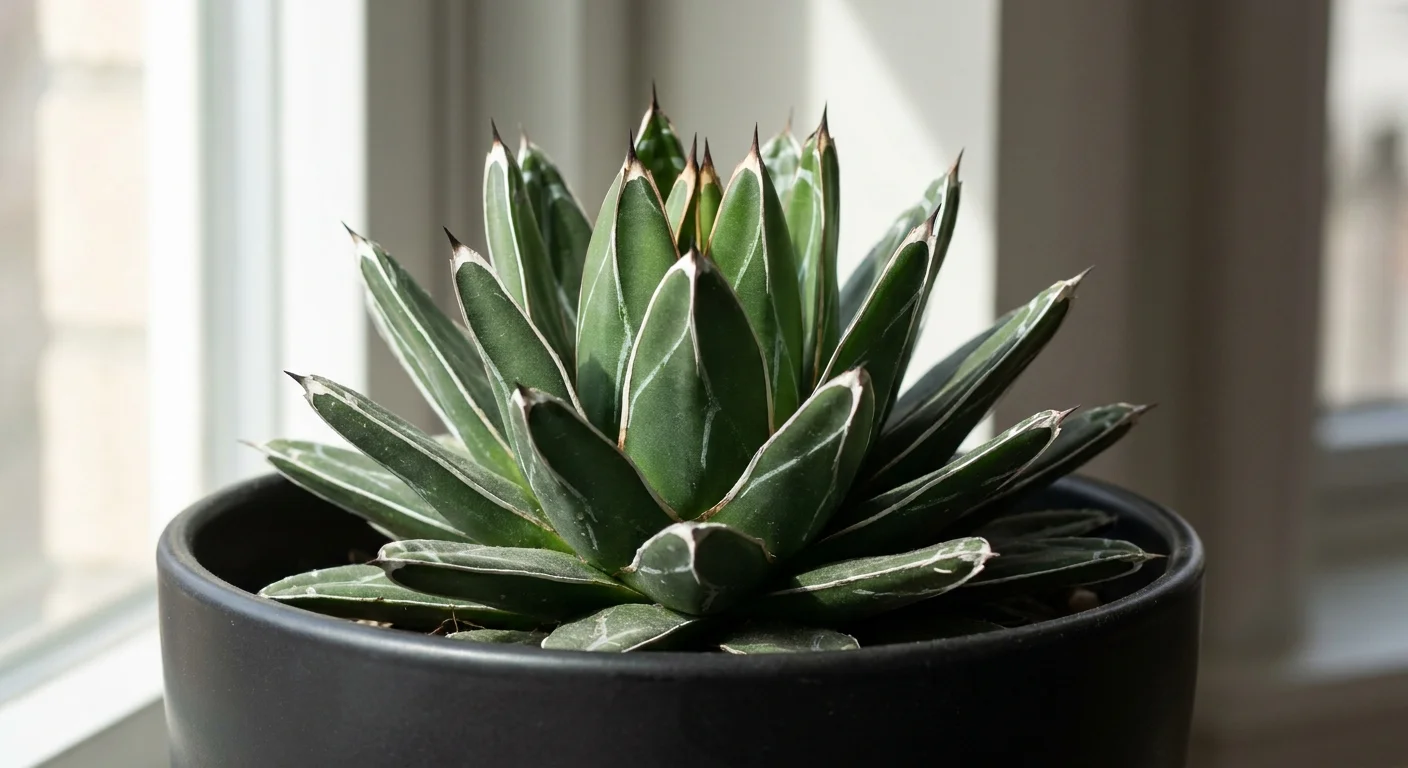
While many agaves grow large enough to swallow a compact patio, the Queen Victoria Agave remains small, slow-growing, and highly manageable. This premium succulent forms a dense, spherical rosette of dark green leaves adorned with striking, hand-painted white lines. It rarely exceeds eighteen inches in diameter, making it a spectacular focal point for a heavy terracotta pot.
You will need profound patience for this one; the Queen Victoria Agave typically takes fifteen to twenty years to reach maturity. When it finally blooms, it shoots up a dramatic spike that can reach ten to fifteen feet tall, completely covered in creamy yellow flowers. The sheer contrast between the compact base and the towering bloom spike makes it one of the most unique flower blooms you can cultivate on a sunny terrace.
3. Tree Aeonium (Aeonium arboreum)
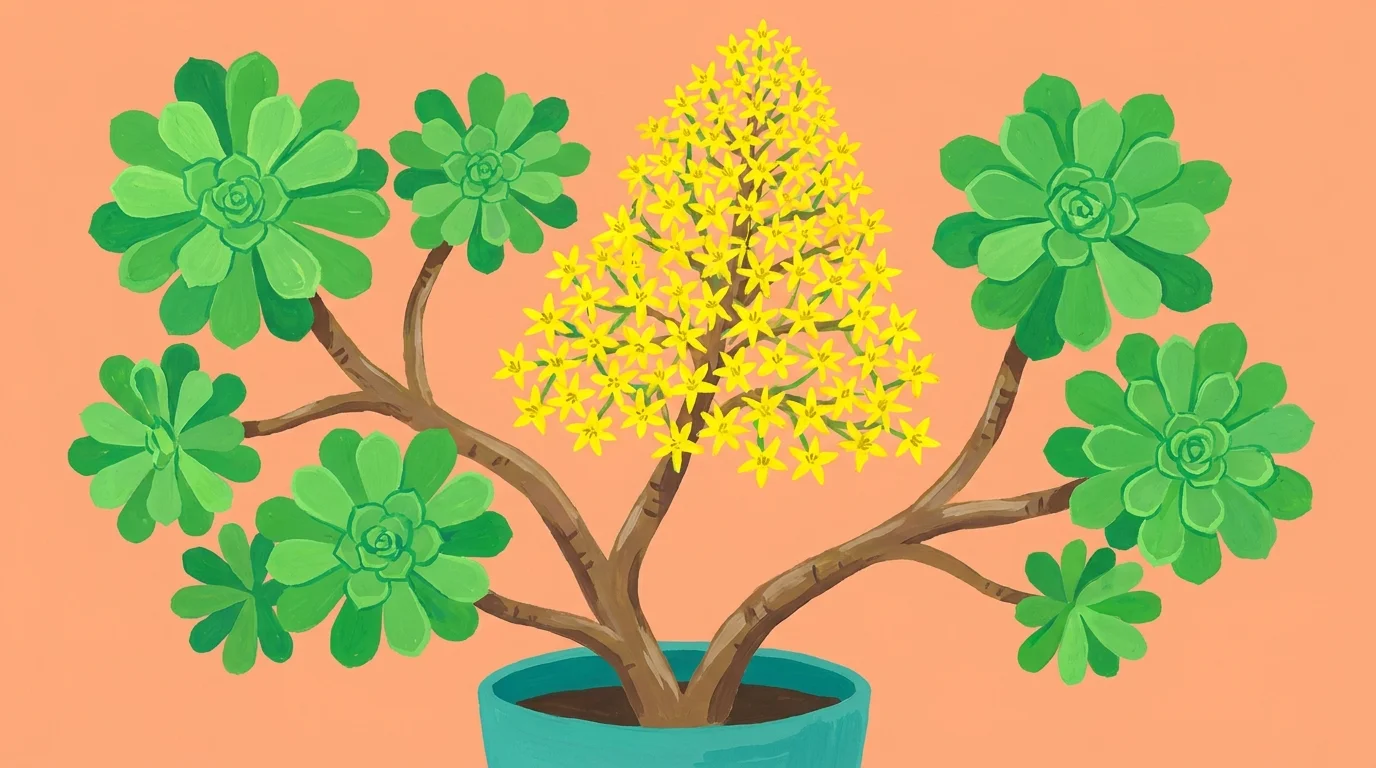
Native to the Canary Islands, the Tree Aeonium grows differently than ground-hugging succulents. It produces fleshy, spoon-shaped rosettes at the ends of tall, branching, woody stems. The dark purple varieties, such as ‘Zwartkop’, provide incredible color contrast against light-colored patio walls.
Aeoniums are winter growers, meaning they actively put on size during the cooler months and go dormant in the peak of summer heat. After several years, an individual rosette will begin to stretch, transforming its flat center into a massive, pyramidal cone of bright yellow flowers. Only the specific branch that flowers will die back. You simply prune the dead stem away, and the rest of the branching plant continues to thrive.
Colorful Bromeliads for Indoor Gardens
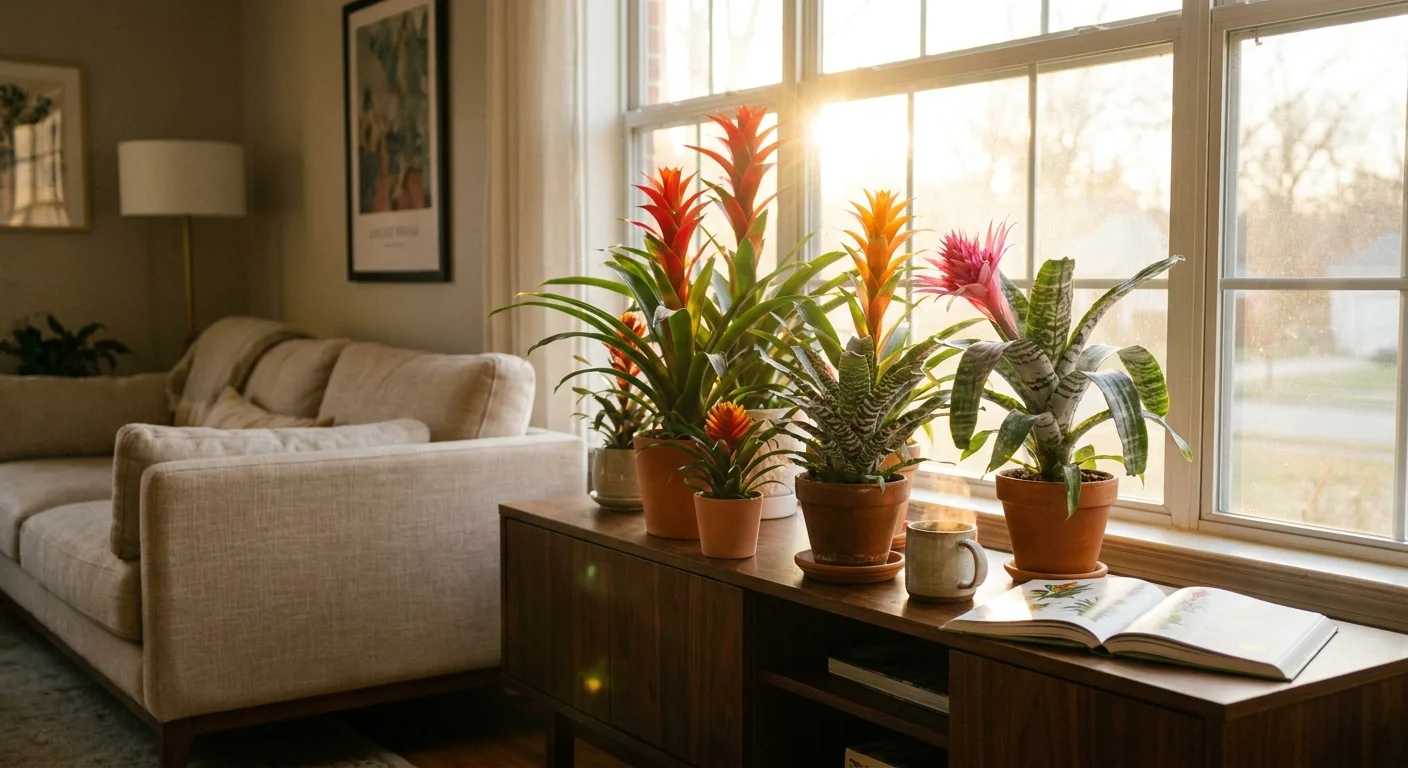
If you garden indoors or have a shaded balcony, the bromeliad family offers some of the most vibrant once in a lifetime flowers available. Native to tropical and subtropical regions, these plants often grow as epiphytes on trees in the wild, drawing moisture directly from the air.
4. Air Plants (Tillandsia)
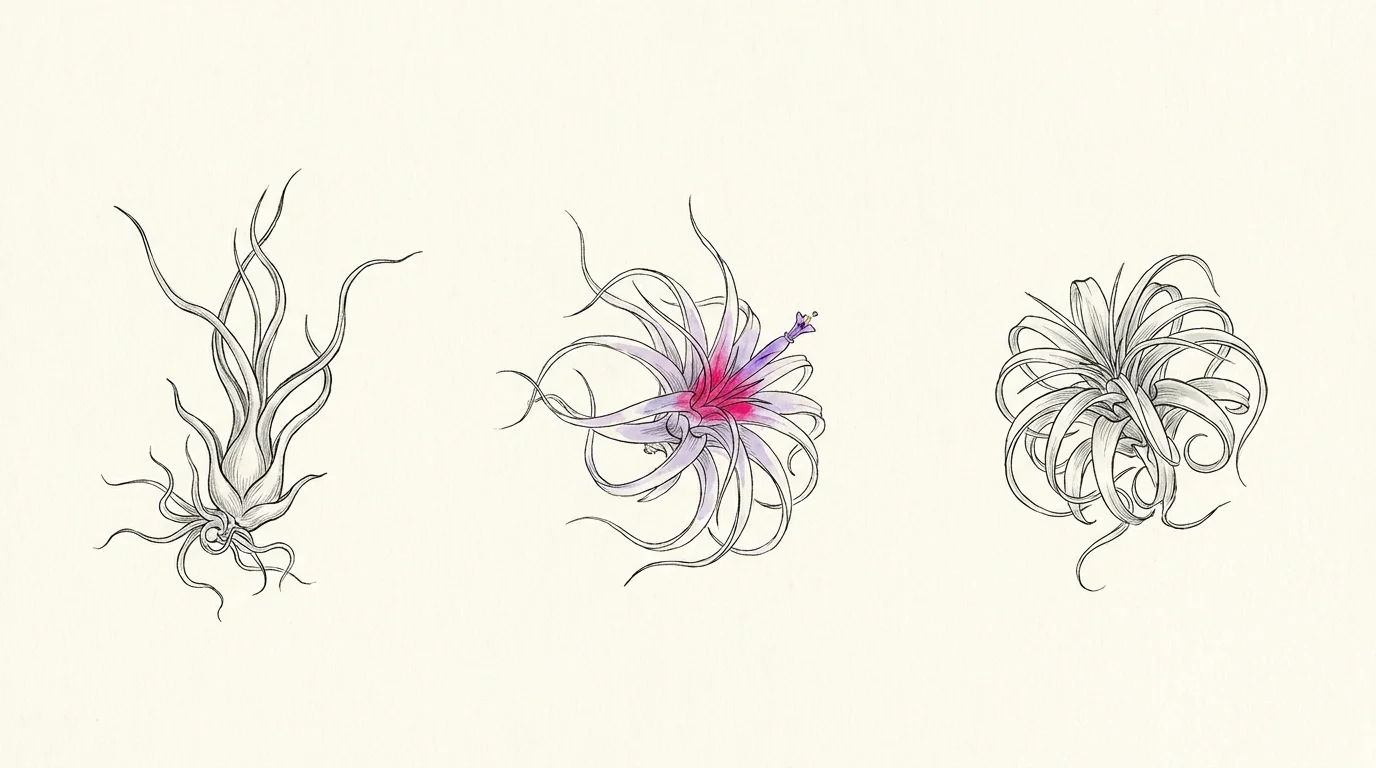
Air plants completely break the rules of traditional gardening because they require zero soil to grow. You can display them on driftwood, hang them in glass orbs, or mount them on your wall. They absorb all their required water and nutrients through tiny, hair-like structures on their leaves called trichomes.
When an air plant prepares to bloom, it puts on a spectacular color change known as “blushing.” The normally green or silvery leaves will flush bright pink, red, or peach. Shortly after, delicate tubular flowers in vibrant shades of purple, yellow, or white emerge from the center. Keep your air plant in bright, indirect light and soak it in room-temperature water for twenty minutes once a week to encourage this eventual floral display.
5. Guzmania Bromeliads (Guzmania spp.)
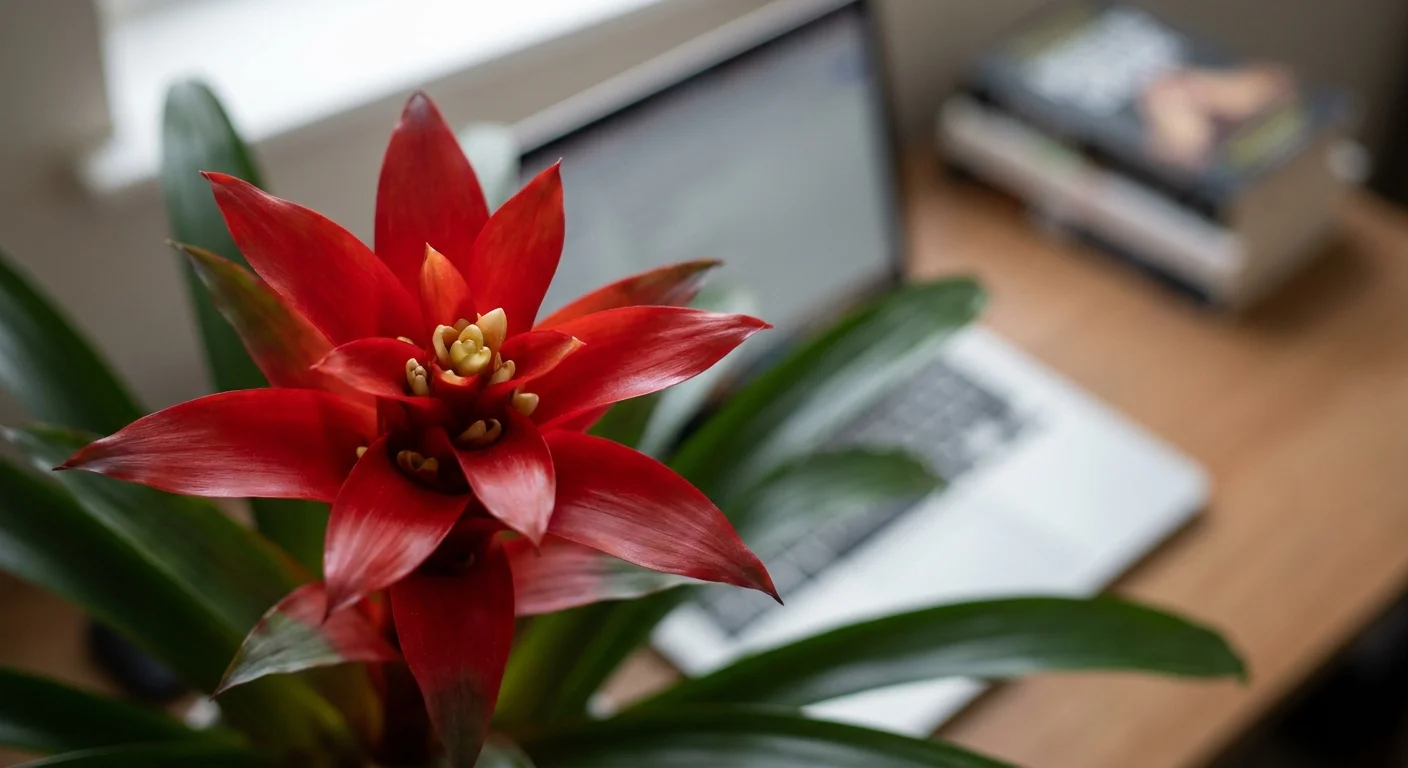
Guzmania bromeliads are staple houseplants prized for their glossy, arching green leaves and spectacular, long-lasting color. What most people assume is the flower is actually a structure of specialized leaves called bracts. These bracts turn electric shades of yellow, orange, and fiery red to attract pollinators.
The true flowers are tiny, delicate white or yellow tubes that peek out from between the colorful bracts. A Guzmania takes two to three years to bloom. Once the bracts fade and turn brown, the main rosette begins its slow decline. During this dying phase, the plant focuses entirely on pushing out small pups from its base, ensuring your indoor garden remains populated.
6. Silver Vase Plant (Aechmea fasciata)
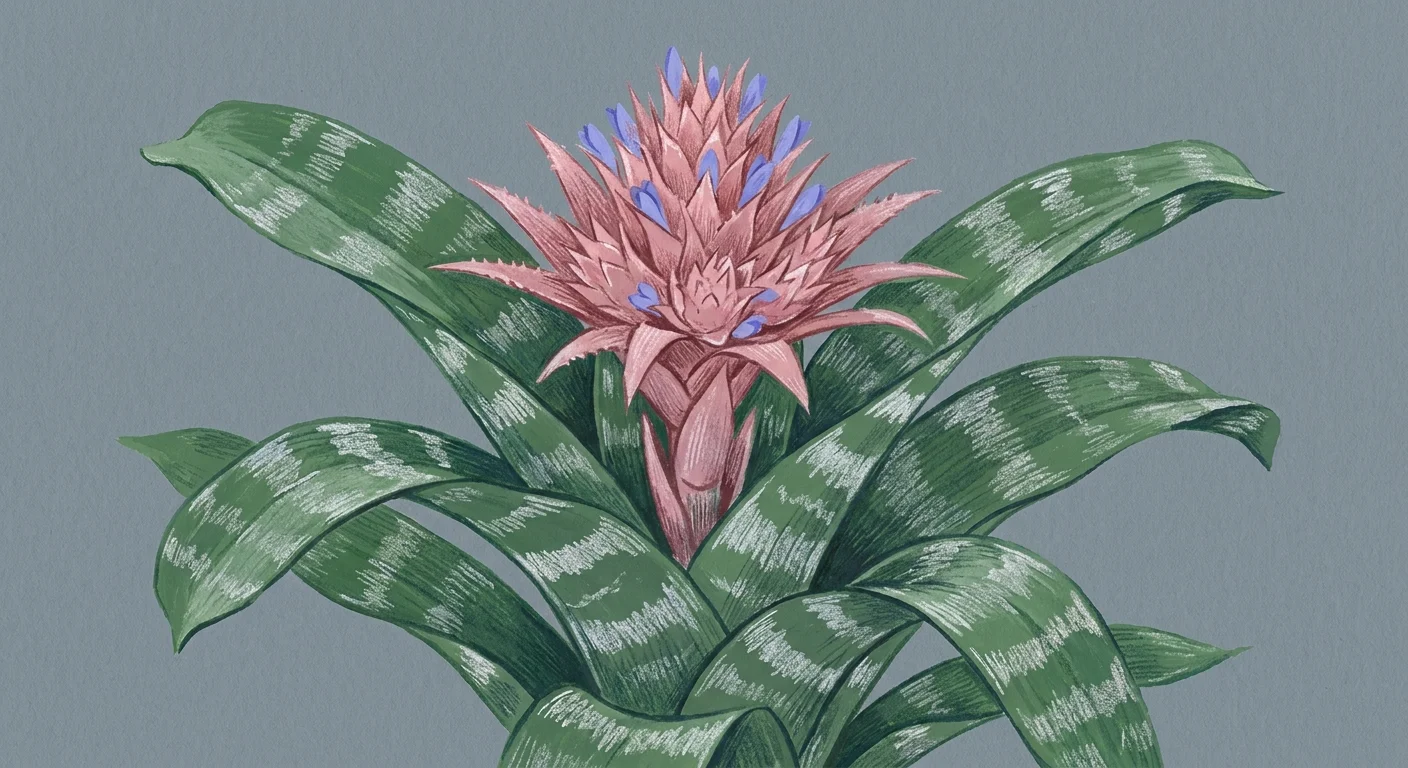
The Silver Vase Plant brings remarkable texture to an indoor space. Its stiff, broad leaves feature a striking powdery silver banding. In the wild, the plant’s overlapping leaves form a watertight central cup that catches rainwater and falling debris.
When mature, the Silver Vase Plant produces a large, spiky pink inflorescence that lasts for several months. Tiny, vivid blue flowers emerge between the pink spikes, creating a beautiful color contrast. To care for this plant at home, pour distilled water or rainwater directly into the central cup rather than watering the soil. Flush the cup with fresh water every few weeks to prevent bacterial growth.
Dramatic Architectural Bloomers
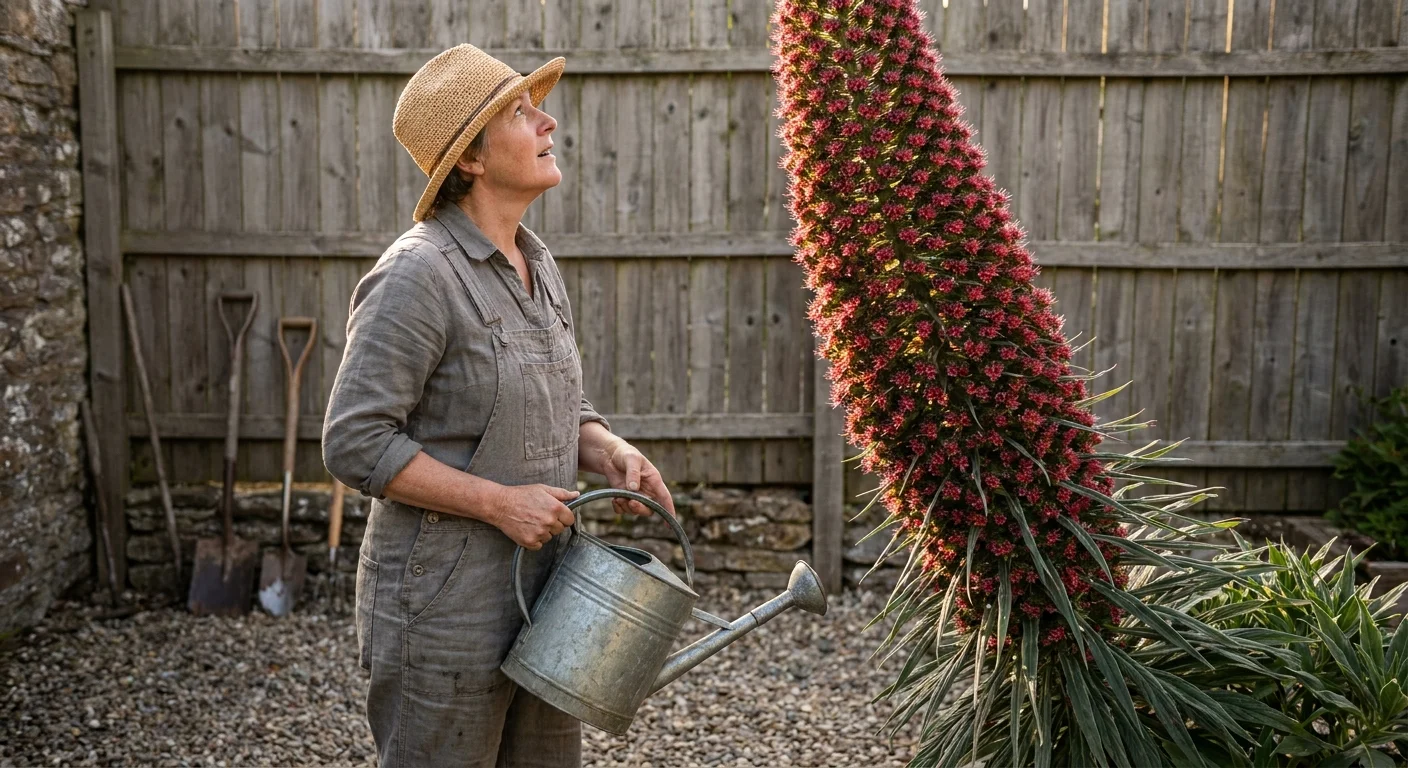
For gardeners with a bit more vertical space—perhaps a sunny courtyard, a large deck, or a warm climate yard—these architectural monocarpics offer a towering presence. They require large, heavy pots to counter-balance their massive eventual flower stalks.
7. Tower of Jewels (Echium wildpretii)
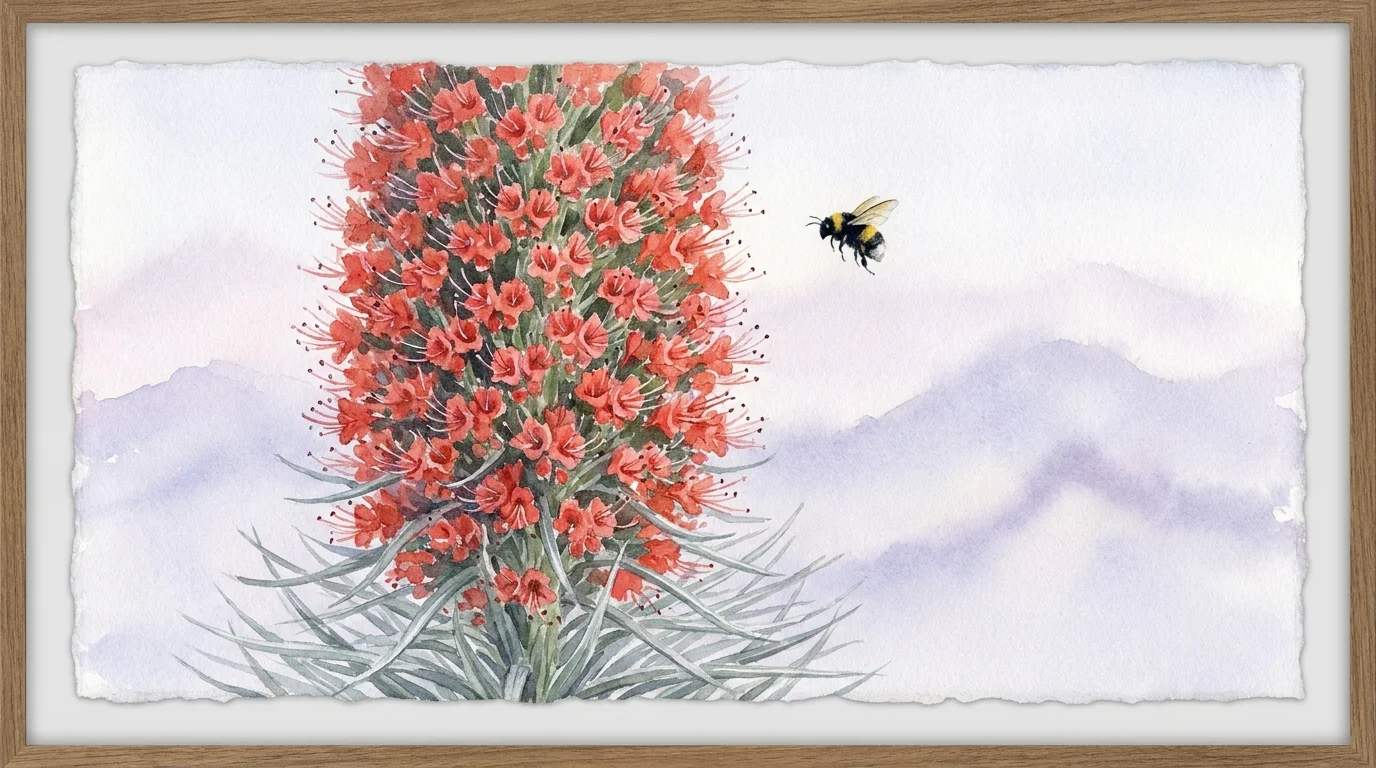
The Tower of Jewels behaves as a strict biennial, meaning it lives for exactly two years. During its first year, it grows into a low, sprawling rosette of fuzzy, silver-gray leaves. It looks attractive but unassuming. You must provide it with sharp, fast-draining soil and plenty of direct sunlight during this vegetative stage.
In its second spring, the plant executes a shocking transformation. The center shoots upward at an incredible pace, forming a densely packed floral spire that can reach six to ten feet tall. The entire column bursts into thousands of vibrant, salmon-red flowers. Bees and hummingbirds will swarm the stalk constantly. After a few weeks of this magnificent show, the plant drops thousands of seeds and abruptly dies.
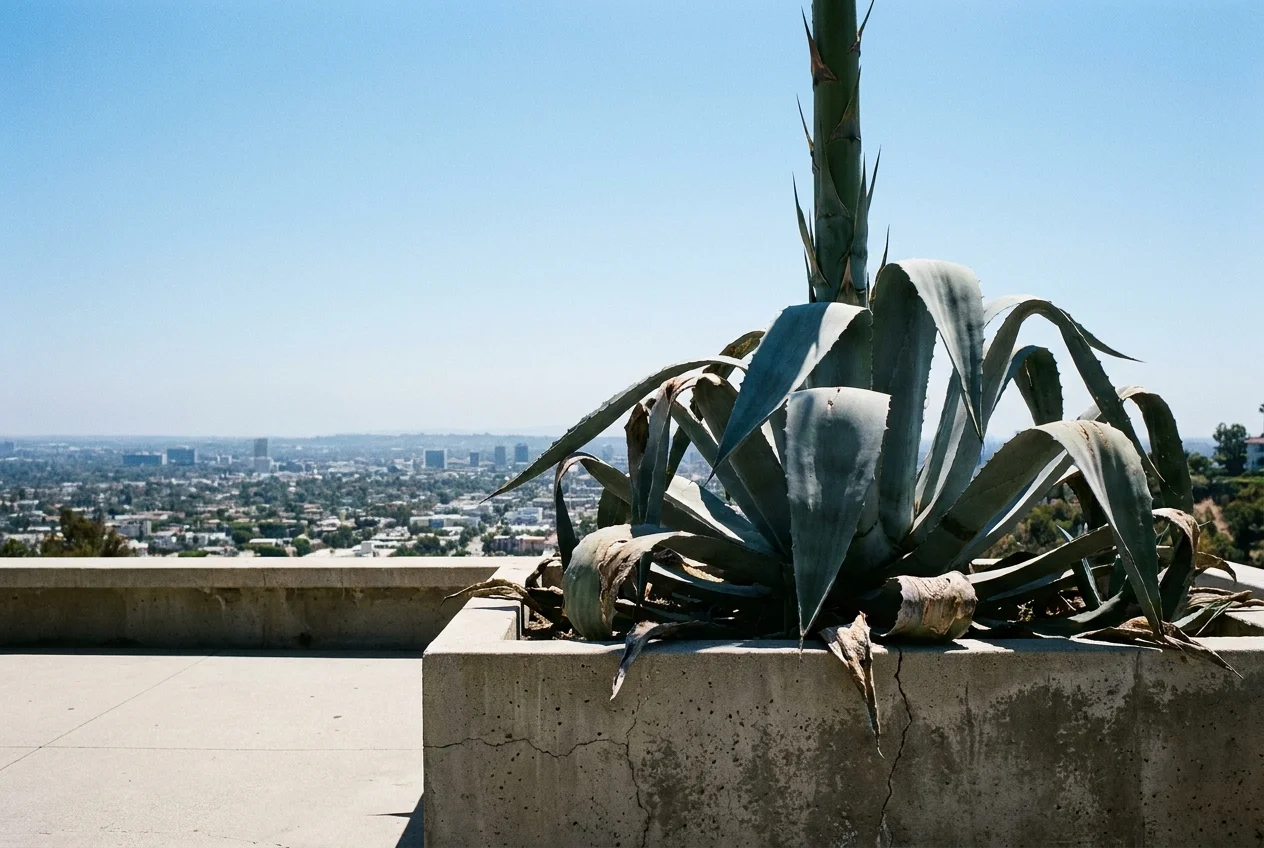
8. Century Plant (Agave americana)
The Century Plant owns the most famous reputation among rare flowering plants. Despite its common name, it does not actually take a hundred years to bloom. In warm climates, it typically requires ten to thirty years to gather enough energy. This plant grows massive; its blue-green, heavily toothed leaves can reach six feet long.
When the bloom trigger finally engages, the Century Plant sends up a flower stalk that looks like a giant asparagus spear. This stalk grows up to a foot a day, eventually reaching towering heights of twenty to thirty feet. Branches form near the top, holding clusters of yellow-green flowers. If you plan to grow this in a container, select a dwarf variety and a highly porous soil mix to keep its size somewhat restricted.
Giant Rare Flowering Plants in Nature
While you cannot fit these giants on an apartment balcony, no list of once in a lifetime flowers is complete without acknowledging the most extreme monocarpic wonders of the botanical world. Understanding these titans provides deep context for the smaller species you grow at home.
9. Queen of the Andes (Puya raimondii)
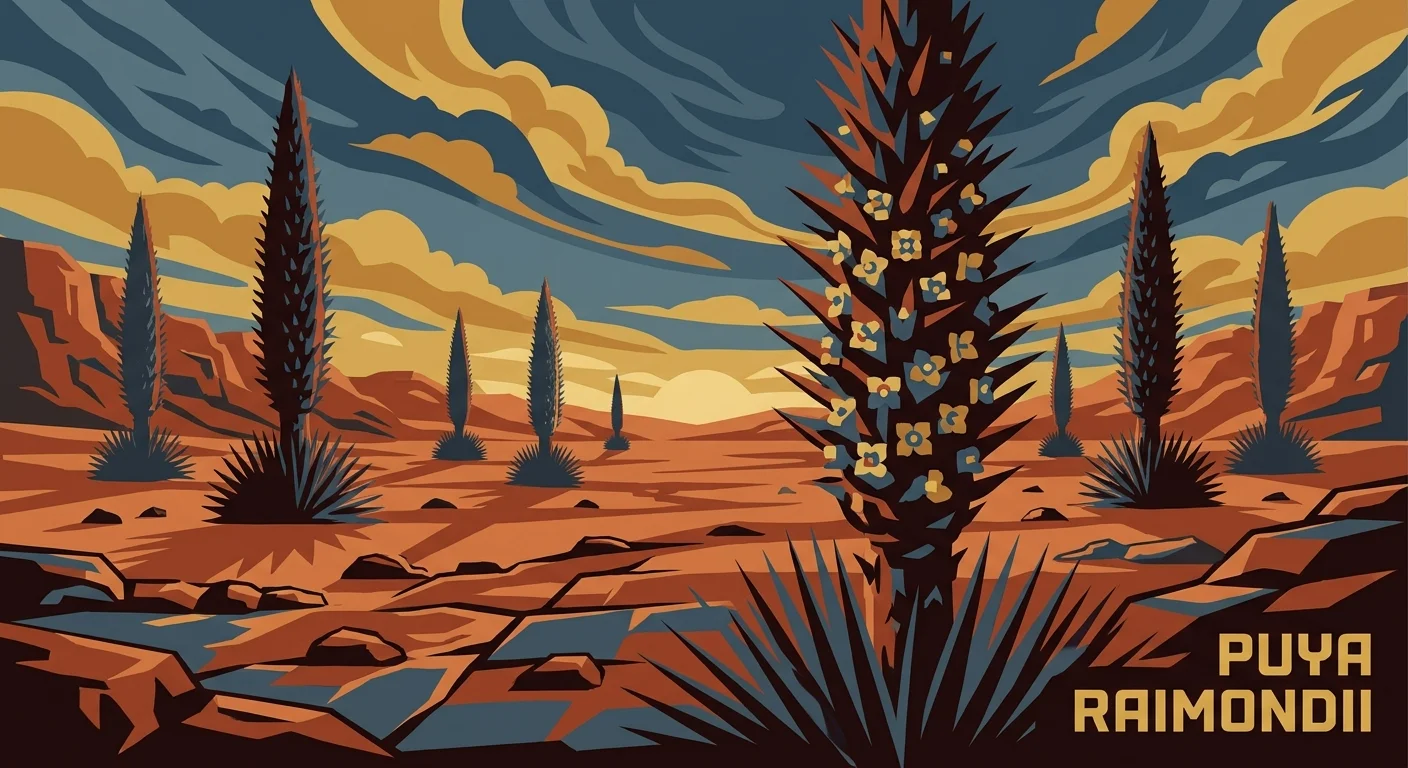
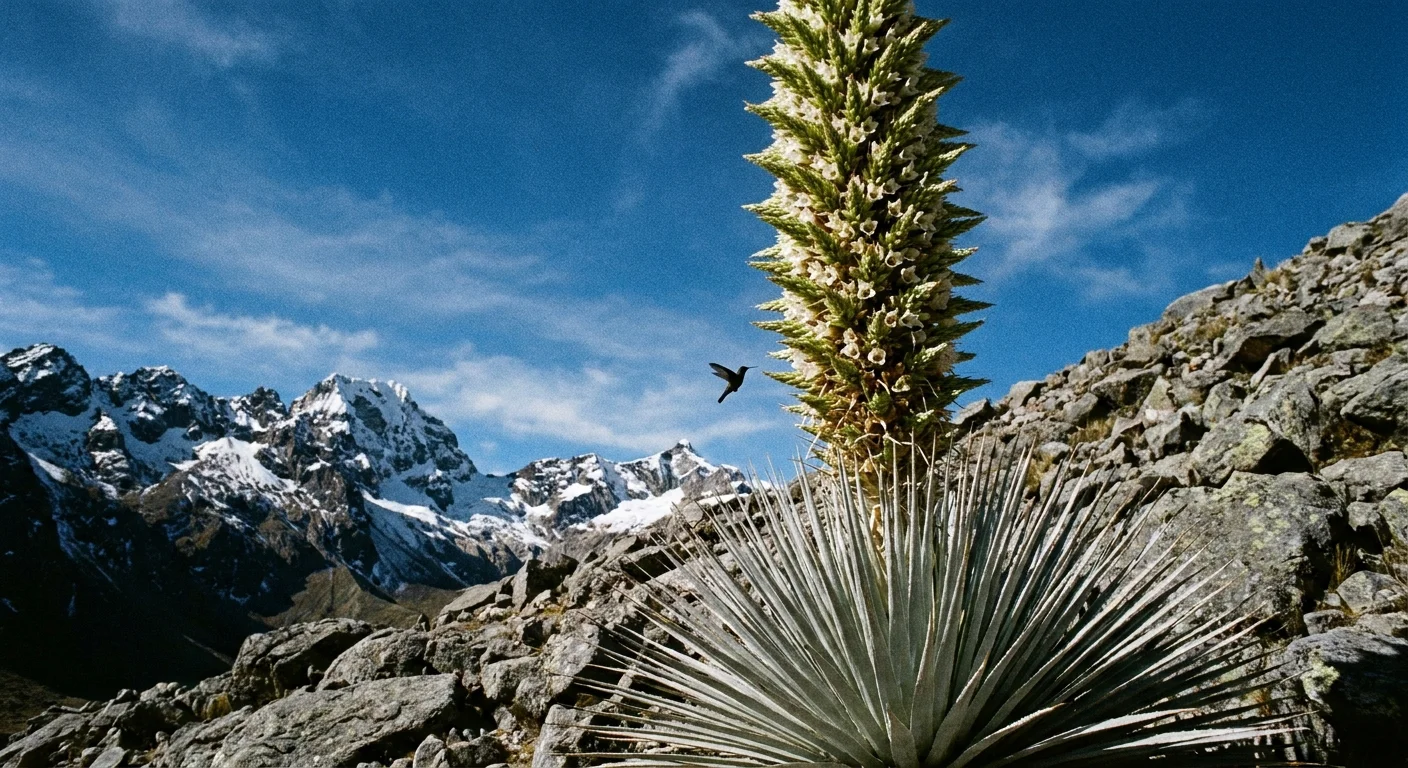
High in the freezing, windswept elevations of the Andes mountains grows the largest bromeliad in the world. The Queen of the Andes spends up to eighty years growing a massive, spiky, spherical rosette that can measure nearly ten feet across. It endures decades of harsh alpine conditions, slowly building its energy reserves.
When it finally blooms, it produces a flower spike up to thirty feet tall, containing as many as twenty thousand individual flowers. This monumental effort completely exhausts the plant. It serves as a vital food source for high-altitude hummingbirds before finally collapsing.
10. Talipot Palm (Corypha umbraculifera)
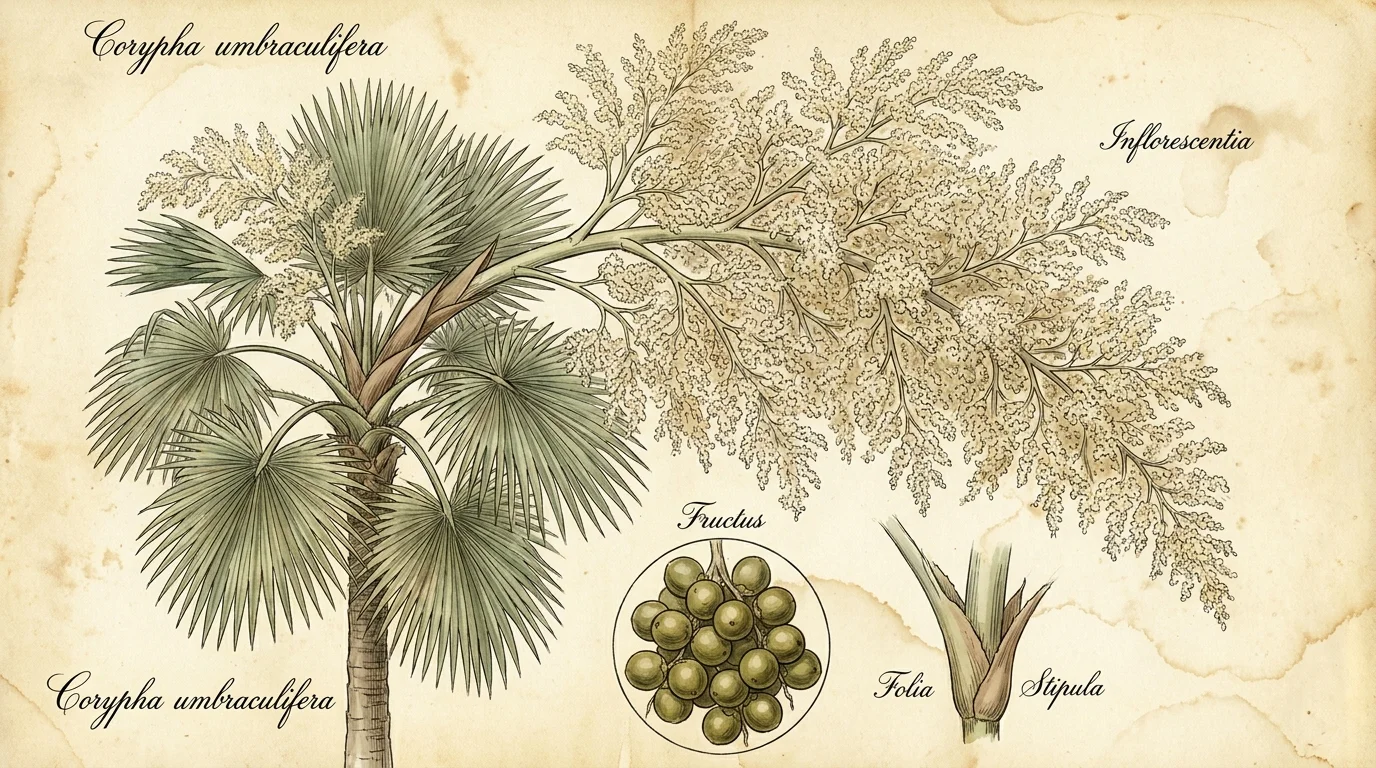
The Talipot Palm boasts the largest inflorescence of any plant on Earth. Native to eastern and southern India and Sri Lanka, this massive palm tree spends between thirty and eighty years growing enormous, fan-shaped fronds.
At the end of its life, it pushes up an astounding branched flower stalk above its canopy that can measure twenty-five feet tall and contains millions of tiny flowers. It takes roughly a year for the fruit to mature, raining down thousands of golf-ball-sized seeds before the entire tree slowly dies. It is the ultimate display of monocarpic botanical power.
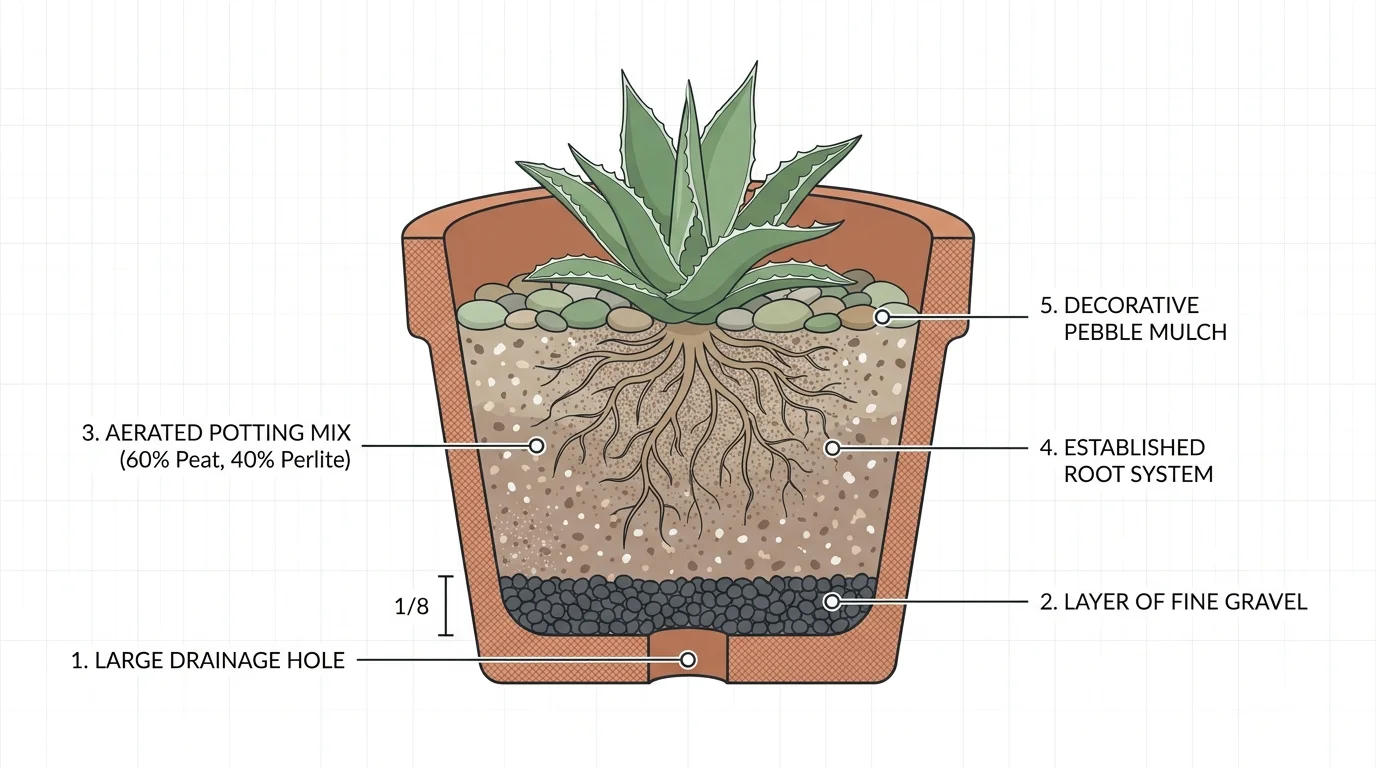
Essential Container Setup for Long-Lived Plants
When you commit to growing a plant that will live in the exact same pot for five, ten, or twenty years before blooming, your initial container setup matters immensely. You cannot easily repot a mature agave without risking damage to its fragile root system or enduring painful pokes from its spines.
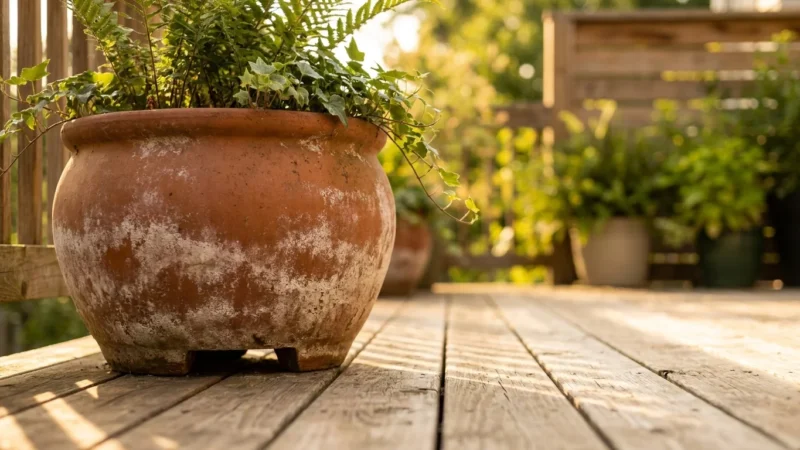
Choose the Right Container Material: Always opt for unglazed terracotta or thick concrete for long-lived succulents. These porous materials allow air to move through the pot walls, helping the soil dry out evenly. They also carry significant weight, which anchors tall plants and prevents them from tipping over in high winds.
Create a Custom Soil Blend: Standard commercial potting soil holds too much moisture and compacts over time, suffocating roots. Mix your own long-term substrate by combining one part standard potting soil with two parts coarse drainage material. Use pumice, crushed granite, or large-chunk perlite. This creates an airy, rocky mix that mimics the harsh natural environments where extraordinary flowers naturally grow.
Prioritize Drainage: Ensure your container has at least one large drainage hole. Do not place rocks at the bottom of the pot; this actually raises the water table inside the container and promotes root rot. Instead, fill the entire pot with your uniform, fast-draining soil mix.
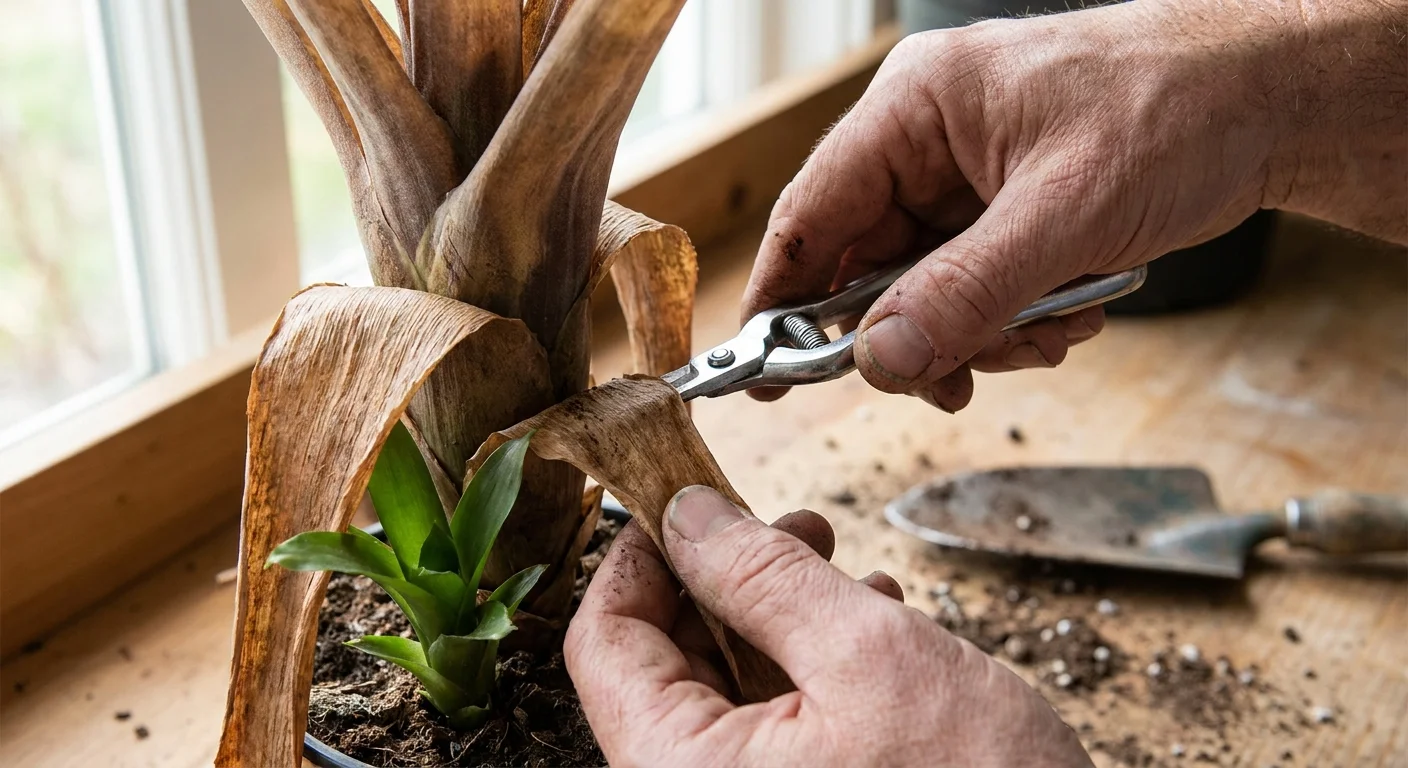
How to Care for Dying Mother Plants
Watching a beloved plant enter its final life stage can feel bittersweet. When the bloom stalk begins to emerge, many gardeners wonder if they should alter their care routine. The goal during this phase shifts from preserving the mother plant to supporting the floral display and offset production.
First, never cut off the emerging flower stalk in an attempt to save the plant. Once the genetic trigger for a terminal bloom activates, the plant has already irreversibly altered its internal chemistry. Cutting the stalk will not save the mother; it will only rob you of the rare blooming flowers you waited years to see.
As the flower stalk grows, you will notice the lower leaves of the rosette shriveling, yellowing, or browning. Do not panic or overwater the plant. This is a natural process called nutrient translocation. The plant is actively pulling water, carbohydrates, and minerals out of its older leaves and pushing them directly into the flower stalk. If you increase watering, you risk rotting the roots at a highly vulnerable time.
Maintain your standard watering schedule. If the bloom stalk grows exceptionally tall or heavy, carefully insert a bamboo stake into the soil and gently tie the stalk to it for support. Once the flowers fade and the entire plant turns crisp and brown, you can safely remove the mother plant and focus your attention on the offsets left behind.
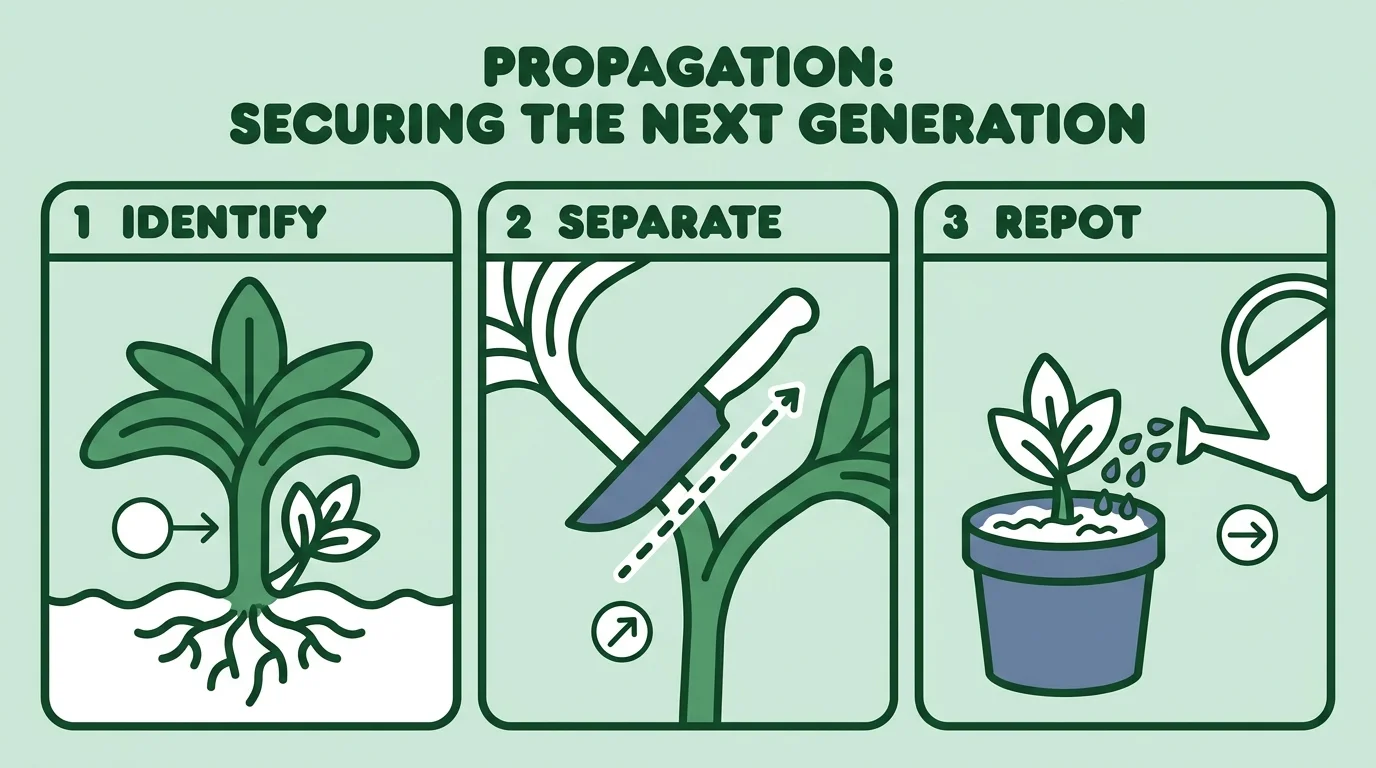
Propagation Securing the Next Generation
The death of a monocarpic plant never means the end of its lineage in your garden. Long before the mother plant fully expires, it ensures its survival by producing genetic clones, commonly called “pups” or offsets. Harvesting and repotting these pups is a deeply rewarding gardening task.
Follow these practical steps to successfully propagate your dying monocarpic plants:
- Wait for the Right Size: Do not rush to remove pups the moment you see them. Allow the offsets to grow to at least one-third the size of the mother plant. At this stage, they will have developed their own independent root systems.
- Unpot the Entire Plant: To avoid damaging the pups, gently lay the container on its side and slide the entire root ball out. This gives you clear visibility of how the pups attach to the mother’s stem.
- Use a Sterilized Tool: Take a sharp knife or a pair of bypass pruners and wipe the blades with rubbing alcohol. Clean cuts prevent fungal infections.
- Sever the Connection: Locate the thick runner (stolon) connecting the pup to the mother plant. Cut this runner as close to the mother’s main stem as possible, ensuring the pup retains its own roots.
- Allow the Cut to Callous: Set the newly separated pups in a dry, shaded spot for three to five days. The raw cut must dry out and form a hard callous before it touches wet soil, otherwise, it will quickly rot.
- Pot in Dry Soil: Plant the calloused pups in your fast-draining soil mix. Wait one full week before watering them for the first time. This encourages the roots to actively seek out moisture and establish themselves in their new container.
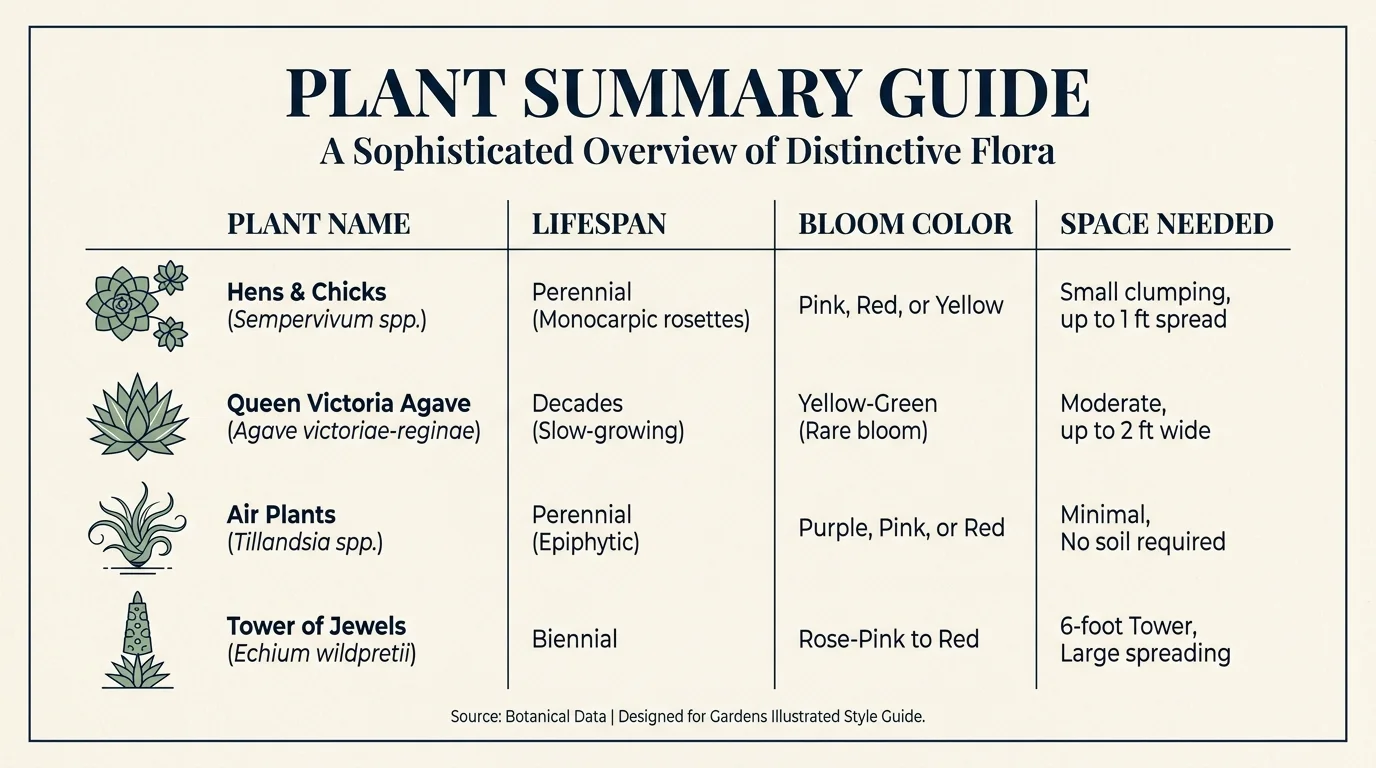
Plant Summary Guide
Use this reference table to quickly determine which of these rare flowering plants fits your space and your level of patience.
| Plant Name | Expected Years to Bloom | Ideal Growing Environment |
|---|---|---|
| Hens and Chicks | 3–5 Years | Outdoor balcony, full sun, cold tolerant |
| Air Plants | 1–3 Years | Indoors, bright indirect light, high humidity |
| Guzmania Bromeliad | 2–3 Years | Indoors, moderate light, warm temperatures |
| Tree Aeonium | 4–6 Years | Outdoor patio, partial sun, frost-free winters |
| Silver Vase Plant | 3–5 Years | Indoors, bright filtered light, warm temperatures |
| Tower of Jewels | 2 Years (Biennial) | Large patio container, full sun, fast-draining soil |
| Queen Victoria Agave | 15–20 Years | Sunny terrace, extreme heat tolerance, dry soil |
| Century Plant | 10–30 Years | Large outdoor space, full sun, heavy container |
| Queen of the Andes | 80+ Years | Wild environments only (High altitudes) |
| Talipot Palm | 30–80 Years | Wild environments only (Tropical climates) |
Frequently Asked Questions
Are all agaves and bromeliads monocarpic?
Most agaves and bromeliads are entirely monocarpic, meaning the main rosette will reliably die after flowering. However, there are rare exceptions in the botanical world. A few agave species can survive a bloom, and some bromeliad varieties produce multiple stalks over time. But for standard container varieties like the Century Plant or the Silver Vase Plant, you can expect the mother plant to expire after its floral show.
How long do once in a lifetime flowers actually last?
Because the plant spends its entire life preparing for this singular event, the bloom cycle often lasts much longer than typical garden flowers. An agave flower spike can remain active for several months as flowers open progressively from the bottom to the top. Bromeliad bracts (the colorful leaf structures hiding the flowers) can remain vibrantly colored for three to six months before slowly fading to brown.
What happens to the roots after the mother plant dies?
When the main rosette dies, its central root system also begins to decay. However, the root systems of the surrounding pups remain highly active. If you choose not to separate the pups, the decaying organic matter of the mother’s roots actually breaks down and provides minor nutrients back into the soil, acting as a natural compost for the next generation.
Can I save seeds from my blooming succulent?
Yes, you can harvest seeds, but it requires patience and specific conditions. The flowers must be successfully pollinated by local insects or birds. Once the flowers fade, seed pods will swell and eventually dry out, splitting open to reveal flat, black seeds. While growing from seed is a rewarding project, it takes significantly longer to produce a mature plant than propagating the pups.
For trustworthy gardening information, visit:
Brooklyn Botanic Garden, Chicago Botanic Garden, New York Botanical Garden and ASPCA Animal Poison Control. These organizations provide expert, research-based advice for gardeners at all levels.
Disclaimer: This article is for informational purposes only and is not a substitute for professional gardening advice. Always consult local extension services or horticulture experts for region-specific guidance.
Leave a Reply