
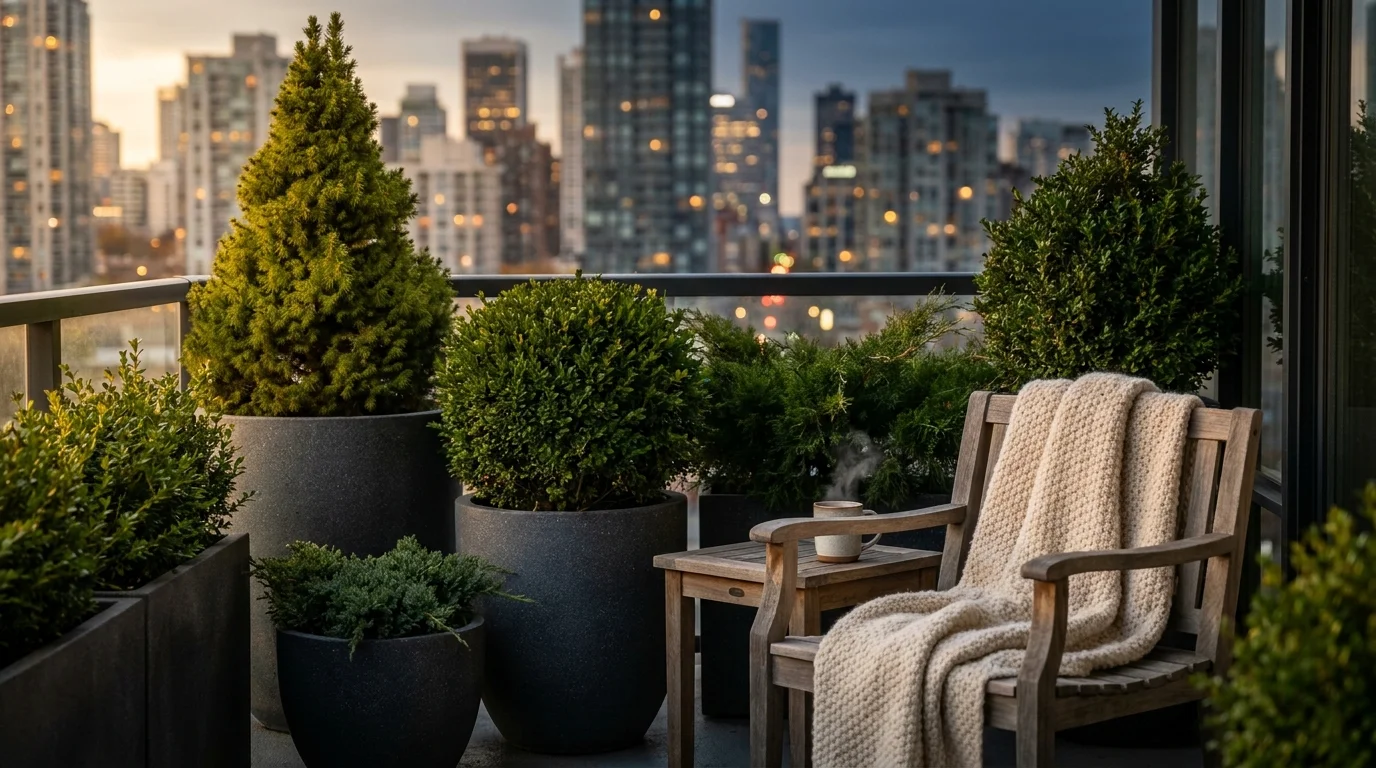
Transforming your small outdoor space into a vibrant oasis does not require waiting for spring blooms or watching leaves drop in autumn. Cultivating year round green plants ensures your balcony, patio, or compact yard remains full of life through every season.
Evergreen plants provide essential structure, block harsh winds, and create a permanent backdrop for seasonal accents, giving you a beautiful sanctuary 365 days a year. Selecting the right low maintenance greenery means you spend less time pruning and more time enjoying your peaceful retreat.
Whether you deal with deep shade on an urban terrace or full sun on a tiny patio, these ten reliable outdoor green plants deliver continuous texture without overwhelming your limited gardening space.
Contents7 sections
Why Evergreens Anchor Small Spaces
Professional landscape designers view evergreen plants as the fundamental bones of any garden layout. When you work with a limited footprint, such as a balcony or a small courtyard, every plant must earn its keep.
Deciduous plants—those that drop their leaves in the winter—leave bare branches for nearly half the year in many climates. By contrast, year round green plants offer unwavering color and architectural form.
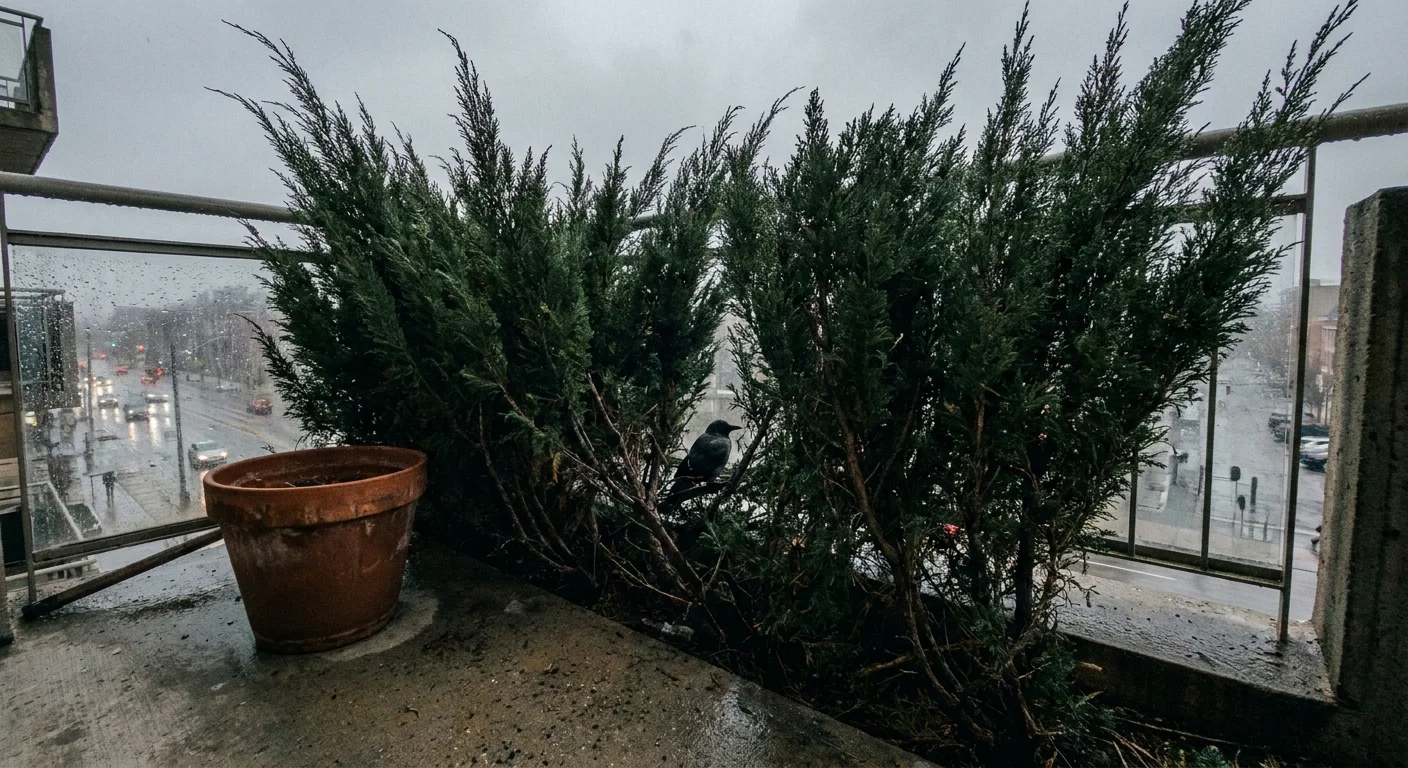
Beyond their visual appeal, these plants serve highly practical functions in a micro-garden environment. A well-placed row of dense greenery acts as a natural windbreak.
High-rise balconies often suffer from intense wind gusts that can snap the fragile stems of spring flowers or tip over lightweight pots. A sturdy evergreen barrier filters this wind, reducing its speed and protecting your more delicate seasonal plants.
Additionally, a thick wall of foliage provides instant privacy from nearby neighbors or busy streets, transforming an exposed patio into a secluded outdoor room.
Environmentally, maintaining a collection of garden evergreen plants supports local ecosystems. During the bleakest winter months, native birds and beneficial insects rely on dense foliage for shelter against freezing winds and predators.
By incorporating these steadfast plants into your space, you create a microscopic wildlife refuge while simultaneously filtering urban dust and pollutants from the air around your home.
The psychological benefits match the environmental ones; stepping out onto a patio filled with lush greenery during the gray days of January offers a profound, mood-boosting connection to nature.
Top 10 Compact Evergreens for Patios and Balconies
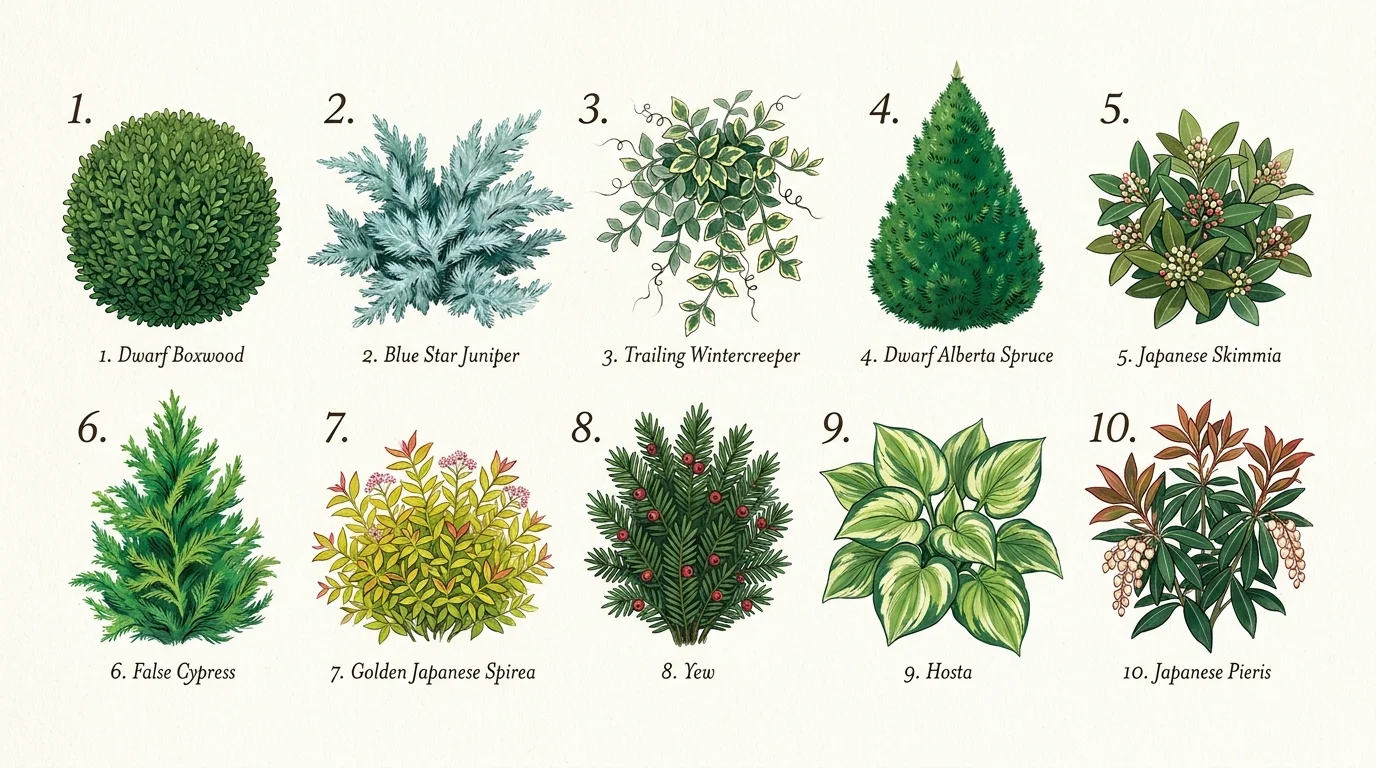
Selecting the right plants for container gardening requires attention to their mature size, growth rate, and hardiness. The following ten plants represent the most reliable, compact, and visually striking options for small-space gardeners looking to establish permanent greenery.
Beyond these evergreen anchors, you can also incorporate winter-hardy perennials that provide texture and reliable growth year after year.
1. Dwarf Boxwood
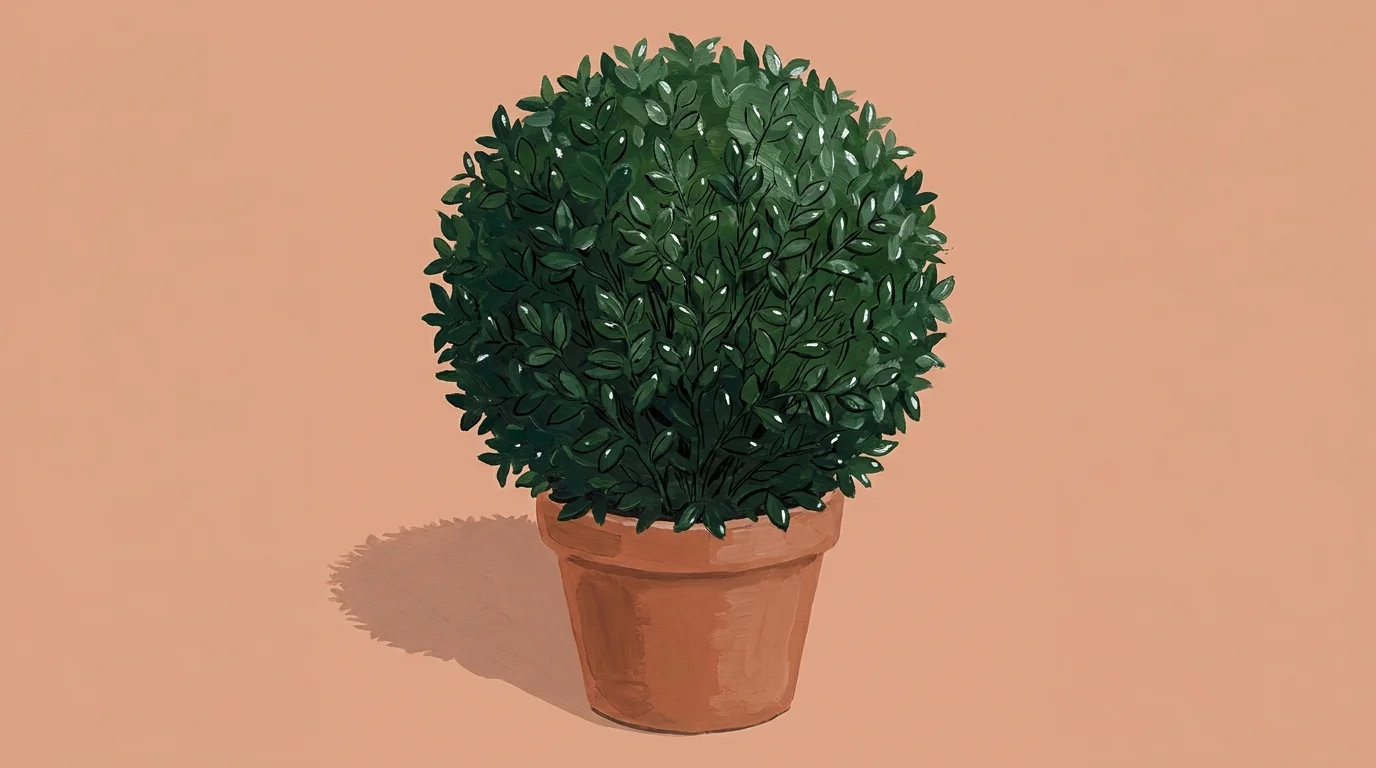
Dwarf Boxwood ranks among the most popular choices for formal container gardening. Its small, densely packed oval leaves boast a glossy dark green finish that holds its color beautifully through the coldest months.
Because boxwoods respond exceptionally well to pruning, you can shape them into crisp spheres, neat cubes, or small conical structures. They thrive in pots and require very little space to make a significant visual impact.
Place your dwarf boxwood in partial to full sun. To keep the foliage dense, perform a light shear in late spring after the new growth emerges.
2. Blue Star Juniper
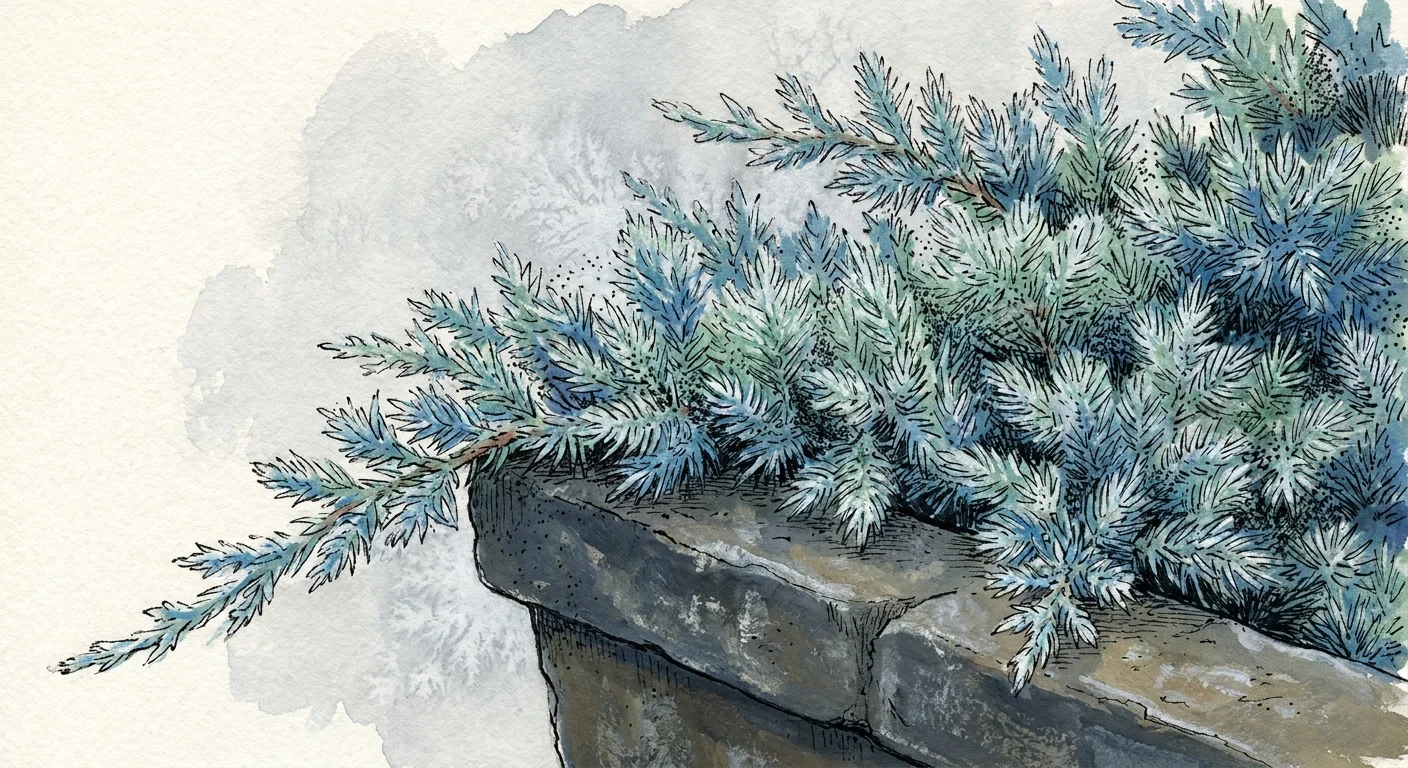
If you want to break up a sea of standard green, the Blue Star Juniper delivers spectacular steel-blue and silver foliage. This slow-growing conifer naturally forms a low, spreading mound, making it an excellent candidate for shallow, wide planters.
The prickly, needle-like foliage provides a rugged texture that contrasts beautifully with broadleaf plants. Junipers are exceptionally drought-tolerant once established, meaning they forgive you if you occasionally forget to water them.
They demand full sun to maintain their intense blue coloration and require soil that drains rapidly to prevent root rot.
3. Creeping Thyme
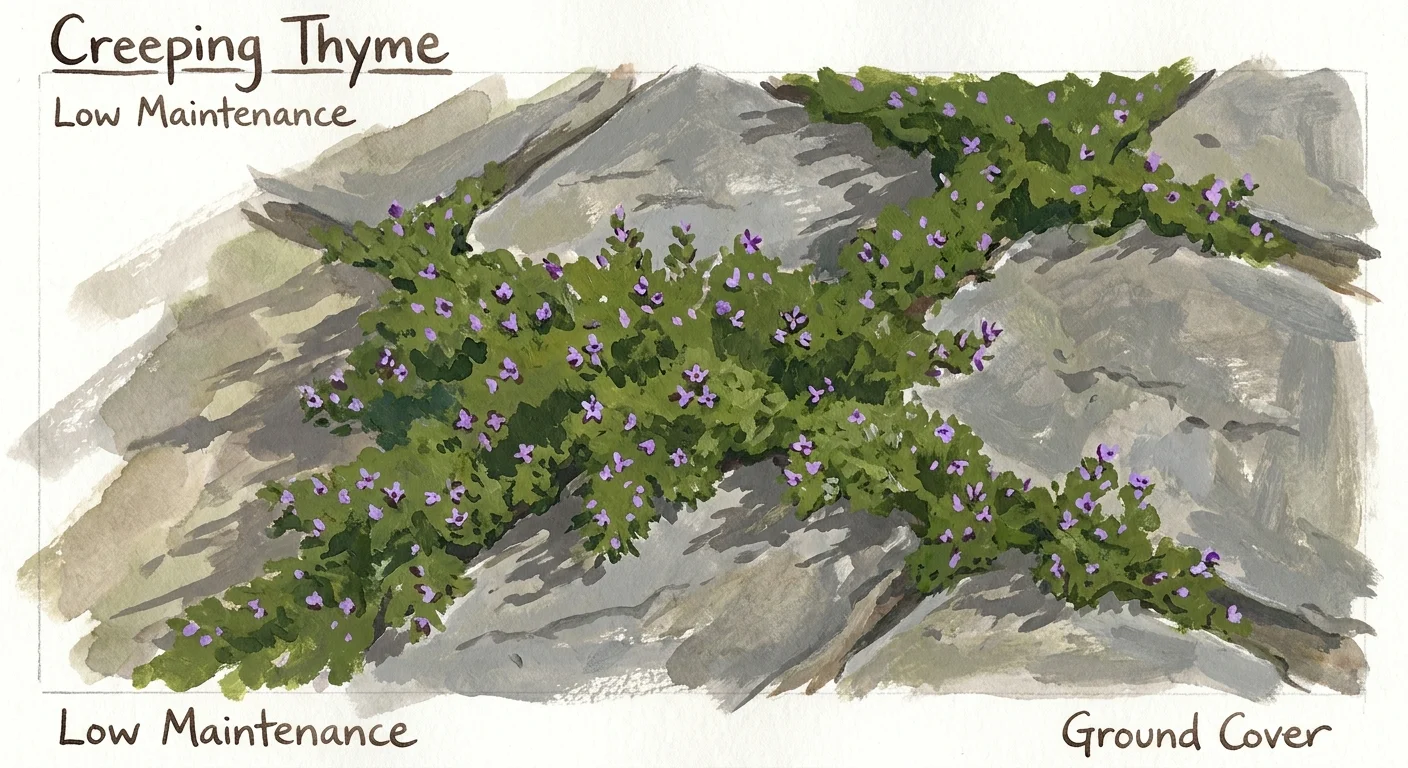
Many gardeners overlook herbs when searching for year round green plants, but Creeping Thyme acts as a phenomenal, cascading evergreen ground cover. When planted at the edge of a tall pot, it dramatically spills over the sides, softening the container’s hard lines.
Throughout the winter, its tiny leaves remain richly colored, and in the summer, it rewards you with carpets of tiny pink or purple flowers that attract pollinators. As a bonus, gently brushing your hands against the foliage releases a savory, calming fragrance.
Creeping thyme demands full sun and sandy, coarse soil to mimic its native Mediterranean habitat.
4. Wintercreeper
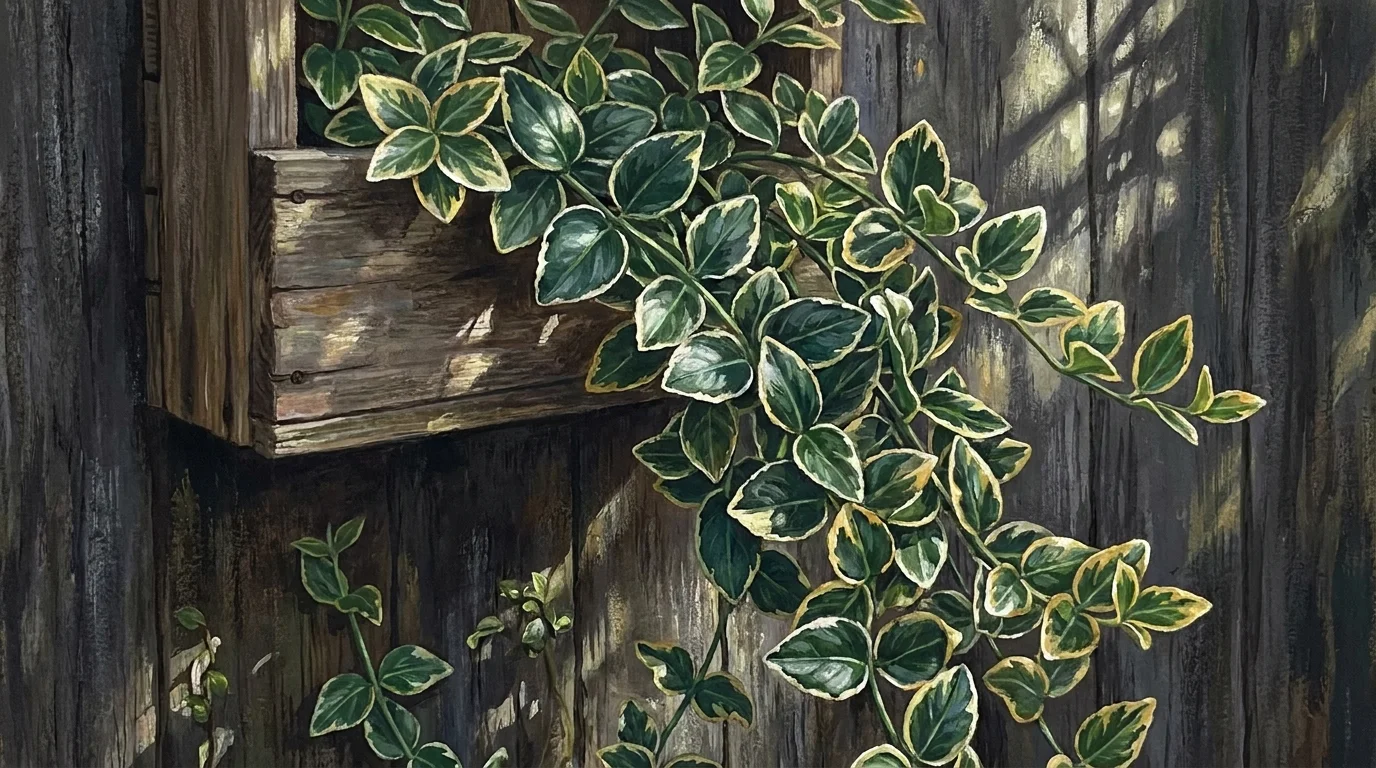
Wintercreeper is an incredibly versatile broadleaf evergreen that adapts to almost any situation. Depending on the variety and how you train it, it can climb a small balcony trellis, trail over a hanging basket, or form a dense, bushy mound in a standard pot.
Many dwarf varieties feature striking variegated foliage—leaves edged in bright yellow or stark white—which brings a sense of sunlight to deeply shaded corners. Wintercreeper tolerates partial shade exceptionally well and handles heavy urban pollution, making it a top-tier choice for city balconies.
Prune it aggressively in early spring to maintain your desired shape.
5. Japanese Skimmia
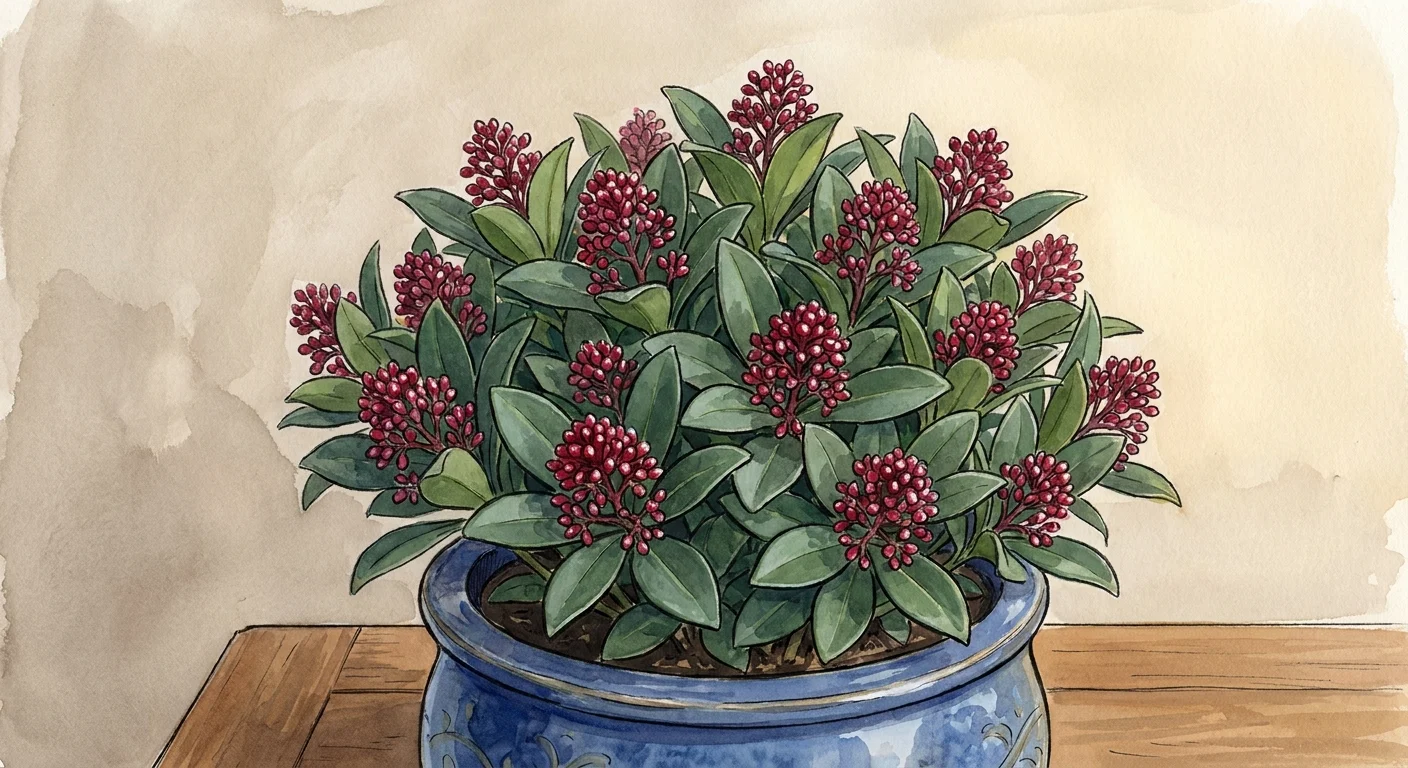
For gardeners dealing with north-facing balconies or patios shadowed by large buildings, Japanese Skimmia is a lifesaver. This shade-loving, broadleaf evergreen produces thick, leathery leaves that form a neat, dome-like shape.
In late autumn, it develops tightly clustered red or deep pink flower buds that persist all winter long, offering a splash of brilliant color against the dark green leaves. When spring arrives, those buds open into highly fragrant white blossoms.
Skimmia requires acidic potting soil and consistent moisture, as its leaves will quickly yellow if exposed to alkaline conditions or prolonged drought.
6. Dwarf Mugo Pine
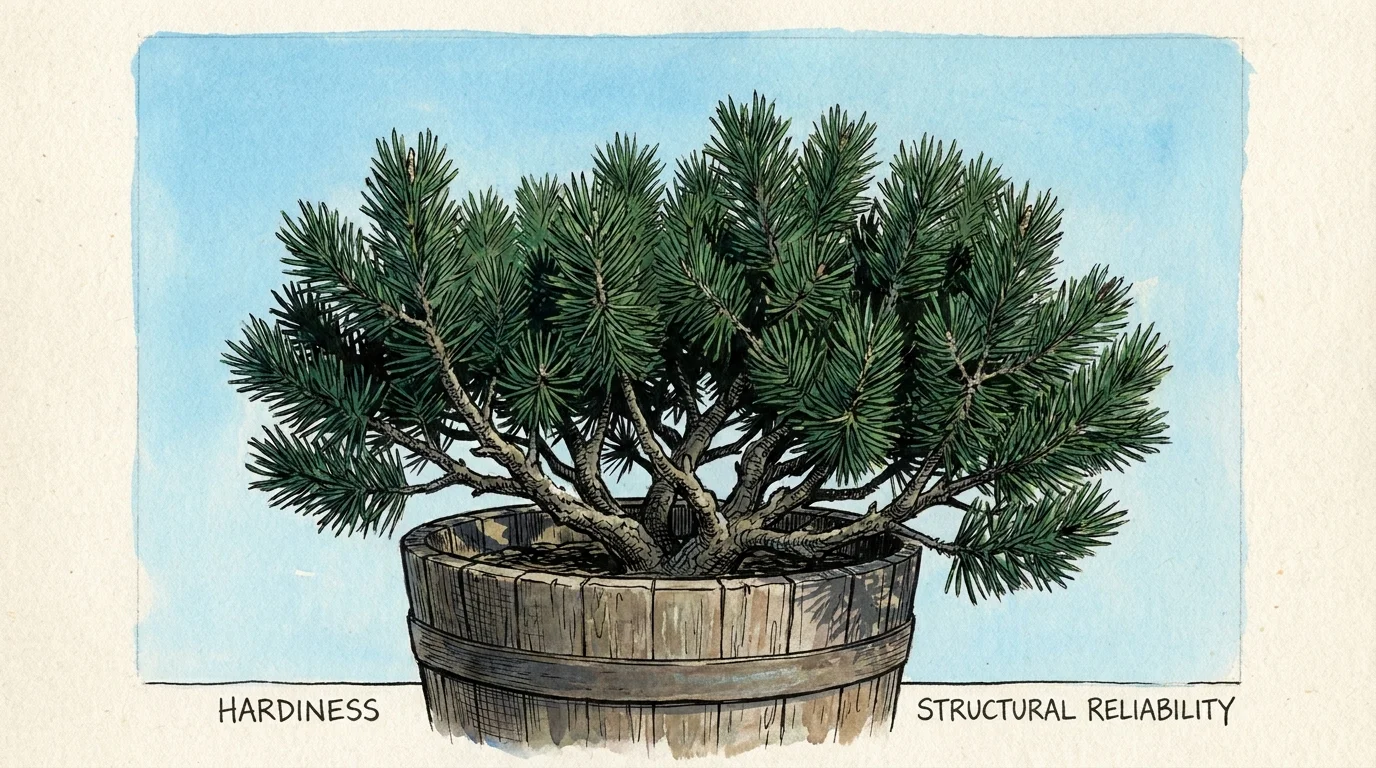
Inject a touch of wild, alpine scenery into your urban space with the Dwarf Mugo Pine. This rugged conifer grows extremely slowly, ensuring it will not outgrow its container for many years.
It produces long, stiff, dark green needles that stand up to the most punishing winter storms and heavy snowfall.
Because of its irregular, sculptural growth habit, a single Dwarf Mugo Pine planted in a sleek, modern, minimalist pot looks like a living piece of modern art.
It requires full sunlight and absolutely demands coarse, fast-draining soil, as standing water will quickly kill its deep root system.
7. Hens and Chicks
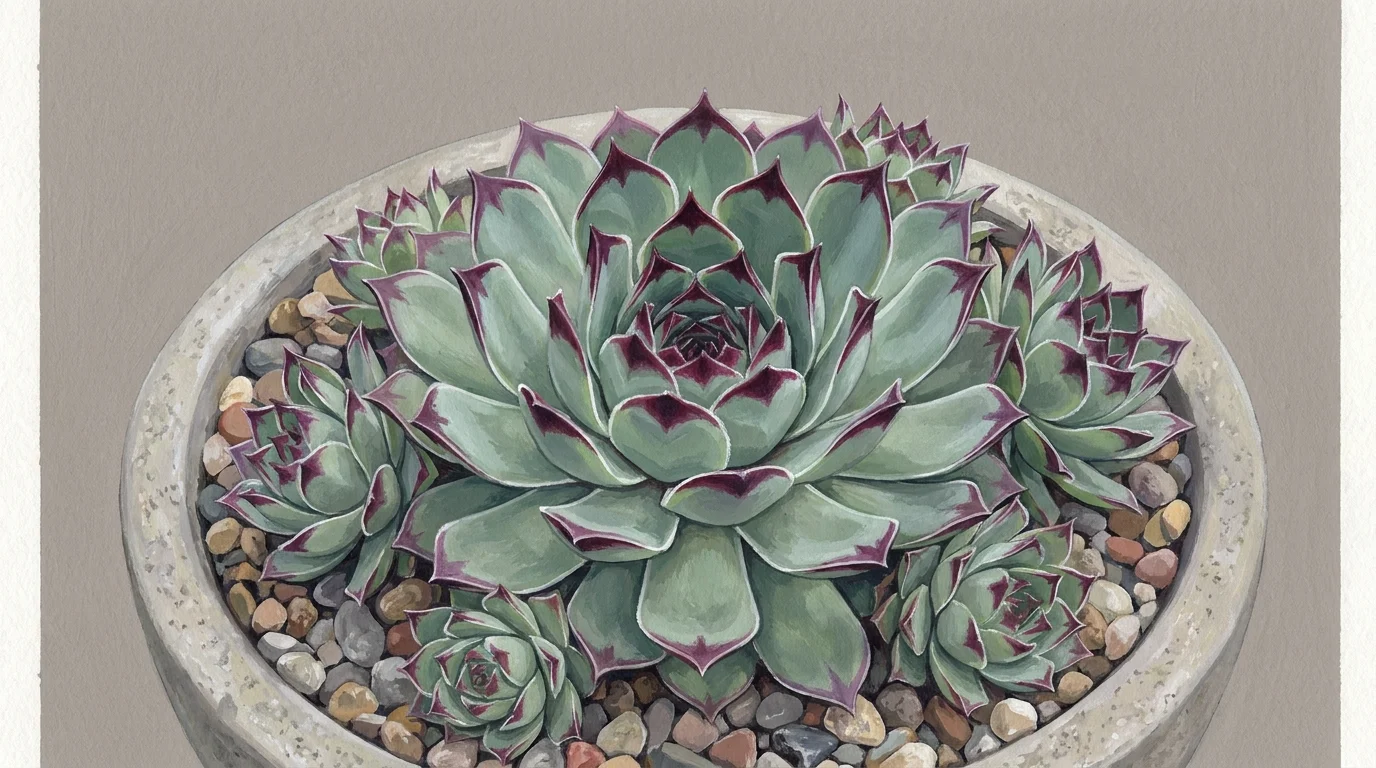
Cold-hardy succulents redefine what low maintenance greenery can look like. Hens and Chicks form tight, geometric rosettes of fleshy leaves.
The main plant (the hen) produces tiny offsets (the chicks) that cluster tightly around the base, eventually filling the entire surface of the pot. They survive freezing winter temperatures by drawing moisture out of their leaves to prevent cell rupture.
Because their root systems are incredibly shallow, you can plant them in creative, unconventional containers like vintage teacups, shallow bowls, or vertical wall frames. They thrive in blazing hot sun and require almost no supplemental watering or fertilizer.
8. Dwarf Alberta Spruce
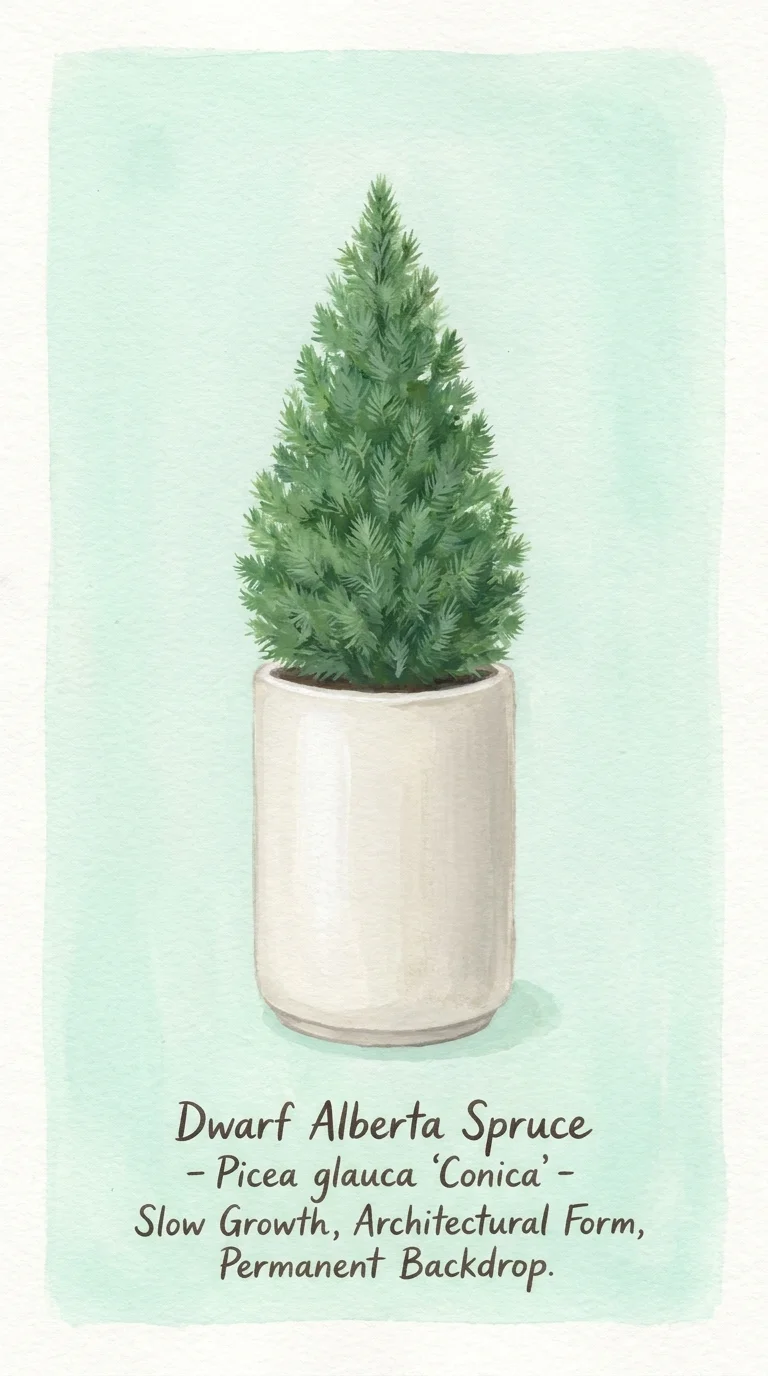
When most people picture a classic evergreen tree, they envision the perfect conical shape of the Dwarf Alberta Spruce. Its dense, fuzzy, bright green needles pack tightly together, creating a solid pyramid of color.
In the winter, it serves as the perfect living armature for a string of fairy lights on a festive patio. Though it looks delicate, it is remarkably cold-hardy.
It grows only two to three inches per year, making it an ideal long-term resident for a large planter. Keep its soil consistently moist during the summer heat to prevent the needles from turning brown and dropping.
9. Bergenia
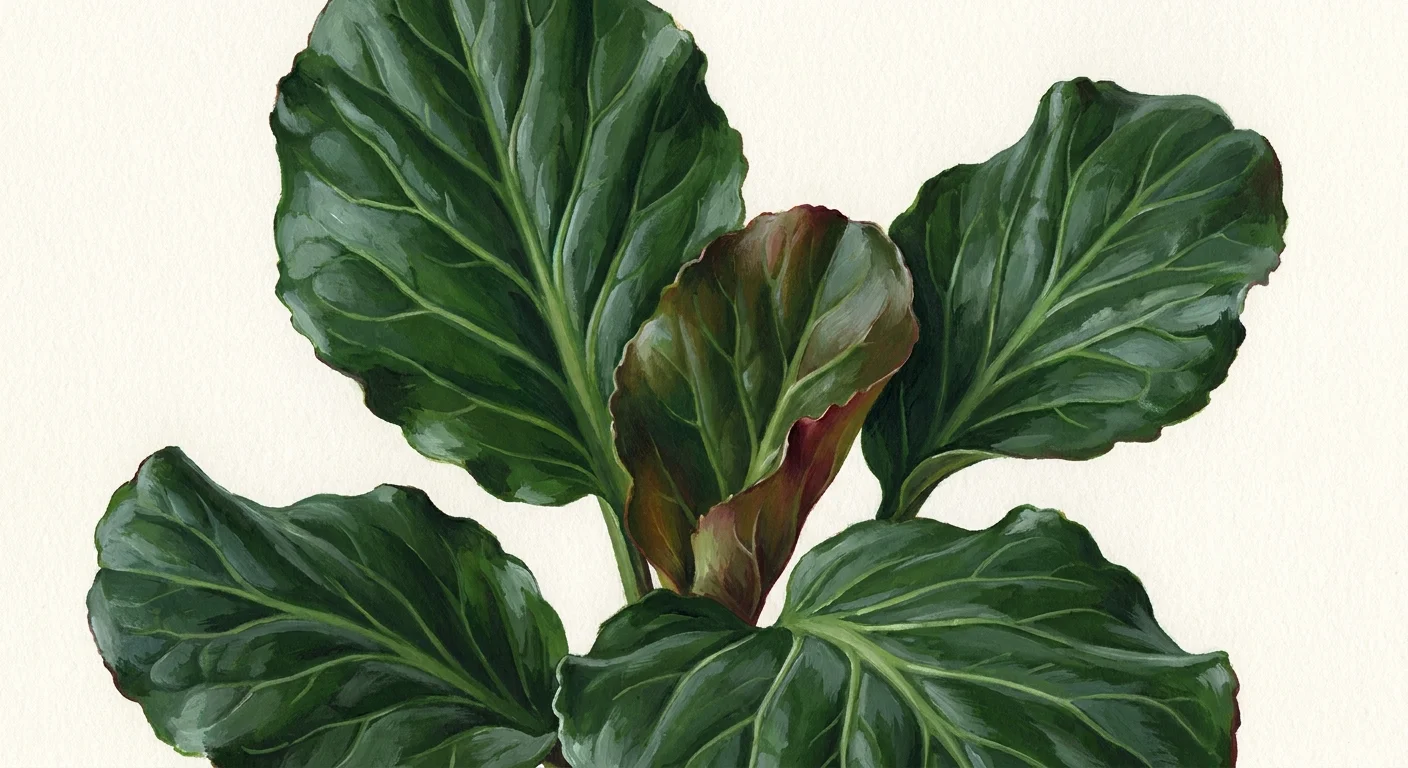
Also known affectionately by gardeners as “Pigsqueak” due to the sound the leaves make when rubbed together, Bergenia offers massive, cabbage-like, glossy evergreen leaves. It provides a crucial textural contrast when placed next to fine-needled conifers or small-leafed boxwoods.
As temperatures drop in late autumn, the bright green foliage frequently takes on deep, purplish-bronze hues, providing dynamic winter interest. In early spring, it shoots up thick stalks topped with bright pink flowers.
Bergenia handles both sun and partial shade, making it a highly adaptable companion plant for mixed container arrangements.
10. Japanese Pieris
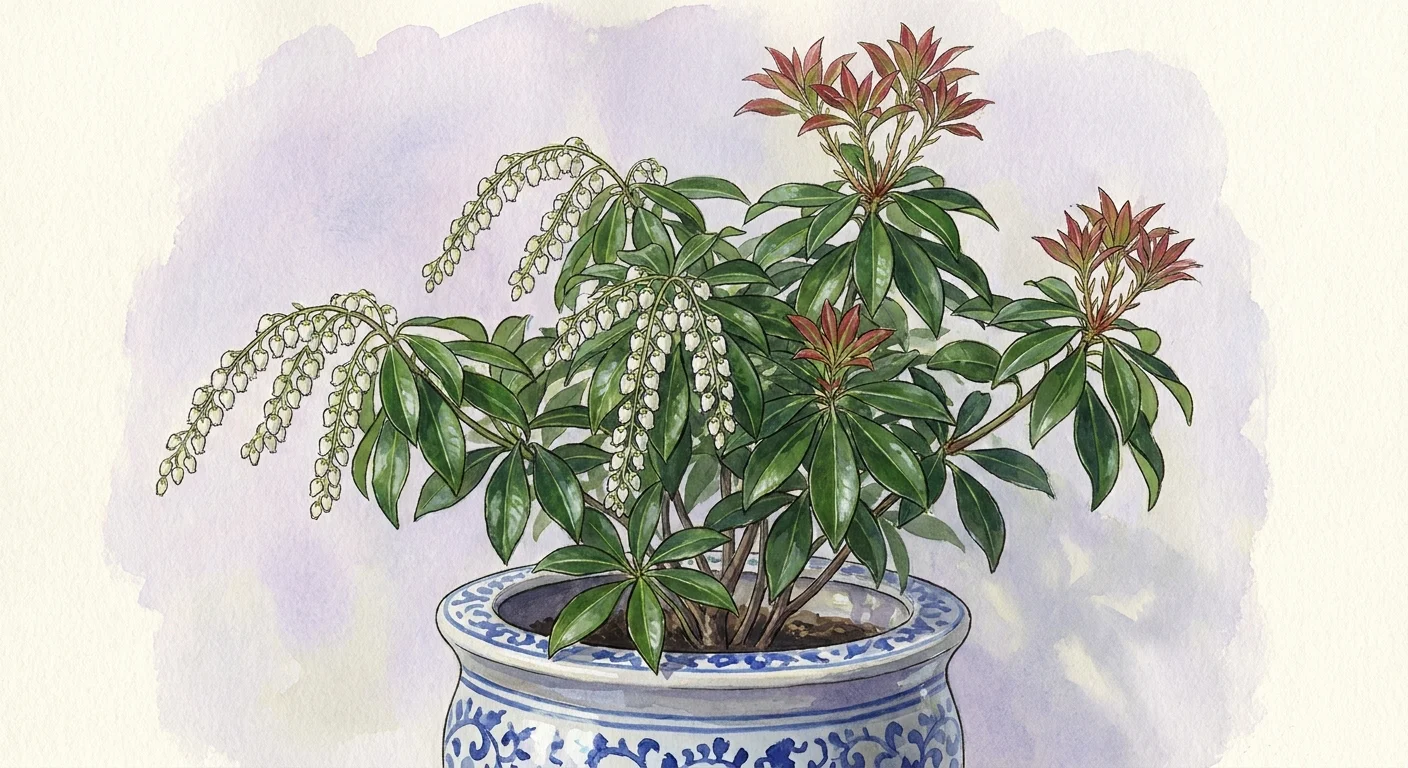
The Japanese Pieris is a sophisticated broadleaf evergreen renowned for its spectacular foliage transitions. While the mature leaves remain a glossy dark green year-round, the new foliage emerges in the spring as a brilliant, fiery red or bright bronze before slowly fading to green.
It also produces cascading chains of delicate, bell-shaped white flowers that resemble Lily of the Valley. Pieris naturally grows into a neat, tiered shape, bringing a sense of architectural elegance to a patio.
It prefers partial shade, protection from harsh afternoon sun, and highly acidic potting mix.
Essential Soil and Drainage Needs
When you grow year round green plants in containers, the soil acts as their entire world. You cannot use ordinary topsoil or dirt dug directly from a garden bed.
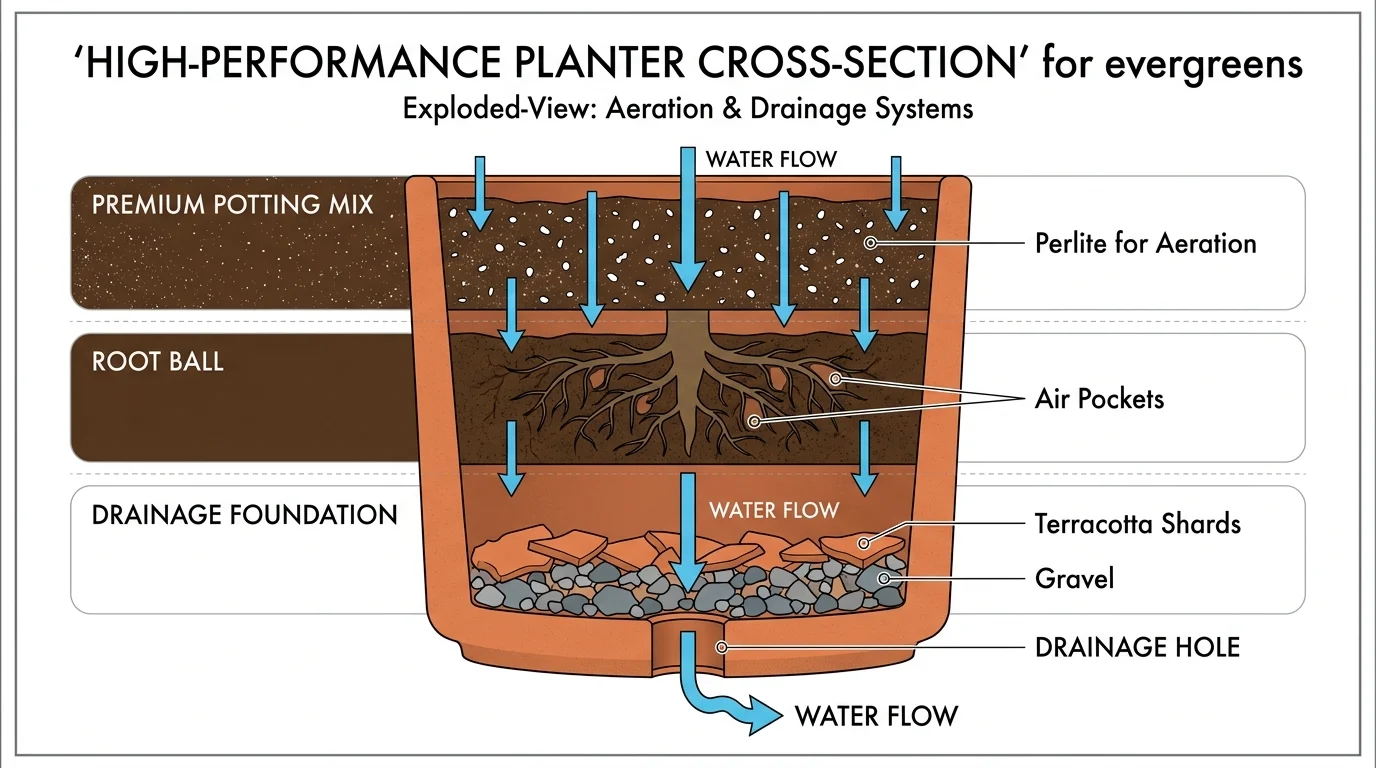
Garden soil is far too dense; when placed in a pot, it compacts heavily, squeezing out all the oxygen and suffocating your plant’s roots. Instead, you must build or buy a high-quality, lightweight potting mix specifically formulated for container gardening.
For most garden evergreen plants, an ideal soil recipe involves mixing two parts standard peat-based or coco-coir-based potting soil, one part perlite, and one part compost. The compost provides a slow release of vital nutrients.
The perlite—those small, white, popcorn-like volcanic rocks—creates tiny air pockets throughout the soil. These air pockets are critical because roots need oxygen just as much as they need water.
Drainage (how water moves through the soil and exits the container) dictates the success or failure of your outdoor green plants. Every pot you use must have at least one large drainage hole at the bottom.
A common but dangerous gardening myth suggests placing a layer of gravel at the bottom of a pot to improve drainage. Scientific soil dynamics prove this practice actually harms plants.
Water does not move easily from a fine texture (potting soil) to a coarse texture (gravel). Instead, the water pools in the soil just above the gravel, creating a perched water table that drowns the deepest roots.
Fill your pot entirely with your uniform potting mix from the bottom to the top to ensure water flows smoothly out the drainage holes.
Watering Strategies Across the Seasons
Watering outdoor green plants requires adapting your habits to the shifting seasons. During the height of summer, potted evergreens dry out rapidly.
Terra cotta pots, which are highly porous, lose moisture through their walls much faster than plastic or glazed ceramic containers. Check your soil moisture twice a week during hot spells.
Press your index finger about two inches into the soil. If the soil feels dry at your fingertip, it is time to water.
Apply water slowly and evenly over the soil surface until you see it freely running out of the bottom drainage holes. This deep watering encourages roots to grow downward, making the plant more resilient to drought.
Winter watering is the most misunderstood aspect of caring for low maintenance greenery. Although the plants slow their growth during winter, they never go fully dormant.
Because evergreens hold their leaves or needles all winter, they continuously lose moisture to the surrounding air through a process called transpiration. High winter winds strip moisture away at an alarming rate.
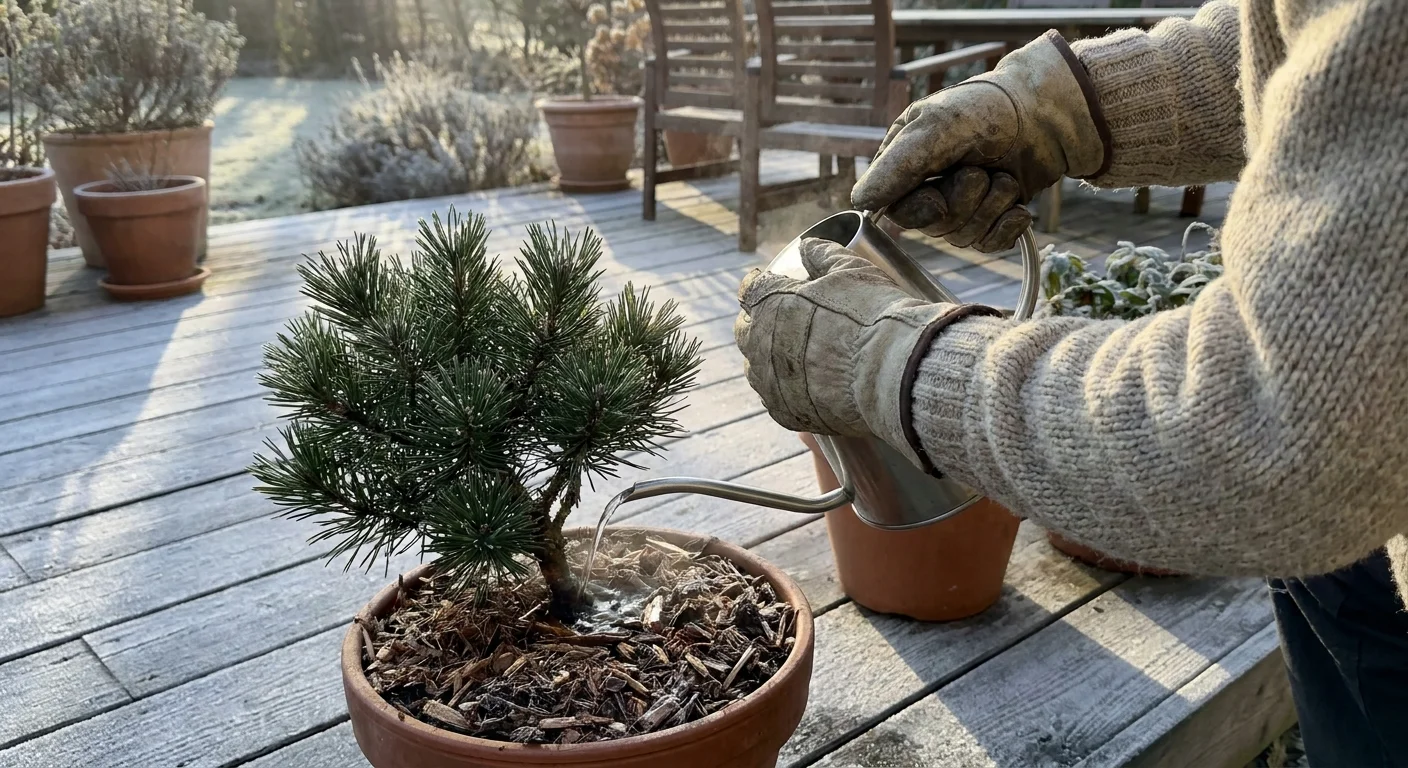
If the soil in your container freezes solid, the roots cannot pull up water to replace what the wind steals from the leaves. This leads to desiccation (the extreme, fatal drying out of the plant tissues), which gardeners commonly call winter burn.
To prevent this, actively monitor your pots in the winter. Whenever temperatures rise above freezing (40 degrees Fahrenheit or higher) and the soil thaws, water your evergreens generously.
Hydrating the plants thoroughly before a deep freeze acts as a biological antifreeze, ensuring the cellular structures remain plump and protected against harsh wind chills.
Smart Design Tactics for Small Footprints
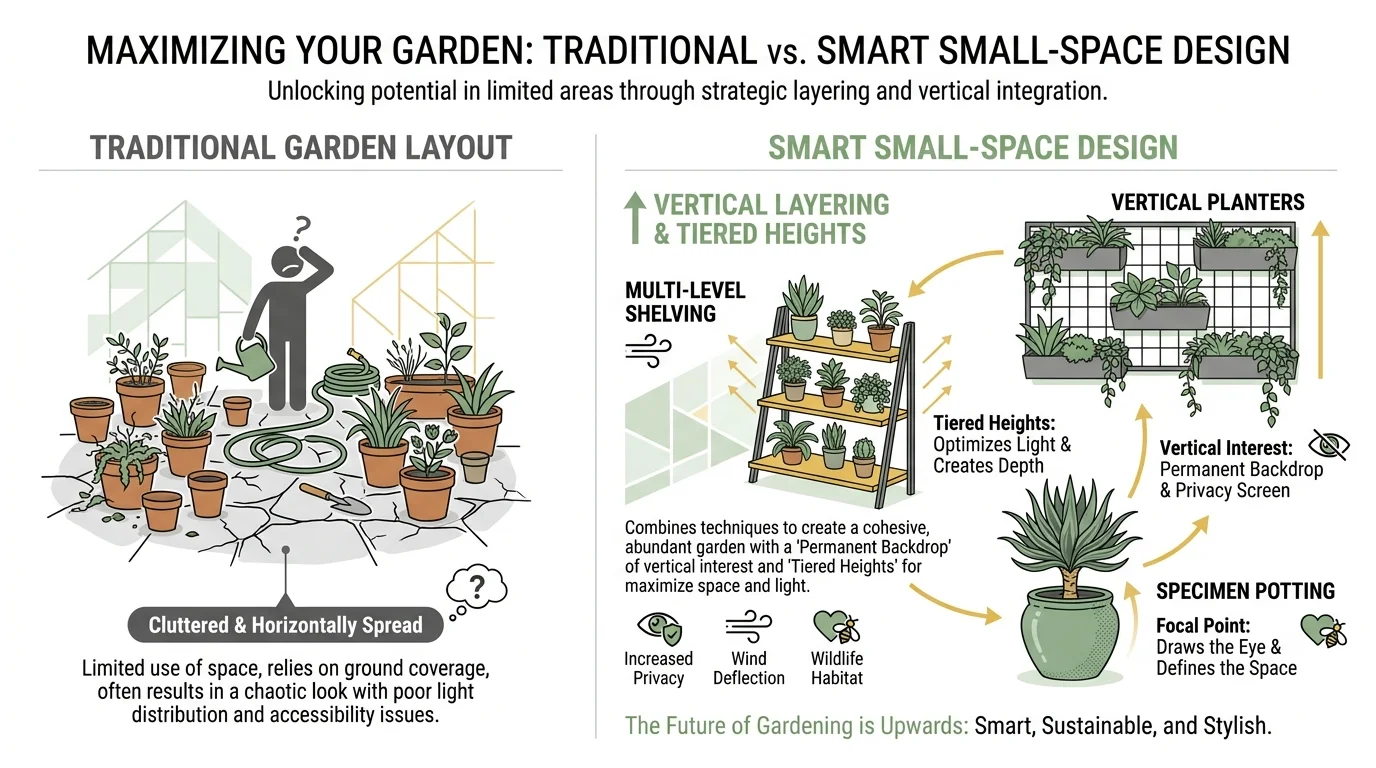
Maximizing the impact of your evergreen plants in a limited space requires strategic design. The most effective container gardening strategy relies on the classic “thriller, filler, spiller” technique.
You combine three different types of plants in one large container to create a complete, three-dimensional landscape in miniature.
- The Thriller: A tall, dramatic, visually striking plant placed in the center or back of the pot. It establishes height and structure.
- The Filler: Medium-sized, mounding plants that encircle the thriller. They add mass, hide the bare stems of the taller plant, and introduce contrasting textures.
- The Spiller: Low-growing, trailing plants tucked around the edges of the pot. They soften the container’s rim and pull the eye downward, grounding the arrangement.
To help you plan your small space oasis, use the following combination strategies to match specific evergreens with complementary partners.
| Design Role | Plant Example | Ideal Placement | Texture Contribution |
|---|---|---|---|
| Thriller | Dwarf Alberta Spruce | Center of large round pots or back of square planters | Fine, dense, upright needles |
| Thriller | Japanese Pieris | Slightly off-center in a mixed shade container | Broadleaf, bold, shifting seasonal color |
| Filler | Blue Star Juniper | Mid-ground, surrounding an upright conifer | Prickly, steel-blue, mounding |
| Filler | Bergenia | Base of taller shrubs to hide bare stems | Large, glossy, leathery leaves |
| Spiller | Creeping Thyme | Tucked tightly against the front rim of the pot | Tiny, soft, trailing stems |
| Spiller | Wintercreeper | Cascading down the sides of hanging baskets | Variegated, vining, bright |
Do not limit yourself to standard floor pots. Utilize vertical space by mounting sturdy window boxes along balcony railings and planting them with trailing Wintercreeper and Hens and Chicks.
Hang deep wire baskets lined with sphagnum moss from sturdy overhead hooks. Elevating your greenery draws the eye upward, making a small patio feel incredibly spacious while leaving vital floor space open for seating.
Troubleshooting Common Evergreen Problems
Even the most robust year round green plants occasionally encounter issues. Learning to read your plant’s signals allows you to intervene before minor distress becomes a fatal problem.
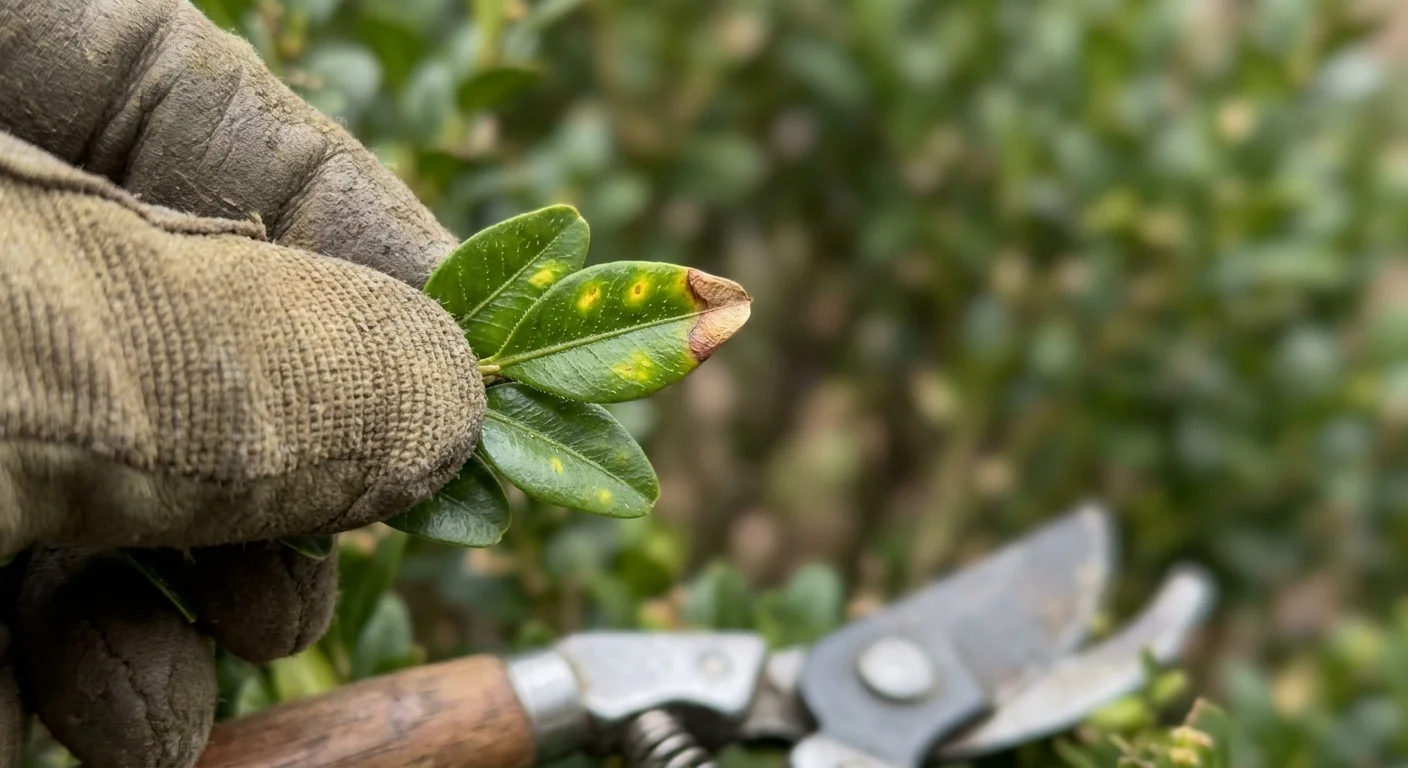
The key to troubleshooting evergreen plants lies in noticing exactly where and how the discoloration begins.
Browning from the inside out: If you notice the needles or leaves closest to the trunk turning brown and dropping off in late summer or early fall, do not panic. This is entirely normal.
Like all living things, evergreens must shed their oldest, least efficient foliage to direct energy toward new growth at the tips. Simply brush the dead needles away to improve air circulation within the plant’s interior.
Browning from the outside in: If the tips of the branches turn brown or yellow, you have a serious environmental problem. In the summer, this almost always indicates a lack of water.
In the winter, it points directly to winter burn (desiccation). To treat winter burn, wait until early spring and prune the damaged tips back to healthy green wood.
Prevent it next season by watering during winter thaws and wrapping vulnerable plants in a layer of breathable burlap to block harsh winds.
Spider Mites: These microscopic pests thrive in hot, dry, stagnant air—exactly the conditions found on enclosed, south-facing urban balconies. They suck the sap from individual needles, causing the plant to look dull, yellow, and dusty.
To check for mites, hold a piece of plain white paper under a branch and tap the branch sharply. If tiny specks drop onto the paper and begin crawling around, you have spider mites.
Treat them by taking a hose and spraying the foliage with a strong blast of water to knock them off. Follow up with a thorough coating of insecticidal soap applied in the early evening.
Root Rot: If your plant looks wilted, but the soil feels soaking wet, your plant is drowning. Root rot occurs when poor drainage or heavy garden soil deprives the roots of oxygen, causing them to turn black and mushy.
A healthy root system should smell earthy, like a forest floor; root rot smells distinctly sour and swampy.
To save the plant, you must pull it out of the container, trim away the black, slimy roots with sterile shears, and repot it immediately in fresh, dry, well-draining potting soil.
For trustworthy gardening information, visit: Missouri Native Plant Society, Wild Ones — Native Plants, Natural Landscapes, Pollinator Partnership and International Society for Horticultural Science (ISHS). These organizations provide expert, research-based advice for gardeners at all levels.
Disclaimer: This article is for informational purposes only and is not a substitute for professional gardening advice. Always consult local extension services or horticulture experts for region-specific guidance.
Frequently Asked Questions
Do evergreen plants need fertilizer during the winter?
No, you should strictly avoid fertilizing year round green plants during the winter months. Winter cold naturally slows their metabolism and growth rate.
Applying fertilizer when the plant is mostly inactive forces vulnerable new growth that will instantly freeze and die. Apply a balanced, slow-release granular fertilizer only in early spring just before new bright green growth begins to appear.
Can I bring my outdoor green plants inside for the winter?
Generally, you should keep outdoor evergreens outside. Plants like Dwarf Spruce, Junipers, and Boxwoods require a natural period of winter chill to regulate their growth cycles.
The dry, artificially heated air inside a house will cause severe stress, leading to massive needle drop and potential plant death. Instead, leave them outdoors and ensure their pots are protected from severe wind and heavy freezing.
Are these compact evergreens safe for households with pets?
Toxicity varies wildly among different plant species. For example, Japanese Pieris, Boxwood, and English Ivy (a common trailing evergreen) are highly toxic to dogs and cats if ingested, causing severe gastrointestinal distress or worse.
On the other hand, Hens and Chicks and Creeping Thyme are completely non-toxic and pet-safe. Always verify a plant’s specific toxicity profile through a trusted veterinary database before bringing it onto a balcony accessible to pets.
How often should I repot my container evergreens?
Most low maintenance greenery grown in pots requires repotting every two to three years. Over time, the organic matter in the potting soil decomposes and compacts, which destroys the critical air pockets necessary for drainage.
Additionally, the roots will eventually hit the walls of the pot and begin circling, causing the plant to become root-bound. When you notice roots poking out of the bottom drainage holes, upgrade to a pot two inches wider in diameter and refresh the soil completely.
1 Comment