
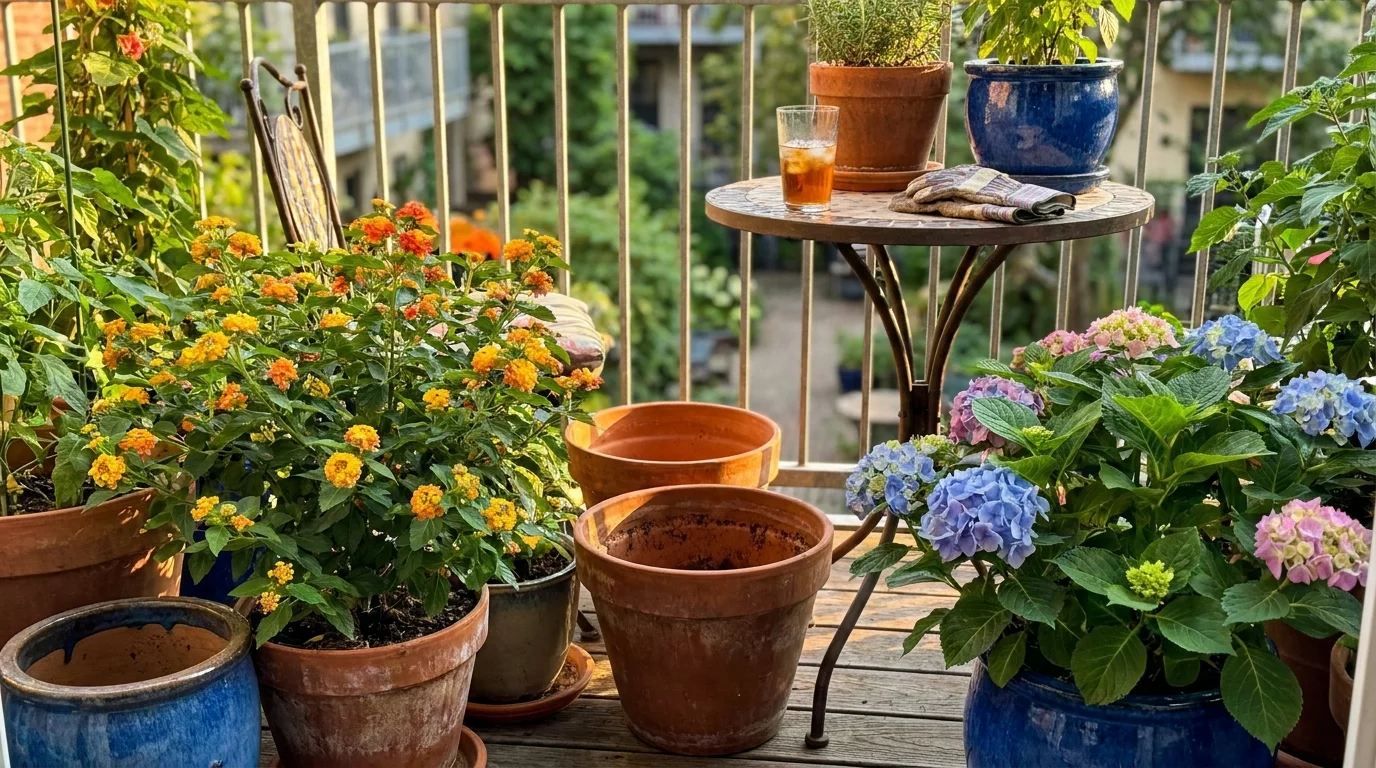
Nature offers few spectacles as magical as color changing flowers shifting hues right before your eyes. Adding these dynamic plants to your balcony or patio brings an ever-evolving living artwork to your small space without requiring extra square footage.
Environmental triggers like temperature shifts, pollination, and soil acidity prompt these unique flower varieties to transition through vibrant spectrums over days or even hours.
Whether you want a dramatic centerpiece for your container garden or a playful edging plant that surprises you daily, growing flowers that change color provides immense visual reward.
You can easily cultivate these stunning flowering plants by mastering basic container gardening fundamentals, ensuring your display thrives from spring through autumn while supporting local pollinators.
For even more variety, you can mix these with no-fail flowers that maintain their beauty with very little maintenance.
To get started, follow a spring planting guide to ensure your pots are prepared for these unique specimens.
Contents6 sections
The Fascinating Science Behind Flowers That Change Color
You might wonder if color changing flowers rely on magic, but the reality involves fascinating botanical chemistry. Plants use color primarily as a communication tool, signaling to pollinators exactly when a blossom is ready for fertilization.
When you understand how these mechanisms work, you can better care for your unique flower varieties and even manipulate the hues of certain species.
Many of these color-shifting varieties are also excellent long-blooming plants that provide reliable color throughout the season.
This botanical knowledge is key when designing seasonal container displays that offer visual interest through every month.
If you find these botanical shifts intriguing, you might also enjoy learning about unusual plants that eat animals for a look at even more unique garden curiosities.
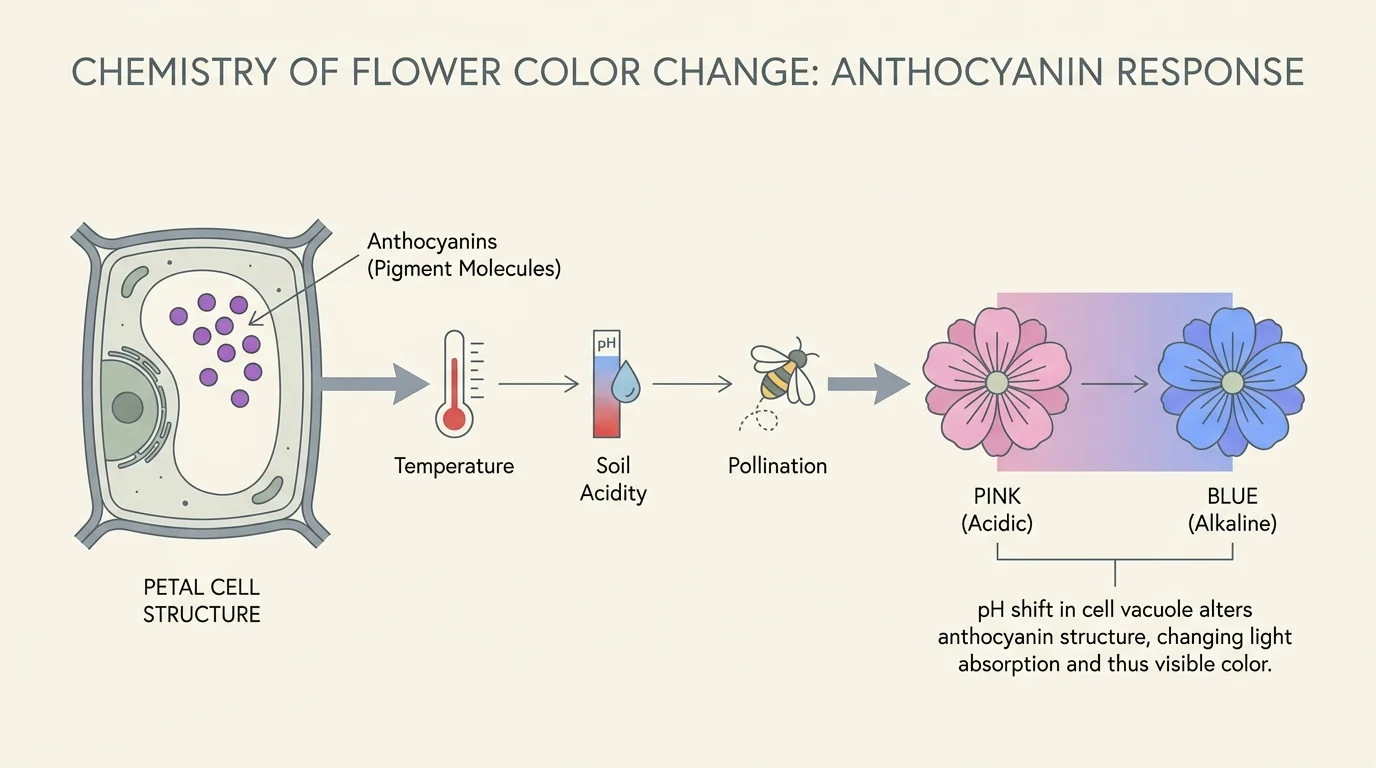
Most color shifts in the garden come down to specialized plant pigments called anthocyanins. These water-soluble pigments produce brilliant reds, purples, and blues.
Anthocyanins are highly sensitive to their environment; their exact color expression changes based on the pH level inside the plant’s cells, the presence of specific metal ions in the soil, and even the surrounding air temperature.
For example, as some flowers age, their internal cellular pH naturally shifts, causing a blossom that opened pink to slowly fade into a deep blue.
Another common trigger for color change is pollination itself. Many stunning flowering plants have evolved to operate like microscopic traffic lights.
When a bee or butterfly successfully pollinates a bloom, the plant immediately stops producing certain pigments. The flower visually transforms—often shifting from a bright, inviting yellow to a darker red or magenta.
This dark color tells passing insects that the nectar is gone, encouraging them to visit the unpollinated blossoms nearby. This brilliant adaptation saves energy for both the plant and the pollinator.
Finally, sunlight and temperature play crucial roles. Some unusual garden flowers respond rapidly to ultraviolet light or the cool evening air.
As the sun beats down on the petals throughout the day, the plant ramps up pigment production to protect its delicate tissues, resulting in a deeper, darker color by sunset.
By giving these plants the right microclimate on your patio, you get a front-row seat to this incredible daily transformation.
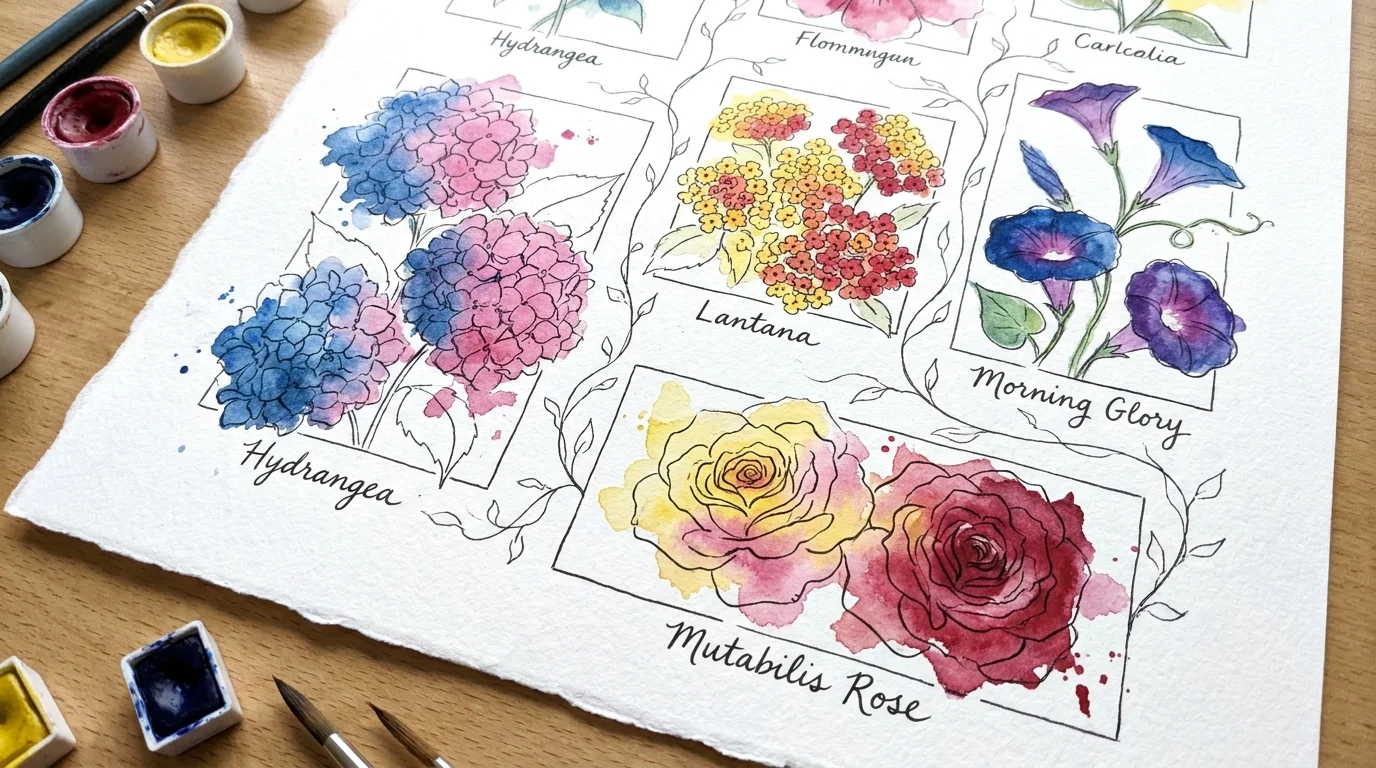
11 Color-Changing Flowers for Small Spaces
Growing unusual garden flowers does not require a sprawling backyard. Many of the most dramatic color-shifting plants adapt beautifully to containers, window boxes, and large patio pots.
Before diving into the detailed care for each plant, use this quick reference guide to understand their basic requirements.
You can also incorporate native plants that thrive in containers to create a robust and eco-friendly habitat alongside your ornamental blooms.
While these specific varieties are known for their shifts, you can also explore perennials with multi-colored flowers to bring a similar rainbow effect to your outdoor space.
| Plant Name | Color Shift | Sunlight Needs | Container Suitability |
|---|---|---|---|
| Bigleaf Hydrangea | Pink to Blue (or vice versa) | Morning sun, afternoon shade | Excellent (Large pot) |
| Lantana | Yellow to Orange to Magenta | Full sun | Excellent (Baskets/pots) |
| Confederate Rose | White to Pink to Deep Red | Full sun | Good (Very large pot) |
| Yesterday, Today, & Tomorrow | Purple to Lavender to White | Dappled shade | Excellent (Medium pot) |
| Lungwort | Pink to Blue | Full shade to part shade | Excellent (Small pot) |
| Mutabilis Rose | Yellow to Pink to Crimson | Full sun | Good (Large pot) |
| Morning Glory | Azure Blue to Magenta | Full sun | Excellent (With trellis) |
| Four O’Clocks | Various shifting splashes | Full sun to part shade | Good (Deep pot) |
| Rangoon Creeper | White to Pink to Red | Full sun to part sun | Good (With sturdy support) |
| Antoinette Tulip | Yellow to Salmon Red | Full sun | Excellent (Standard pot) |
| Joseph’s Coat Rose | Yellow to Orange to Red | Full sun | Good (Large pot with trellis) |
1. Bigleaf Hydrangea (Hydrangea macrophylla)
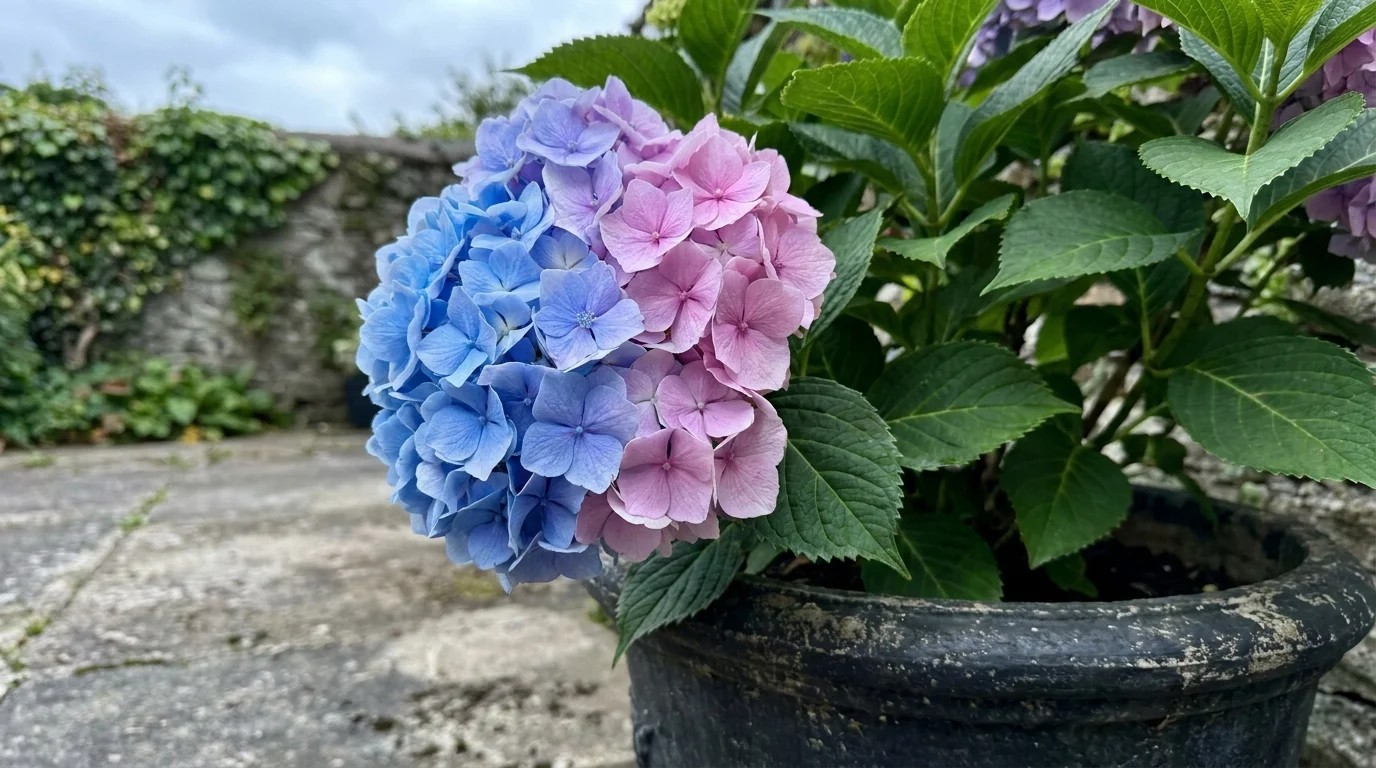
The Bigleaf Hydrangea is perhaps the most famous of all color changing flowers. Rather than shifting color as the blossom ages, this shrub changes color based on the soil it grows in. The magic ingredient is aluminum.
When soil is acidic (having a low pH), the plant can easily absorb aluminum, which reacts with the plant’s pigments to turn the flowers a brilliant, striking blue.
When the soil is alkaline (having a high pH), aluminum becomes locked away, and the flowers bloom in shades of bright pink.
Container gardening gives you a massive advantage here. Trying to alter the pH of the earth in a garden bed is a constant, uphill battle.
In a container, you have total control over the soil chemistry. If you want blue flowers, you can simply add a soil acidifier or aluminum sulfate to your potting mix.
If you prefer pink, add a small amount of garden lime. Keep your potted hydrangea out of harsh afternoon sunlight, as too much heat will cause the large leaves to wilt dramatically.
2. Lantana (Lantana camara)
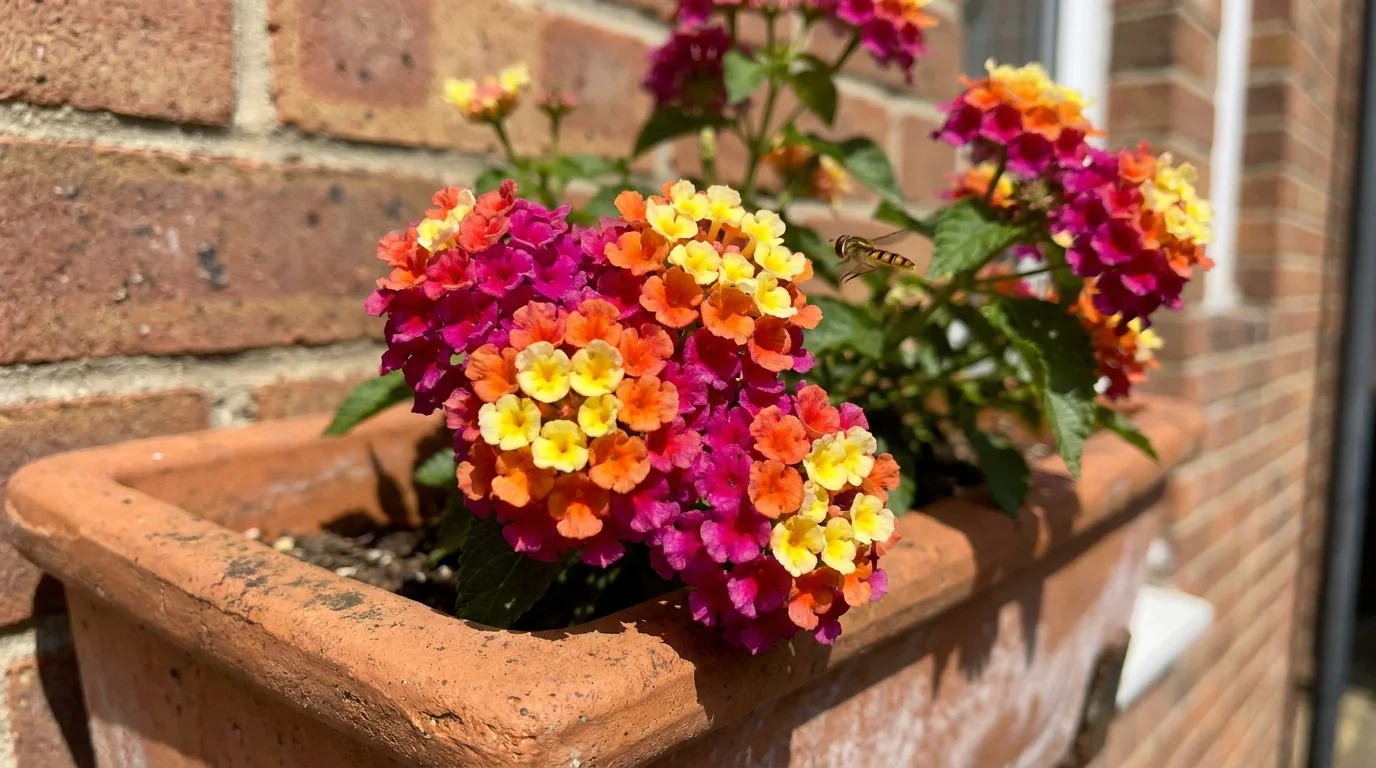
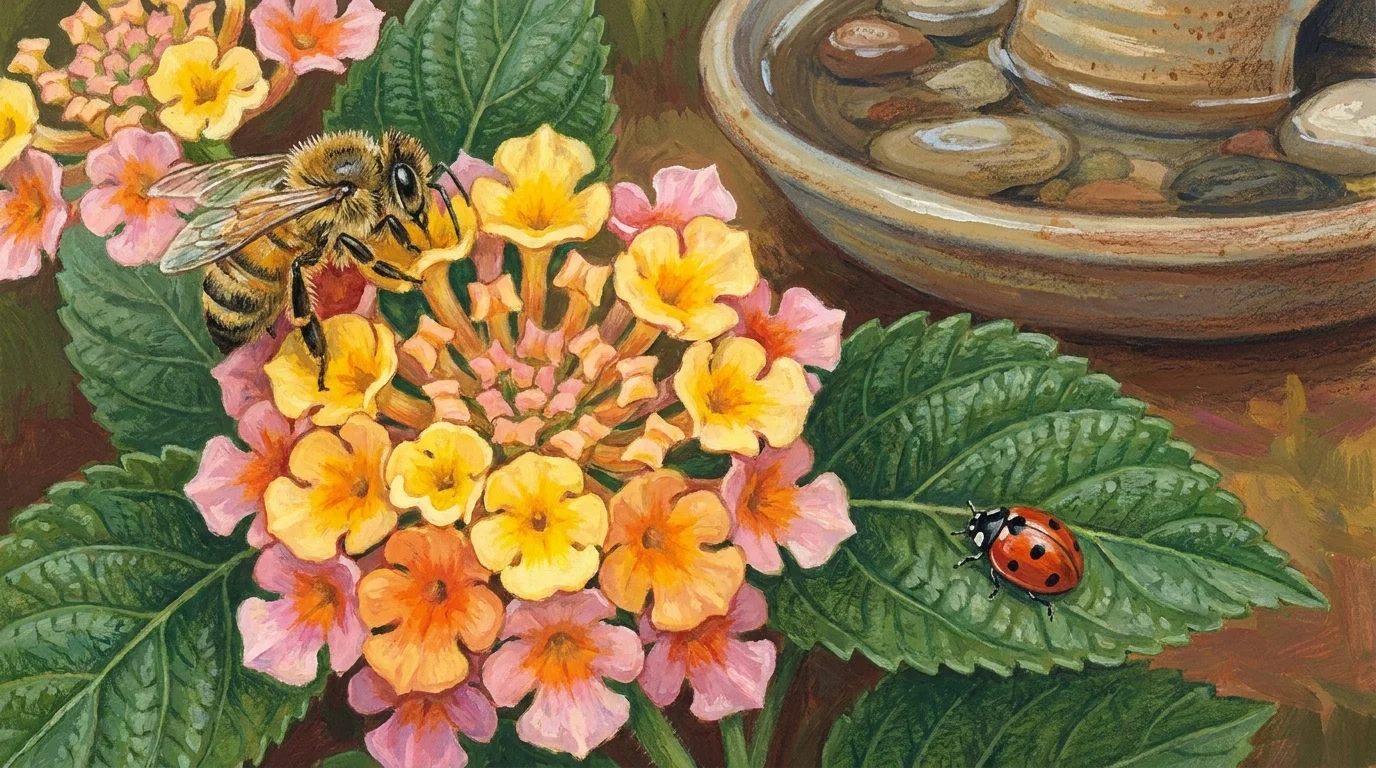
If you have a sun-baked balcony that receives intense afternoon heat, Lantana is the perfect resilient choice. These stunning flowering plants produce clusters of tiny, trumpet-shaped blooms that shift colors rapidly.
A single cluster—called an umbel—might feature bright yellow flowers in the center surrounded by rings of orange, pink, and deep magenta.
This color shift is tied directly to pollination. The newly opened blossoms are yellow and rich in nectar, which attracts butterflies and bees.
Once a pollinator visits the flower, the plant stops producing nectar and changes the petal color to red or magenta. This tells the insects to focus their energy on the newer, yellow flowers.
Lantana thrives in well-draining potting soil and is incredibly drought-tolerant, making it a low-maintenance favorite for busy container gardeners.
3. Confederate Rose (Hibiscus mutabilis)
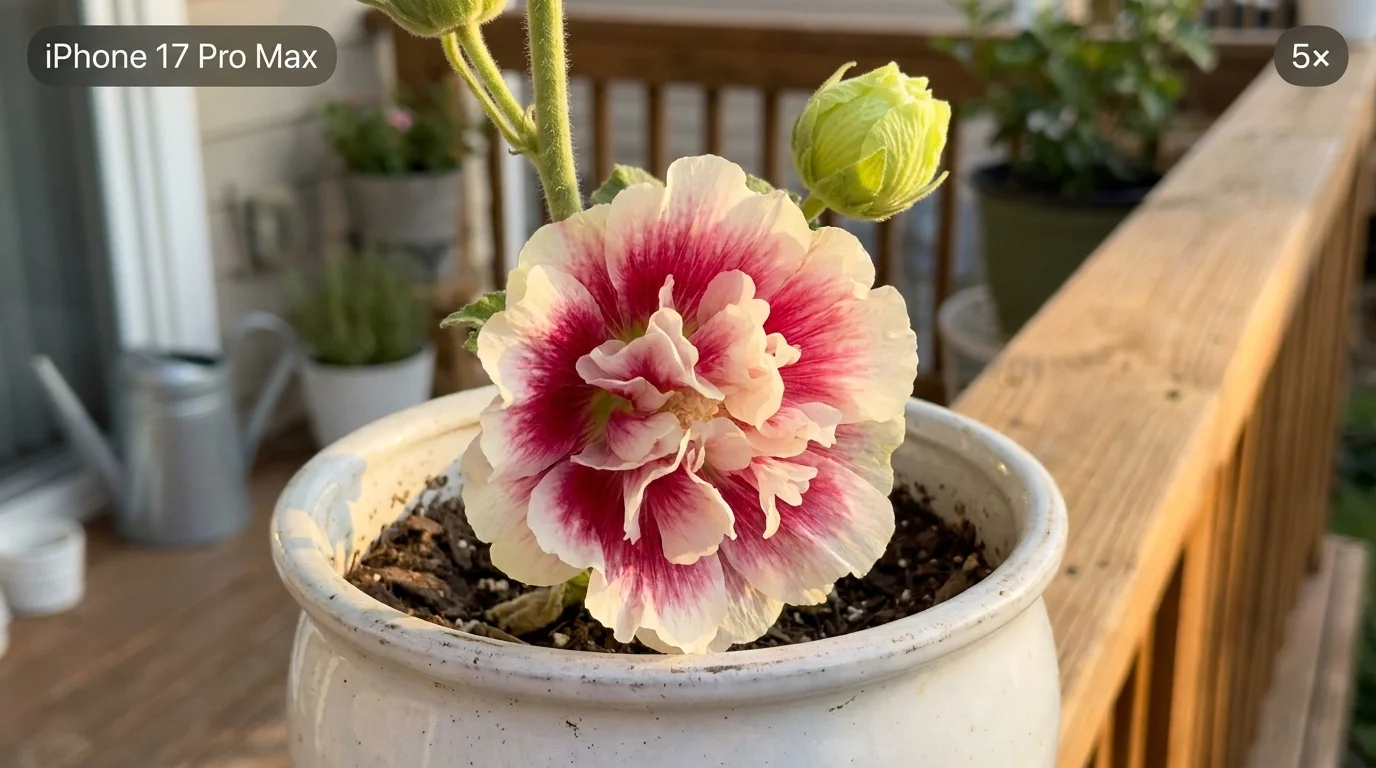
Do not let the common name fool you; this plant is not a rose at all, but a spectacular member of the hibiscus family. The Confederate Rose puts on an incredibly rapid, theatrical display.
In the morning, the large, ruffled blossoms open as a pure, crisp white. By midday, as the temperature rises and the sun hits the petals, they shift to a delicate light pink.
By late afternoon or early evening, those same flowers transition into a deep, bold crimson.
Because the flowers change color based on temperature and sunlight, you will often see white, pink, and red blooms on the plant simultaneously.
Though this plant can grow quite large in the ground, you can successfully cultivate it in a half-barrel planter or a heavy ceramic pot.
It requires frequent watering during the hottest days of summer and feeds heavily, so apply a balanced organic fertilizer every few weeks.
4. Yesterday, Today, and Tomorrow (Brunfelsia pauciflora)
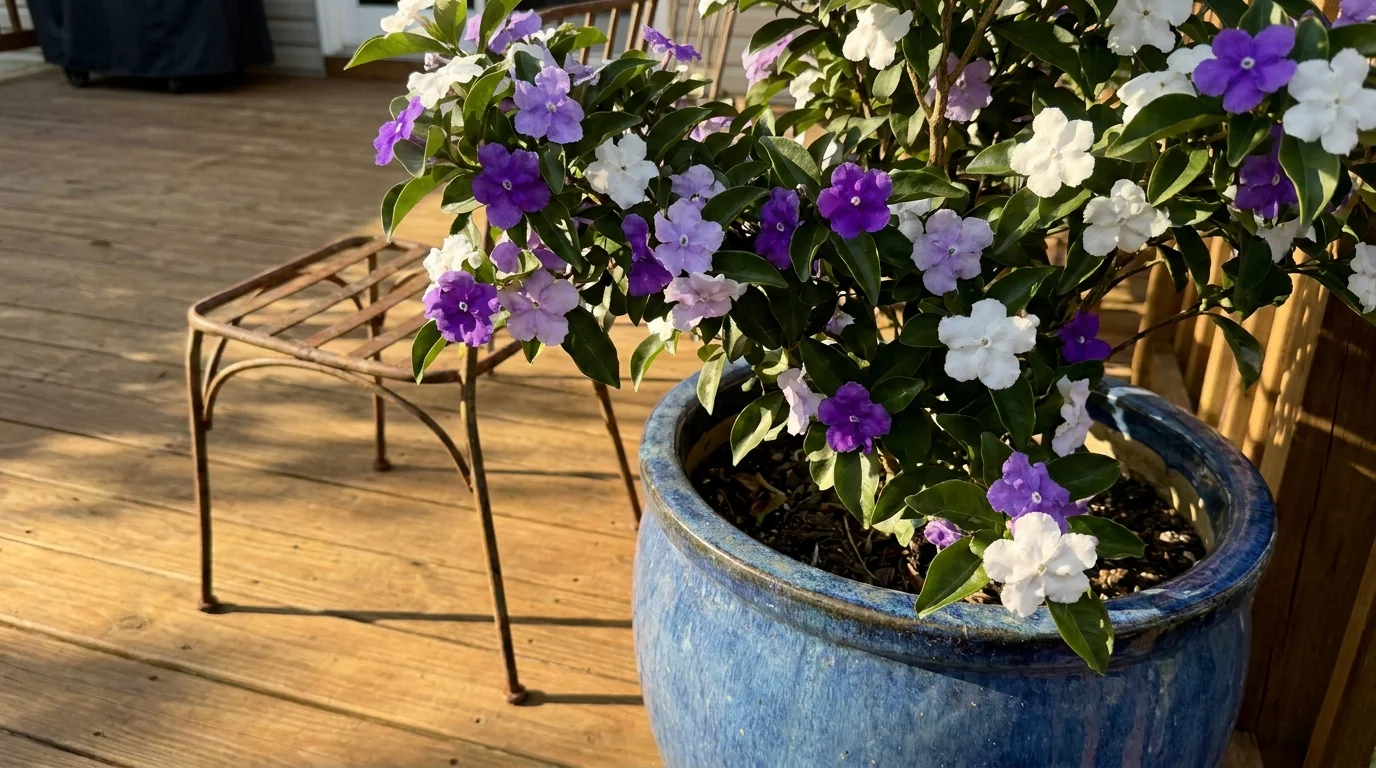
This tropical shrub earns its delightful common name from its three-day floral lifecycle. The flowers open on their first day (yesterday) as a deep, vibrant purple.
On their second day (today), they fade to a soft pastel lavender. By their third day (tomorrow), they turn completely pure white before finally falling off the plant.
Because the shrub produces new flowers continuously throughout the spring and summer, the plant is always covered in a mesmerizing mix of purple, lavender, and white blossoms.
Brunfelsia makes an outstanding container plant for partially shaded patios. It prefers dappled sunlight and slightly acidic soil.
The flowers also release an intoxicating, sweet fragrance, especially in the evening. Note: All parts of this plant are toxic if ingested, so place your containers out of reach if you share your balcony with curious pets or young children.
5. Lungwort (Pulmonaria)
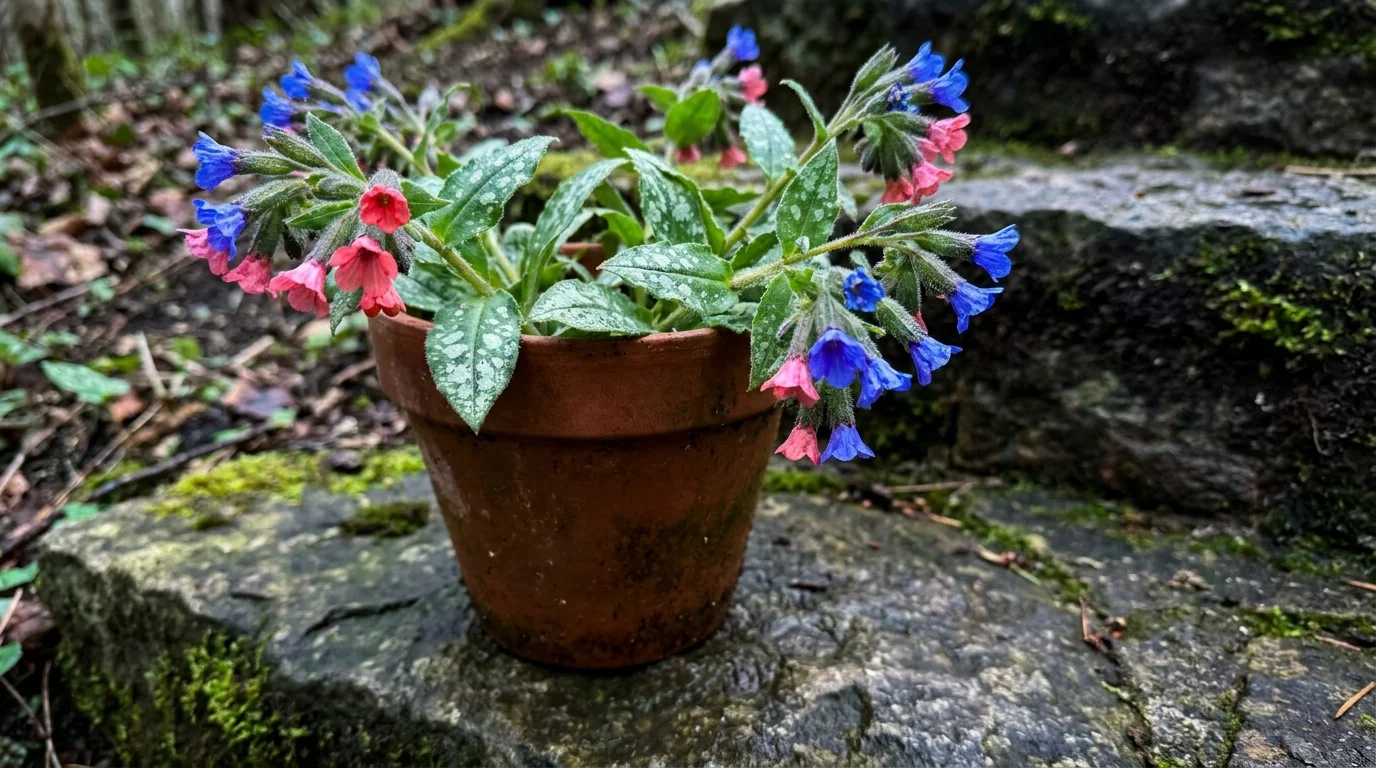
For gardeners with heavily shaded patios, finding vibrant color can be a challenge. Lungwort is one of the most reliable early-spring bloomers for shade, and it offers a beautiful color-changing show.
The plant produces clusters of bell-shaped flowers that begin as pink buds. As the flowers open and mature, the cellular pH within the petals changes, turning the blossoms to a striking violet-blue.
Lungwort is relatively compact, making it ideal for the front of a mixed container or a small, dedicated window box. Beyond the unusual garden flowers, the foliage is equally stunning—long, fuzzy green leaves speckled with silvery-white spots.
The plant requires consistently moist soil to thrive, so check your containers frequently during dry spring winds.
6. Mutabilis Rose (Rosa chinensis ‘Mutabilis’)
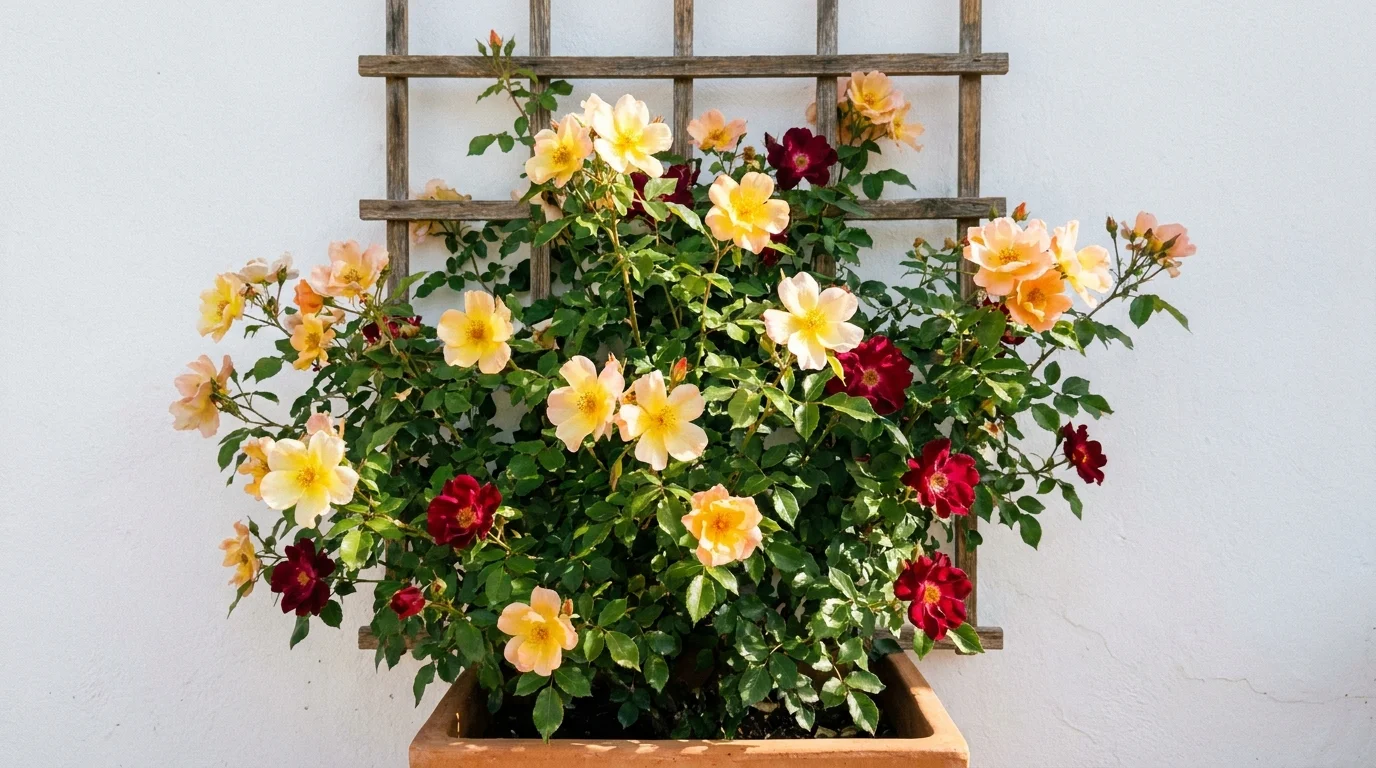
Often called the Butterfly Rose, this unique heritage rose produces single-petaled flowers that look like brightly colored insects resting on the foliage. The buds open to reveal pale yellow flowers.
Over the next few days, those yellow petals deepen into an orange-pink, and eventually mature into a rich, velvety crimson. Because the rose blooms profusely, you will have a constant, multi-colored display of yellow, pink, and red all summer long.
While many roses struggle in pots, the Mutabilis Rose can thrive if you provide a suitably large container—aim for a pot that is at least 20 inches deep and wide. This ensures the deep taproot has room to stretch.
Place the container in a spot that receives at least six hours of direct sunlight, and ensure the pot has plenty of drainage holes to prevent root rot.
7. Morning Glory (Ipomoea tricolor)
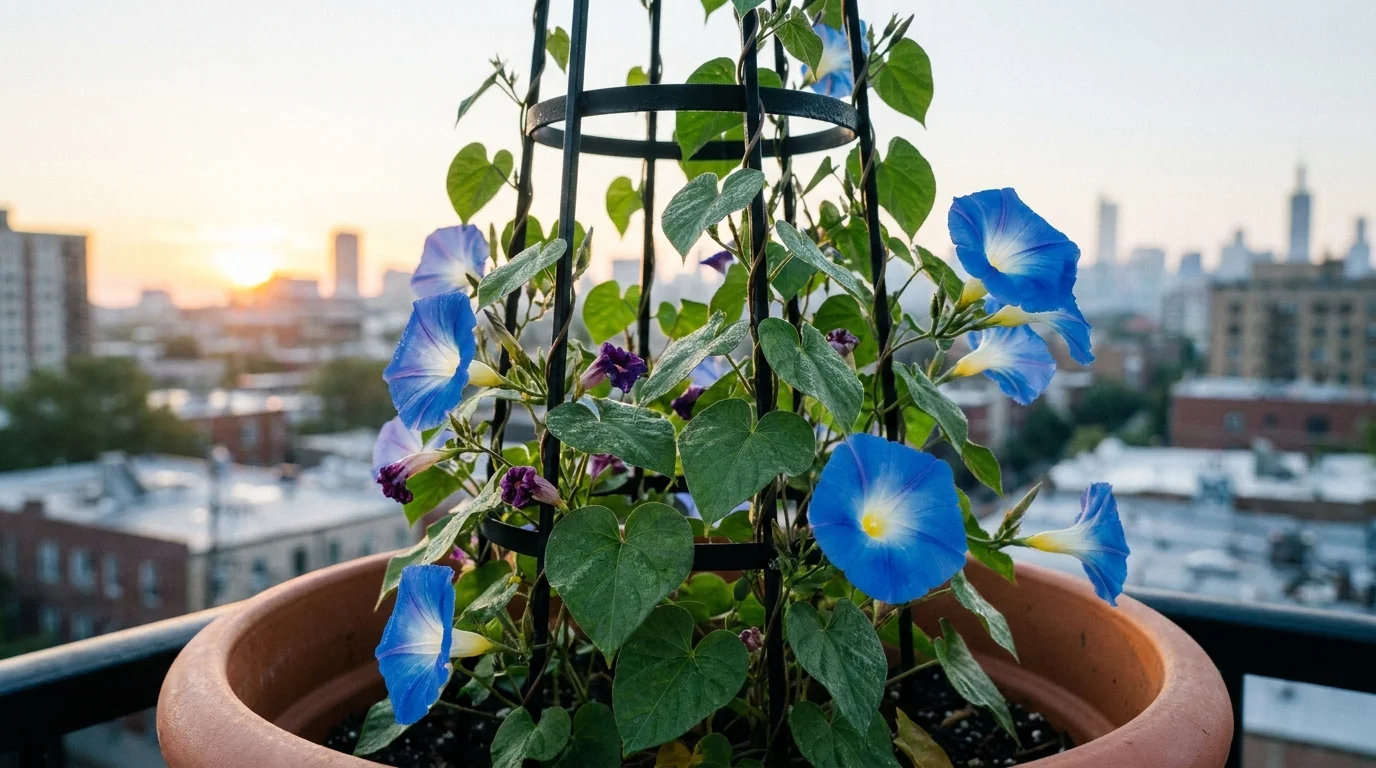
If you want to maximize a small balcony, think vertically. The ‘Heavenly Blue’ Morning Glory is a vigorous climbing vine that produces massive, saucer-shaped flowers.
True to their name, the blooms unfurl early in the morning, displaying a vivid, clear azure blue.
However, as the day progresses and the flower ages, the cellular pH shifts, and the blue petals fade into a beautiful purplish-magenta by late afternoon before the bloom finally closes.
Morning glories are incredibly easy to grow from seed directly in their final container. They need a sturdy trellis, netting, or balcony railing to climb.
Keep in mind that morning glory seeds are toxic, so handle them carefully. To encourage more blooms, avoid overly rich fertilizers; too much nitrogen will give you a massive vine with lush leaves but very few color-changing flowers.
8. Four O’Clocks (Mirabilis jalapa)
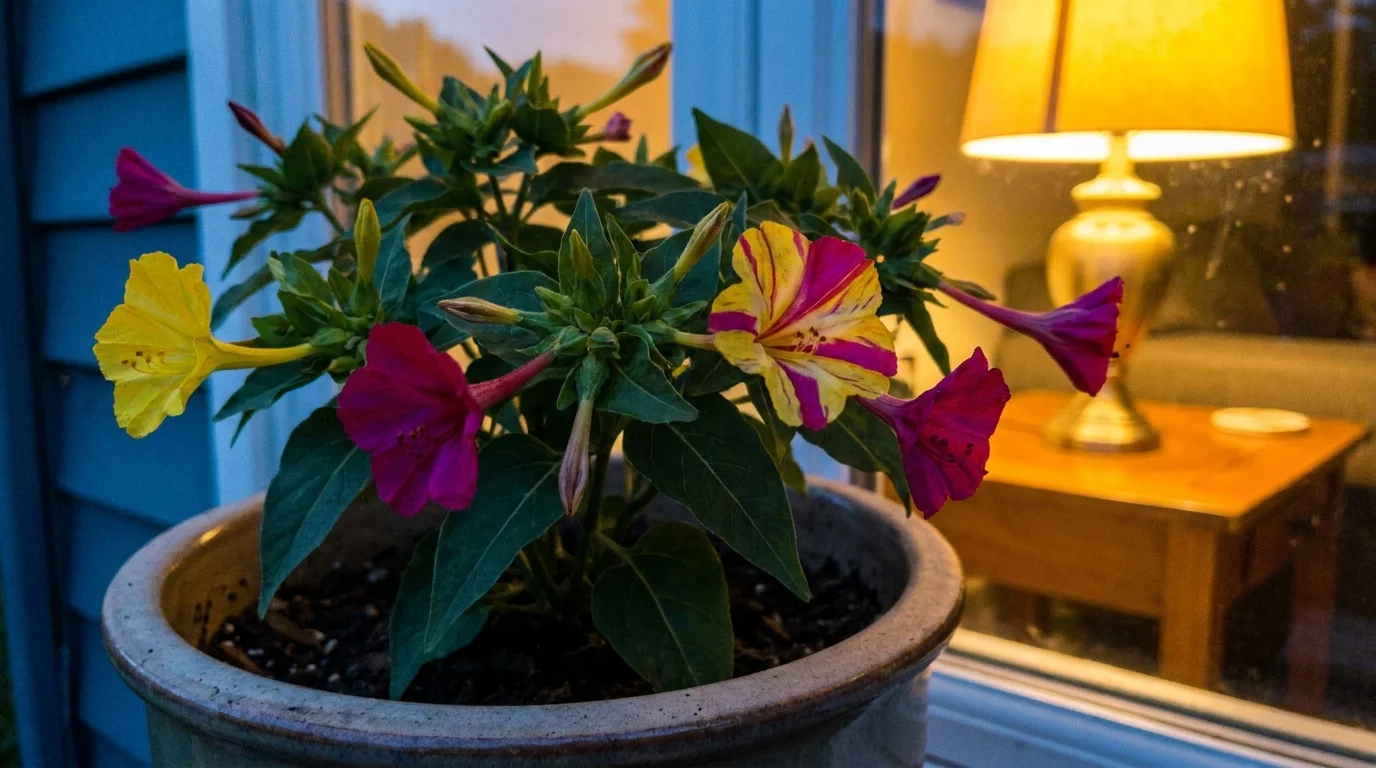
Four O’Clocks are named for their unique blooming schedule; they keep their trumpet-shaped flowers tightly spiraled shut during the heat of the day and pop open in the late afternoon. What makes them part of the color changing flowers family is their unpredictable pigmentation.
A single plant can produce yellow, pink, and white flowers simultaneously. Furthermore, individual blossoms often feature stripes and splashes of color that seem to shift and mutate as the plant grows.
These plants form large, tuberous roots, meaning they need a deep container to remain happy.
Place them near a seating area on your patio, as the blooms release a strong, sweet fragrance reminiscent of orange blossoms exactly when you are likely winding down for the evening.
9. Rangoon Creeper (Combretum indicum)
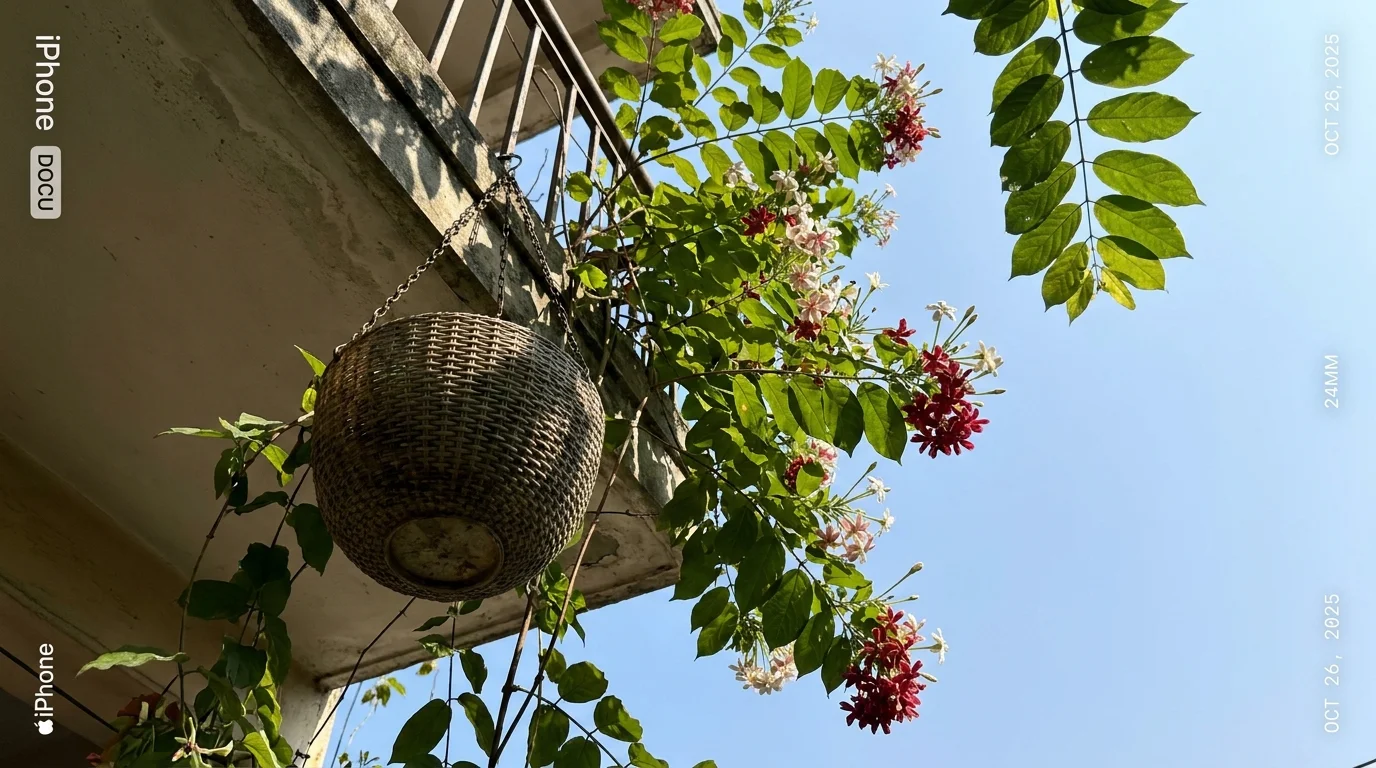
The Rangoon Creeper is an awe-inspiring tropical vine that puts on a fiery color display. The star-shaped, tubular blossoms open in the evening as a pure white.
By the next morning, they have turned to a soft pink, and by their third day, they mature into a deep, vibrant blood-red. Because the vine blooms in massive, weeping clusters, the cascading flowers create a stunning gradient effect.
This is a vigorous plant that needs warm temperatures and full sun to perform its best. In a container garden, you must provide a very strong trellis or arbor for support.
If you live in a region with cold winters, you will need to cut the vine back and bring the container indoors, or treat this spectacular plant as a fast-growing annual.
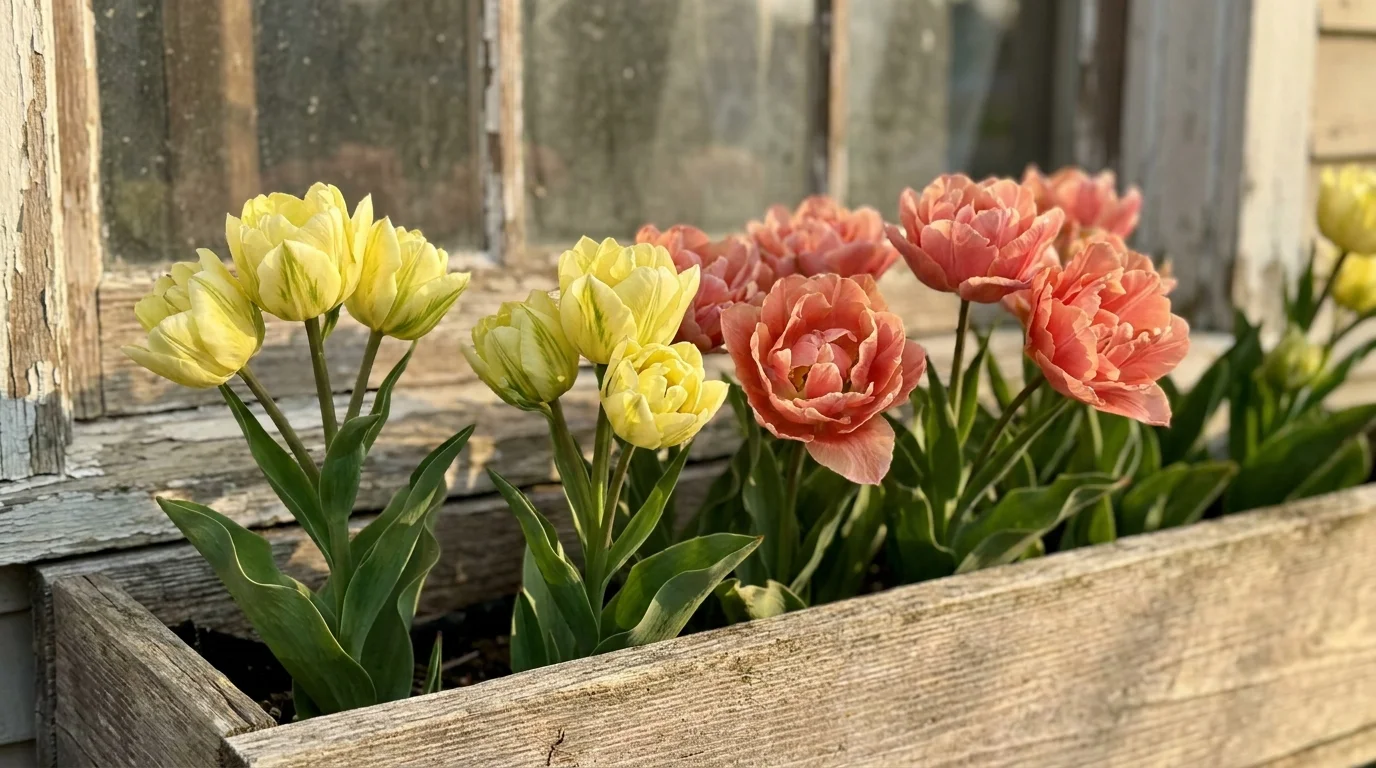
10. Antoinette Tulip (Tulipa ‘Antoinette’)
Most spring bulbs offer a static burst of color, but the Antoinette Tulip is a dynamic exception. This multi-flowering tulip produces three to four blooms per stem.
The flowers emerge as a soft, creamy yellow. Over a period of about two weeks, as the blossoms soak up the spring sunshine, the edges of the petals blush with pink.
Eventually, the entire flower transforms into a rich salmon-red.
Tulips are incredibly easy to grow in small spaces. Plant the bulbs in the fall in a container with excellent drainage.
You can layer them with other bulbs—a technique called lasagna planting—to maximize your floral display. When spring arrives, place the pot in full sun and watch the daily color shift.
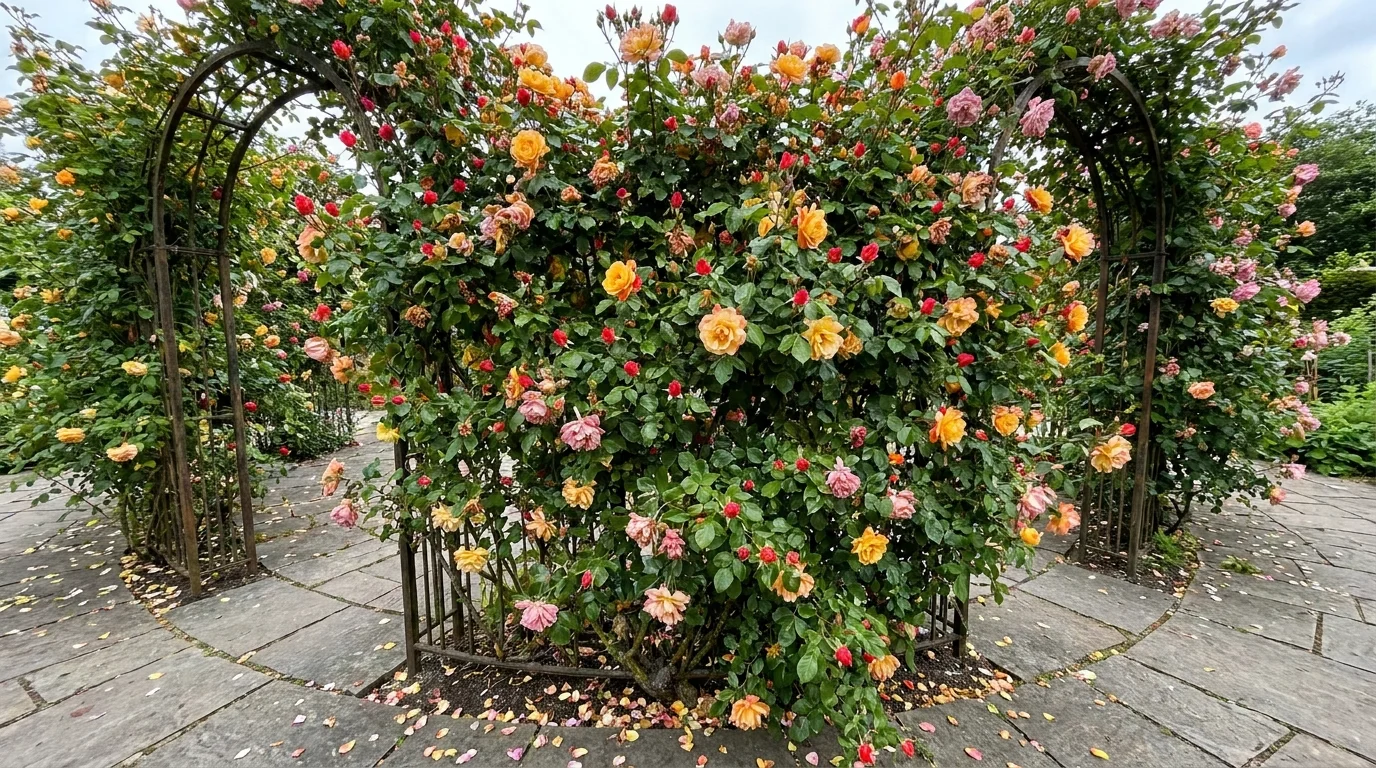
11. Joseph’s Coat Rose (Rosa ‘Joseph’s Coat’)
As the name suggests, this climbing rose is a coat of many colors. The semi-double blooms open yellow and orange, and as they age under the sun, they flush with cherry-red and deep carmine.
The continual blooming nature of this plant means you will always have a kaleidoscope of warm hues climbing up your balcony wall.
To grow Joseph’s Coat in a container, select a large, heavy pot that will not tip over under the weight of the trellis. Roses need high-quality, nutrient-dense potting soil and consistent moisture.
Be diligent about pruning out dead wood and older canes; good air circulation is essential to prevent powdery mildew in the confined space of a patio.
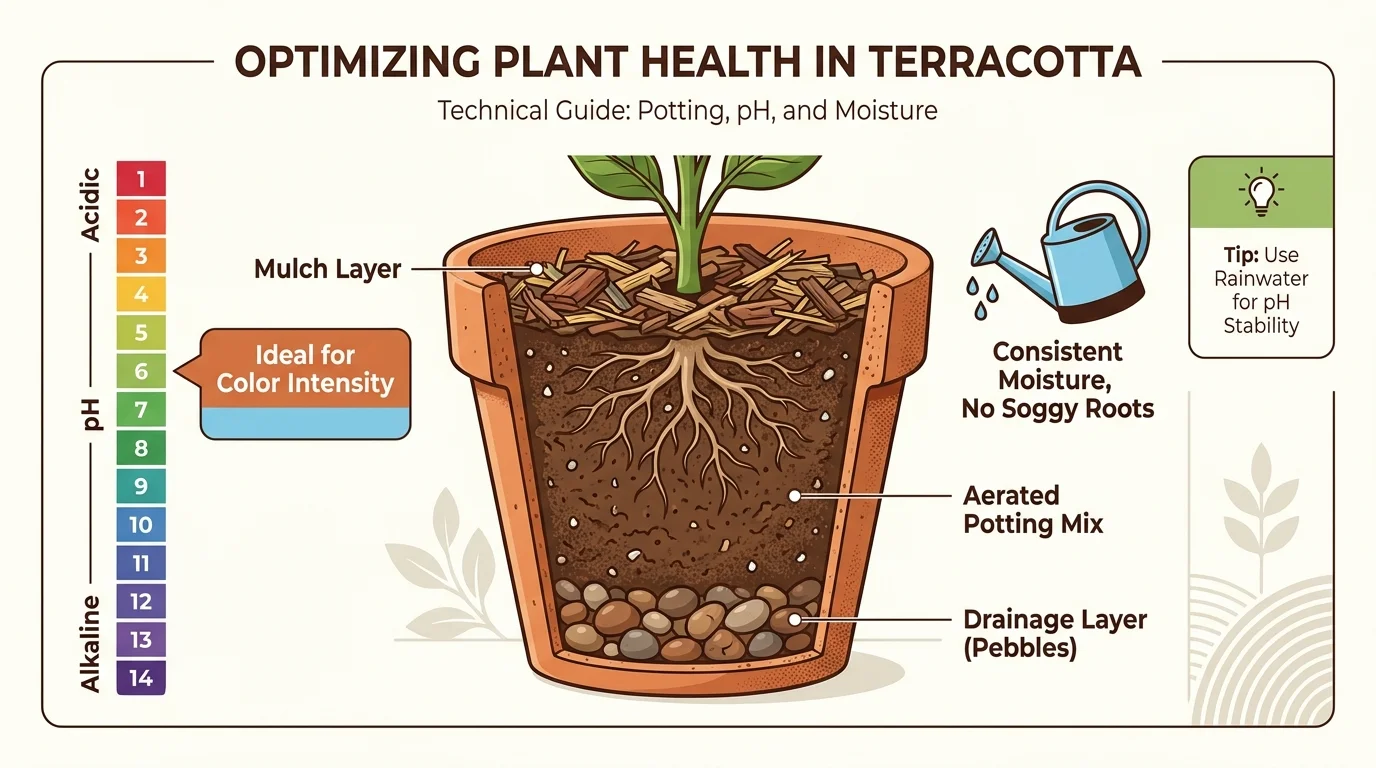
Essential Soil and Watering Tips for Unique Flower Varieties
The secret to keeping color changing flowers vibrant and healthy lies entirely in the roots. When you garden in containers, the soil environment is completely in your hands.
Getting the soil and watering right is the foundation of a stunning display.
First, you must understand drainage—which simply means how water moves through soil. If water sits stagnant at the bottom of a pot, the roots suffocate, rot, and die.
To ensure proper drainage, never use heavy ground soil or topsoil in your pots. Garden soil compacts tightly and traps moisture.
Instead, create a light, airy potting mix. A reliable, simple recipe for your container garden is:
- 1 part high-quality commercial potting soil: This provides the peat moss or coco coir base for moisture retention.
- 1 part organic compost: This adds essential nutrients and beneficial microbes to support the energetic demands of changing colors.
- 1 part perlite or pumice: These small, white volcanic rocks create tiny air pockets in the soil, ensuring excess water flows out of the drainage holes quickly.
When it comes to watering your stunning flowering plants, consistency is key. Daily watering schedules rarely work because weather fluctuates.
Instead, use the “finger test.” Push your index finger two inches into the potting soil.
If it feels completely dry, it is time to water. If it still feels moist, check back tomorrow.
When you do water, pour slowly until you see water actively flowing out of the bottom drainage holes. This deep watering technique encourages plants to grow robust, deep root systems, making them far more resilient on hot summer days.
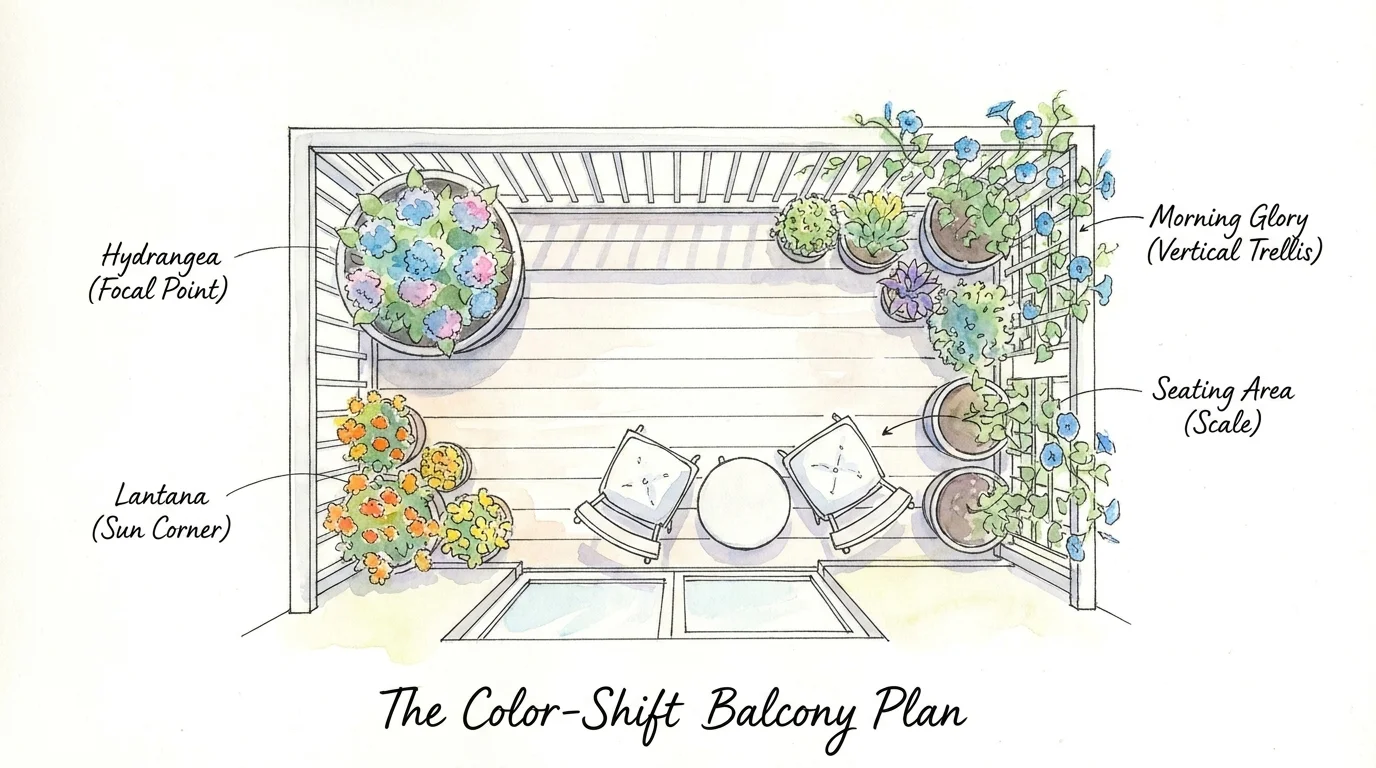
Designing a Small Space with Stunning Flowering Plants
Incorporating unusual garden flowers into a limited footprint requires thoughtful design. When working with a balcony or patio, you want to maximize vertical space and layer your containers to create a lush, immersive environment.
Creating a visual masterpiece requires the right vessels; learn how to mix and match pots to perfectly complement your color-shifting display.
Use the classic “thriller, filler, spiller” method to build your pots. Let a color-shifting plant be your “thriller”—the dramatic centerpiece.
For example, a Confederate Rose placed in the center of a large half-barrel commands attention. Surround its base with “fillers” like soft, green ferns or simple white sweet alyssum.
These neutral companions allow the vibrant reds and pinks of the main plant to pop without clashing. Finally, add a “spiller” like trailing creeping jenny to cascade over the rim, softening the hard edges of the pot.
Take advantage of vertical space to draw the eye upward and make a small patio feel twice as large. A trellis secured against a wall is the perfect home for a Heavenly Blue Morning Glory or a Rangoon Creeper.
By moving these aggressive growers off the floor and onto the wall, you free up valuable ground space for shade-loving plants like Lungwort to nestle below the plant canopy.
Keep your color palettes intentional. Because color changing flowers introduce multiple hues—like a Lantana displaying yellow, orange, and magenta at once—surround them with solid, contrasting colors.
A pot of multi-colored Lantana looks incredibly sharp when placed next to containers holding deep purple foliage plants or pure white petunias.
Eco-Friendly Practices for Unusual Garden Flowers
Creating a beautiful container garden should go hand-in-hand with caring for the local ecosystem. Small-space gardeners can implement highly effective, sustainable practices that benefit both the plants and the environment.
Skip the synthetic, blue liquid fertilizers. While they provide a quick burst of growth, they often wash right through the potting soil and can burn delicate roots.
Instead, nourish your unique flower varieties with organic alternatives. Top-dressing your containers with worm castings or a slow-release granular organic fertilizer feeds the soil microbiology.
Healthy soil microbes naturally break down nutrients, providing a steady, gentle diet that supports massive, vibrant blooms over the entire season.
Conserve water by applying a generous layer of mulch to the surface of your containers. Shredded bark, fine wood chips, or even dry grass clippings spread over the top of the potting soil act as a protective blanket.
This layer blocks the hot sun from baking the soil surface, drastically reducing water evaporation. You will spend less time hauling watering cans, and your plants will suffer less stress.
Finally, embrace the wildlife that visits your balcony. Color changing flowers like Lantana and Lungwort are absolute magnets for native bees, hoverflies, and butterflies.
Avoid using broad-spectrum chemical pesticides, which kill these essential pollinators alongside the pests.
If you notice aphids on your roses or hibiscus, simply blast them off with a sharp stream of water from a hose, or apply a gentle, organic insecticidal soap in the evening when bees are not active.
Frequently Asked Questions
Can I change the color of any flower by altering the soil pH?
No, the soil pH trick primarily works with specific plants like the Bigleaf Hydrangea (Hydrangea macrophylla). Most color changing flowers rely on genetics, temperature, or pollination cues to shift their hues.
Trying to dump heavy acids or alkaline powders into the soil of a Morning Glory or Lantana will not change their color; it will likely just burn their roots and damage the plant.
Do unusual garden flowers need special fertilizer to change colors?
They do not require a special “color-changing” fertilizer, but they do require adequate nutrition. Producing the chemical pigments required for vibrant hues takes significant energy.
Providing a balanced, organic fertilizer that is rich in phosphorus and potassium will encourage prolific blooming and ensure the color shifts remain bold and bright.
Are these unique flower varieties difficult to grow from seed?
It depends entirely on the plant. Morning Glories and Four O’Clocks are incredibly easy to grow from seed and are perfect projects for beginners.
In fact, they grow so fast you can sow them directly into their final containers.
However, woody shrubs like Hydrangeas, Confederate Roses, and Brunfelsia are much easier to purchase as established young plants from a nursery, as growing them from seed can take years before they produce flowers.
Why did my flowers suddenly stop changing color?
If your plants are stuck in one color phase, they are likely experiencing environmental stress. Extreme heat waves can halt pigment production, causing flowers to fade or drop prematurely.
Lack of water is another common culprit. Ensure your containers are consistently watered, provide some afternoon shade during peak summer heat, and check that pests are not draining the plant’s energy.
For trustworthy gardening information, visit:
Kansas State University Extension — Horticulture, Oklahoma State University Extension — Lawn & Garden and Tennessee Extension — Gardening. These organizations provide expert, research-based advice for gardeners at all levels.
Disclaimer: This article is for informational purposes only and is not a substitute for professional gardening advice. Always consult local extension services or horticulture experts for region-specific guidance.