
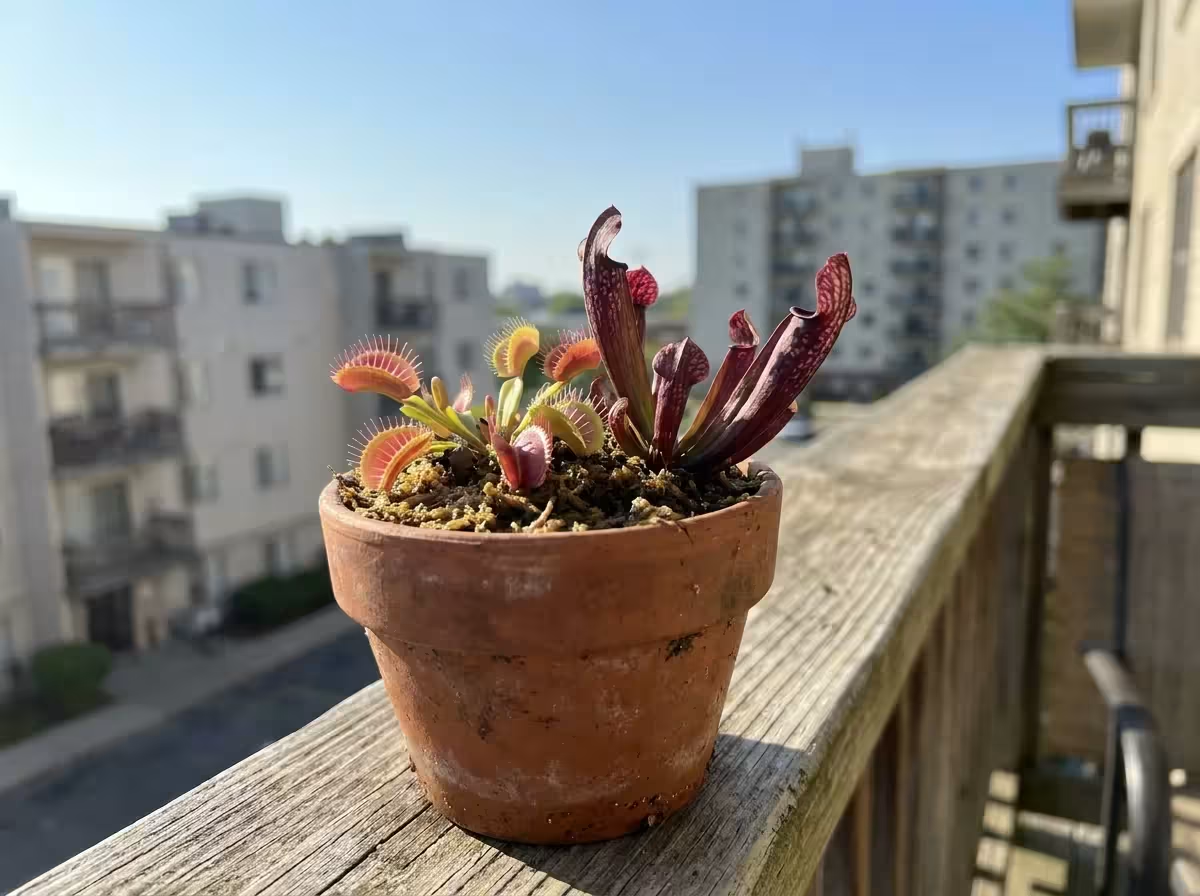
Discovering plants that eat animals transforms a standard balcony into a living cabinet of curiosities while offering a natural solution for managing pesky gnats and flies.
Cultivating fascinating carnivorous species in containers requires specific soil and water conditions, but the reward is watching botanical predators snap, slide, or stick their way to a meal.
You can easily grow these botanical wonders in bright windowsills, sunny patios, or compact terrariums without needing acres of backyard space. Understanding their unique adaptations and mimicking their natural bog environments allows you to keep these captivating meat eating plants thriving right at home.
Let us explore the ten most incredible carnivorous options perfectly suited for small-space gardeners craving a touch of the extraordinary.
Contents9 sections
- The Fascinating World Of Botanical Predators
- How Meat Eating Plants Capture Their Prey
- Ten Incredible Plants That Eat Animals
- Designing A Small Space Bog Garden
- Essential Care Requirements For Unusual Plants
- Common Mistakes And Troubleshooting
- Sustainable And Eco Friendly Practices
- Frequently Asked Questions
- Expanding Your Carnivorous Collection
The Fascinating World Of Botanical Predators
Carnivorous plants represent one of the most remarkable evolutionary leaps in the natural world. Most traditional houseplants and garden vegetables pull essential macronutrients—like nitrogen, phosphorus, and potassium—directly from rich, loamy soil.
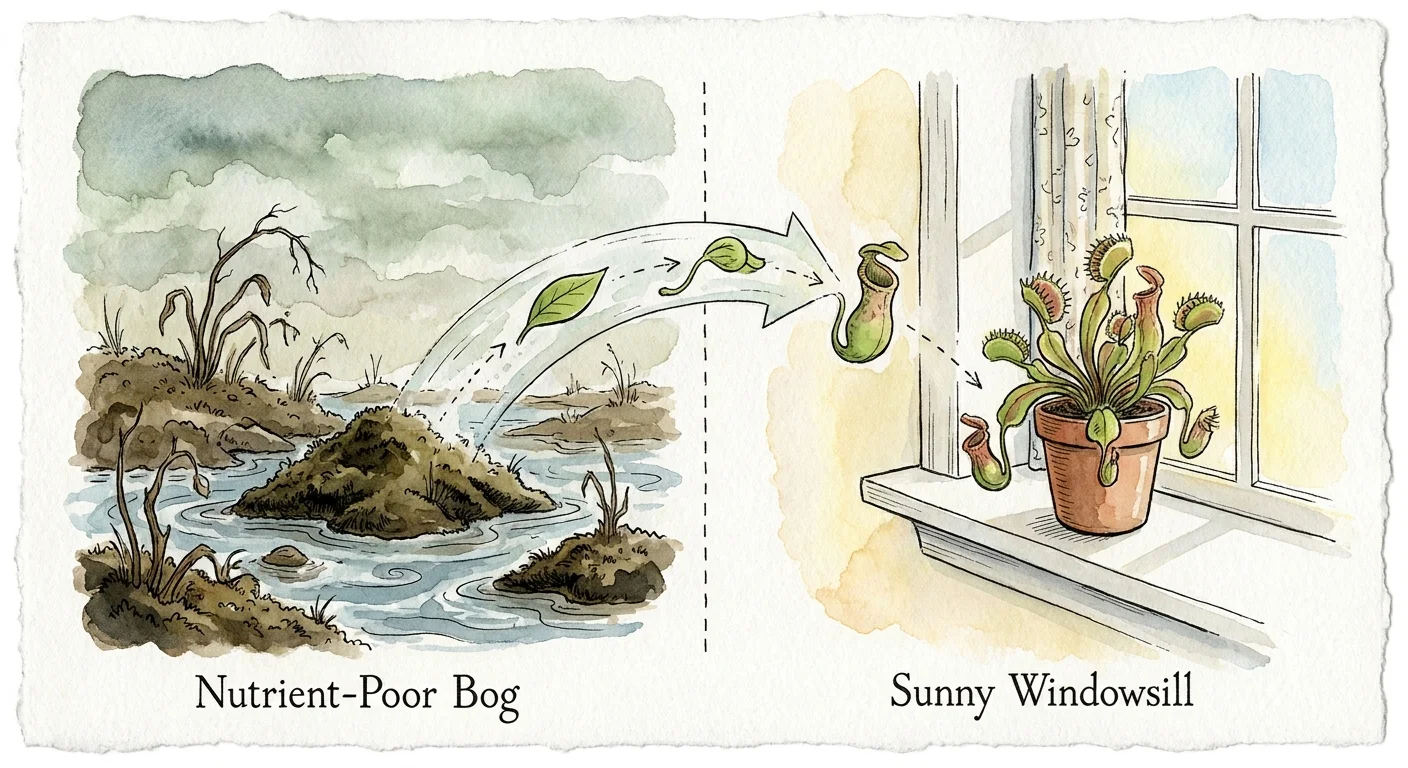
However, plants that eat animals originate in some of the most nutrient-poor environments on the planet. Peat bogs, sandy coastal savannas, and rocky outcroppings offer plenty of water and sunshine but severely lack the foundational elements required for plant growth.
To survive in these harsh environments, certain species flipped the food chain upside down. Over millions of years, their leaves mutated into highly specialized traps designed to lure, capture, and digest living creatures.
While we often associate these unusual plants with deep, impenetrable jungles, many of the most famous carnivorous plants are actually native to North America.
Their diet primarily consists of insects and arachnids, such as flies, ants, mosquitoes, and spiders, though larger tropical varieties have been known to occasionally digest small frogs or lizards.
Bringing these botanical predators into your small-space garden provides an excellent opportunity to observe biology in action. You do not need a sprawling backyard to accommodate them; their naturally small root systems make them ideal candidates for container gardening.
By providing them with a micro-habitat that mirrors their wild origins, you can cultivate a thriving collection of meat eating plants right on your apartment balcony or sunny kitchen windowsill.
How Meat Eating Plants Capture Their Prey
Fascinating carnivorous species do not hunt actively; they cannot uproot themselves and chase down a meal.
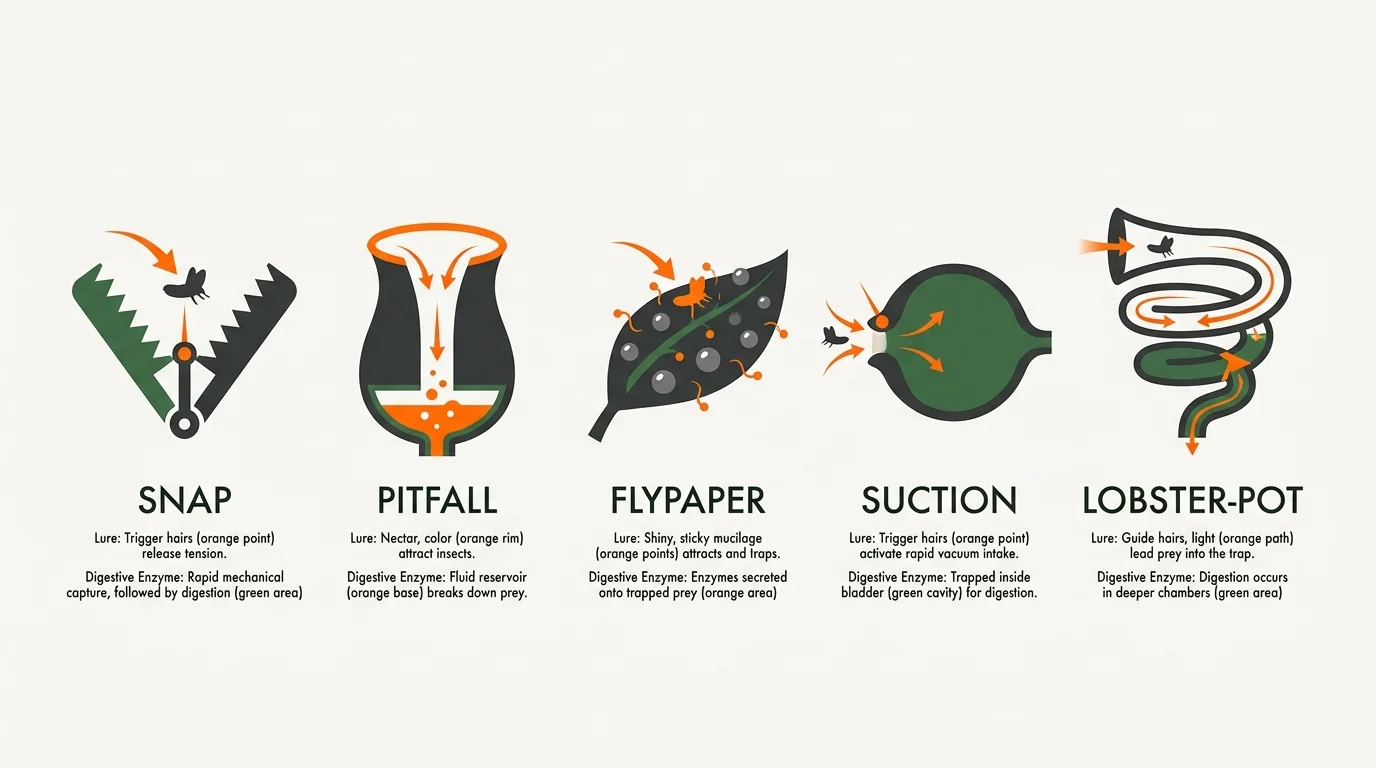
Instead, they rely on complex biological mechanisms and enticing lures—such as vibrant colors, sweet nectar, and ultraviolet patterns invisible to the human eye—to draw prey directly into their clutches. Botanists categorize carnivorous plant traps into five distinct mechanisms.
Snap Traps: The most recognizable hunting mechanism relies on rapid movement. Snap traps feature hinged leaves edged with interlocking teeth.
When a wandering insect brushes against tiny trigger hairs inside the leaf, the trap snaps shut in a fraction of a second, creating a biological prison that tightens as the insect struggles.
Pitfall Traps: Also known as pitcher plants, these species utilize modified leaves rolled into deep, hollow tubes. The rims of these pitchers secrete a slippery, sweet nectar.
When an insect lands to feed, it loses its footing and plummets into a pool of digestive enzymes and water collected at the bottom. Downward-pointing hairs inside the tube prevent any chance of escape.
Flypaper Traps: These traps use specialized glands covering their leaves to secrete a sticky, glistening mucilage. To a thirsty gnat, these droplets look like refreshing morning dew.
Once the insect lands, it immediately becomes glued to the surface. Many flypaper plants will slowly curl their leaves around the struggling prey to maximize contact with their digestive juices.
Bladder Traps: Found mostly in aquatic or heavily waterlogged environments, bladder traps operate via a vacuum mechanism. Tiny, hollow bladders sit below the water or soil surface, maintaining low internal pressure.
When a microscopic organism triggers the bristles near the bladder door, the seal breaks, instantly sucking the prey and surrounding water into the trap.
Lobster-pot Traps: These highly complex, subterranean traps function like a maze. Chemical attractants entice microscopic soil creatures into a specialized tube.
Downward-pointing hairs force the prey to continually move forward until they reach a centralized digestive chamber, with no ability to turn back.
Ten Incredible Plants That Eat Animals
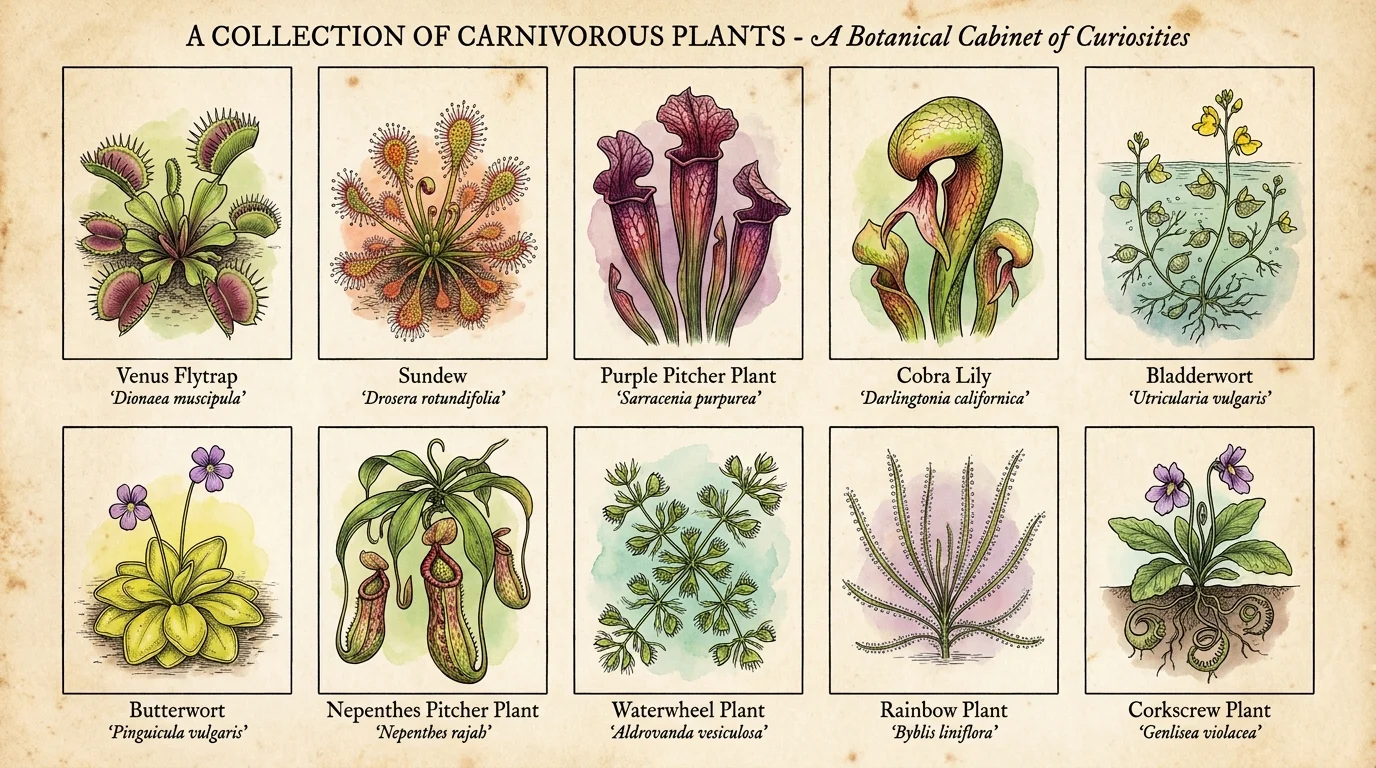
If you are ready to start building your own collection of botanical curiosities, these ten plants offer incredible variety, stunning visual appeal, and a healthy appetite for pests. Each species possesses specific requirements, but all can be adapted to container life.
While these predators offer architectural beauty, you can pair them with flowers that bloom all summer to keep your balcony vibrant throughout the warm months.
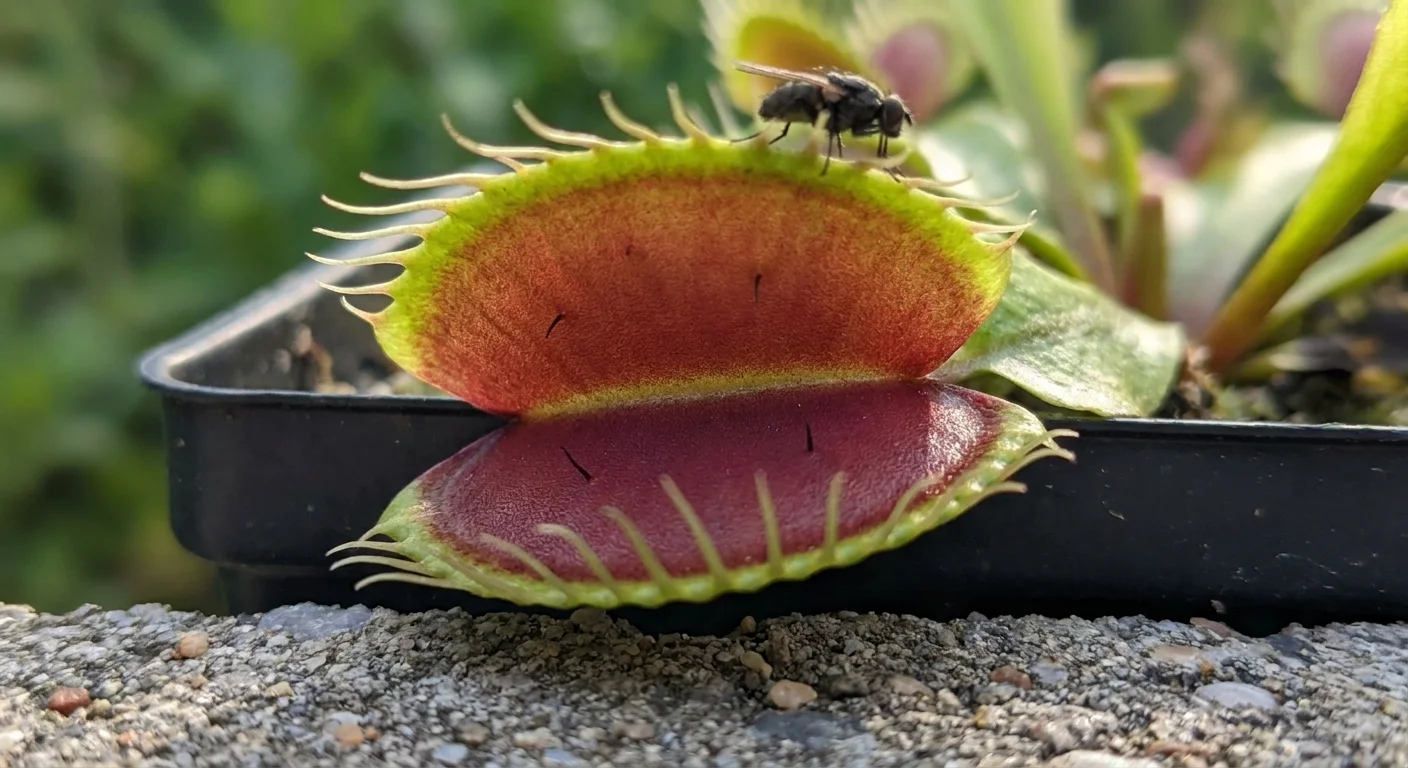
1. Venus Flytrap (Dionaea muscipula)
The Venus Flytrap is the undisputed king of unusual plants, captivating growers with its jaw-like snap traps. Native only to a small radius spanning the border of North and South Carolina, this plant requires full, direct sunlight to thrive.
In a container garden, the Flytrap performs beautifully when sitting in a shallow tray of water during the growing season. Keep in mind that each trap only opens and closes a few times before dying off to make room for new growth.
Do not intentionally trigger empty traps, as this wastes the plant’s valuable energy. Venus Flytraps require a cold winter dormancy period, meaning you should place them in an unheated garage or cool windowsill during the winter months to rest.
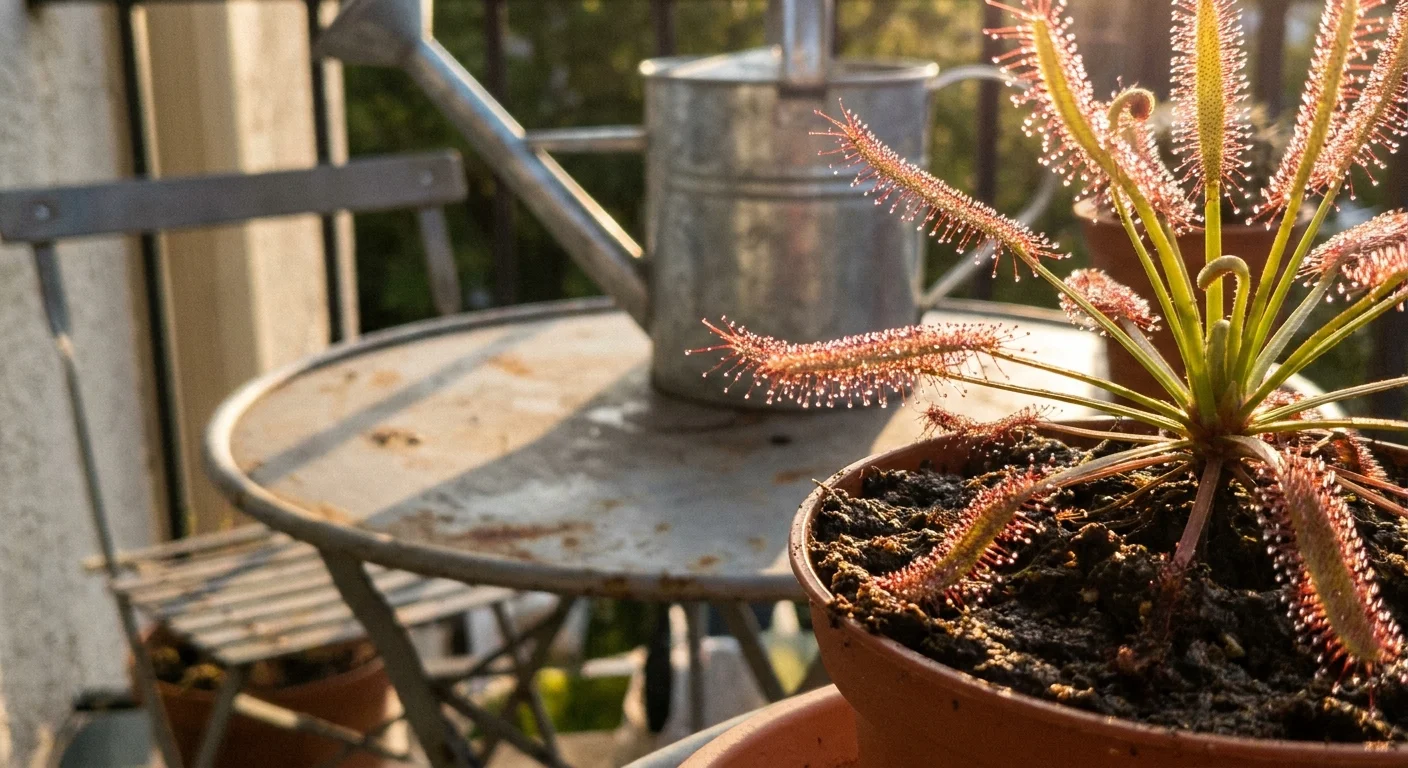
2. Cape Sundew (Drosera capensis)
For beginner gardeners, the Cape Sundew is arguably the easiest carnivorous plant to keep alive. Hailing from South Africa, this flypaper trap produces long, strap-like leaves covered in bright red tentacles that weep sticky mucilage.
They are incredibly efficient hunters, and you will often find their leaves tightly curled around recently caught fruit flies or fungus gnats. Because they do not require a winter dormancy period, Cape Sundews make phenomenal year-round indoor houseplants.
Place them in a brightly lit window, keep their soil consistently wet, and watch them multiply and flourish with minimal intervention.
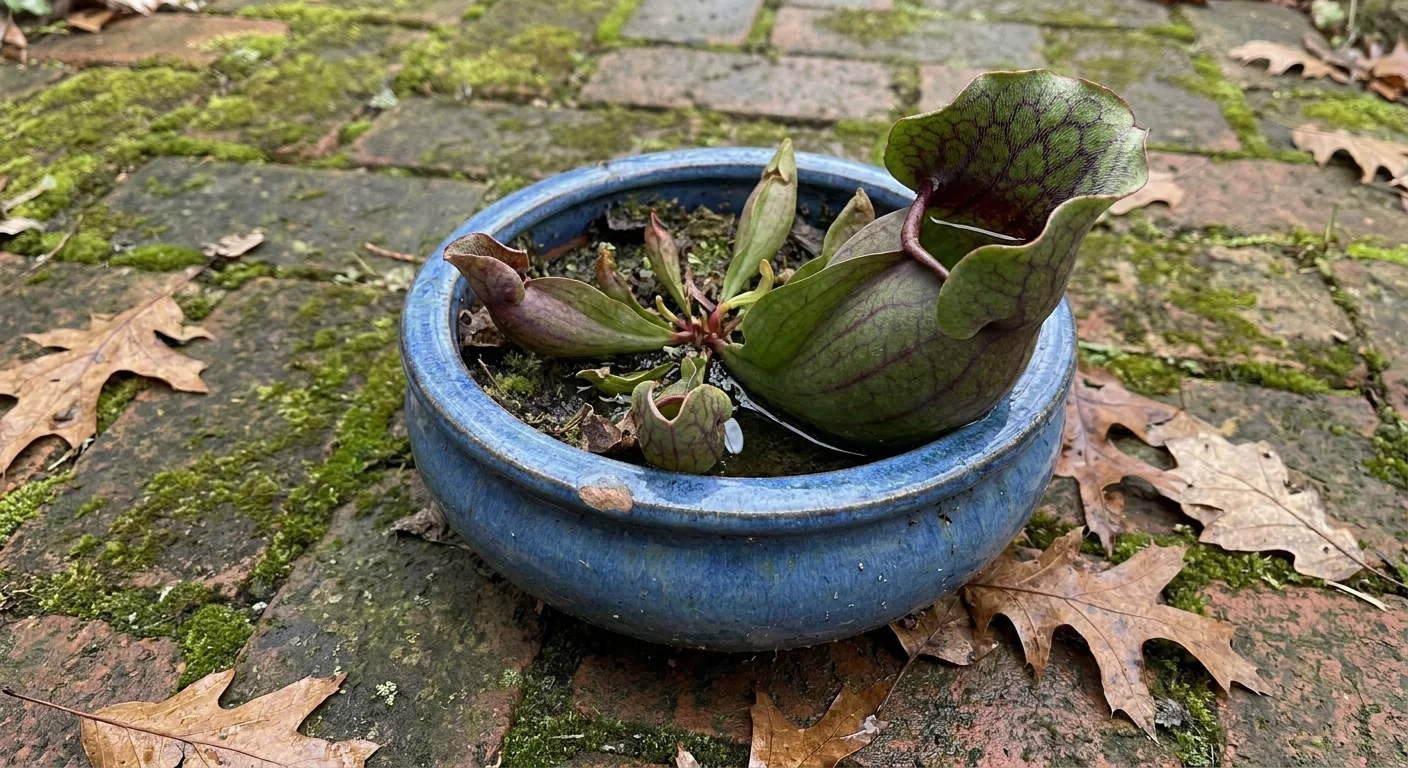
3. Purple Pitcher Plant (Sarracenia purpurea)
Unlike tall, trumpet-shaped pitcher plants, the Purple Pitcher Plant grows low and squat, hugging the surface of the soil. This structural adaptation makes it an excellent choice for windy balconies where taller plants might topple over.
Their wide, veiny hoods do not block rainfall; instead, they rely on rain to fill their pitchers, creating a natural soup of enzymes and bacteria that breaks down fallen ants and flies.
They are exceptionally cold-hardy, capable of surviving freezing temperatures, which makes them a superb anchor plant for an outdoor patio bog container.
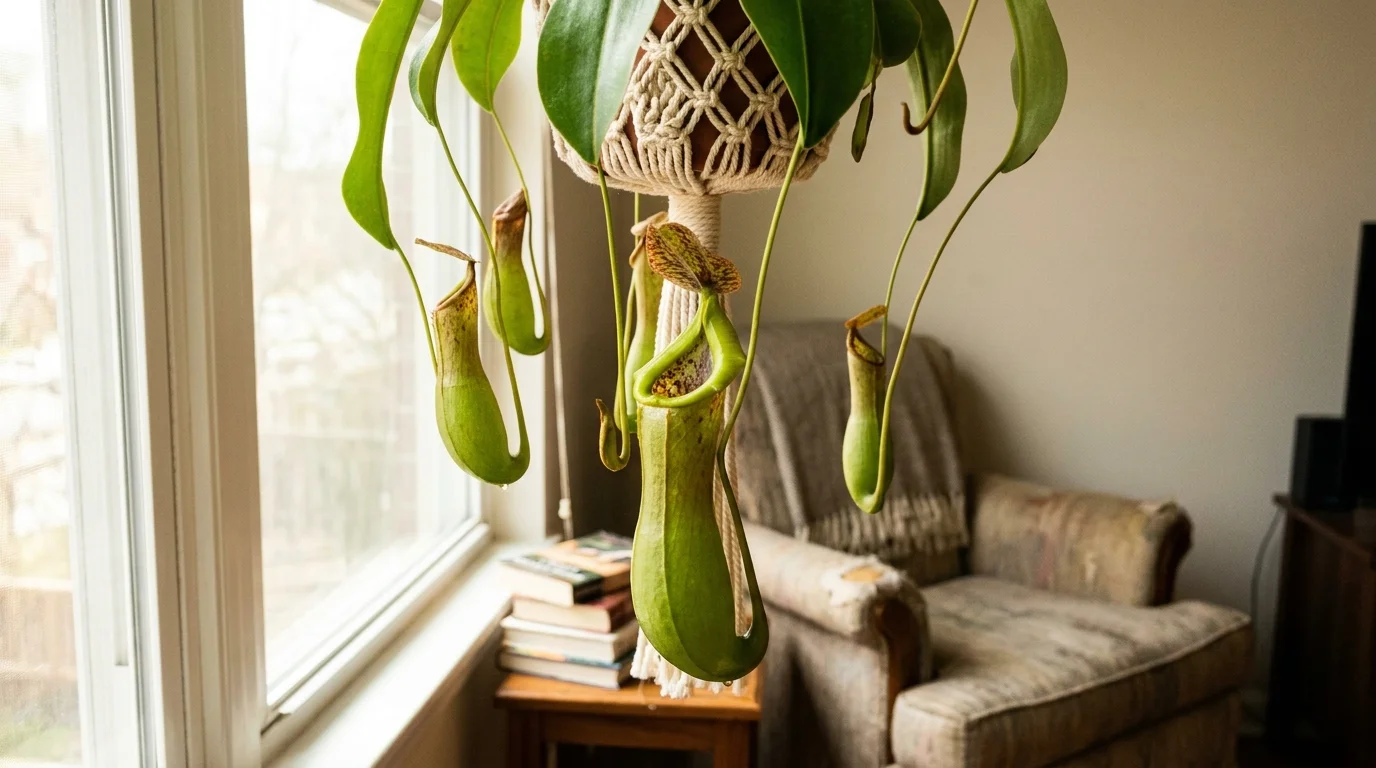
4. Tropical Pitcher Plant (Nepenthes)
If you want to utilize vertical space, the Tropical Pitcher Plant is the ultimate hanging basket specimen. Native to the warm, humid jungles of Southeast Asia, Nepenthes form long vines with spectacular, ornate pitchers hanging from the tips of their leaves.
Some wild varieties grow large enough to capture small rodents, though cultivated container varieties primarily feast on household flies and wasps. Nepenthes despise standing water, making them an exception to the standard bog rule.
Plant them in a loose, airy mix of long-fiber sphagnum moss and perlite, water them heavily from the top, and allow the excess to drain completely. They thrive in bright, indirect light and appreciate daily misting to maintain high humidity.
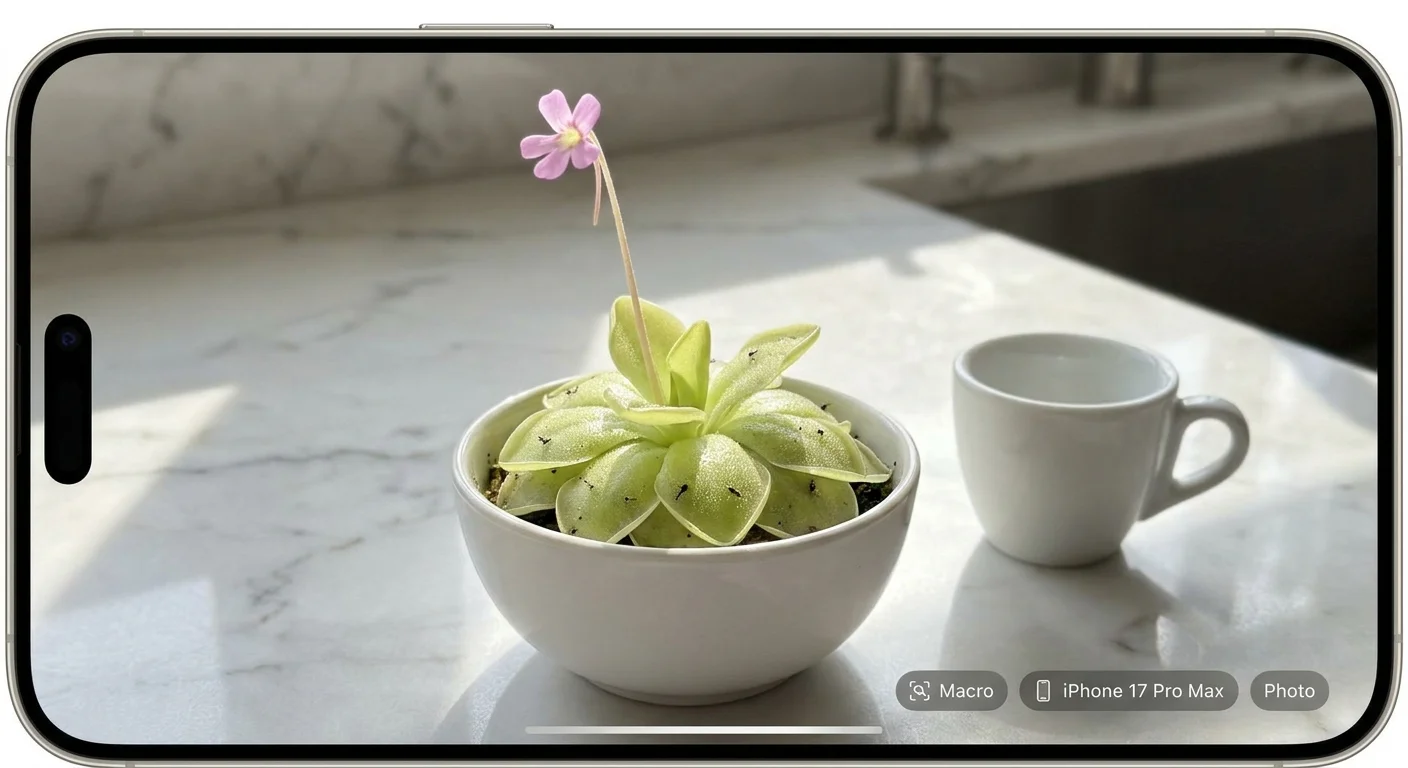
5. Mexican Butterwort (Pinguicula)
Butterworts look less like dangerous botanical predators and more like delicate, fleshy succulents. Their broad, pale green leaves arrange themselves in a neat rosette, topped with stunning, orchid-like purple or pink flowers.
However, run your finger across a Butterwort leaf, and you will discover a sticky, greasy coating. They specialize in capturing tiny prey, acting as unparalleled natural pest control for fungus gnats buzzing around your other houseplants.
During the winter, Mexican Butterworts drop their carnivorous leaves and produce tighter, non-carnivorous succulent leaves, meaning you should significantly reduce their watering during the colder months.
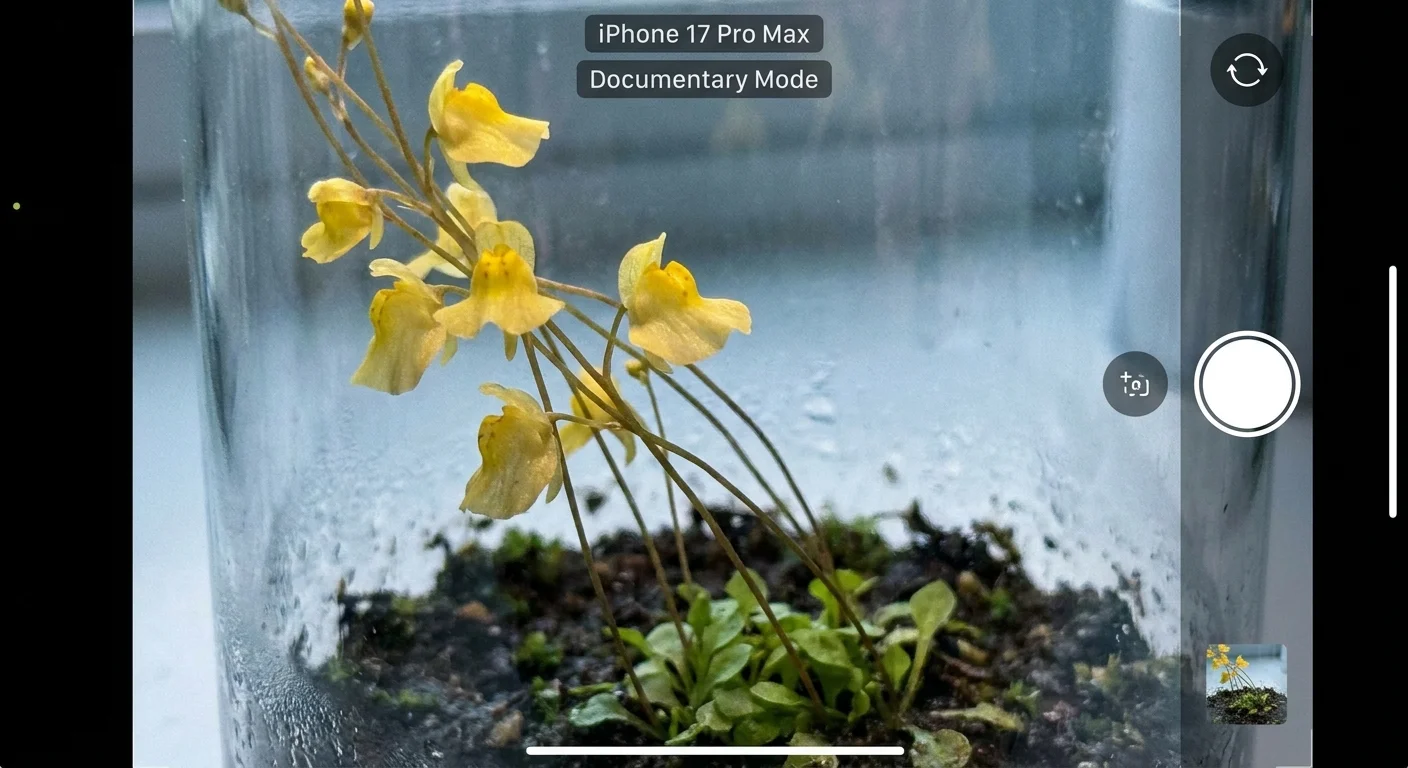
6. Terrestrial Bladderwort (Utricularia)
Bladderworts are the hidden assassins of the carnivorous plant world. From the surface, they appear to be nothing more than a patch of tiny green leaves or grass, occasionally sending up delicate, beautiful flowers.
The real action happens underground. Their root systems are dotted with microscopic vacuum bladders that constantly suck in nematodes, water fleas, and single-celled organisms.
Because they hunt in the soil, terrestrial Bladderworts are incredibly easy to care for in small containers. Simply keep their growing medium extremely wet—almost flooded—and give them plenty of bright light.
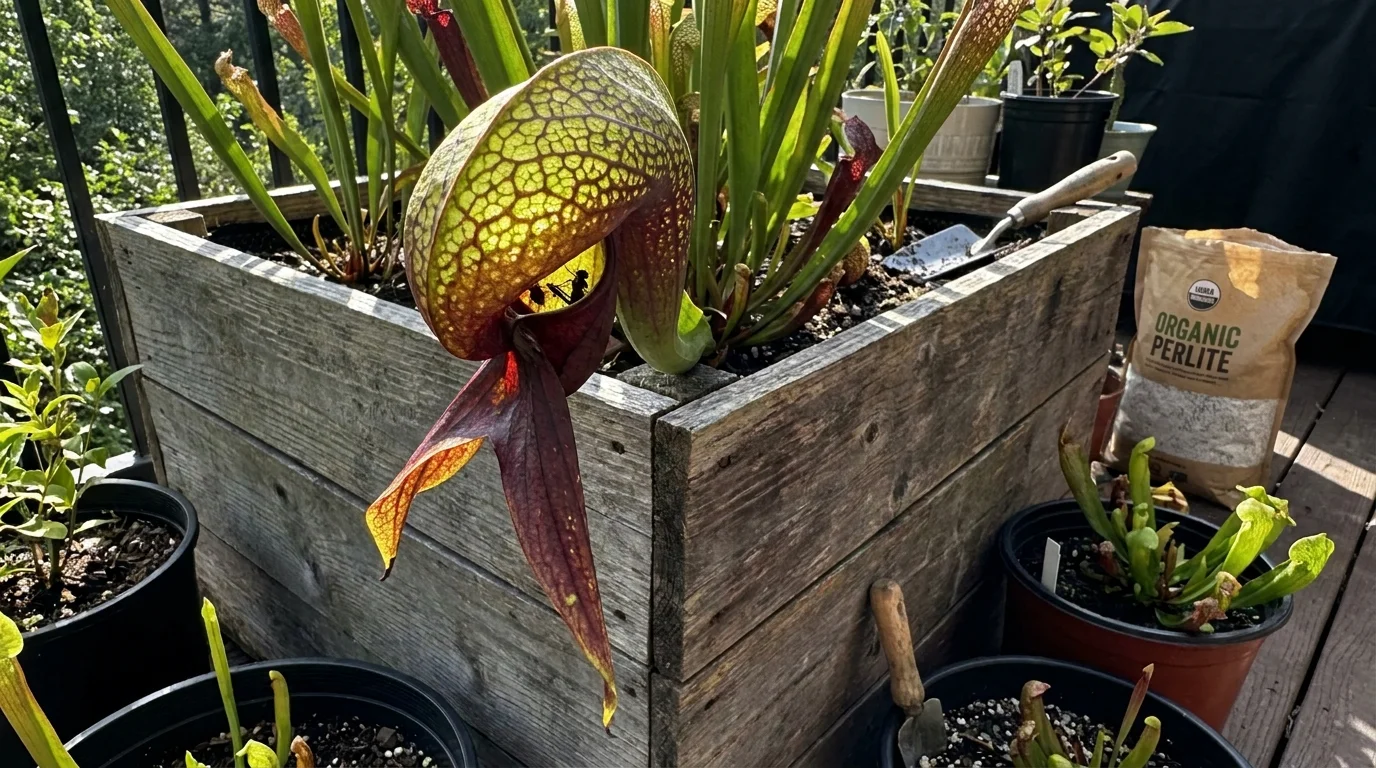
7. Cobra Lily (Darlingtonia californica)
The Cobra Lily stands out as one of the most visually striking meat eating plants available. Their tubular leaves twist upward and flare out into a hooded dome complete with two fang-like appendages, perfectly mimicking a rearing snake.
Insects enter the hood seeking nectar but become disoriented by translucent “windows” on the top of the dome, causing them to exhaust themselves and fall into the digestive tube below.
Cobra Lilies prefer their root systems to remain cool, which can be challenging in small containers. Using light-colored pots to reflect heat and top-watering with refrigerated distilled water helps replicate the frigid mountain streams of their native Pacific Northwest habitat.
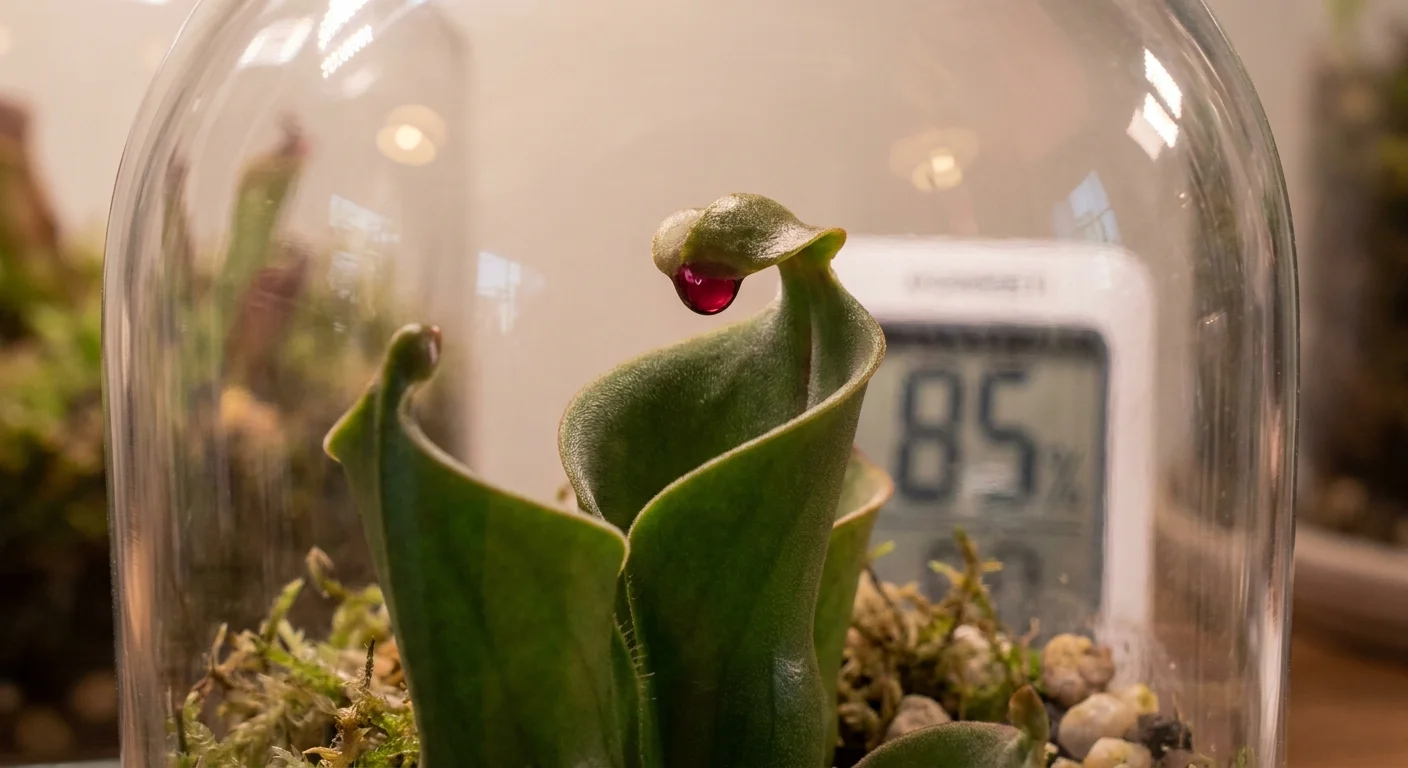
8. Sun Pitcher Plant (Heliamphora)
Native to the remote, towering tepuis (tabletop mountains) of South America, the Sun Pitcher Plant forms elegant, stiff cones that look like rolled parchment.
Because they evolved in regions with constant rain, their pitchers feature a small slit that acts as an overflow drain, preventing the trap from becoming completely submerged.
Heliamphora are generally recommended for intermediate to advanced growers, as they require incredibly bright light alongside cool temperatures and high humidity.
A dedicated indoor terrarium with strong LED grow lights and a small computer fan for air circulation provides the perfect environment for this rare gem.
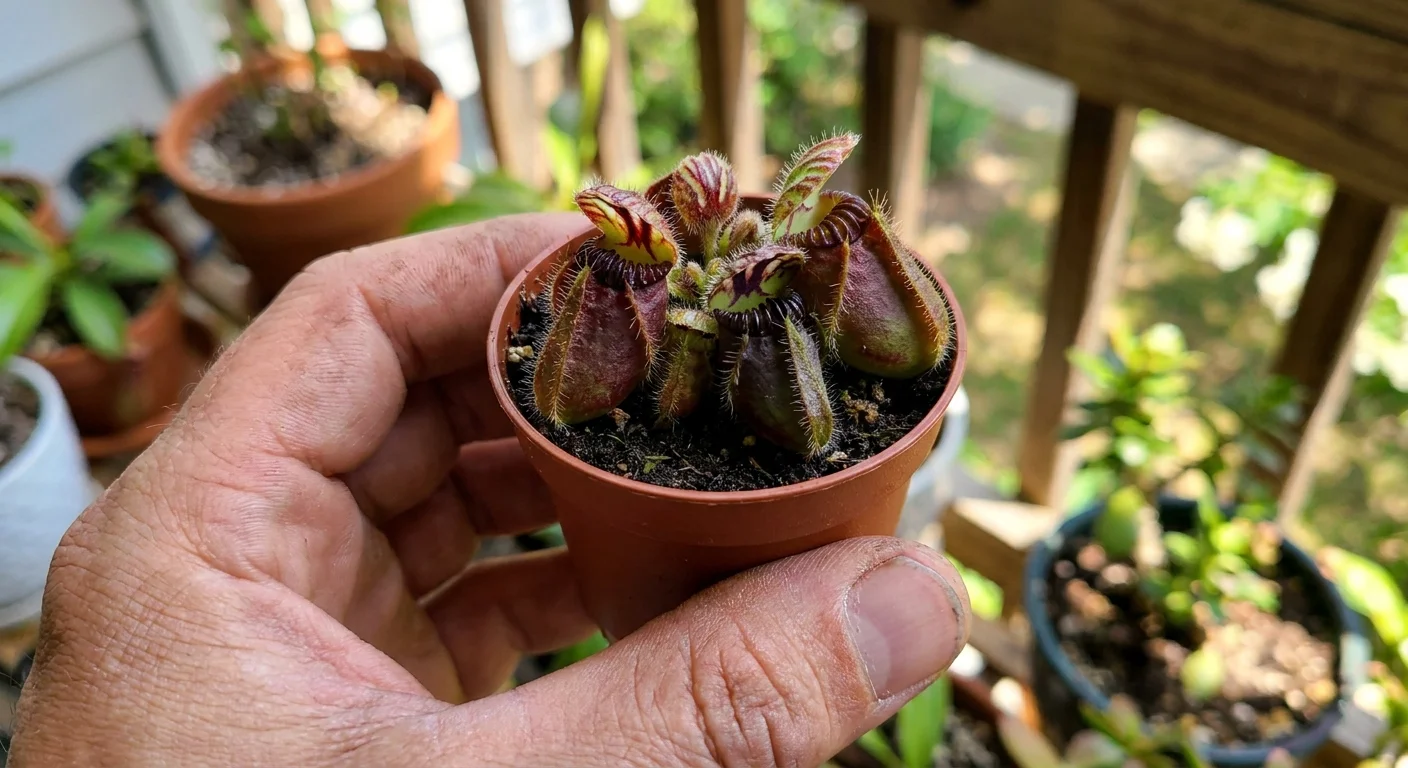
9. Australian Pitcher Plant (Cephalotus follicularis)
If you are working with an exceptionally tight space, such as a dorm room desk or a narrow windowsill, the Australian Pitcher Plant is your perfect match. This compact species produces tiny, chunky, highly detailed pitchers that rarely grow larger than a couple of inches.
The pitchers feature heavily ribbed, toothy rims that look intimidating up close. Cephalotus grows very slowly and resents having its delicate roots disturbed, so pot it once in a deep, well-draining container and leave it be.
It prefers slightly drier conditions than standard bog plants, so wait until the water tray dries out completely before refilling it.
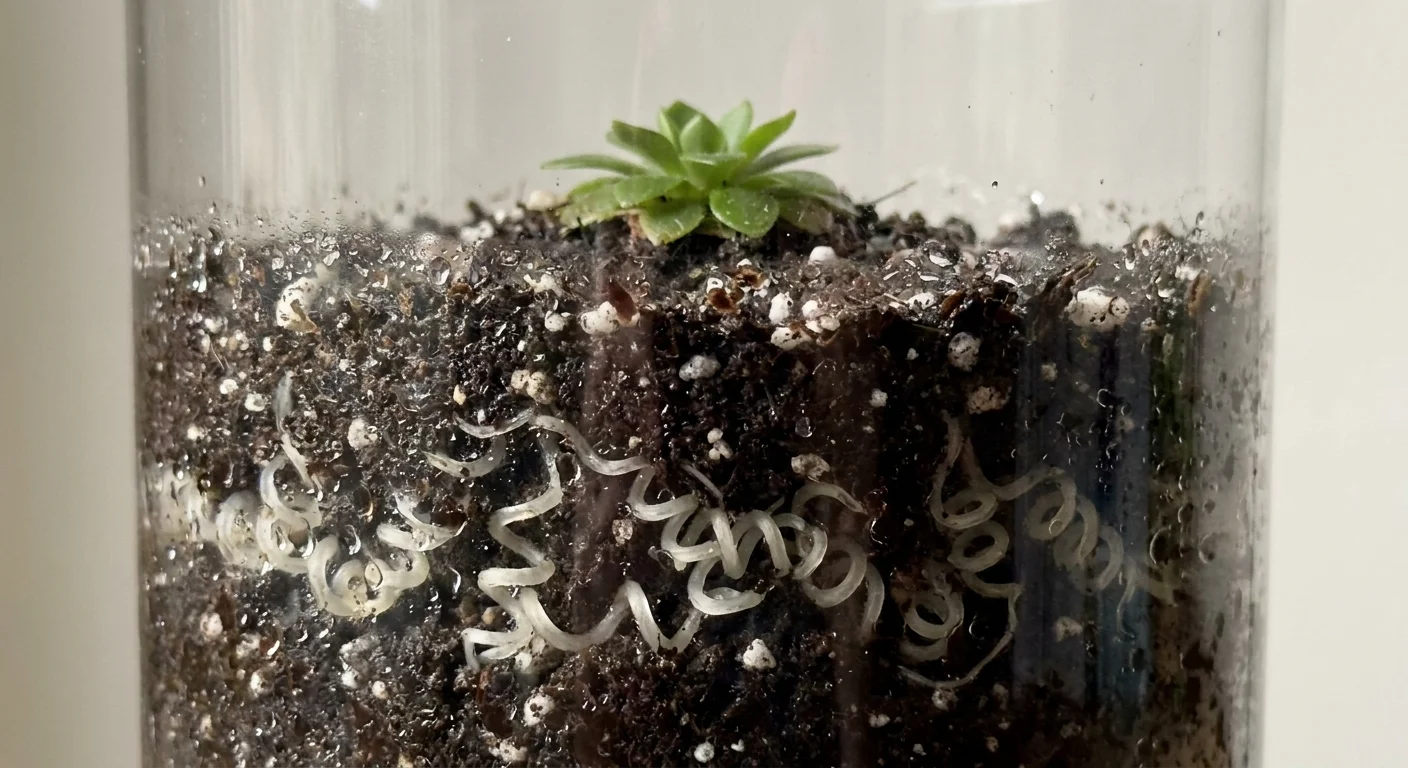
10. Corkscrew Plant (Genlisea)
The Corkscrew Plant features the highly unusual lobster-pot trapping mechanism. Above ground, you will only see a small, unassuming rosette of green leaves.
Below the damp soil surface, however, the plant produces pale, subterranean leaves twisted into spiral tubes. These tubes are lined with inward-pointing hairs that force microscopic soil organisms upward into a digestive chamber.
While you will never actually see a Corkscrew Plant catch its prey, knowing what is happening beneath the soil makes it a brilliant conversation piece for any unusual plant enthusiast. They thrive in very wet, peaty soil kept in bright, indirect sunlight.
Designing A Small Space Bog Garden
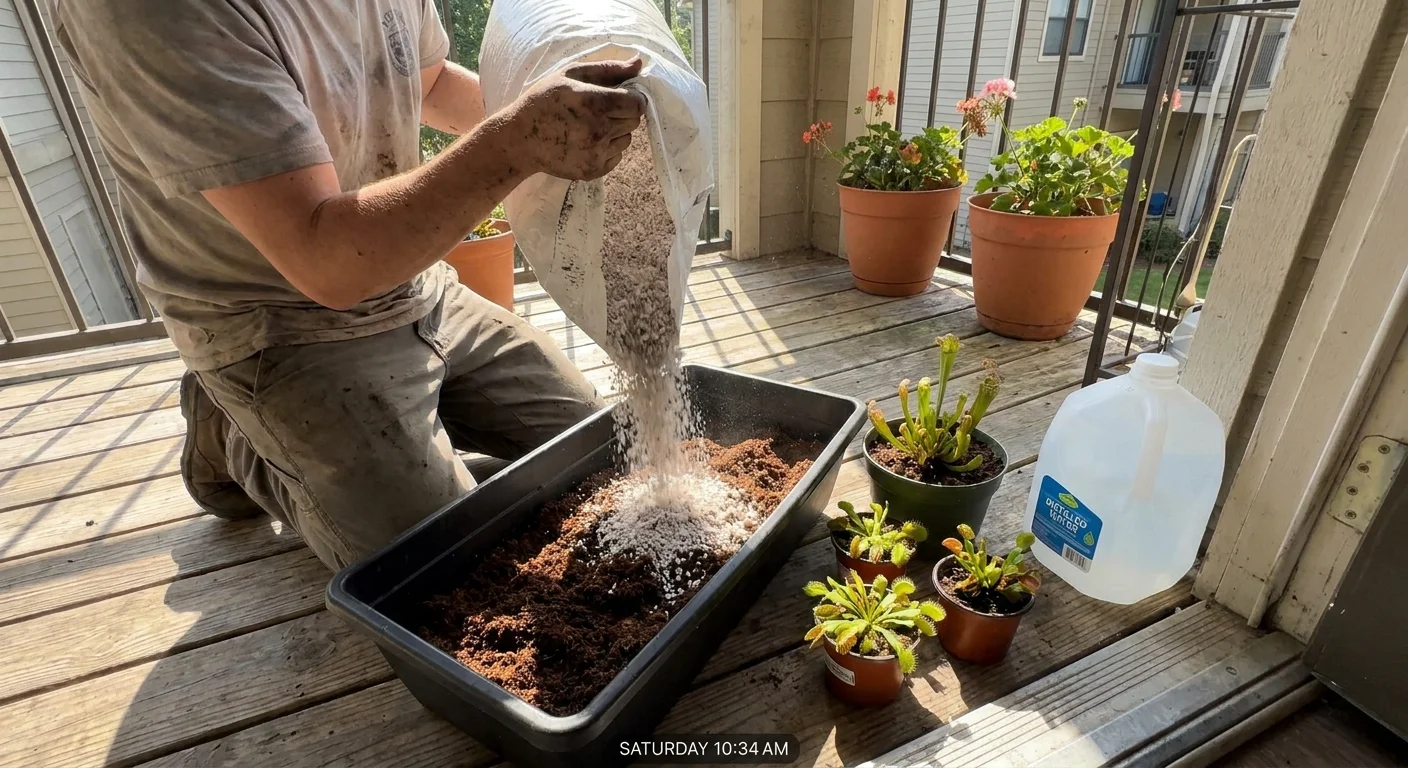
You do not need a large yard to create a wetland environment. A container bog garden allows you to house multiple carnivorous plants together, creating a stunning centerpiece for your patio or balcony.
Selecting the right container is the most critical first step. Always use glazed ceramic, plastic, or resin pots.
Never use unglazed terracotta or clay; these materials slowly leach dissolved minerals and salts into the soil, which will inevitably burn the sensitive roots of your plants.
Applying principles of companion planting for small spaces can also help you group moisture-loving species effectively.
Your container needs to hold moisture efficiently. If you use a pot with drainage holes, you must place a deep saucer underneath it to ensure the bottom few inches of soil remain constantly submerged.
Alternatively, you can use a pot without drainage holes, provided you carefully monitor the water level to prevent the top of the soil from becoming a stagnant, foul-smelling swamp.
Because plants that eat insects naturally grow in nutrient-depleted soil, regular potting soil or compost will prove fatal. You must mix your own sterile, nutrient-free medium.
Below is a breakdown of standard components used to create a successful carnivorous plant bog mix.
| Ingredient | Purpose in the Bog Garden | Important Notes |
|---|---|---|
| Sphagnum Peat Moss | Retains immense amounts of water and provides the necessary acidic environment. | Must be 100% pure. Read the label carefully to ensure no fertilizers like Miracle-Gro have been added. |
| Horticultural Sand | Prevents the moss from compacting and allows delicate roots to push through the soil. | Use coarse silica sand or pool filter sand. Never use play sand or beach sand, which contain harmful salts. |
| Perlite | Adds aeration to the soil mixture, preventing root rot in flooded conditions. | Wash the perlite thoroughly before use to remove fine dust. Ensure it is unfertilized. |
| Long-Fiber Sphagnum | Used as a top dressing to retain humidity and anchor small plants in place. | Excellent for wrapping the roots of epiphytic species like Nepenthes. |
A standard, universally successful soil recipe is a 50/50 mixture of pure peat moss and coarse perlite.
Wet the soil mix thoroughly with distilled water before planting, as dry peat moss naturally repels water and can be frustrating to hydrate once it is already in the pot.
Arrange taller plants like Sarracenia in the back or center, and place low-growing species like Venus Flytraps and Sundews around the borders.
Essential Care Requirements For Unusual Plants
Caring for fascinating carnivorous species requires you to unlearn many of the habits you developed tending to standard houseplants. These plants are exceptionally resilient when their fundamental needs are met, but they are entirely unforgiving if you break their golden rules regarding water and light.
If your space lacks the intense sun these carnivores require, consider low-light plants that thrive indoors for your shadier corners.
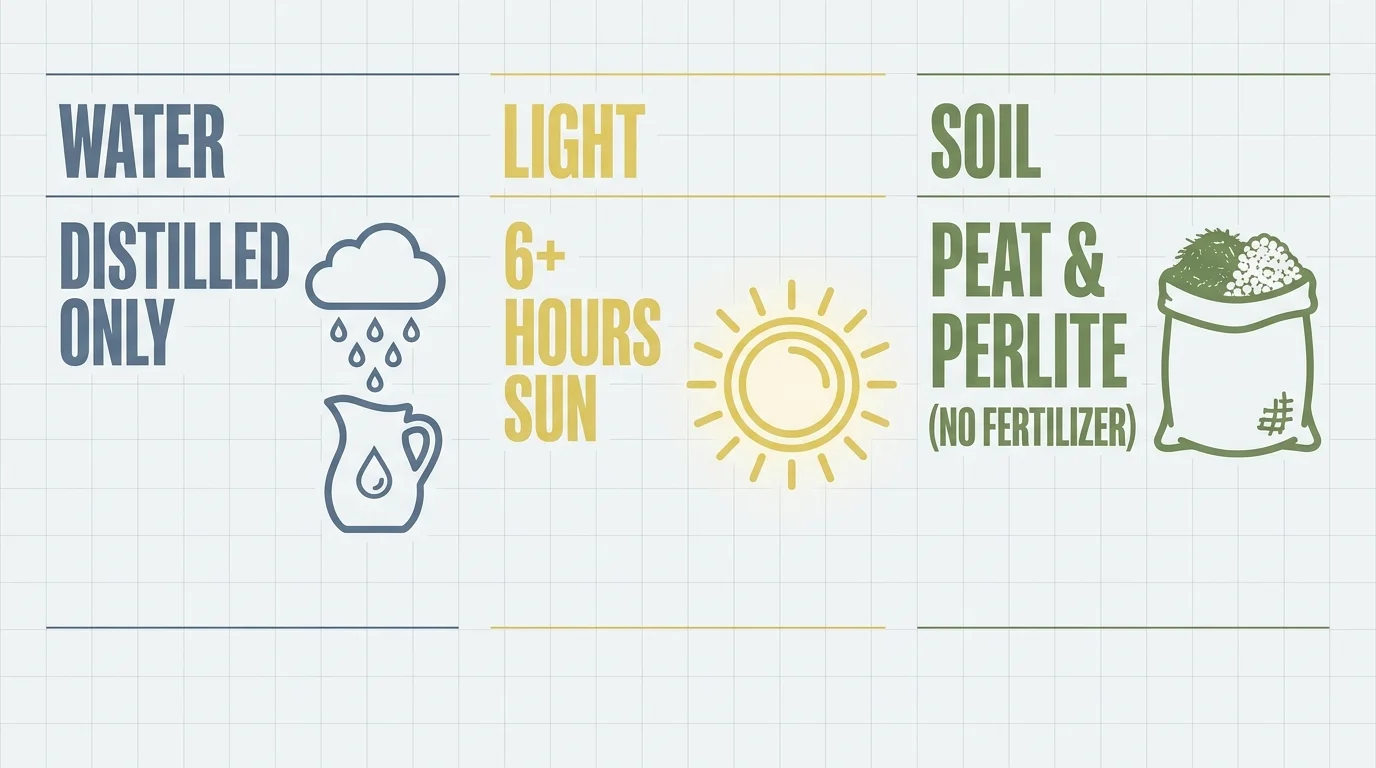
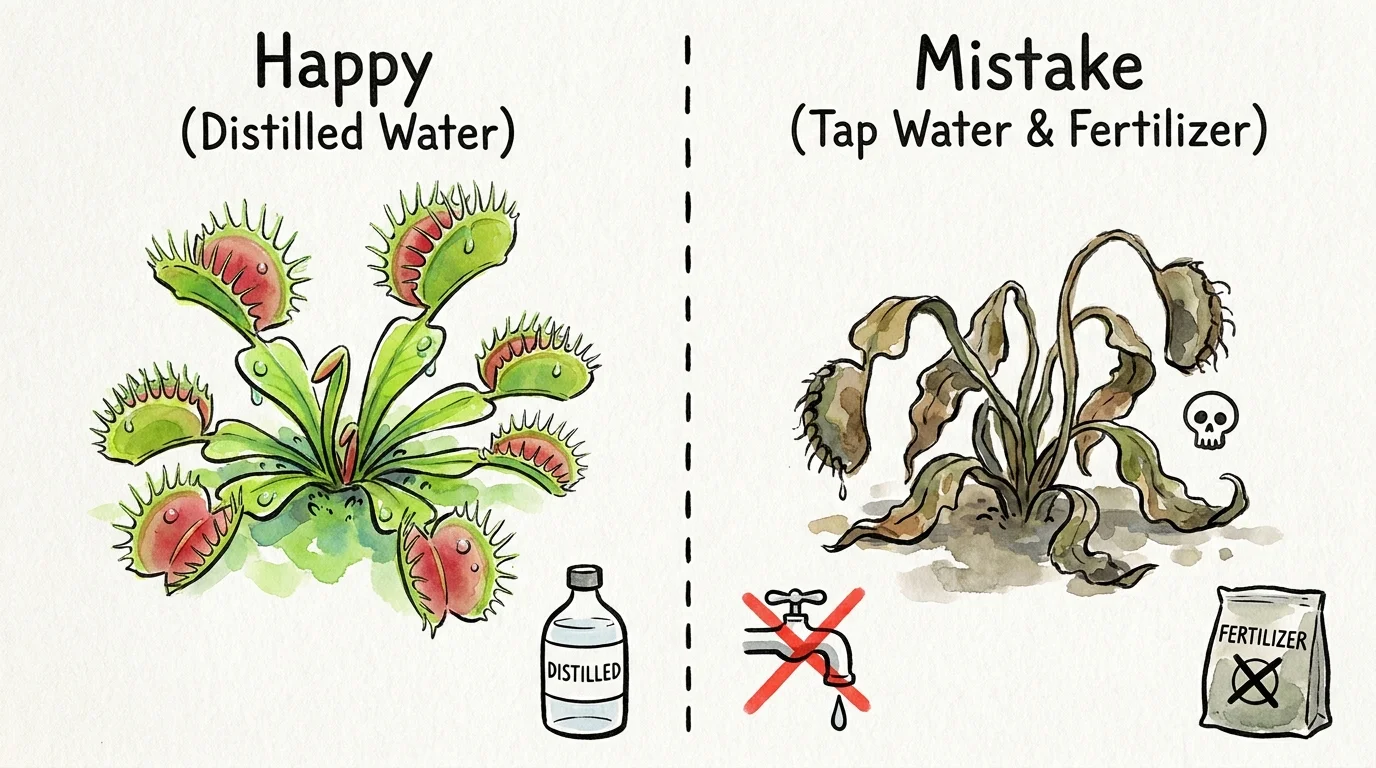
First and foremost, you must strictly control their water source. The tap water in most municipalities contains chlorine, chloramine, calcium, magnesium, and dissolved heavy metals.
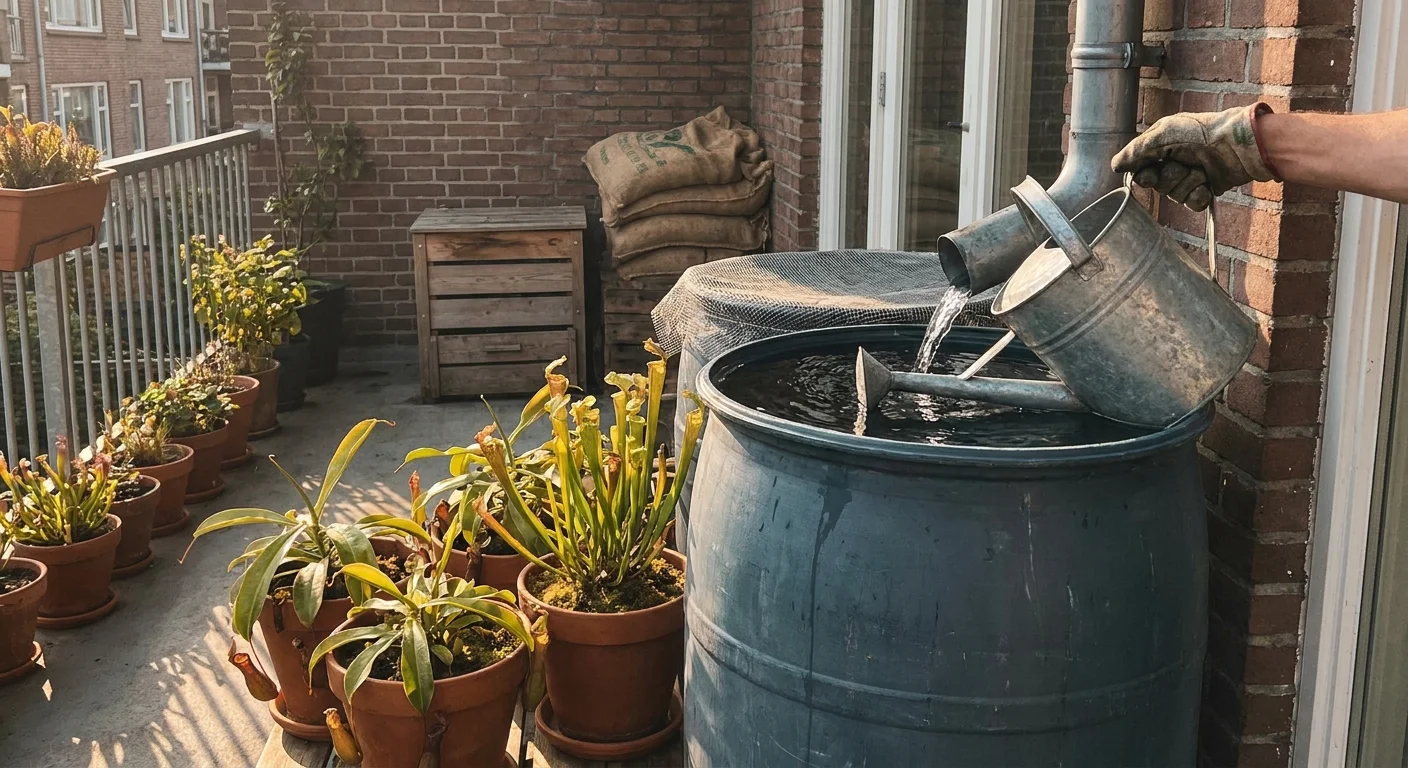
While completely safe for humans and standard vegetables, these trace minerals will accumulate in a bog container and quickly poison carnivorous roots. You must exclusively use rainwater, distilled water, or water purified through a reverse osmosis (RO) system.
Most carnivorous plants prefer the “tray method,” where their pot sits in a saucer filled with an inch of pure water at all times. The soil acts like a sponge, drawing moisture upward and keeping the roots happily wet.
Light is the engine that drives a carnivorous plant’s metabolism. Digesting an insect requires a massive amount of energy, which the plant must supplement with robust photosynthesis.
Temperate species, including Venus Flytraps and Sarracenia, demand direct, unfiltered sunlight for at least six to eight hours a day. Without adequate sun, they will grow long, weak, green leaves and eventually stop producing traps altogether.
If you are growing indoors without a south-facing window, you must invest in high-quality, full-spectrum LED grow lights to keep them vibrant and healthy.
Finally, you must respect the dormancy cycle. Species native to North America experience cold winters in the wild.
As days shorten and temperatures drop in late autumn, these plants will stop growing, and their leaves may turn black and die back to the rhizome. This is not a sign of failure; it is a required hibernation.
During dormancy, keep the soil only slightly damp rather than waterlogged, and place the pot in a chilly location (between 35°F and 50°F) for three to four months.
If you live in an apartment without a cold garage, you can unearth the rhizomes, wrap them in slightly damp sphagnum moss, place them in a zip-top bag, and store them in the crisper drawer of your refrigerator until spring.
Common Mistakes And Troubleshooting
Even seasoned gardeners make errors when transitioning to unusual plants. Because their needs differ so vastly from traditional agriculture, it is easy to accidentally kill a carnivorous plant with kindness.
By understanding the common pitfalls, you can keep your botanical collection thriving for years.
- Feeding them human food: Never feed a Venus Flytrap or pitcher plant raw hamburger meat, cheese, or dead bugs you found on a windowsill. Human food contains complex fats and proteins the plant cannot digest, leading to rapid bacterial rot that will kill the trap and potentially the whole plant. If you grow them indoors and want to feed them, rehydrate freeze-dried bloodworms (fish food) and gently apply a tiny amount to the traps.
- Applying chemical fertilizers: Do not add liquid fertilizer, compost tea, or standard houseplant food to the soil or water tray. The nitrogen burn will destroy the root system in a matter of days. The plants will get all the nutrients they need by capturing insects.
- Triggering traps for fun: Poking a Venus Flytrap with a pencil to watch it close drains its energy reserves. If a trap closes on empty air, it takes several days to reopen, robbing the plant of potential hunting time and photosynthetic surface area.
- Using terracotta pots: As mentioned previously, unglazed clay pots evaporate water quickly and leach harmful minerals into the soil. Stick to plastic or fully glazed ceramics.
If you notice the traps on your plants turning black and dying off one by one, do not panic. Carnivorous plants naturally cycle through their leaves.
As long as the new growth emerging from the center of the plant looks firm and brightly colored, the plant is completely healthy. Simply use sharp, sterilized snips to prune away the dead foliage to prevent fungal growth.
Sustainable And Eco Friendly Practices
As you expand your collection of meat eating plants, it is vital to keep sustainability in mind. The primary component of most carnivorous plant soil, sphagnum peat moss, is harvested from ancient bogs.
These bogs are crucial carbon sinks, and over-harvesting contributes to habitat destruction and climate change. As an eco-conscious gardener, consider transitioning to sustainable alternatives.
To balance your predatory plants, it is also beneficial to incorporate pollinator-friendly plants for balconies and patios that support the wider ecosystem.
Coconut coir (the fibrous husk of coconuts) provides a fantastic, renewable substitute for peat moss. However, because coconuts grow near the ocean, commercial coir is heavily laden with salt.
If you use coconut coir for carnivorous plants, you must wash and soak it multiple times in distilled water until all the salts are thoroughly flushed out. Alternatively, sourcing live sphagnum moss from sustainable, farm-raised suppliers provides an excellent growing medium without damaging natural ecosystems.
Furthermore, never purchase plants poached from the wild. Carnivorous plants face severe threats in their native habitats due to land development and illegal collection.
Always buy from reputable nurseries that propagate their stock via tissue culture, seed, or division. Supporting ethical growers ensures these fascinating carnivorous species remain in the wild for generations to come.
For trustworthy gardening information, visit: National Garden Bureau, National Wildlife Federation — Garden for Wildlife and Lady Bird Johnson Wildflower Center. These organizations provide expert, research-based advice for gardeners at all levels.
Frequently Asked Questions
Do I absolutely have to feed my carnivorous plants?
If you keep your plants outside on a balcony or patio, you do not need to feed them at all; they will naturally attract and catch plenty of insects on their own.
If you grow them in a sterile indoor terrarium, you should provide a supplemental feeding of rehydrated bloodworms or live wingless fruit flies once every few weeks during the active growing season.
However, they will not immediately die if they go without a meal—they will simply grow much slower.
Are these plants dangerous to my pets or children?
No, carnivorous plants are completely harmless to humans, dogs, and cats. Their digestive enzymes are extremely weak and only formulated to break down tiny insect exoskeletons.
If a cat chews on a pitcher plant or a child sticks a finger into a Venus Flytrap, the plant is the only one in danger of being damaged.
Why are my Venus Flytrap leaves growing long and flat with tiny traps?
This is a classic symptom of light starvation. When a Venus Flytrap does not receive enough direct sunlight, it abandons trap production and stretches its leaves wide to maximize its surface area for photosynthesis.
Move the plant to a much sunnier location or place it under a strong, full-spectrum LED grow light, and it will begin producing robust, colorful traps again.
Can I grow carnivorous plants in regular potting soil if I wash it first?
Absolutely not. Commercial potting soils contain organic compost, forest products, and pre-mixed fertilizers that cannot be washed away.
Planting a carnivorous plant in standard garden soil will burn its roots and kill the plant rapidly. You must always use a sterile, nutrient-free mix of pure peat moss (or washed coconut coir) and perlite or silica sand.
Expanding Your Carnivorous Collection
Starting a container garden filled with plants that eat animals opens the door to a deeply rewarding horticultural hobby.
As you master the basics of pure water, proper lighting, and nutrient-free soil, you will quickly find yourself captivated by the strange, alien beauty of these resilient survivors.
Small spaces are no longer a limitation but rather the perfect intimate setting to observe the microscopic battles taking place within your planters.
As your garden grows, keep an eye on your containers, as most garden plants that need replanting eventually outgrow their original pots.
Whether you choose the iconic snap of the Venus Flytrap or the elegant, cascading vines of the Tropical Pitcher Plant, these botanical predators bring unmatched character to your home.
Continue observing your plants daily, adjusting their microclimates as the seasons shift, and enjoy the natural pest control they provide. Happy growing, and enjoy your spectacular foray into the extraordinary world of carnivorous botany.
Disclaimer: This article is for informational purposes only and is not a substitute for professional gardening advice. Always consult local extension services or horticulture experts for region-specific guidance.