
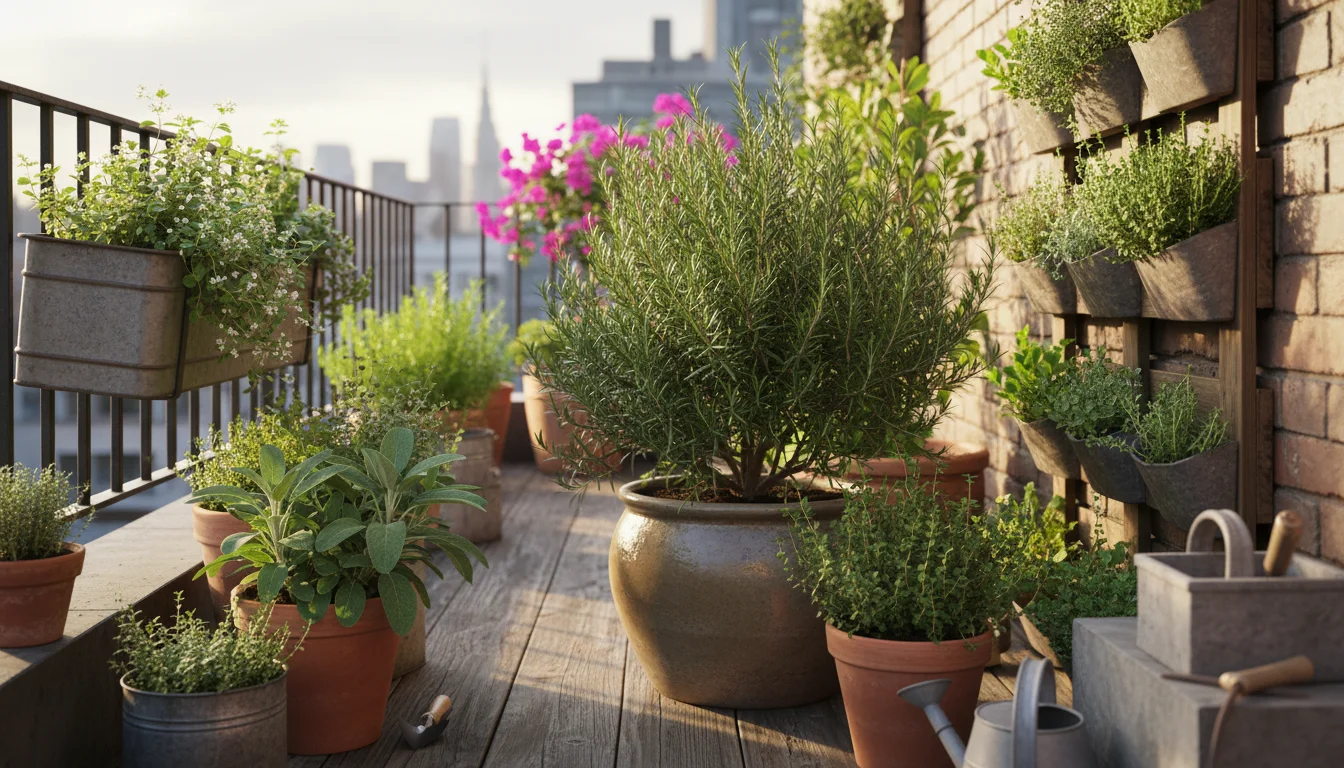
Summer brings abundant sunshine and the promise of fresh garden produce, but for many small-space gardeners, it also brings a familiar frustration: bolting basil.
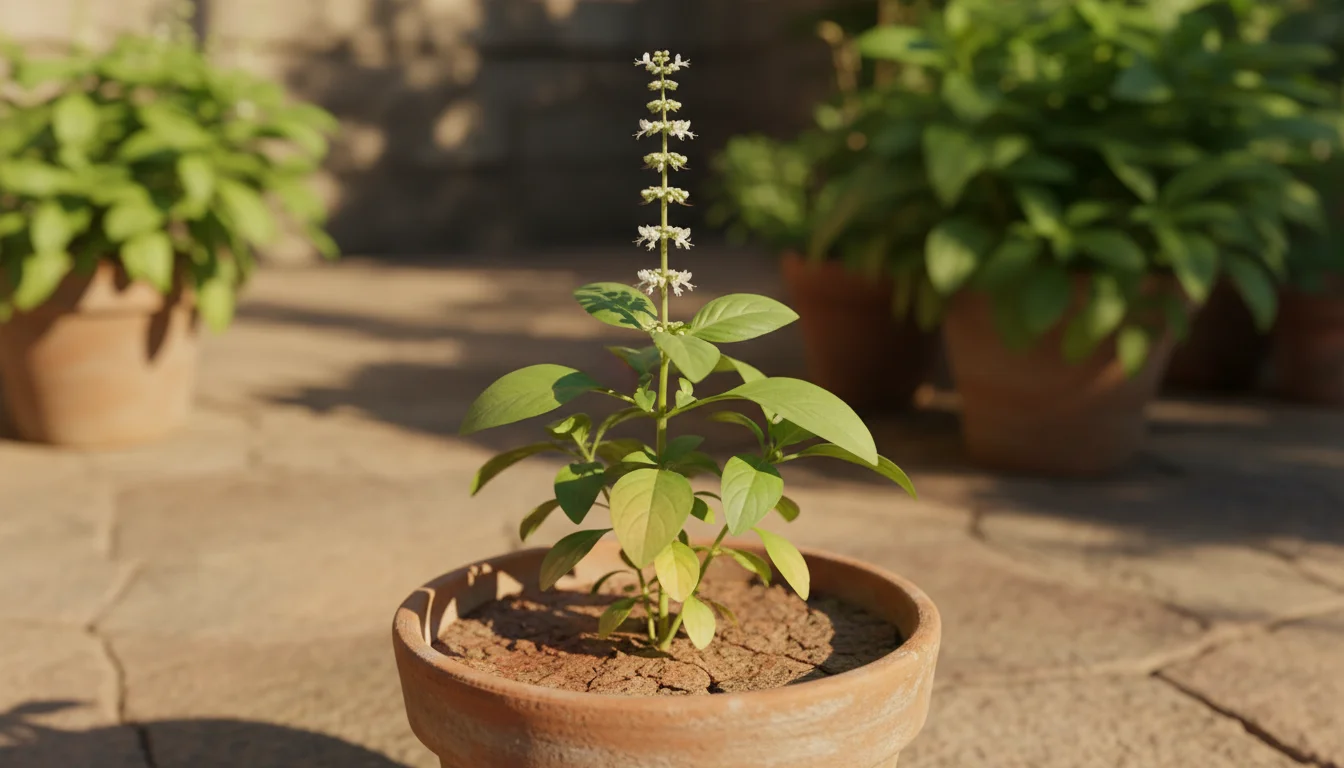
You diligently plant your sweet basil, envisioning endless pesto, only to watch it quickly shoot up a flower stalk, develop tiny flowers, and turn bitter as temperatures soar.
This common issue happens when plants prematurely go to seed, often triggered by heat stress and long daylight hours. It signals the end of the plant’s useful culinary life, leaving you with a disappointing harvest.
You do not need to abandon your dreams of fresh herbs in summer. Instead of battling basil’s natural inclination to bolt in the heat, you can pivot to herbs that naturally thrive in warm, sunny conditions.
Imagine stepping out onto your balcony or patio to snip vibrant, flavorful herbs that embrace the summer sun, remaining lush and productive even as temperatures climb past 90 degrees Fahrenheit.
This guide introduces you to three incredible heat-loving herbs that resist bolting, offering practical, actionable advice for growing them successfully in your pots, ensuring your summer kitchen always has a fresh supply.
Contents9 sections
- Understanding Herb Bolting and Summer Stress
- The Core Strategy: Choosing Heat-Tolerant Varieties
- Hero Herb 1: Greek Oregano, Your Resilient Mediterranean Ally
- Hero Herb 2: Thyme, The Fragrant Groundcover for Pots
- Hero Herb 3: Rosemary, The Sturdy Evergreen Bush
- Designing Your Sizzling Summer Herb Garden in Pots
- Essential Care for Thriving Heat-Tolerant Herbs
- Frequently Asked Questions
- Moving Beyond Basil Frustration
Understanding Herb Bolting and Summer Stress
Before we dive into our heat-loving heroes, let us understand why basil and many other annual herbs tend to “bolt” in the summer. Bolting refers to the process where a plant prematurely produces a flower stalk and goes to seed.
This happens because the plant perceives its growing season is coming to an end, often triggered by environmental stress such as high temperatures, long daylight hours, or even lack of water.
Its primary goal shifts from producing lush foliage to ensuring the survival of its species by creating seeds.
For extreme heat waves, our balcony heat dome survival guide offers extra techniques to protect vulnerable container plants.
When a plant bolts, several undesirable changes occur. The leaves often become smaller, tougher, and significantly more bitter.
The plant diverts its energy from foliage production to flower and seed development, which reduces the quantity and quality of your culinary harvest. For herbs like basil, this means a quick end to that sweet, aromatic flavor you desire for your recipes.
While you can sometimes delay bolting by pinching off flower buds, this becomes a constant battle in intense summer heat, and it rarely fully prevents the flavor change.
Basil, a tropical plant, thrives in warm conditions but becomes stressed when temperatures consistently exceed 85 degrees Fahrenheit. This stress, combined with the long daylight hours of summer, tricks the plant into thinking it needs to reproduce quickly before adverse conditions persist.
Understanding this natural plant behavior helps you make smarter choices about which herbs to grow during the hottest months, leading to a much more satisfying gardening experience.
The Core Strategy: Choosing Heat-Tolerant Varieties
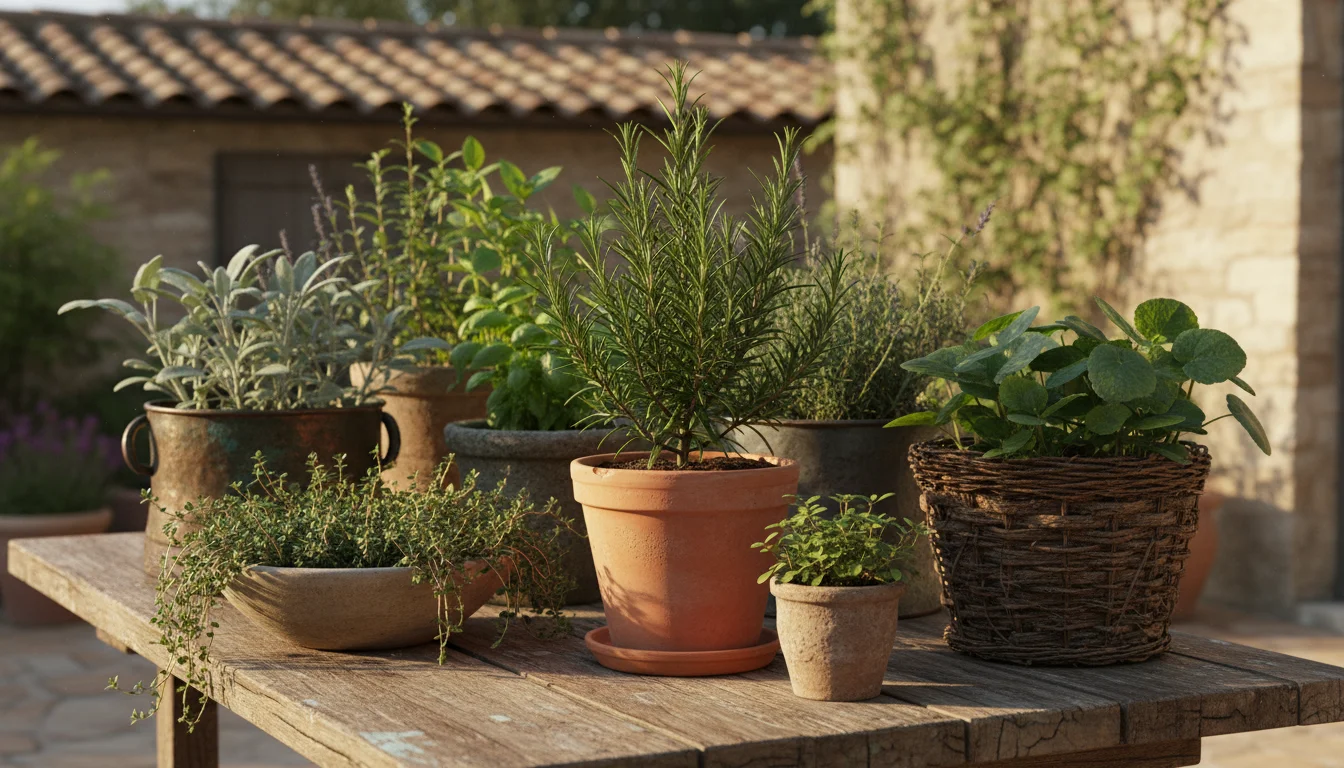
The most effective way to avoid the frustration of bolting herbs in summer is to select varieties that naturally tolerate and even thrive in hot, sunny conditions. Instead of fighting nature, you collaborate with it.
Many Mediterranean herbs, native to regions with intense sun and often dry spells, developed evolutionary adaptations to handle these challenging environments. They maintain their flavor and foliage production even when the mercury rises, making them perfect candidates for your sizzling summer pots.
If you want to combine several robust varieties in a single container, try building a mediterranean pizza pot garden for easy harvesting.
These resilient herbs often possess characteristics that aid their survival in heat. They may have smaller, thicker, or hairy leaves to reduce water loss.
Their root systems are often more extensive, allowing them to seek out moisture deeper in the soil. Furthermore, their genetic makeup simply does not trigger the bolting response as readily as basil when faced with high temperatures.
By choosing these naturally robust plants, you ensure a continuous supply of fresh flavor, turning your summer gardening efforts into consistent success.
Hero Herb 1: Greek Oregano, Your Resilient Mediterranean Ally
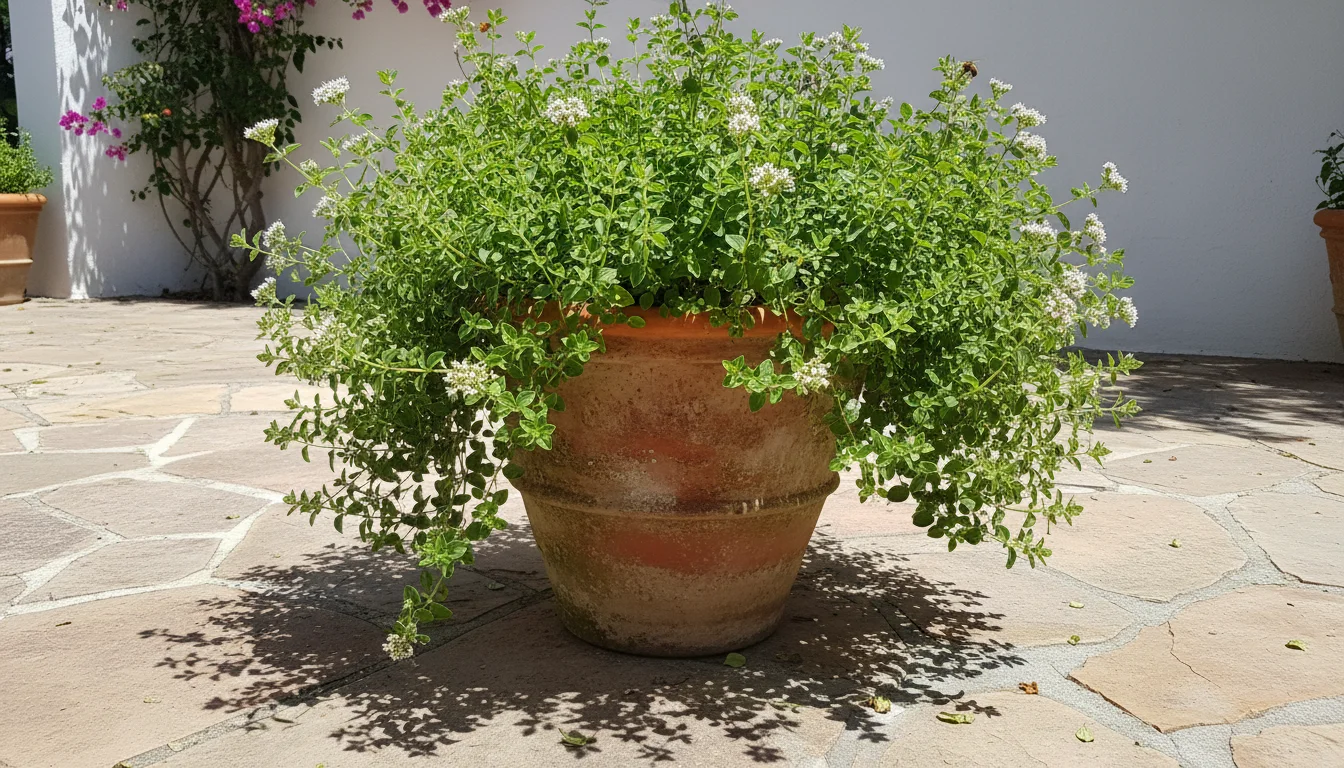
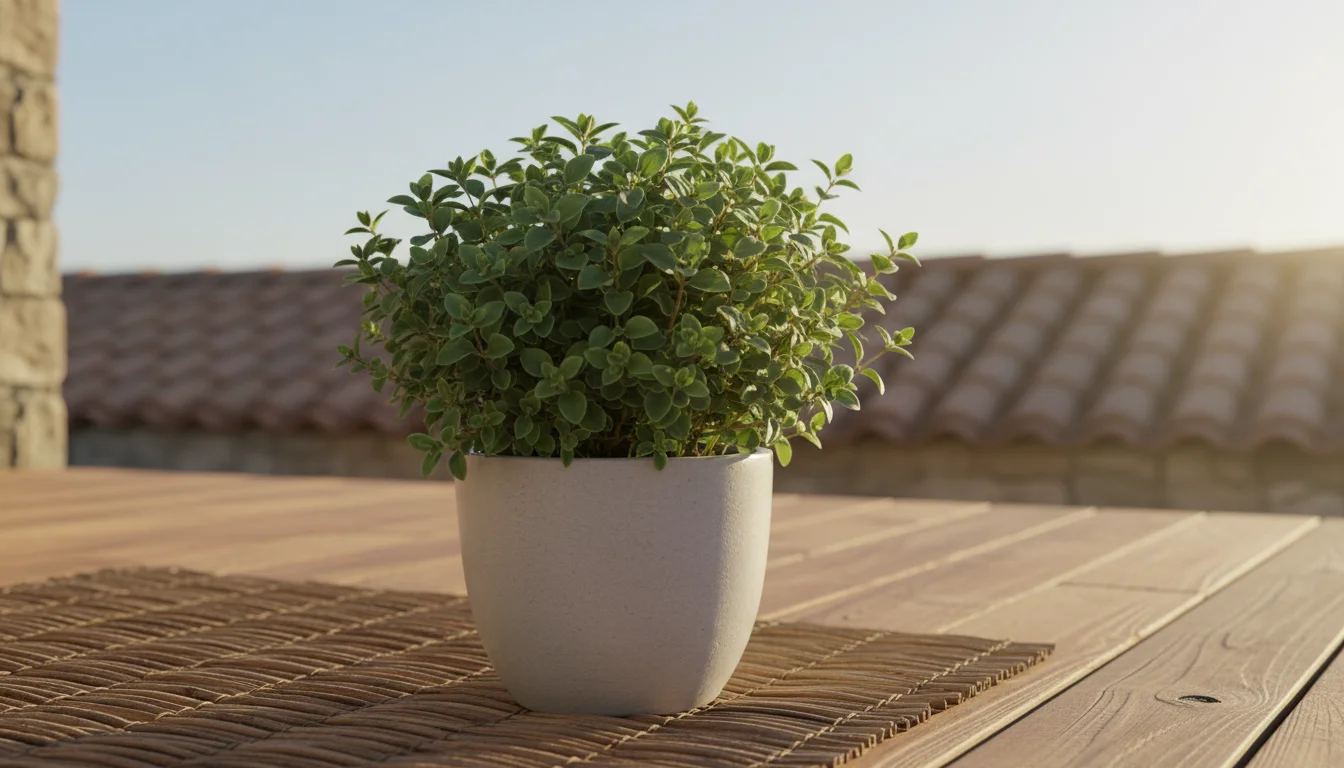
Greek oregano (Origanum vulgare hirtum) stands out as a true champion among heat tolerant herbs. Unlike its milder cousins, Greek oregano boasts a robust, pungent flavor that intensifies with warm weather.
This perennial herb originates from the rocky, sun-drenched hillsides of the Mediterranean, which explains its remarkable ability to withstand intense summer heat and dry spells without missing a beat.
In addition to great flavor, Mediterranean staples also work brilliantly as companion herbs that boost vegetable growth when potted alongside summer crops.
Growth Habit and Flavor Profile
Greek oregano typically grows as a compact, bushy plant, reaching about 12-18 inches tall and spreading up to 2 feet wide. Its small, slightly fuzzy leaves are packed with essential oils, giving it a distinctive, peppery, earthy aroma and taste.
This makes it an indispensable ingredient in Italian, Greek, and Mexican cuisines, perfect for sauces, grilled meats, and roasted vegetables. Its flavor actually benefits from hot conditions, becoming more concentrated and potent.
If you harvest more leaves than you can use immediately, explore easy ways to preserve your harvest into flavorful herb salts and infused oils.
Why it Loves Heat and Sun
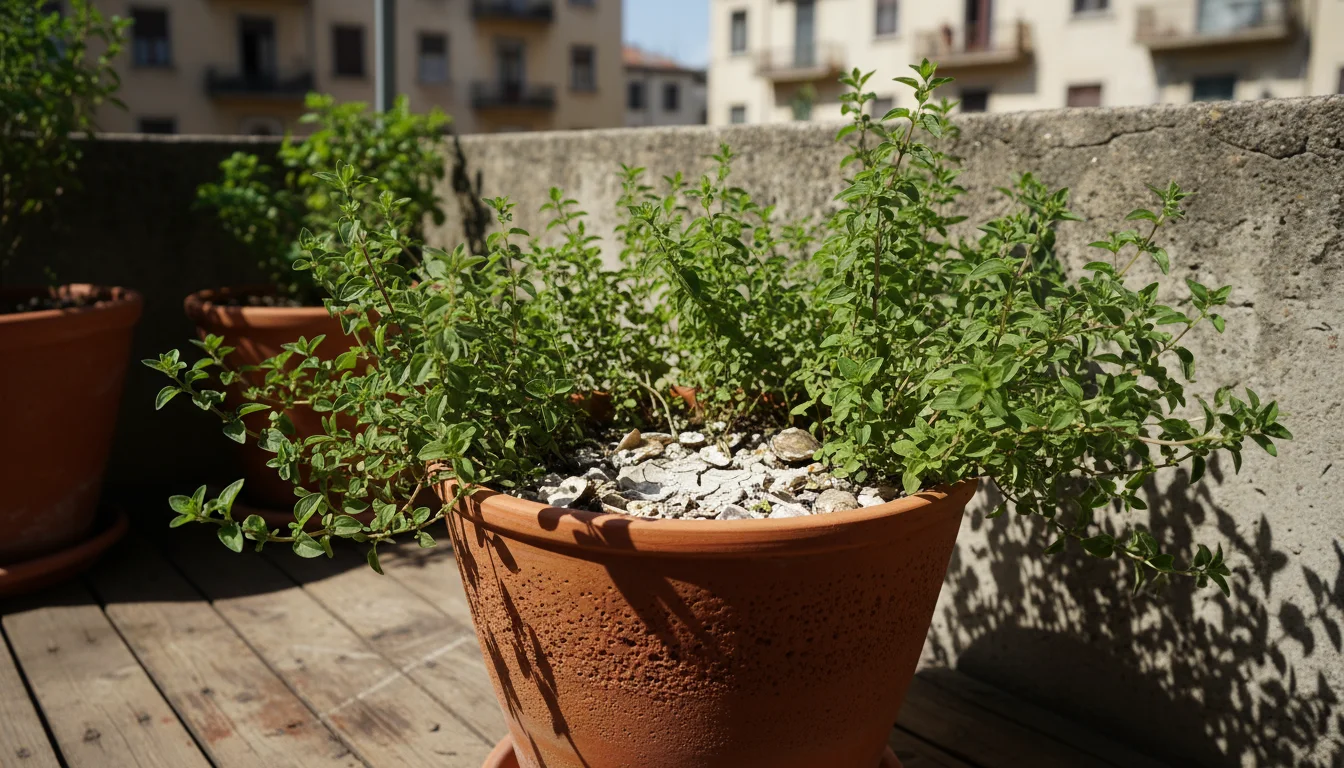
The evolutionary background of Greek oregano dictates its preferences. It thrives in full sun, meaning it needs at least 6-8 hours of direct sunlight daily to produce the most flavorful leaves.
Its natural habitat is often characterized by poor, rocky soil and infrequent rainfall. This translates into a plant that tolerates dry conditions and heat exceptionally well, making it an ideal candidate for summer herbs for balcony garden containers that often dry out quickly.
Managing hot exposures is even easier when you combine tough plants with the shadow shift strategy to leverage balcony shade.
Growing Greek Oregano in Pots: Step-by-Step
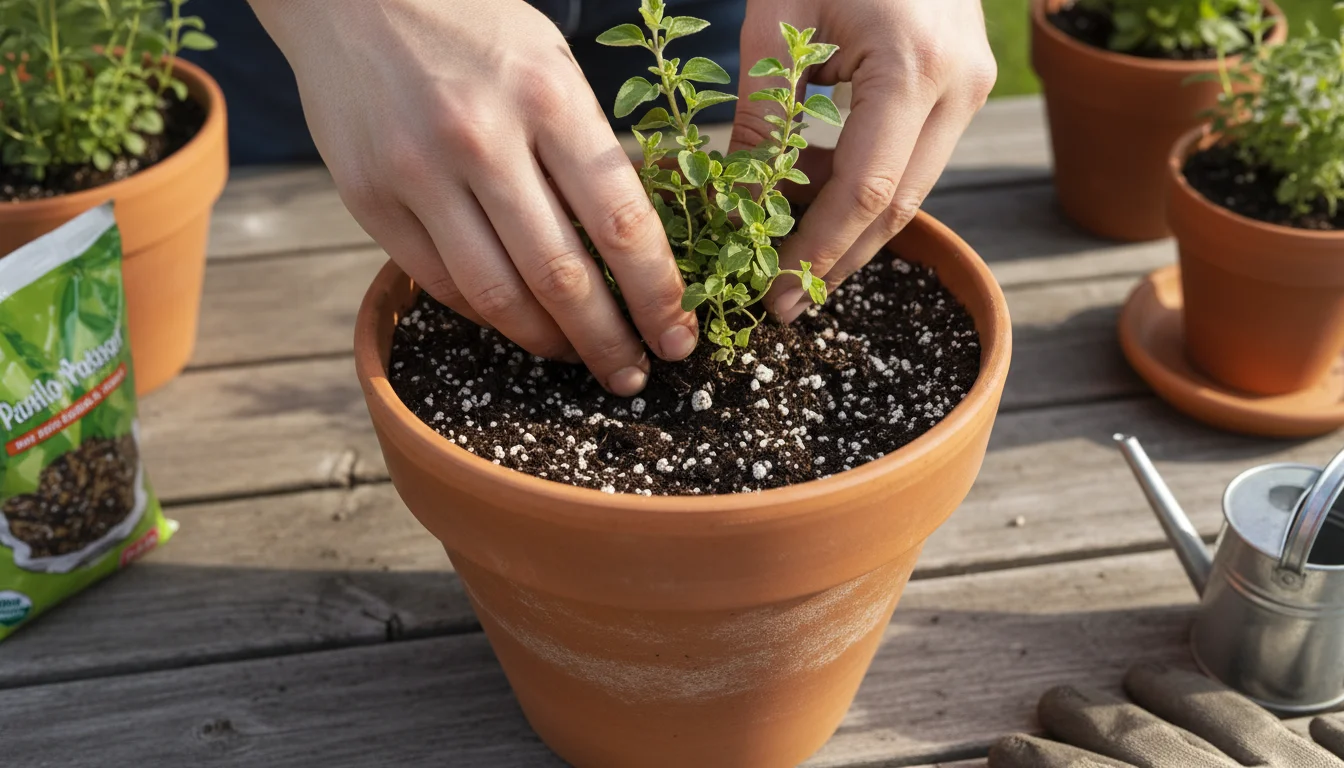
Growing Greek oregano in pots is straightforward. Follow these steps for success:
- Container Choice: Select a pot at least 8-10 inches in diameter with excellent drainage holes. Terra cotta pots are an excellent choice because their porous nature helps prevent waterlogging, which oregano dislikes.
- Soil Requirements: Use a well-draining potting mix. This means the soil allows water to pass through freely, preventing it from sitting around the roots. You can enhance drainage by mixing in perlite or coarse sand to a standard potting mix. Oregano prefers slightly alkaline to neutral soil, but it tolerates a range of pH levels.
- Planting: Transplant young oregano plants into your prepared pot. Dig a hole just large enough for the root ball, place the plant, and backfill with soil, ensuring the plant is at the same depth it was in its nursery container.
- Sunlight: Place your pot in a location that receives full sun. A south-facing balcony or a sunny patio corner works perfectly.
- Watering: This is crucial for growing greek oregano in pots. Water thoroughly when the top 1-2 inches of soil feel dry to the touch. Then, allow the soil to dry out almost completely before watering again. Overwatering is the most common cause of oregano failure, leading to root rot.
- Fertilizing: Oregano is not a heavy feeder. A light application of a balanced liquid fertilizer once a month at half strength, or a slow-release granular fertilizer once at the start of summer, suffices. Too much fertilizer can dilute the flavor.
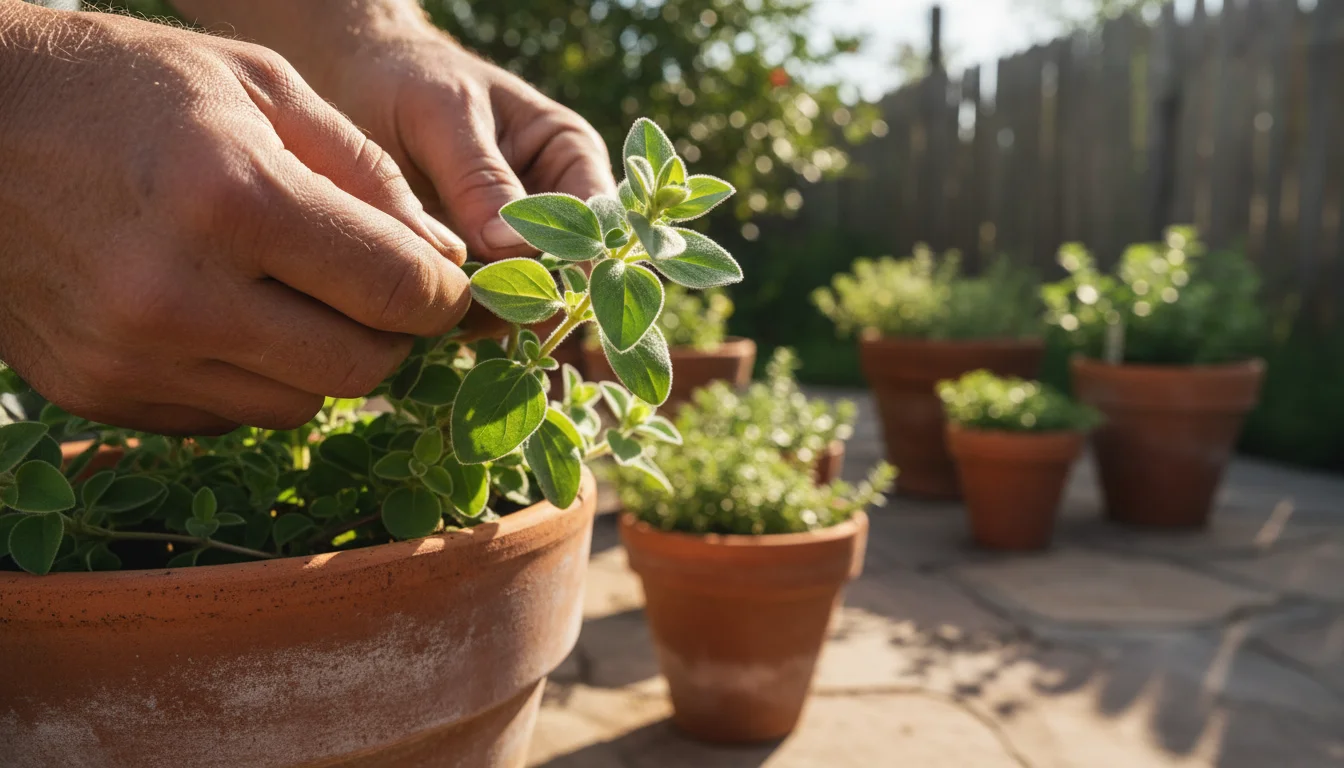
- Pruning and Harvesting: Regularly harvest your oregano by snipping off the top few inches of stems. This encourages bushier growth and prevents the plant from getting leggy. If you see any flower buds starting to form, pinch them off to direct energy back into leaf production, although Greek oregano is much less prone to bolting than basil.
Greek oregano is incredibly low-maintenance and truly thrives on neglect once established, making it a perfect choice for gardeners seeking easy success in hot climates.
Hero Herb 2: Thyme, The Fragrant Groundcover for Pots
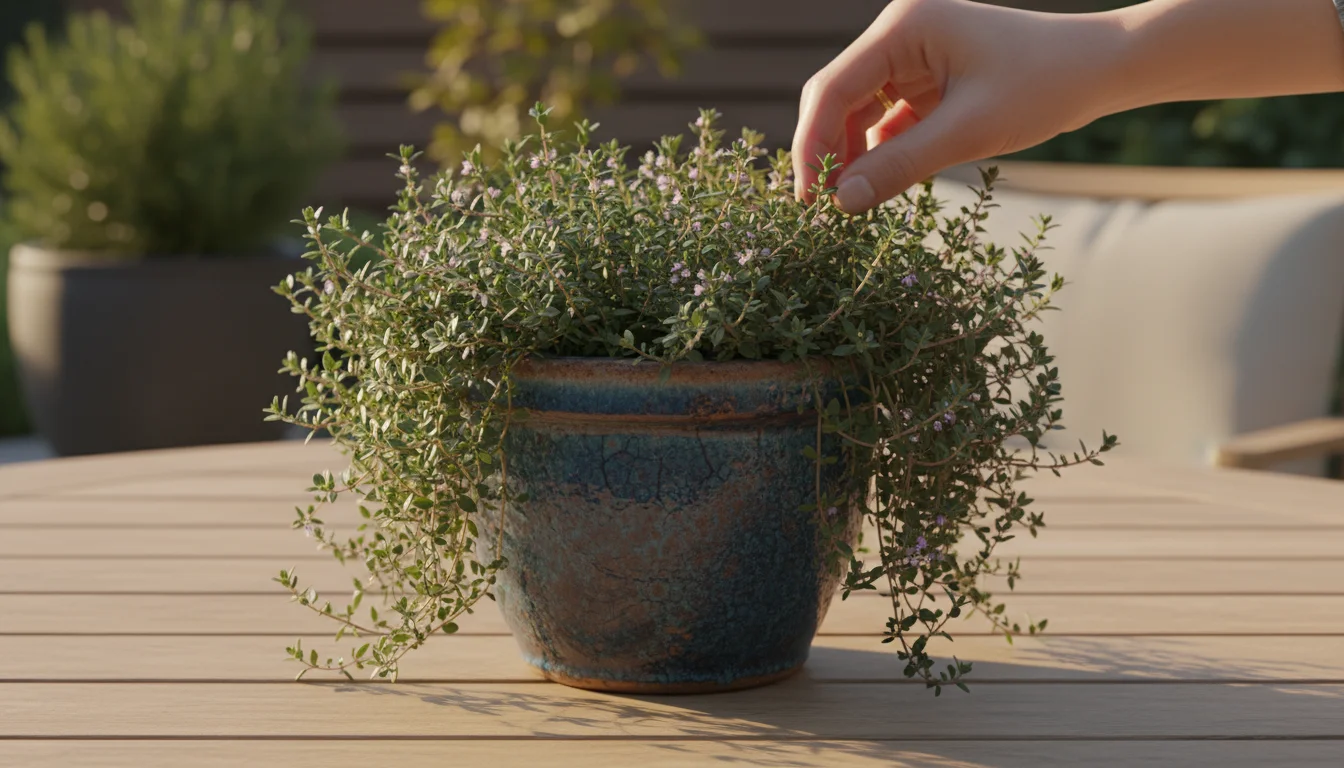
Thyme (Thymus vulgaris) is another robust herb that shines in hot, sunny conditions. Its delicate appearance belies its tough, resilient nature.
With its tiny, aromatic leaves and low-growing habit, thyme is a versatile addition to any container herb garden, offering both culinary delight and attractive foliage.
Citrusy varieties like lemon thyme are also key candidates if you want to create a patio tea garden for refreshing summer infusions.
Pairing thyme with other fast-growing culinary herbs is an easy way to maintain a continuous supply of fresh flavors.
Description, Varieties, and Flavor
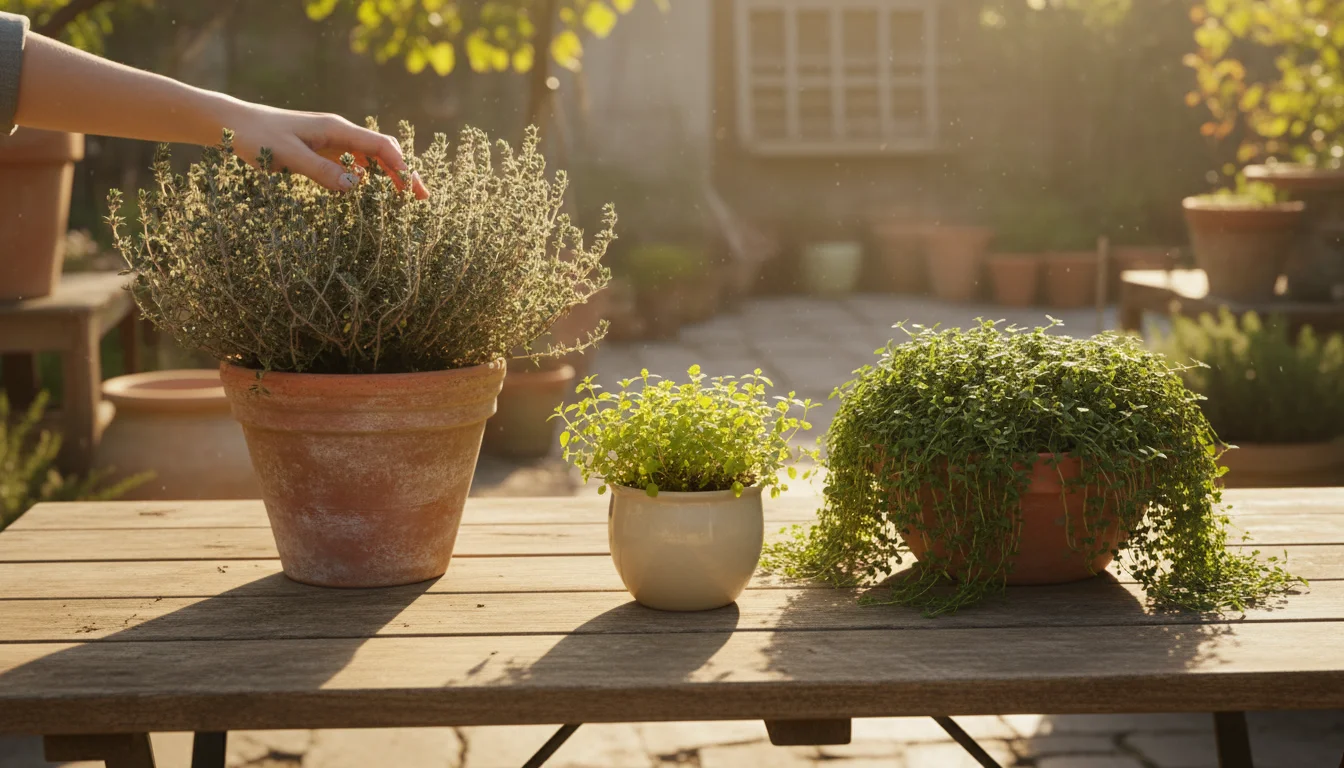
Common thyme grows into a small, woody sub-shrub, typically reaching 6-12 inches tall and spreading up to 18 inches. Its leaves are tiny, oval, and gray-green, emanating a warm, savory, slightly minty aroma when brushed or crushed.
Many varieties exist, including lemon thyme with its citrusy notes, and creeping thyme, which spills beautifully over the edges of pots. The flavor of thyme is robust and holds up well to long cooking times, making it excellent for stews, roasted chicken, and marinades.
Thyme retains its aromatic qualities well when dried, giving you plenty of options for using dried balcony herbs throughout the colder months.
Heat and Drought Tolerance
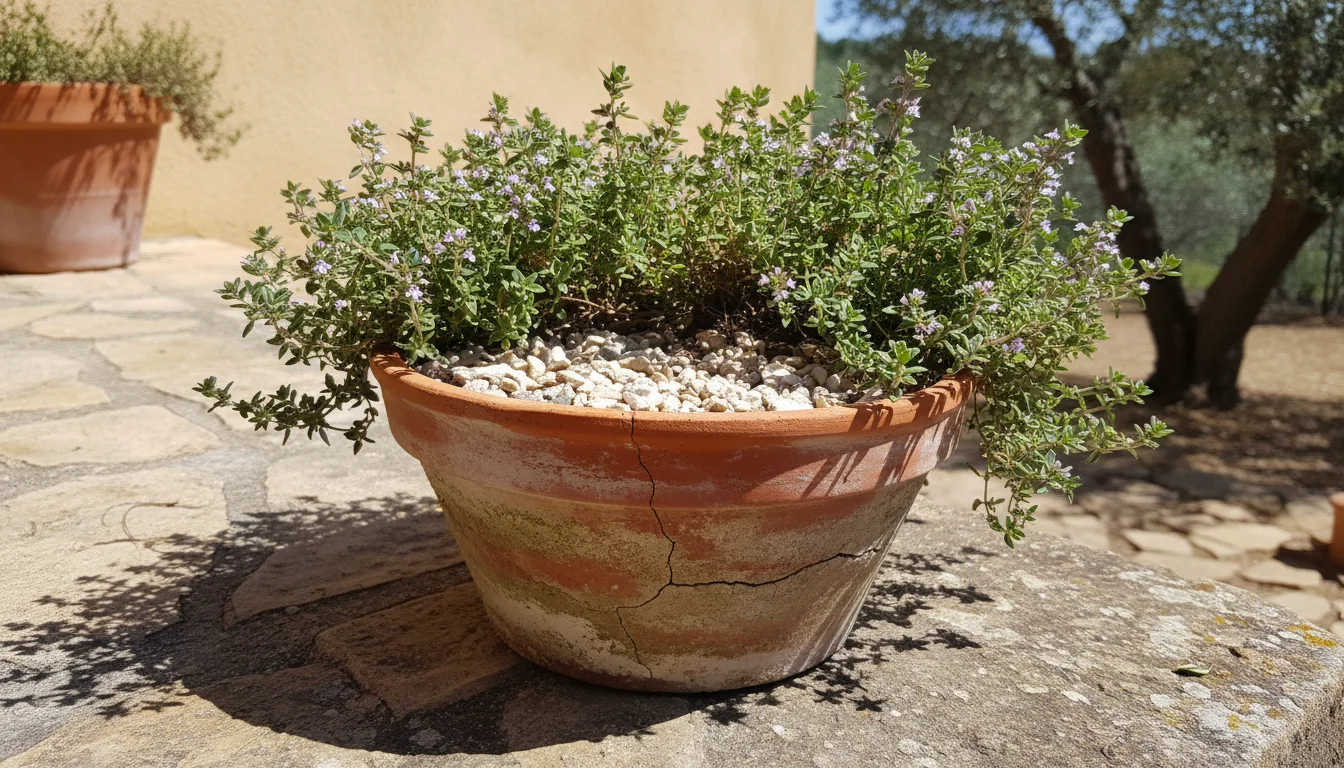
Like oregano, thyme originates from arid, rocky Mediterranean regions. It evolved to tolerate intense sun, high temperatures, and periods of drought.
These characteristics make it one of the best heat tolerant herbs for container gardening, as it does not wilt or bolt readily when exposed to summer’s harsh conditions. Its small leaves help minimize water loss through transpiration, further contributing to its drought resistance.
For broader garden maintenance during severe spikes, practice essential techniques for keeping potted plants alive in heat waves.
Container Growing Specifics
Growing thyme in pots follows similar principles to oregano:
- Container and Placement: Choose a pot with good drainage, at least 6-8 inches in diameter. Thyme looks beautiful in terra cotta or even shallow, wide containers, especially creeping varieties. Place it in a spot receiving full sun, ensuring at least 6 hours of direct light daily.
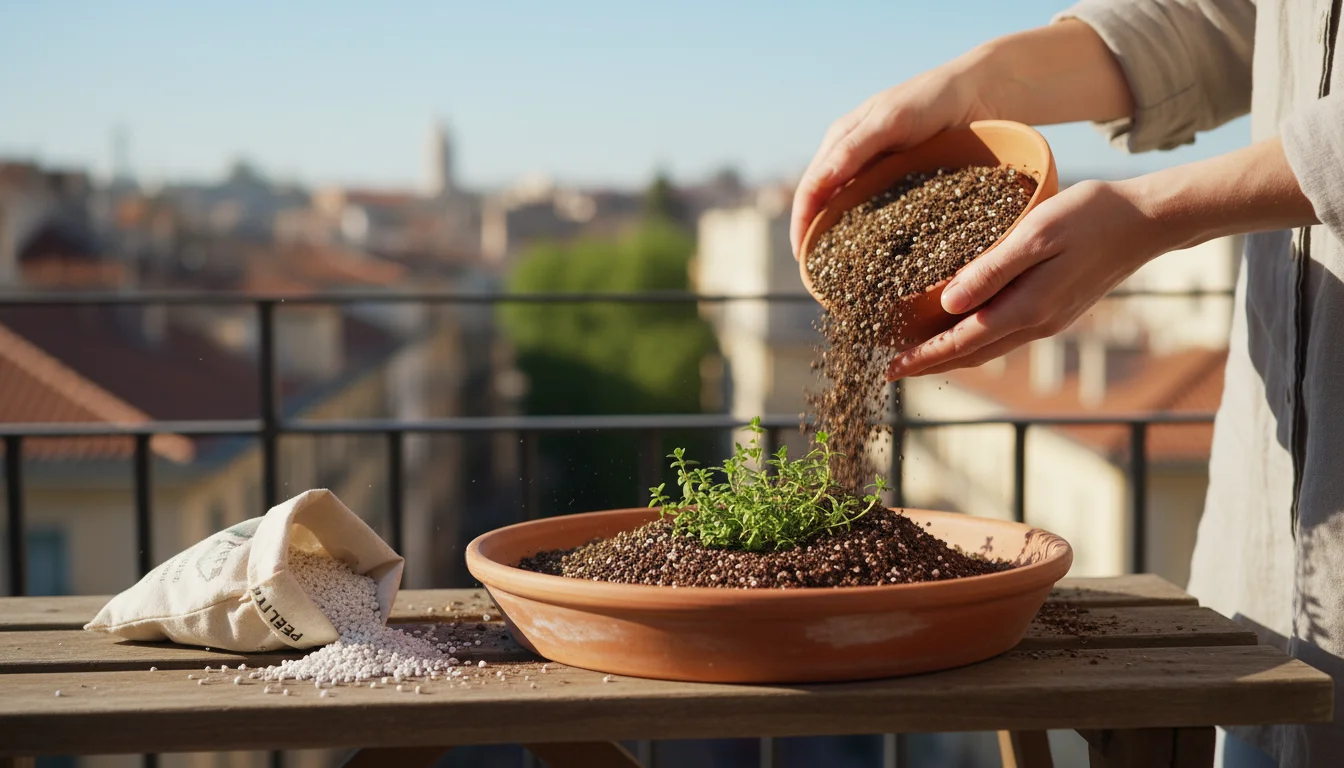
- Soil: Thyme absolutely requires well-draining soil. A sandy or gritty potting mix is ideal. You can amend regular potting soil with extra perlite or sand to improve drainage. Poor drainage inevitably leads to root rot for thyme.
- Watering: Water thoroughly but infrequently. Allow the top 1-2 inches of soil to dry out completely between waterings. Thyme is more forgiving of underwatering than overwatering. In hot summer weather, you might need to water more frequently, but always check soil moisture first.
- Fertilizing: Thyme, like many herbs, performs best with minimal fertilization. An annual application of compost or a very dilute, balanced liquid fertilizer in spring is usually sufficient. Over-fertilizing can lead to leggy growth and reduced flavor concentration.
- Pruning for Bushiness and Flavor: Regular harvesting keeps thyme bushy and encourages new growth. Snip off sprigs as needed, cutting back to just above a leaf node. You can also give the plant a more significant trim (up to one-third of its growth) in late spring or early summer to rejuvenate it and prevent it from becoming too woody.
- Pest Resistance: Thyme’s strong aromatic oils act as a natural deterrent to many common garden pests, meaning you will likely encounter very few issues with insects.
Embrace thyme’s low-maintenance nature. Its sturdy constitution means you spend less time fussing and more time enjoying its delightful aroma and flavor.
Hero Herb 3: Rosemary, The Sturdy Evergreen Bush
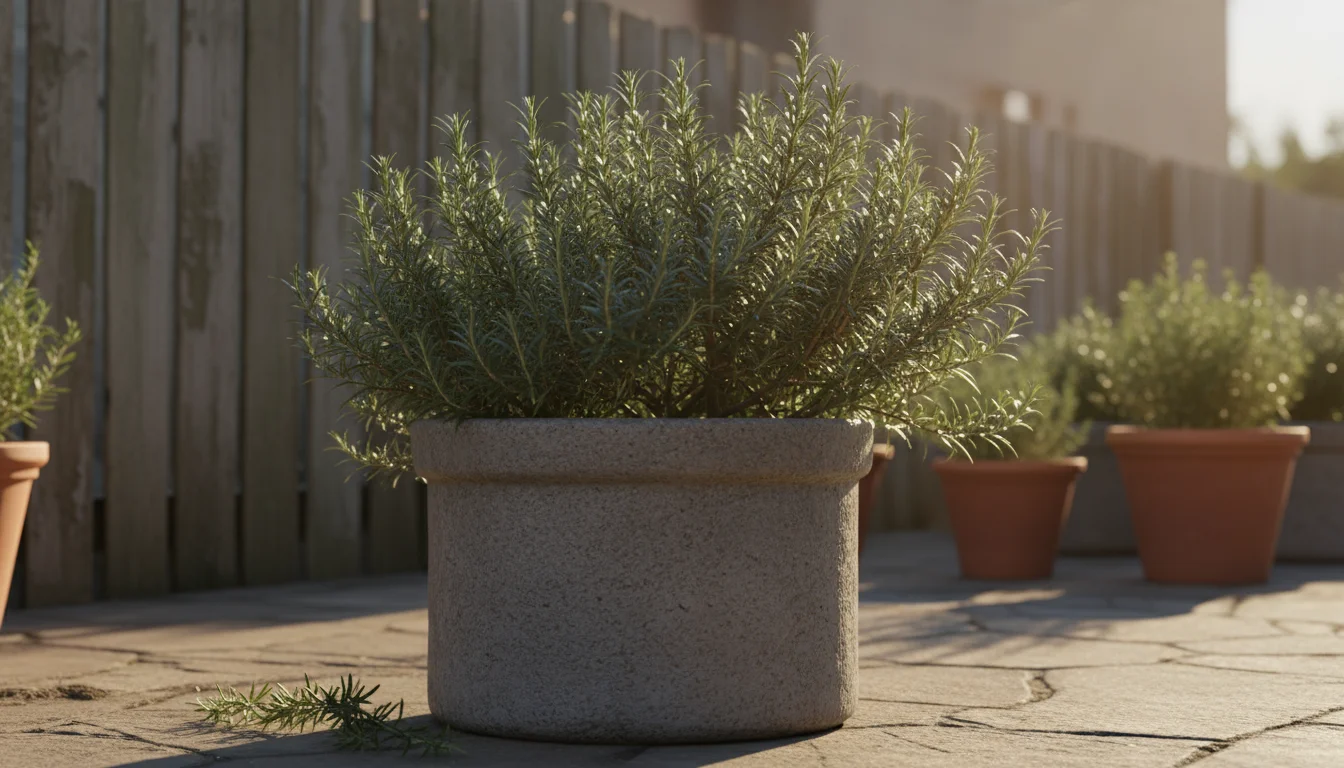
Rosemary (Salvia rosmarinus, formerly Rosmarinus officinalis) is perhaps the quintessential Mediterranean herb, renowned for its strong, pine-like aroma and flavor. This evergreen shrub is perfectly suited for growing in containers in hot climates, offering year-round beauty and culinary utility.
If you are looking for herbs that like sun and can withstand the heat, rosemary is an excellent choice.
As temperatures drop in late autumn, potted rosemary can easily transition inside so you can grow herbs indoors for fresh winter cooking.
Description and Uses
Rosemary grows into an upright or sprawling woody shrub, often reaching 2-4 feet tall in containers, though it can grow much larger in the ground. Its needle-like leaves are dark green on top and silvery underneath, densely covering its stems.
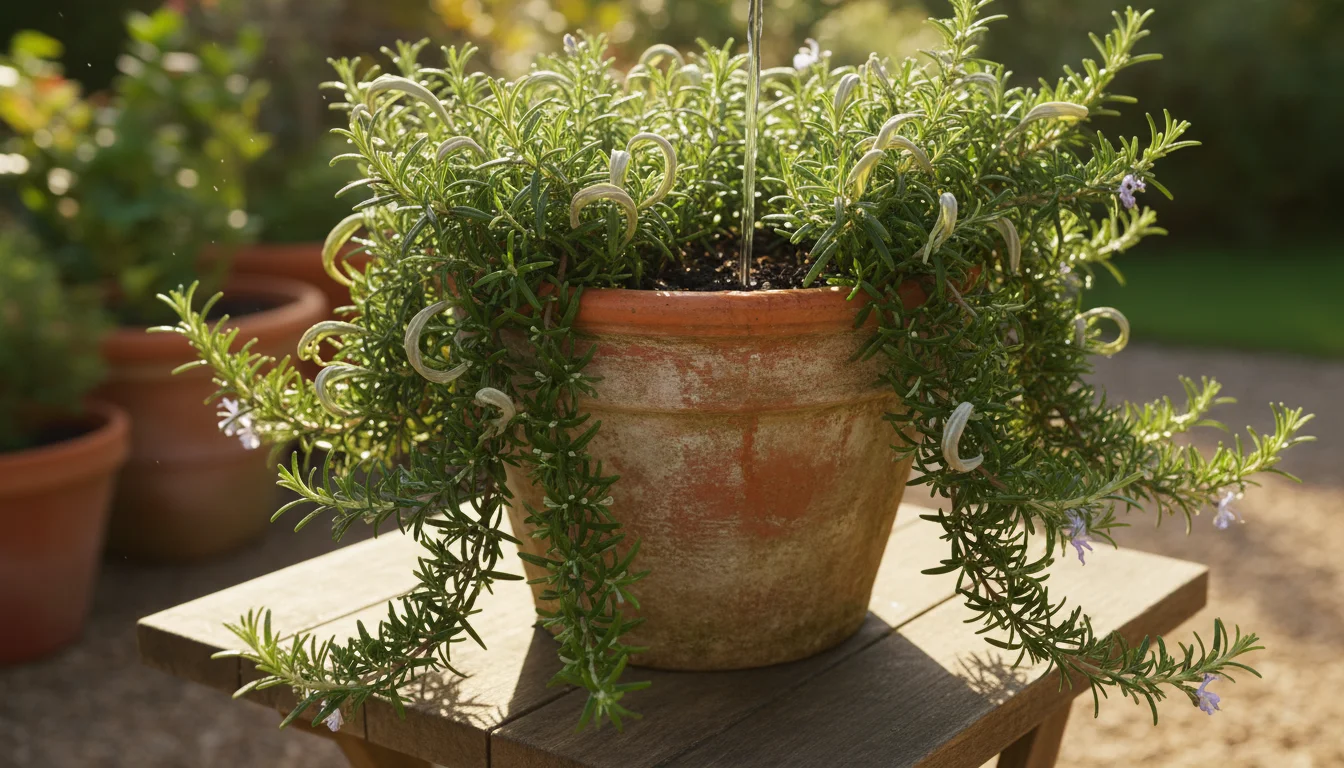
Varieties range from upright types like ‘Arp’ and ‘Tuscan Blue’ to prostrate or creeping forms that cascade elegantly over pot edges. Rosemary’s potent flavor pairs wonderfully with roasted potatoes, chicken, lamb, and even some desserts.
Adaptation to Hot, Dry Climates
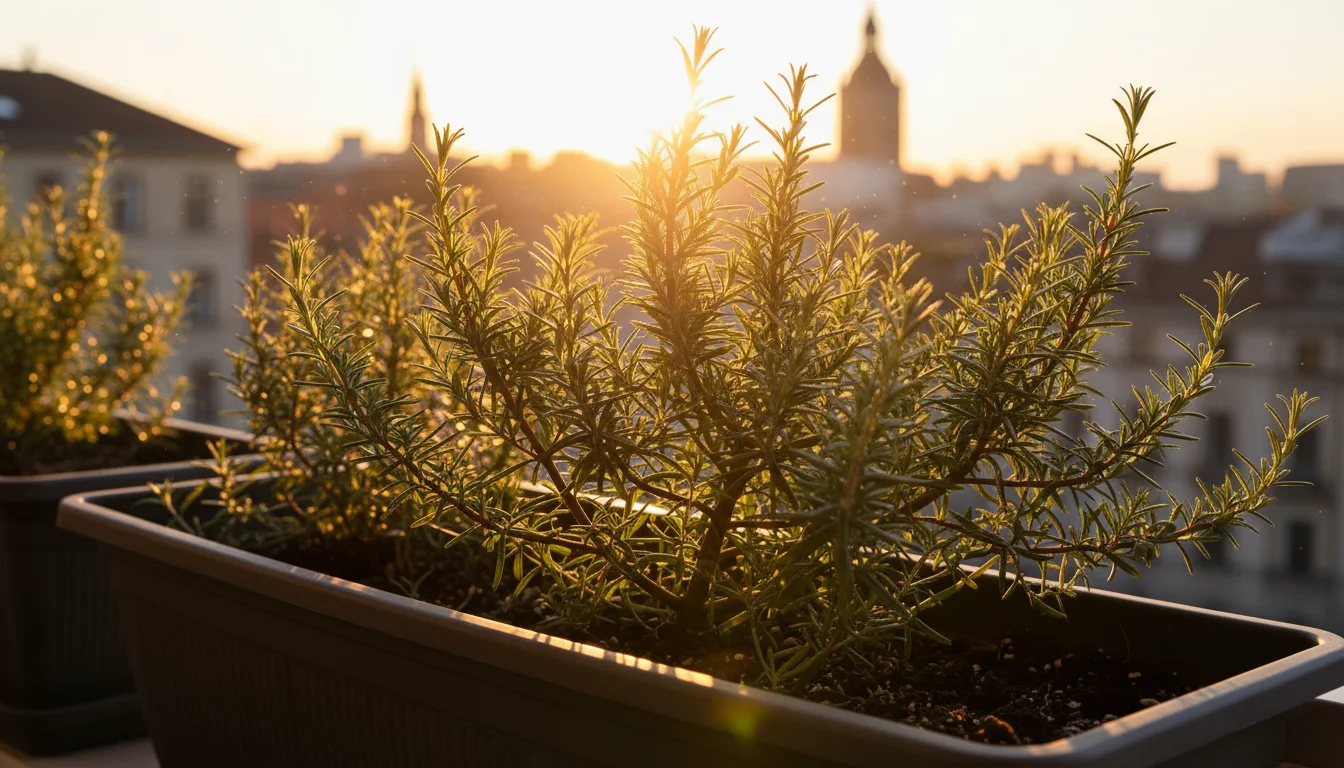
Hailing from the coastal regions of the Mediterranean, rosemary is a true sun worshipper. It thrives in full sun and embraces high temperatures, enduring prolonged periods of heat and drought without stress.
Its tough, leathery leaves are designed to conserve moisture, making it exceptionally well-adapted to conditions that cause other herbs to wilt or bolt.
Container Growing Specifics
Rosemary can live for many years in a pot with proper care:
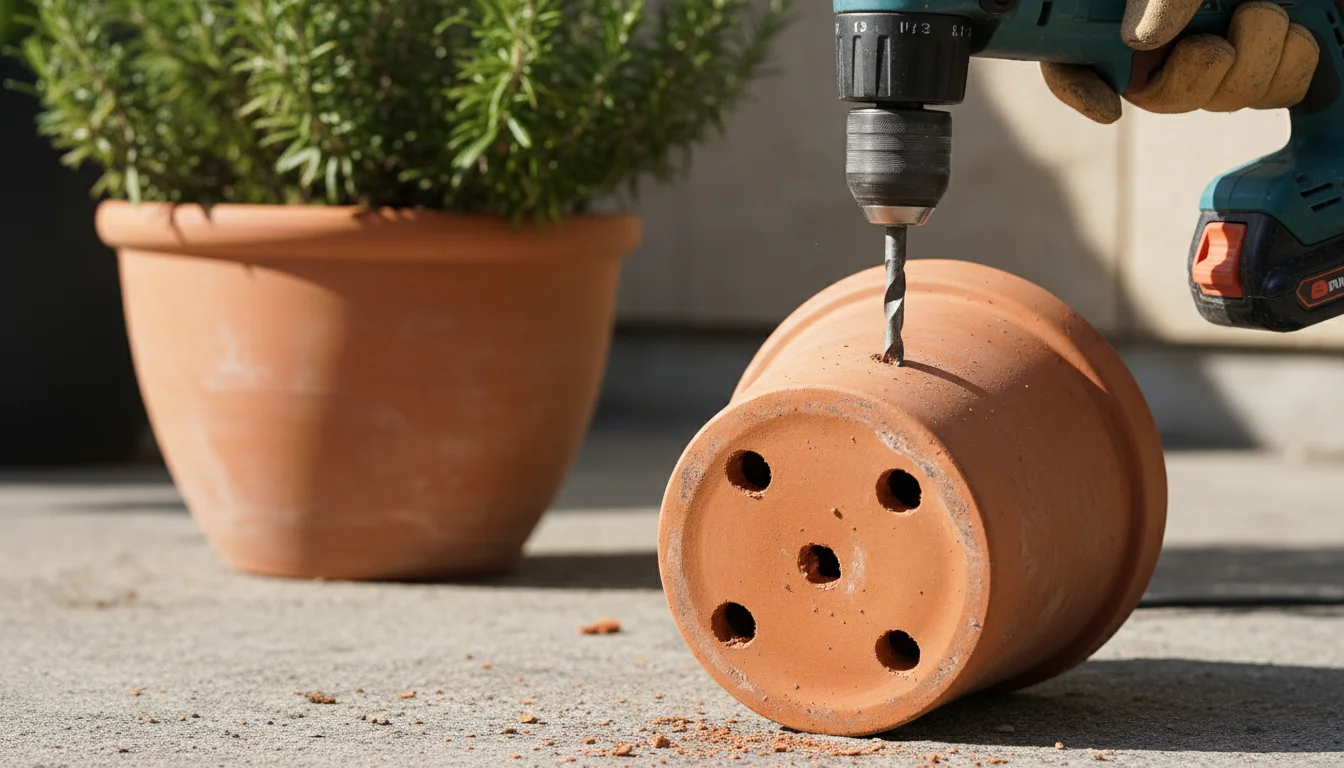
- Container Choice: Choose a sturdy pot at least 12-16 inches in diameter for a mature plant. Rosemary develops a robust root system, so it needs room to grow. Excellent drainage is absolutely paramount. If your pot does not have multiple large drainage holes, consider drilling more.
- Soil Requirements: Use a very well-draining potting mix. Rosemary absolutely hates wet feet, meaning its roots will quickly rot if they sit in soggy soil. Incorporate plenty of perlite, coarse sand, or even small gravel into your potting mix to ensure rapid drainage. A good rule of thumb is that the soil should feel light and airy.
- Sunlight: Provide full sun, ideally 6-8 hours or more of direct sunlight daily. Rosemary will tolerate some partial shade, but its growth will be less vigorous, and its flavor might be less intense.
- Watering: Allow the soil to dry out significantly between waterings. Test the soil by sticking your finger 2-3 inches deep. If it feels dry, water thoroughly until water drains from the bottom of the pot. Never let the pot sit in standing water. In extreme heat, you may need to water every few days, but always check the soil first.
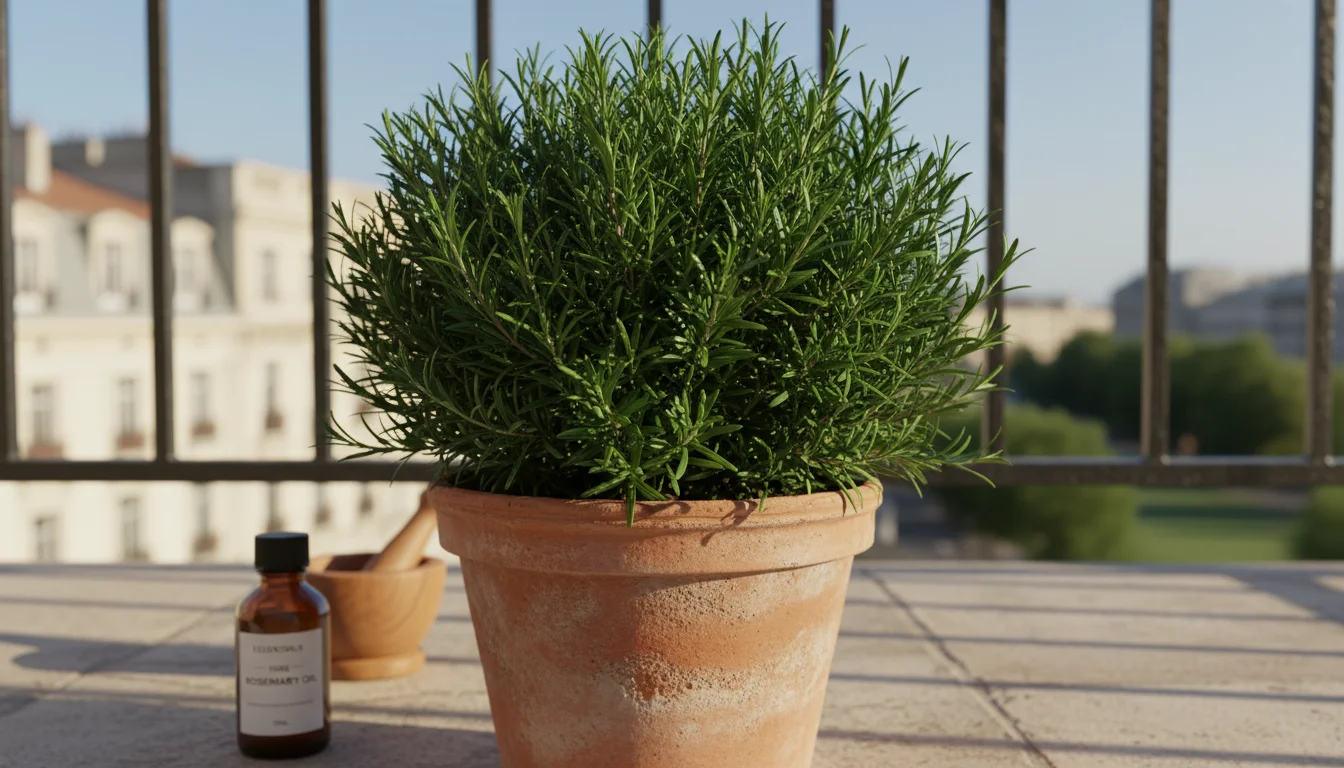
- Fertilizing: Rosemary is a light feeder. Over-fertilizing can lead to weak, leggy growth and reduced aromatic quality. A slow-release granular fertilizer applied once in spring, or a very dilute liquid feed every 4-6 weeks during the growing season, is sufficient.
- Pruning for Shape and Harvest: Regularly prune rosemary to maintain its shape, encourage bushiness, and harvest sprigs. You can cut back up to one-third of the plant’s growth at a time, always cutting above a leaf node. Avoid cutting into old, woody stems that have no leaves, as these often do not resprout. Pruning also helps improve air circulation, reducing the risk of fungal issues.
- Winter Care (for perennial pots): If you live in a climate with cold winters (below USDA Zone 7), you will need to protect your potted rosemary. Move it indoors to a cool, bright location or into a protected garage or unheated sunroom. Reduce watering significantly during winter, ensuring the soil barely stays moist.
With its striking appearance and fragrant foliage, rosemary brings a touch of Mediterranean elegance and enduring flavor to your summer container garden.
Designing Your Sizzling Summer Herb Garden in Pots
Creating a successful summer herb garden involves more than just selecting the right plants. Thoughtful design and placement enhance both the beauty and productivity of your pots.
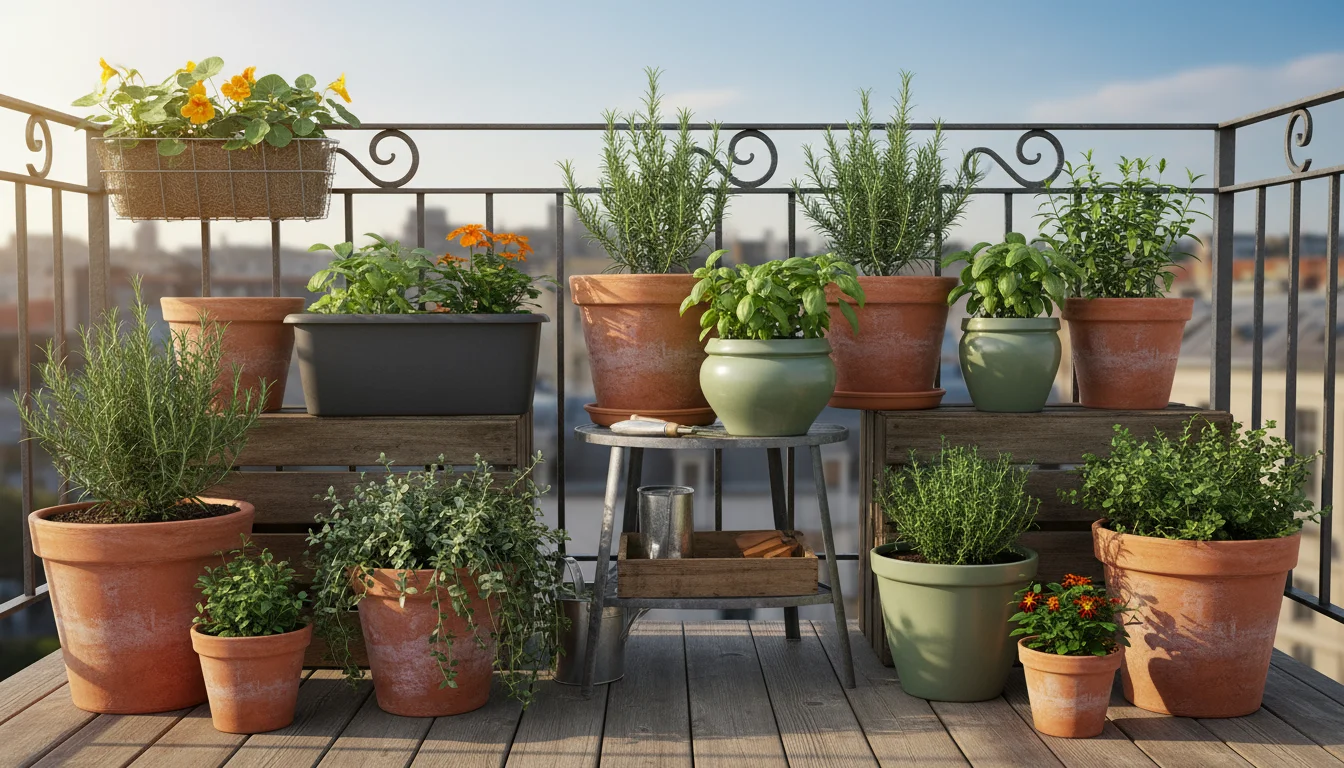
For your summer herbs for balcony garden, consider how these heat-loving plants interact with their environment and each other.
Grouping Compatible Herbs
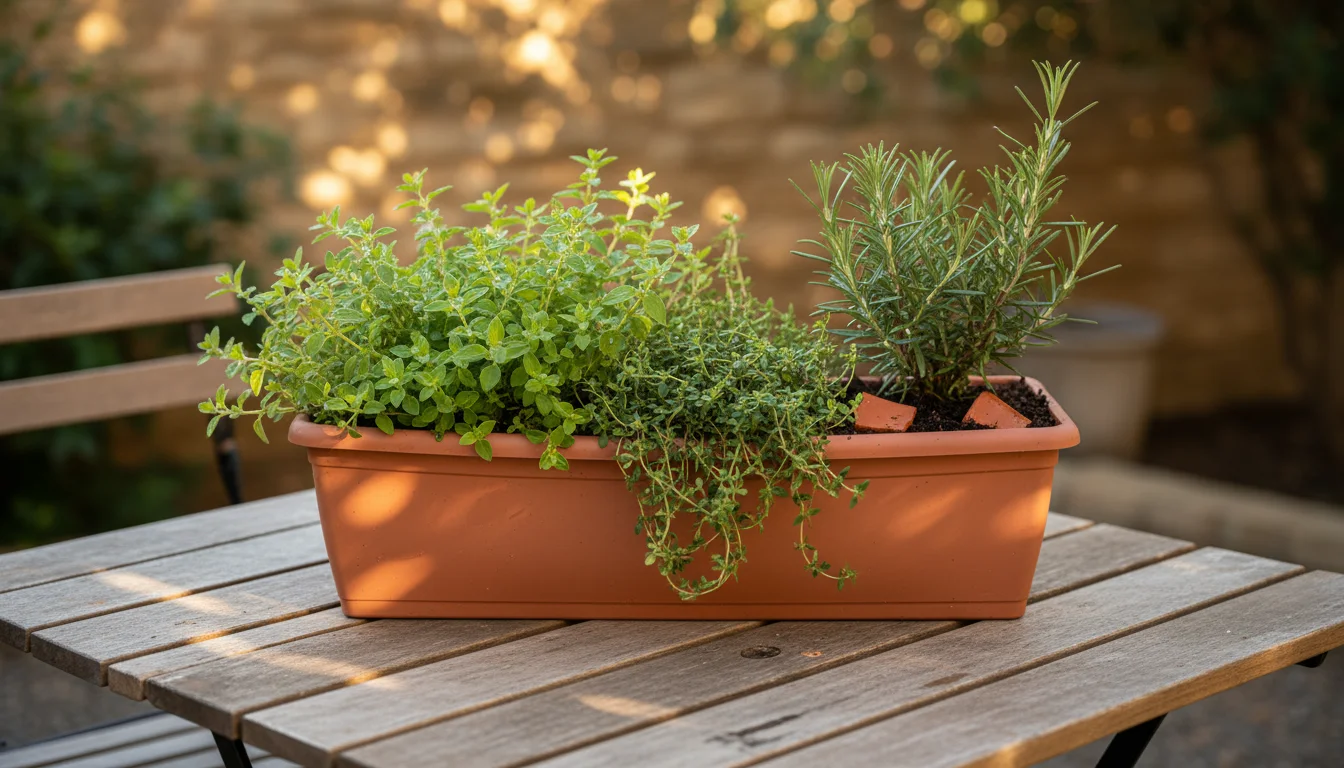
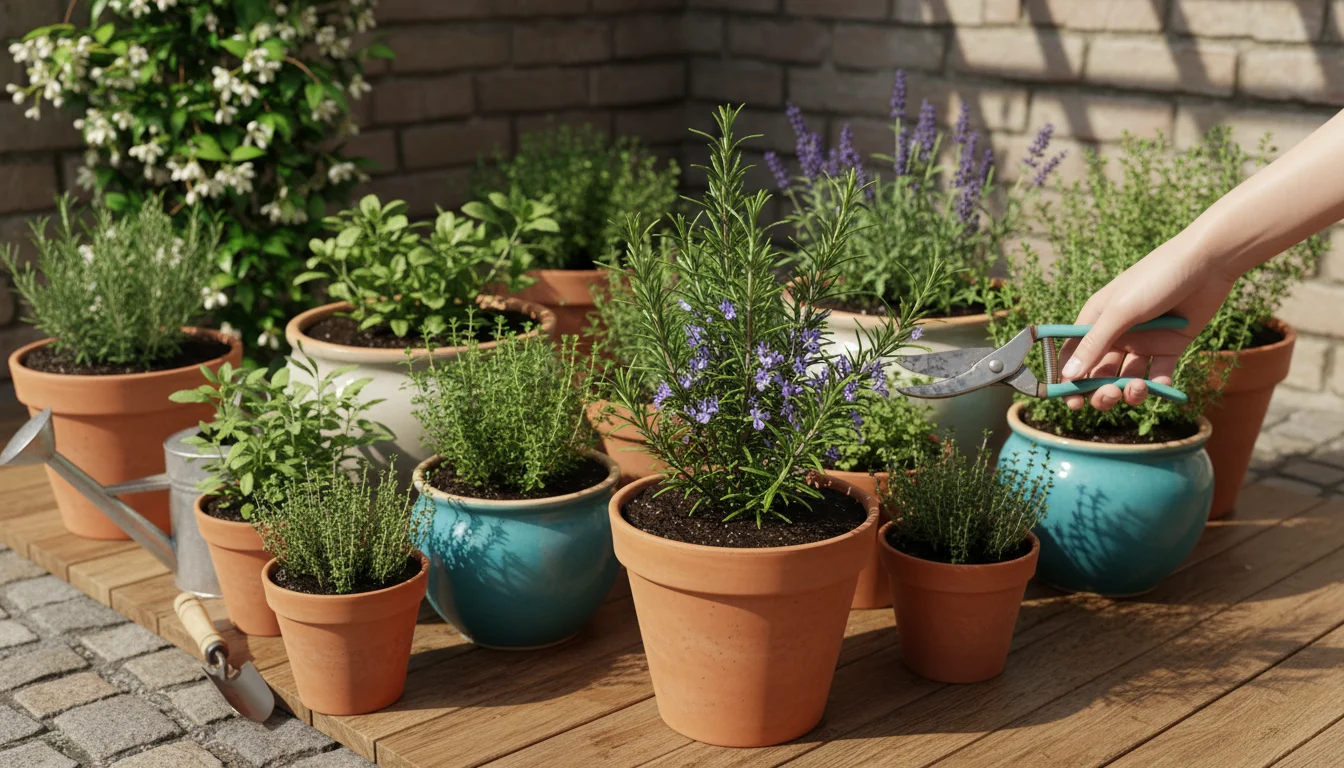
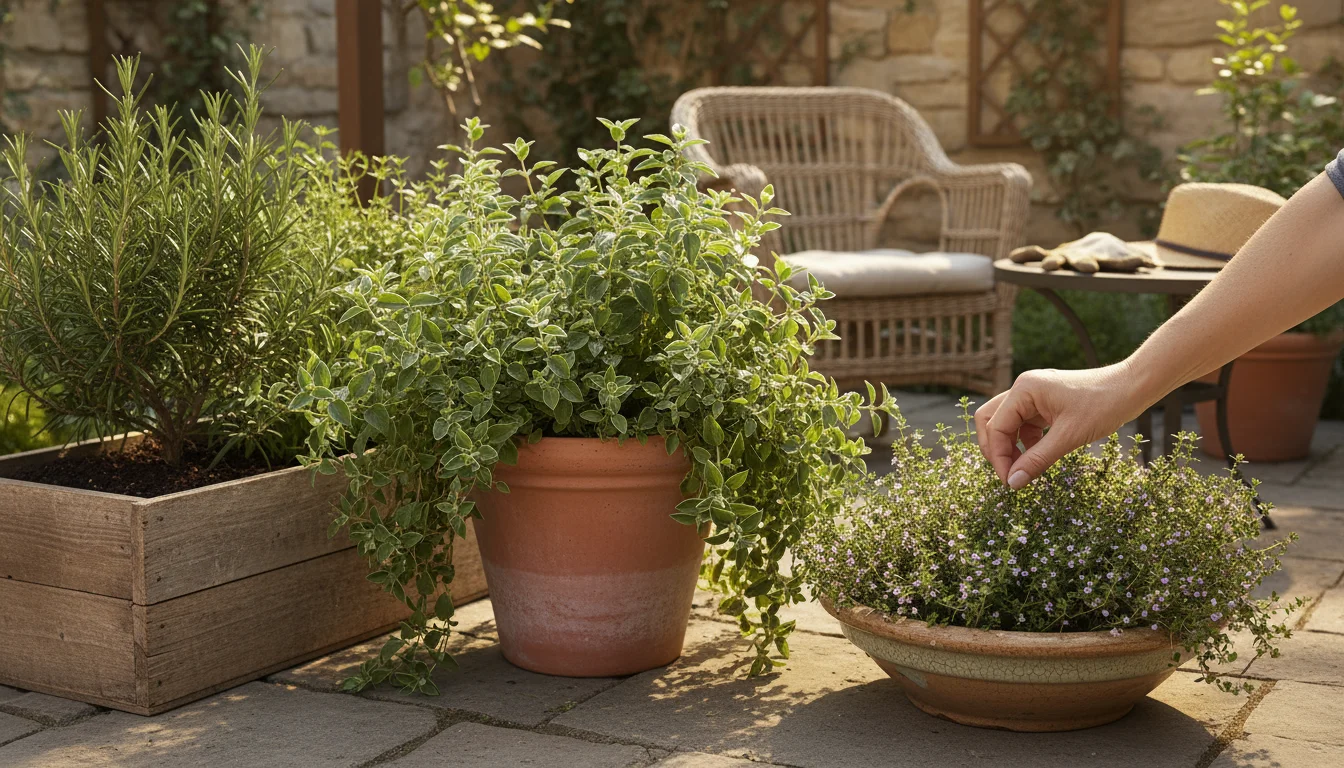
The three herbs we have discussed—Greek oregano, thyme, and rosemary—are excellent companions. They all share a preference for full sun, well-draining soil, and relatively dry conditions.
This compatibility simplifies care, as you do not need to worry about providing different watering schedules or light requirements for each plant.
You can plant them in individual pots or combine them in larger containers, ensuring each plant has adequate space to grow without crowding its neighbors.
Container Choice Matters
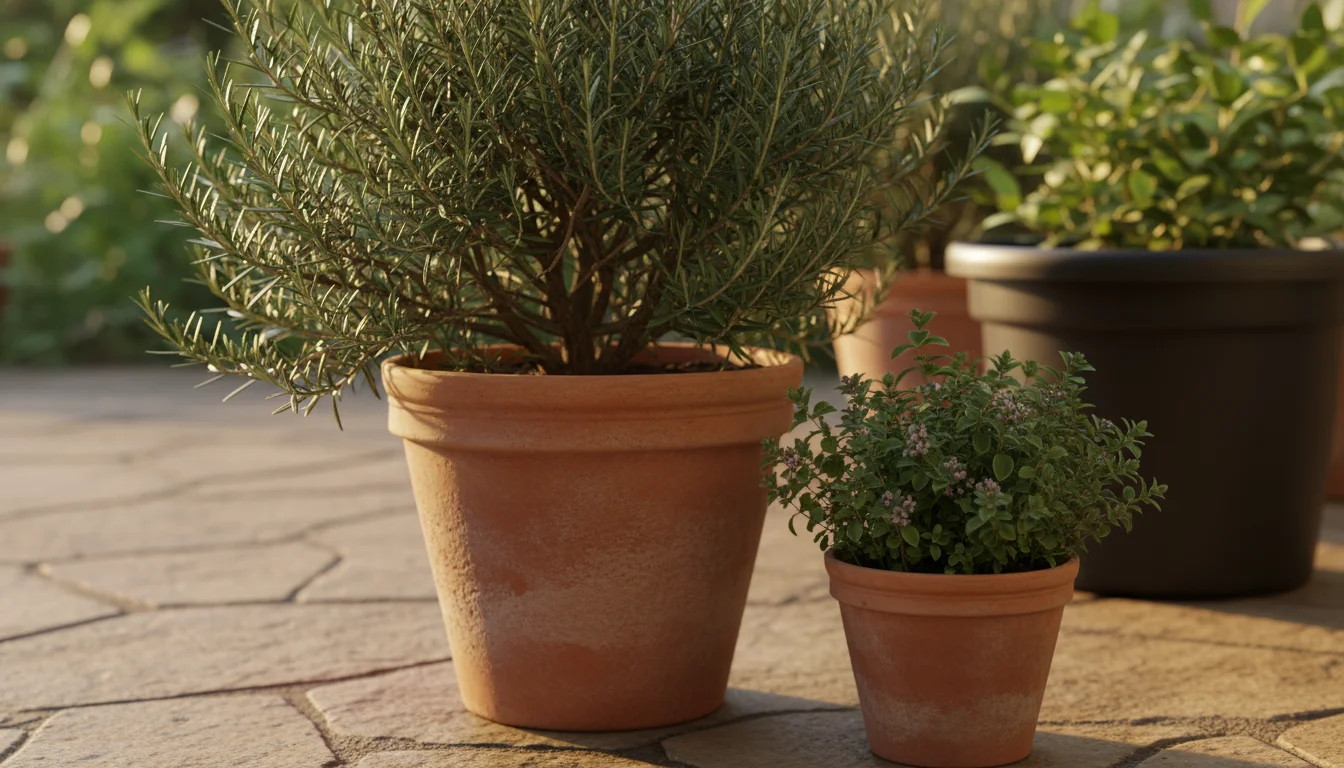
- Material: Terra cotta pots are often ideal for these Mediterranean herbs. Their porous nature allows moisture to evaporate through the sides, helping to prevent soggy soil, which these herbs dislike. Plastic pots retain moisture more, so if you use them, be extra vigilant about watering and ensure excellent drainage holes.
- Size: Choose appropriately sized pots. While thyme and oregano can start in 6-8 inch pots, rosemary benefits from a larger pot, at least 12-16 inches, to accommodate its growing root system. Larger pots also offer more soil volume, which helps buffer against extreme temperature fluctuations and retains moisture slightly longer than very small pots.
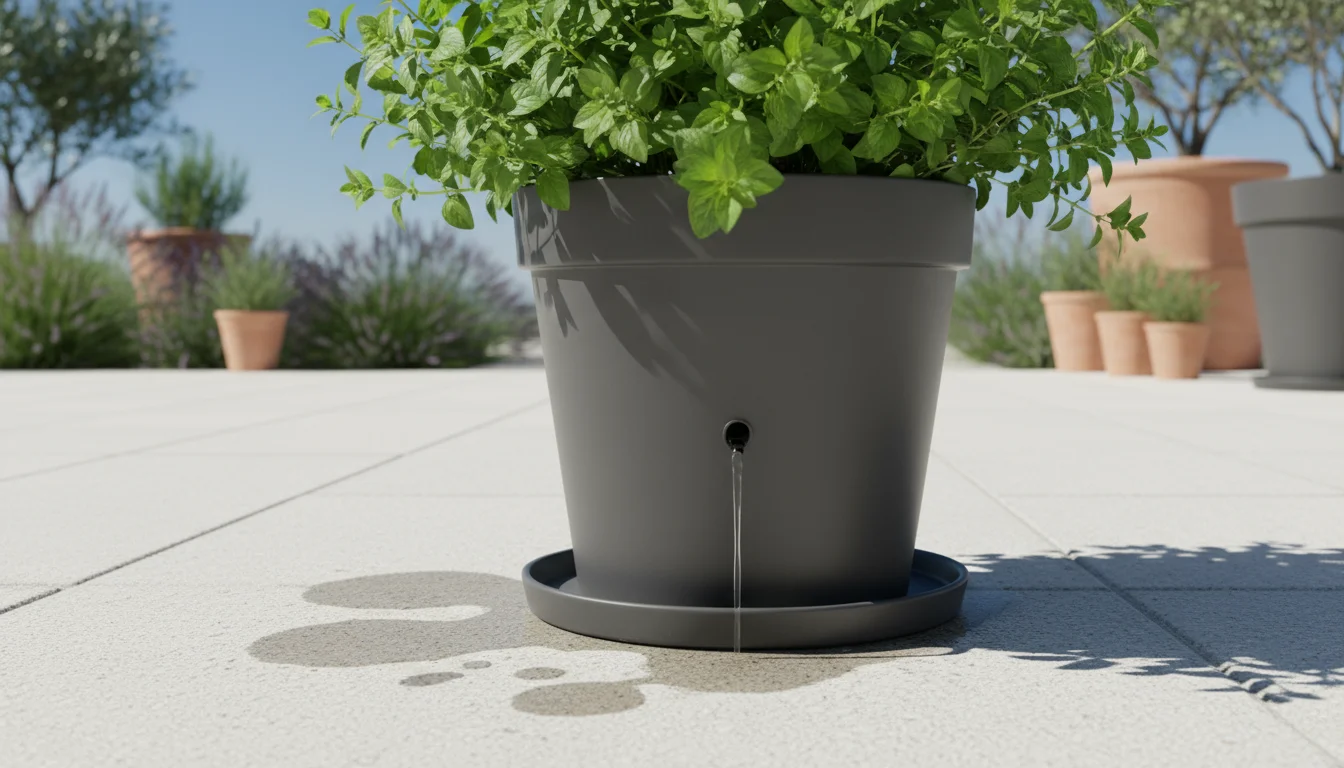
- Drainage Holes: This is non-negotiable. Every pot must have adequate drainage holes at the bottom. Without them, water collects, leading to root rot. Consider adding a layer of coarse gravel or broken pottery shards at the bottom of the pot before adding soil to improve drainage, though simply ensuring the soil mix itself drains well is most important.
Placement for Maximum Sun
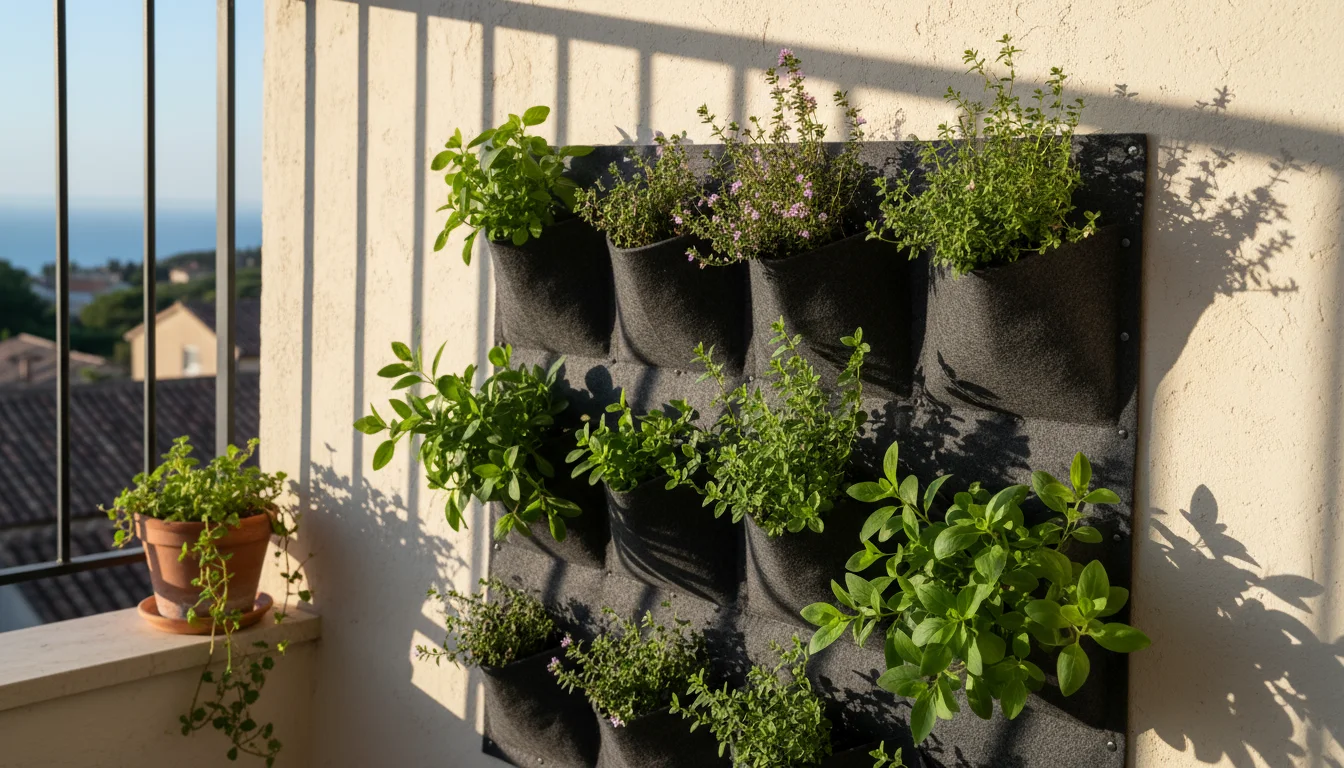
Position your pots where they will receive at least 6-8 hours of direct sunlight each day. South-facing balconies, patios, or any unshaded spot in your yard are prime locations.
Observe the sun’s path throughout the day in your growing area to determine the sunniest spots. If space is limited, consider vertical gardening solutions like tiered planters or wall-mounted pockets, ensuring each level still gets ample light.
Sustainable Practices
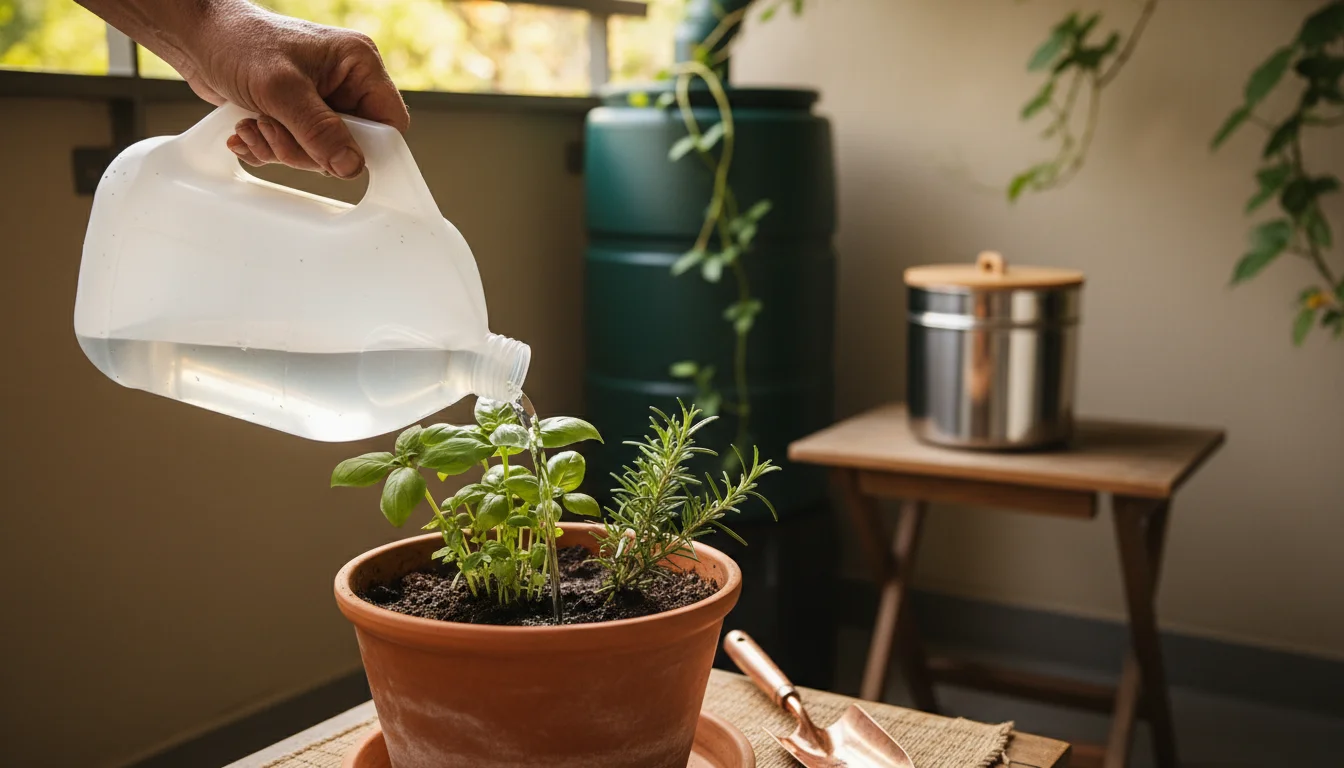
Embrace eco-friendly practices in your container herb garden. Use organic potting mixes and consider composting any pruned herb trimmings.
When watering, collect rainwater if possible, or use water from washing vegetables. These small actions contribute to a healthier planet and a more sustainable garden.
You reduce your reliance on chemical inputs and support natural cycles within your small space.
Essential Care for Thriving Heat-Tolerant Herbs
Even with the right plant choices, consistent and appropriate care ensures your heat-tolerant herbs remain productive and flavorful throughout the summer. These practices focus on supporting the plants’ natural resilience rather than constantly fighting environmental challenges.
Watering Techniques: The Golden Rule
For most heat-tolerant, Mediterranean herbs, the golden rule of watering is: water deeply but infrequently. This differs from the constant moisture needs of many annuals.
You want to encourage the roots to grow deeper, seeking moisture, which makes the plant more drought-tolerant. Here is how you apply this:
- Check Soil Moisture: Before watering, always stick your finger 1-2 inches into the soil. If it feels moist, wait. If it feels dry, it is time to water. You can also use a moisture meter for a more precise reading.
- Deep Watering: When you do water, water slowly and thoroughly until you see water draining from the bottom of the pot. This ensures the entire root ball gets hydrated.
- Avoid Wet Feet: Never let your pots sit in saucers of standing water for extended periods. This can lead to root rot. Empty saucers after about 30 minutes, or raise pots slightly on “pot feet” to allow air circulation and drainage.
- Frequency: In the peak of summer heat, you might water every 2-3 days for smaller pots, but larger pots or more established plants might only need water once a week. Let the plant and soil tell you when they need water, not a calendar.
Fertilizing for Flavor, Not Just Growth
Herbs generally prefer leaner soil conditions. Over-fertilizing can lead to lush, leafy growth but often at the expense of concentrated flavor and aroma.
For heat tolerant herbs, less is often more:
- Minimal Approach: A single application of a balanced, slow-release organic fertilizer at the beginning of the growing season (spring) is often sufficient.
- Diluted Liquid Feed: If your herbs appear to be struggling, or if they are in very small pots and you harvest frequently, you can apply a half-strength liquid organic fertilizer once a month. Look for fertilizers with an NPK ratio like 5-10-5, favoring phosphorus and potassium to encourage essential oil production over just leafy growth.
Pest and Disease Prevention
Heat-loving Mediterranean herbs are generally quite resistant to pests and diseases, especially when given proper care. Healthy plants naturally fend off many issues.
Here are a few tips:
- Good Air Circulation: Space your pots adequately to allow air to flow around the plants. This helps dry out leaves quickly after rain or watering, reducing the risk of fungal diseases.
- Proper Watering: As mentioned, avoiding overwatering is key to preventing root rot and other moisture-related problems.
- Inspect Regularly: Occasionally check the undersides of leaves and stems for any signs of pests (like aphids or spider mites) or unusual spots. Address any issues promptly with organic solutions like insecticidal soap, if necessary.
Dealing with Unexpected Flowering
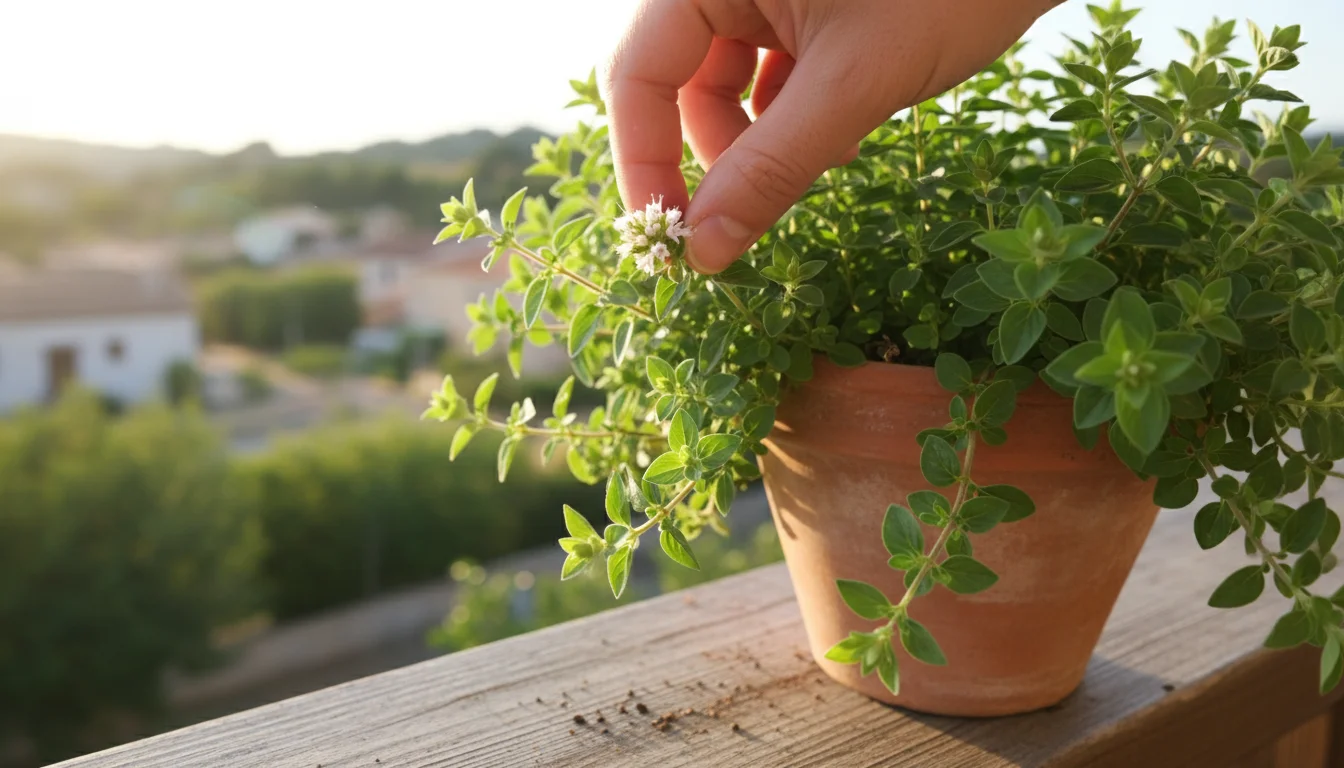
While our chosen herbs are less prone to bolting than basil, especially when it comes to herbs that won’t flower in summer, extreme, prolonged heat or significant environmental stress can still sometimes trigger them to produce flowers.
If you see flower buds forming on your oregano, thyme, or rosemary, simply pinch them off. This practice, known as “deadheading” or “pinching back,” directs the plant’s energy back into producing more delicious foliage, keeping the plant bushy and flavorful.
While it might not completely stop basil from bolting once it is determined to go to seed, it effectively prolongs the harvest for these more resilient herbs.

Frequently Asked Questions
Can I grow these heat-loving herbs indoors?
Yes, you can grow Greek oregano, thyme, and rosemary indoors, but they will still require specific conditions to thrive. The most critical factor is light.
They need at least 6 hours of direct sun daily, which often means placing them in a south-facing window. If natural light is insufficient, consider supplementing with a grow light.
Indoors, ensure good air circulation and avoid overwatering, as the soil will dry out slower than outdoors. Maintain consistent temperatures, ideally between 60-70 degrees Fahrenheit, to prevent stress.
How do I harvest these herbs to ensure continuous growth?
Regular harvesting encourages your herbs to produce more foliage and maintains a compact, bushy shape. For Greek oregano and thyme, snip off the top few inches of stems, cutting just above a set of leaves or a branching point.
For rosemary, prune sprigs from the top and sides, again cutting above a leaf node. Avoid taking more than one-third of the plant’s growth at any one time.
Consistent harvesting prevents the plants from becoming leggy and woody, ensuring a fresh supply of tender leaves.
What soil mix is best for these potted herbs?
The best soil mix for Greek oregano, thyme, and rosemary is a well-draining, gritty potting mix. A standard high-quality potting mix can be improved by adding amendments that increase drainage, such as perlite, coarse sand, or small gravel.
A good ratio is often 2 parts potting mix to 1 part perlite or sand. This ensures that water moves through the soil quickly, preventing waterlogging and root rot, which these Mediterranean herbs are particularly susceptible to.
How do I overwinter these herbs in colder climates?
If you live in a region with cold winters (below USDA Zone 7 for rosemary, or Zones 5-6 for oregano and thyme), you will need to protect your potted perennial herbs.
Before the first hard frost, move the pots indoors to a cool, bright location, such as an unheated sunroom, a south-facing window, or even a protected garage with some light.
Reduce watering significantly during winter, only watering enough to keep the soil from completely drying out. Do not fertilize.
In spring, gradually reintroduce them to outdoor conditions after the last frost threat has passed.
Are there other heat-tolerant herbs I can try?
Absolutely.
Beyond our three heroes, other excellent heat-tolerant herbs include marjoram (a milder cousin to oregano), lavender (though primarily ornamental, some varieties are culinary), sage (many varieties thrive in sun), and certain types of mint (though mint can be aggressive and is best kept in its own pot).
Mexican mint marigold offers an anise-like flavor similar to tarragon and loves the heat. Experiment with these to expand your heat-proof herb garden.
Moving Beyond Basil Frustration
You no longer need to endure the disappointment of bolting basil or compromise on fresh herbs during summer’s peak.
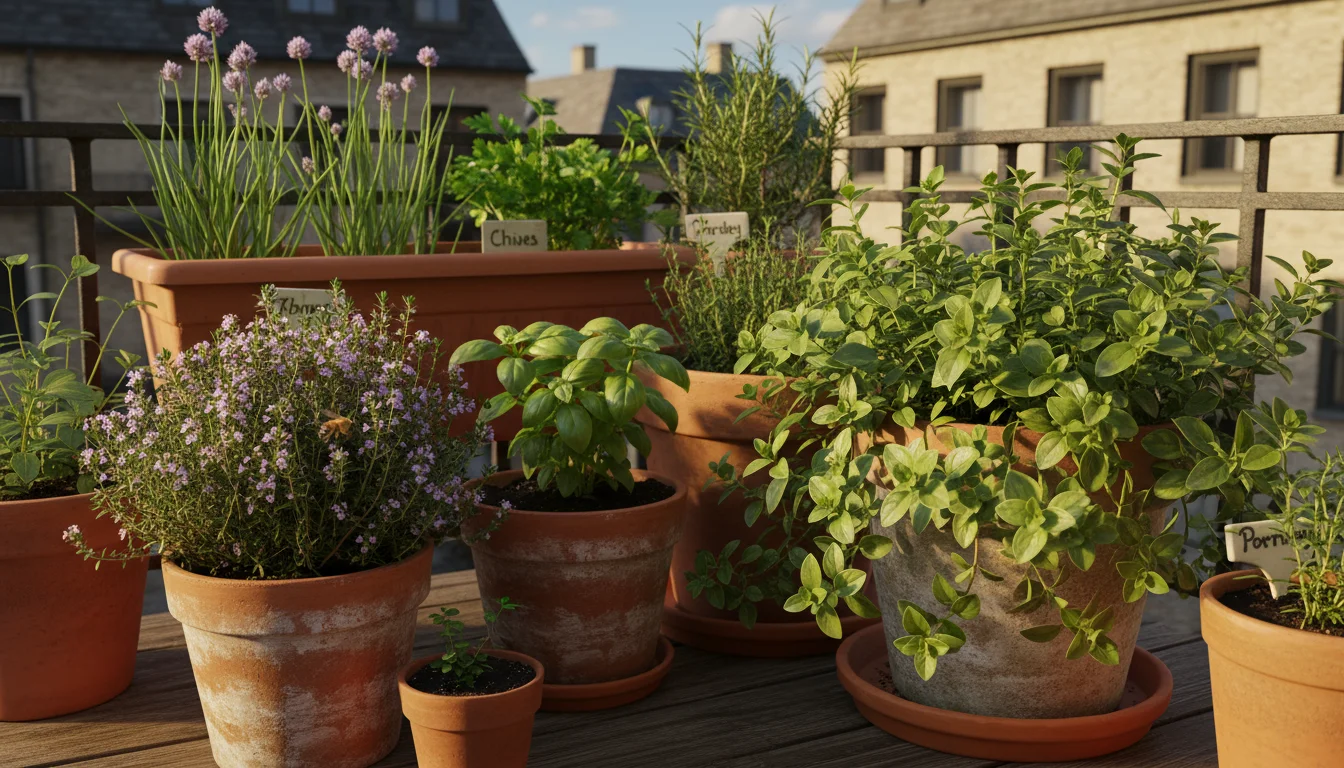
By embracing the natural resilience of Greek oregano, thyme, and rosemary, you transform your small-space garden into a thriving source of flavor, even in the hottest conditions.
These heat tolerant herbs offer consistent, high-quality harvests with minimal fuss, proving that successful summer gardening is about making smart plant choices.
You gain not only a continuous supply of aromatic ingredients for your kitchen but also the satisfaction of growing plants that genuinely thrive in your environment. Their low-maintenance nature means less time troubleshooting and more time enjoying the simple pleasures of gardening.
So, equip your balcony or patio with these sun-loving powerhouses, and savor a summer filled with abundant, fresh, and delicious herbs, making your small garden a true joy.
For trustworthy gardening information, visit: Connecticut Agricultural Experiment Station, Massachusetts Horticultural Society, Denver Botanic Gardens and San Diego Botanic Garden. These organizations provide expert, research-based advice for gardeners at all levels.
Disclaimer: This article is for informational purposes only and is not a substitute for professional gardening advice. Always consult local extension services or horticulture experts for region-specific guidance.