
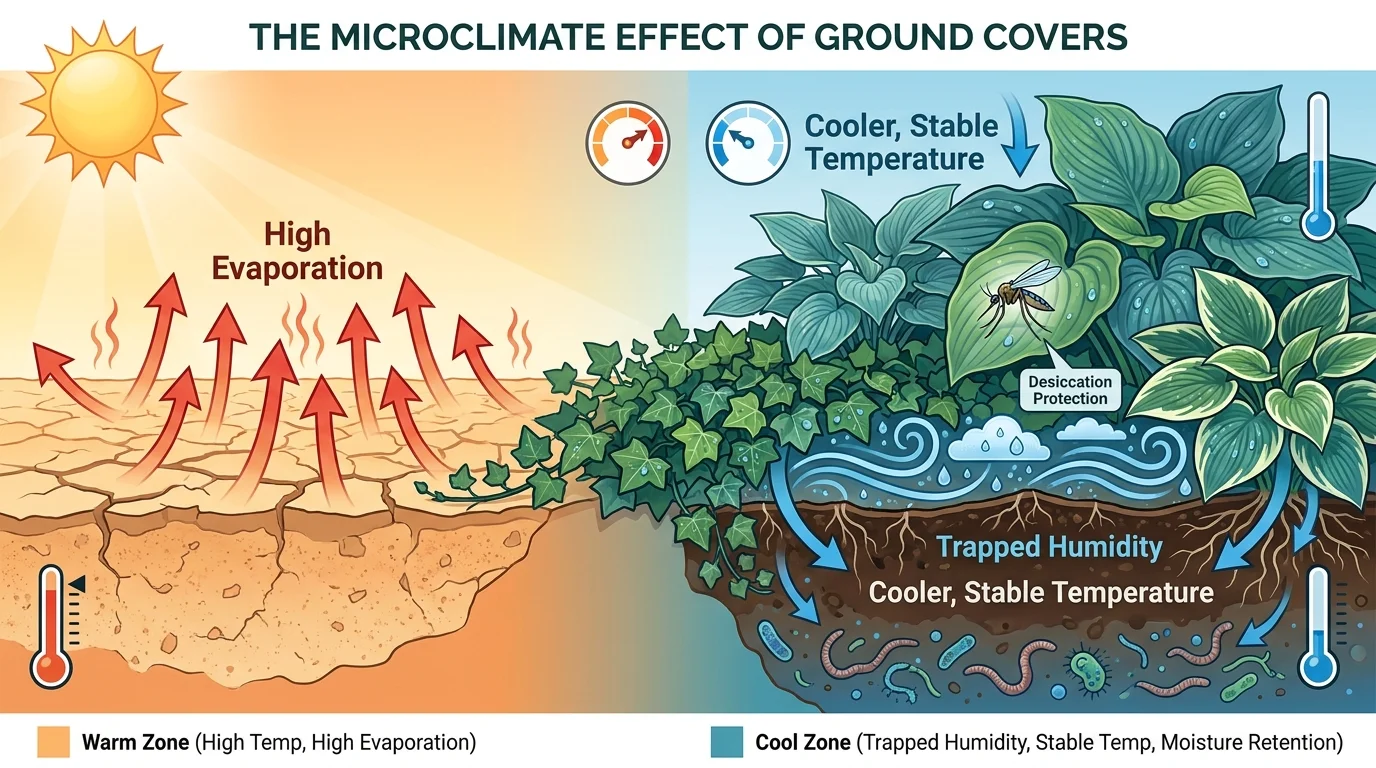
Dense Ground Covers and Shade Plants
Adult mosquitoes cannot tolerate the harsh midday sun. They require heavily shaded, cool spots with poor air circulation to rest and retain their body moisture.
Dense ground covers provide the ultimate daytime refuge.
If your gardening space is limited by light, choosing shade-tolerant plants you can grow in pots is a great way to maintain greenery without creating dense thickets.
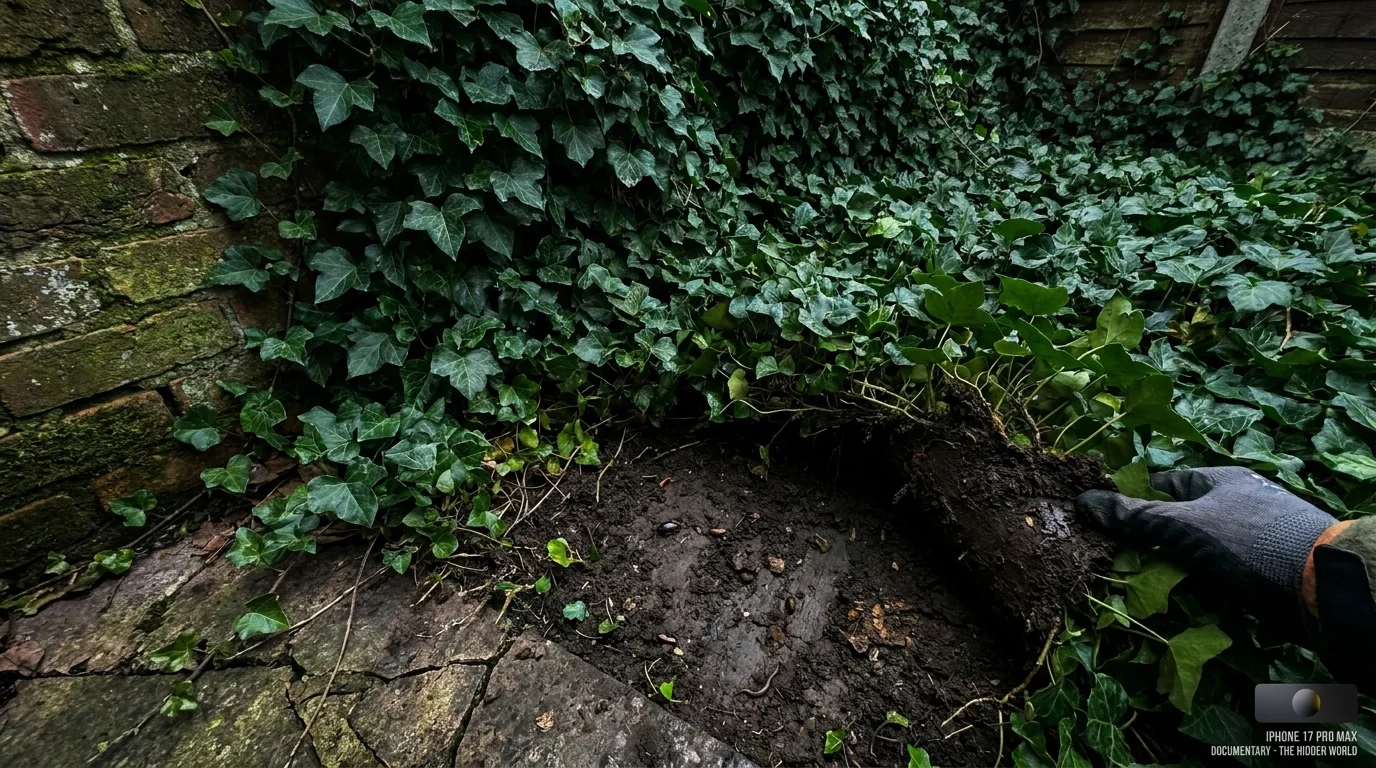
7. English Ivy
English ivy is a vigorous, spreading ground cover that rapidly forms a thick blanket over the soil. The overlapping leaves block both sunlight and wind, creating a highly humid, stagnant microclimate just a few inches above the ground.
If you walk through a patch of English ivy on a summer afternoon, you will likely disturb a massive cloud of resting mosquitoes.
How to manage it: English ivy is widely considered one of the top plants to avoid in garden landscapes, not only because it harbors pests, but because it is aggressively invasive in many regions.
Consider removing heavy ivy patches and replacing them with native, lower-growing ground covers that allow for better air circulation and support local, beneficial ecosystems.
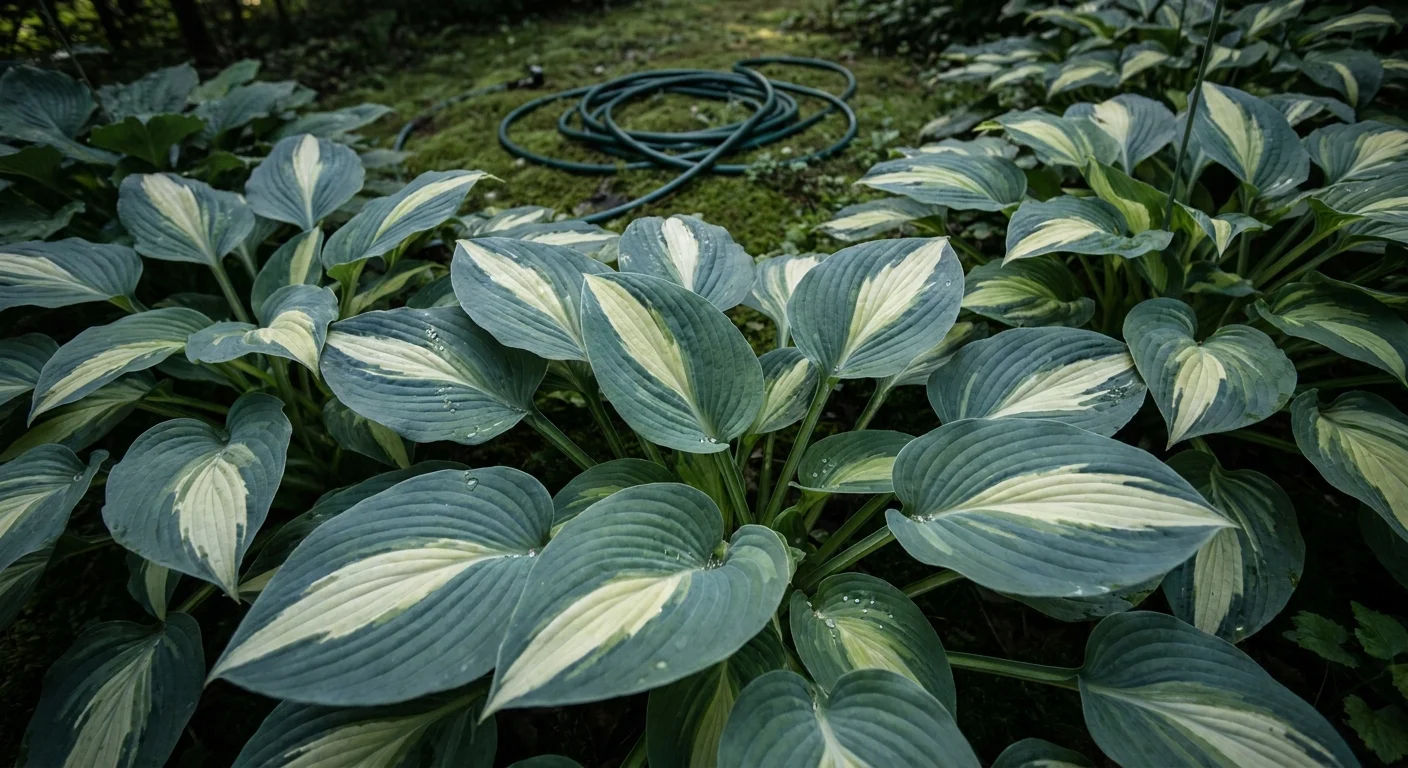
8. Hostas
Hostas are the quintessential shade garden favorite, prized for their massive, textured leaves. However, those wide leaves act like giant umbrellas, shading the soil so thoroughly that morning dew and irrigation water rarely evaporate.
The damp, cool soil beneath a mature hosta plant is a highly preferred resting spot for adult mosquitoes.
How to manage it: Space your hostas appropriately to ensure adequate airflow between the individual plants. Do not pack them too tightly together.
Furthermore, practice smart soil health and refreshing mixes: amend the soil around your hostas with coarse organic matter to improve drainage so water pulls away from the surface quickly rather than pooling in the shade.
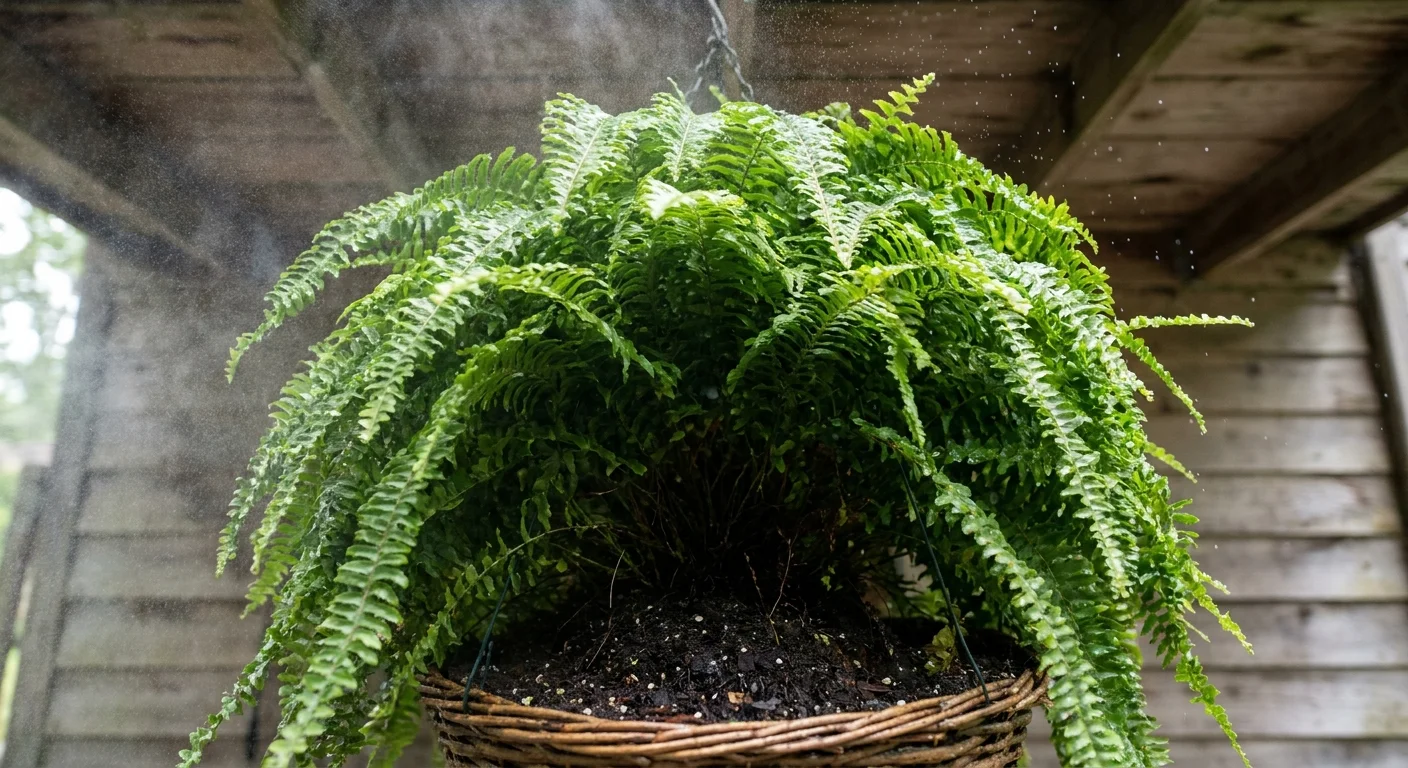
9. Dense Ferns
Ferns naturally thrive in the exact conditions mosquitoes love: high humidity, consistent moisture, and deep shade. Large, clumping ferns like the Ostrich Fern or Boston Fern feature tight crowns and overlapping fronds that trap humid air and restrict breezes.
How to manage it: Regularly perform pest and disease checks on your ferns while simultaneously thinning out the dense inner growth. Removing old, dying fronds from the base of the plant improves air circulation, allowing the soil surface to dry out slightly during the day.
This simple maintenance habit makes the environment significantly less hospitable to resting insects.
So, what are the twelve plants? Can you supply a listing?
Yes Patricia, they don’tsay!!!
Yes Patricia, they don’t say!!!
Mosquito-Producing Plants:
1. BromeliadsBamboo
2. Elephant Ears (Colocasia and Alocasia)
3. Pitcher Plants
4. Water Lilies
5. Water Hyacinth
6. Papyrus
7. English Ivy
8. Hostas
9. Dense Ferns
10. Bamboo
11. Tall Ornamental Grasses (Pampas and Fescue)
12. Privet Hedges and Dense Shrubs
Thank you JT