
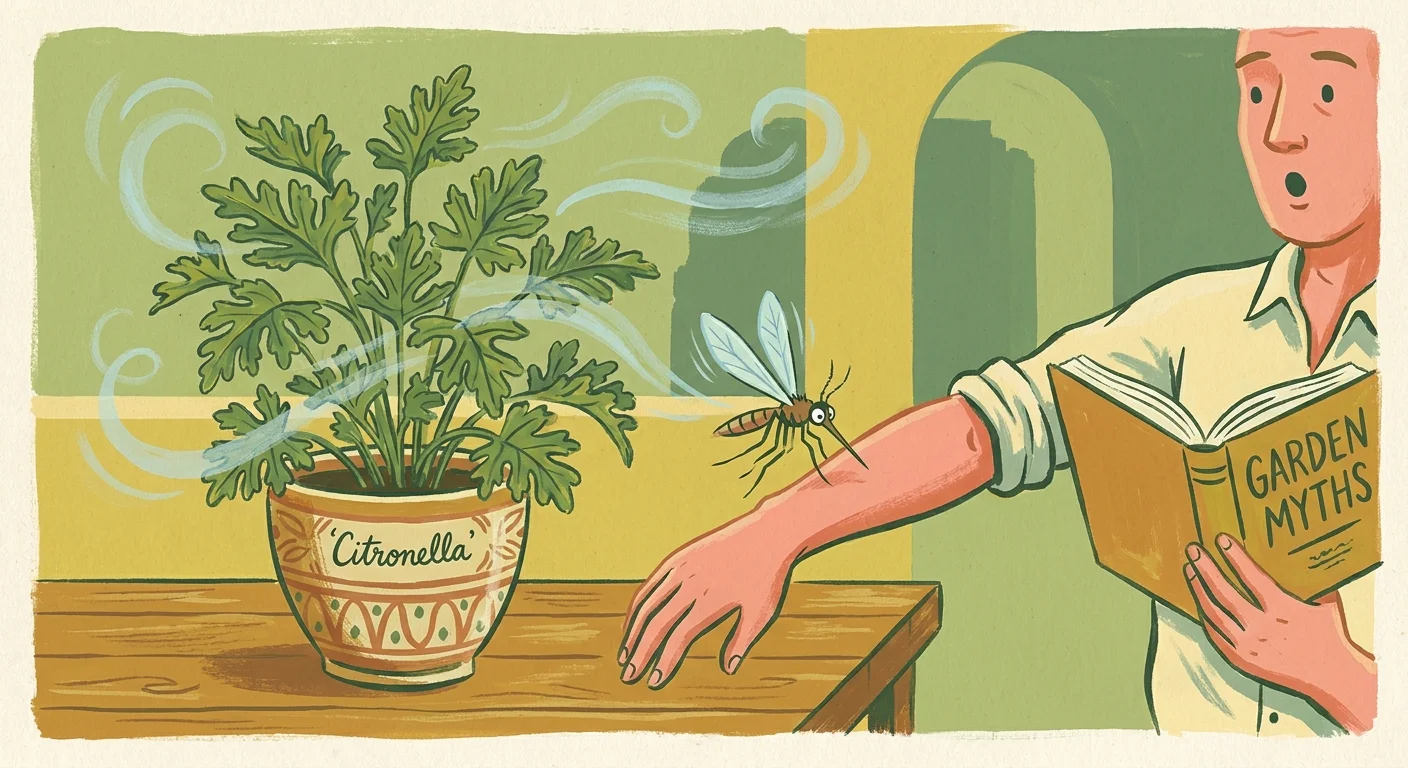
The Truth About the Mosquito Repellent Plants Myth
If you have ever visited a garden center in the middle of summer, you have likely seen displays of “mosquito-repelling” plants. The most common offerings include the citronella plant (Pelargonium citrosum), marigolds, lavender, and rosemary.
Retailers market these plants as natural, invisible forcefields that will instantly protect your patio from biting pests.
Unfortunately, you need to understand the reality behind the mosquito repellent plants myth. It is entirely true that the essential oils inside these plants—such as citronellal, camphor, and linalool—have scientifically proven repellent properties.
However, those volatile oils remain securely locked inside the plant’s cellular structure. Simply placing a potted citronella geranium on your outdoor table does absolutely nothing to deter mosquitoes from entering the area.
To reduce mosquitoes naturally using these specific plants, you have to manually release the oils into the air. You must vigorously rub, crush, or break the leaves to fracture the plant cells.
Even then, the resulting aroma dissipates quickly in an open outdoor environment. While these aromatic herbs and flowers make wonderful, fragrant additions to your low-maintenance garden, you should never rely on them as a standalone method for backyard pest control.
So, what are the twelve plants? Can you supply a listing?
Yes Patricia, they don’tsay!!!
Yes Patricia, they don’t say!!!
Mosquito-Producing Plants:
1. BromeliadsBamboo
2. Elephant Ears (Colocasia and Alocasia)
3. Pitcher Plants
4. Water Lilies
5. Water Hyacinth
6. Papyrus
7. English Ivy
8. Hostas
9. Dense Ferns
10. Bamboo
11. Tall Ornamental Grasses (Pampas and Fescue)
12. Privet Hedges and Dense Shrubs
Thank you JT