
Understanding What Makes a Plant Attractive to Mosquitoes
To effectively manage your backyard pest control, you first need to understand the biological needs of mosquitoes. These insects are not simply flying around aimlessly waiting for a host; they require highly specific environmental conditions to survive and reproduce.
Female mosquitoes require stagnant water to lay their eggs, and the larvae need that water to remain undisturbed for several days to hatch and mature.
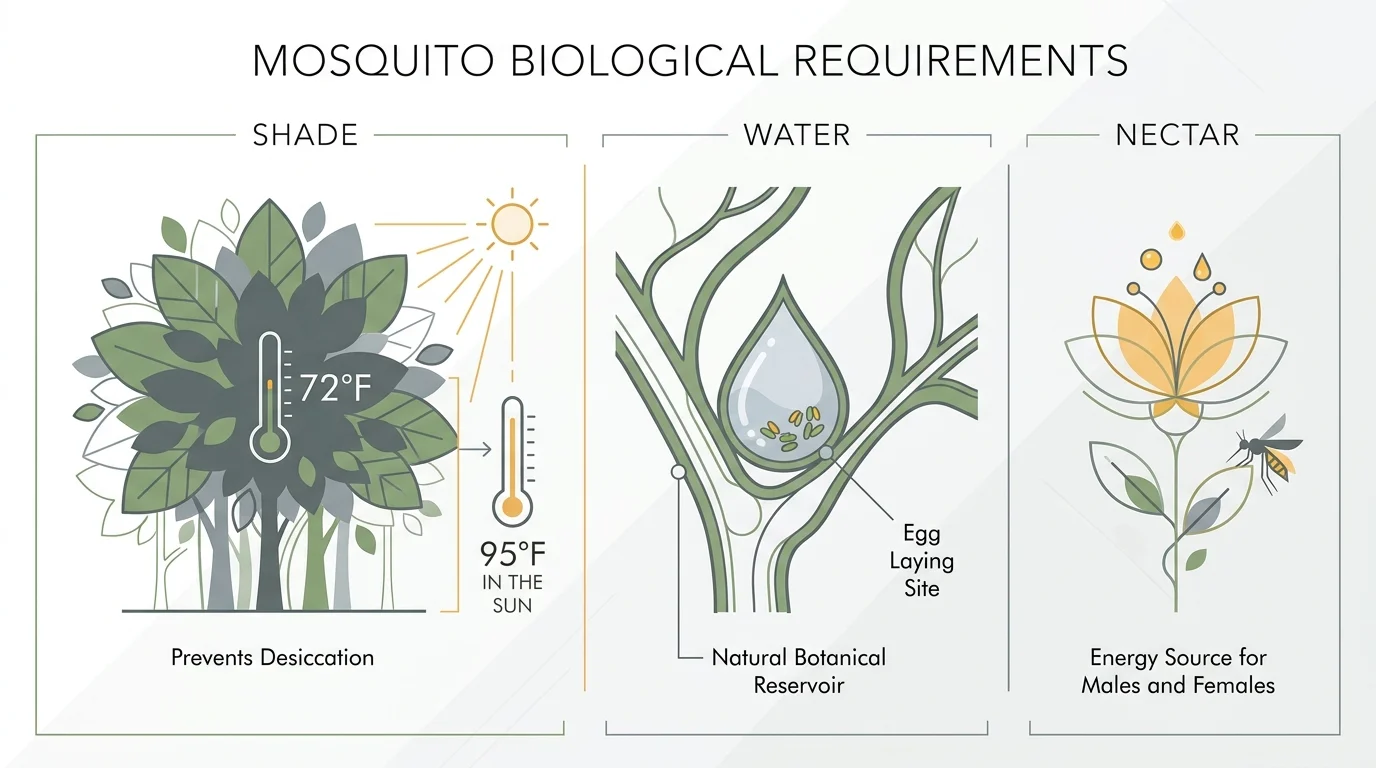
Because they are fragile and prone to desiccation—drying out in the sun—adult mosquitoes spend the majority of their daylight hours resting in cool, dark, and damp locations.
In addition to pests, be aware of common gardening mistakes that invite snakes to ensure your outdoor space remains safe for everyone.
Beyond managing mosquitoes, you can further protect your patio by learning about plants that repel and keep mice away for a fully pest-free environment.
Certain plants perfectly replicate the exact environment of a humid forest floor. Plants with large, overlapping leaves plunge the soil beneath them into deep shade, preventing the sun from evaporating morning dew or irrigation water.
Additionally, structural features like deep floral cups, tight leaf axils, or hollow stems physically collect and hold rainwater. Even if you meticulously drain your buckets and empty your watering cans, these natural botanical reservoirs provide a safe haven for mosquito larvae.
Furthermore, adult mosquitoes consume nectar for their daily energy requirements. While females require blood to develop viable eggs, both male and female mosquitoes actively forage among nectar-producing flowers.
By combining heavy nectar sources, deep shade, and water-holding capabilities, your beautifully curated landscape might inadvertently become a five-star resort for pests. Identifying these specific plants gives you the power to implement effective garden mosquito control without resorting to harsh chemical sprays.
So, what are the twelve plants? Can you supply a listing?
Yes Patricia, they don’tsay!!!
Yes Patricia, they don’t say!!!
Mosquito-Producing Plants:
1. BromeliadsBamboo
2. Elephant Ears (Colocasia and Alocasia)
3. Pitcher Plants
4. Water Lilies
5. Water Hyacinth
6. Papyrus
7. English Ivy
8. Hostas
9. Dense Ferns
10. Bamboo
11. Tall Ornamental Grasses (Pampas and Fescue)
12. Privet Hedges and Dense Shrubs
Thank you JT