
How to Reduce Mosquitoes Naturally in Your Yard
The most effective strategy for managing mosquitoes is an integrated approach that focuses on environmental modification. By altering the microclimates in your yard, you disrupt the insect’s lifecycle and drastically reduce their numbers over time.
Rather than spraying broad-spectrum chemical pesticides—which harm vital pollinators like bees, butterflies, and ladybugs—you can implement simple, sustainable maintenance habits.
| Task | Frequency | Impact on Mosquito Lifecycle |
|---|---|---|
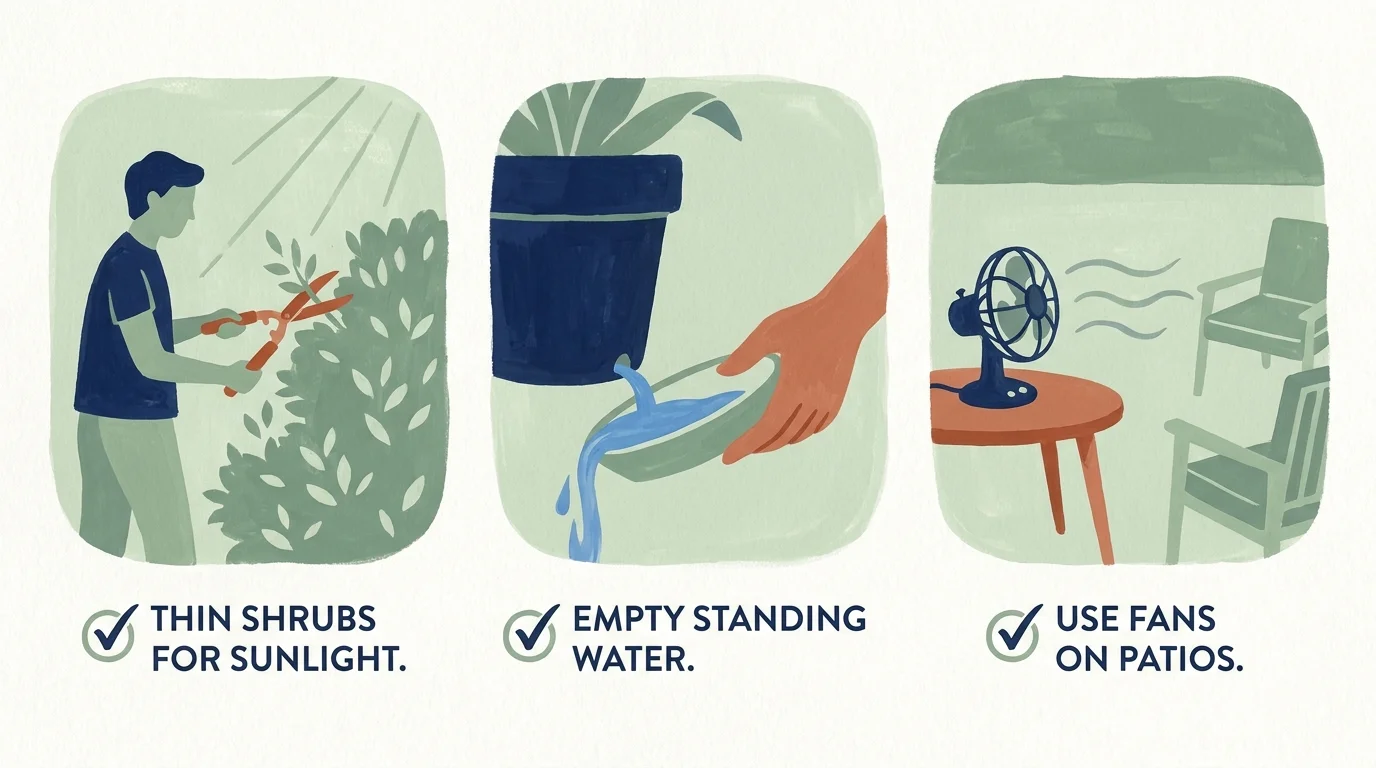
| Empty Standing Water | Twice a week | Dumping saucers, birdbaths, and buckets eliminates the exact habitat female mosquitoes need to lay their eggs, stopping the next generation instantly. |
| Apply BTI (Mosquito Dunks) | Every 30 days | Releases a naturally occurring bacteria into permanent water features that aggressively destroys mosquito larvae without harming beneficial wildlife. |
| Prune and Thin Dense Foliage | Monthly | Improves air circulation and allows sunlight to hit the soil, drying out the humid, damp resting areas that adult mosquitoes rely on during the day. |
| Clear Yard Debris | Weekly | Removing decaying leaves, damp grass clippings, and old mulch removes the decaying organic matter that larvae feed on and adults hide beneath. |
When you combine these regular maintenance habits with a strategic approach to your plant selection, you take absolute control of your outdoor space. Focus on planting open, airy shrubs and well-spaced perennials that encourage airflow.
Promote a healthy, diverse ecosystem that welcomes natural mosquito predators, such as dragonflies, swallows, and frogs, to do the heavy lifting for you.
Frequently Asked Questions
Does having a birdbath guarantee I will have mosquitoes?
Not at all. Mosquito larvae require stagnant water to remain undisturbed for several days to mature.
If you actively flush and refill your birdbath with fresh water every two to three days, you completely disrupt their breeding cycle.
You can also add a small, solar-powered water wiggler or fountain to the birdbath; mosquitoes will not lay eggs in moving or rippling water.
Can I keep my hostas without being eaten alive?
Yes, you can absolutely keep your hostas. The key is strict environmental management.
Ensure you space the hostas far enough apart that air can move between them, and use a chunky, fast-draining soil mix that does not hold water on the surface.
Avoid overhead watering in the evenings, as this leaves the foliage and topsoil damp all night long.
Are there any plants that actually eat mosquitoes?
While carnivorous plants like Venus flytraps, sundews, and pitcher plants do consume insects, they are not effective mosquito control tools. They consume very few mosquitoes relative to the massive populations that hatch during the summer.
Furthermore, as previously mentioned, some pitcher plants actually serve as breeding grounds for specific mosquito species. Your best defense is always standing water elimination.
What is the most effective natural way to kill mosquito larvae?
The most effective and scientifically supported natural treatment is the use of Bacillus thuringiensis israelensis (BTI). Sold commercially as mosquito dunks or bits, this naturally occurring soil bacterium specifically attacks the digestive systems of mosquito and fungus gnat larvae.
It is entirely non-toxic to humans, pets, fish, birds, and vital garden pollinators.
For research-based plant care guidance, visit Arkansas Extension — Yard & Garden, Kansas State University Extension — Horticulture, Oklahoma State University Extension — Lawn & Garden and Tennessee Extension — Gardening.
Disclaimer: This article is for informational purposes only and is not a substitute for professional advice. Consult local extension services for region-specific recommendations.
So, what are the twelve plants? Can you supply a listing?
Yes Patricia, they don’tsay!!!
Yes Patricia, they don’t say!!!
Mosquito-Producing Plants:
1. BromeliadsBamboo
2. Elephant Ears (Colocasia and Alocasia)
3. Pitcher Plants
4. Water Lilies
5. Water Hyacinth
6. Papyrus
7. English Ivy
8. Hostas
9. Dense Ferns
10. Bamboo
11. Tall Ornamental Grasses (Pampas and Fescue)
12. Privet Hedges and Dense Shrubs
Thank you JT