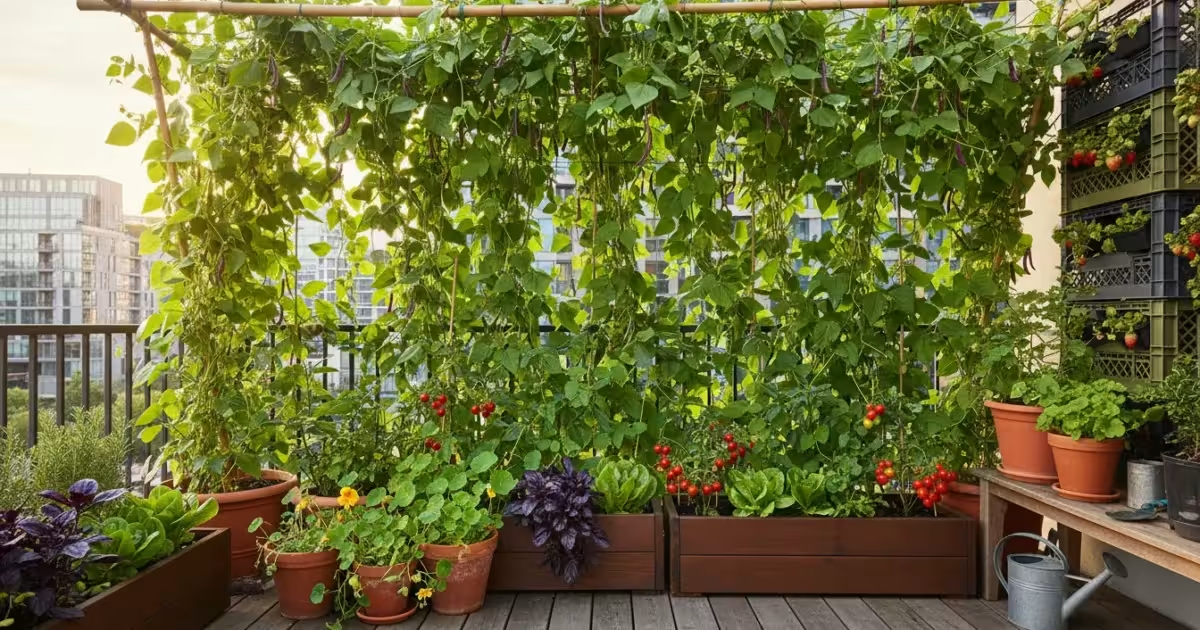
Your balcony or patio offers valuable outdoor living space, but it often comes with a few common challenges: a lack of privacy, intense sun exposure, and perhaps a yearning for fresh, homegrown produce. Imagine transforming these challenges into opportunities. You can create a vibrant, living solution that provides personal sanctuary, cools your space, and delivers delicious food. Welcome to the edible balcony ‘shade curtain’—a brilliant way to grow vining beans for privacy, shade, and a summer harvest.
This comprehensive guide empowers you to cultivate your own natural sun shade for patio or balcony, using the power of vining beans. You will discover how to select the best vining plants for balcony privacy, set up your growing beans on trellis, and enjoy an abundant edible vertical garden. Get ready to turn your small space into a productive, private oasis.
Why Grow an Edible Balcony Shade Curtain?
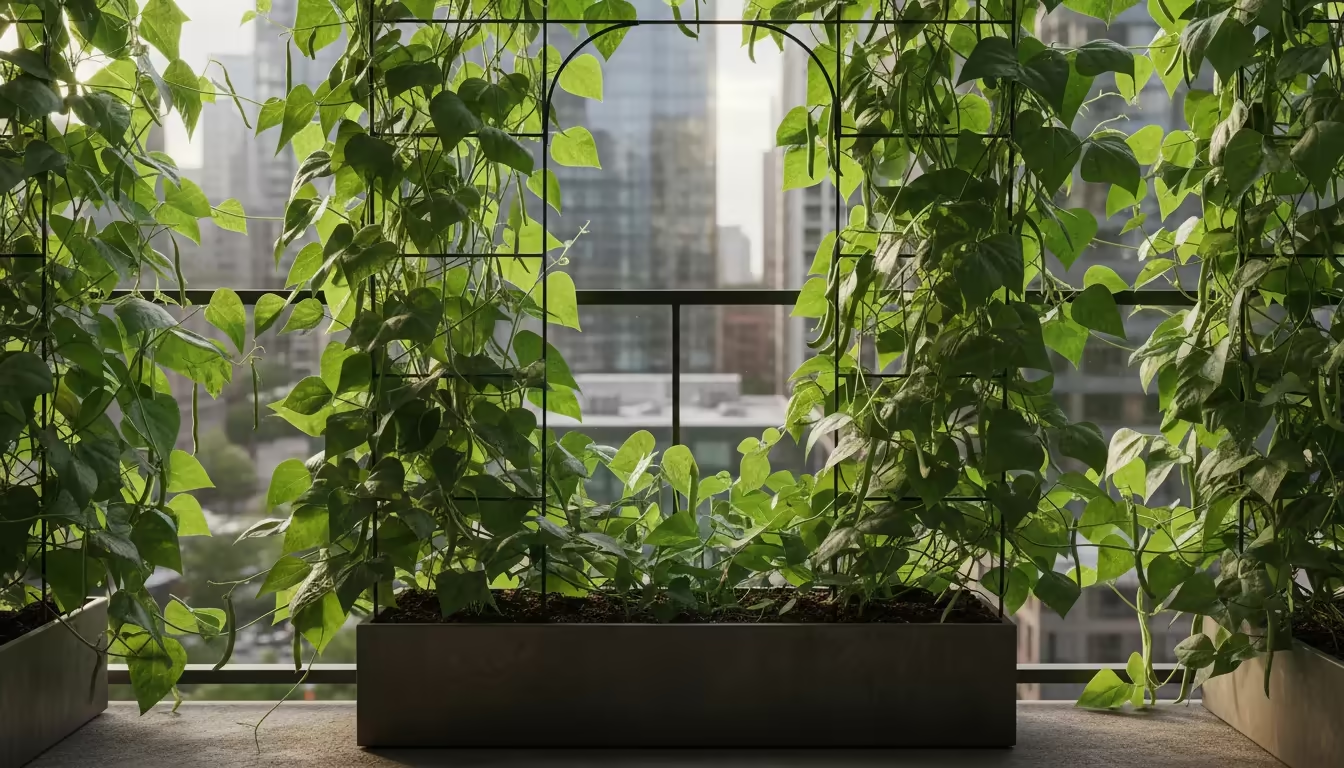
An edible balcony ‘shade curtain’ is more than just a garden project; it is a multi-functional solution addressing common urban living dilemmas. You gain privacy, reduce heat, and produce food all from one elegant system. Consider the significant benefits this living screen brings to your small space.
Enhanced Privacy for Your Balcony
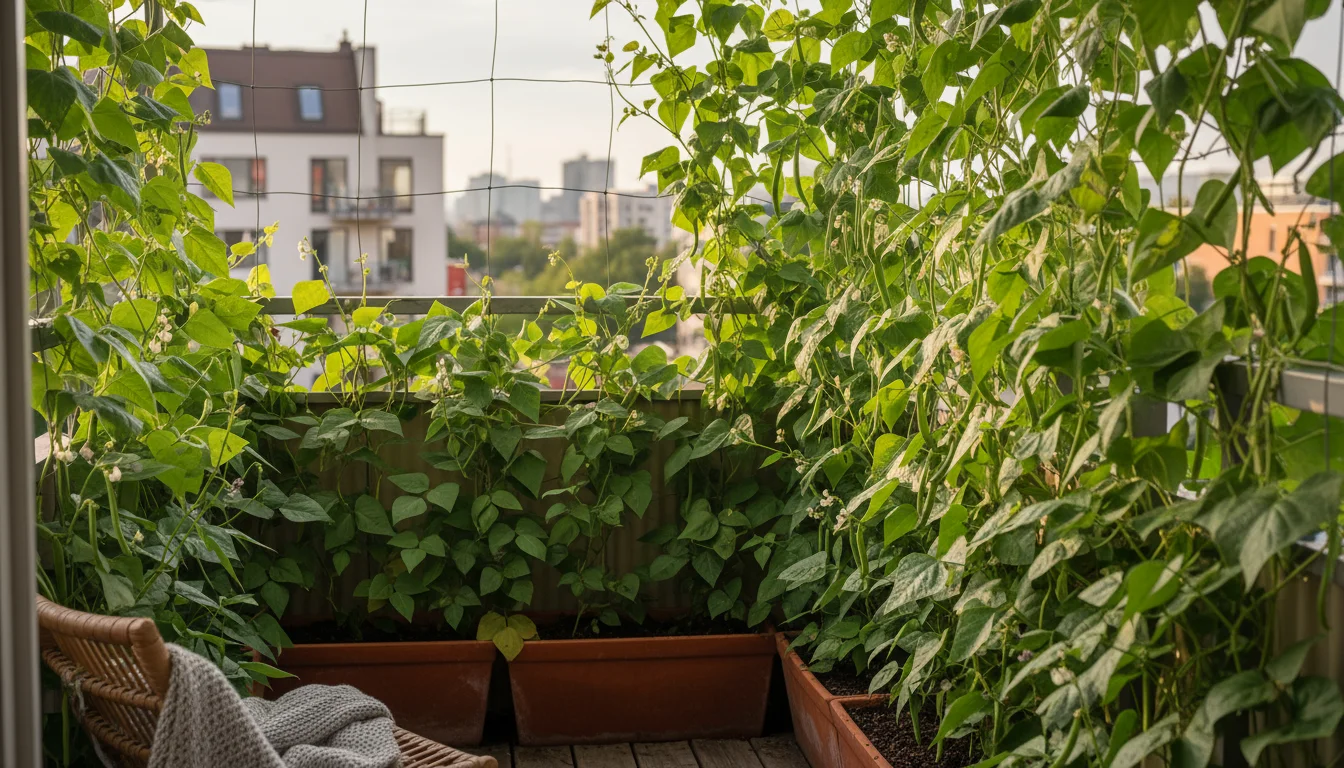
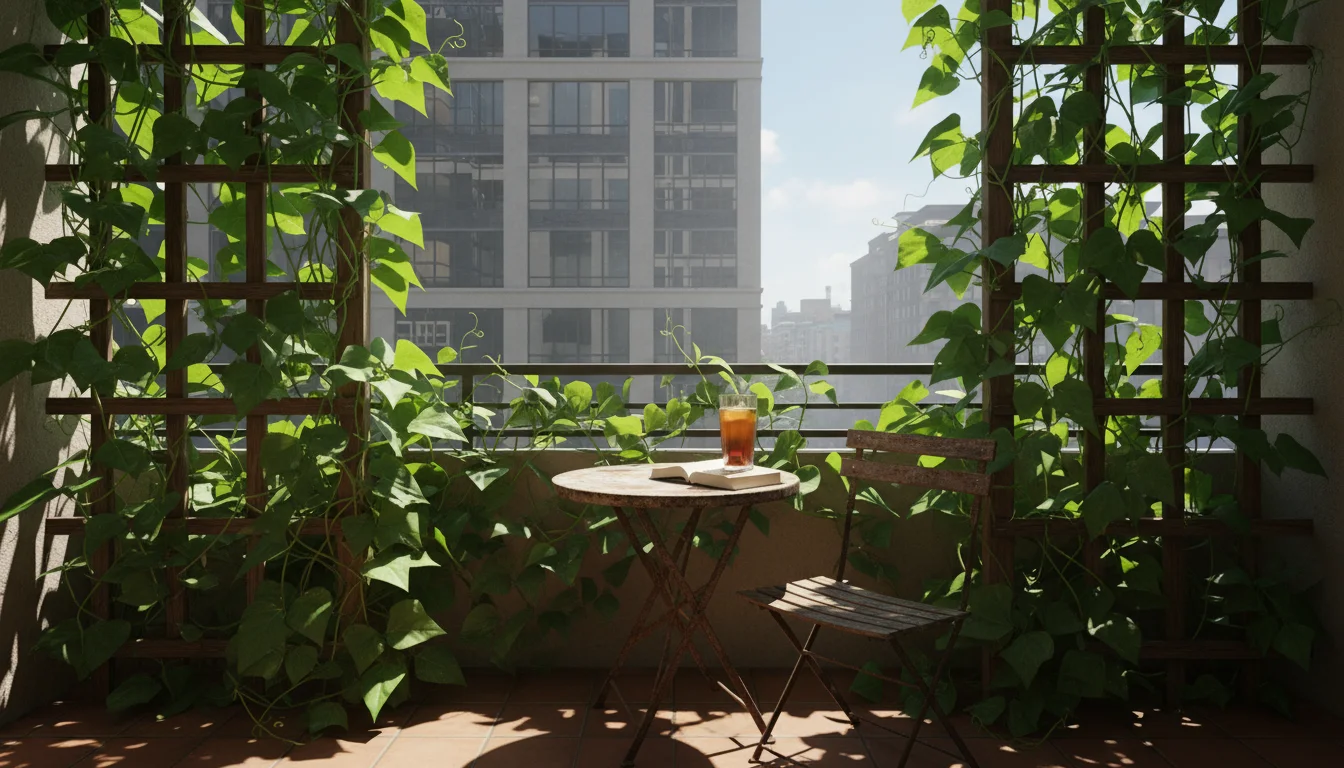
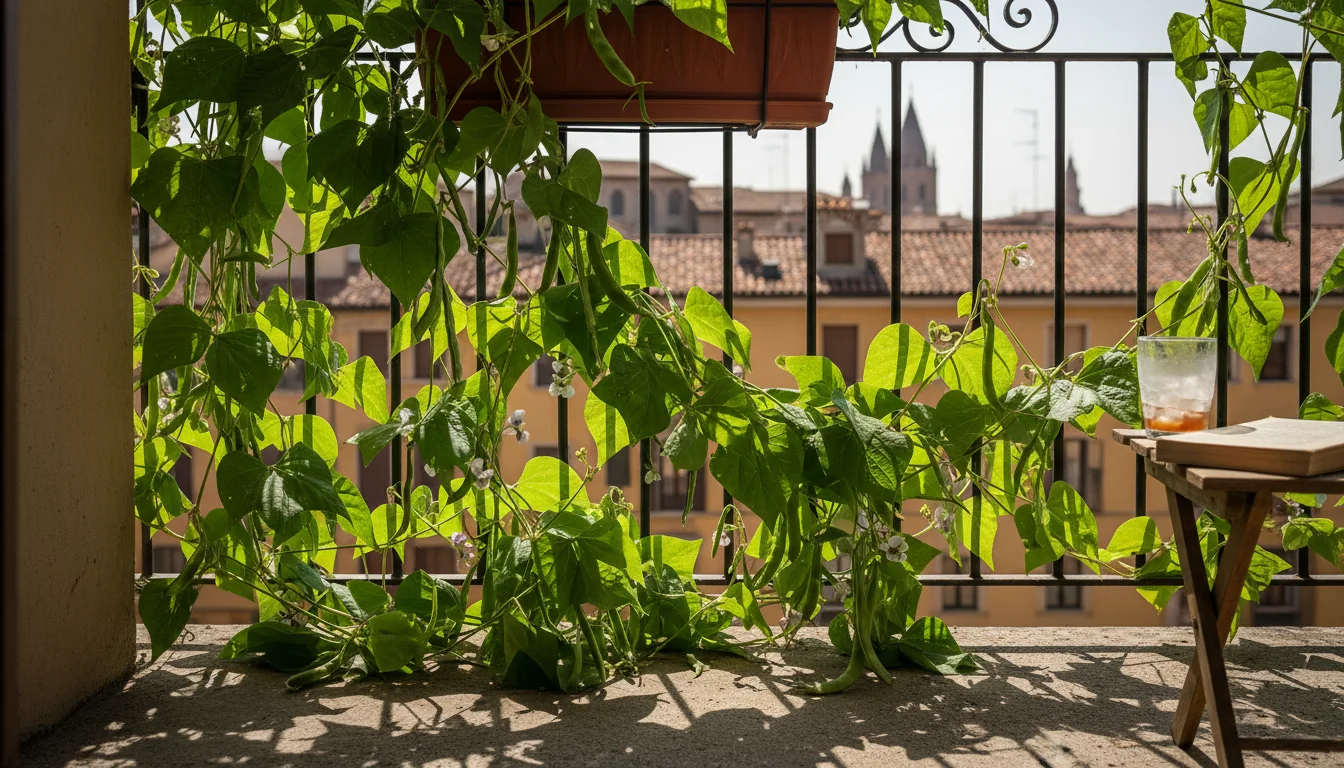
Living in close proximity often means sacrificing personal space. A strategically placed screen of vining beans creates a lush, green barrier that shields your balcony or patio from prying eyes. Unlike static screens, a bean curtain grows and adapts, providing varying levels of coverage as the season progresses. This natural barrier gives you the freedom to relax, dine, or simply enjoy your outdoor area without feeling exposed. For example, a dense growth of pole beans can effectively obscure views from neighboring apartments or walkways, transforming your open balcony into a secluded retreat. You gain a beautiful, organic balcony privacy screen that enhances your sense of calm and personal space.
Natural Cooling and Sun Protection
Summer sun can turn a lovely balcony into an unbearable oven. Artificial shades block light but often trap heat. A bean curtain offers a dynamic, natural sun shade for patio or balcony. As the plants grow, their leaves transpire, releasing moisture into the air and creating a localized cooling effect. This evaporative cooling can noticeably reduce ambient temperatures on your patio, making your outdoor space more comfortable. The dense foliage also provides excellent shade, filtering harsh sunlight and preventing heat from radiating directly onto your walls and windows. Data from urban gardening initiatives often show that green infrastructure, even on a small scale, contributes to cooler microclimates, reducing the need for air conditioning and lowering energy bills in adjacent indoor spaces. You enjoy a cooler, more pleasant environment, and potentially save on energy costs.
You can also combine living screens with balcony shadow shifting techniques to track sunlight movement and protect heat-sensitive potted crops.
For additional strategies on protecting your outdoor plants during extreme heatwaves, check out our balcony heat protection guide.
A Continuous Harvest of Fresh Beans
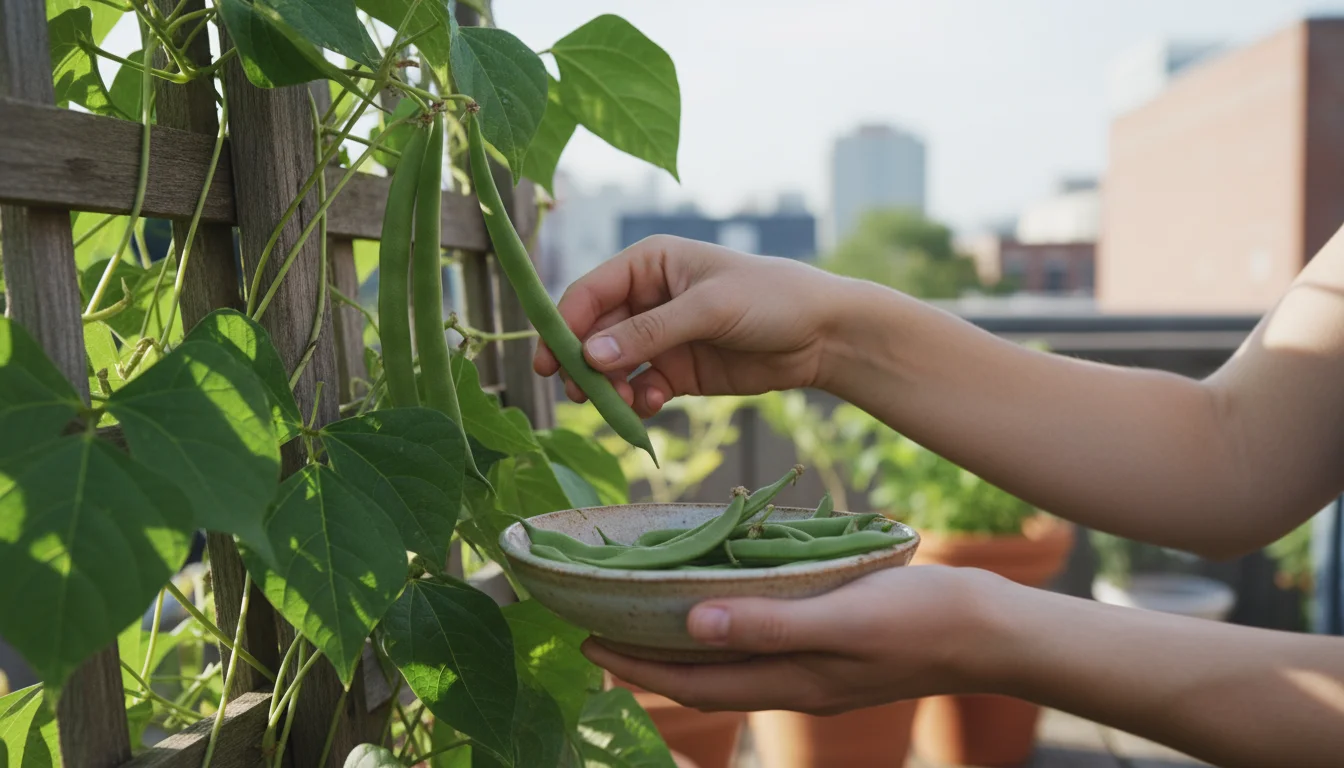
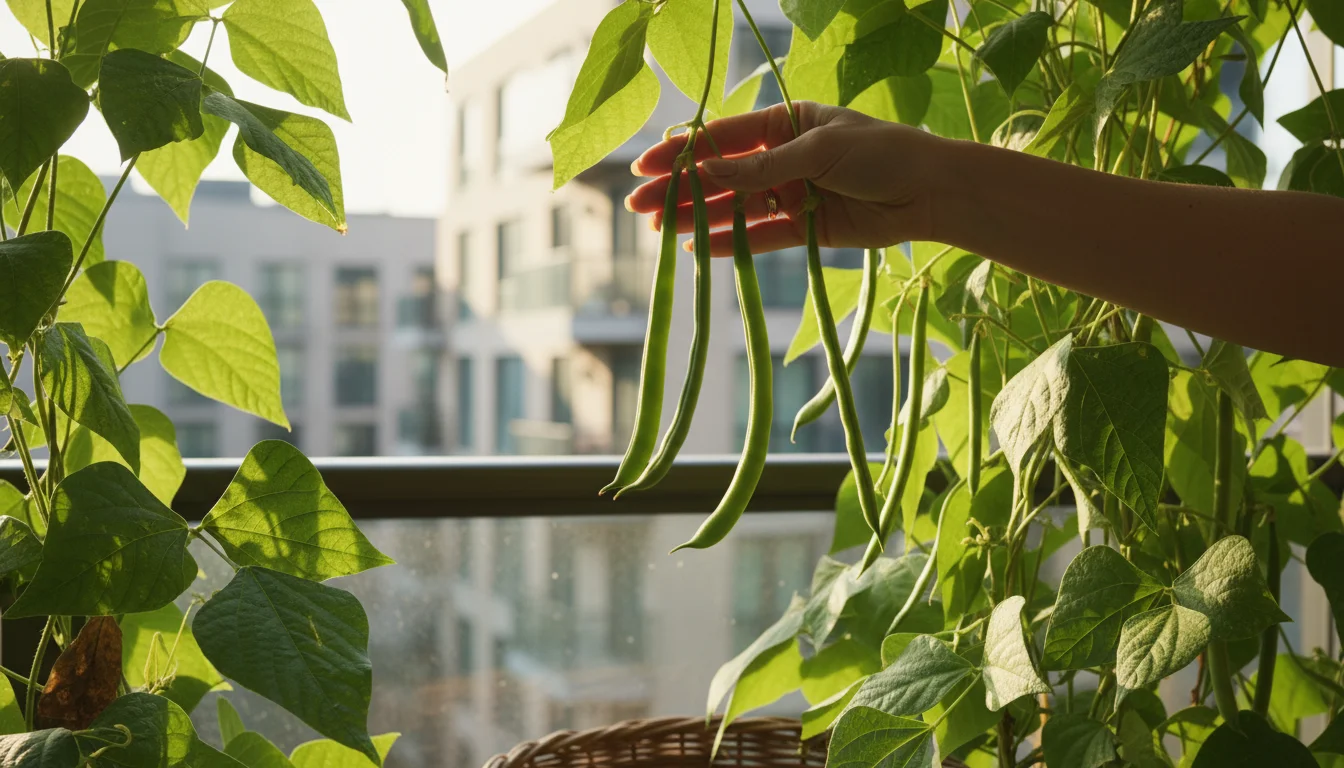
Beyond privacy and shade, your bean curtain delivers a delicious bounty. Vining beans, particularly pole beans, produce consistently throughout the summer, offering fresh, nutritious vegetables for your meals. Harvesting your own food connects you to nature, reduces your grocery bill, and ensures you eat produce picked at peak freshness. Imagine stepping onto your balcony and plucking crisp green beans directly from the vine for dinner. This immediate access to garden-fresh produce offers a culinary advantage no supermarket can match. You cultivate an edible vertical garden that consistently provides healthy food for you and your family.
To keep your balcony productive as midsummer arrives, explore options for summer sowing fast-growing veggies to complement your bean yields.
Aesthetic Appeal and Green Living
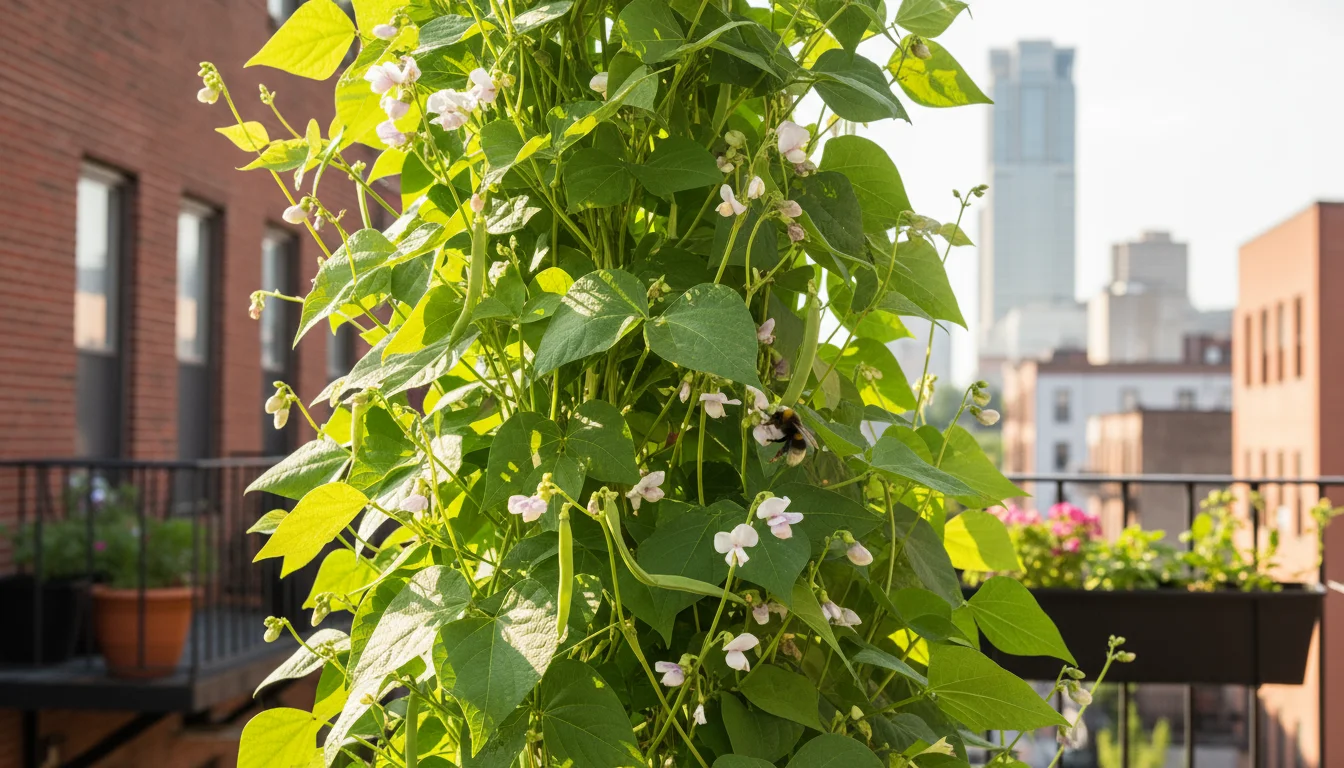
Finally, a bean curtain adds immense beauty to your urban environment. The lush green foliage, delicate flowers, and developing bean pods create a living tapestry that enriches your space. It transforms a sterile balcony into a vibrant, dynamic garden. Incorporating living plants into your home improves air quality, fosters biodiversity by attracting beneficial insects like bees, and simply makes your surroundings more enjoyable. This green solution enhances your personal well-being and contributes to a more sustainable, aesthetically pleasing urban landscape.
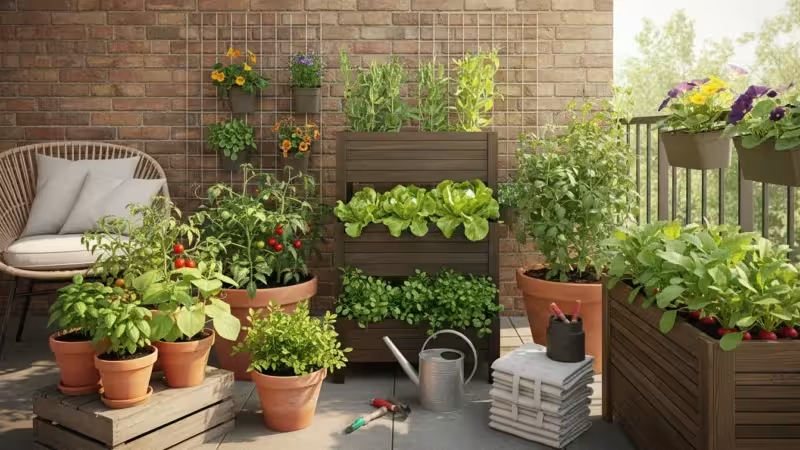
Pairing vertical foliage with smart layout choices makes it easy to design a balcony garden that feels like a room.
Choosing Your Vining Beans: Best Varieties for Balconies
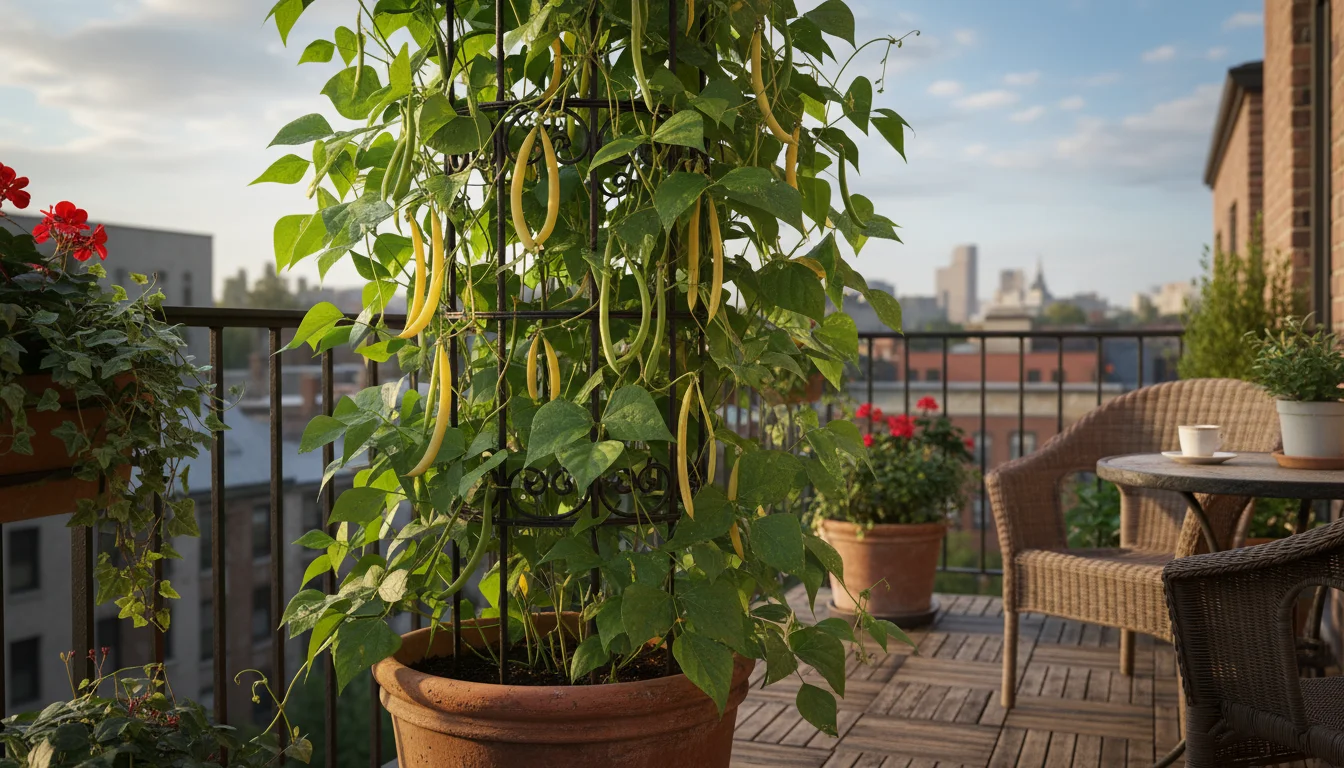
Selecting the right bean variety is crucial for a successful edible shade curtain. You need types that vigorously vine, produce well in containers, and thrive in your local climate. Focus on pole beans, as bush beans do not offer the height or coverage required for a privacy screen.
If you want ornamental companions alongside your edible crop, look into other climbing plants for fences and pergolas.
Key Characteristics of Ideal Balcony Beans
When you choose bean seeds, consider these factors:
Pole beans top the list of the best high-yield vegetables to grow in pots when optimizing small spaces.
- Vining Habit: Look for “pole” bean varieties. These grow tall, reaching 6 to 10 feet or more, perfectly suited for climbing a trellis and forming a dense screen.
- Container Suitability: While most pole beans can grow in containers, some perform exceptionally well. Varieties that tolerate slightly smaller root spaces while maintaining productivity are ideal.
- Pest and Disease Resistance: Choosing resistant varieties minimizes maintenance and ensures a healthier, more productive plant throughout the season.
- Yield: Select beans known for their prolific production, ensuring you get a generous harvest from your limited space.
- Flavor and Texture: Ultimately, you want beans you enjoy eating! Green, yellow, and purple varieties offer different flavors and textures.
Recommended Pole Bean Varieties for Your Shade Curtain
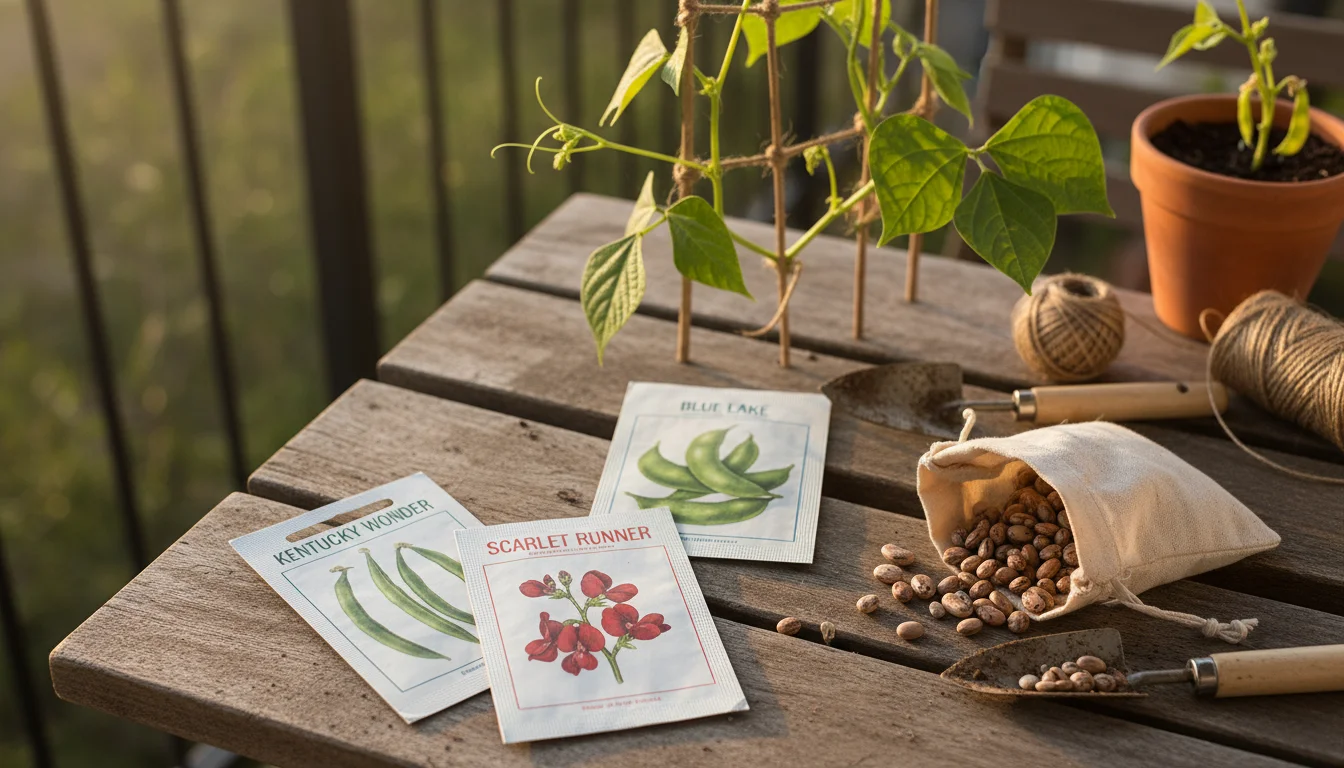
Here are some excellent choices for growing beans on trellis in a container:
Allowing a few mature pods to dry on the vine late in the season provides a great opportunity to learn how to save seeds from your balcony garden for next spring.
To continue growing legumes into the cooler seasons, explore planting fava beans in pots during autumn.
| Variety Name | Key Characteristics | Best For |
|---|---|---|
| Kentucky Wonder Pole | Classic green bean, stringless when young, excellent flavor, very prolific, grows 6-8 feet. | Beginners, reliable yield, traditional green bean taste. |
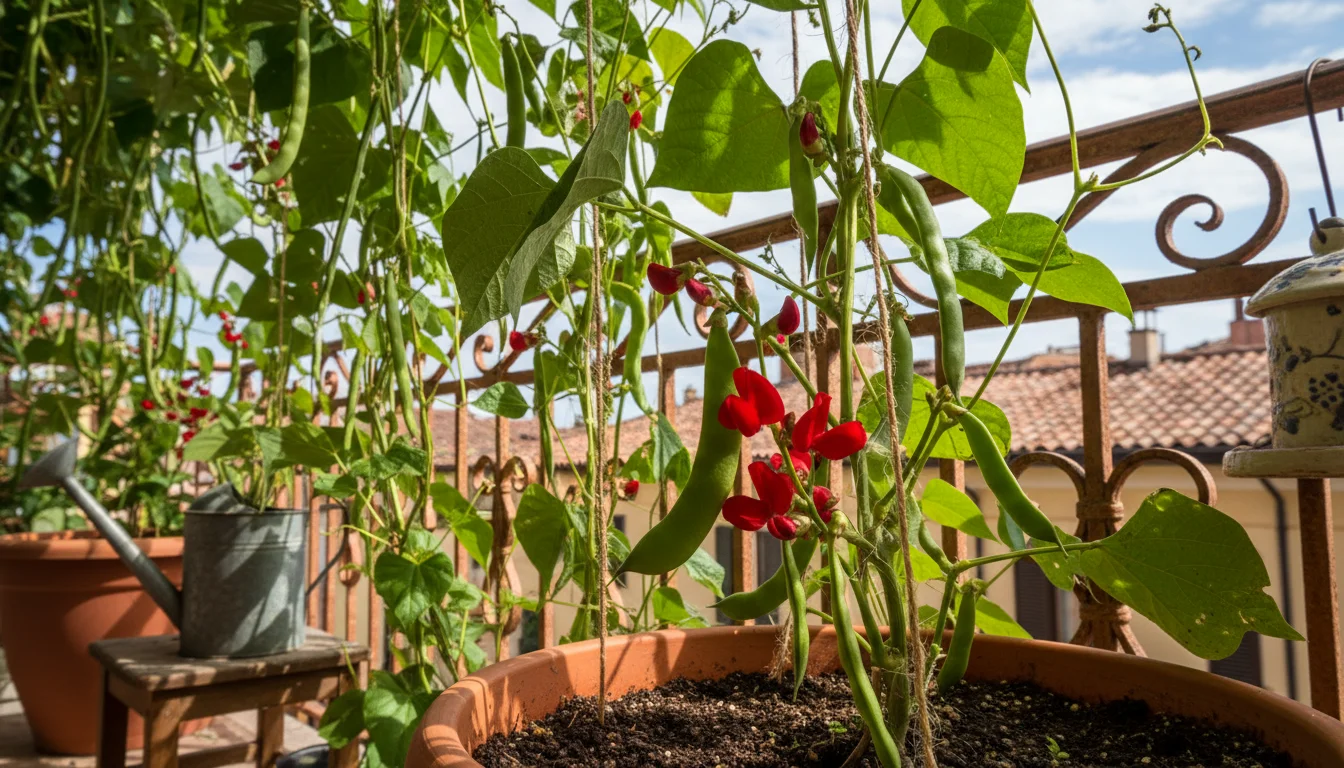
| Scarlet Runner Beans | Vigorous climber, beautiful red flowers attract hummingbirds, edible pods (best young) and dry beans. Grows 8-10 feet. | Adding ornamental value, attracting pollinators, dual-purpose (flowers & food). |
| Blue Lake Pole | Dependable green bean, stringless, tender, sweet flavor, high yields, grows 6-7 feet. | Consistent harvests, canning and freezing, excellent fresh eating. |
| Roma II Pole (Romano type) | Flat, broad, tender pods with a distinctive, rich flavor. Grows 6-8 feet. | Gourmet cooking, unique texture, sturdy growth. |
| Rattlesnake Pole Beans | Green pods streaked with purple, excellent flavor, heat tolerant, very productive, grows 7-9 feet. | Warm climates, visual interest, extended harvest. |
When considering the best vining plants for balcony privacy, these pole bean varieties stand out for their robust growth and reliable production. Experiment with a couple to see which ones perform best in your specific microclimate and suit your culinary preferences. Read seed packet descriptions carefully; they provide valuable information on mature plant size, days to harvest, and any specific growing requirements.
Essential Supplies for Your Bean Curtain Project
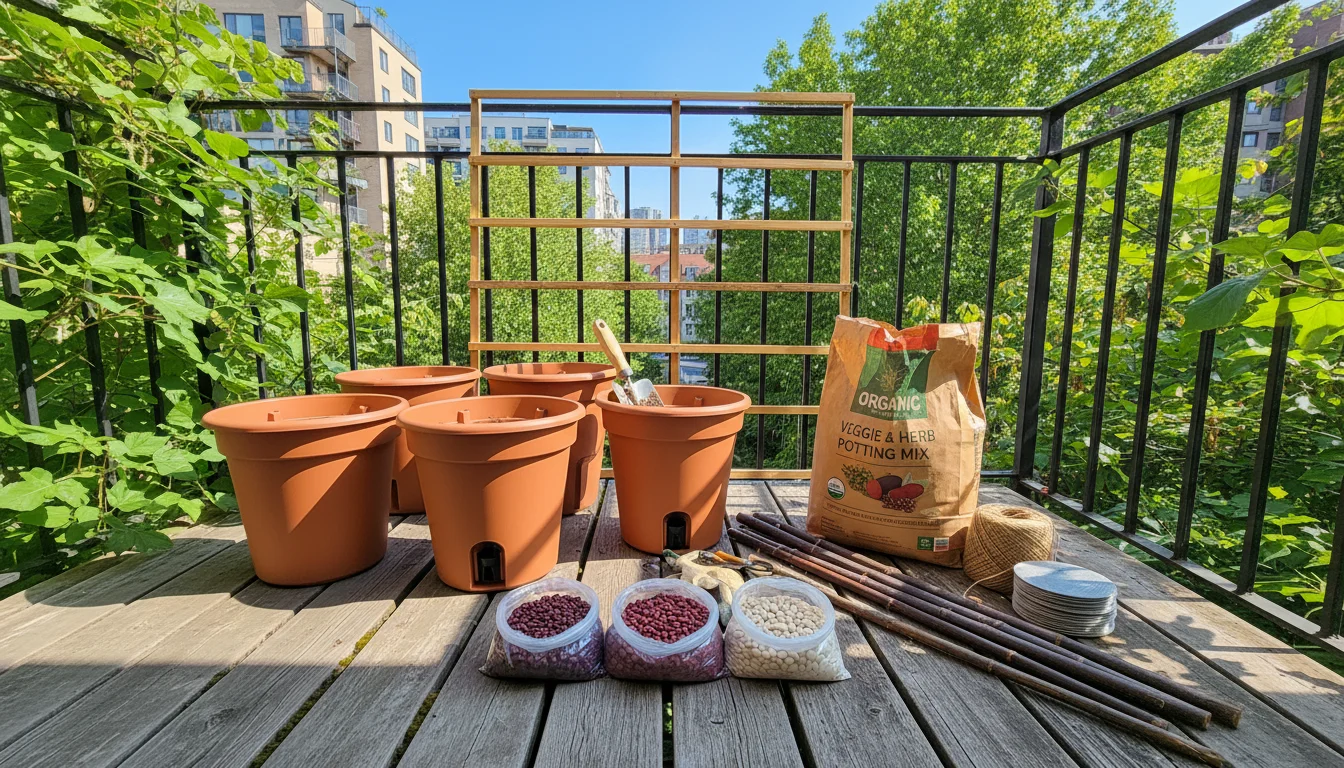
Setting up your edible privacy screen requires a few key items. Gathering these supplies before you begin simplifies the planting process and ensures you have everything you need for success. Think quality and functionality to support your growing beans.
Containers: Size Matters for Robust Growth
The success of how to grow pole beans in a container for shade depends heavily on your choice of container. Beans need ample root space to support their vigorous vining growth and heavy production.
Selecting improper containers or skipping drainage holes are common balcony garden mistakes beginners make that can easily be avoided.
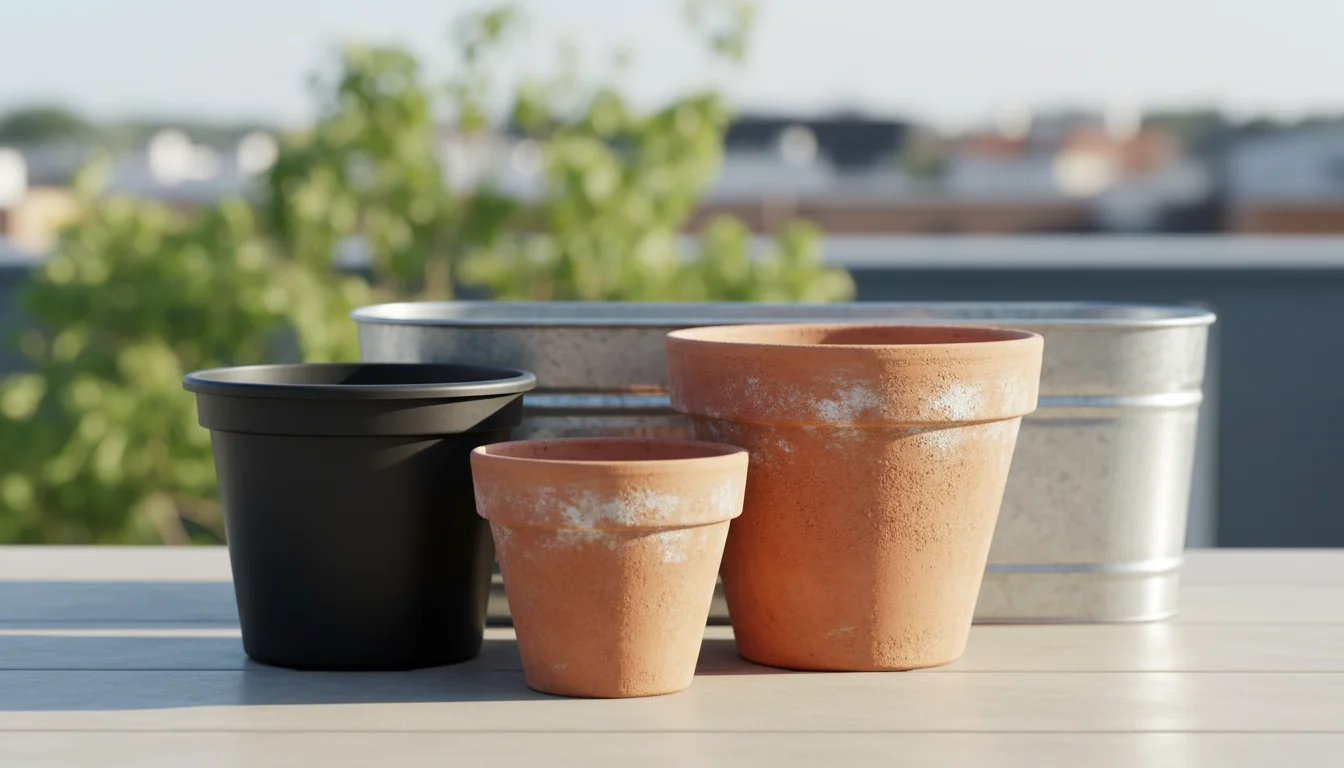
- Minimum Size: Each bean plant requires a container holding at least 5 gallons (approximately 10-12 inches in diameter and depth). For multiple plants, a larger trough-style planter or half whiskey barrel works even better.
- Drainage Holes: Absolutely critical. Without proper drainage, roots sit in water, leading to root rot. Ensure your chosen containers have multiple drainage holes at the bottom. You can drill additional holes if necessary.
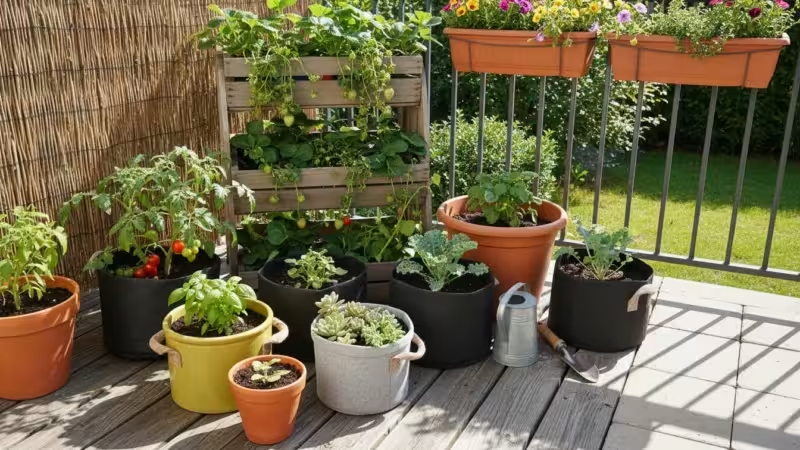
- Material: Terracotta pots look attractive but dry out quickly. Plastic pots retain moisture better. Fabric grow bags (like Smart Pots) offer excellent aeration and drainage, preventing root circling, and are lightweight. Choose based on your climate and maintenance preference.
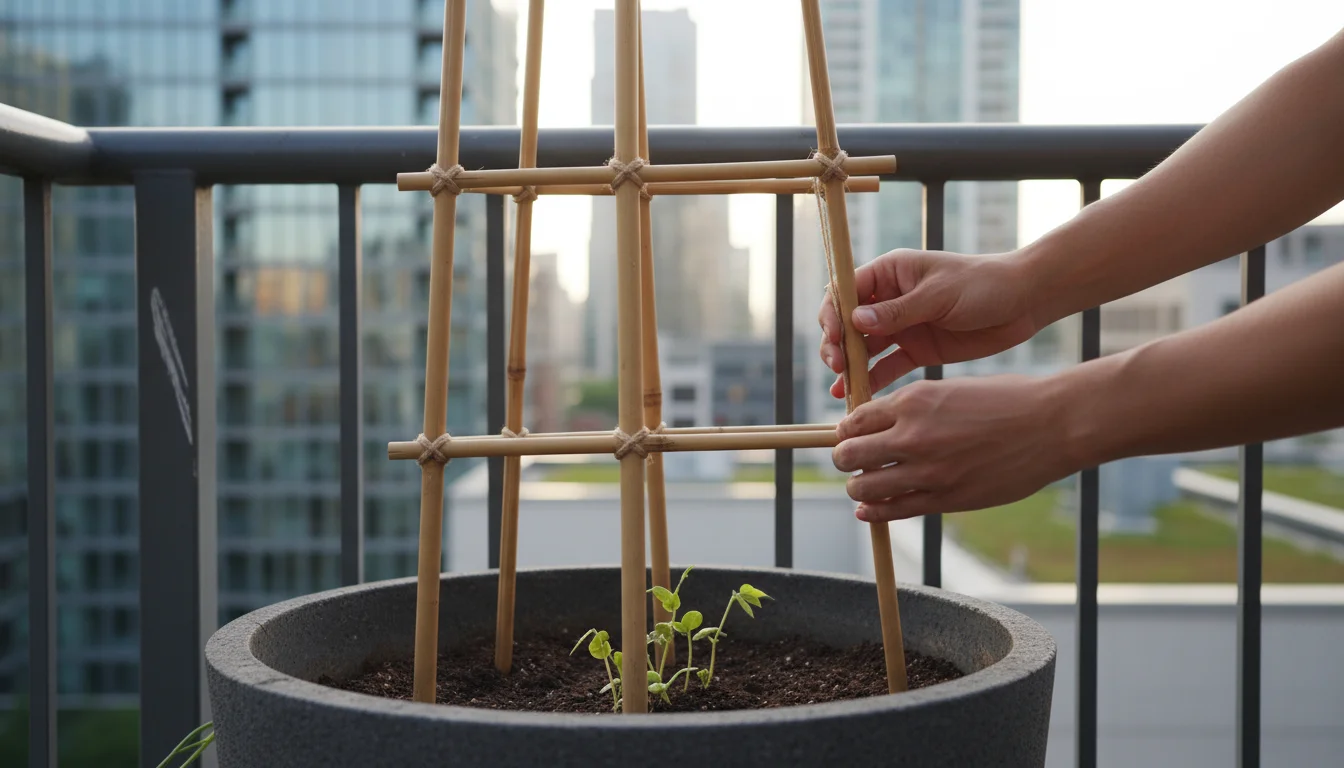
Trellis or Support Structure: The Backbone of Your Curtain
Vining beans cannot support themselves. They need a strong structure to climb, creating your desired balcony privacy screen.
You can use similar trellis techniques when growing sugar snap peas on a balcony trellis during cooler spring or fall weather.
If you enjoy vertical crops, you can also learn how to grow sugar snap peas in one pot with a balcony trellis.
- Height: Select a trellis that is at least 6 feet tall, preferably 7-8 feet, to maximize your shade and privacy benefits.
- Material: Wooden trellises, bamboo stakes tied together, metal obelisks, or even sturdy nylon netting all work. Ensure the material withstands wind and the weight of mature, bean-laden vines.
- Placement: Secure your trellis firmly within or behind your container. You can anchor it to a railing or wall for added stability, especially in windy locations. Consider how you will position it to best catch the sun and provide shade.
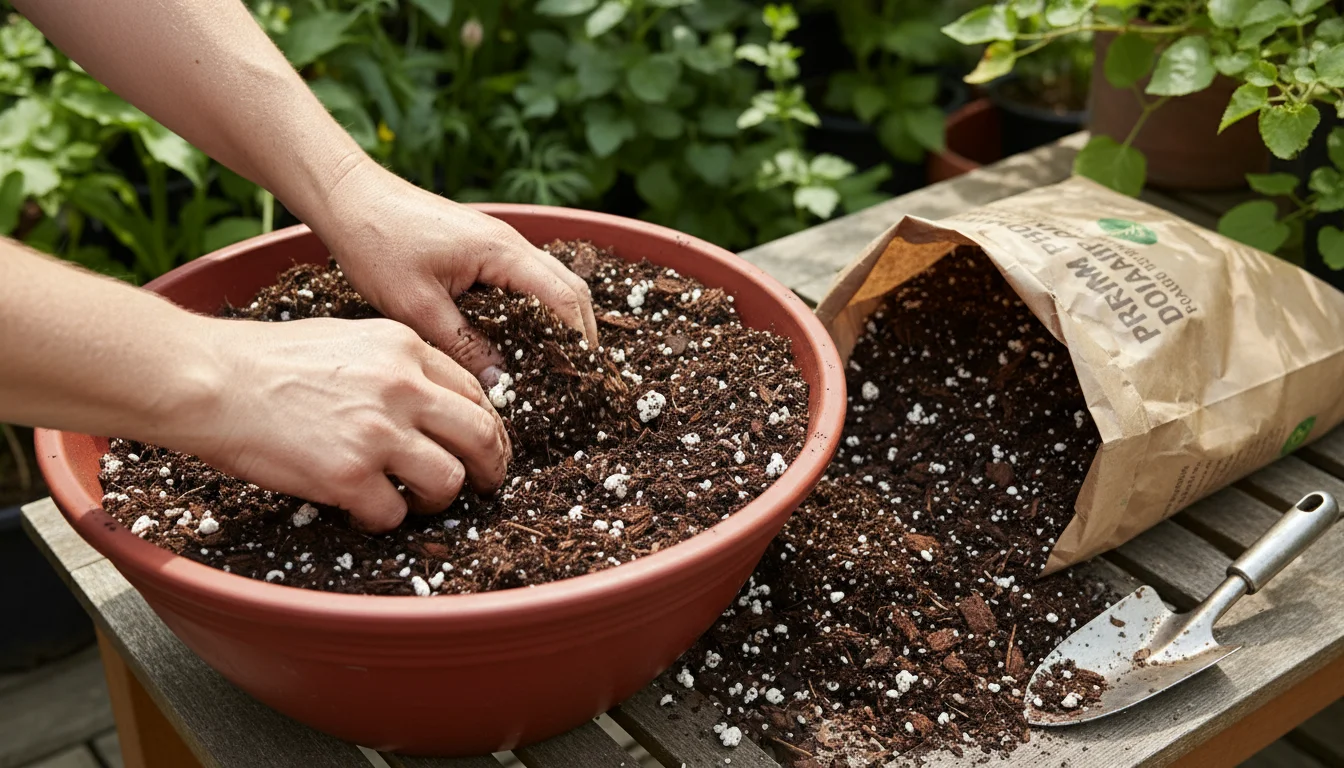
High-Quality Potting Mix: Fueling Your Harvest
Do not use garden soil in containers; it compacts too much and lacks proper drainage and aeration. A good potting mix provides the ideal environment for root development and nutrient uptake.
- Ingredients: Look for a mix containing peat moss or coco coir for moisture retention, perlite or vermiculite for drainage and aeration, and compost or other organic matter for nutrients.
- Nutrient Content: A high-quality potting mix often includes a slow-release fertilizer to give your plants a strong start.
- Volume: Purchase enough mix to fill all your containers, accounting for settling after watering.
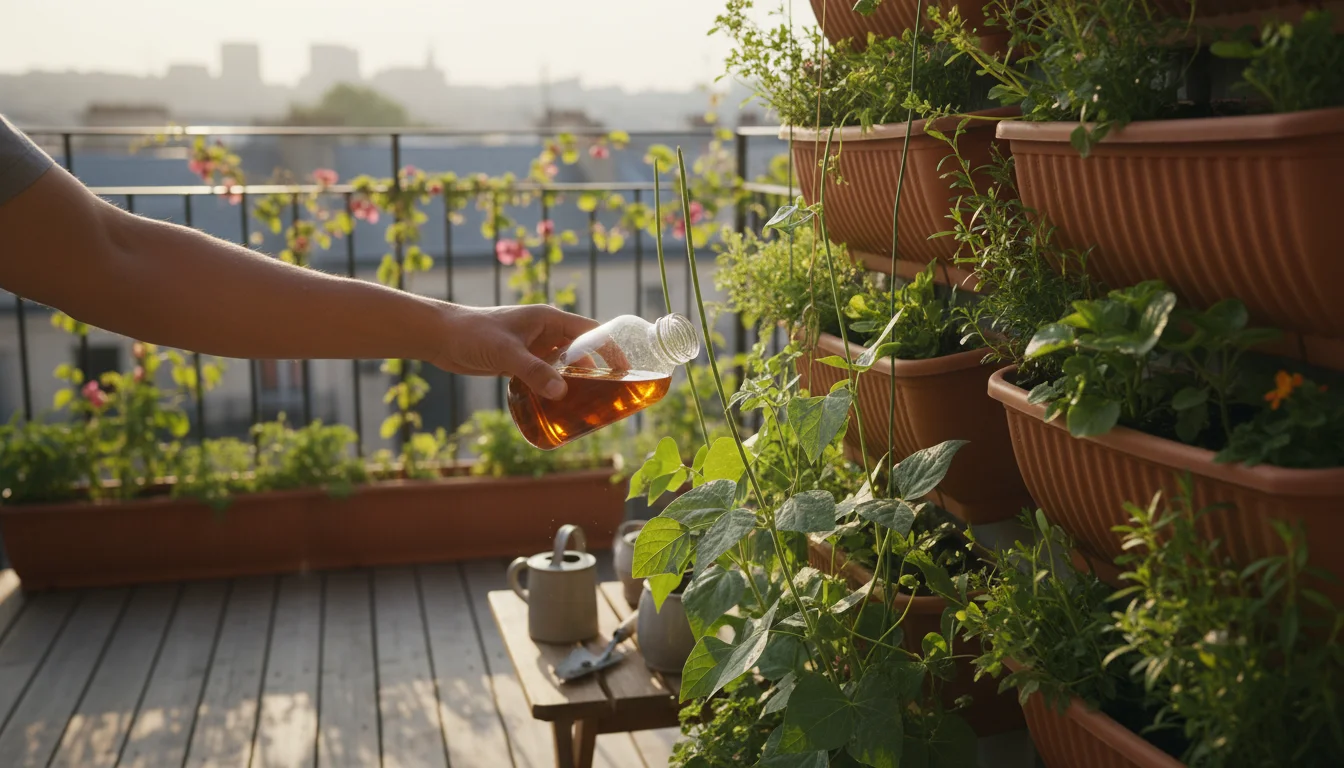
Seeds, Water, and Fertilizer: The Essentials
- Bean Seeds: Choose one of the recommended pole bean varieties. Purchase fresh seeds for better germination rates.
- Watering Can or Hose: Consistent watering is vital for beans, especially in containers.
- Balanced Liquid Fertilizer: Beans benefit from regular feeding once they start producing. A balanced NPK (nitrogen, phosphorus, potassium) liquid fertilizer or one slightly higher in phosphorus and potassium for flowering and fruiting is ideal.
- Gardening Gloves and Small Trowel: Basic tools make planting and handling soil much more comfortable.
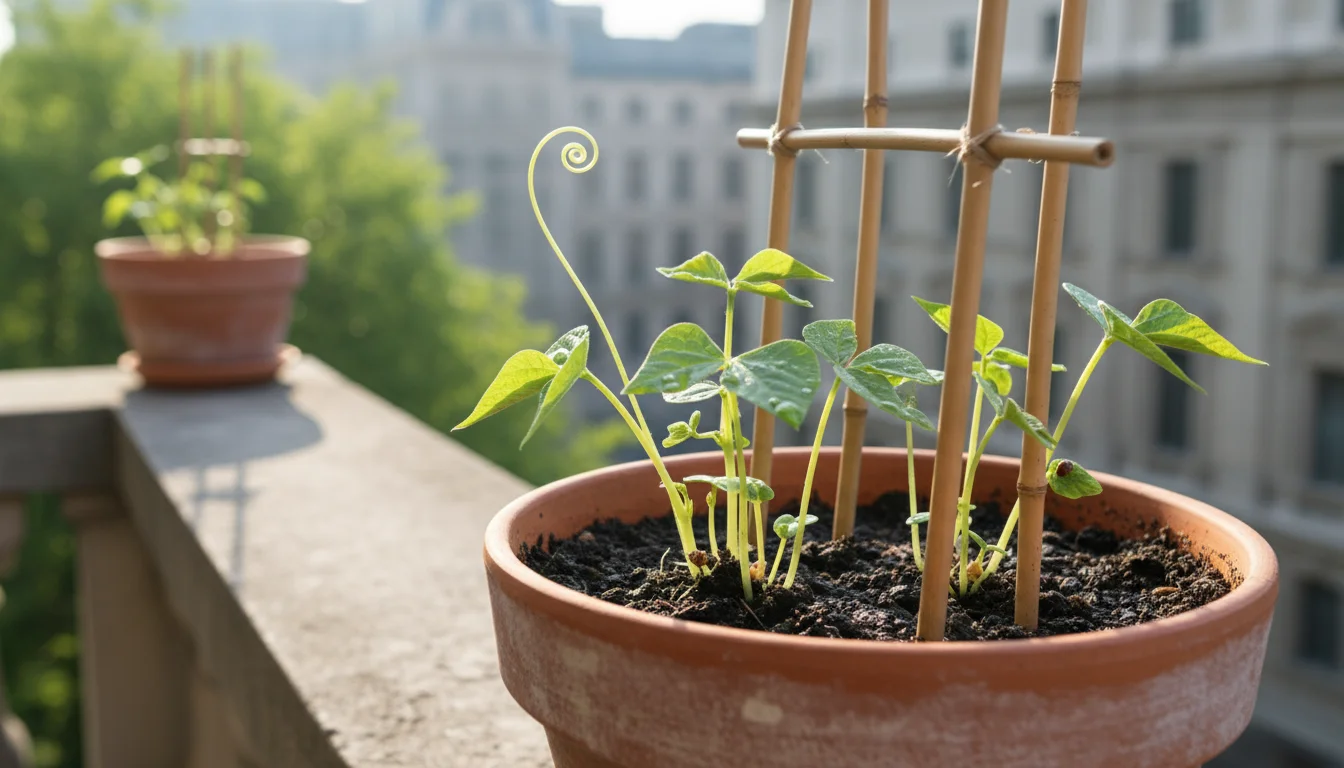
Step-by-Step: Planting and Training Your Bean Trellis
With your supplies ready, you can now embark on building your edible vertical garden. Follow these steps carefully to give your bean plants the best possible start and ensure a thriving, productive shade curtain.
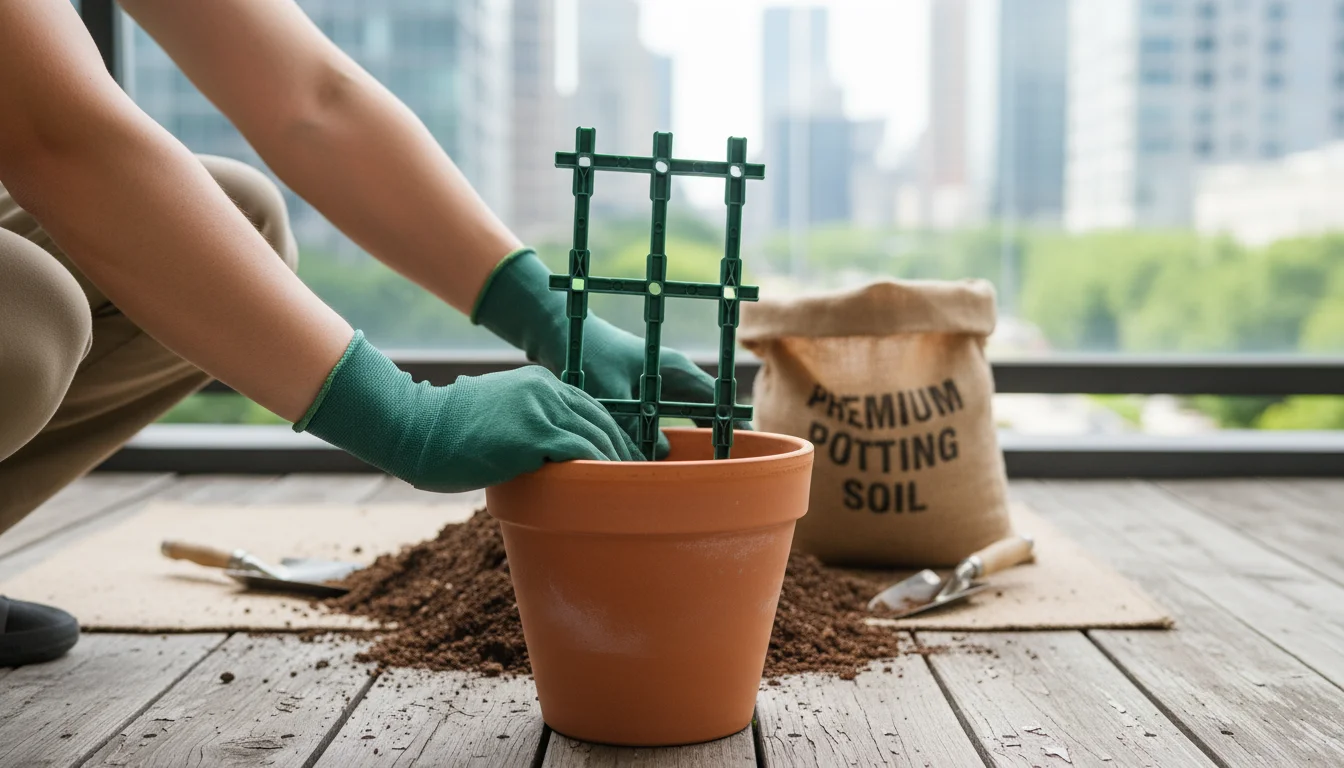
Step 1: Prepare Your Containers and Trellis
- Clean Containers: If reusing pots, wash them thoroughly with soap and water, then rinse well to remove any disease spores or pests.
- Position Trellis: Place your trellis or support structure securely in the container before adding soil. This prevents disturbing developing roots later. For larger containers, you can place the trellis directly into the pot, ensuring it reaches the bottom for stability. For smaller pots, you might attach the trellis to a nearby railing or wall, positioning the pot close to its base.
- Add Potting Mix: Fill your containers with the high-quality potting mix, leaving about an inch or two of space from the rim. Gently moisten the soil throughout.
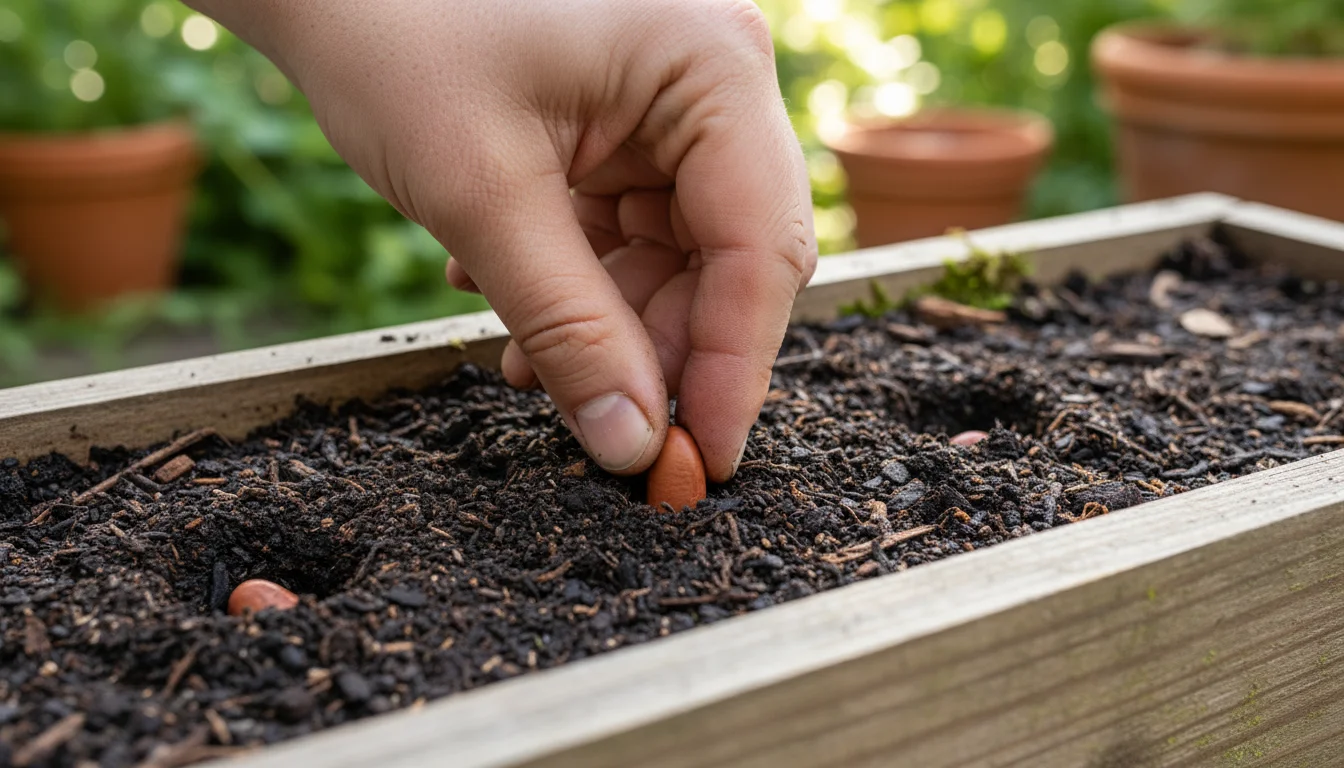
Step 2: Planting Your Bean Seeds
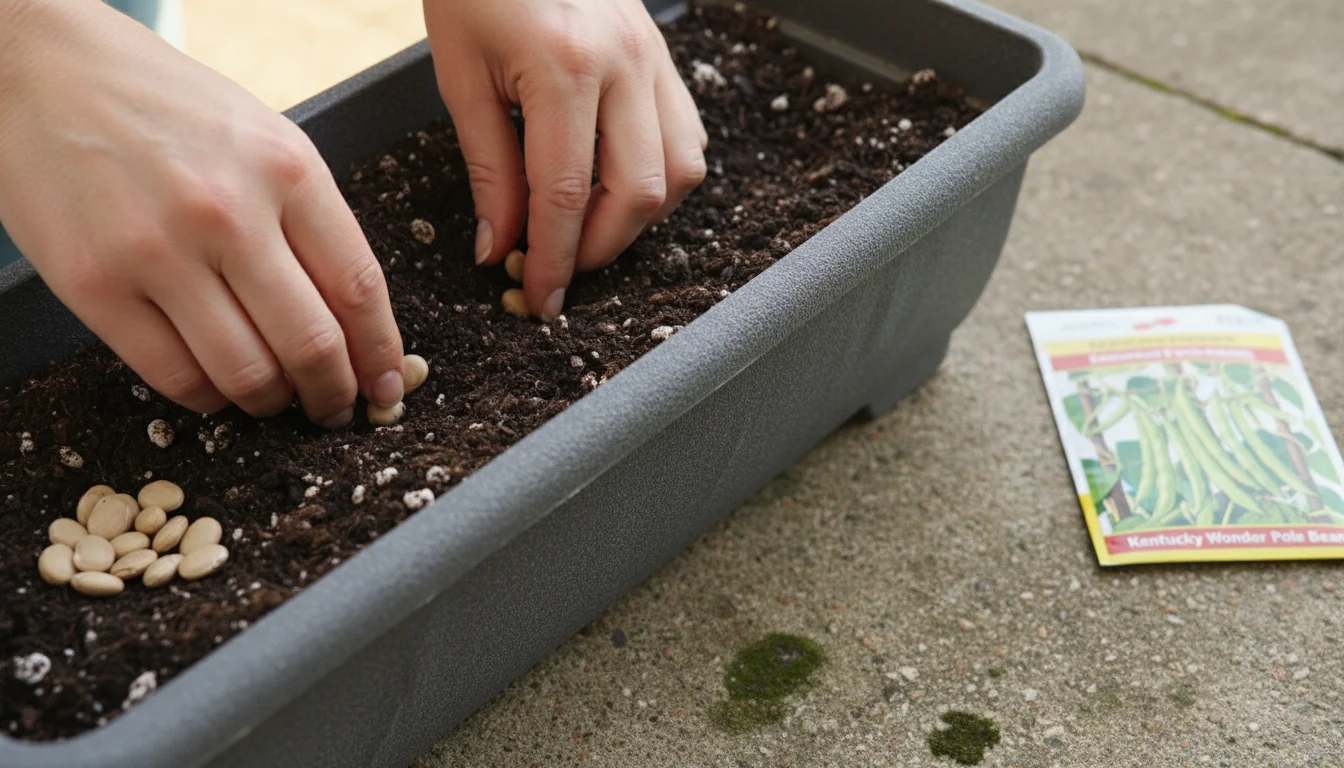
Beans are easy to grow directly from seed. You generally do not need to start them indoors.
- Timing: Plant bean seeds after all danger of frost has passed in your area and soil temperatures consistently stay above 60°F (15°C). Consult your local extension service for specific planting dates for your region.
- Depth and Spacing: Plant bean seeds about 1 inch deep. If planting multiple seeds in a single container, space them 4-6 inches apart. For a dense balcony privacy screen, you can plant 2-3 seeds per individual 5-gallon container, or space them every 4-6 inches along a larger trough.
- Water Thoroughly: After planting, water the soil gently but deeply. Keep the soil consistently moist (not waterlogged) until germination. Seeds typically sprout within 7-14 days.
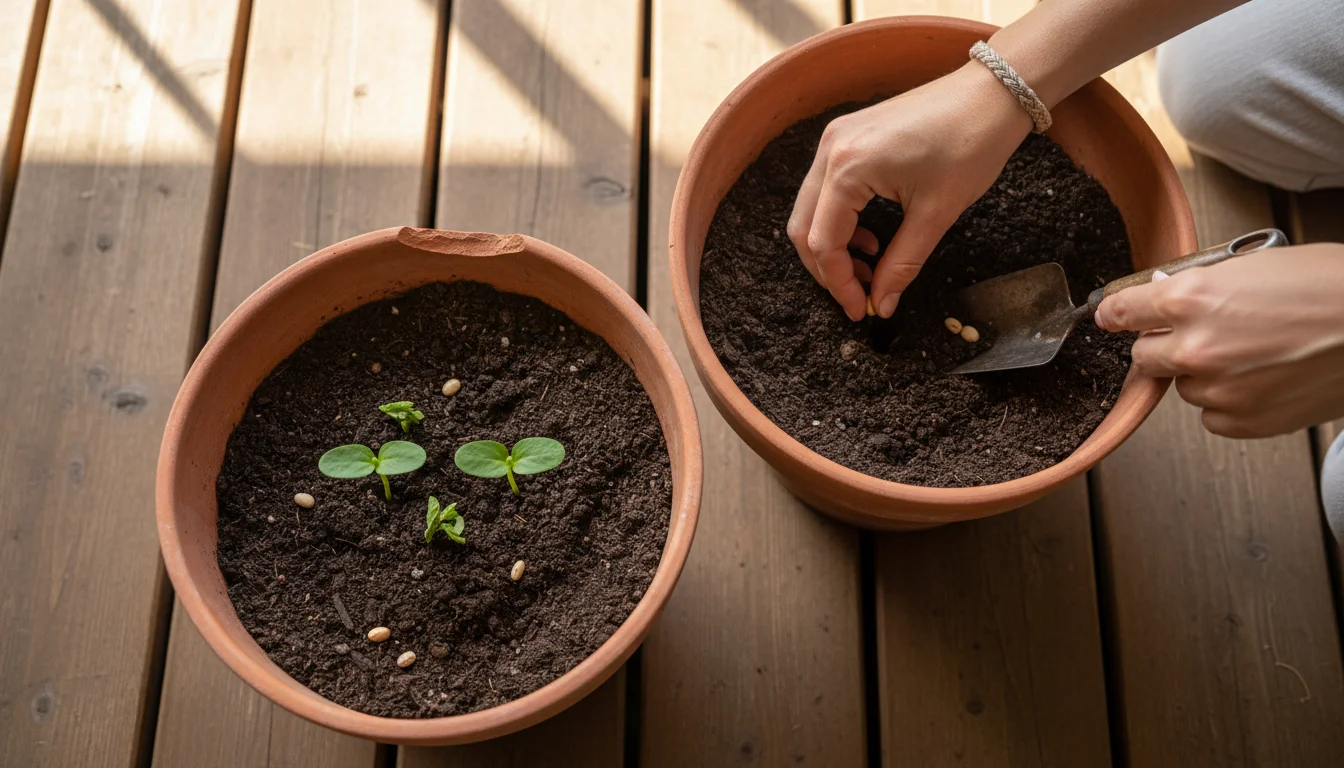
Step 3: Thinning and Initial Care
Once your bean seedlings emerge, you may need to thin them for optimal growth.
- Thinning: When seedlings are a few inches tall, thin them to the strongest plant per desired spot. If you planted 2-3 seeds per 5-gallon pot, thin to 1-2 strong plants. You can snip weaker seedlings at the soil line to avoid disturbing the roots of the keepers. Proper spacing ensures each plant receives adequate light, air circulation, and nutrients.
- Early Support: As soon as your seedlings develop their first true leaves, gently guide them towards the base of your trellis. Beans naturally twine, but a little initial guidance helps them find their way.
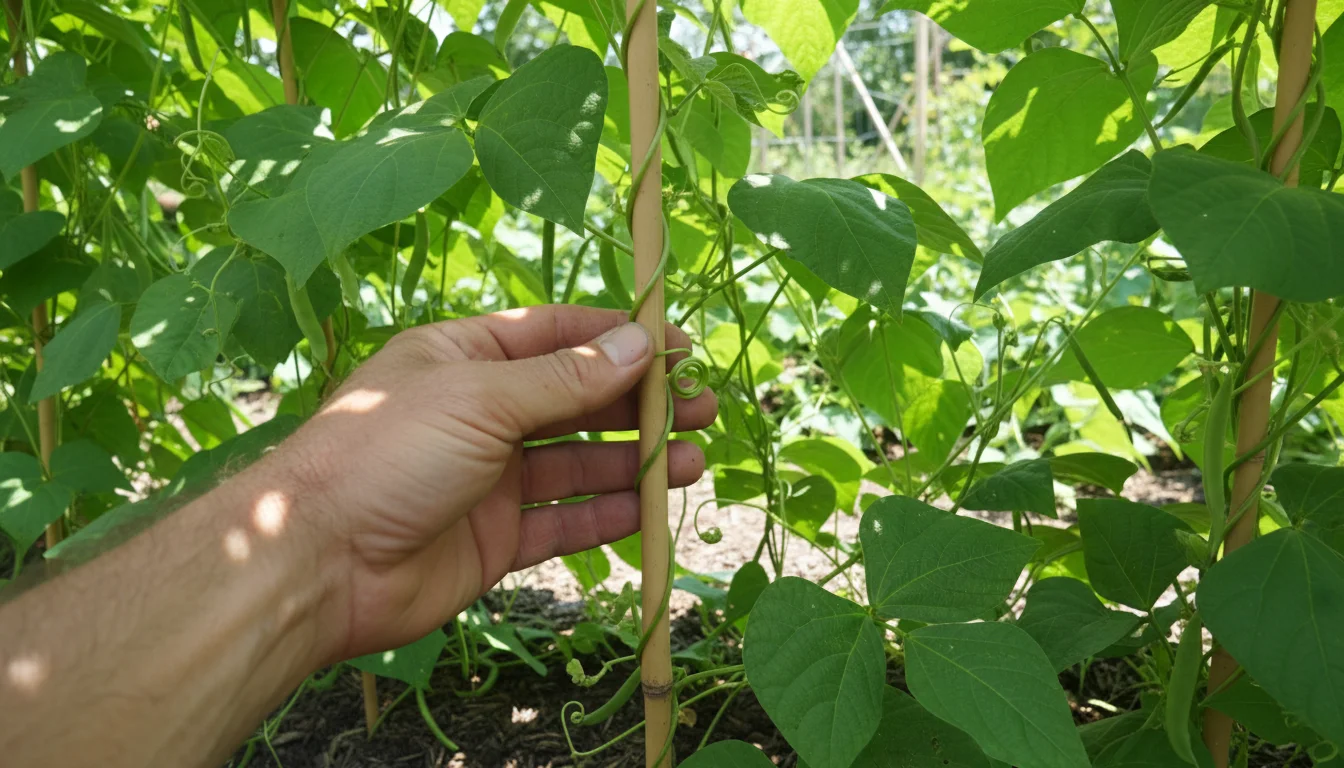
Step 4: Training Your Vines Up the Trellis
This is where your edible vertical garden truly takes shape.
- Gentle Guidance: As the vines grow, they will send out tendrils to grasp the trellis. If a vine seems to wander, gently wrap it around a trellis support in a clockwise direction. Do not force or tie it too tightly; beans need to grow freely.
- Continuous Encouragement: Check your plants every few days. Guide new growth upwards and sideways along the trellis to fill in any gaps and create an even, dense screen. The goal is to maximize coverage for privacy and shade while providing ample space for pods to develop. This continuous training ensures your growing beans on trellis create the lush curtain you desire.
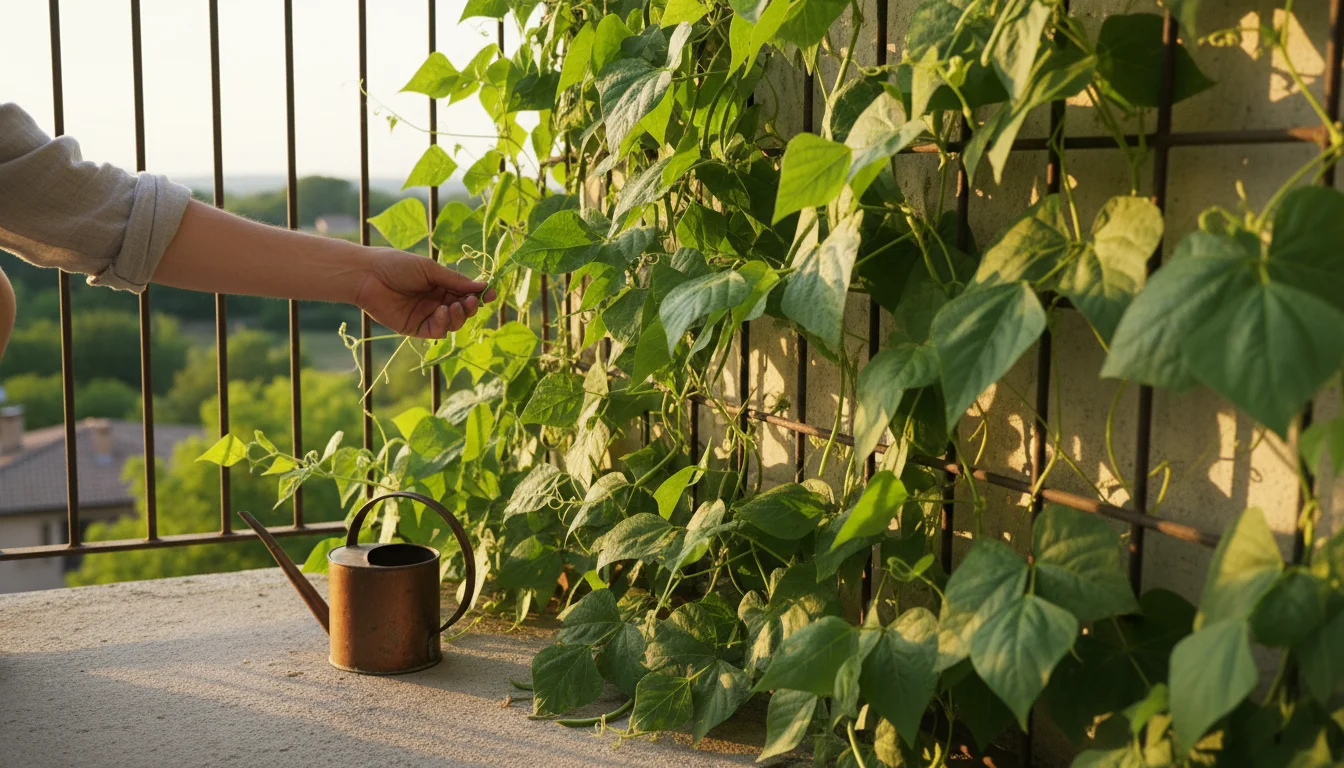
Caring for Your Edible Privacy Screen: Watering, Fertilizing, and Support
Consistent care ensures a healthy, productive bean curtain. Pay attention to your plants’ needs regarding moisture, nutrients, and ongoing support to enjoy a lush privacy screen and abundant harvests.
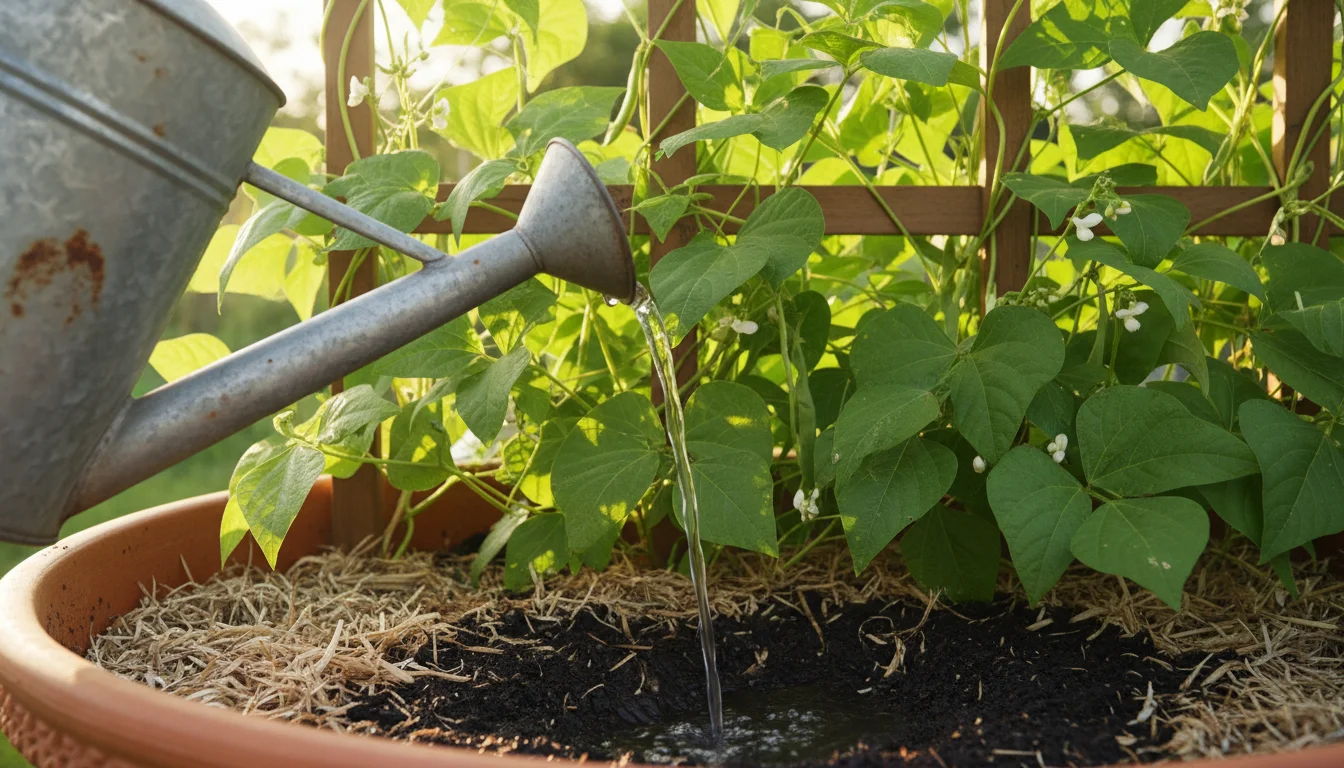
Watering: The Most Critical Element for Container Beans
Container plants dry out faster than garden beds, and beans are thirsty, especially when flowering and fruiting. How to grow pole beans in a container for shade successfully hinges on proper watering.
- Consistency is Key: Aim for consistently moist soil. Check your soil daily by sticking your finger an inch or two deep. If it feels dry, it is time to water.
- Deep Watering: Water thoroughly until you see drainage from the bottom of the pot. This encourages deep root growth. Avoid frequent, shallow watering, which leads to weak root systems.
- Timing: Water in the early morning or late evening to minimize evaporation. On hot, sunny days, you may need to water twice a day.
- Moisture Retention: Consider adding a layer of mulch (like straw, shredded leaves, or coco coir) on top of your potting mix. Mulch helps retain soil moisture, suppresses weeds, and moderates soil temperature, reducing your watering frequency.
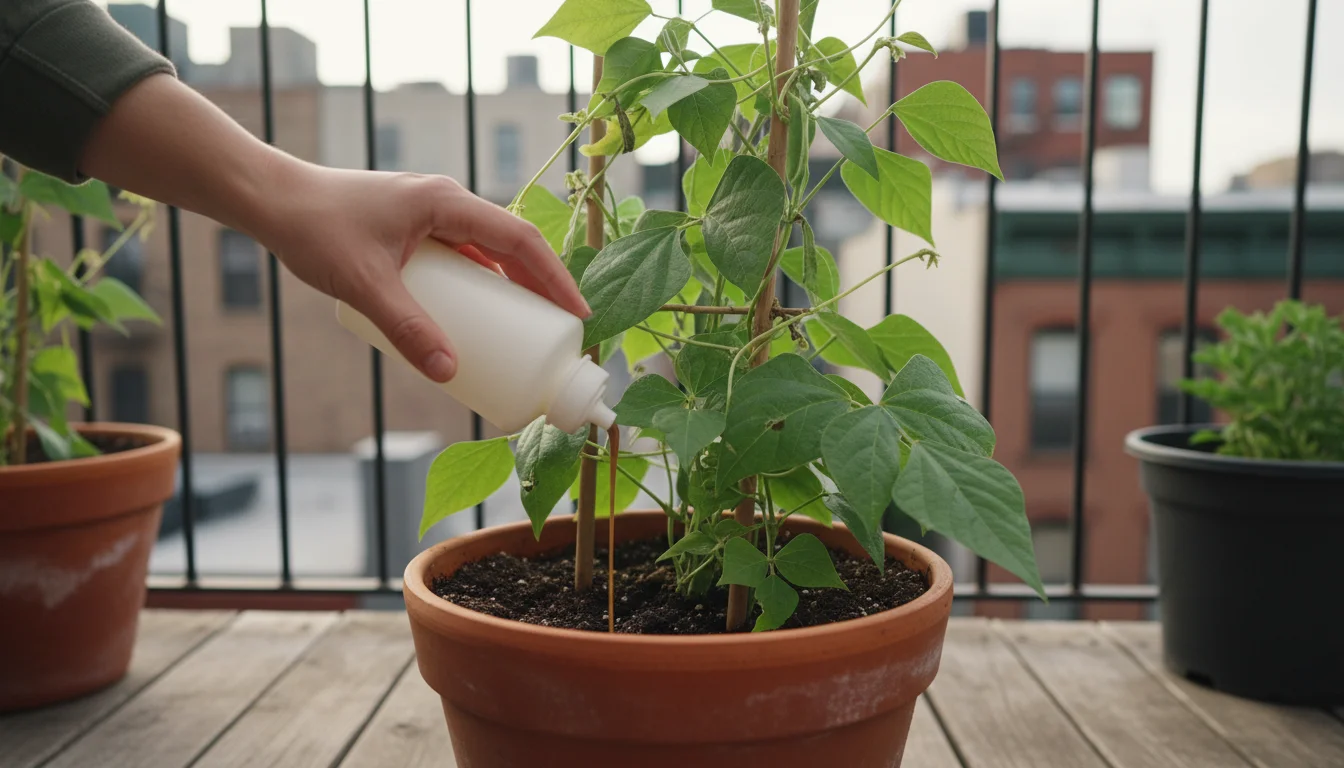
Fertilizing: Fueling Growth and Harvests
While beans fix some of their own nitrogen (meaning they convert nitrogen from the air into a form they can use), container plants exhaust soil nutrients more quickly than garden plants. Regular feeding supports continuous production.
- Initial Boost: If your potting mix did not contain a slow-release fertilizer, you can provide a balanced liquid feed (e.g., 5-5-5 or 10-10-10) once seedlings are 6-8 inches tall.
- Flowering and Fruiting Stage: Once plants begin to flower, switch to a fertilizer lower in nitrogen and higher in phosphorus and potassium (e.g., 2-5-4 or 3-4-6). This encourages flower and pod production over excessive leafy growth.
- Frequency: Fertilize every 2-4 weeks according to product instructions. Over-fertilizing, particularly with nitrogen, can lead to lush foliage but fewer beans.
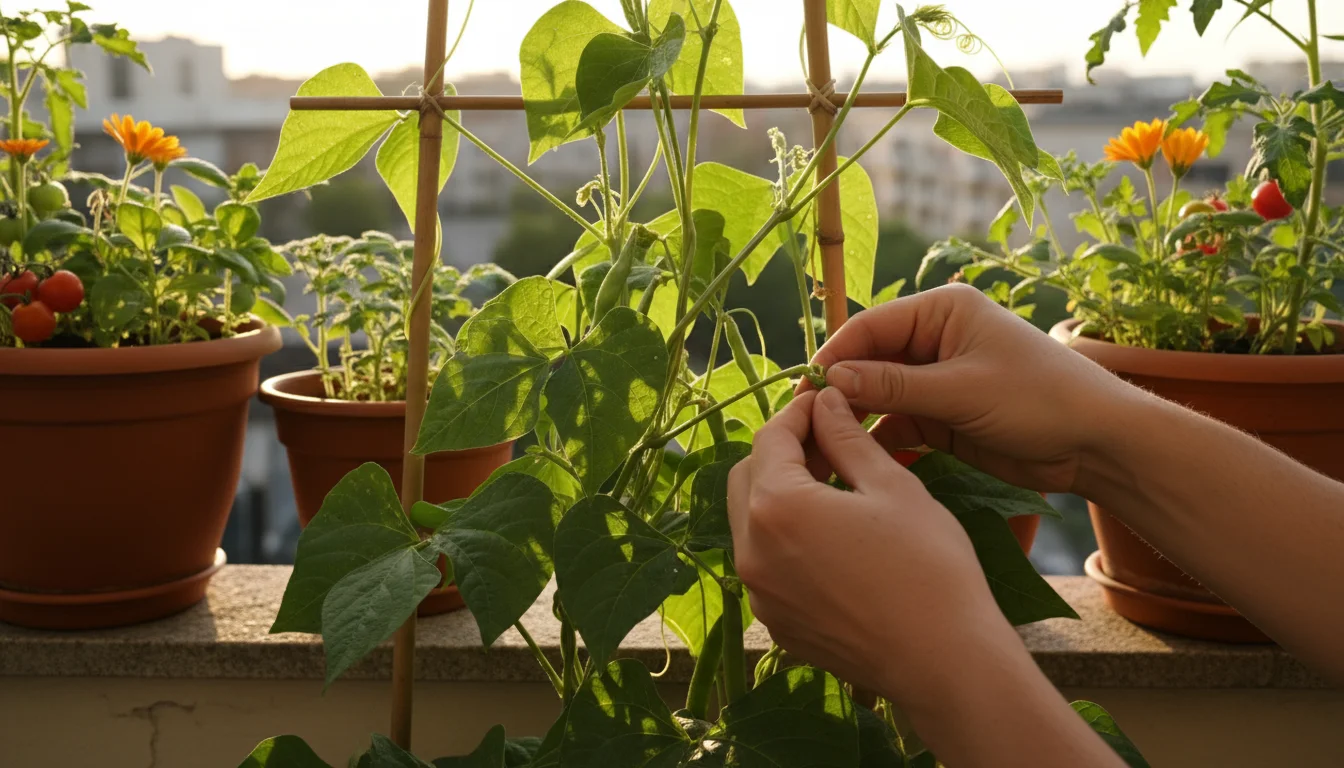
Ongoing Support and Pruning
Your bean curtain needs continuous guidance to maintain its structure and maximize light exposure for all parts of the plant.
- Training New Growth: Continue to gently guide new vines up and across your trellis to fill in gaps. This creates a dense balcony privacy screen.
- Pruning (Optional): You generally do not need to prune pole beans for fruit production. However, if your vines become extremely dense and block too much airflow, you can snip off a few non-productive lower leaves to improve air circulation and reduce disease risk. If vines grow excessively past the top of your trellis, you can pinch off the growing tips to encourage side branching and denser growth below.
- Pest and Disease Monitoring: Regularly inspect your plants for signs of pests (aphids, spider mites) or diseases (powdery mildew). Early detection allows for prompt, organic treatment, preventing small issues from becoming major problems. Horticultural soap or neem oil effectively combats many common pests. Ensuring good air circulation also helps prevent fungal diseases.
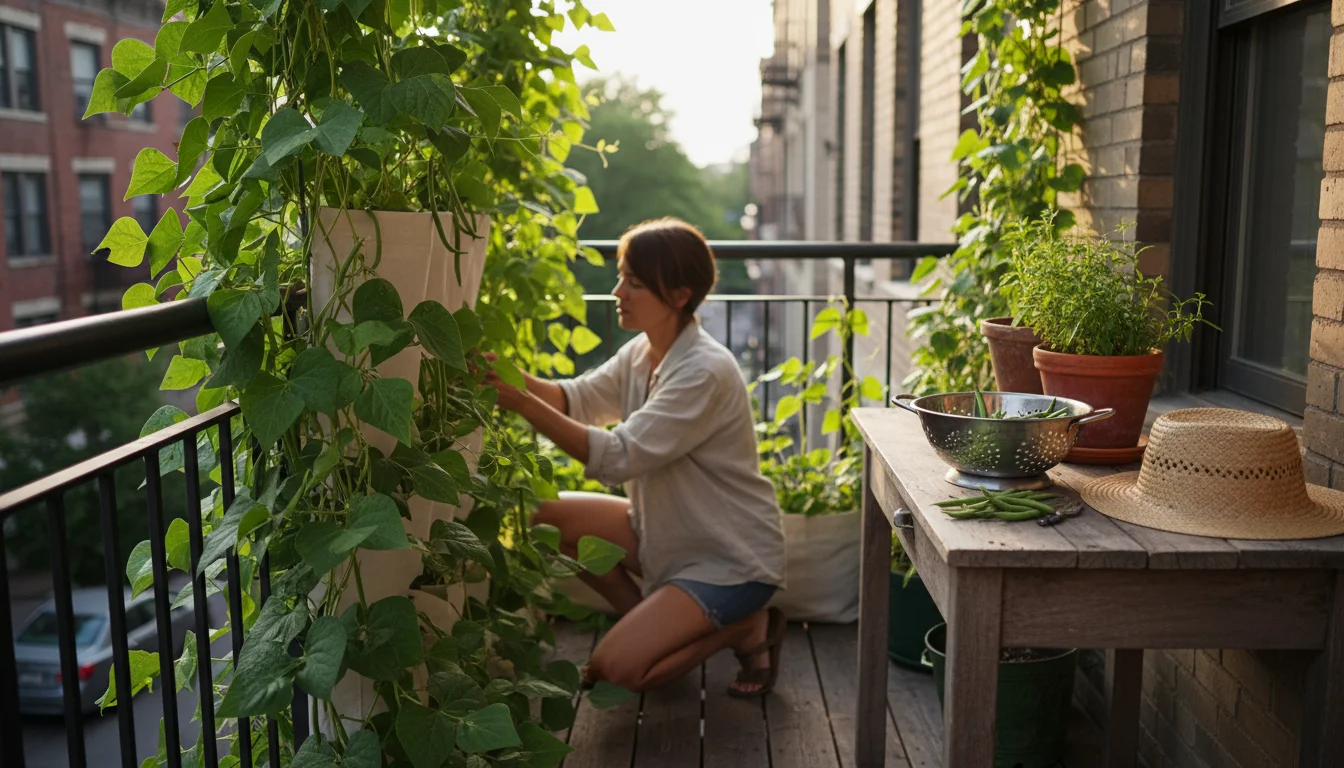
Harvesting Your Bounty and Enjoying Your Space
The moment your beans start producing, you transition from gardener to harvester. Proper harvesting techniques ensure a continuous supply of fresh beans and prolong your plant’s productivity. You also unlock the full potential of your natural sun shade for patio and enjoy the fruits of your labor.
When and How to Harvest Your Beans
Most pole bean varieties begin producing pods about 50-65 days after planting, depending on the variety and growing conditions.
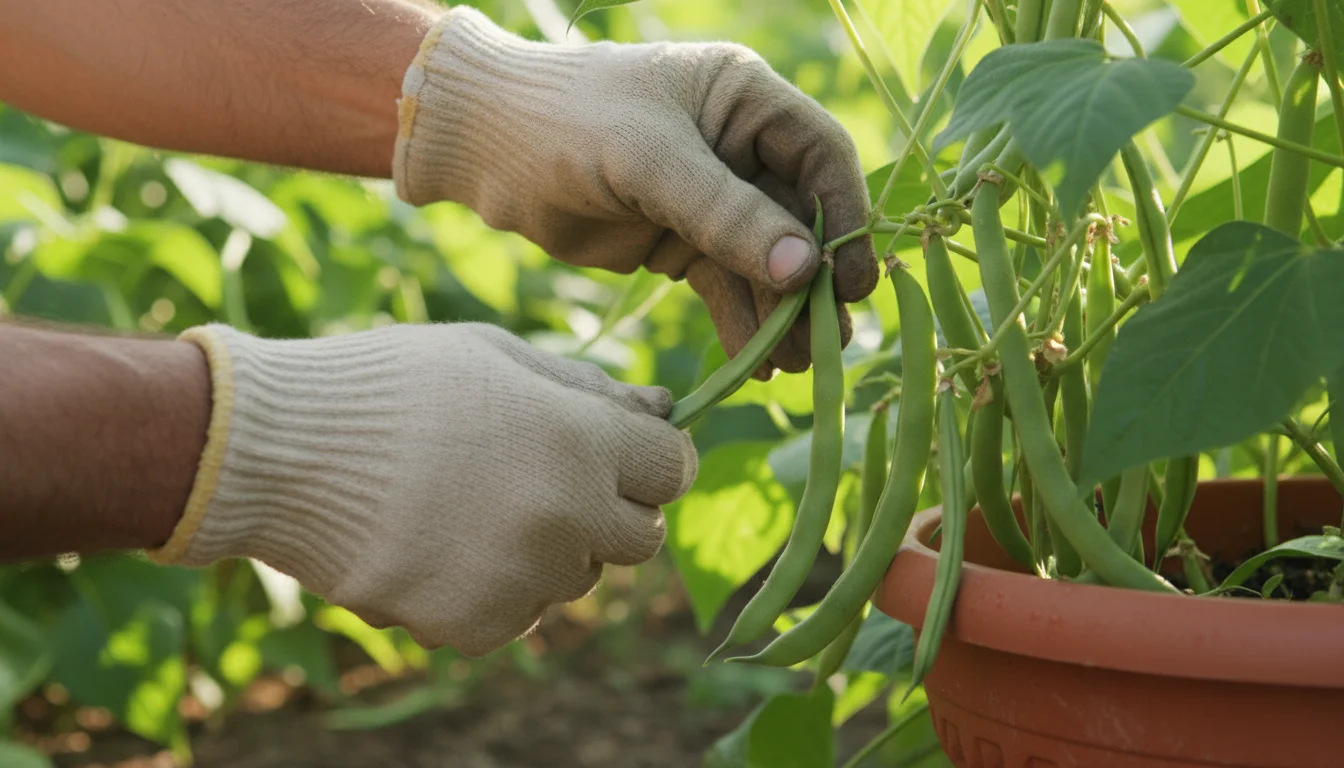
- Timing is Everything: Harvest green beans when pods are young, tender, and snap cleanly. They should be firm and vibrant in color. Avoid letting them get too large and lumpy, as they become tough and fibrous. Runner beans are best harvested very young.
- Continuous Harvesting: Pick beans frequently, every 1-2 days. This encourages the plant to produce more flowers and, therefore, more beans. If you leave mature pods on the vine, the plant thinks its reproductive cycle is complete and slows down or stops production. This is a crucial tip for maximizing your edible vertical garden’s yield.
- Technique: Use two hands to harvest. Hold the stem with one hand and gently pull or snap the bean off with the other. Avoid yanking the vine, which can damage the plant. You can also use small snips or scissors.
- Yield Expectation: A well-cared-for pole bean plant can produce several pounds of beans over the growing season. A healthy balcony privacy screen of 3-4 plants can easily provide enough beans for regular meals for a small family.
Maximizing Your Edible Vertical Garden
Your bean curtain offers more than just the beans themselves. You can maximize its utility and enjoyment.
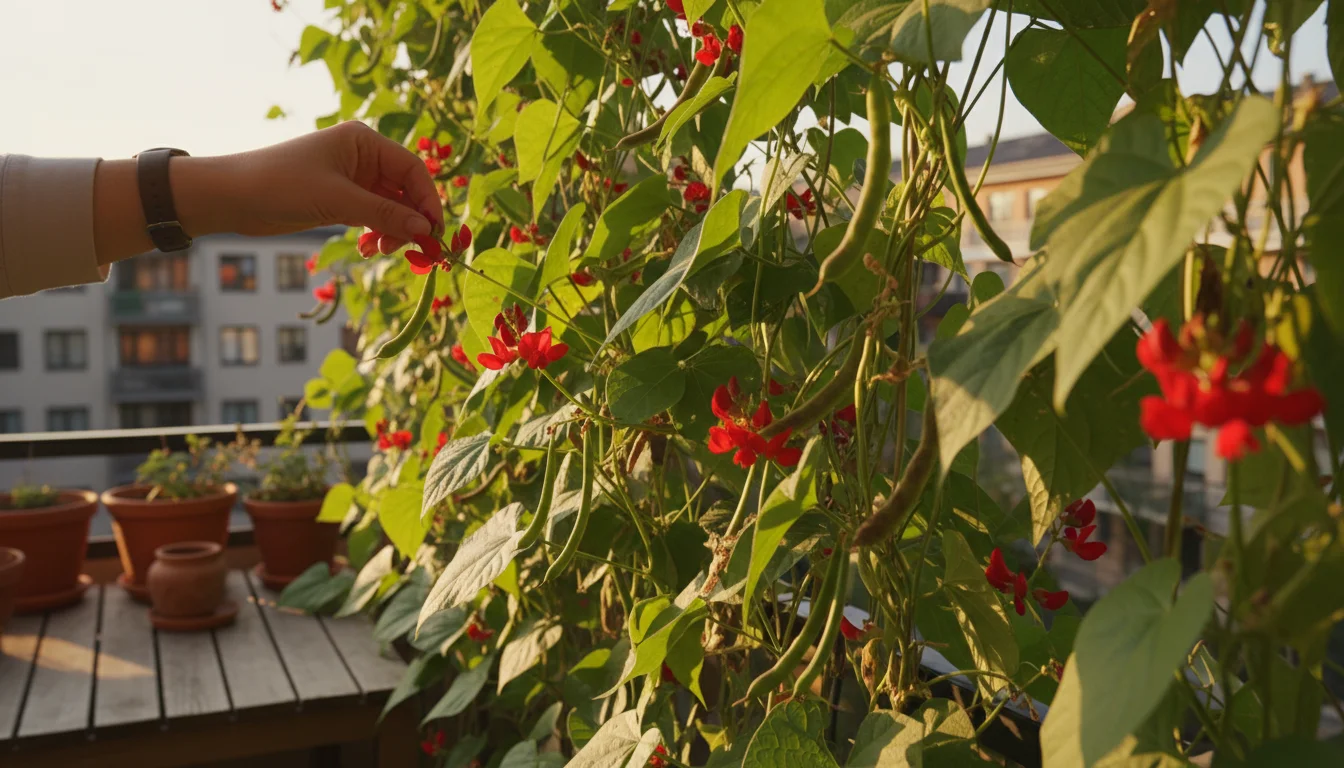
- Enjoying the Flowers: Scarlet runner beans, in particular, produce beautiful, bright red flowers. These flowers are also edible and make a lovely garnish for salads, offering a mild, sweet flavor.
- Succession Planting: To extend your harvest even further, consider succession planting. Plant a second batch of beans 3-4 weeks after your initial planting. This ensures you have fresh, young plants taking over as the first batch starts to slow down towards the end of the season.
- Seed Saving (for open-pollinated varieties): If you grew an open-pollinated variety (not a hybrid), you can let some pods mature fully on the vine, dry them, and save the seeds for next year’s crop. This makes your bean curtain project even more sustainable.

Relaxing in Your Private, Shaded Oasis
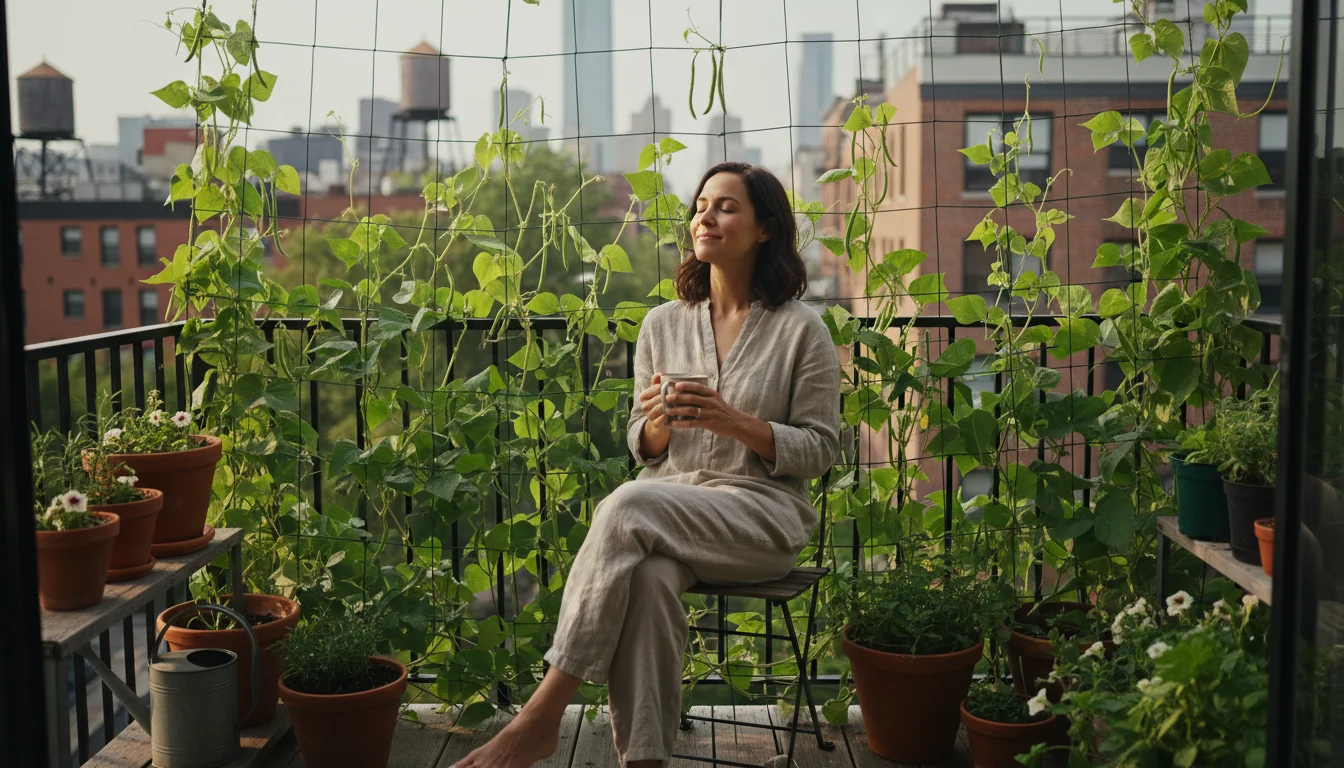
Beyond the harvest, take time to appreciate the transformed space. Your natural sun shade for patio or balcony provides a tangible sense of comfort and seclusion.
- Cooler Temperatures: Notice the difference in temperature under your bean canopy. It provides a real-world example of how to grow pole beans in a container for shade effectively.
- Enhanced Aesthetics: The lush green foliage and perhaps colorful flowers add a vibrant, living element that improves the appearance of your outdoor area.
- Mindfulness: Spend time observing your plants. Watch the bees visit the flowers, listen to the rustling leaves, and enjoy the peace of your private garden space. This connection to nature offers significant mental well-being benefits.
Common Challenges and Troubleshooting Your Bean Curtain
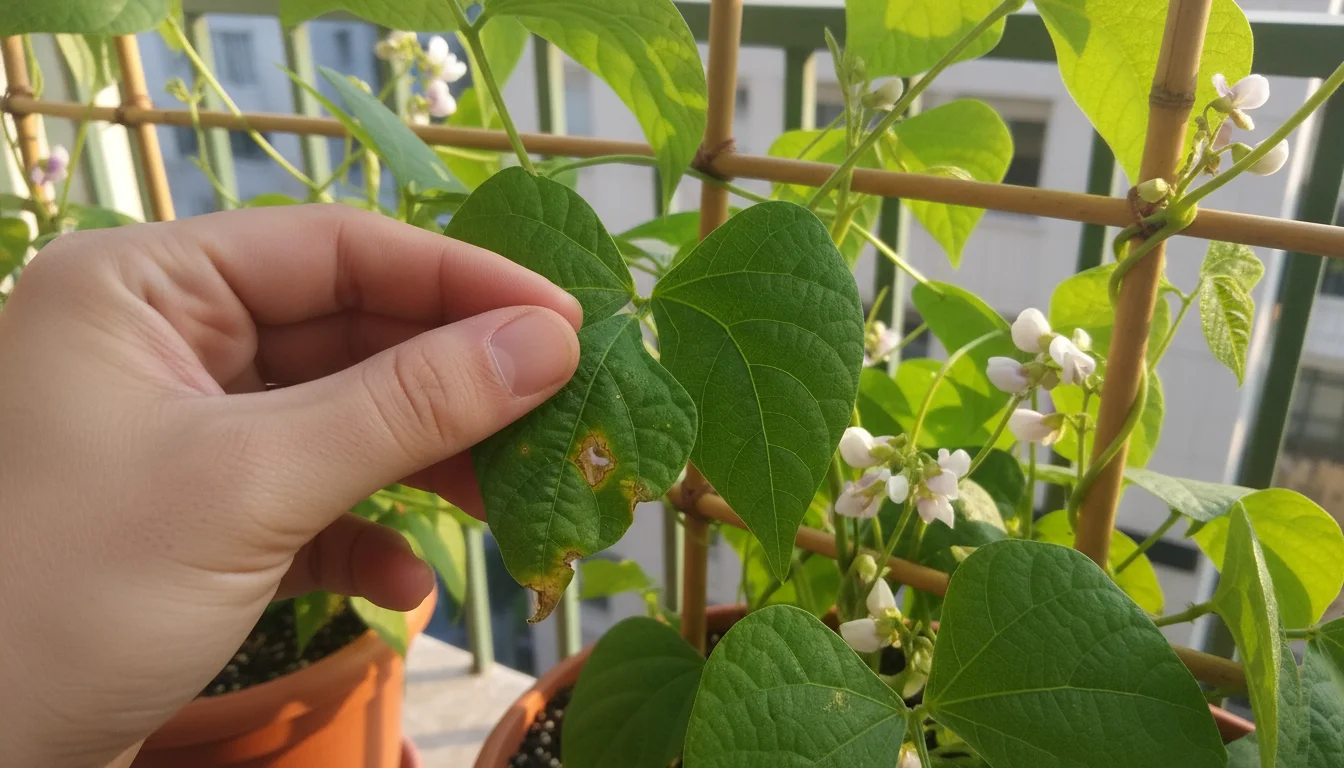
Even with the best planning, gardeners encounter occasional hurdles. Understanding common problems with growing beans on trellis and knowing how to address them quickly keeps your edible vertical garden thriving and ensures your balcony privacy screen remains lush and productive.
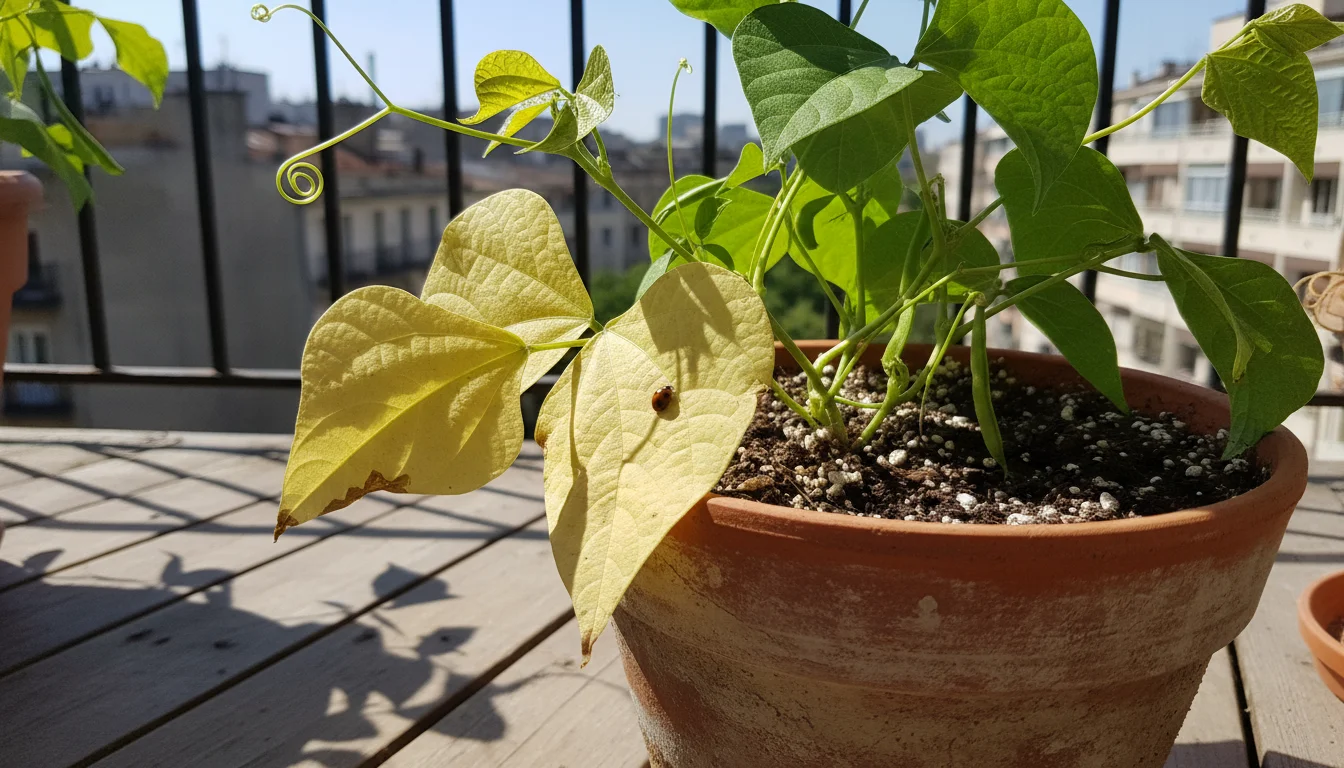
Yellowing Leaves
Yellow leaves often indicate a nutrient deficiency or improper watering.
- Problem: Uniform yellowing, especially on older leaves.
- Cause: Often nitrogen deficiency, which is less common in beans due to their nitrogen-fixing ability, but possible in nutrient-poor potting mixes or heavy rainfall leaching nutrients.
- Solution: Apply a balanced liquid fertilizer or a compost tea. Ensure adequate drainage to prevent root rot, which can also cause yellowing.
- Problem: Yellowing with stunted growth or wilting.
- Cause: Overwatering or underwatering. Overwatering leads to root rot, preventing nutrient uptake. Underwatering causes stress and wilting.
- Solution: Check soil moisture daily. Ensure containers have excellent drainage. If overwatered, let the soil dry out significantly before rewatering. If underwatered, water deeply.
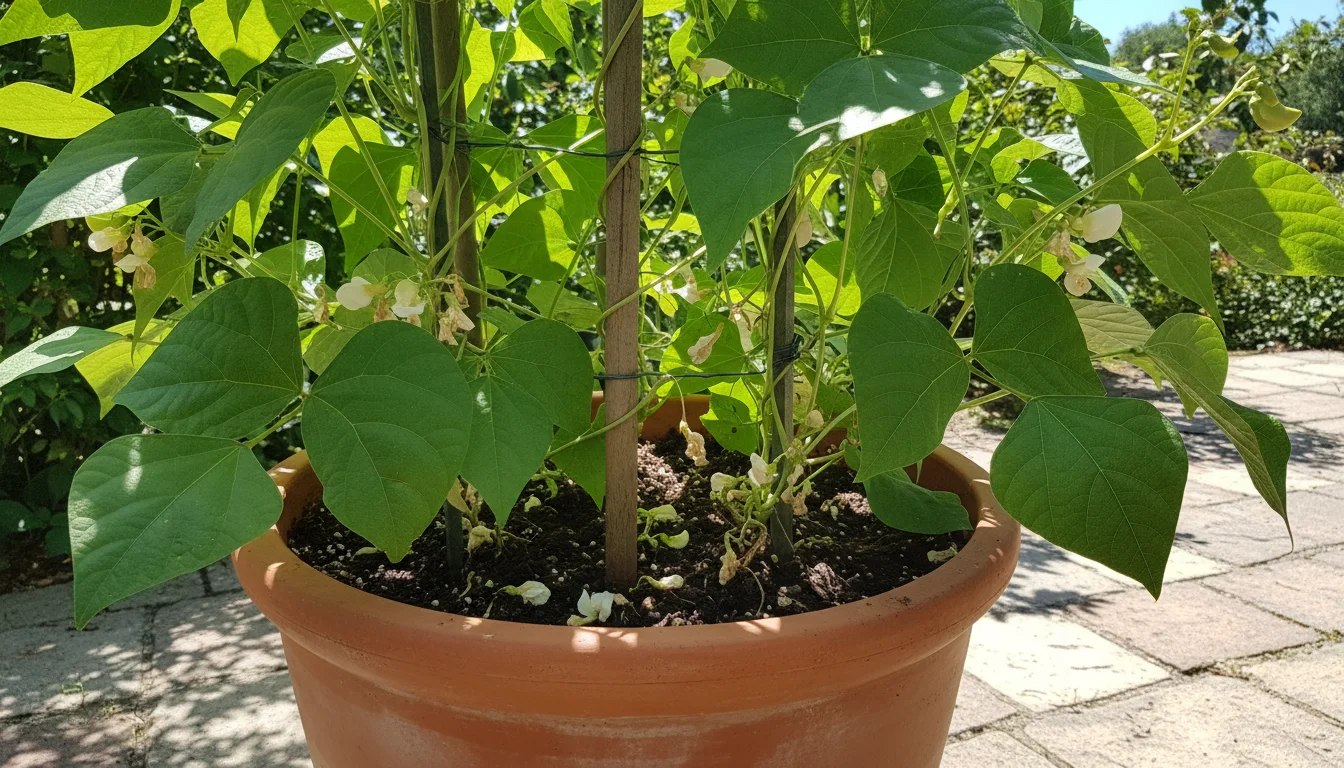
Lack of Flowers or Pods
Your bean plants may look healthy but fail to produce the harvest you expect.
- Problem: Lush, green foliage but few or no flowers.
- Cause: Too much nitrogen fertilizer. Nitrogen encourages leafy growth at the expense of flowering and fruiting.
- Solution: Reduce nitrogen fertilization. Switch to a fertilizer higher in phosphorus and potassium.
- Problem: Flowers appear but drop off without forming pods.
- Cause: Environmental stress, such as extreme heat (above 85°F or 29°C), insufficient pollination, or inconsistent watering.
- Solution: Ensure consistent watering. Provide some afternoon shade if temperatures are consistently very high; the natural sun shade for patio might need a temporary fabric shade during heatwaves. Hand-pollinate if you notice few pollinators, gently brushing flowers with a small paintbrush.
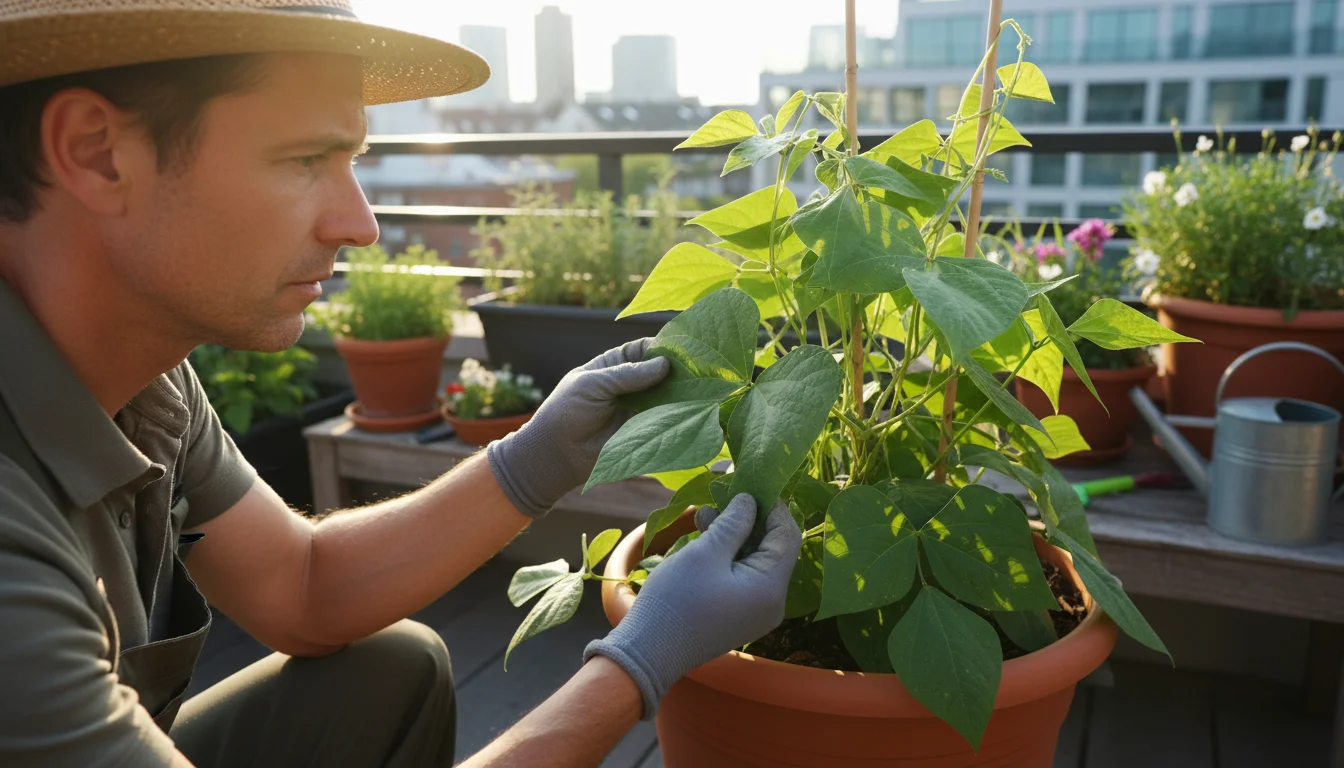
Pests on Your Bean Plants
Container gardens can still attract common garden pests, but vigilance helps.
- Common Pests: Aphids (small, often green insects clustered on new growth), spider mites (tiny, difficult-to-see mites causing stippling on leaves and fine webbing), bean beetles (look like ladybugs, but destructive).
- Solution:
- Manual Removal: For small infestations, pick off pests or spray them off with a strong jet of water.
- Organic Sprays: Apply insecticidal soap or neem oil according to package directions. These are effective against many soft-bodied pests.
- Beneficial Insects: Encourage natural predators like ladybugs by avoiding broad-spectrum pesticides. Your edible vertical garden can attract these helpers.
- Prevention: Regularly inspect your plants, especially the undersides of leaves. Good air circulation also discourages many pests.
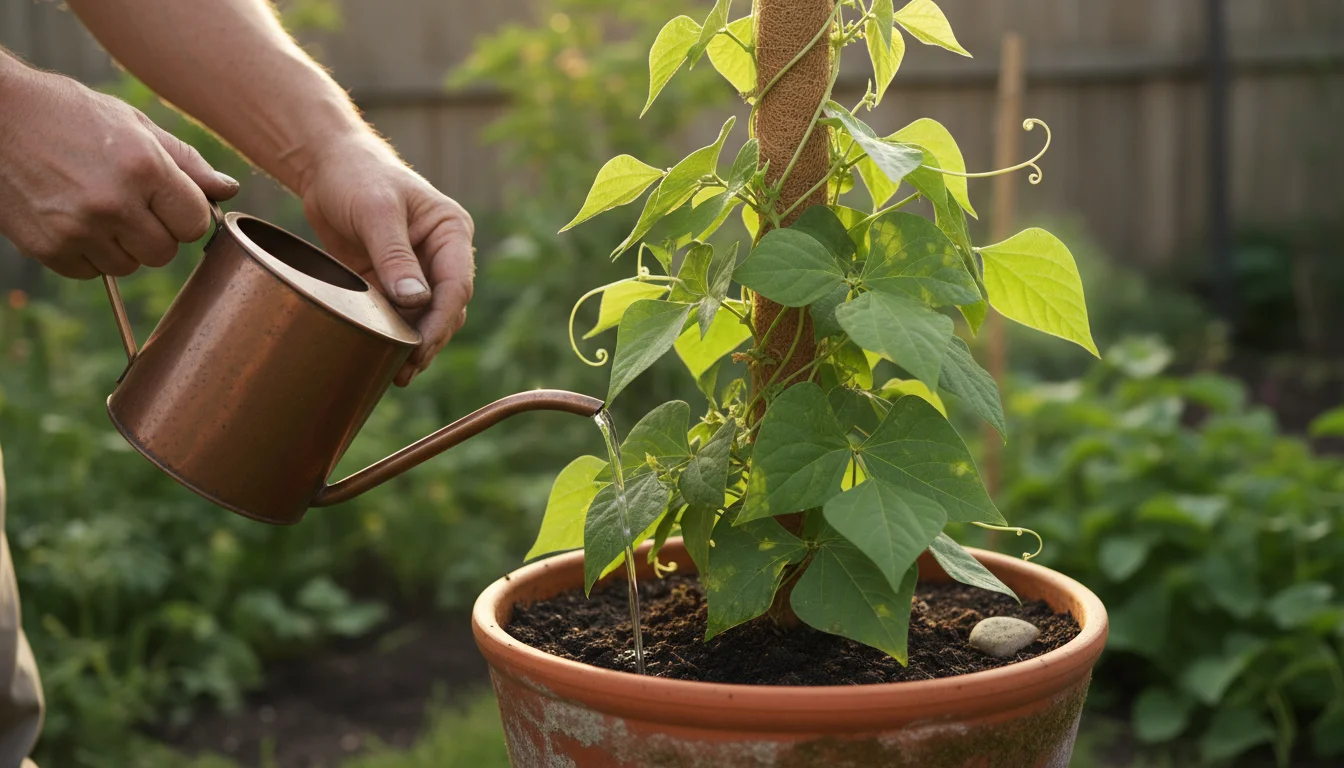
Diseases
Fungal diseases are common, especially in humid conditions.
- Common Diseases: Powdery mildew (white, powdery spots on leaves), rust (small, reddish-brown spots).
- Solution:
- Air Circulation: Ensure good air movement around your plants. Avoid overcrowding.
- Watering Technique: Water at the base of the plant, avoiding wetting the leaves, especially in the evening.
- Fungicides: For severe cases, use an organic fungicide like copper-based sprays or neem oil.
- Resistance: Choose disease-resistant bean varieties when possible.
Frequently Asked Questions
Can I grow beans in a balcony box or railing planter?
Yes, you can. For a balcony privacy screen, use railing planters that are at least 8-10 inches deep and wide to accommodate the bean roots. Ensure they are securely attached to your railing and have adequate drainage. Trough planters work well for multiple plants, allowing you to create a continuous green wall. Remember to factor in the weight of the soil, water, and mature plants when choosing railing planters.
How much sun do beans need to grow well?
Beans are sun-loving plants. They require at least 6-8 hours of direct sunlight per day to produce a strong harvest and create a dense natural sun shade for patio. If your balcony receives less than 6 hours, you might still get some beans, but your yield will be significantly reduced, and the plants may not be as vigorous for privacy. Ensure your trellis is positioned to maximize sun exposure for the plants while still providing the desired shade for your sitting area.
Do I need to fertilize beans if they are nitrogen fixers?
Even though beans fix atmospheric nitrogen, container-grown plants deplete soil nutrients faster than those in garden beds. Your potting mix might have an initial nutrient charge, but it will diminish. Regular fertilization, especially with a fertilizer higher in phosphorus and potassium once flowering begins, supports continuous pod production. Avoid excessive nitrogen, which can lead to lush foliage but fewer beans. A light, balanced feeding every 2-4 weeks after the plants establish helps ensure a bountiful edible vertical garden.
Can I grow other vining vegetables with my beans for variety?
Absolutely! Many vining vegetables make excellent companions for growing beans on trellis and can contribute to your edible vertical garden. Consider growing cucumbers, small vining squash (like ‘Patio Snappy’ or ‘Bush Delicata’ which can still be trained), or even cherry tomatoes alongside your beans. Ensure companion plants have similar sun and water requirements and adequate root space. You might need larger containers or separate pots with their own supports if integrating very vigorous companion plants.
What do I do with my bean plants at the end of the season?
Once your bean plants stop producing and the weather turns cold, they have completed their life cycle. Remove the entire plant, roots and all, from your containers. You can compost the spent plant material (if free of disease). Refresh your potting mix by adding new compost or a fresh batch of potting soil before planting your next crop. This practice helps maintain soil health and prepares your containers for future gardening endeavors.
The Environmental Impact of Your Edible Garden
Your edible balcony ‘shade curtain’ is more than a personal project; it contributes positively to your local environment. Small-space gardening, especially when focused on food production, offers significant ecological benefits. You make a tangible difference in creating a greener, more sustainable urban landscape.
Reducing Your Carbon Footprint
Growing your own food, even on a small scale, directly reduces the carbon footprint associated with your diet. Locally grown produce eliminates the long-distance transportation, refrigeration, and packaging required for supermarket produce. The average supermarket vegetable travels hundreds, if not thousands, of miles to reach your plate. Your beans, however, travel mere feet. This reduction in food miles significantly lowers greenhouse gas emissions, making your edible vertical garden an environmentally conscious choice. Data suggests that local food systems can reduce carbon emissions by as much as 5-17 times compared to conventional systems. Your growing beans on trellis contribute to this positive impact.
Enhancing Local Biodiversity
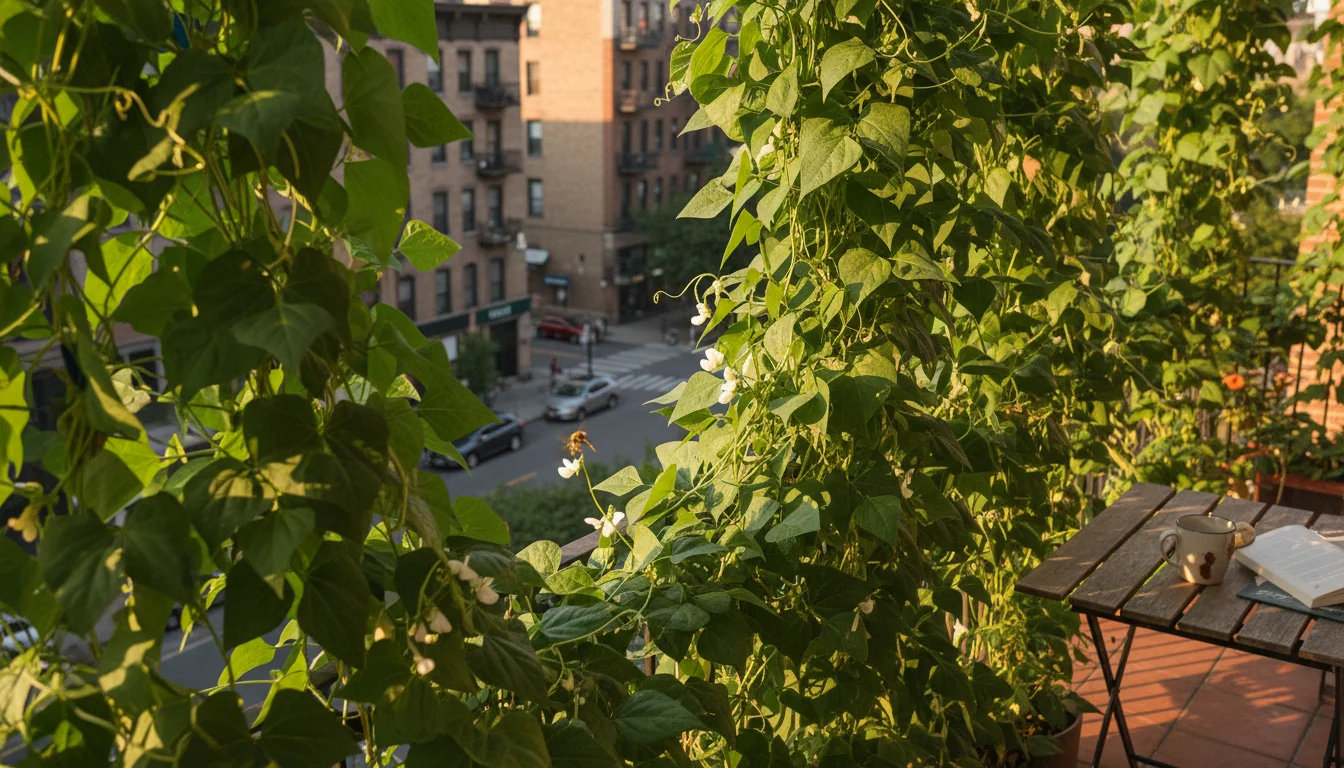
Urban environments often lack green spaces, impacting local wildlife. Your bean curtain, with its flowers, provides a valuable food source for pollinators like bees and butterflies, which are essential for ecosystem health and the production of many crops, including your beans. This contribution to local biodiversity is particularly important in built-up areas where natural habitats are scarce. By providing nectar and pollen, your balcony privacy screen helps support these crucial insects. You actively participate in supporting the intricate web of life, even in a small urban setting.
Improving Urban Air Quality and Temperature
Plants are natural air filters. Your bean curtain helps absorb carbon dioxide and releases oxygen, improving the air quality around your immediate space. The dense foliage also filters airborne pollutants. As previously mentioned, the transpiration from plant leaves creates a cooling effect, combating the urban heat island effect. This localized cooling can reduce the need for air conditioning, leading to lower energy consumption and fewer greenhouse gas emissions from power plants. Your natural sun shade for patio does double duty, cooling your space and cleaning the air.
Promoting Sustainable Practices
By engaging in small-space gardening, you often adopt more sustainable practices. You become more aware of water usage, leading to more efficient watering techniques. You might also explore composting kitchen scraps to enrich your container soil, diverting waste from landfills. Growing your own food fosters a deeper appreciation for the resources required to produce it, encouraging mindful consumption. This personal connection to sustainable living empowers you to make environmentally friendly choices in other areas of your life.
Start Your Shade Curtain Today
You now have the knowledge and tools to transform your balcony or patio into a productive, private, and beautiful space. The edible balcony ‘shade curtain’ offers an innovative solution to common urban challenges, delivering privacy, natural cooling, and a continuous harvest of fresh, delicious beans. This project is a testament to the power of small-space gardening, proving that even limited areas can yield abundant rewards.
Embrace the journey of growing your own balcony privacy screen. Select your favorite pole bean varieties, gather your supplies, and follow the step-by-step guidance for planting and care. You will enjoy the process of watching your edible vertical garden flourish, providing shade and sustenance throughout the summer. The satisfaction of harvesting your own food, knowing you created a natural sun shade for patio, and enhancing your personal space is immensely rewarding.
For trustworthy gardening information, visit: Tennessee Extension — Gardening, University of Delaware Extension — Gardening, University of Vermont Extension — Gardening, University of New Hampshire Extension — Yard & Garden and University of Maine Cooperative Extension — Gardening. These organizations provide expert, research-based advice for gardeners at all levels.
Disclaimer: This article is for informational purposes only and is not a substitute for professional gardening advice. Always consult local extension services or horticulture experts for region-specific guidance.
Leave a Reply