

Transform your bare balcony or tiny patio into a lush, floating oasis by adding the right cascading greens. The best trailing plants maximize your vertical space—drawing the eye upward while freeing up precious square footage on the ground.
Hanging baskets overflowing with vibrant vines and brilliant blooms provide immediate texture, privacy, and color to any outdoor setting. Whether you battle blistering afternoon sun or manage a deeply shaded porch, selecting resilient outdoor hanging flowers and decorative trailing greenery determines your success.
You will discover exactly which cascading plants thrive in containers, how to master tricky watering routines, and foolproof design tricks to keep your hanging baskets looking lush all season long.
If you are looking to expand your setup, you can compare different vertical garden systems to see which method works best for your layout.
Contents6 sections
Why Hanging Baskets Maximize Small Spaces
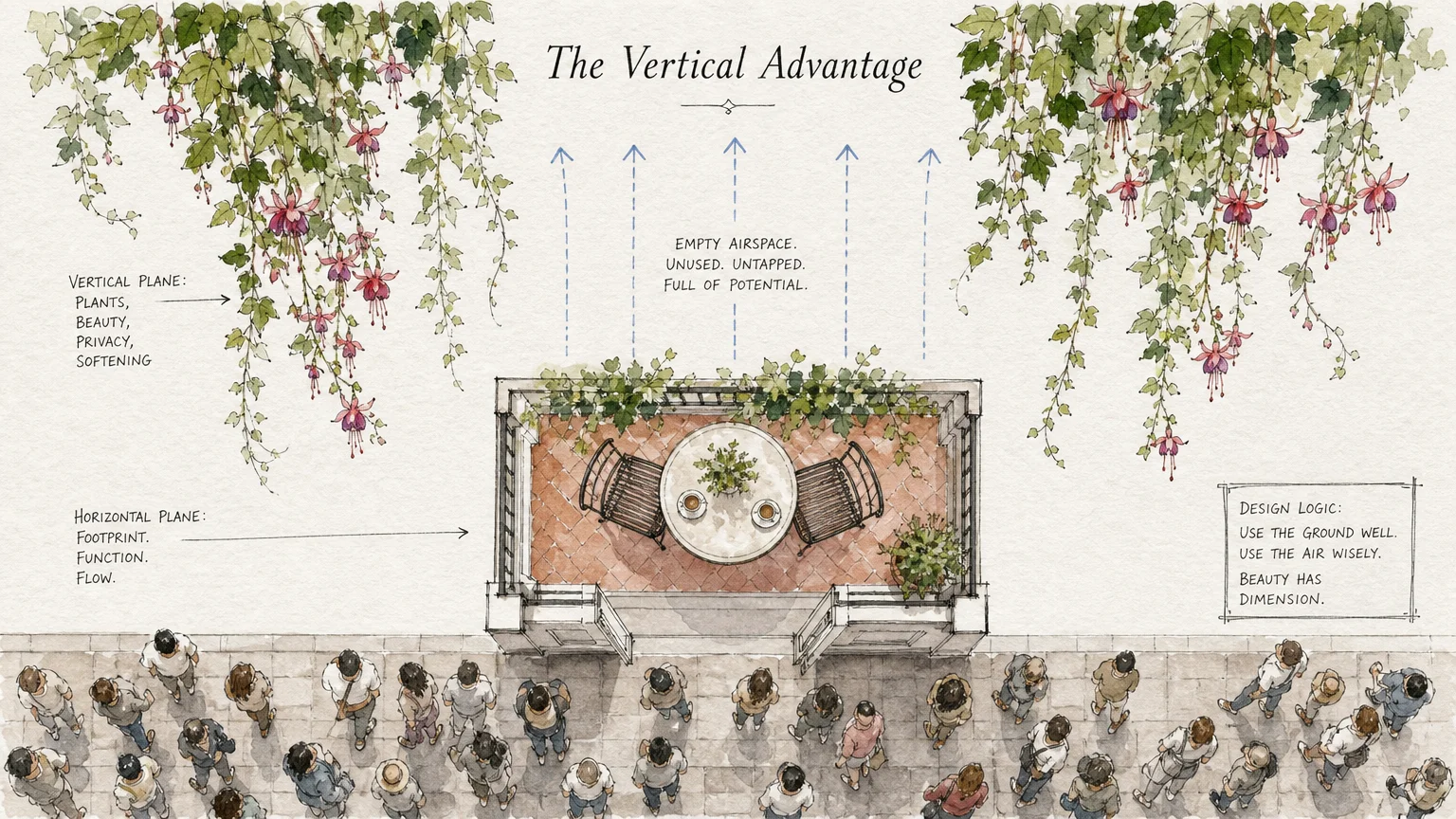
When you garden on a cramped apartment balcony or a tiny concrete patio, ground space vanishes quickly. After you place a small bistro table and a couple of seating chairs, you rarely have enough square footage left for traditional ceramic planters or bulky raised beds.
This is where vertical gardening entirely changes the rules of small-space design. By utilizing the empty airspace above your head, hanging baskets allow you to multiply your garden’s footprint significantly without sacrificing a single inch of walkable flooring.
These elevated arrangements are also key features when you want to design a balcony garden that feels like a room, adding distinct vertical layers to the space.
The best trailing plants provide immediate and profound visual impact. Instead of waiting several years for a stubborn climbing vine to scale a wooden trellis, a well-planted hanging basket instantly softens harsh architectural lines and expertly disguises ugly metal balcony railings.
Cascading plants pull the eye upward toward the ceiling, making tight, claustrophobic areas feel expansive, dynamic, and deliberately designed.
Furthermore, hanging plants benefit from superior air circulation compared to ground-level pots tucked tightly into corners. This continuous breeze keeps the foliage dry, which significantly reduces the risk of fungal diseases like powdery mildew that often plague crowded ground-level gardens.
Hanging baskets also keep your most prized decorative trailing greenery safely out of reach from destructive ground pests, roaming rabbits, or digging neighborhood cats.
By carefully evaluating your environment and selecting plants that match your specific sunlight conditions, you can completely transform empty, underutilized vertical voids into a lush, thriving canopy of living color and rich texture.
Essential Supplies for Healthy Hanging Plants
Before you purchase any outdoor hanging flowers, you must establish a strong, reliable foundation. Hanging baskets endure extreme environmental exposure.
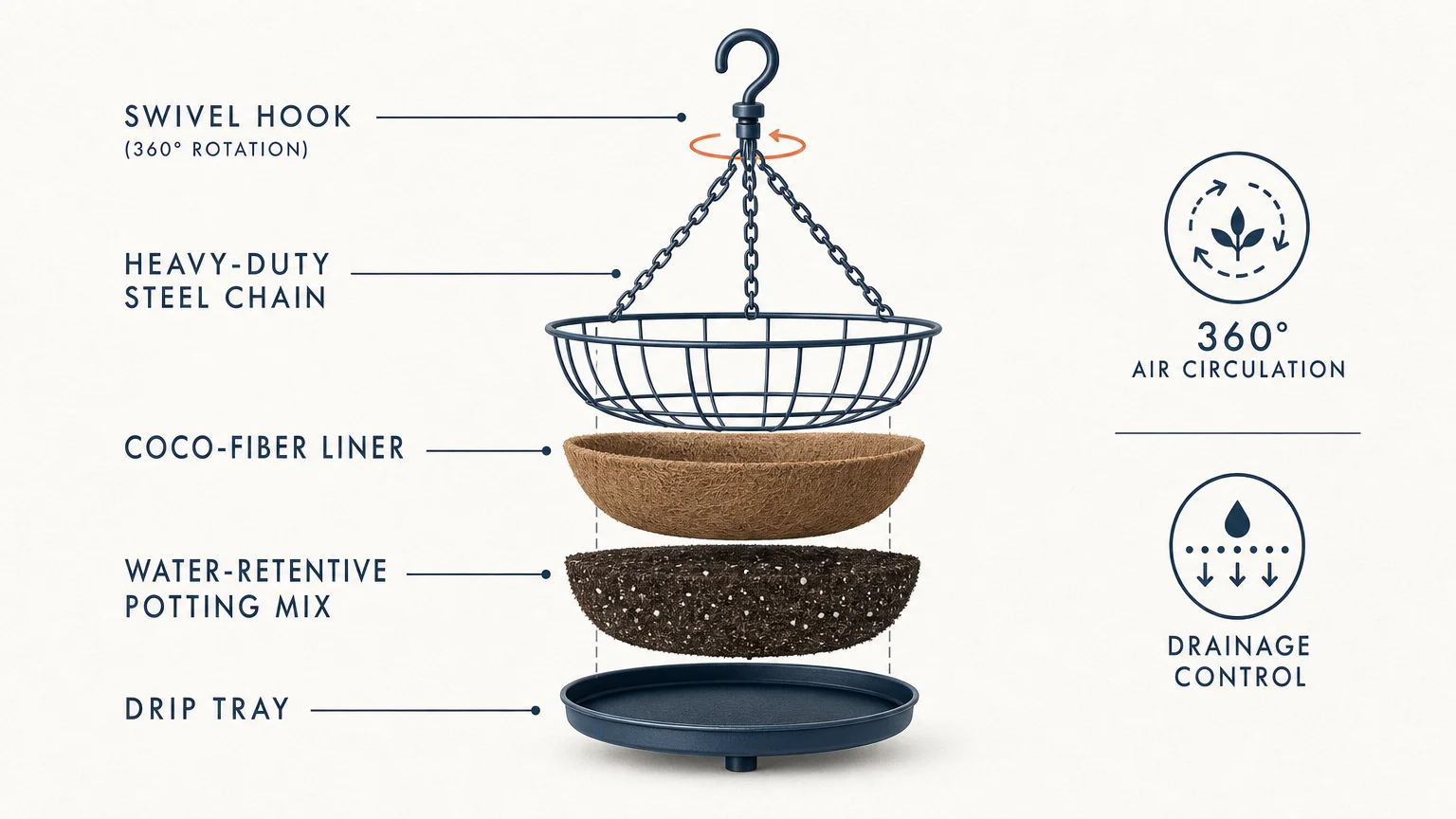
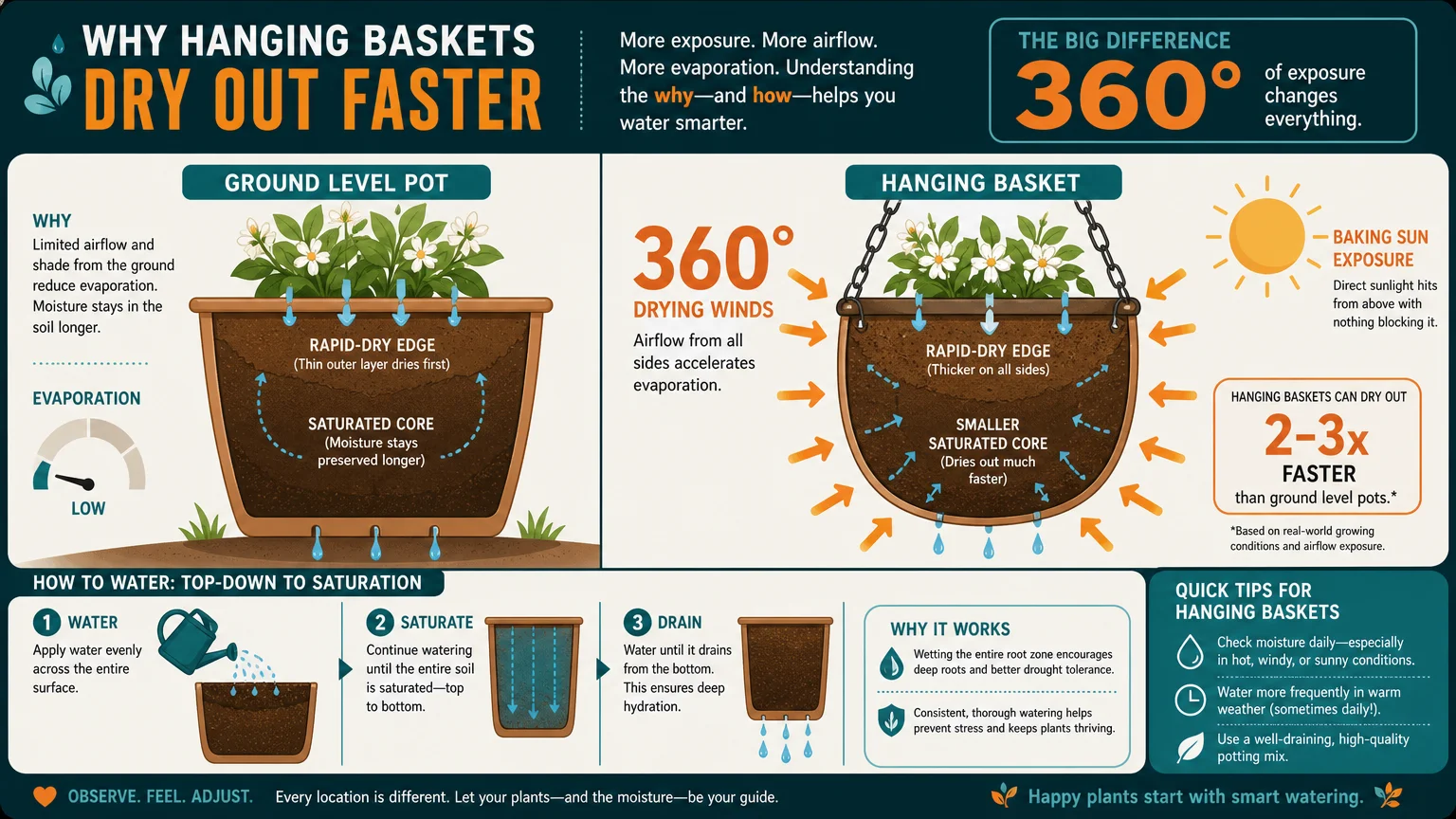
Suspended in the air, they face baking sun and drying winds from all three hundred and sixty degrees. Selecting the correct materials right from the start determines whether your cascading plants thrive through the summer or constantly struggle to survive the heat.
Getting your setup right from the start helps you avoid common balcony garden mistakes that lead to dry soil and struggling plants.
Setting up your first vertical display is much easier when you follow a comprehensive guide to container gardening tailored for limited spaces.
First, you must select an appropriate container. The material you choose directly impacts the soil temperature and dictates exactly how often you need to water your plants.
| Basket Material | Water Retention Capability | Best Gardening Use Case |
|---|---|---|
| Wire Frame with Coir Liner | Low (Dries out extremely quickly) | Perfect for succulents, drought-tolerant plants, and shaded areas. Offers excellent root aeration but requires frequent watering. |
| Solid Plastic or Resin | Medium to High | Ideal for moisture-loving flowers like fuchsia and lobelia. Highly recommended for full-sun, windy balconies where evaporation is rapid. |
| Self-Watering Baskets | High (Contains a built-in water reservoir) | The absolute best choice for busy gardeners, frequent travelers, or high-heat climates. Reduces watering frequency significantly. |
Next, focus heavily on your soil selection. Never use heavy garden topsoil in a hanging basket.
Topsoil compacts quickly, suffocating fragile plant roots, and adds unnecessary, dangerous weight to your overhead hanging hardware. Instead, purchase a premium, lightweight potting mix specifically formulated for enclosed containers.
Good drainage simply refers to how efficiently and quickly water moves through the soil structure and exits the bottom of the container. You want a potting mix that contains plenty of perlite or vermiculite to keep the soil matrix open and airy.
If your chosen potting soil looks dark, dense, and heavy, manually stir in a few extra handfuls of perlite to vastly improve the internal aeration.
Finally, invest in heavy-duty, weather-resistant hanging hardware. A large plastic basket filled with wet potting soil and mature trailing plants weighs significantly more than you might expect.
Relying on flimsy plastic hooks guarantees a disastrous crash. Always use securely mounted metal wall brackets, heavy-gauge steel shepherd’s hooks, or sturdy iron S-hooks attached directly to solid wooden structural beams.
Top Ten Cascading Plants for Baskets
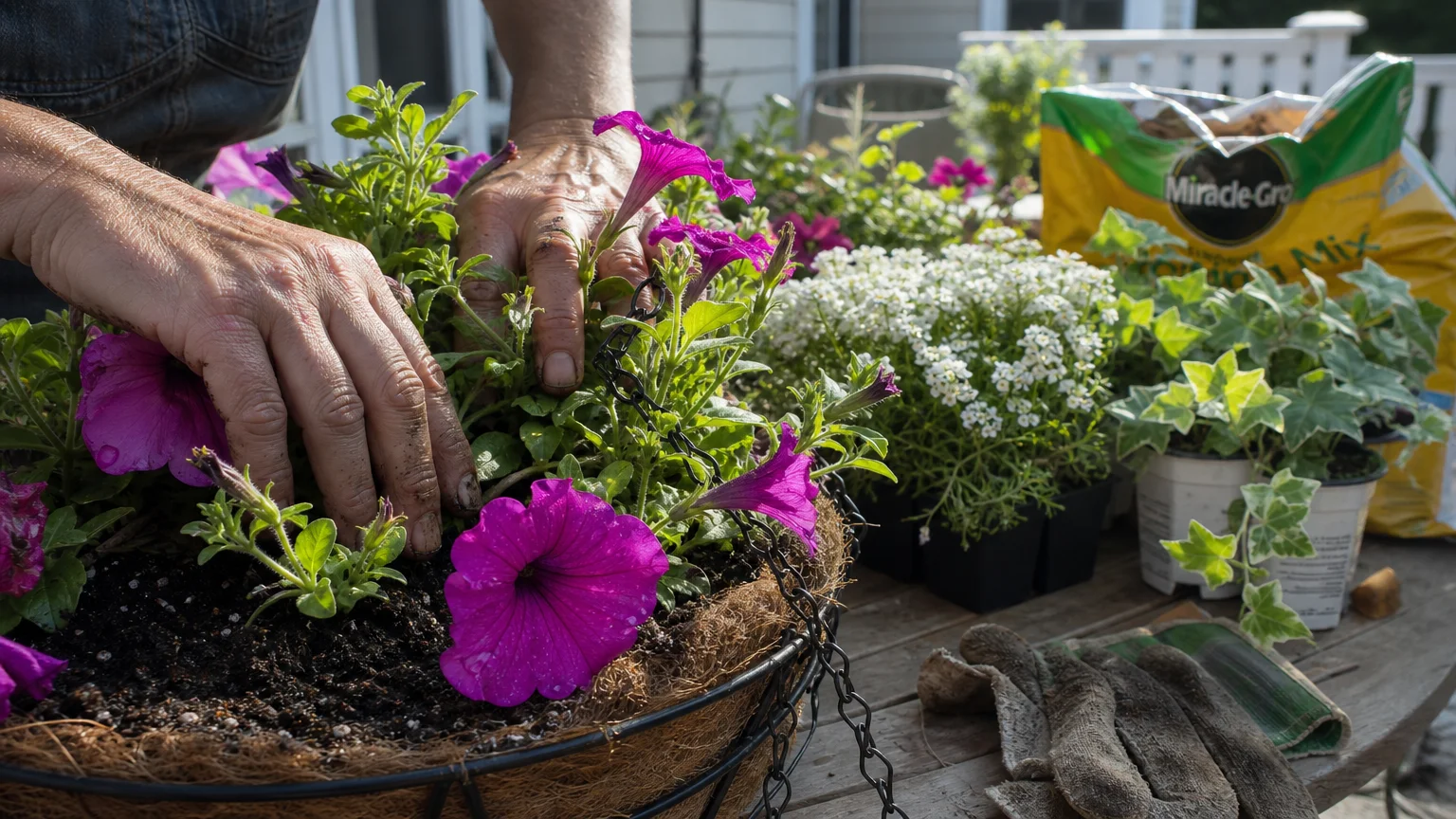
Selecting the right varieties ensures a stunning display that lasts for months. The following ten plants represent the most reliable, vigorous, and visually stunning options for your vertical garden.
1. Supertunia (Petunia Hybrids)
Supertunias dominate the world of outdoor hanging flowers for excellent reasons. Breeders developed these highly vigorous petunia hybrids specifically for relentless, non-stop blooming and robust, aggressive trailing habits.
Unlike older, traditional petunias, Supertunias are completely self-cleaning. This means you never have to undergo the tedious chore of pinching off sticky, dead flowers to encourage new growth.
They rapidly spill over the edges of containers, producing a thick, impenetrable waterfall of vibrant color that lasts from late spring until the very first heavy frost of autumn.
For more options to keep your patio colorful, explore other sturdy flowers that bloom all summer to mix into your seasonal containers.
- Light Requirement: Full sun (minimum 6 hours of direct sunlight daily).
- Water Needs: High. Keep soil consistently moist but never soggy.
- Design Tip: Plant a single color, like the popular ‘Vista Bubblegum,’ in a large basket for a massive, dramatic sphere of solid pink blooms.
2. Sweet Alyssum (Lobularia maritima)
Sweet Alyssum acts as the perfect, frothy spillway for your hanging baskets. This low-growing, highly delicate plant produces thousands of tiny, cross-shaped flowers that release a rich, intoxicating, honey-like fragrance.
The scent grows particularly strong on warm summer afternoons, attracting a flurry of beneficial pollinators like bees, butterflies, and hoverflies to your balcony.
While traditional gardeners often use it as a low border plant in ground beds, Sweet Alyssum transforms into a dazzling, cloud-like cascade when planted closely at the outer edge of a hanging pot.
- Light Requirement: Full sun to partial shade. Afternoon shade is highly beneficial in extremely hot climates.
- Water Needs: Moderate. Prefers evenly moist soil but handles brief dry spells gracefully.
- Design Tip: Pair white Sweet Alyssum with dark purple or deep red flowers to create a striking, high-contrast visual display.
3. Creeping Jenny (Lysimachia nummularia)
If you want to inject a massive shock of electric color into your arrangements without relying on delicate flowers, Creeping Jenny delivers unparalleled results. This highly vigorous trailing foliage plant produces brilliant, round leaves in intense shades of bright chartreuse and golden yellow.
The flexible vines cascade beautifully, often reaching two to three feet in length by the end of the summer season.
Creeping Jenny serves as the ultimate structural “spiller” in container design, providing steady, reliable color even during intense heatwaves when delicate flowers often pause their blooming cycles.
If you are interested in wildlife-friendly gardening, you can also look into resilient native plants that thrive in containers to support local pollinators.
- Light Requirement: Sun to full shade. Brighter sun exposure yields brighter, more golden foliage.
- Water Needs: High. This plant absolutely loves moisture and wilts quickly if the soil dries out completely.
- Design Tip: Trim the vines occasionally with clean scissors to encourage thicker, bushier growth near the crown of the plant.
4. Trailing Lobelia (Lobelia erinus)
Finding true, deep blue color in the botanical world often proves incredibly difficult, but Trailing Lobelia provides it in stunning abundance. This delicate, cascading plant produces dense masses of tiny, vivid blue, deep violet, or pure white flowers set against fine, dark green foliage.
The thin trailing stems drape elegantly over the sides of wire coir baskets, creating a soft, highly romantic texture. Lobelia works exceptionally well in early spring and early summer arrangements when the weather remains pleasantly mild.
- Light Requirement: Partial shade. Lobelia despises scorching afternoon sun.
- Water Needs: High. Never allow a lobelia basket to dry out completely, as it rarely recovers from severe dehydration.
- Design Tip: When mid-summer heat causes the plant to stop blooming, cut the entire plant back by half. It will push out a fresh, vigorous flush of blooms once cooler autumn temperatures arrive.
5. Million Bells (Calibrachoa)
At first glance, Million Bells look exactly like miniature petunias, but they offer several distinct advantages for small-space container gardeners. These trailing plants produce hundreds of tiny, trumpet-shaped blooms along cascading stems that effortlessly grow up to two feet long.
Like Supertunias, Calibrachoa sheds its spent blooms naturally, keeping the basket looking meticulously fresh without any effort on your part. They come in an incredible, vast spectrum of colors, including vibrant corals, deep magentas, pure whites, and striking bi-colors.
- Light Requirement: Full sun.
- Water Needs: Moderate. They demand excellent drainage and will suffer from root rot in heavy, waterlogged soil.
- Design Tip: Mix three different colors of Million Bells in a single basket to create a vibrant, festive, confetti-like aesthetic.
6. Fuchsia (Fuchsia magellanica)
For gardeners managing heavily shaded porches or strictly north-facing balconies, Fuchsia acts as a brilliant lifesaver. While most blooming trailing plants demand intense, direct sunlight, Fuchsia thrives elegantly in the shadows.
The plant produces exquisite, pendulous blooms that look exactly like tiny, intricate ballerinas or elaborate hanging lanterns. These brightly colored, teardrop-shaped flowers dangle below the green foliage, making them perfect for hanging baskets where you can easily admire their complex structures from below.
Once the warm season winds down, transition your containers with unique species that provide winter interest on your balcony through the frost.
- Light Requirement: Full shade to dappled morning sunlight. Protect them fiercely from harsh afternoon rays.
- Water Needs: High. Maintain consistently damp, but not soggy, potting soil.
- Design Tip: Hang fuchsia baskets near windows or outdoor seating areas; the bright, tubular flowers serve as irresistible magnets for local hummingbirds.
7. Nasturtium (Tropaeolum majus)
Nasturtiums bring a unique, delightfully untamed charm to hanging baskets with their distinct, circular lily-pad-shaped leaves and brilliantly colored, funnel-shaped flowers.
Beyond their considerable visual appeal, trailing nasturtiums offer a highly practical twist for apartment dwellers: both the leaves and the bright flowers are completely edible. They add a sharp, peppery, radish-like bite to summer salads and make gorgeous culinary garnishes.
They grow rapidly from large, easy-to-handle seeds, making them an excellent budget-friendly choice.
- Light Requirement: Full sun to partial shade.
- Water Needs: Low to moderate. They tolerate drought exceptionally well compared to most container annuals.
- Design Tip: Do not fertilize nasturtiums. Planting them in highly enriched soil causes them to produce massive mounds of green leaves while stubbornly refusing to produce any flowers.
8. Silver Falls Dichondra (Dichondra argentea)
When you need a striking, modern structural element to anchor your hanging basket design, reach immediately for Silver Falls Dichondra. This phenomenal trailing plant produces long, shimmering, fan-shaped leaves covered in fine, silvery hairs.
The vines grow aggressively downward, often cascading three to four feet like a smooth waterfall of liquid mercury. The unique metallic foliage reflects ambient sunlight beautifully and provides an incredible cooling visual contrast when paired with bright, warm-toned flowers.
- Light Requirement: Full sun. Heavy shade causes the vines to stretch unattractively and turn a dull, pale green.
- Water Needs: Low. Allow the soil surface to dry out completely before watering again.
- Design Tip: Plant Silver Falls around the perimeter of a basket, placing a bright pink or red upright geranium directly in the center for a classic, sophisticated pairing.
9. Spider Plant (Chlorophytum comosum)
Do not restrict the classic Spider Plant exclusively to your indoor living room shelves. During the warm summer months, this robust, arching plant makes a spectacular, low-maintenance outdoor hanging basket specimen.
The long, grass-like, brightly variegated leaves create a fountain effect, spilling gracefully over the container edges. As the plant matures, it sends out long, cascading stalks that produce miniature plantlets, affectionately known as “pups.”
These pups dangle gracefully below the main pot, adding multiple tiers of architectural interest.
- Light Requirement: Bright, indirect light or heavy shade. Direct afternoon sun will quickly scorch the leaves and turn the crisp white stripes completely brown.
- Water Needs: Moderate. The plant utilizes thick, tuberous roots that store water efficiently.
- Design Tip: Before the first autumn frost threatens your area, simply unhook the basket and bring it indoors to enjoy as a beautiful winter houseplant.
10. Burro’s Tail (Sedum morganianum)
If you possess a hot, sun-drenched balcony and frequently forget your watering chores, Burro’s Tail offers the perfect cascading solution. This extraordinary, deeply textured succulent produces thick, heavy stems densely packed with plump, pale-green leaves that overlap tightly like the scales on a pinecone.
Over several years, the trailing stems can reach up to three feet long, creating a heavy, sculptural masterpiece. Because the fleshy leaves are quite fragile and snap off easily when bumped, a hanging basket provides the ideal, undisturbed environment for this plant to thrive safely.
- Light Requirement: Bright, filtered sunlight or partial sun.
- Water Needs: Very low. Water only when the soil feels completely dry throughout the entire depth of the pot.
- Design Tip: You must use a highly porous cactus or succulent mix; the plant will rapidly succumb to root rot in standard, moisture-retaining potting soil.
Mastering Hanging Basket Watering Routines
Watering hanging baskets requires a completely different approach and mindset than watering ground-level garden beds. Because they hang directly in the wind and absorb intense ambient heat from all sides, the soil loses moisture at a rapid pace.
During the peak heat of summer, you must check your baskets every single day without fail.
To determine if your trailing plants actually need water, ignore the surface of the soil, which often looks dry mere hours after watering. Instead, use the physical “heft test.”
Simply push up on the bottom of the basket with the palm of your hand. If the basket feels remarkably light and lifts easily, the internal soil has dried out, and you must water the container immediately.
If the basket feels dense, heavy, and resists your upward push, the soil retains plenty of internal moisture, and you should leave the plant alone for another day.
When you do water, practice the professional double-watering technique. Dry, peat-based potting soil often becomes hydrophobic, meaning it actively repels water.
If you pour a large watering can rapidly over a completely dry basket, the water often rushes quickly down the inside edges of the plastic pot and straight out the drainage holes without actually penetrating the compacted root ball.
To fix this common issue, lightly water the basket until moisture just begins to drip from the bottom. Wait ten minutes for the outer edges of the soil crust to soften and expand, then water the basket a second time, much more thoroughly.
This crucial pause ensures the moisture actually saturates the deep, central roots of your trailing plants.
Always aim to water your hanging plants in the early morning. Morning watering provides the root system with a fresh, deep reservoir of moisture to draw upon before the intense afternoon heat arrives.
It also gives any accidentally splashed foliage ample time to dry off in the morning sun, preventing the nighttime spread of fungal outbreaks.
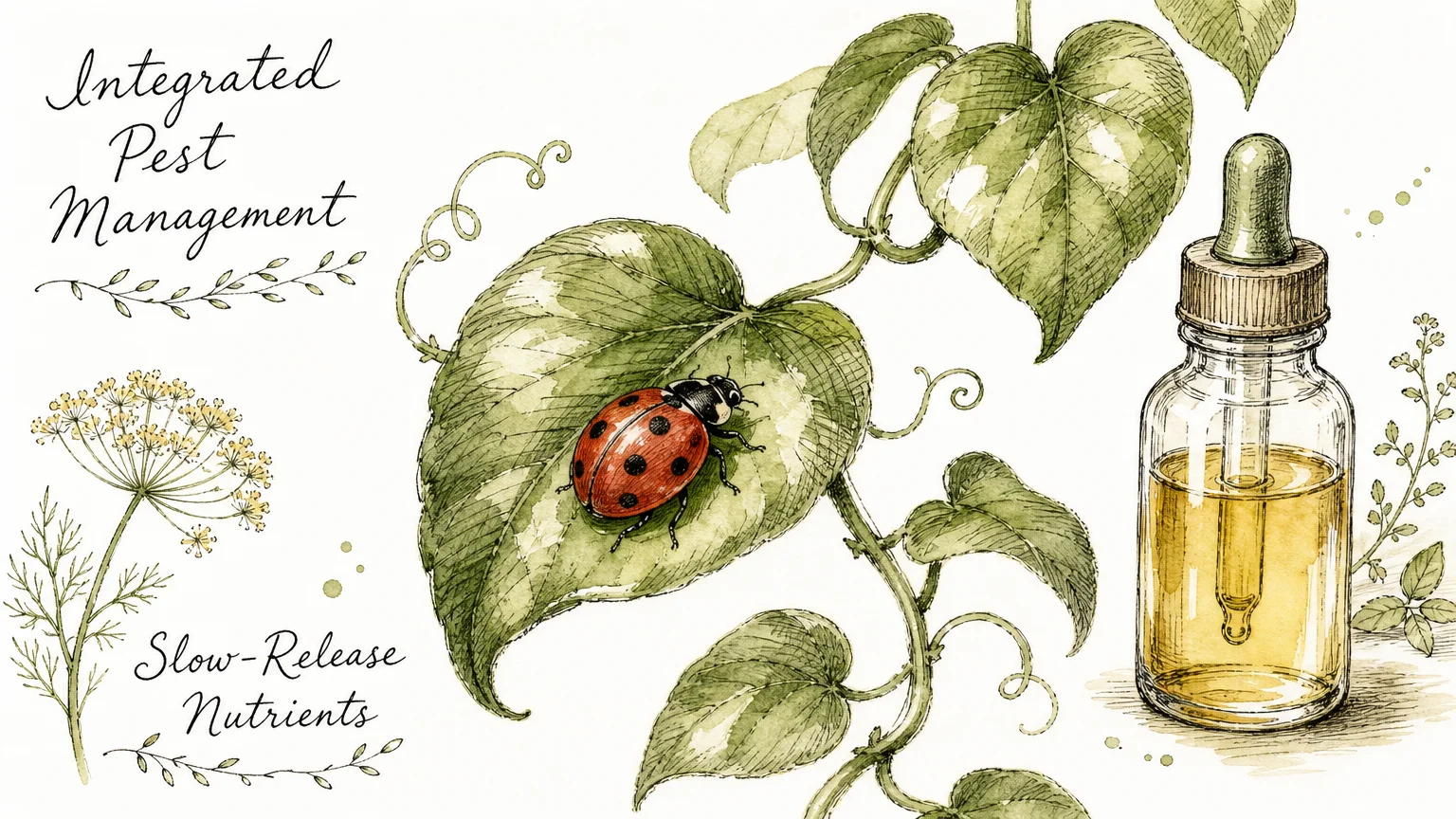
Sustainable Fertilizer and Pest Management
Because you must water hanging baskets so frequently to combat summer evaporation, the essential macronutrients in the soil inevitably wash out the drainage holes at a rapid pace. This process, known as nutrient flushing, leaves your plants starving by mid-July.
To keep your cascading plants blooming vigorously and producing fresh foliage all season, you must replace these lost nutrients through a consistent, deliberate fertilization routine.
Avoid harsh, high-concentration synthetic fertilizers that can instantly burn tender roots within the confines of a small pot. Instead, mix an organic, slow-release granular fertilizer deeply into the potting soil when you first assemble and plant the basket in the spring.
This provides a steady, reliable baseline of nutrition. To supplement this baseline during peak blooming periods, apply a high-quality organic liquid fertilizer—such as a balanced seaweed extract or deodorized fish emulsion blend—every two weeks.
Always dilute the liquid fertilizer to half-strength; applying weaker doses more frequently prevents dangerous nutrient salt buildup from accumulating in the enclosed pot.
When managing occasional pests, fiercely avoid broad-spectrum chemical sprays that drift in the wind and harm beneficial, hard-working pollinators. Hanging baskets occasionally attract common sap-sucking insects like aphids, spider mites, or whiteflies.
Because the plants conveniently sit at eye level, you can usually spot these tiny pests early before they multiply out of control. First, try dislodging the insects mechanically with a sharp, targeted blast of plain water from your garden hose or a handheld spray bottle.
If the infestation persists after a few days, thoroughly coat the affected foliage—paying special, careful attention to the hidden undersides of the leaves—with a natural insecticidal soap or heavily diluted cold-pressed neem oil.
Always apply these natural oil treatments in the late evening, just as the sun goes down, to ensure the lingering oil does not magnify the intense daytime sunlight and severely scorch the delicate plant leaves.
Frequently Asked Questions
How often should I water my outdoor hanging flowers?
During the hottest summer months, you must check your hanging baskets daily. Baskets positioned in full, direct sun or exposed to heavy, dry winds often require deep watering every single morning, and occasionally a lighter second watering in the late afternoon.
Always use the physical heft test—lifting the basket slightly from the bottom—to accurately gauge the moisture levels deep within the root zone before casually adding more water.
Why are the leaves on my cascading plants turning yellow?
Yellowing leaves on hanging plants usually indicate a severe moisture management issue. Ironically, both extreme overwatering and severe underwatering produce the exact same yellowing symptom because the roots shut down in both scenarios.
Check the bottom drainage holes to ensure they remain completely unblocked by debris. If the soil feels soggy, dense, and heavy, withhold water immediately and let the basket dry.
If the soil feels bone dry and visibly pulls away from the inner edges of the pot, your plant requires a thorough, slow soaking.
Can I save my hanging plants for next year?
This depends entirely on the specific plant species and your local winter climate. Annuals like sweet alyssum and calibrachoa naturally complete their entire life cycle in one season and die after the first hard frost.
Tender perennials like spider plants, fuchsias, and creeping Jenny will perish outdoors in freezing temperatures, but you can successfully overwinter them by bringing the baskets inside before frost arrives and treating them as standard indoor houseplants until spring returns.
How many plants should I put in a standard 12-inch hanging basket?
To achieve a full, lush, professional appearance without severely overcrowding the competing root systems, plant three to five starter plants in a standard 12-inch basket.
Place one upright, visually striking “thriller” plant in the dead center, and arrange two to four trailing “spiller” plants evenly around the outer edges. As they grow and mature, they will quickly intertwine, hiding the plastic edges and fully covering the bare soil surface.
For trustworthy gardening information, visit:
New York Botanical Garden, ASPCA Animal Poison Control, Michigan State University Extension — Gardening and University of Wisconsin Extension — Horticulture. These organizations provide expert, research-based advice for gardeners at all levels.
Disclaimer: This article is for informational purposes only and is not a substitute for professional gardening advice. Always consult local extension services or horticulture experts for region-specific guidance.