
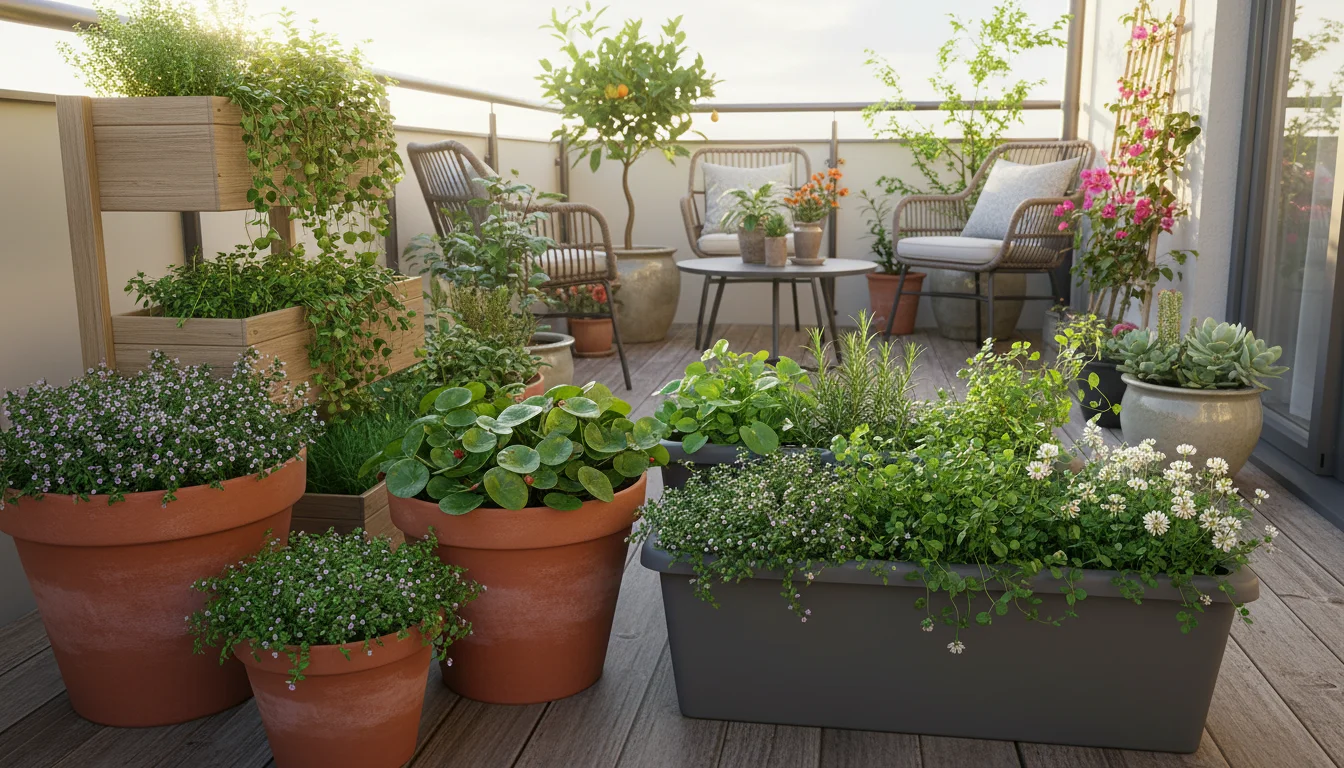
Summer’s intense heat brings unique challenges for balcony gardeners, especially when growing plants in large pots. The sun beats down, heating the container walls, and turning your precious potting soil into an oven.
This extreme heat stresses plant roots, accelerates water evaporation, and often leads to unhappy, underperforming plants. You might find yourself watering daily, yet your plants still wilt and struggle.
Fortunately, a smart, sustainable, and surprisingly simple solution exists: the living mulch method. This technique involves planting low-growing, beneficial plants at the base of your main container crops.
These companion plants act as a natural, green blanket, shielding the soil from direct sun and keeping roots cooler. Even better, when you choose edible groundcovers, you gain an extra harvest while protecting your primary plants.
This approach not only keeps your `summer container gardening` thriving but also maximizes the productivity of every square inch in your small space.
Contents9 sections
- Beat the Heat: Why Balcony Pots Overheat in Summer
- Understanding Living Mulch: Nature’s Smart Solution for Your Containers
- Choosing Your Champions: Best Edible Groundcovers for Balcony Pots
- Step-by-Step: Planting Your Living Mulch in Large Balcony Pots
- Synergies in Your Container: Pairing Main Plants with Edible Groundcovers
- Care and Maintenance: Keeping Your Living Mulch System Thriving
- Common Mistakes to Avoid for Successful Living Mulch Containers
- Beyond Cooling: The Multifaceted Benefits of Edible Groundcovers
- Frequently Asked Questions
Beat the Heat: Why Balcony Pots Overheat in Summer
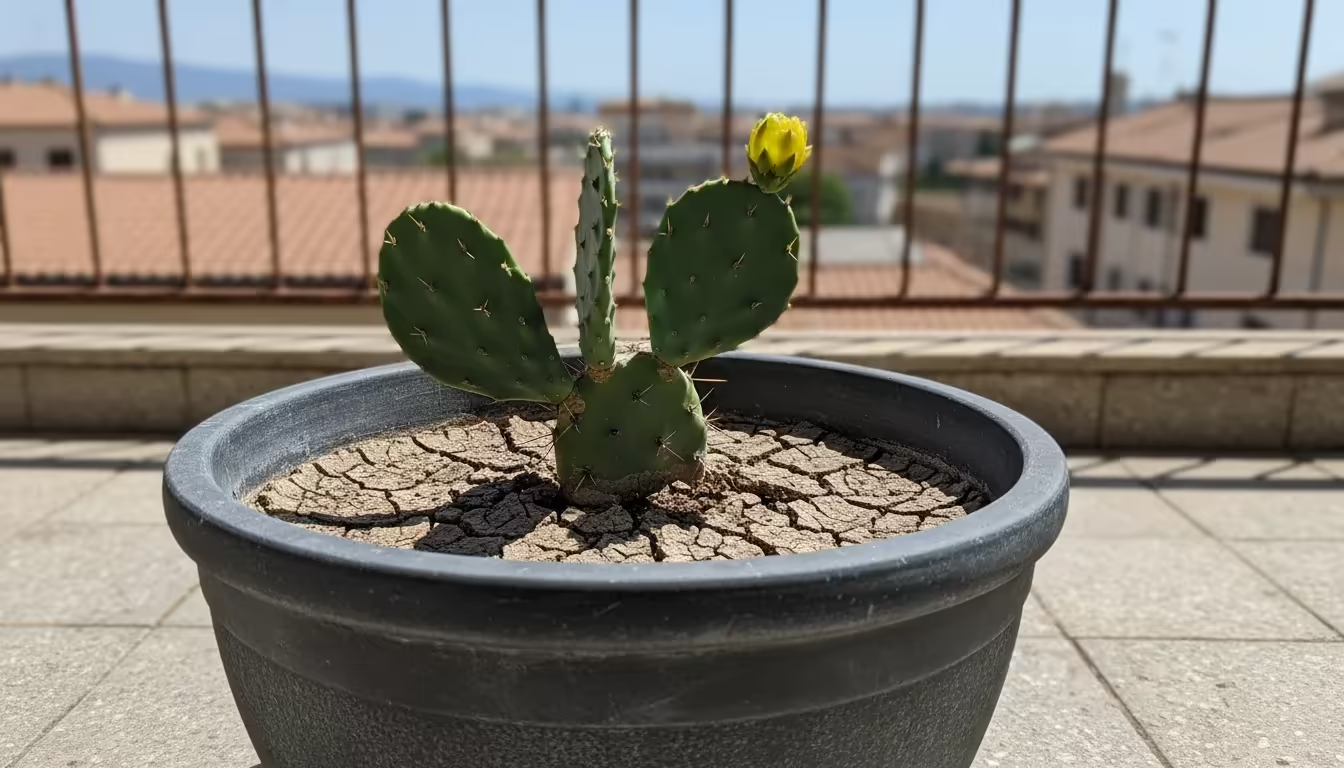
If you garden on a balcony or patio, you know the summer sun can be relentless. Your potted plants face a unique struggle compared to their in-ground counterparts: container soil acts like a heat sink.
Traditional garden beds have the vast insulating capacity of the surrounding earth. Pots, however, expose their entire surface area, including sides and bottom, directly to the sun and ambient air.
This exposure leads to rapid and significant temperature fluctuations.
When daily watering leaches away soil fertility, a quick mid-summer planter recharge can revitalize yellowing or stalled container crops.
Pairing physical container placement with a moving shade strategy gives pots crucial relief from scorching afternoon rays.
During severe summer heatwaves, ambient heat radiating from surrounding walls and floors can create a balcony heat dome that quickly overwhelms unshaded pots.
Several factors contribute to this overheating problem. First, the material and color of your pots play a crucial role.
Dark-colored pots, such as black plastic or dark ceramic, absorb and retain significantly more solar radiation than lighter-colored pots. Studies show that soil temperatures in dark containers can easily soar to 120°F (49°C) or even higher on a 90°F (32°C) day.
These extreme temperatures are well above the optimal range for most plant roots, which generally thrive in soil temperatures between 65-80°F (18-27°C).
Second, the limited volume of soil in a container means it heats up and cools down much faster than the extensive soil mass in the ground. There is less thermal mass to buffer temperature changes.
Third, the exposed surface of the soil directly absorbs solar radiation and loses moisture quickly through evaporation, further heating the root zone.
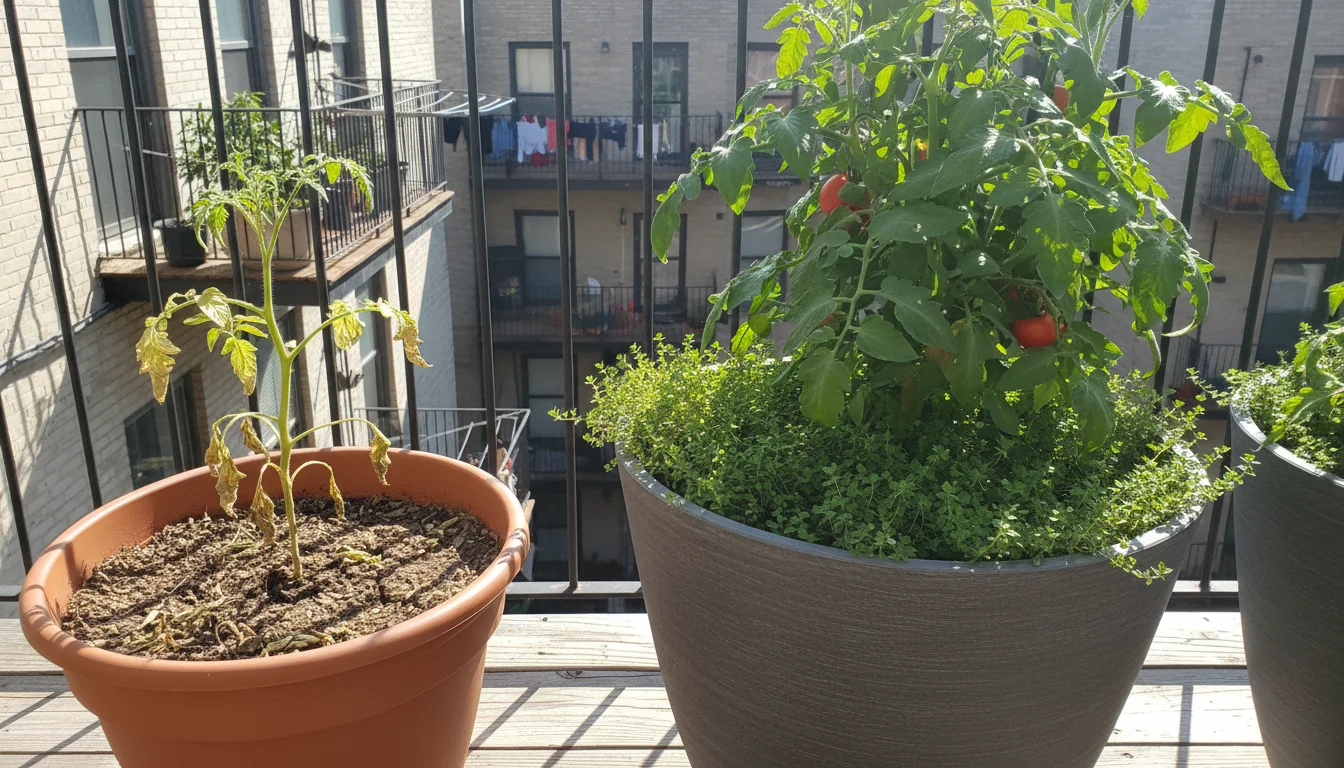
The consequences for your plants are severe. Root systems, essential for water and nutrient uptake, become stressed and damaged in excessively hot soil.
High temperatures can denature enzymes, impair nutrient absorption, and even kill root cells. This leads to symptoms you have likely observed: wilting even after watering, scorched leaves, stunted growth, reduced fruit production, and an increased susceptibility to pests and diseases.
You might also notice your potting mix drying out at an astonishing rate, forcing you to water multiple times a day. This constant watering leaches out nutrients, requiring more frequent fertilization and potentially leading to a build-up of salts in the container.
Understanding this challenge is the first step toward implementing effective solutions, such as `how to keep potted plant soil cool in summer` using living mulch.
Understanding Living Mulch: Nature’s Smart Solution for Your Containers
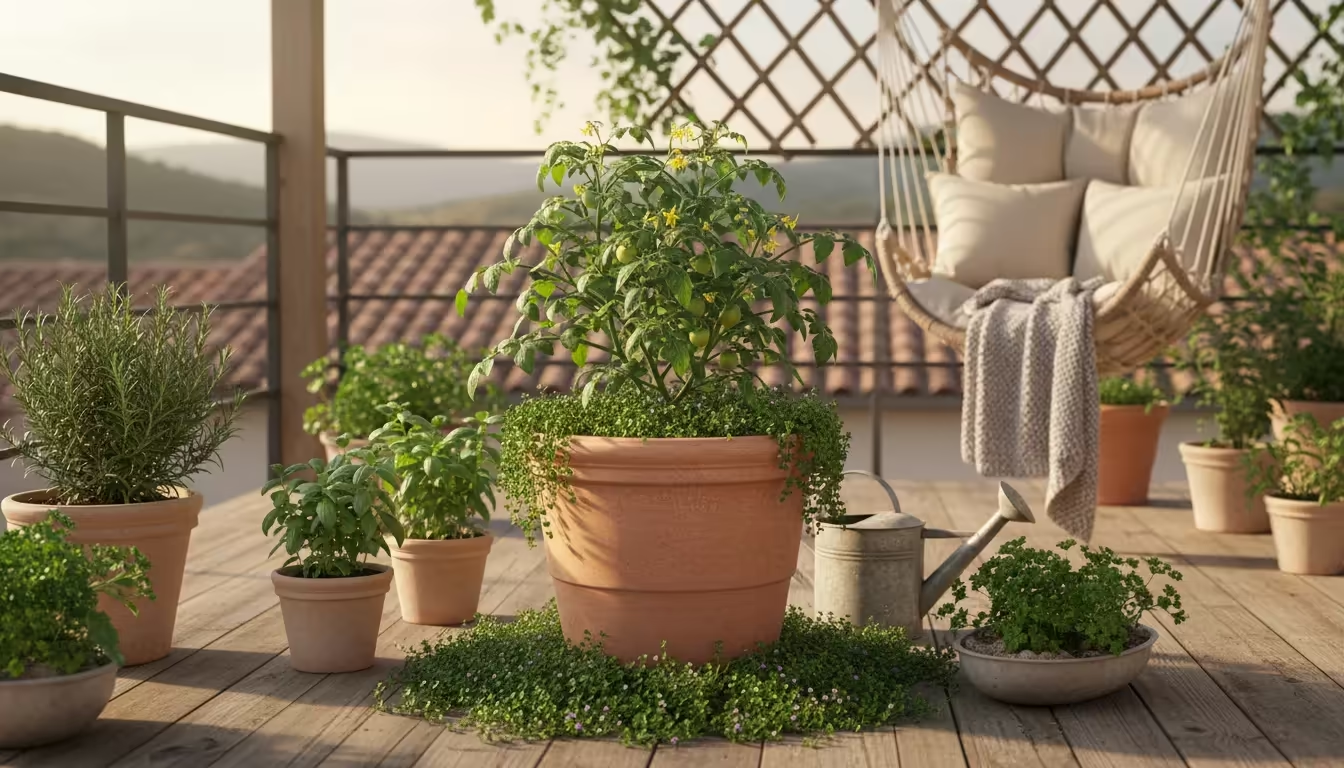
The `living mulch` method, also known as undersowing or cover cropping within a container, involves growing a secondary, low-growing plant at the base of your primary crop. Think of it as nature’s ingenious way of protecting and nurturing the soil.
Instead of leaving the soil surface bare, you deliberately plant a groundcover that complements your main plant. This green carpet brings a host of benefits, transforming your container environment from a vulnerable, exposed space into a resilient, self-regulating ecosystem.
Slowing soil moisture loss with groundcovers is also an essential tactic when designing a vacation-proof balcony garden that can withstand hot stretches while you are away.
While traditional mulching for containers usually relies on wood bark or straw, establishing a living cover provides the same thermal buffering with the added bonus of a fresh harvest.
First and foremost, living mulch excels at temperature regulation. The foliage of the groundcover plants forms a protective canopy over the soil, shading it from direct sunlight.
This shading effect dramatically reduces the amount of solar radiation absorbed by the potting mix, keeping the root zone significantly cooler. This is a crucial defense against the overheating we discussed, particularly for sensitive annuals and vegetables during intense summer heat.
Data indicates that soil temperatures under a living mulch layer can be 10-20°F (5-11°C) cooler than bare soil on a hot day, directly addressing `how to keep potted plant soil cool in summer`.
Beyond cooling, living mulch offers several other advantages. It acts as a natural moisture retainer.
The groundcover foliage reduces surface evaporation, meaning the moisture you provide stays in the soil longer. This translates to less frequent watering, a significant relief for busy gardeners and a smarter use of water resources.
Furthermore, a dense `edible groundcover` acts as a natural weed suppressor. By occupying the soil surface, it prevents weed seeds from germinating and competing with your main plant for water and nutrients.
This means less time spent weeding your containers.
Some living mulches also enhance soil health. As their roots grow, they contribute to the soil’s structure and aeration.
When the groundcover eventually dies back, it adds organic matter to the potting mix, enriching it over time. Certain plants, particularly legumes, even fix nitrogen, providing a slow-release natural fertilizer to their companion plants.
This creates a miniature, dynamic ecosystem within your pot, fostering beneficial microbial activity and overall plant vigor. For balcony gardeners, where every inch matters, choosing an `edible groundcover` means you are not sacrificing space, but rather adding another layer of productivity to your container.
It is a sustainable, highly efficient method for enhancing `summer container gardening`.
Choosing Your Champions: Best Edible Groundcovers for Balcony Pots
Selecting the right `edible groundcover` is crucial for the success of your `living mulch` system, especially in `summer container gardening`. You need plants that are low-growing, non-aggressive, tolerant of similar conditions to your main crop, and, of course, delicious.
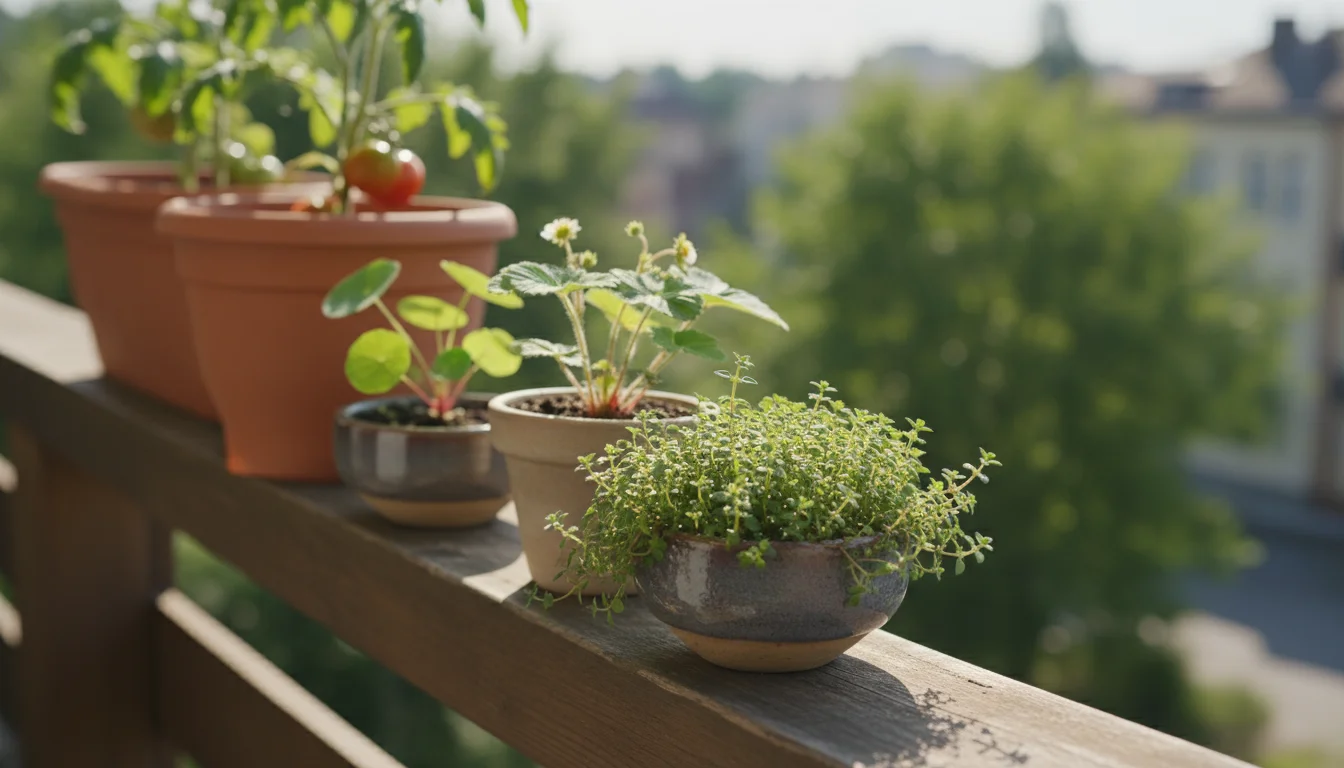
Here are three excellent choices that perform exceptionally well in large balcony pots, providing both protective groundcover and an additional harvest. These are truly the `best edible groundcover for pots`.
To double your heat protection, consider pairing low-growing mulches with a vertical edible shade curtain of climbing beans to block direct sunlight.
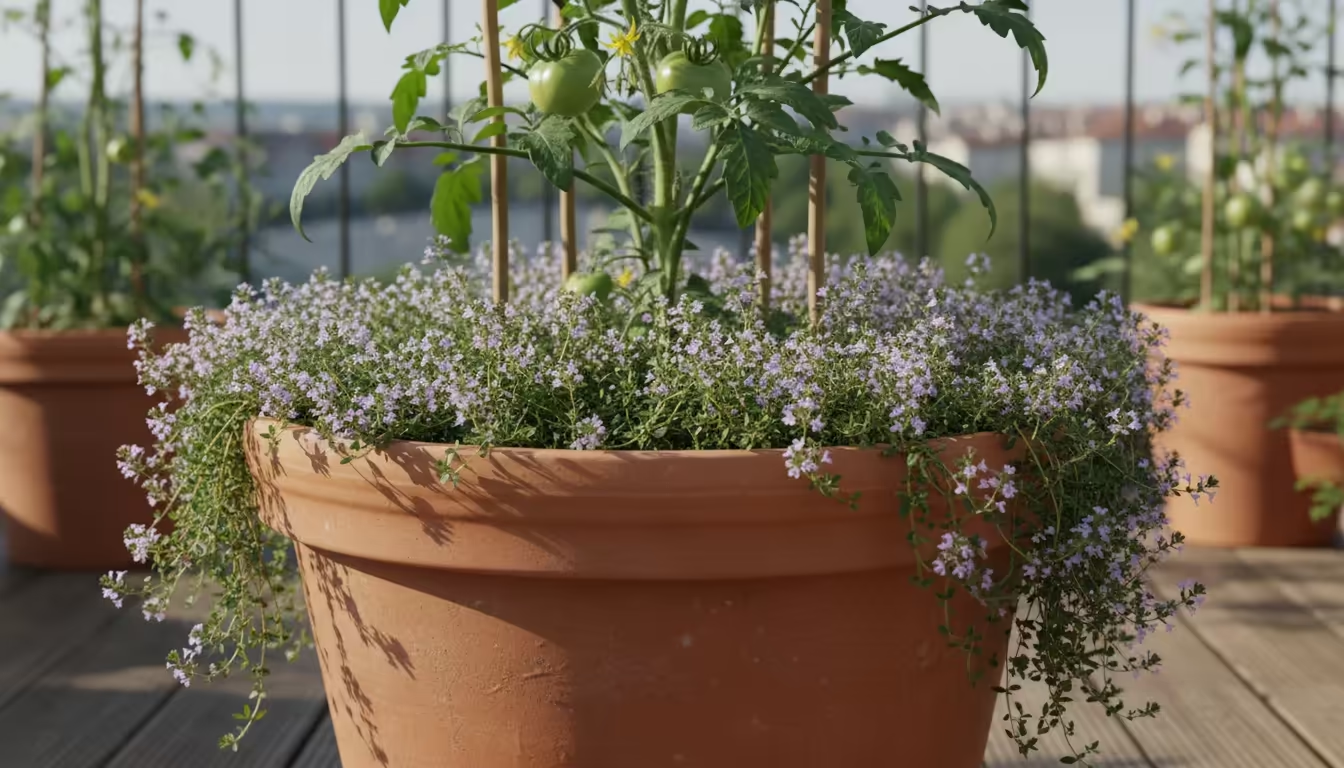
1. Creeping Thyme (Thymus serpyllum, Thymus praecox)
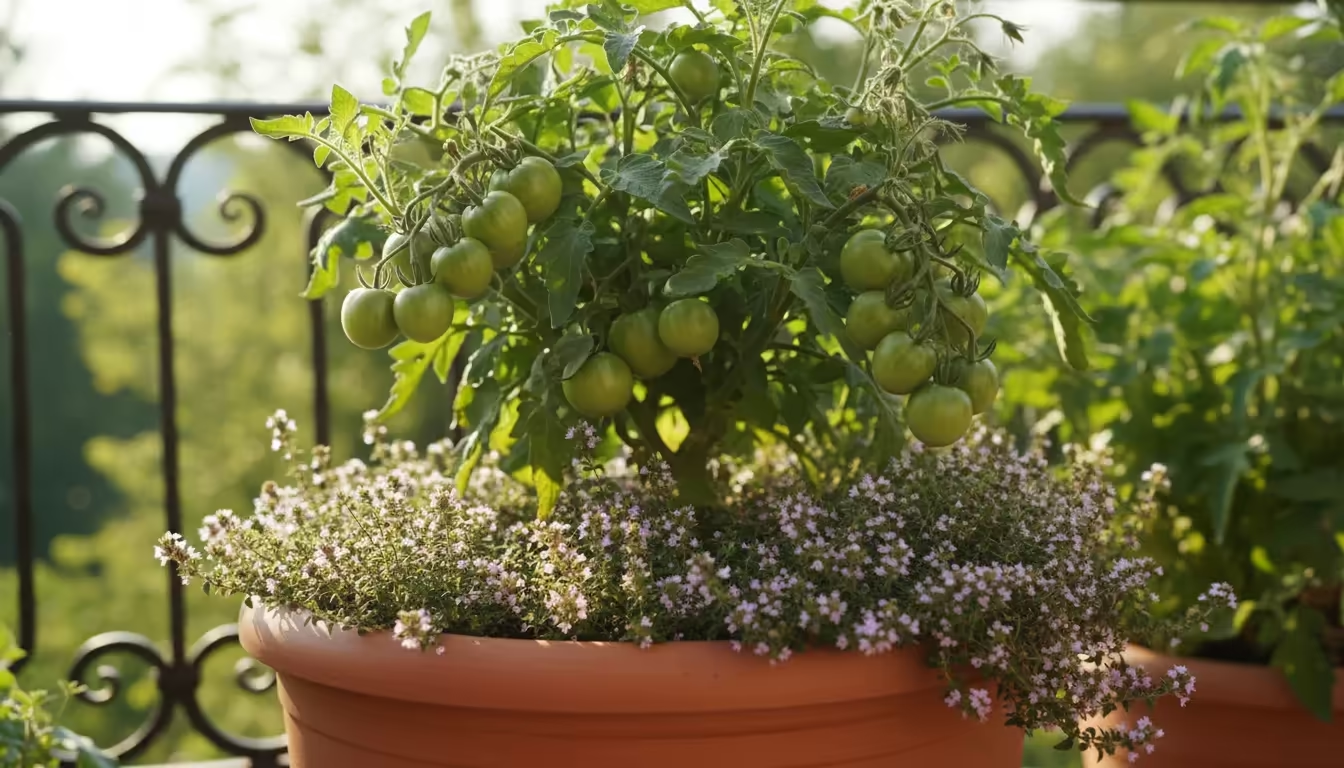
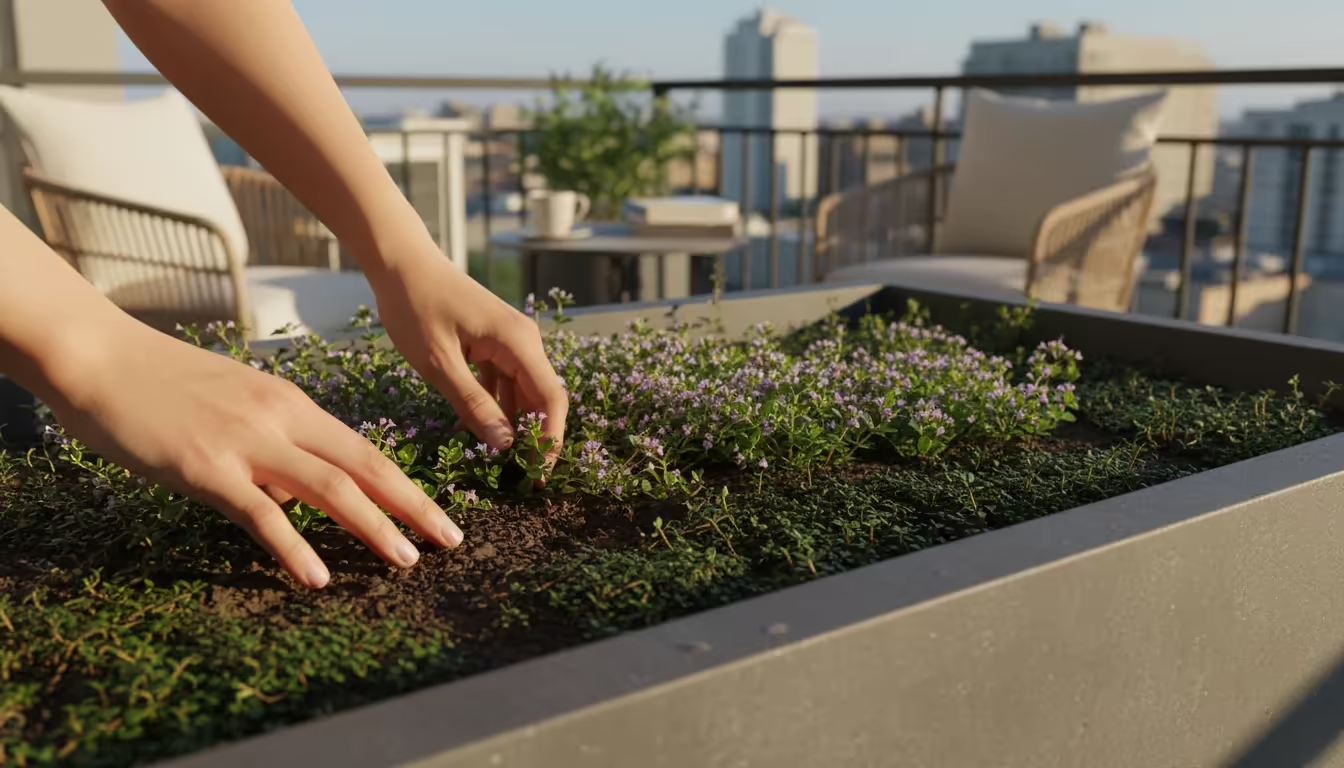
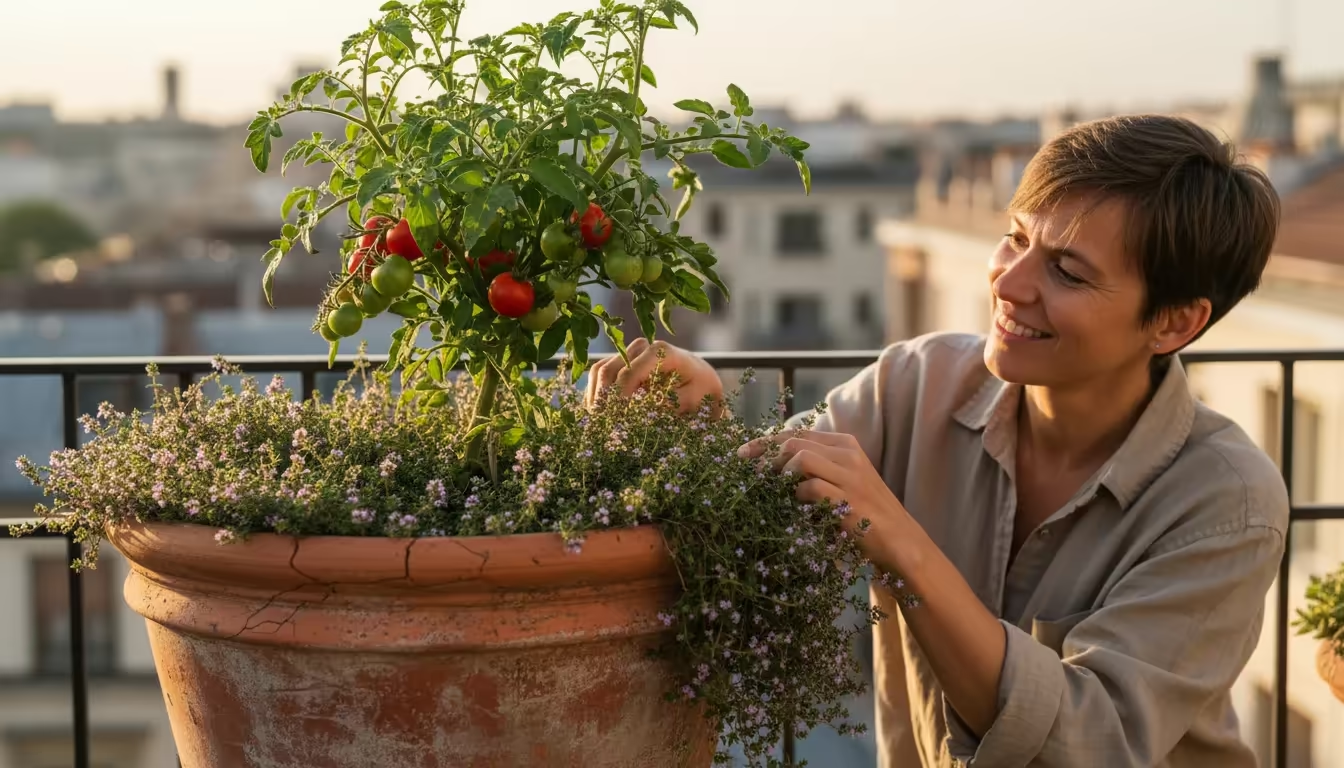
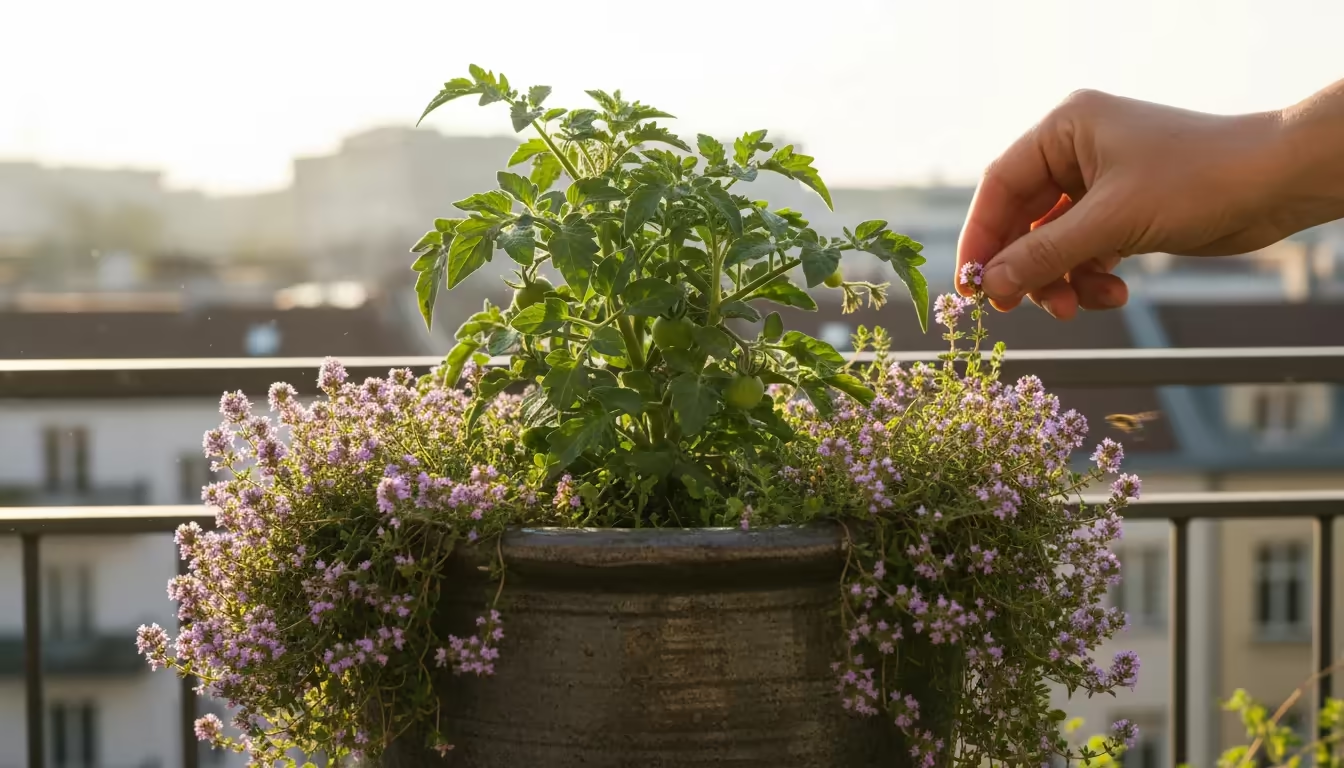
Creeping thyme is an absolute superstar for `growing creeping thyme in a container`. This low-growing, mat-forming herb is incredibly hardy, drought-tolerant once established, and thrives in full sun, making it perfect for hot, exposed balcony pots.
Its tiny leaves release a delightful fragrance when brushed, and it produces small, often purple or pink flowers that attract pollinators.
Like other resilient, heat-loving herbs for summer pots, creeping thyme stands up to baking midday sun without wilting or going to seed prematurely.
Benefits:
- Excellent Soil Cover: Forms a dense, evergreen mat that effectively shades the soil, dramatically reducing soil temperatures and moisture evaporation.
- Edible: All parts of creeping thyme are edible, offering a savory, earthy flavor. You can harvest the leaves for cooking, teas, or garnishes.
- Low Maintenance: Requires minimal water once established and tolerates a wide range of soil conditions, as long as drainage is good (meaning water moves through the soil easily).
- Aesthetic Appeal: Its delicate foliage and small flowers add beauty to your container arrangements.
Growing Tips: Plant small plugs or starter plants around the base of your main crop. It spreads gently, filling in gaps without becoming invasive.
Regular light trimming keeps it tidy and encourages bushier growth.
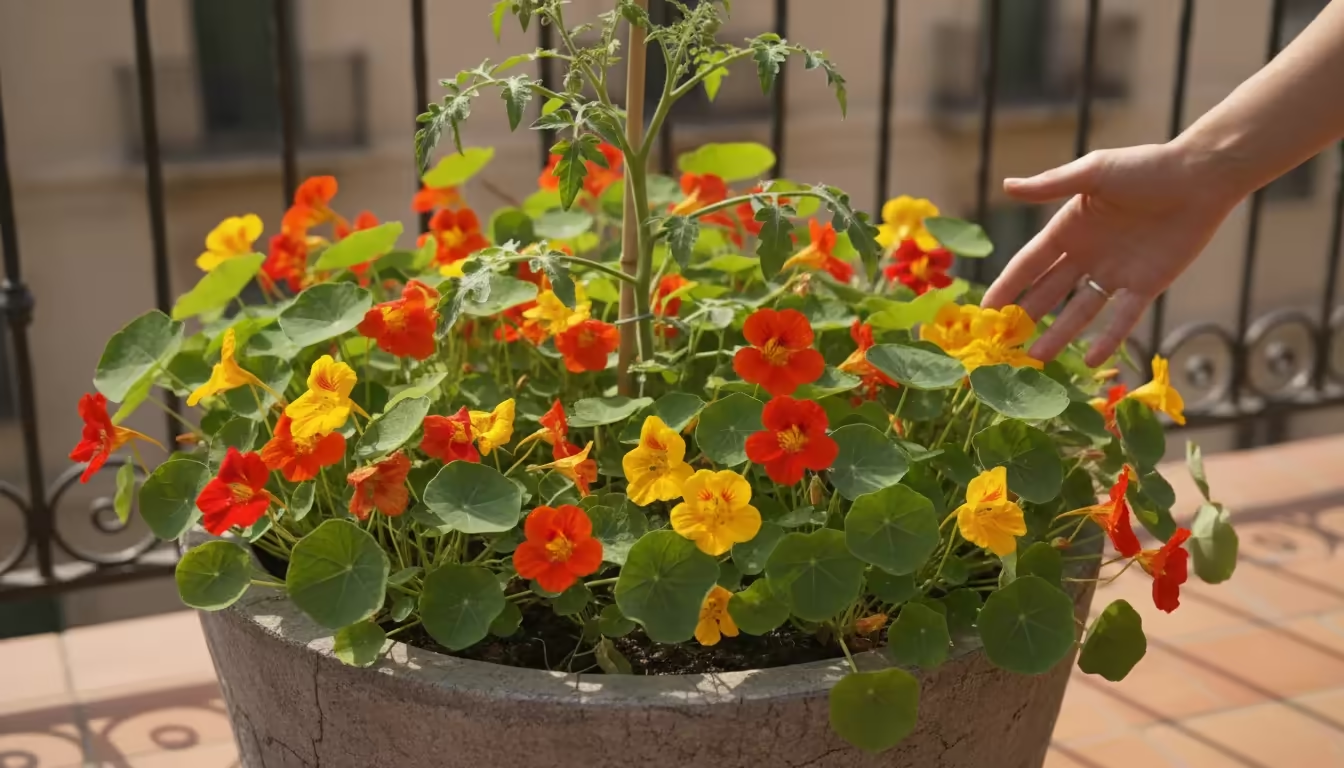
2. Nasturtiums (Tropaeolum majus)
Nasturtiums are vibrant, fast-growing annuals that offer both beauty and bounty. Many varieties have a cascading or trailing habit, making them ideal for spilling over the sides of balcony pots.
They are remarkably tolerant of neglect and even prefer leaner soil, which is often a feature of container gardening.
Benefits:
- Fast Coverage: Nasturtiums quickly grow to cover the soil surface, providing excellent shade and moisture retention. Their large leaves create a dense canopy.
- Highly Edible: The leaves, flowers, and even unripe seed pods (often pickled as “poor man’s capers”) are edible. They possess a peppery, slightly spicy flavor, perfect for salads, sandwiches, and garnishes.
- Pest Deterrent/Trap Crop: Anecdotally, nasturtiums can act as a trap crop for aphids, drawing them away from your main vegetables. While not guaranteed, their strong scent may also deter some pests.
- Attractive Flowers: Their cheerful yellow, orange, and red blooms add a splash of color to your containers.
Growing Tips: Sow seeds directly into the pot around your main plants after the last frost. They germinate easily and grow quickly.
Choose compact or trailing varieties for best container performance. Avoid over-fertilizing, as this encourages foliage growth over flowers.
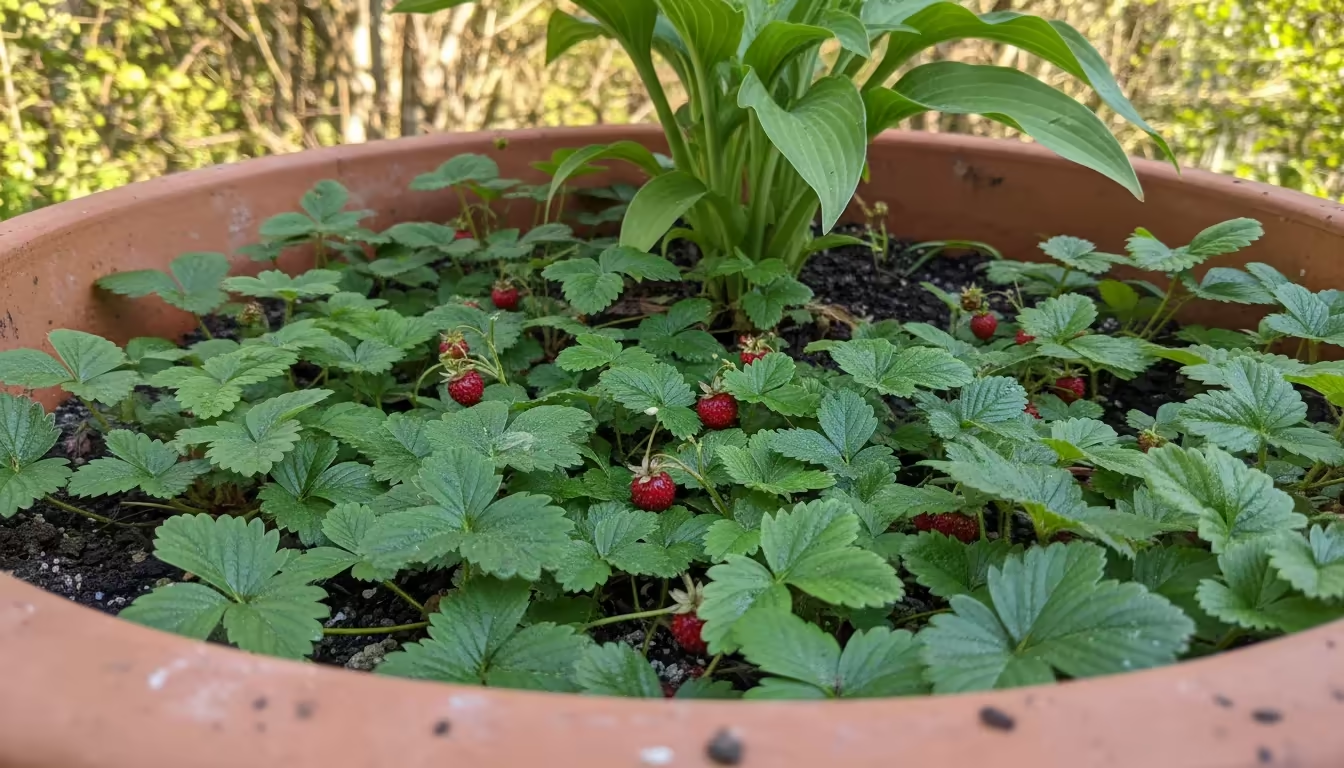
3. Alpine Strawberries (Fragaria vesca)
While traditional strawberries can be vigorous, alpine strawberries are smaller, mounding varieties that make fantastic `edible groundcover` choices for pots. They do not send out long runners as aggressively as their larger cousins, making them more manageable for container life.
They produce small, intensely flavorful berries over a long season.
Benefits:
- Effective Soil Shading: Their dense, low-growing foliage creates a protective layer over the soil, keeping roots cool and moist.
- Continuous Harvest: Alpine strawberries produce small, sweet berries from late spring through fall, offering a prolonged harvest directly from your living mulch.
- Perennial in Many Zones: In temperate climates, alpine strawberries can overwinter in your pots, providing groundcover year after year.
- Minimal Runner Production: Unlike common strawberries, alpine varieties produce very few runners, making them ideal for confined spaces.
Growing Tips: Plant alpine strawberry starts around the edges or at the base of your main plant. Provide consistent moisture, especially during fruiting.
They appreciate well-drained, slightly acidic soil and some afternoon shade in the hottest climates, although they tolerate full sun well when protected by living mulch. Remove any occasional runners to maintain compactness.
These three `best edible groundcover for pots` options offer versatility, beauty, and practical benefits for any small-space gardener looking to implement `living mulch` in their `summer container gardening`.
Step-by-Step: Planting Your Living Mulch in Large Balcony Pots
Implementing the `living mulch` method in your `summer container gardening` is a straightforward process. By following these steps, you can successfully establish an `edible groundcover` that protects your main plants and provides an additional harvest.
This process ensures your `living mulch` thrives from the start, contributing to a healthier and cooler root environment.
- Choose the Right Container and Potting Mix:
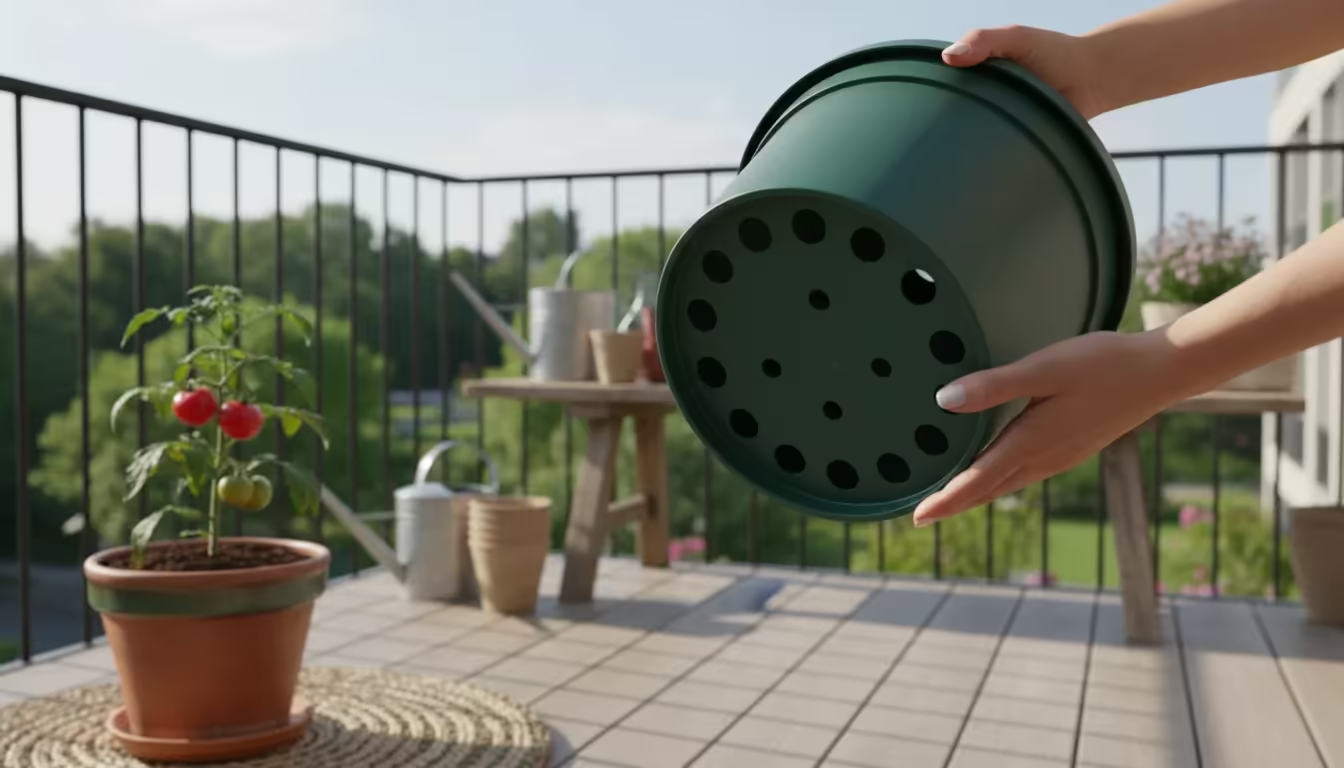
- Pots: For `living mulch` to be effective, especially with a main plant, use large containers. A minimum of 15-20 gallons (60-75 liters) capacity is often recommended for large vegetables like tomatoes or peppers, but even 5-10 gallon (20-40 liter) pots can work for smaller main plants if paired with compact groundcovers. Ensure your pot has ample drainage holes to prevent waterlogging. Material matters too: terracotta breathes well but dries faster, while plastic retains moisture more effectively.
- Potting Mix: Start with a high-quality, well-draining potting mix. “Well-draining” means water passes through the soil at a good rate, preventing roots from sitting in stagnant water. Avoid using garden soil, which compacts easily in pots and can harbor pests or diseases. Look for mixes containing perlite, coco coir, or peat moss for good aeration and moisture retention.
- Plant Your Main Crop First:
- Fill your chosen container mostly with potting mix, leaving a few inches from the rim.
- Dig a hole for your primary plant (e.g., tomato, pepper, eggplant, cucumber). Plant it at the appropriate depth, ensuring its root ball is level with the surrounding soil. Firm the soil gently around its base.
- Water your main plant thoroughly to help it settle in.
- Strategically Plant Your Edible Groundcover:
- For Starter Plants (like Creeping Thyme or Alpine Strawberries): Gently remove the groundcover plant from its nursery pot. Dig small, shallow holes around the perimeter of your main plant, or strategically place them to cover the exposed soil surface. Space them according to their mature size, usually 4-8 inches (10-20 cm) apart, to allow for spread. Plant them so their root balls are just below the soil surface.
- For Seeds (like Nasturtiums): Scatter nasturtium seeds directly onto the exposed soil around your main plant. Aim for 3-5 seeds per pot for larger containers, or 1-2 for smaller ones, allowing for natural thinning. Lightly cover the seeds with about 1/2 inch (1-1.5 cm) of potting mix.
- Water Thoroughly and Consistently:
- After planting both your main crop and `edible groundcover`, water the entire container deeply. This helps to settle the soil around the roots and initiates growth for your `living mulch`.
- Maintain consistent moisture, especially in the initial weeks, until both plants are established. The groundcover needs water to develop its root system and begin its protective canopy.
- Monitor and Adjust:
- Observe how your plants are growing. Ensure the `living mulch` is spreading to cover the soil without directly competing with the main plant’s base. You may need to gently guide its growth or trim it back if it becomes too vigorous.
- The goal is cooperation, not competition, making this method an excellent strategy for `how to keep potted plant soil cool in summer`.
By following these steps, you set the stage for a thriving container garden, ensuring your plants remain productive and healthy throughout the summer.
Synergies in Your Container: Pairing Main Plants with Edible Groundcovers
The success of the `living mulch` method in `summer container gardening` largely depends on intelligent plant pairing. When you choose companion plants that complement each other’s needs, you create a harmonious environment where both thrive.
The goal is to maximize the benefits of the `edible groundcover` without it competing negatively with your main crop. Here are some effective pairings for your large balcony pots:
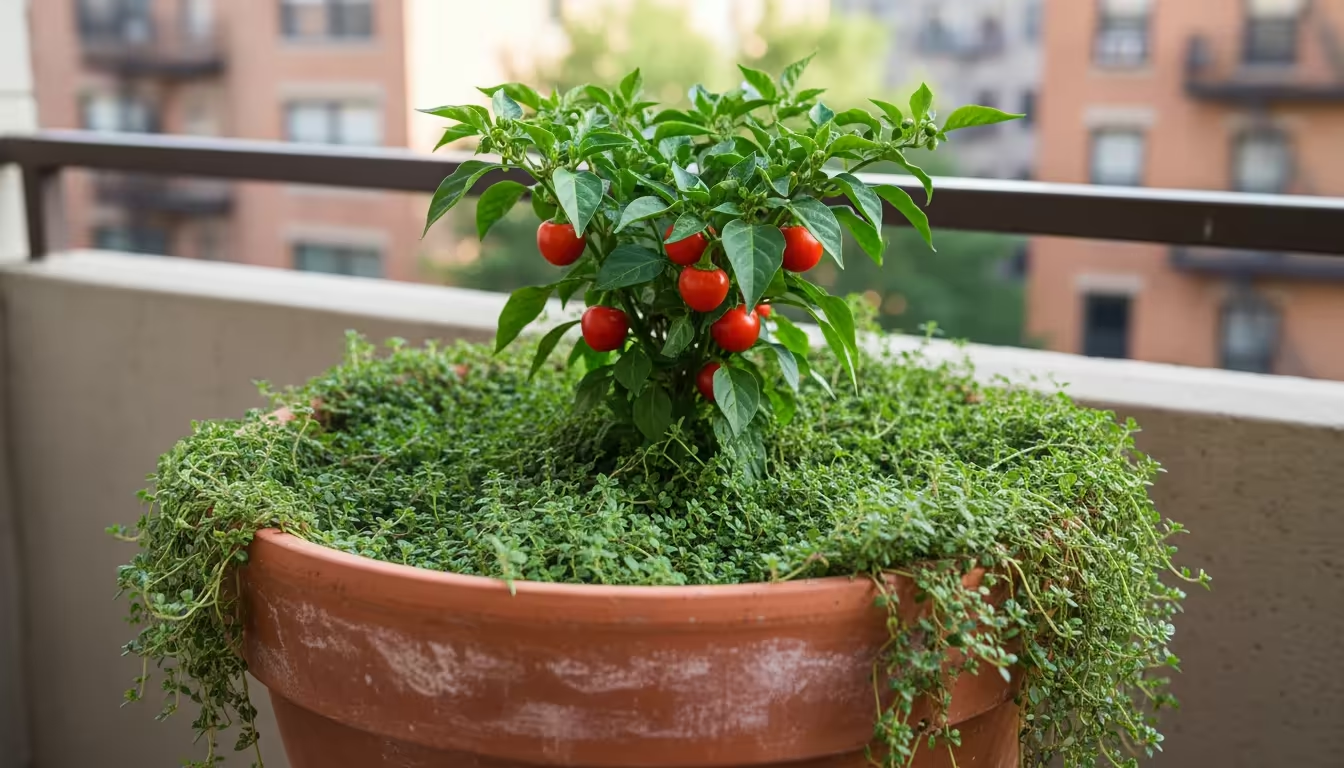
1. Tomatoes, Peppers, and Eggplants with Creeping Thyme
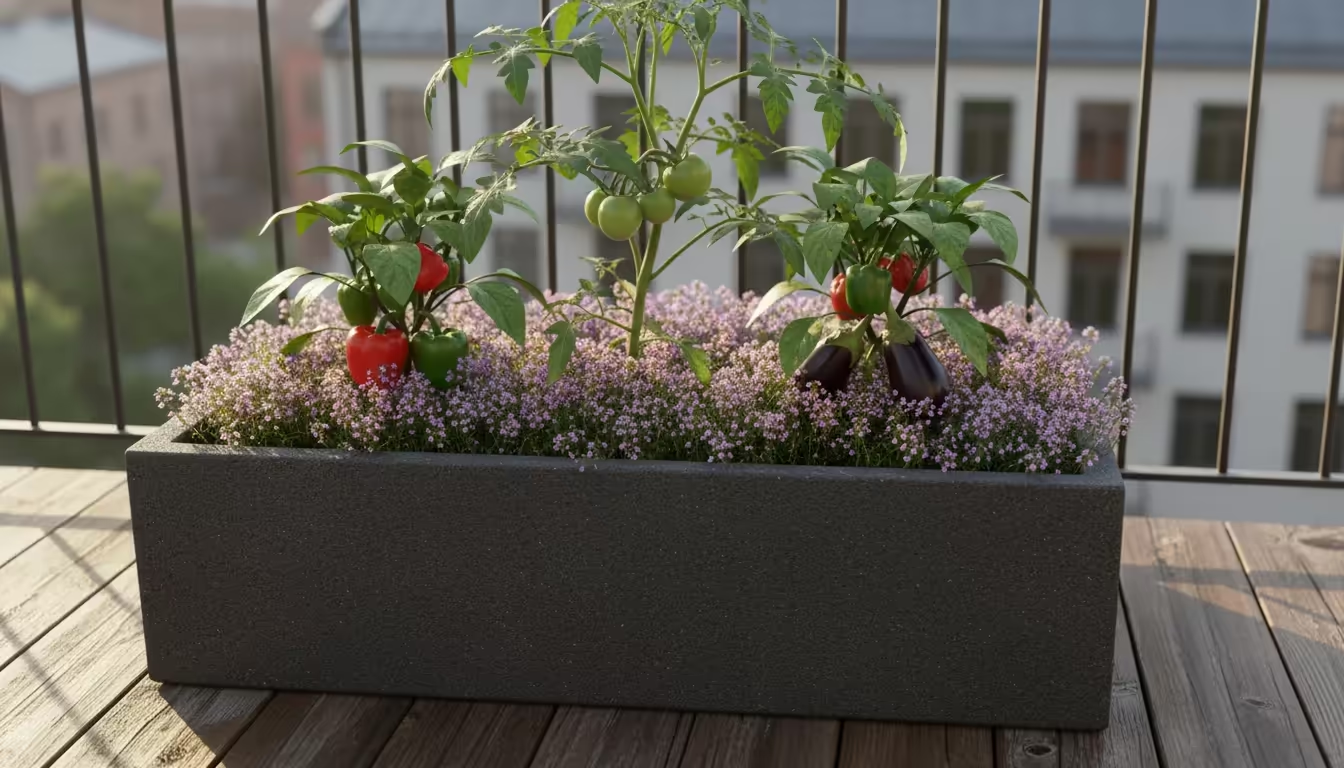
These heat-loving Solanaceae family members are excellent candidates for `living mulch`. They grow upright, creating ample space for a low-growing `edible groundcover` like creeping thyme beneath them.
- Why it works: Tomatoes, peppers, and eggplants demand consistent moisture and struggle with extreme soil heat. `Growing creeping thyme in a container` provides superb soil insulation, keeping their root zones cool and preventing rapid water loss. Creeping thyme’s shallow root system typically doesn’t compete heavily with the deeper roots of these vegetables.
- Considerations: Ensure sufficient pot size (at least 15-20 gallons/60-75 liters) to accommodate both plants comfortably. Both appreciate full sun and good `drainage`.
2. Cucumbers, Zucchini, and Bush Beans with Nasturtiums
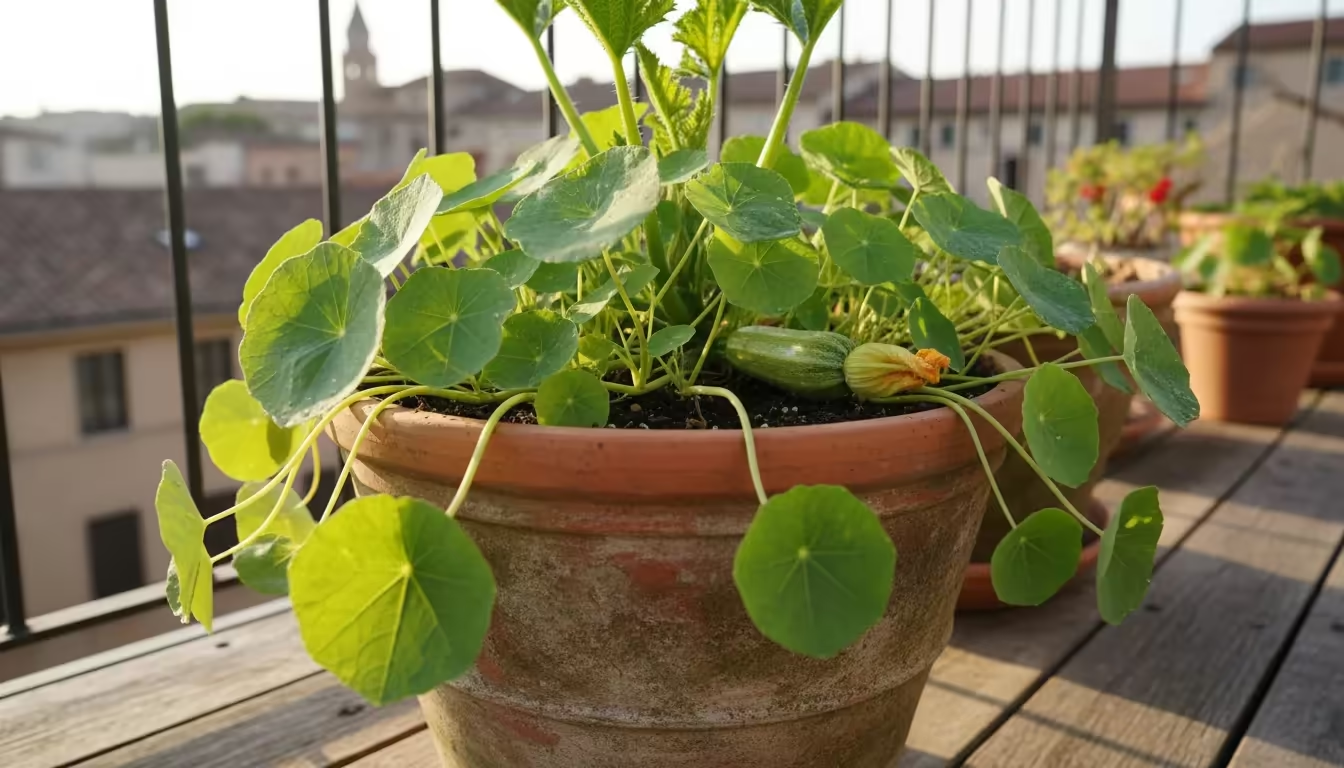
These vining or bush-type vegetables can greatly benefit from nasturtiums as a `living mulch`.
- Why it works: Nasturtiums have broad leaves that quickly spread, providing excellent shade and moisture retention. Their peppery flavor is also thought to deter some common cucumber and bean pests. For vining plants, nasturtiums can trail over the pot’s edge, adding beauty while protecting the soil.
- Considerations: Vining cucumbers and zucchini require significant space and support. Ensure the nasturtiums do not climb up or smother the main plant. Keep nasturtium growth in check with occasional trimming if it becomes too vigorous.
3. Larger Herbs (Basil, Rosemary, Oregano) with Alpine Strawberries
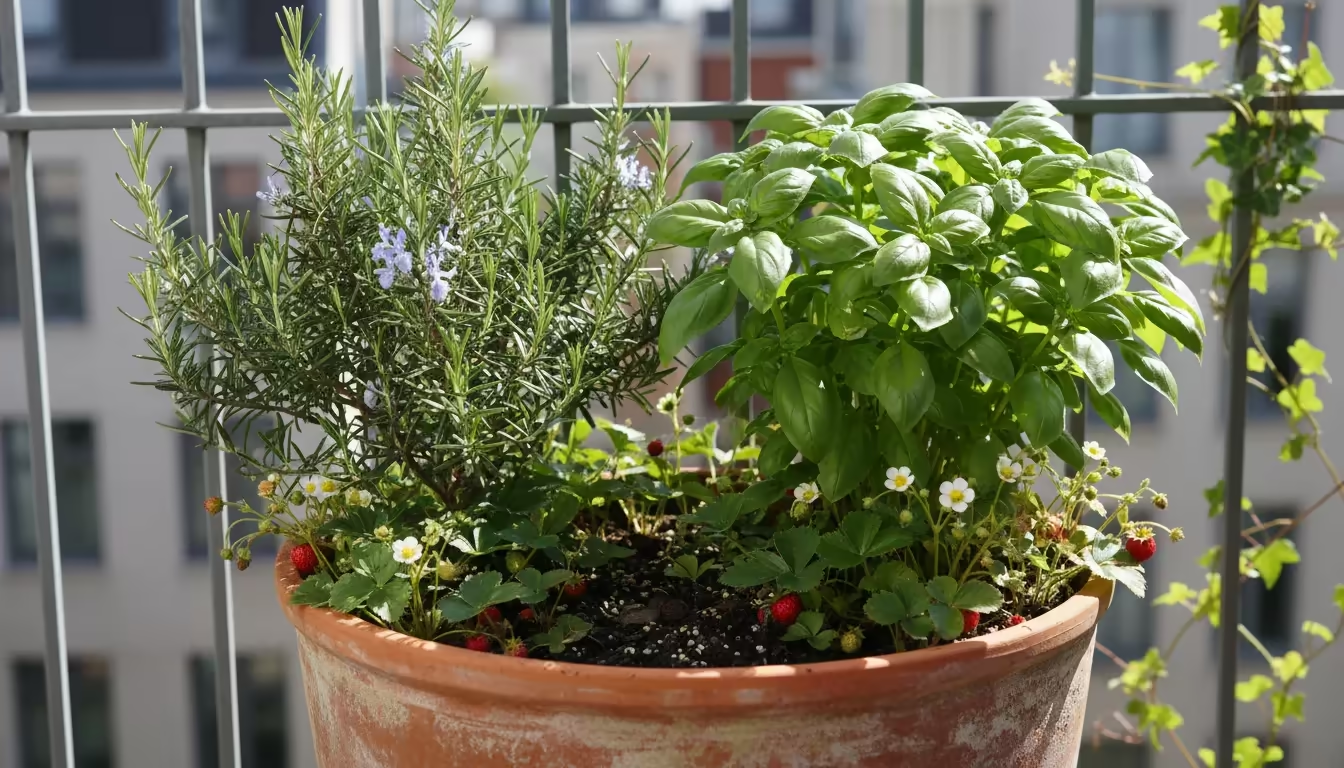
If your primary goal is a bountiful herb garden, consider using alpine strawberries as your `edible groundcover`.
- Why it works: Many large herbs, especially rosemary and oregano, enjoy conditions similar to alpine strawberries: full sun and well-drained soil. The strawberries provide a beautiful, productive underplanting, keeping the soil cool and moist for the herb roots. You get two harvests from one pot.
- Considerations: Basil prefers slightly more moisture than rosemary or oregano. Adjust your watering based on the needs of the more moisture-loving plant. Choose large enough pots (5-10 gallons/20-40 liters) to allow adequate space for both root systems.
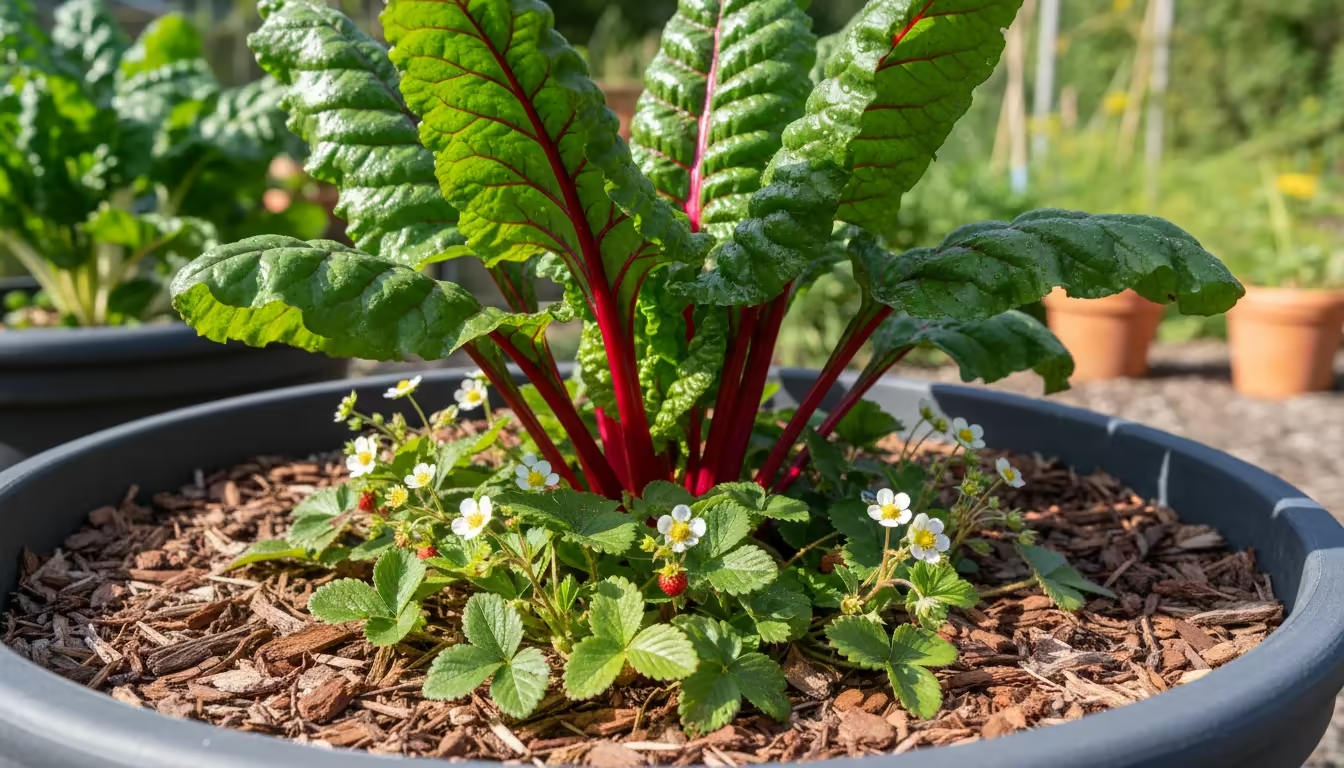
4. Leafy Greens (Swiss Chard, Kale) with Creeping Thyme or Alpine Strawberries
Even some leafy greens can benefit from a `living mulch`, particularly during early summer when heat can cause them to bolt (go to seed prematurely).
- Why it works: The cooling effect of `living mulch` can extend the harvest season for some leafy greens by delaying bolting. Creeping thyme offers a compact, unobtrusive cover, while alpine strawberries provide a beautiful visual contrast.
- Considerations: Leafy greens generally prefer cooler soil and more consistent moisture. The `living mulch` helps maintain these conditions. Ensure the groundcover does not shade the leafy greens too much, especially when they are young.
When pairing, always consider the light, water, and nutrient requirements of both plants. Matching these needs ensures both your main crop and `edible groundcover` can coexist harmoniously, leading to a more productive and resilient `summer container gardening` experience.
Care and Maintenance: Keeping Your Living Mulch System Thriving
Successfully maintaining a `living mulch` system in your large balcony pots requires a slightly different approach than caring for single-plant containers. The key is to balance the needs of both your main crop and your `edible groundcover`, ensuring they cooperate rather than compete.
This proactive care ensures your `living mulch` continues to be an effective strategy for `how to keep potted plant soil cool in summer` and enhances overall plant health.
Watering Wisely
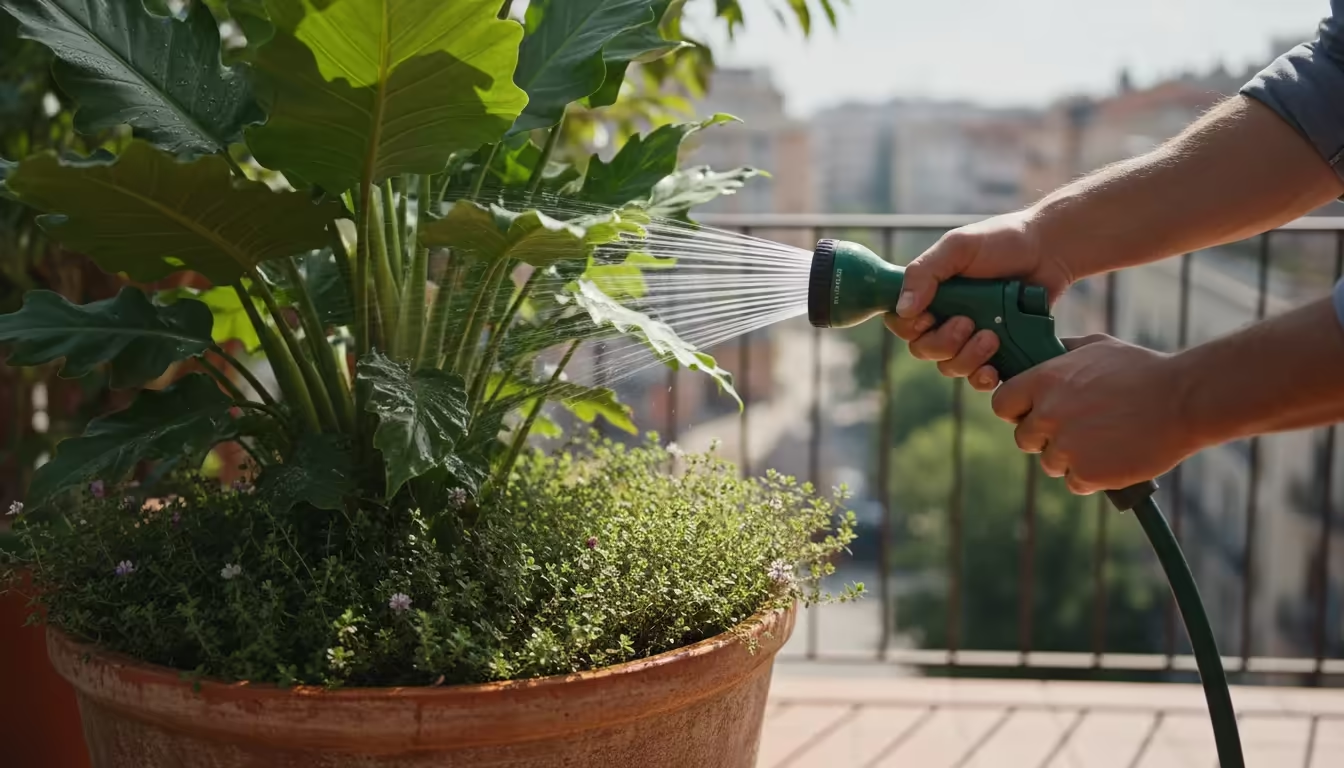
While `living mulch` significantly reduces evaporation, you still need to water appropriately. The presence of two plants means more root mass drawing water from the pot.
However, the groundcover prevents rapid drying of the soil surface.
- Monitor Moisture: Instead of relying on a schedule, feel the soil beneath the `living mulch`. Insert your finger about an inch or two (2.5-5 cm) deep. If it feels dry, it is time to water.
- Deep Watering: When you do water, do so thoroughly until water drains from the bottom of the pot. This encourages deep root growth for both plants.
- Avoid Overwatering: Even with `living mulch`, consistently soggy soil leads to root rot. Good `drainage` is paramount.
Nutrient Management
With two plants in one pot, nutrient demands increase. However, living mulch also helps retain nutrients that might otherwise leach out.
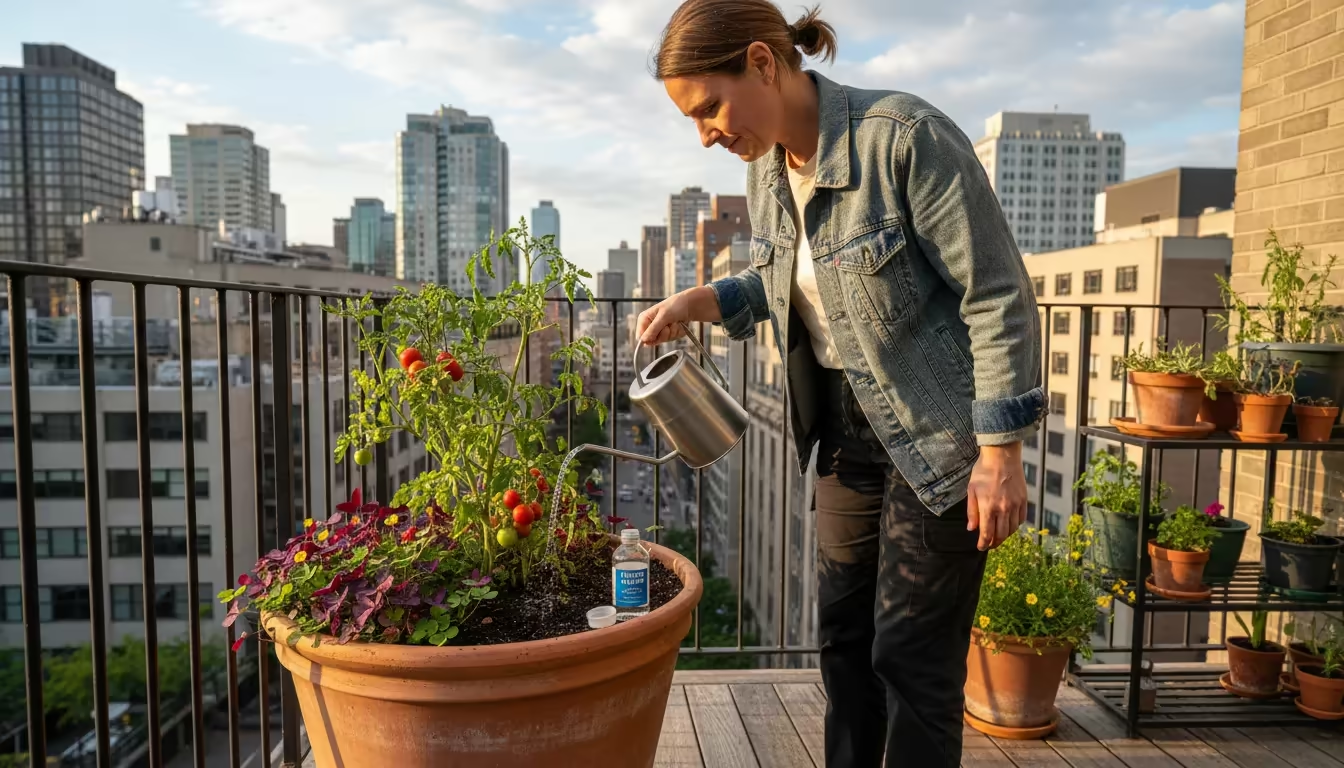
- Balanced Fertilization: Use a balanced liquid fertilizer at about half strength, applied every 2-4 weeks, especially during peak growth and fruiting periods. Fertilize when you water to ensure nutrients reach both root systems.
- Organic Options: Consider slow-release organic fertilizers mixed into the top few inches of soil when planting. This provides a steady supply of nutrients over time.
- Observe Plants: Yellowing leaves on either plant might indicate a nutrient deficiency. Adjust your feeding schedule or product accordingly.
Pruning and Trimming
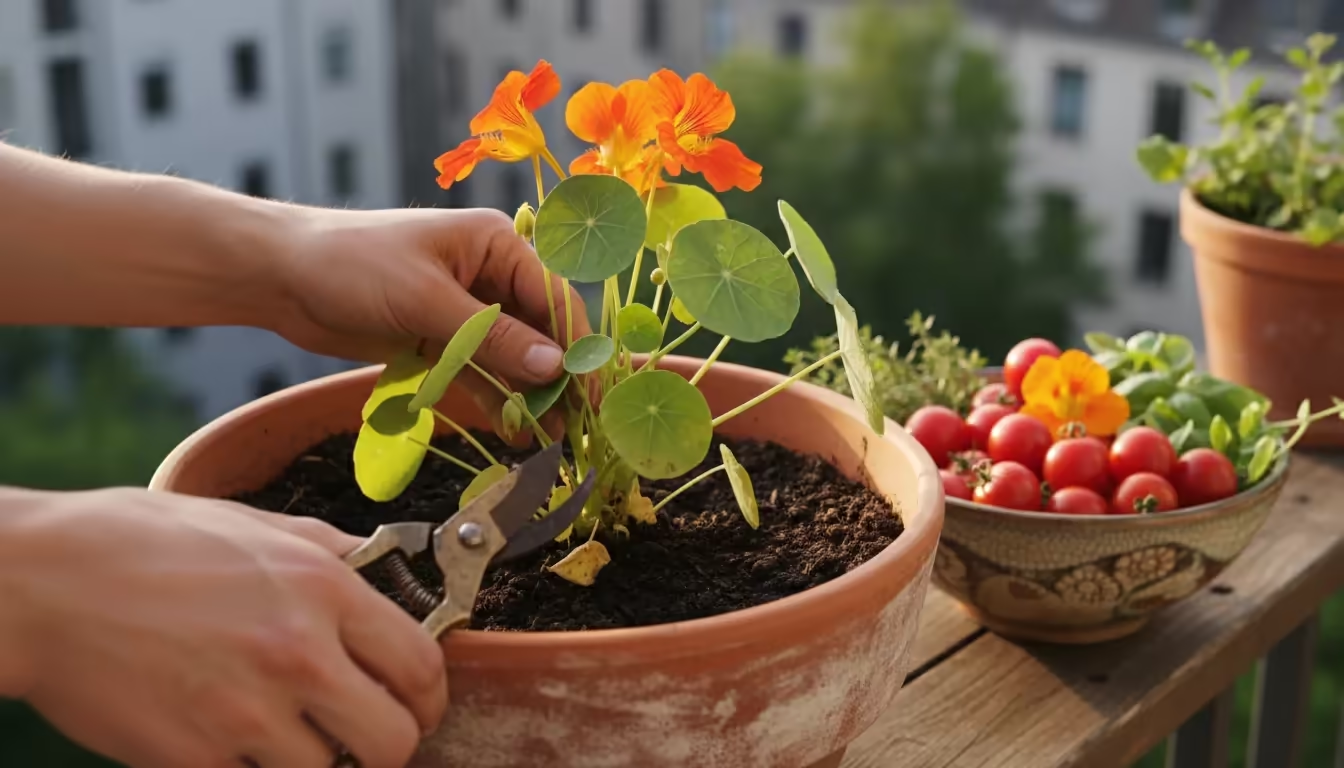
Regular pruning keeps your `living mulch` from overwhelming your main plant and encourages healthier growth.
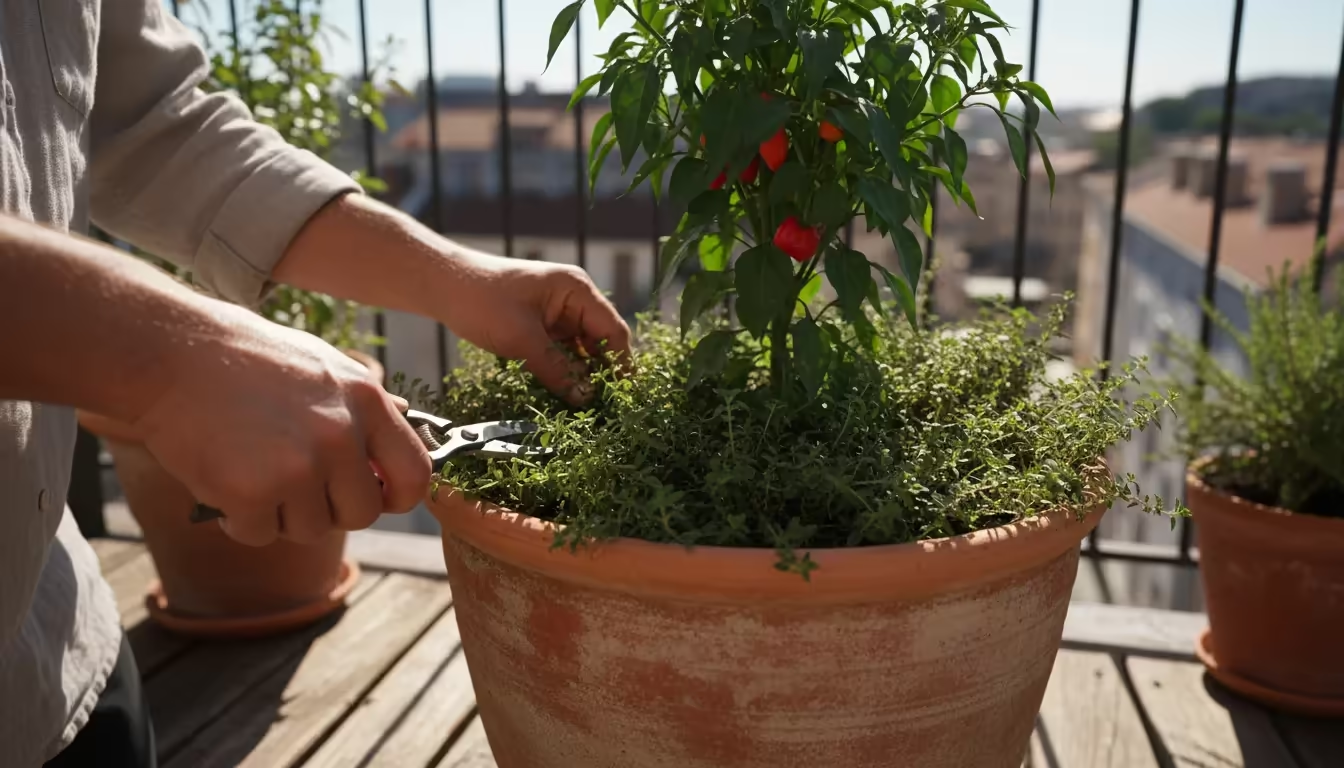
- Groundcover Control: Trim back your `edible groundcover` if it starts to grow too vigorously and shades the base of your main plant excessively, or if it competes directly for light. For example, prune nasturtium leaves that climb too high or spread too wide.
- Harvesting: Regularly harvest your `edible groundcover` (e.g., snipping creeping thyme, picking nasturtium leaves and flowers, harvesting alpine strawberries). This encourages new growth, keeps the plant compact, and prevents it from going to seed prematurely, which can sometimes signal the end of its productive life.
Pest and Disease Monitoring
A diverse planting can sometimes attract beneficial insects, but you still need to monitor for common pests and diseases.
- Regular Inspections: Routinely check the undersides of leaves and stems for signs of pests like aphids, spider mites, or whiteflies.
- Integrated Pest Management: If you spot pests, address them promptly. Use organic solutions like insecticidal soap, or simply blast them off with a strong stream of water. Healthy plants are more resistant to pest damage.
- Airflow: Ensure good air circulation around your main plant, especially if your `living mulch` becomes very dense. This helps prevent fungal diseases.
By actively engaging in these care and maintenance practices, you will ensure your `living mulch` system thrives, providing continuous benefits throughout the `summer container gardening` season and contributing to a resilient, productive balcony garden.
Common Mistakes to Avoid for Successful Living Mulch Containers
While the `living mulch` method offers incredible benefits for `summer container gardening`, a few common missteps can hinder its success. Understanding and avoiding these pitfalls will significantly improve your chances of a thriving, productive container garden with a healthy `edible groundcover`.
1. Overcrowding the Pot
This is perhaps the most frequent mistake. Trying to squeeze too many plants, both main crops and `living mulch`, into a container that is too small leads to fierce competition for resources.
- Problem: Limited soil volume means limited water and nutrients. Overcrowding results in stunted growth for both plants, reduced yields, and increased susceptibility to stress, making the `living mulch` less effective at cooling the soil.
- Solution: Always use appropriately sized pots. For a single large main crop like a tomato, aim for at least a 15-20 gallon (60-75 liter) pot. Even with `living mulch`, give both plants enough space to spread their roots and foliage without directly competing for light or air. Refer to plant tags for mature size estimates.
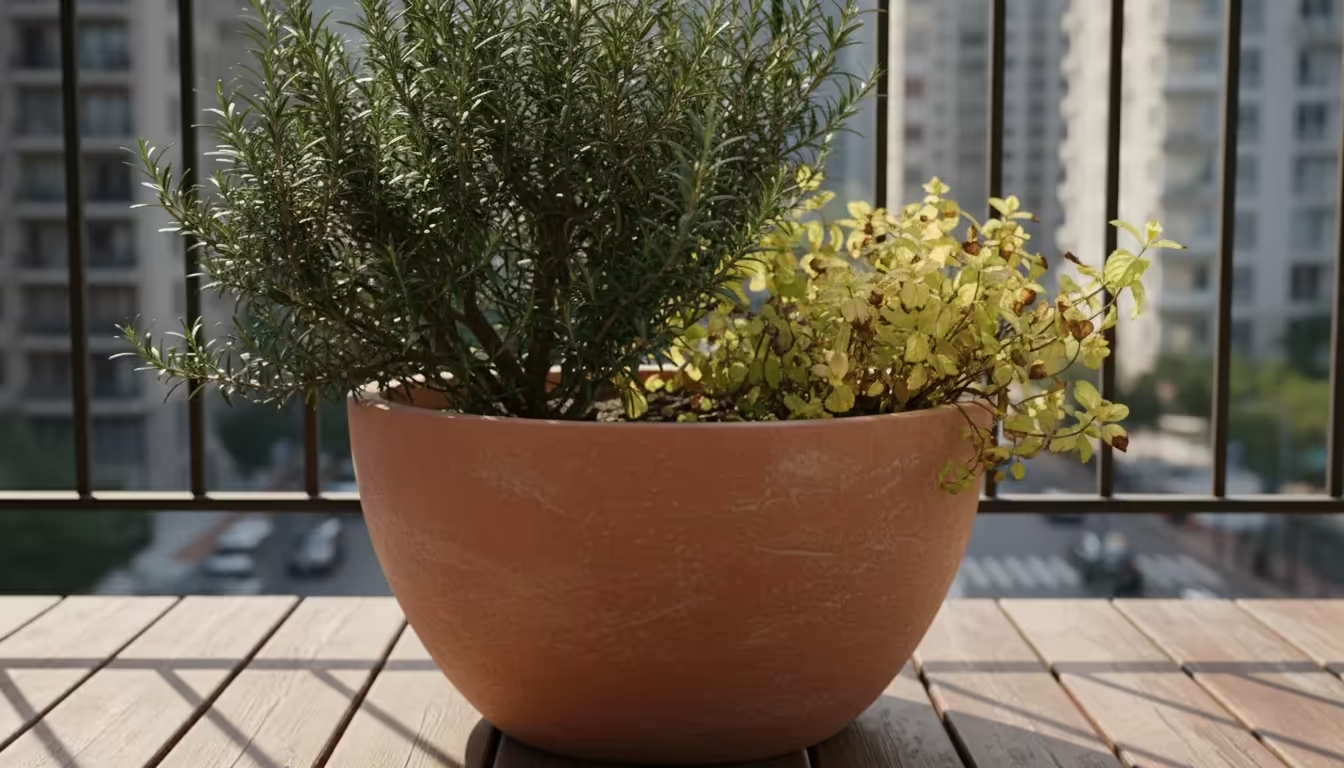
2. Choosing Incompatible Plant Pairings
Not all plants are natural companions. Selecting `edible groundcover` and main plants with vastly different environmental needs can lead to one or both struggling.
- Problem: For example, pairing a plant that loves dry soil (like rosemary) with a groundcover that demands constant moisture (like some varieties of mint) creates a watering dilemma. One plant will suffer.
- Solution: Research the light, water, and nutrient requirements of both your main crop and your `living mulch`. Choose `best edible groundcover for pots` that thrive in similar conditions. The pairings suggested earlier in this article are excellent starting points because they share similar needs.
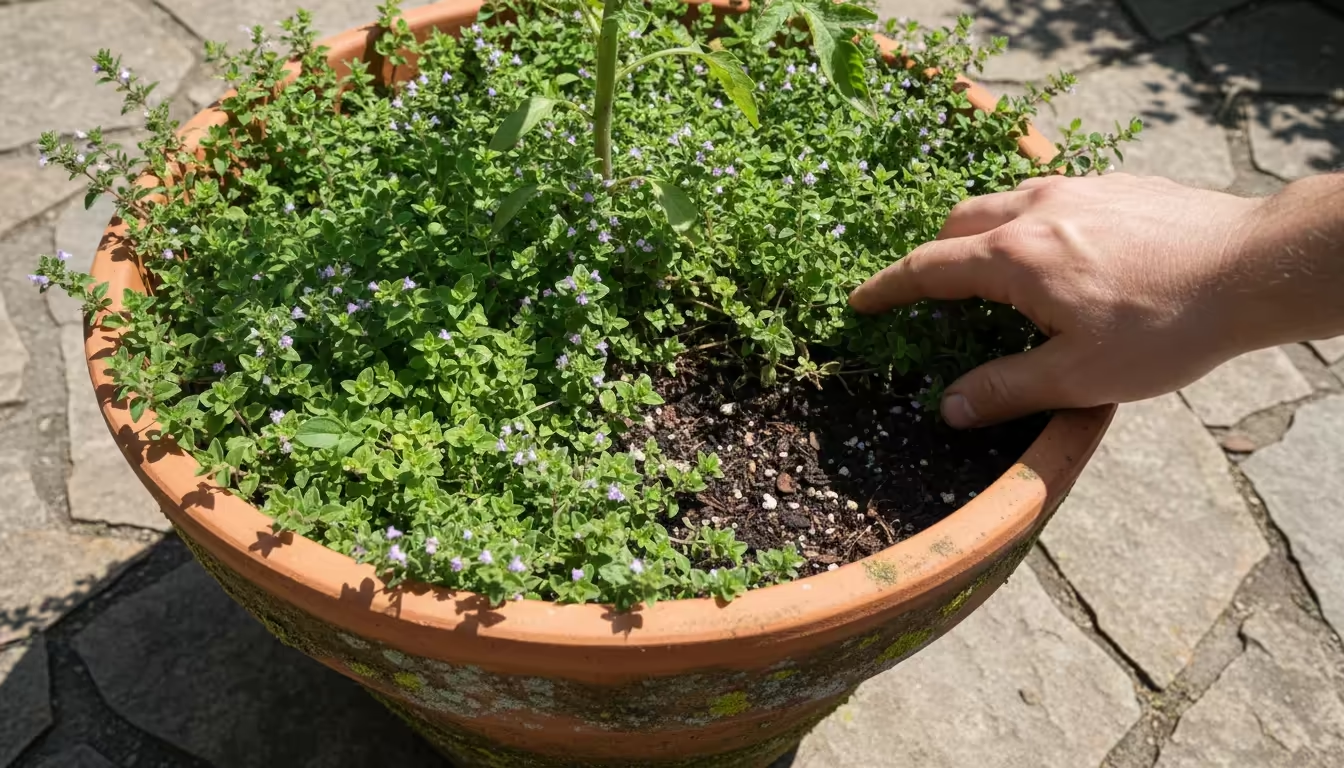
3. Neglecting Water and Nutrient Needs
While `living mulch` helps conserve moisture, it does not eliminate the need for regular watering and feeding, especially in containers.
- Problem: Two plants in one pot mean double the demand for water and nutrients. Forgetting this can lead to dehydration and nutrient deficiencies, causing wilting, yellowing, and poor plant performance despite the presence of the `living mulch`.
- Solution: Regularly check soil moisture beneath the groundcover. Water deeply and consistently when the top few inches of soil are dry. Implement a regular, balanced fertilization schedule, understanding that container plants deplete nutrients faster than in-ground plants.
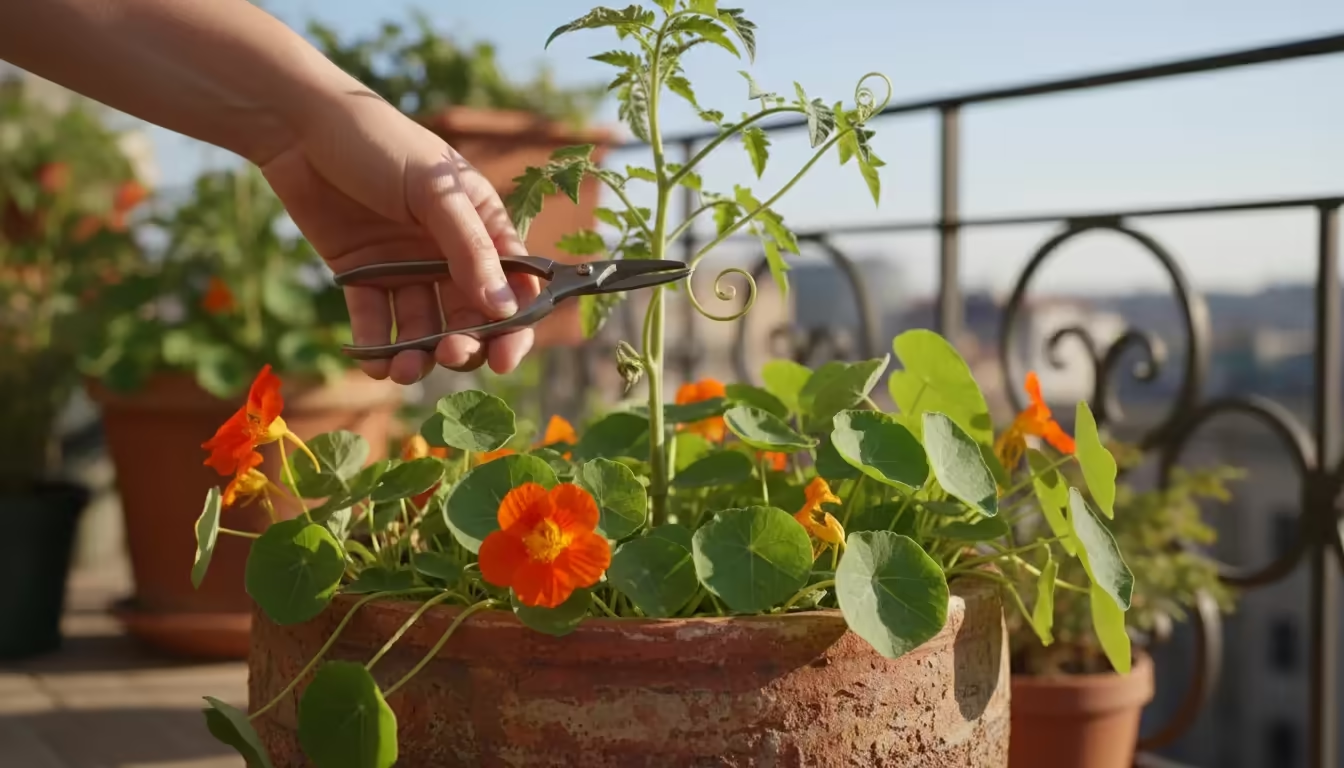
4. Allowing the Groundcover to Overwhelm the Main Plant
The purpose of `living mulch` is to protect, not to smother. Some vigorous groundcovers can become too dominant if left unchecked.
- Problem: An `edible groundcover` that grows too tall or spreads too broadly can shade out the main plant, restrict airflow, or compete too aggressively for water and nutrients, ultimately hindering the main crop’s growth and yield.
- Solution: Regularly prune and harvest your `living mulch`. Keep it at a manageable size and ensure it does not climb up or overshadow your main plant. This is particularly important for fast-growing options like nasturtiums. Think of it as shaping your `living mulch` to serve its purpose without becoming a problem.
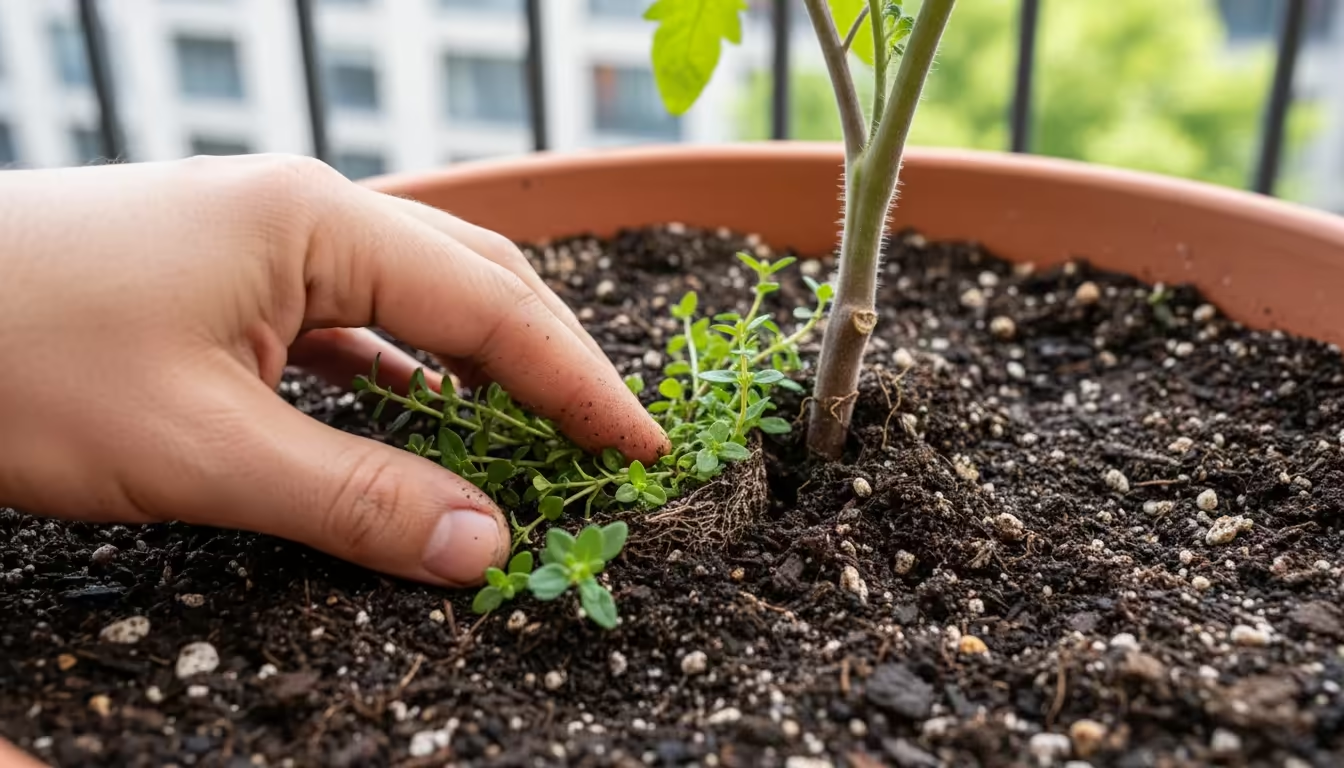
5. Planting Too Deep or Too Shallow
Improper planting depth applies to both the main plant and the `edible groundcover`.
- Problem: Planting too deep can cause stem rot, while planting too shallow can expose roots to air and rapid drying.
- Solution: Ensure the root ball of both your main plant and `living mulch` is level with the surrounding soil. For seeds, follow package instructions for depth. Proper planting provides the best start for a healthy root system.
By being mindful of these common mistakes, you can harness the full potential of `living mulch` to create a more resilient, cooler, and productive `summer container gardening` experience.
Beyond Cooling: The Multifaceted Benefits of Edible Groundcovers
While keeping your large balcony pots cool in summer is a primary driver for using `living mulch`, the advantages of incorporating `edible groundcover` extend far beyond temperature regulation.
This innovative technique offers a spectrum of ecological and practical benefits, making it a highly sustainable and efficient choice for `summer container gardening`.
1. Superior Moisture Retention and Reduced Watering
The most significant benefit, besides cooling, is enhanced moisture retention. The dense foliage of the `edible groundcover` acts as a physical barrier, directly reducing the rate at which water evaporates from the soil surface.
This means your soil stays moist longer, reducing your watering frequency. For example, studies on agricultural fields show that living mulches can reduce soil moisture evaporation by 15-25%.
While container environments differ, you will still observe a tangible decrease in how often you need to water your thirsty summer plants. This conserves water, saving you time and resources.
2. Natural Weed Suppression
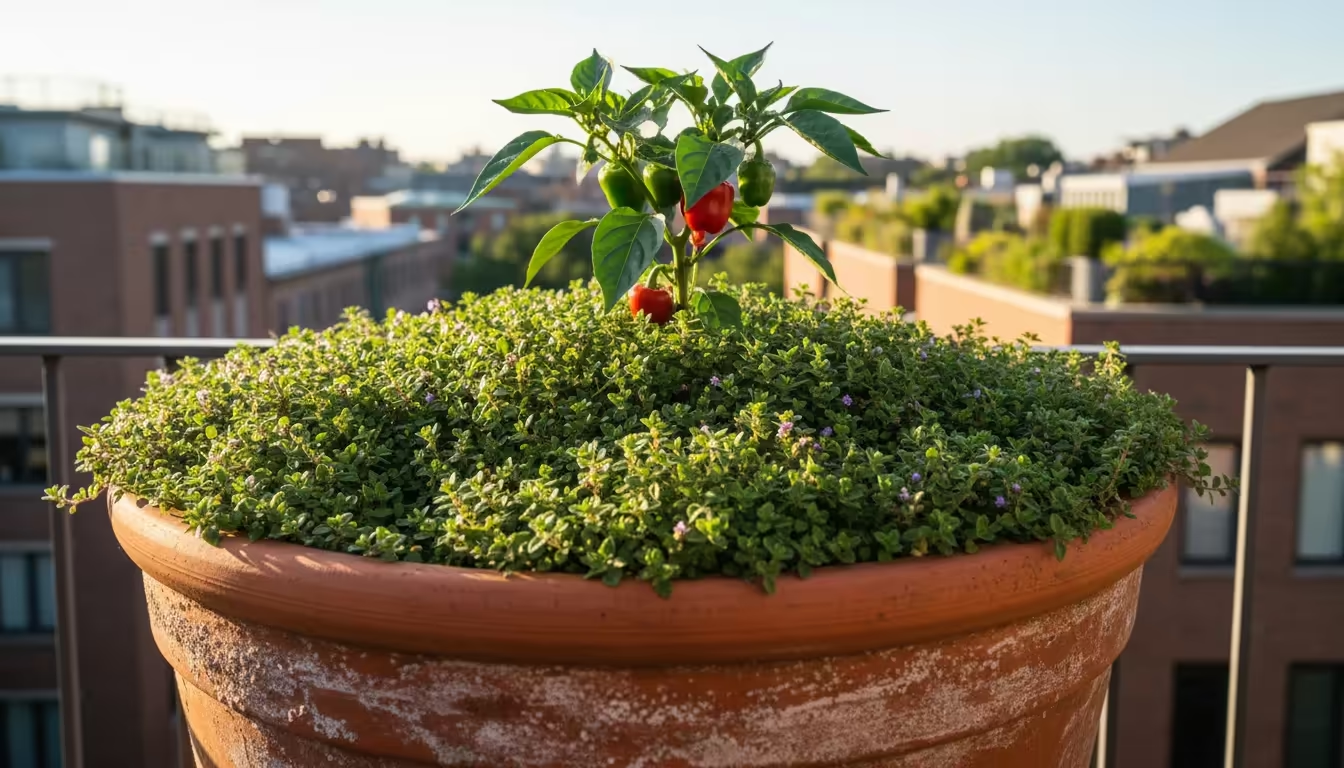
Bare soil is an open invitation for weed seeds to germinate. `Living mulch` covers this exposed real estate, actively competing with weeds for light, water, and nutrients. By establishing a desired groundcover, you naturally suppress unwanted weed growth.
This translates to less time spent pulling weeds from your pots, freeing you up to enjoy other aspects of your `summer container gardening`. It is a proactive, chemical-free form of weed control.
3. Soil Health and Structure Improvement
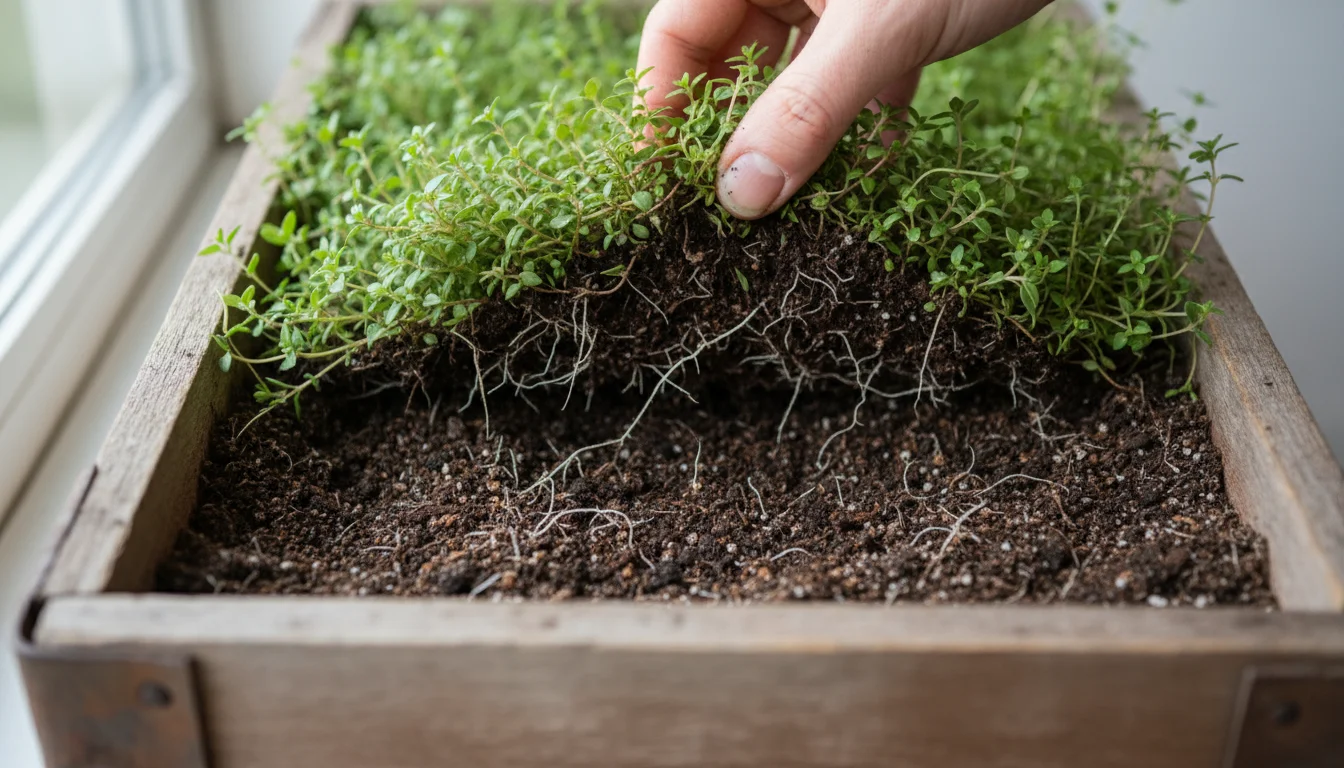
The roots of `living mulch` plants, even in a container, contribute to soil health. As they grow, they help aerate the potting mix, preventing compaction.
When these plants eventually break down or are pruned, they add valuable organic matter back into the soil, slowly improving its structure and fertility over time. This fosters a healthier microbial environment, which benefits your main crop’s roots.
4. Erosion Control in Containers
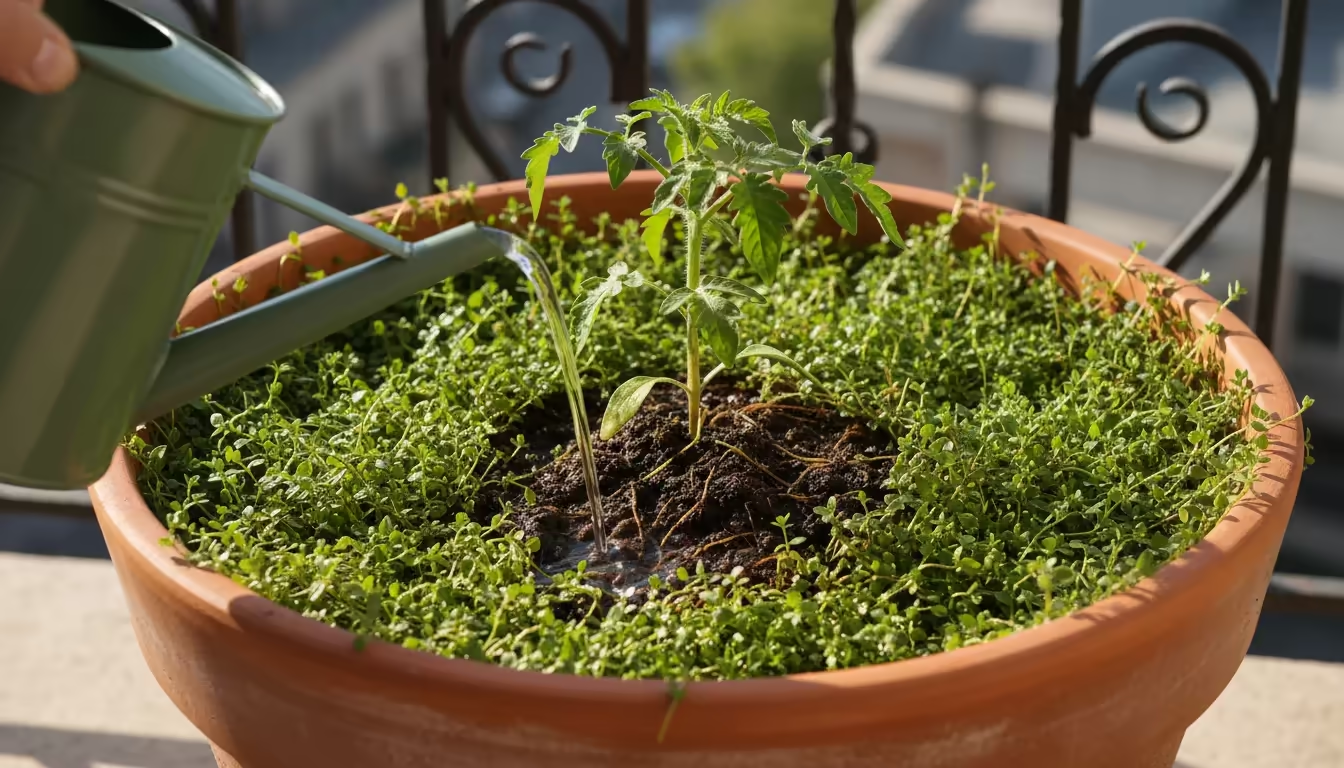
On windy balconies or during heavy rain, exposed soil in pots can experience erosion. Loose potting mix can wash out, taking valuable nutrients with it.
A `living mulch` forms a protective net over the soil, stabilizing it against wind and rain and keeping your potting mix where it belongs.
5. Attracting Beneficial Insects and Pollinators
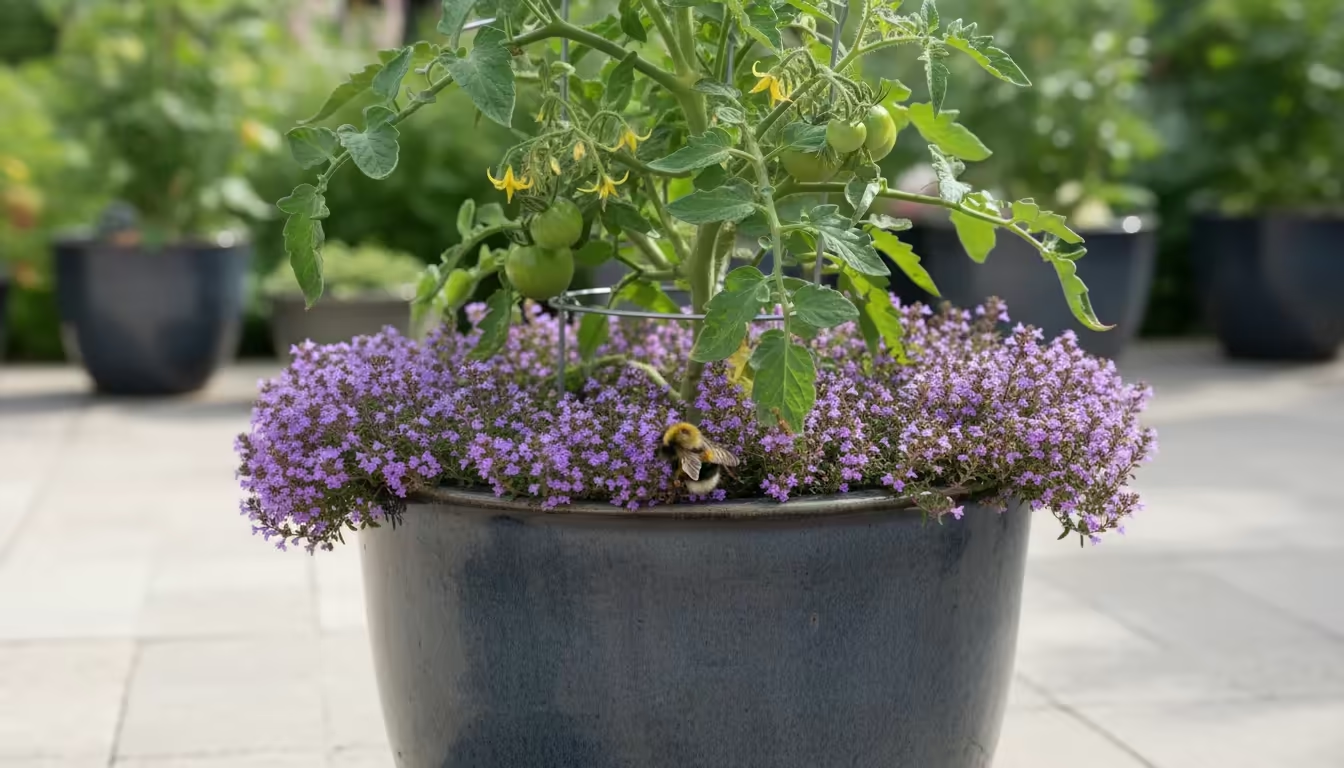
Many `edible groundcover` options, especially those that flower, act as magnets for beneficial insects and pollinators. Creeping thyme, for instance, produces small blooms that attract bees and other helpful garden visitors.
These insects can aid in pollinating your main crop, leading to better fruit set, and can also help control pest populations, reducing your reliance on chemical interventions. This boosts the biodiversity of your small garden ecosystem.
6. Enhanced Aesthetics and Productivity
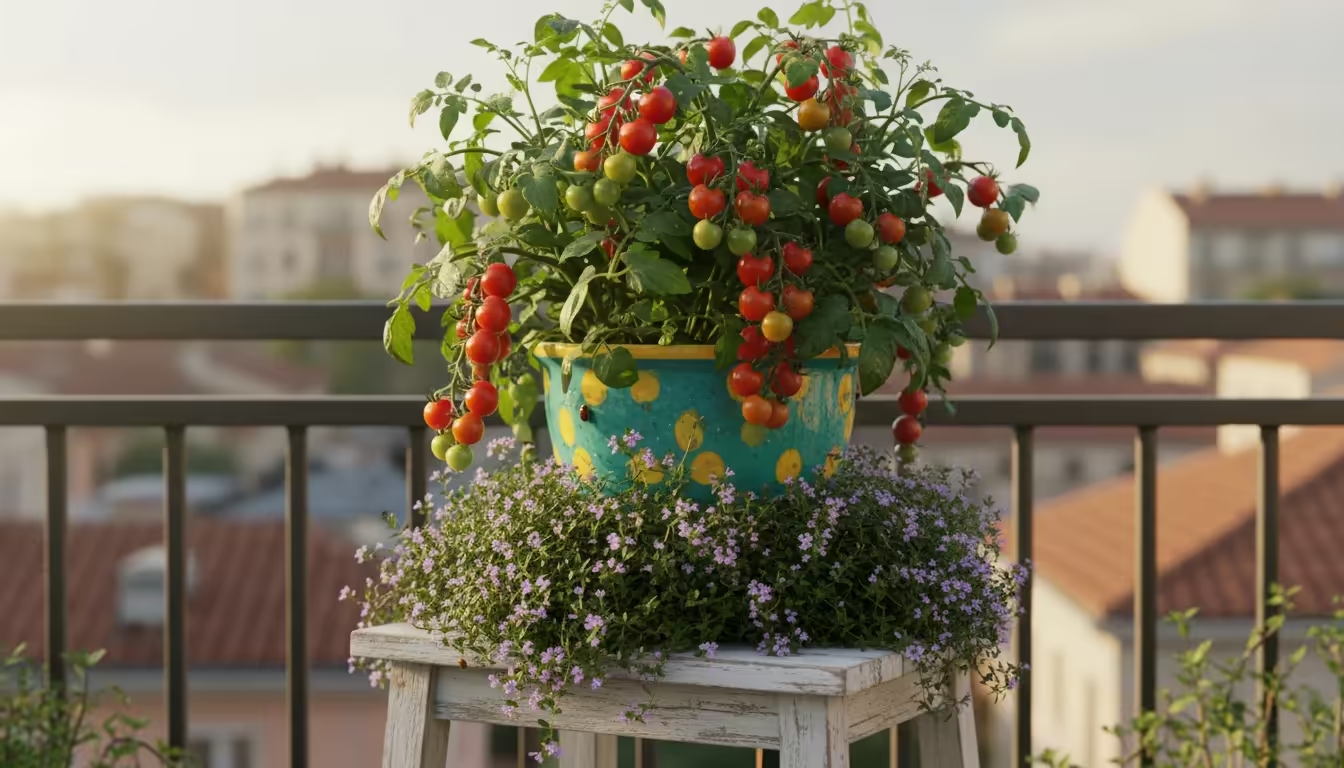
Visually, a container with `living mulch` often looks fuller, lusher, and more appealing than one with bare soil. The layered greenery adds texture and depth to your balcony garden.
Furthermore, by choosing an `edible groundcover` like alpine strawberries or nasturtiums, you gain a bonus harvest from the same pot, effectively doubling the productivity of your valuable container space. It is a smart way to maximize your yield in limited gardening areas.
By embracing the `living mulch` method, you are not simply cooling your pots; you are adopting a holistic approach to `summer container gardening` that leads to healthier plants, reduced maintenance, and a more vibrant, productive garden space.
Frequently Asked Questions
Here are answers to some common questions about using the `living mulch` method in your large balcony pots.
Can I use living mulch in smaller pots?
While the principle of `living mulch` applies to all pots, it is most effective and easiest to manage in larger containers. Smaller pots have limited soil volume, which means more competition between plants for water and nutrients.
If you use it in smaller pots, choose the most compact `edible groundcover` varieties and very small main plants. You might find it more challenging to balance their needs.
For best results, stick to larger containers, typically 5 gallons (20 liters) or more.
How do I fertilize my main plant when I have living mulch established?
Fertilize your main plant and `edible groundcover` simultaneously. Use a liquid fertilizer at half strength every 2-4 weeks, pouring it directly onto the soil around the base of the main plant and over the `living mulch`.
This ensures both plant systems receive nutrients. You can also mix slow-release granular organic fertilizer into the potting mix when planting, which provides a steady nutrient supply for several months without much effort.
Always follow fertilizer package directions and consider the nutrient needs of both plants.
Will the groundcover steal nutrients or water from my main plant?
This is a valid concern. The potential for competition exists, but you mitigate it by choosing compatible plant pairings, using adequately sized pots, and maintaining good care. `Living mulch` plants are generally shallow-rooted and non-aggressive.
They contribute to moisture retention and soil health, often offsetting any minor competition. Regular fertilization and watering, as discussed in the maintenance section, ensure enough resources for both.
The goal is symbiosis, not competition.
What if I don’t want edible groundcovers? Are there non-edible options?
Yes, you can use non-edible `living mulch` options. Low-growing ornamental plants like sedums, creeping Jenny (Lysimachia nummularia), or even certain types of moss can serve the same purpose of shading the soil and retaining moisture.
However, the focus of this article and the added benefit for small-space gardeners is the dual purpose of the `edible groundcover`, which provides both protection and an extra harvest. If edibles are not your priority, these ornamental alternatives still offer the essential cooling benefits.
When is the best time to plant living mulch?
Plant your `living mulch` at the same time or shortly after you plant your main crop. This allows the groundcover to establish its root system and begin spreading its protective canopy as your main plant grows.
For `summer container gardening`, you typically plant both after the last frost date in your region when temperatures are consistently warm. Starting both together ensures they develop a cooperative relationship from the outset.
For trustworthy gardening information, visit:
Washington State University Hortsense, University of Minnesota Extension, Penn State Extension — Trees, Lawns and Landscapes, Clemson University Extension — Home & Garden and Colorado State University Extension — Gardening. These organizations provide expert, research-based advice for gardeners at all levels.
Disclaimer: This article is for informational purposes only and is not a substitute for professional gardening advice. Always consult local extension services or horticulture experts for region-specific guidance.
1 Comment