
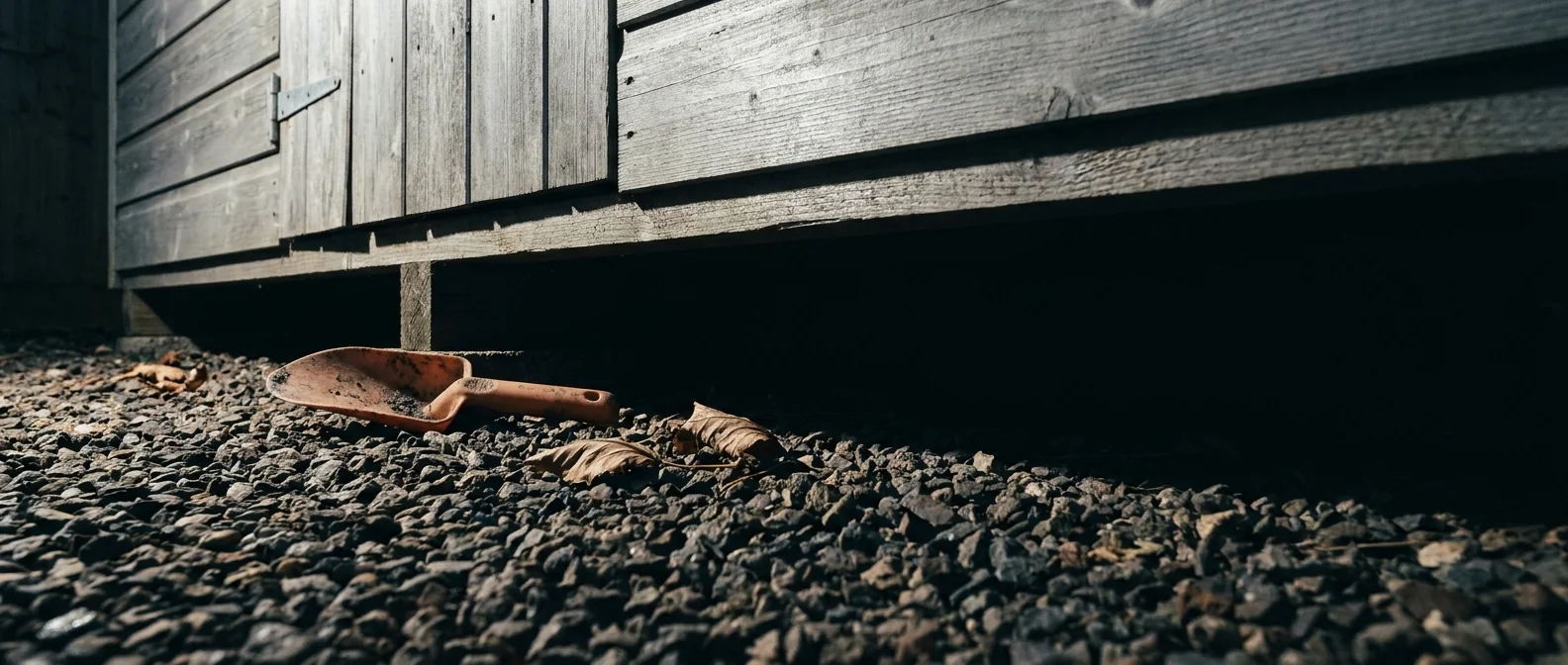
Neglecting the Space Under Patios and Sheds
Elevated structures in your yard create massive, shadowed voids that are largely ignored during routine maintenance. Tool sheds resting on concrete blocks, low-profile wooden decks, and floating patio platforms all offer a secure, dry roof over the bare earth.
Because these spaces are completely protected from the rain and out of the line of sight, they become prime real estate for snakes to establish long-term dens.
Small-space gardeners often face this challenge with compact storage units or elevated planters. The narrow gap between the floorboards and the soil might look too small for a large animal, but snakes can compress their bodies to squeeze through astonishingly tight spaces.
Once underneath, they have undisturbed access to hunt the rodents that also favor these subterranean shelters. If you never inspect or secure the skirting around these structures, you are leaving a permanent door open to wildlife.
Closing off these access points requires a method called exclusion trenching. It is a highly practical, one-time weekend project that provides permanent garden safety.
- Install an exclusion barrier: Dig a narrow trench six inches deep around the perimeter of your deck or shed. Use 1/4-inch galvanized hardware cloth (a stiff wire mesh) to skirt the structure.
- Use the L-shape technique: Bend the bottom of the hardware cloth outward at a 90-degree angle so it forms an “L” shape facing away from the shed, sitting flat in the trench. Bury the mesh with packed soil. This prevents animals from simply digging straight down to get under the wire.
- Seal the top edge: Secure the top edge of the hardware cloth tightly to the baseboards of the shed or deck using heavy-duty staples or screws with large washers.
- Inspect lattice panels: If you use decorative wood lattice around your deck, ensure it is backed by hardware cloth. Flimsy lattice alone will not stop a snake or a determined rodent.