
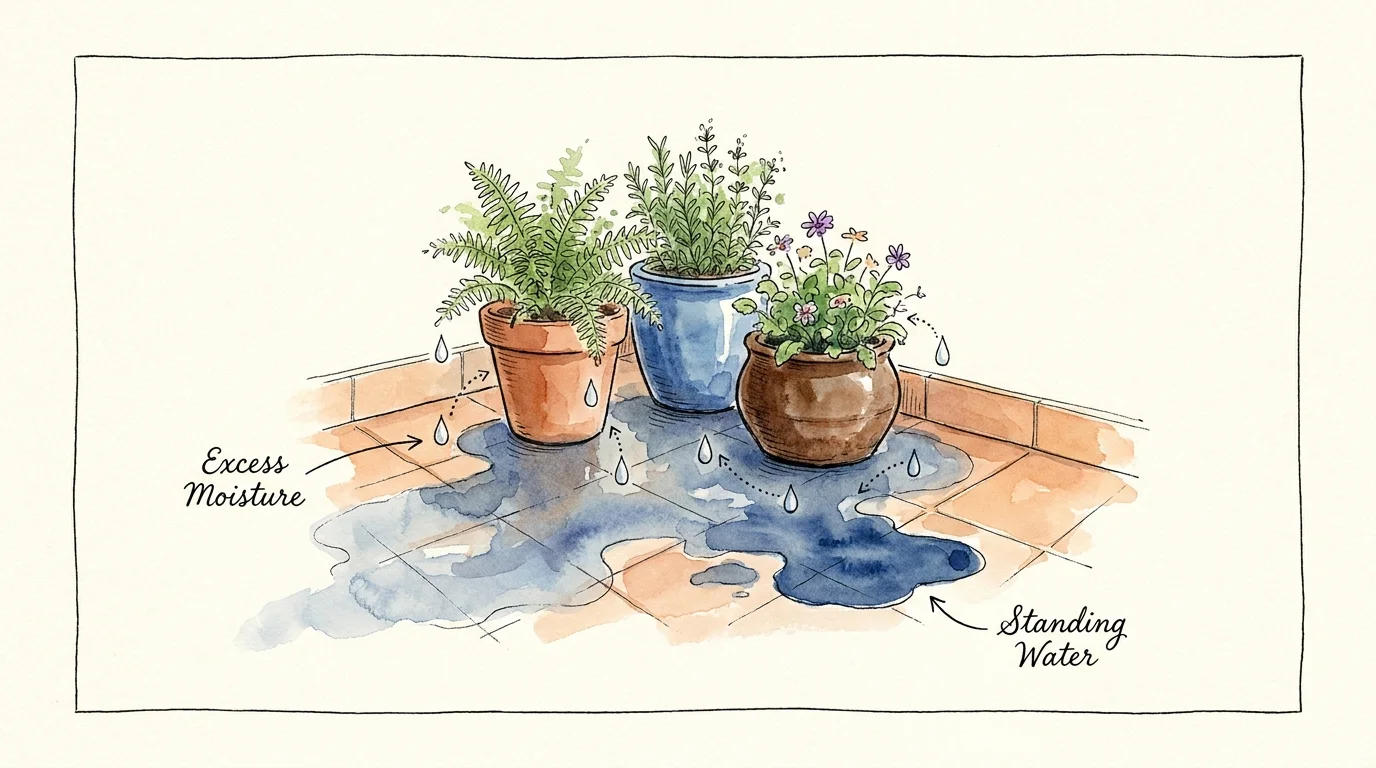
Overwatering and Creating Excess Moisture Zones
Water attracts a diverse array of wildlife, and snakes seek out moisture for two critical reasons: hydration and prey. Snakes absorb water directly from small puddles, and they hunt moisture-loving creatures like frogs, toads, slugs, and earthworms.
Overwatering your garden creates the exact damp, cool microclimates these animals desperately crave during the heat of summer.
Be aware that the same damp conditions favored by reptiles are often responsible for attracting mosquitoes to your garden and other unwanted insects.
Understanding drainage—how water moves through soil—is essential for maintaining a balanced environment. In a confined patio setting, poor drainage often manifests as standing water in the saucer trays sitting beneath heavy ceramic pots.
In a traditional backyard, overwatering might look like soggy depressions in the lawn or constantly muddy mulch beds near your foundation.
When the soil remains permanently saturated, you inadvertently engineer an ideal habitat for amphibians, which in turn draws hungry snakes looking for an easy meal.
Fixing moisture problems protects your plant roots from fungal diseases while simultaneously improving your garden safety profile. Small adjustments to your watering routine yield immediate results.
- Adjust irrigation timers: Run sprinklers or drip systems early in the morning. This allows the sun to dry the top layer of soil before dusk, which is when many snake species become active.
- Empty container saucers: Check the drip trays under your potted plants an hour after watering. Dump out any standing water to eliminate accessible drinking pools.
- Improve soil structure: Incorporate coarse compost or perlite into your garden beds to improve drainage, ensuring water sinks deep into the root zone rather than pooling on the surface.
- Fix leaky fixtures: Inspect outdoor spigots, garden hoses, and irrigation lines for slow drips. A seemingly minor leak can create a permanent mud puddle that attracts wildlife year-round.