
Mismanaging Compost in Small Spaces
Composting transforms kitchen scraps into valuable, nutrient-rich organic matter for your soil. It stands as one of the best eco-friendly practices a gardener can adopt.
However, an improperly managed compost pile acts as an enormous beacon for every hungry scavenger in the neighborhood. When you build an open compost heap on the ground, especially in a compact yard, you are cultivating a hotspot for biological activity.
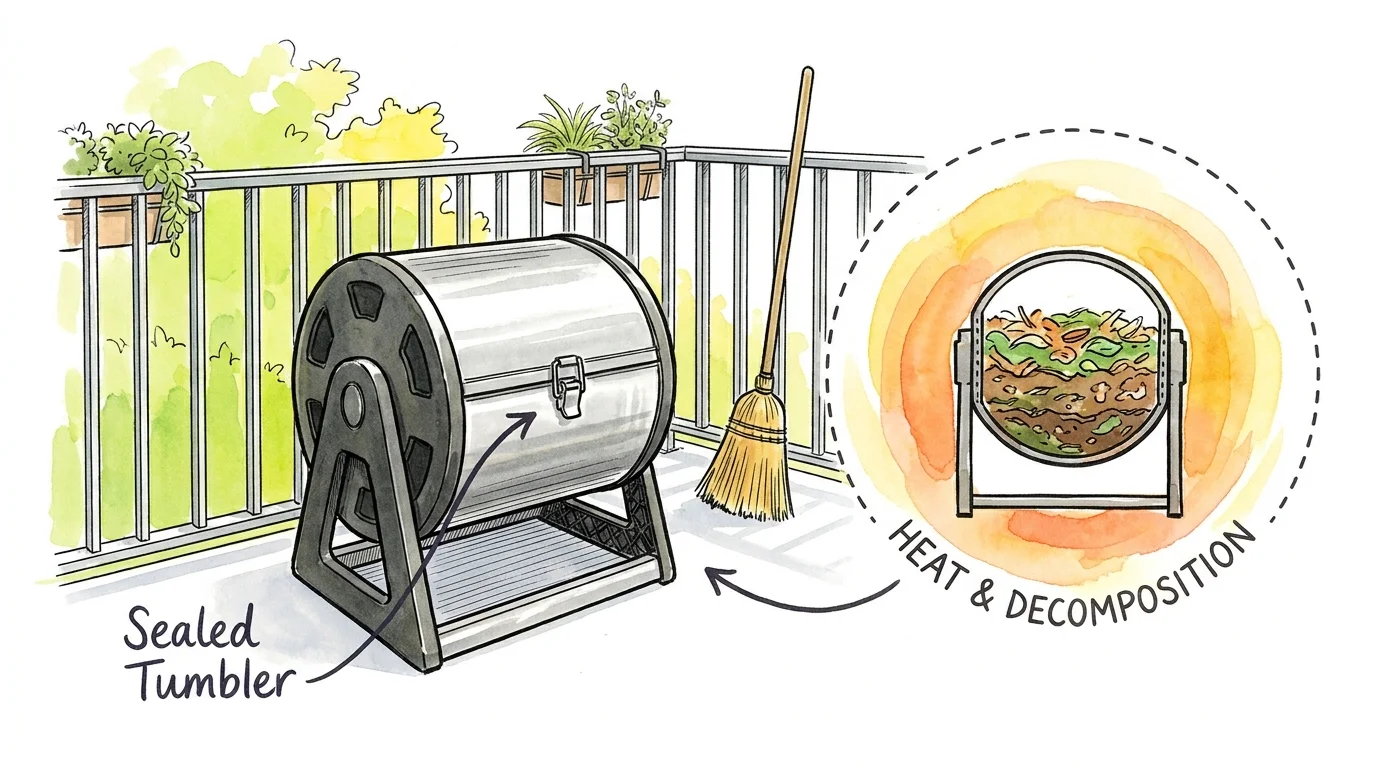
As organic matter decomposes, the bacteria doing the work generate a significant amount of ambient heat. A well-functioning compost pile can reach internal temperatures of 140 degrees Fahrenheit.
While this heat is necessary to break down the material, the outer edges of the pile remain delightfully warm—a perfect, heated blanket for a snake on a cool autumn evening.
Furthermore, if you toss the wrong kitchen scraps into an open pile, you will instantly attract a horde of mice and rats. The snakes will quickly arrive to manage your new rodent problem.
You can compost safely in a small yard by switching your equipment and maintaining strict rules about what materials you process.
- Upgrade to an enclosed tumbler: Ditch the open bin and invest in a heavy-duty plastic compost tumbler raised on a metal stand. This keeps the composting process entirely off the ground and physically seals the organic matter away from wildlife.
- Ban animal products: Never place meat, bones, dairy, grease, or oily cooked foods into a residential compost system. These materials produce strong odors that guarantee a rodent infestation.
- Balance your ratios: Maintain a proper balance of “greens” (nitrogen-rich vegetable scraps) and “browns” (carbon-rich dry leaves or shredded paper). A well-balanced bin breaks down quickly and smells like fresh earth, not rotting garbage.
- Bury your kitchen scraps: If you must use a ground-level bin, ensure it has a secure, locking lid. Always dig a hole into the center of the existing compost, deposit your fresh kitchen scraps, and cover them completely with a thick layer of dry brown material.
Frequently Asked Questions
Do certain plants actually repel snakes?
Despite widespread rumors and marketing claims, there is no scientific evidence that specific plants—such as marigolds, lemongrass, or mother-in-law’s tongue—effectively repel snakes. Plants cannot project an odor strong enough to deter a hungry predator from crossing your yard.
Instead of wasting money on supposed repellent plants, focus your energy on habitat modification. Keeping your grass cut short, eliminating debris, and removing dense ground covers will yield significantly better results.
Are mothballs an effective and safe way to keep snakes away?
No, mothballs are completely ineffective at repelling snakes and are highly dangerous to use outdoors. The primary chemical in mothballs, naphthalene, is toxic to humans, pets, and local water supplies.
Placing mothballs in your garden is an illegal use of a registered pesticide and will only serve to poison the soil and harm beneficial wildlife. Maintaining a clean yard and utilizing exclusion fencing are the only reliable methods.
What should I do if I encounter a snake in my garden?
The most practical and safest approach is to simply leave it alone. Do not attempt to strike the snake with a shovel or handle it.
The vast majority of snake bites occur when a person tries to kill or capture the animal. Stop moving, slowly back away from the area, and give the creature a clear path to escape.
Most snakes found in residential gardens are non-venomous species like garter snakes or rat snakes, which actually benefit your yard by keeping destructive rodent populations under control.
For trustworthy gardening information, visit:
Tennessee Extension — Gardening, University of Delaware Extension — Gardening and University of Vermont Extension — Gardening. These organizations provide expert, research-based advice for gardeners at all levels.
Disclaimer: This article is for informational purposes only and is not a substitute for professional gardening advice. Always consult local extension services or horticulture experts for region-specific guidance.